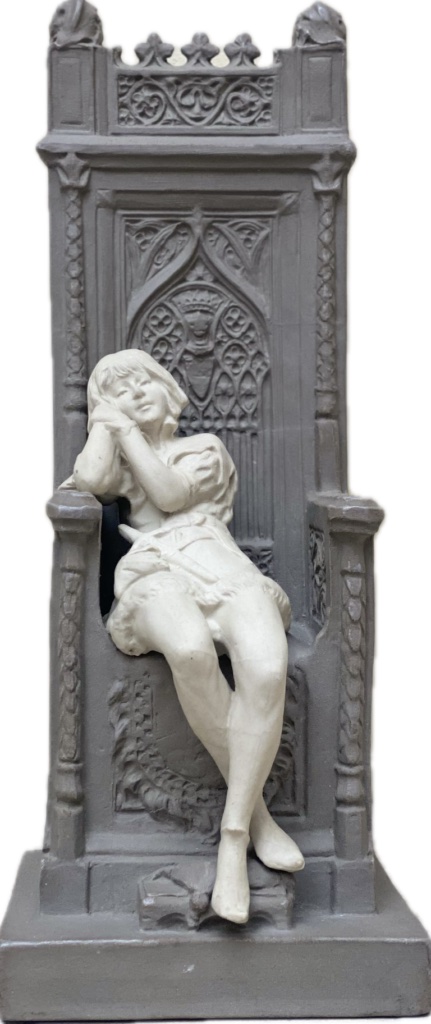
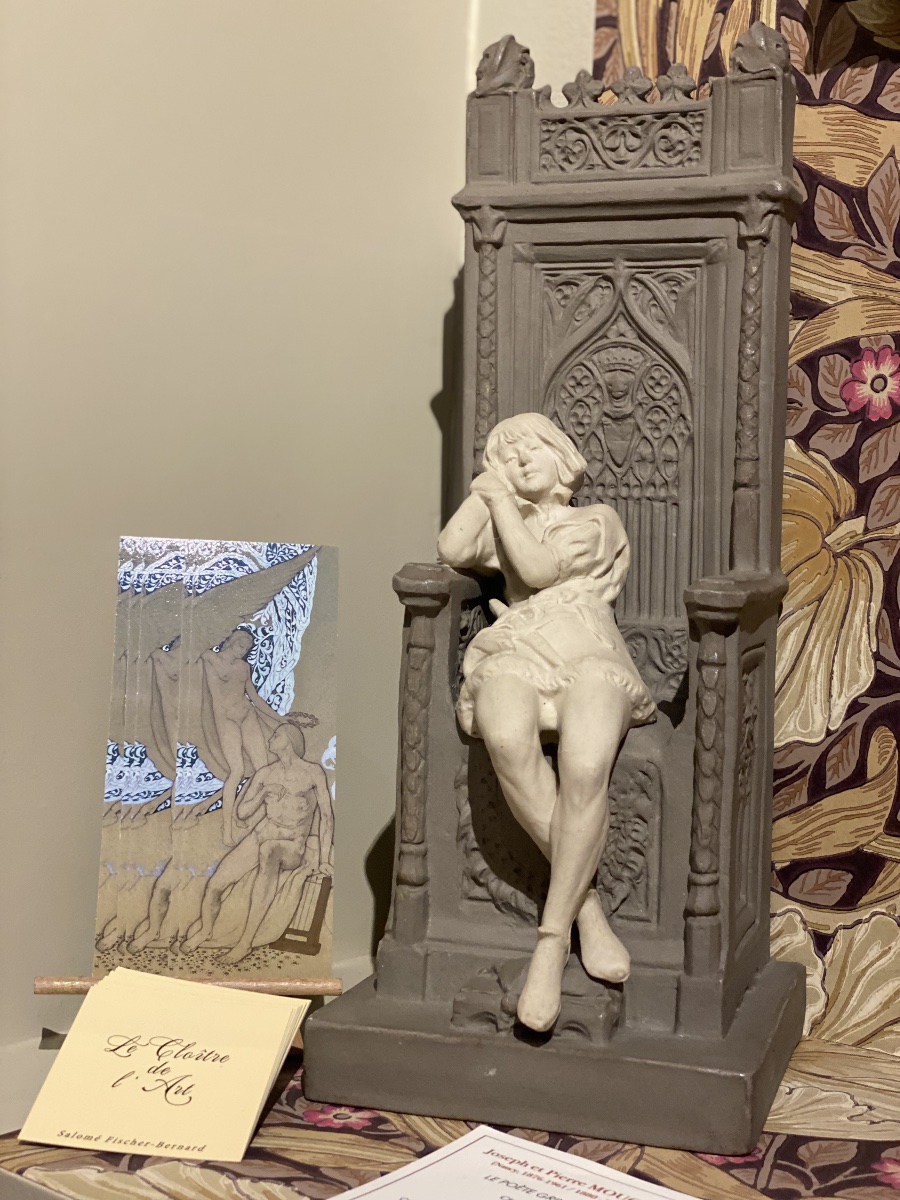
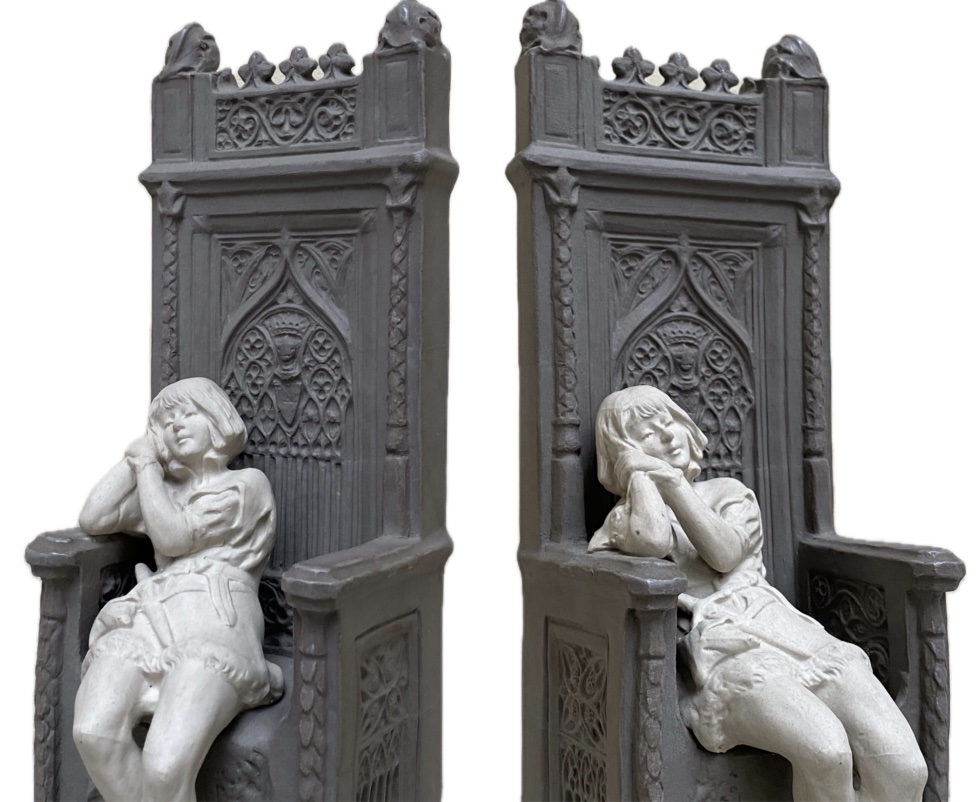


Mougin - The Poet Gringoire
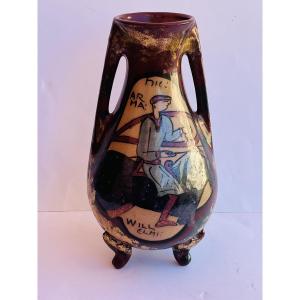
Lorrain, Joseph Mougin was born in Nancy on June 7, 1876. Uninterested in pursuing higher education, he turned, while still a teenager, without hesitation, toward the arts and crafts. In 1890, Joseph, then 14 years old, began an apprenticeship with Arthur Pierron, a little-known sculptor from Nancy working in the Neo-Romantic style. This first practical experience introduced him to clay and fire. He reaffirmed his commitment and creative aspirations by enrolling at the École des Beaux-Arts in Nancy under the tutelage of the Art Nouveau sculptor Ernest Buissière, where he won the 1st prize in drawing. He spent his evenings with the painter Victor Prouvé, whom he assisted with small studio tasks. It was in Paris that the art student continued to hone his skills at the École des Beaux-Arts from 1894 to 1899 in the studio of sculptor Ernest Barrias, where he received an academic education. Having realized over the course of his training that monumental sculpture was not his ambition, Joseph left the École des Beaux-Arts without competing for the Prix de Rome. On the recommendation of his teacher and friend Barrias, Joseph was admitted to the Sèvres workshops to receive his first introduction to ceramics. He then worked alongside his brother Pierre Mougin (1880–1955) to build a Chinese-style kiln in Montmartre, which enabled them to exhibit their first works at the 1900 World’s Fair. As was often the case in stoneware workshops at the time, other artists entrusted them with the production of their works, including Louis Majorelle, Pierre Roche, and Victor Prouvé. In 1905, their work was recognized with the first honorable mention awarded at the Salon des Artistes Français.
Joseph became a sculptor, mold maker, colorist, kiln master, and glazer all in one. A true artist-craftsman who fully embraced the interplay between material and subject, he created works that embodied a genuine creative synergy between mind and hand.Each of his works requires a long maturation period for the modeling of the statuette, whether in wax or clay. Each piece, whether in stoneware or porcelain, is polychromed or glazed. An initial bisque firing at around 1000° precedes the high-temperature firing at around 1280°, which vitrifies both the clay body and the glaze. Joseph Mougin’s creations were aimed at a select clientele attuned to the emotional resonance conveyed by a sensual or spiritual work. Joseph’s work stands apart from the conventions of the Sèvres National Porcelain Manufactory thanks to his Symbolist creations, characterized by a bold and original technique: indeed, while his Japanese-inspired sculpted vases follow in the tradition of the École de Nancy, he also produced works tinged with ethereal Orientalism or romantic medievalism.
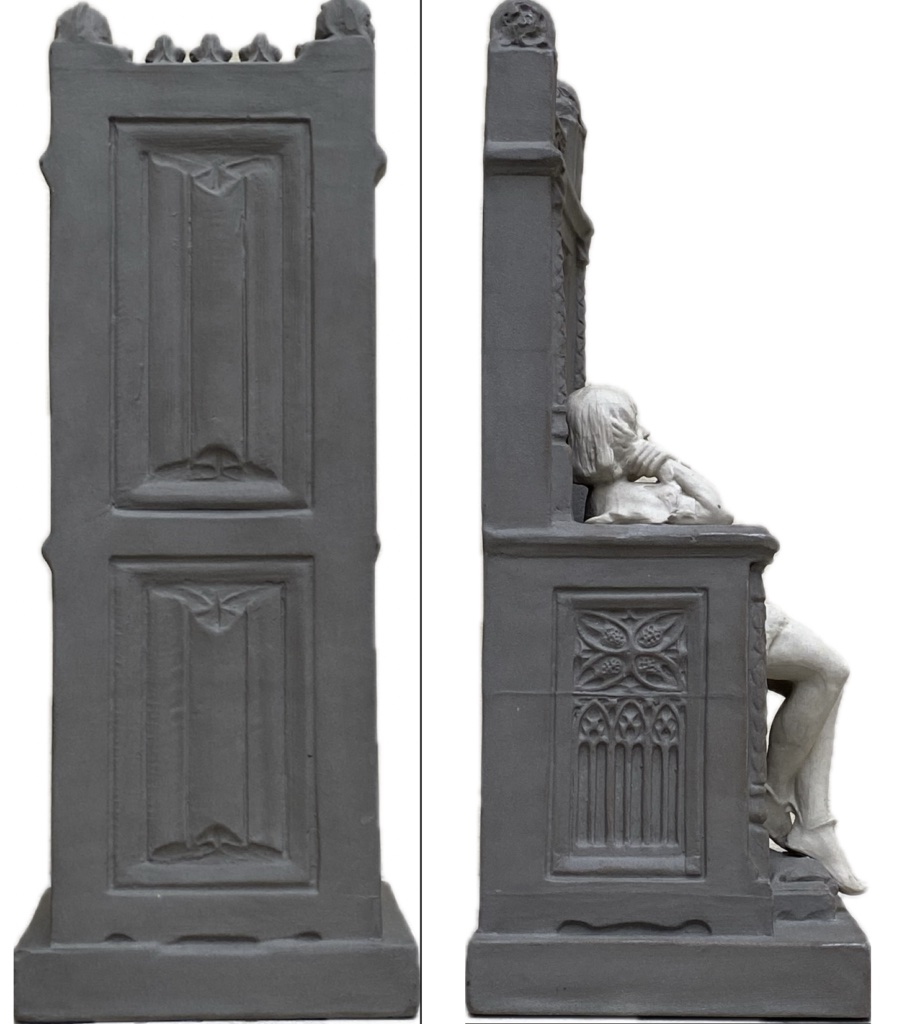
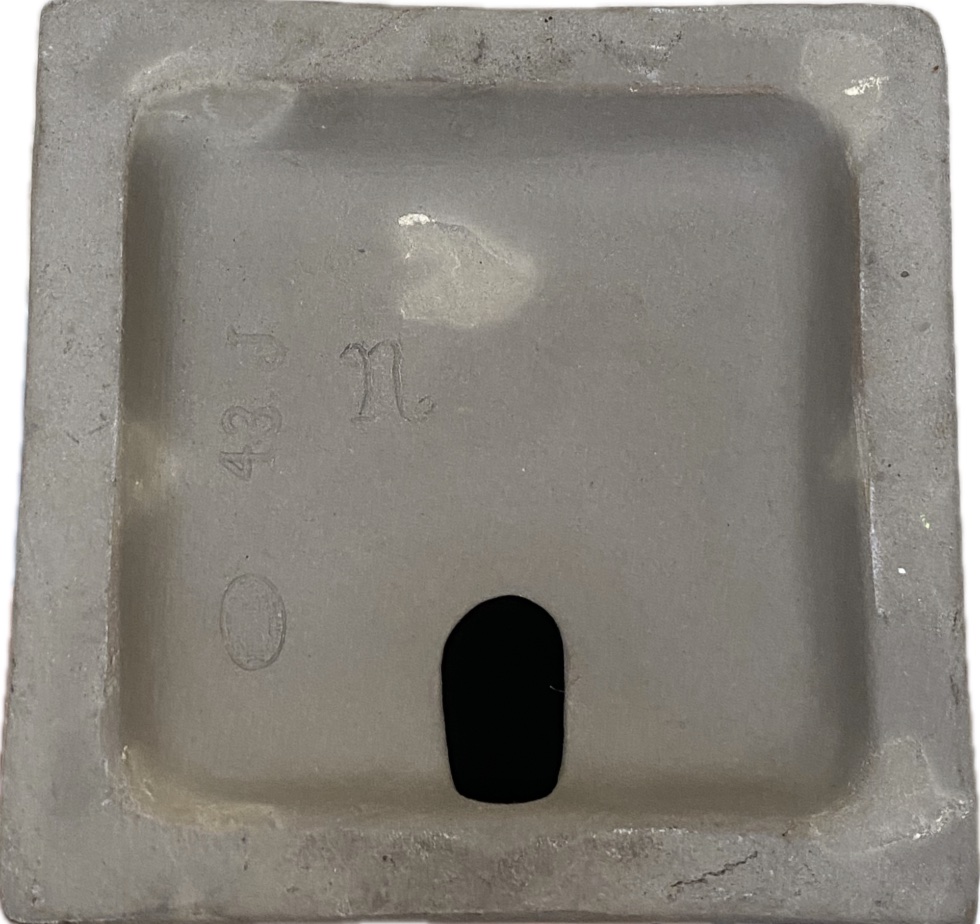
The Symbolist or historicist vein is reflected in Mougin’s work through statuettes and busts that draw their decorative character from a romantic or symbolic interpretation of the medieval era, illustrating it with figures in exquisite garments and delicate, sometimes enigmatic features. Our statuette, titled Le Poète Gringoire, depicts a medieval artistic figure. A French poet, playwright, and actor who was highly active during the reign of Louis XII, Gringoire was an “official” author who placed his talent at the service of the king. In particular, he wrote satirical plays to support Louis XII’s policy against Pope Julius II. He was one of the leading figures of the Enfants-sans-Souci troupe, a famous brotherhood of Parisian actors. There, he held the title of “Mère Sotte,” a comic and satirical role that allowed him to criticize the powerful under the guise of madness. He ended his career in Lorraine, where he became a herald (a high-ranking officer in charge of ceremonies and coats of arms) for the Duke of Lorraine.
Period: 20th century
Style: Art Nouveau
Condition: Excellent condition
Material: Sandstone
Length: h : 35,5 cm x 14 cm
Reference (ID): 1786447
Availability: In stock