

Imperial Porphyry Fragment - 27 Cm
Fragment of imperial porphyry — Roman period
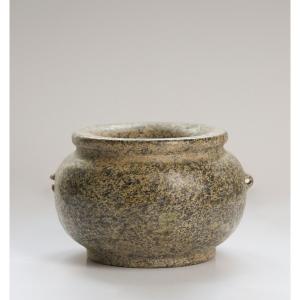
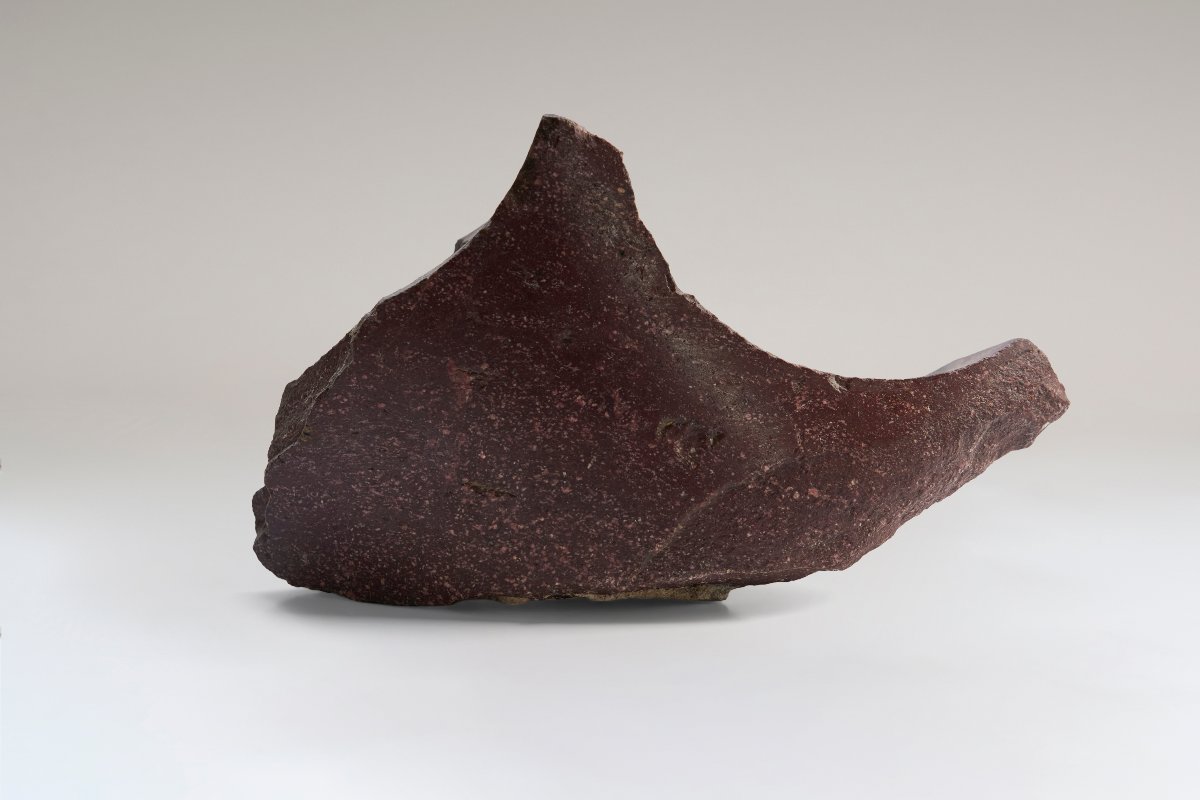
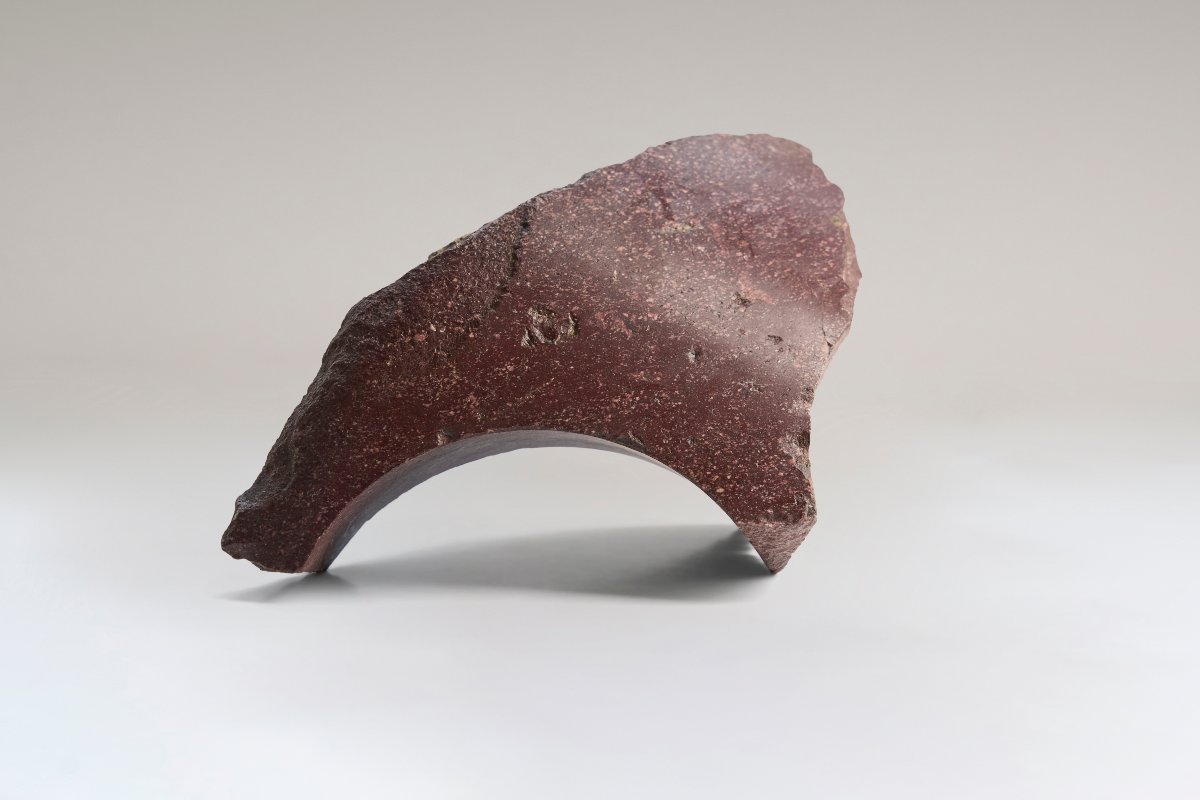
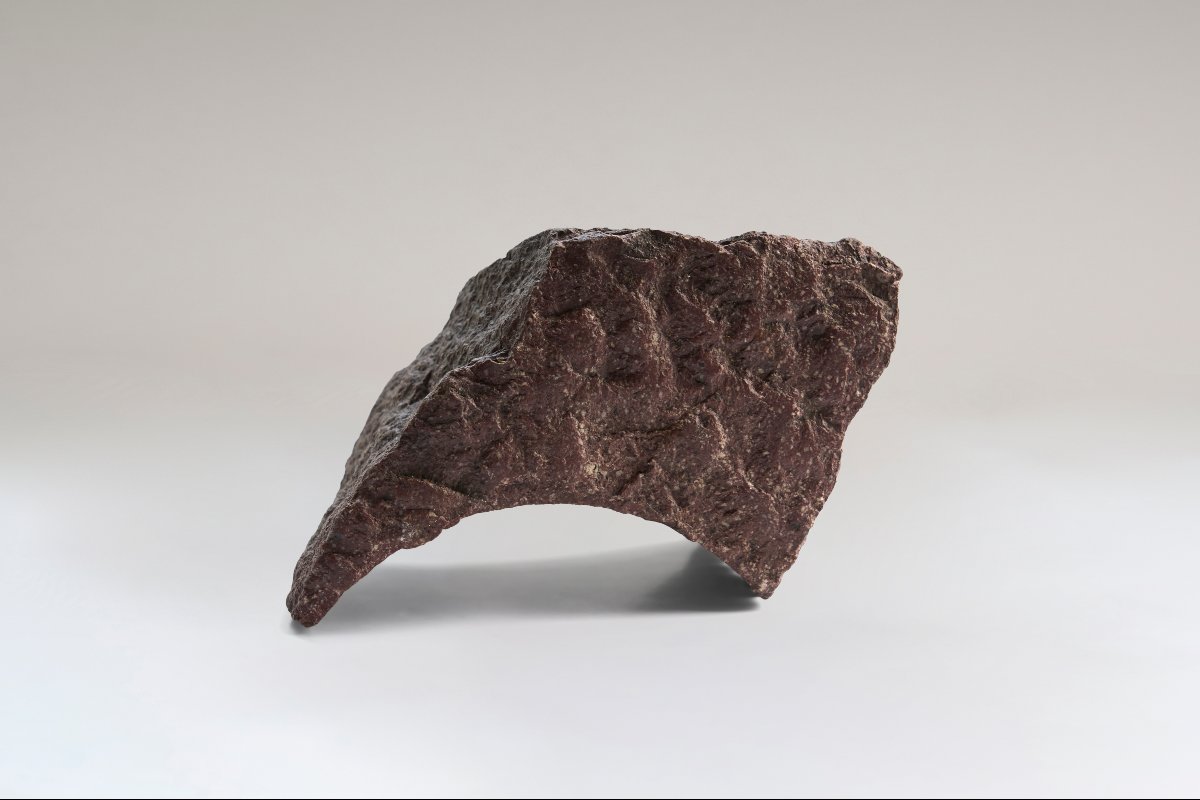
A significant fragment of imperial porphyry, featuring a partially polished surface and irregular fractures that reveal the stone’s structure. Its shape is characterized by a curved cut, likely related to its original function as part of an architectural or decorative ensemble.
Imperial porphyry is a purple-colored volcanic rock dotted with small, clear crystals. It was quarried in the eastern desert of Egypt, in the quarries of Mons Porphyrites, which the Romans began exploiting in the late 1st century A.D. Its purple color, a symbol of imperial power, made it a stone closely associated with the Roman emperors. It was notably used to create columns, statues, and imperial sarcophagi. Quarrying ceased around the 5th century, making this stone permanently inaccessible for extraction in the centuries that followed. Beginning in the Renaissance and continuing under Louis XIV, imperial porphyry was particularly sought after. European artisans salvaged it from ancient monuments to transform it into vases, mortars, and other decorative objects. Thus, unlike most stones used in the decorative arts, imperial porphyry worked in Europe after antiquity generally came from materials quarried during the Roman era.
Dimensions: 27 × 16 × 11 cm
Period: Before 16th century
Style: Rome and Antic Greece
Condition: En l'etat
Material: Marble
Length: 27cm
Width: 16cm
Depth: 11cm
Reference (ID): 1858358
Availability: In stock