


Earthenware Water Fountain, Enameled To Resemble Bronze
This charming water fountain was a piece of furniture found in all the beautiful mansions of yesteryear at the entrance to the dining rooms, so that guests could wash their hands.
Its provenance, however, remains a mystery for now
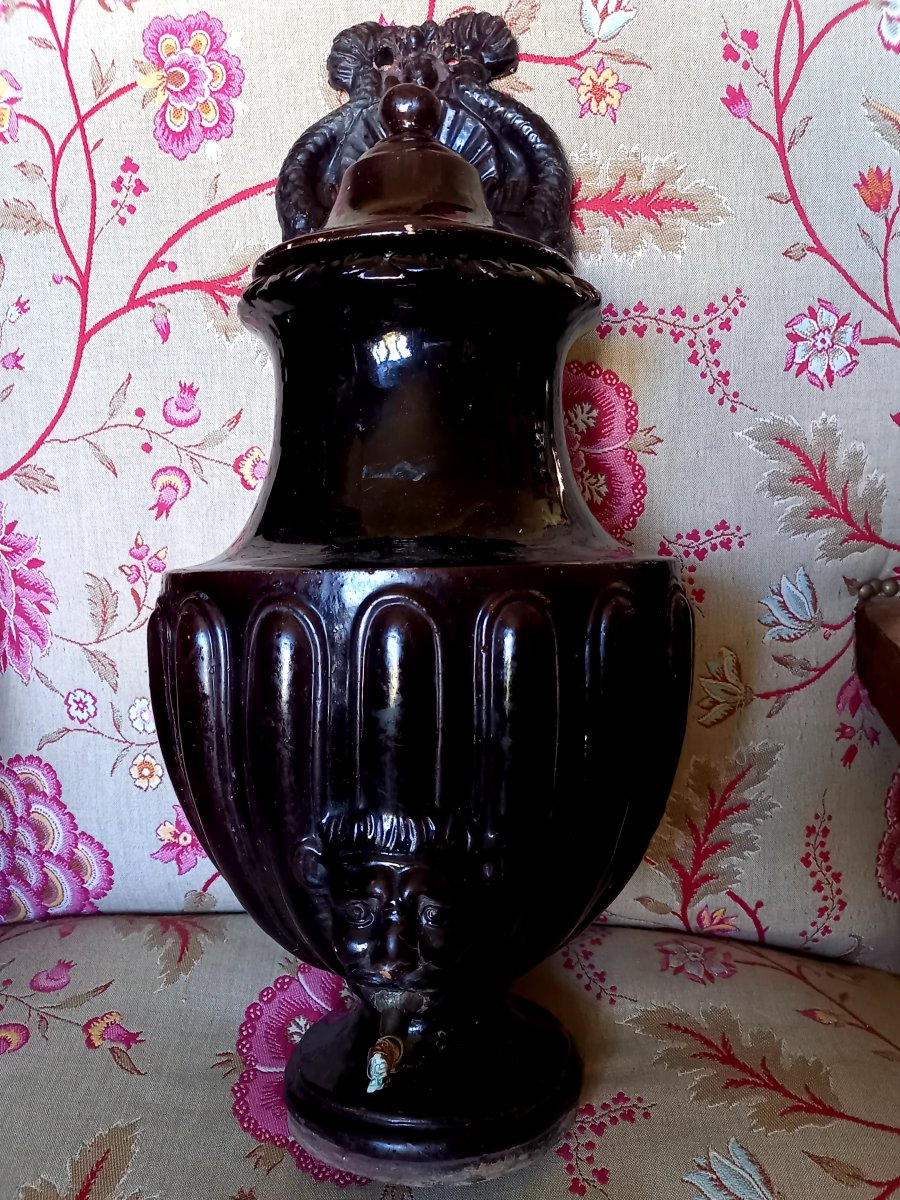
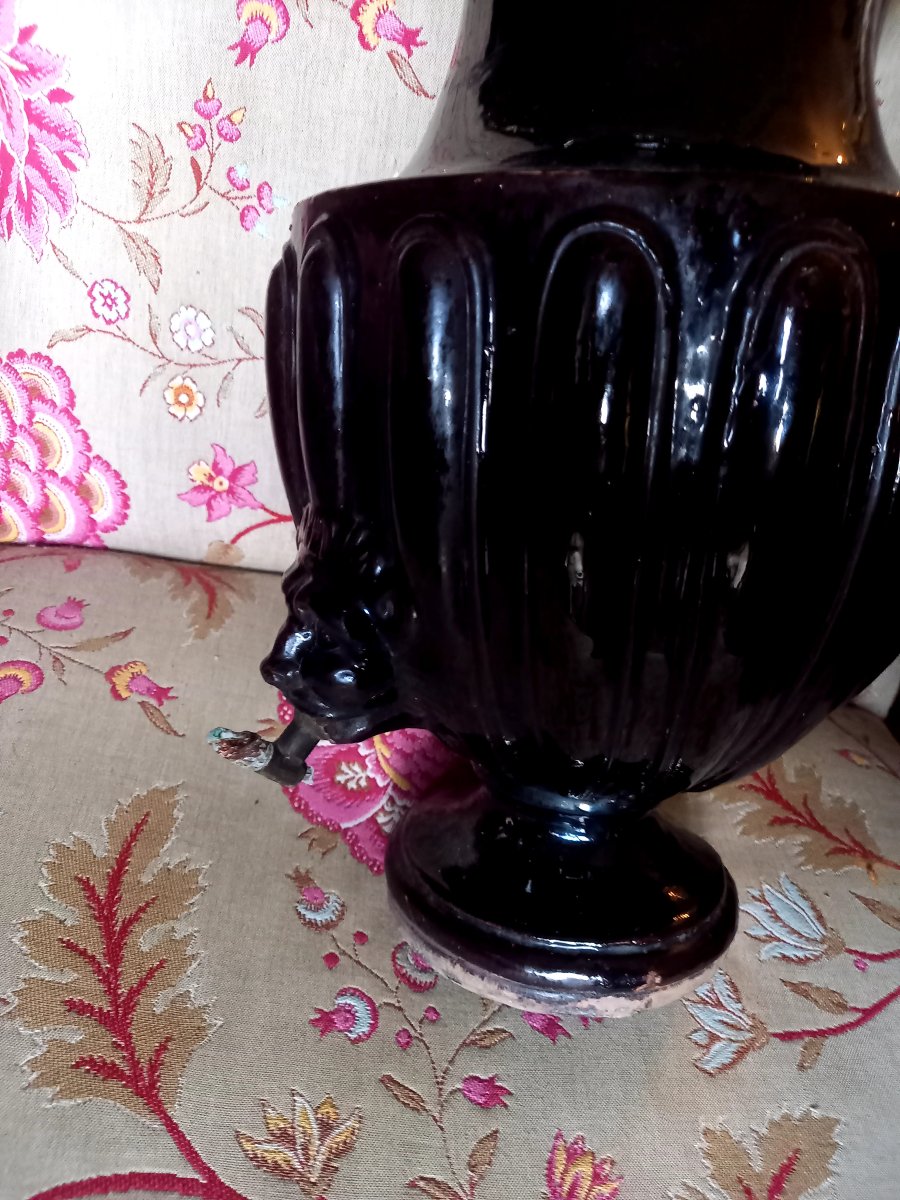
Indeed, while this Grand Siècle-inspired form is well known—with its generously shaped godrons, its mascaron supporting the spout, the decoration of intertwined dolphins at the top, and this brown-black glaze imitating bronze—it defies a definitive attribution to one manufacturer over another for the time being.
Certainly made in the late 18th or early 19th century, one might be tempted to attribute it to a southern region, a region where the attachment to 18th-century decorative arts has long endured, completely indifferent to later trends.
As proof, I remember from my childhood—already sixty years ago—in Aix-en-Provence, at the top of Rue Fernand Dol, there was still an old shop run by two sisters who seemed to exist outside of time, who sold all sorts of monochrome earthenware—in fiery shades of green and brilliant blacks—straight out of the old Provençal tradition for embellishing and serving at the potager (the old masonry cooking hearth in kitchens).
And didn’t people used to say, teasingly, about single people, “Every pot has its lid…”
This fountain is a charming testament to that way of life where every detail of daily life must be beautiful.
The water reservoir is blacker than the basin, which is more brown, yet the gadroons appear to be identical. This basin may have been re-glazed at a later date, which would explain this difference in the glaze’s firing.
The basin has a chip on the front (photo)
The water reservoir is in good condition (a barely visible repair on the dolphins at the front) and comes complete with its lid.
360 €
Period: 18th century
Style: Louis 14th, Regency
Condition: En l'etat
Material: Earthenware
Width: 24 cm la réserve, 34 cm le bassin
Height: 53 cm la réserve d'eau 48 cm le bassin
Depth: 20cmla rzserve ,29 cm le bassin
Reference (ID): 1855408
Availability: In stock
Print