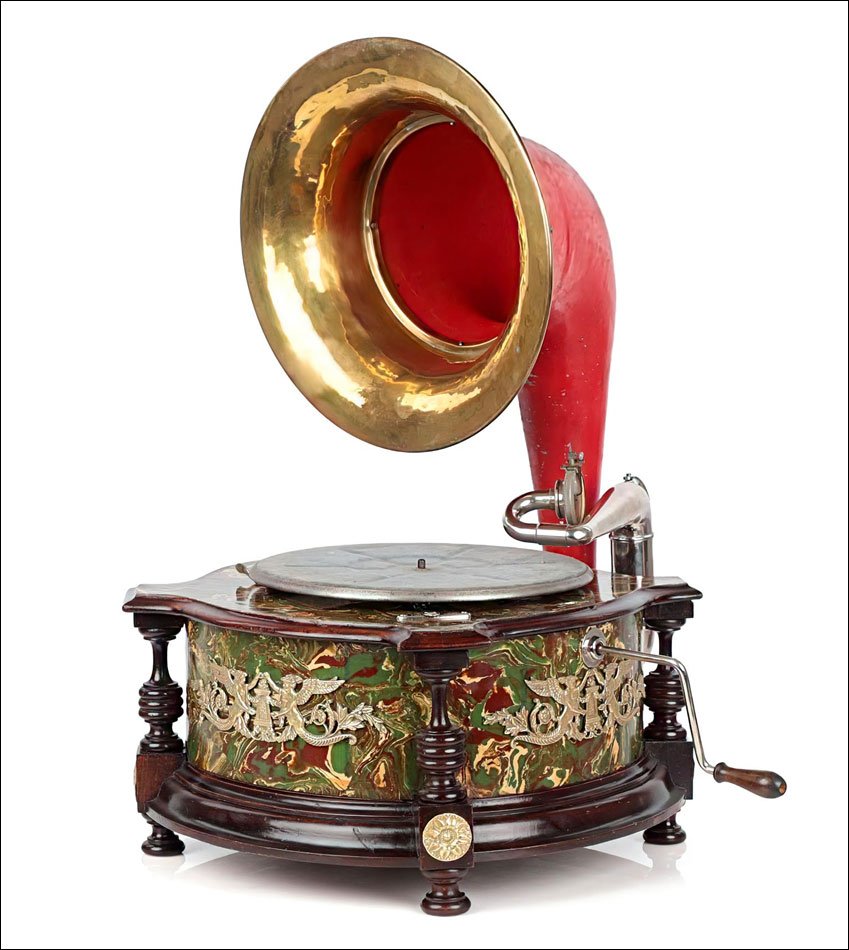




Antique Extrafon (extraphon) Gramophone. Red Horn. Spain, Circa 1930-1932.
View in 360°: https://ardhamin.sirv.com/2026/09/GR-E-615/GR-E-615.spin
Watch the video on YouTube: https://youtu.be/bf4xZA7VyDk
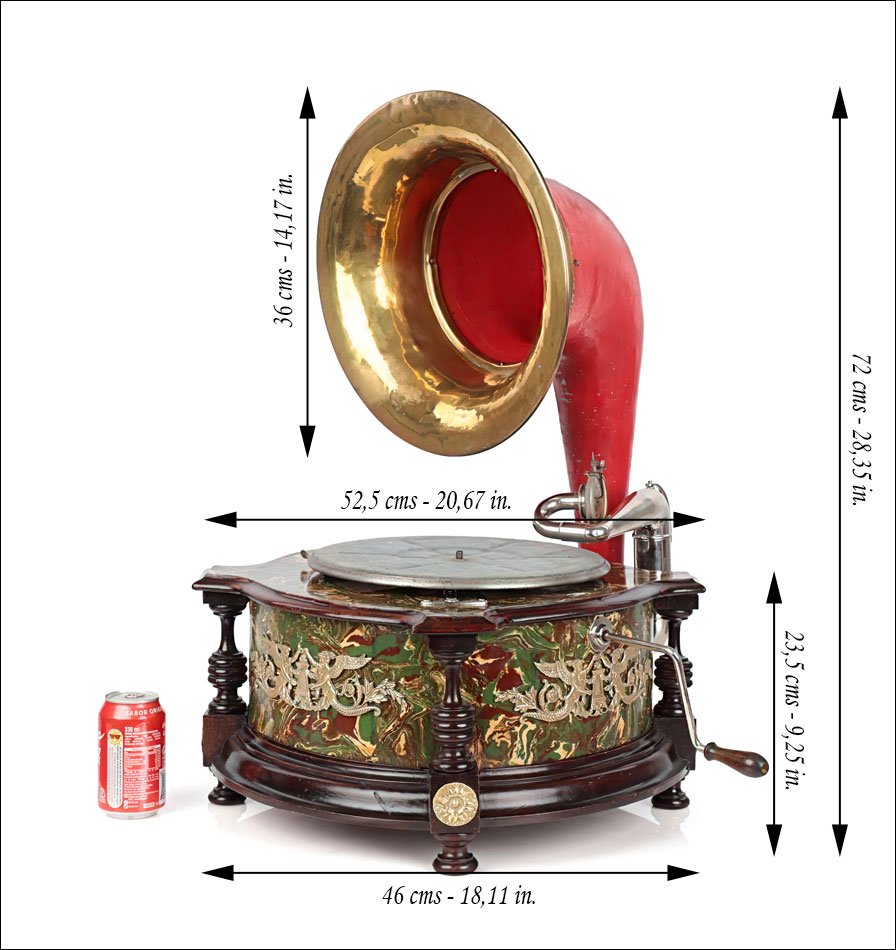
Exceptional antique Spanish Extrafón gramophone, manufactured circa 1930–1932 by Teledino, a company founded in Tarragona by industrial engineer Antonio Banús Alimbau. Also known among collectors as Extraphon, Extraphone, or Extrafone, it is one of the most distinctive and recognizable designs in Spanish gramophone production. This example belongs to one of the final periods in which the model was marketed and features one of its most attractive and difficult-to-find configurations, with its characteristic red horn and gold-finished horn bell. Its unusual construction and elaborate decoration clearly distinguish it from conventional gramophones of its time.
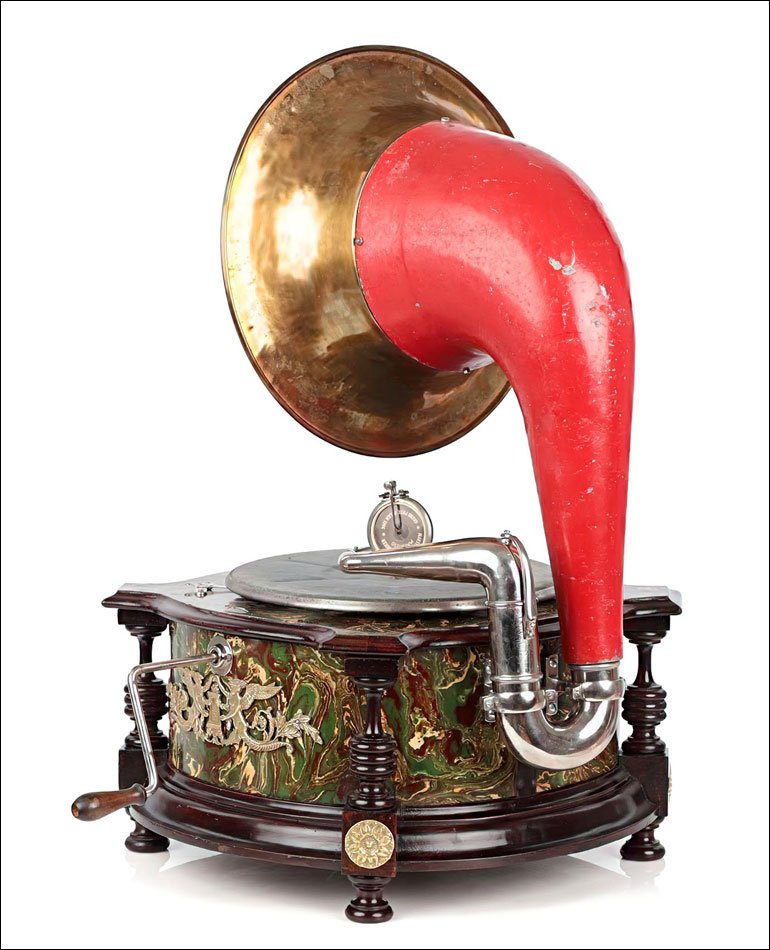
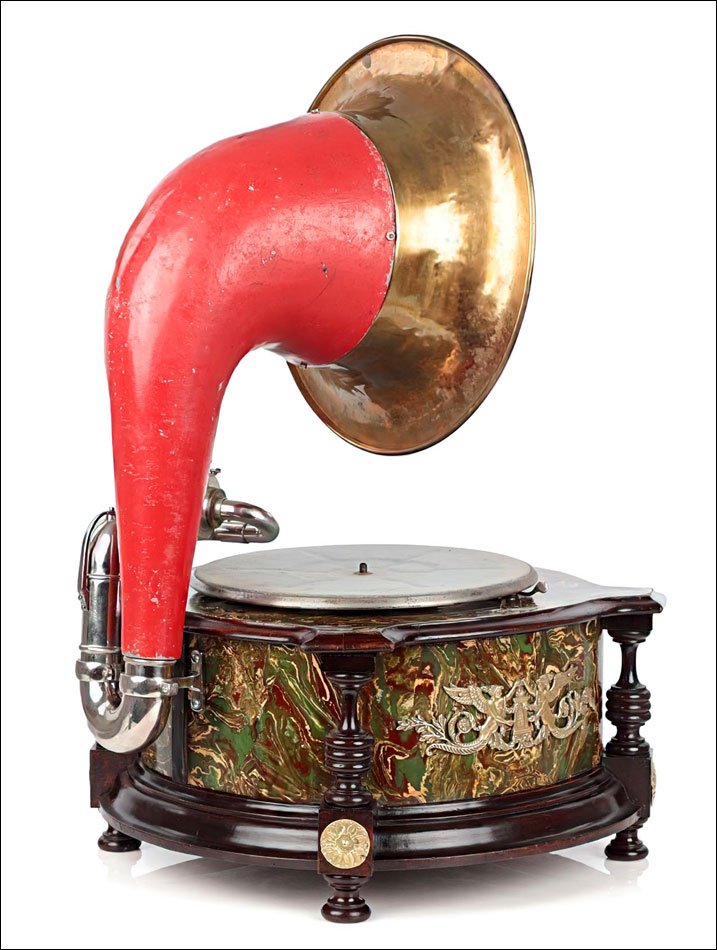
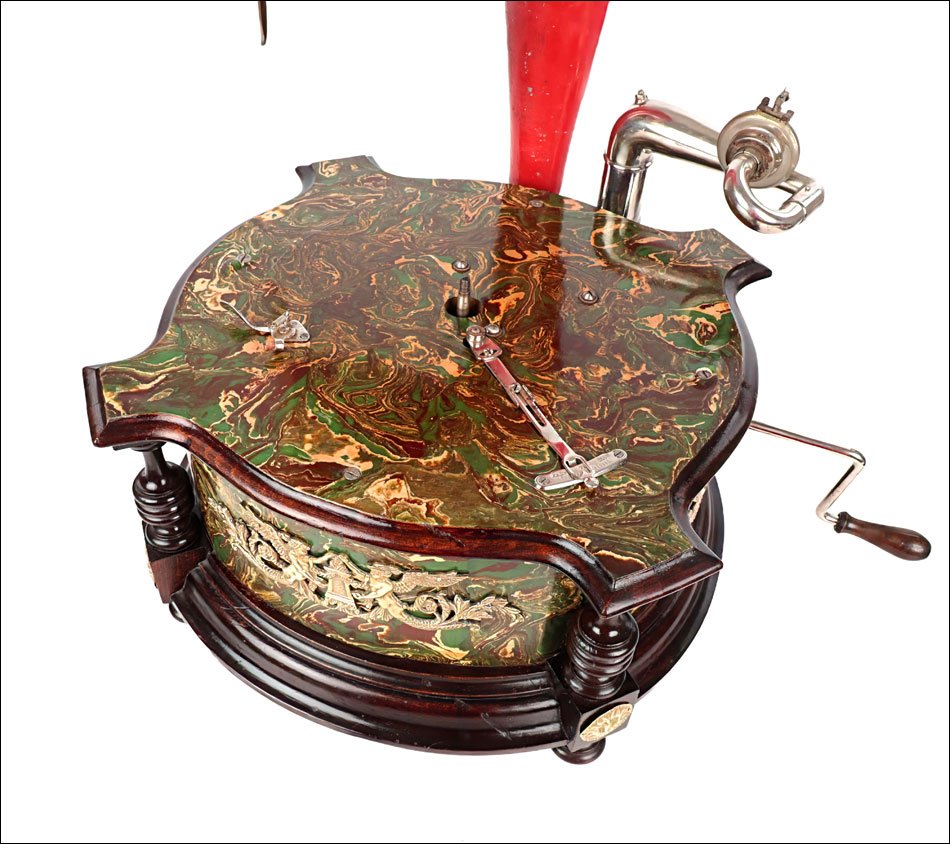
One of its most distinctive features is the marbled celluloid covering both the body of the cabinet and its upper surface. The covering displays a striking pattern of irregular veins in shades of green, red, brown, gold, and cream, reminiscent of multicolored marble. The structure is made of wood, with a circular base featuring stepped moldings, turned wooden columns, and an upper section with an undulating outline. The moldings and turned wooden elements have a dark finish that contrasts beautifully with the vivid colors of the marbled covering.
Elaborate gilt-finish metal appliqués are arranged around the body, featuring winged figures, foliage, and symmetrical ornamental motifs. The turned columns end in small circular feet and are decorated with gold-colored metal medallions near their lower ends. The combination of turned wood, marbled celluloid, and decorative metal appliqués creates a visually striking piece, highly representative of the decorative tastes of the late 1920s and early 1930s.
The horn is another of the principal attractions of this example. It has the distinctive curved shape associated with Extrafón gramophones, with a red exterior finish and a large circular gold-finished metal bell. The model was also marketed with a black horn, but the red version is considerably less common. The contrast between the rich red of the horn, the warm gleam of its golden bell, and the marbled colors of the cabinet gives this gramophone a truly distinctive appearance. The red paint shows small areas of loss, scratches, and superficial signs of age, while the gold-finished bell retains an uneven patina and the changes to its finish resulting from the passage of time.
The gramophone retains a Maestrophone Maestoso soundbox, bearing the circular inscription "MAESTROPHONE REPRODUCER - MAESTOSO - GRAND PRIX MILAN 1906". This is the same type of reproducer historically used by Extrafón, examples of which can be found both with and without the Spanish manufacturer's branding. The nickel-plated metal tonearm retains the characteristic curved shape associated with these gramophones.
The gramophone is fitted with an English-made Garrard Junior B two-spring motor, a high-quality mechanism introduced circa 1930, consistent with the proposed dating of this example. Extrafón had previously used Swiss-made Thorens motors, but during its final period the company also incorporated English-made Garrard mechanisms, such as the one installed in this machine.
The motor is in perfect working order, running exceptionally smoothly and quietly, as we have personally verified. Its excellent mechanical performance allows antique records to be enjoyed as intended, as demonstrated in the video accompanying our description, where the gramophone is shown playing one of the original period records included with it. The machine also retains its side-mounted winding crank, speed control, and brake mechanism.
The gramophone comes with an original period record album bearing the Extrafón name, with a red cover and ornamental gold decoration. Its front cover bears the inscription "EXTRAFON - G. VENTURA - Carretera Bordeta, 8-10 - Barcelona", an interesting reminder of the brand's commercial presence in Barcelona. The album is included together with the original Decca record of "Quizás, quizás, quizás" heard in our video, along with several additional period records. This set allows the gramophone to be enjoyed from the moment it arrives and offers the additional appeal of preserving a historical accessory specifically identified with the Extrafón brand.
The gramophone is in good condition, showing the signs of use and age expected of a machine with nearly a century of history. The marbled covering retains its attractive decorative pattern, while the moldings and wooden parts show minor marks and superficial wear. The red horn has small areas of paint loss, and the gold-finished bell shows changes to its finish, all visible in our photographs. The turntable retains its grayish-blue fabric covering, which shows signs of use. None of these characteristics affects the gramophone's proper operation.
The design of this Extrafón model is documented in the specialized reference book "The Talking Machine: An Illustrated Compendium 1877-1929" by Timothy C. Fabrizio and George F. Paul, published by Schiffer. An example with a black horn is illustrated on the book's cover and also on page 261, identified as reference A-25. The authors specifically highlight its extraordinary design and marbled celluloid covering, while also noting the striking similarity of its construction to the French Aérophone. The inclusion of this model in an internationally recognized reference work reinforces its historical and collecting interest, particularly as such an unusual example of Spanish design.
This Extrafón combines several qualities particularly appreciated by collectors: an unusual Spanish design, the less common red horn, beautifully elaborate decoration, and a perfectly functioning Garrard Junior B two-spring motor. Its distinctive appearance, historical significance, and the original accessories accompanying it make it a highly attractive addition to a specialized collection of antique gramophones.
Measurements: Base width: 46 cm (18.11 in). Cabinet height: 23.5 cm (9.25 in). Overall height: 72 cm (28.35 in). Horn bell diameter: 36 cm (14.17 in). Overall depth: 52.5 cm (20.67 in).
History of Extrafón Gramophones and the Teledino Company:
The history of Extrafón gramophones is closely linked to the Spanish company Teledino, founded in Tarragona by industrial engineer Antonio Banús Alimbau. The company began operating during the early decades of the 20th century, manufacturing and marketing sound reproduction equipment, and later expanded into the radio industry. It was one of the Spanish industrial ventures that contributed to the development of the gramophone industry during the 1920s.
Extrafón gramophones were distinguished by a design quite unlike that of conventional models of their time. Their characteristic circular cabinets, with wooden structures, turned columns, elaborate metal appliqués, and marbled celluloid coverings, gave them a particularly decorative appearance. Another distinctive feature was the external curved-neck horn, marketed primarily in black but also available in a less common red version.
The design of these gramophones bears a striking resemblance to certain French Aérophone models, a similarity documented by Timothy C. Fabrizio and George F. Paul in their book "The Talking Machine: An Illustrated Compendium 1877-1929". However, there is insufficient documentation to establish a direct industrial relationship between the two companies. The distinctive nature of Extrafón gramophones led the authors to specifically highlight their Spanish design and the unusual use of marbled celluloid in their construction.
The brand was still being marketed in Spain at the beginning of the 1930s, as demonstrated by an advertisement published on June 21, 1930, in the Zaragoza newspaper "Noticias", offering an "EXTRAFON - Aparato parlante". This reference confirms the brand's presence in the Spanish market during that period. Today, Extrafón gramophones are particularly appreciated by collectors of early sound reproduction machines because of their distinctive design, their limited availability on the market, and their importance in the history of the Spanish gramophone industry.
The Recording Featured in Our Video: "Quizás, quizás, quizás" - Ethel Smith with Bob Eberly and the Carioca Orchestra. Recorded in 1947.
In the video accompanying our description, we listen to the famous bolero "Quizás, quizás, quizás", composed in 1947 by Cuban musician Osvaldo Farrés and performed in this recording by American organist Ethel Smith, accompanied by Bob Eberly and the Carioca musical ensemble. The performance was recorded in New York on December 11, 1947, a date documented in the discographic archives of the Díaz-Ayala Collection at Florida International University.
Ethel Smith was one of the most popular organists in the United States during the 1940s and 1950s, particularly well known for her performances of Latin American music on the Hammond organ. In this recording, she combines her distinctive style with the voice of Bob Eberly, known for his performances with the major American orchestras of the period.
Bob Eberly (1916–1981), born Robert Eberle in New York, was one of the most popular American singers of the golden age of jazz and swing big bands. He rose to fame as a vocalist with Jimmy Dorsey's orchestra, which he joined in 1935, and became known for his warm, romantic baritone voice. His celebrated performances with Helen O'Connell produced major hits such as "Amapola", "Green Eyes", and "Tangerine". During the 1940s, he was one of the most recognizable male voices in American popular music and appeared on numerous recordings, radio programs, and film productions.
We are professional antique dealers. To see more photos of this item, Please click on this link:
https://www.antiguedades.es/en/antique-gramophones/5573-antique-extrafon-extraphon-gramophone-red-horn-spain-c-1930-1932.html
3 300 €
Period: 20th century
Style: Other Style
Condition: Good condition
Reference (ID): 1853912
Availability: In stock
Print