



Antique Berliner Improved Gramophone Style No. 5. England, Circa 1899-1900
View in 360°: https://ardhamin.sirv.com/2026/09/GR-E-605/GR-E-605.spin
Watch the video on YouTube: https://youtu.be/PL-LJTaDd9g
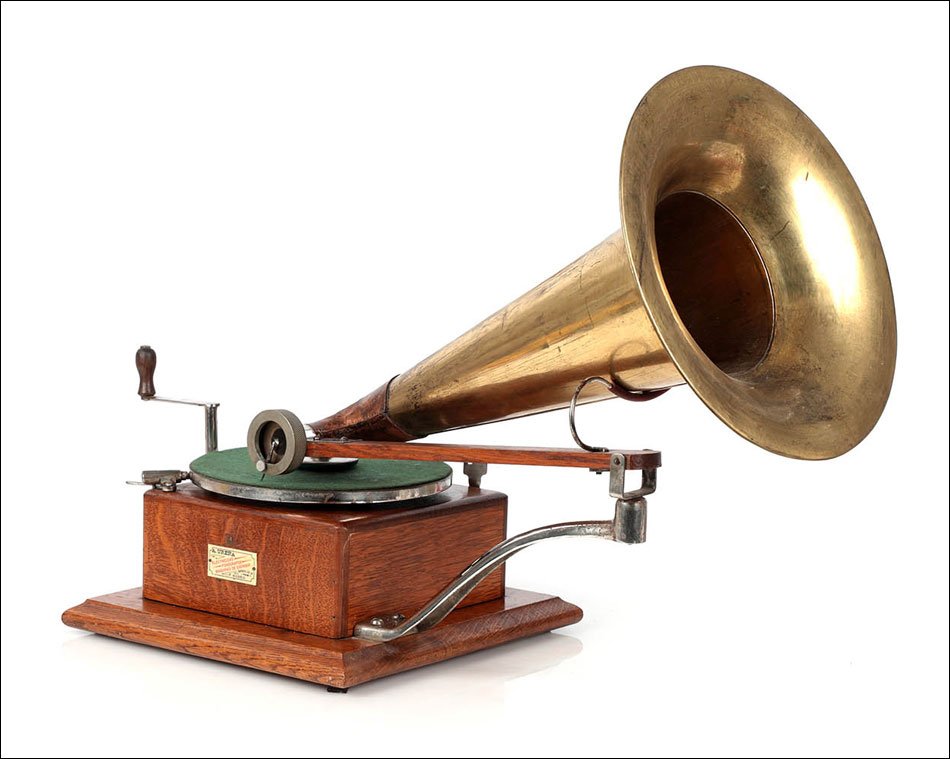
Magnificent antique Berliner Improved Gramophone, Style No. 5, manufactured circa 1899-1900. This is one of the earliest gramophones designed to reproduce sound from flat disc records, an extraordinary testament to the beginnings of the recording industry. This model is closely associated with the gramophone depicted in the famous image of Nipper the dog listening to "His Master's Voice" ("La voz de su amo"), one of the most recognizable symbols in the history of recorded music.
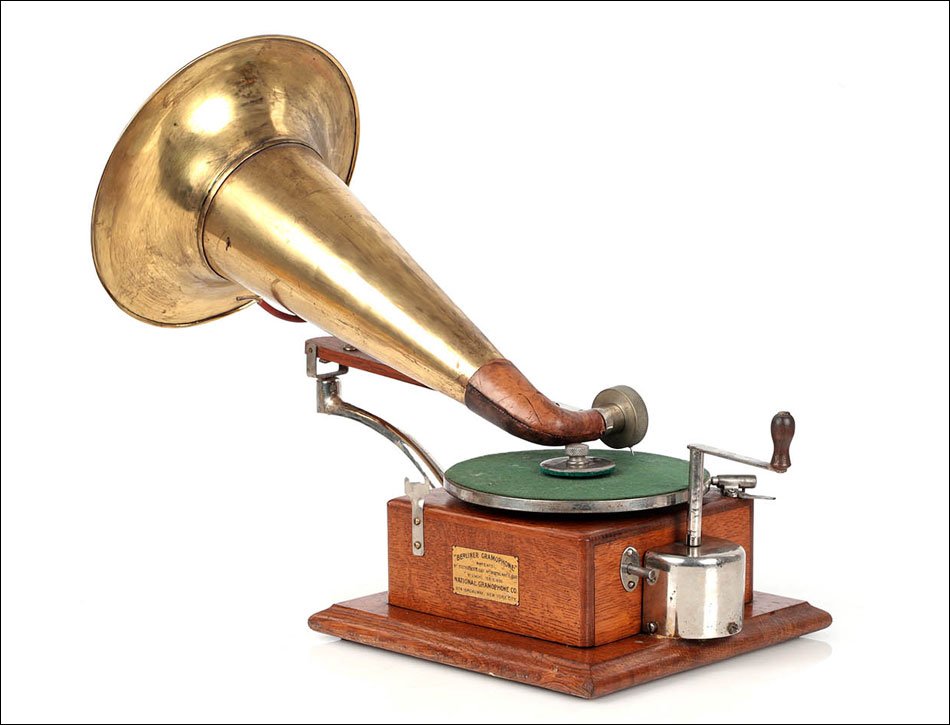
This example is very well preserved and retains its original components from the period, including the oak cabinet, spring-driven motor, winding crank, movable wooden arm, its metal support, the reproducer (soundbox), and the magnificent brass horn. The turntable felt was replaced at a later date. Its construction follows the characteristic configuration of the Improved Gramophone Style No. 5, with its distinctive wooden "travelling arm" and the elegant simplicity typical of these early models. The oak retains its beautiful warm color and original finish, with the minor signs of age one would expect from a machine more than 125 years old. Its overall condition is very good, preserving all the appeal of a historic machine that has survived with its original character intact.
The brass horn is original to the period and retains an attractive period patina. The movable wooden arm and its curved metal support are also original and remain in good condition. The horn connects to the reproducer through the characteristic stitched leather elbow, a distinctive feature of these early Berliner gramophones that helps preserve their authentic historical appearance. The reproducer is correct for this model and operates satisfactorily. The entire machine stands out for its authenticity and the fine preservation of its original components.
One side of the cabinet retains the "Berliner Gramophone" decal, bearing the details of the National Gramophone Co. of New York. Based on its characteristics and state of preservation, we believe this to be the original decal from the period, which remains in very good condition. The gramophone also retains an interesting dealer's plate, made of a Bakelite-like material, identifying the establishment of A. Ureña at Calle Barquillo 14, first floor, Madrid. This plate identifies the dealer who marketed the machine in Spain. The presence of both commercial markings adds special interest to the gramophone, documenting its association with the National Gramophone Co. and its sale in Spain at the end of the 19th century.
The gramophone is in perfect working order, producing sound that is entirely satisfactory for a Berliner machine of this early period, as can be heard in the accompanying video. Its small spring-driven motor provides enough power reserve to play an original period Berliner disc, but it was not designed to play a conventional, longer-duration 10-inch shellac record all the way through. It is important to remember that the earliest Berliner records belong to a very early stage in the development of the recording industry. Their manufacture involved significant technical limitations, with frequent imperfections in the discs and their grooves. In addition, recordings were made at variable speeds, different from the 78 rpm that would later become the standard. The sound quality of these early flat disc recordings was considerably poorer than that achieved by later records and gramophones.
Above all, this Berliner Improved Gramophone is a magnificent historical collector's piece, particularly appealing for its age, the originality of its components, and its excellent state of preservation. Its working condition offers a truly special experience: listening to recordings made at the end of the 19th century on one of the earliest gramophones designed to reproduce them. Rather than a machine intended for everyday record listening, it is an authentic testament to the beginnings of the recording industry, ideal for collectors who appreciate the history and originality of these pioneering musical machines.
Measurements: Wooden base: 25 x 25 cm (9.84 x 9.84 in). Cabinet height: 11 cm (4.33 in). Horn: 38 cm long (15 in), with a bell diameter of 24 cm (9.45 in).
History of Emile Berliner and the Improved Gramophone Style No. 5:
Emile Berliner (1851-1929), a German-born inventor who became a naturalized American citizen, was one of the great pioneers of sound reproduction. In 1887, he patented his system for recording and reproducing sound using flat discs, an innovation that would eventually transform the music industry. Compared with the cylinders used by early phonographs, flat discs offered significant advantages for producing copies and subsequently distributing recordings on a large commercial scale.
During the 1890s, Berliner developed his first commercial gramophones and promoted the establishment of several companies to exploit his patents. In the United States, the National Gramophone Company played a prominent role, while in Europe the expansion of this technology was closely associated with the Gramophone Company, established in London in 1897. These early machines marked the beginning of a new era in the history of recorded music.
One of the most representative models was the Improved Gramophone, marketed from 1897 and later designated Style No. 5 in late 1900. Its construction, featuring a spring-driven motor, movable wooden arm, and external horn, belongs to the first generation of Berliner gramophones. Its original price in Great Britain was five pounds and ten shillings, a considerable sum at the time. The model continued to be sold during the early years of the 20th century.
These early gramophones gained extraordinary historical recognition through the famous image of Nipper, the dog listening to a gramophone under the title "His Master's Voice" ("La voz de su amo"). Francis Barraud's painting, created at the end of the 19th century, subsequently became one of the most famous emblems of the recording industry.
Today, the Berliner Improved Gramophone Style No. 5 represents one of the earliest stages in the history of disc-based sound reproduction, preceding the technological developments that would make gramophones widely popular during the 20th century.
The recording featured in our video: "Malagueña II" - Antonio Pozo "El Mochuelo", August 1899.
The gramophone comes with the original Berliner disc heard in our video, a remarkable historical recording that we are pleased to include as a complimentary gift with the gramophone. The recording is "Malagueña II", performed by the celebrated flamenco singer Antonio Pozo, professionally known as "El Mochuelo", and recorded in Madrid in August 1899. It is considered one of the earliest commercial flamenco recordings made in Spain. The disc bears Berliner Gramophone catalog number 62574 and matrix number 3482, both documented in the company's historical discography. Its reverse retains the inscription "REPRODUCED IN HANOVER", identifying the German city where these early recordings were manufactured.
The recording belongs to the first European recording expeditions undertaken by the Gramophone Company, led by recording engineer Fred Gaisberg. The historic Madrid sessions of 1899 took place at the Grand Hôtel de París in Puerta del Sol, where the voices of some of the earliest flamenco performers ever captured on disc were recorded. These recordings predated the standardization of 78 rpm and were played at variable speeds, at approximately 70 rpm for recordings of this period. Their sound retains the limitations of a technology still in its infancy, yet they represent an exceptional record of the beginnings of Spain's recording history.
Antonio Pozo "El Mochuelo" (1868-1937) was one of the great pioneers of recorded flamenco. Born in Seville, he enjoyed a long career performing in cafés cantantes, the historic Spanish music cafés where flamenco performers appeared, and made numerous recordings for different record companies. His extensive repertoire and early involvement with the recording industry made him a fundamental figure in the preservation of late 19th-century flamenco singing traditions. Hearing his voice on an original Berliner disc from 1899, played on a gramophone of the same period, offers an extraordinarily direct connection to the earliest years of recorded music.
We are professional antique dealers. To see more photos of this item, Please click on this link:
https://www.antiguedades.es/en/antique-gramophones/5569-antique-berliner-improved-gramophone-style-no-5-circa-1899-1900.html
3 500 €
Period: 19th century
Style: Other Style
Condition: Good condition
Reference (ID): 1853153
Availability: In stock
Print