

Antique Silver Reliquary With Relic Of A Jesuit Saint. Spain, Mid 19th Century
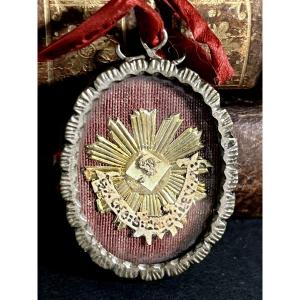
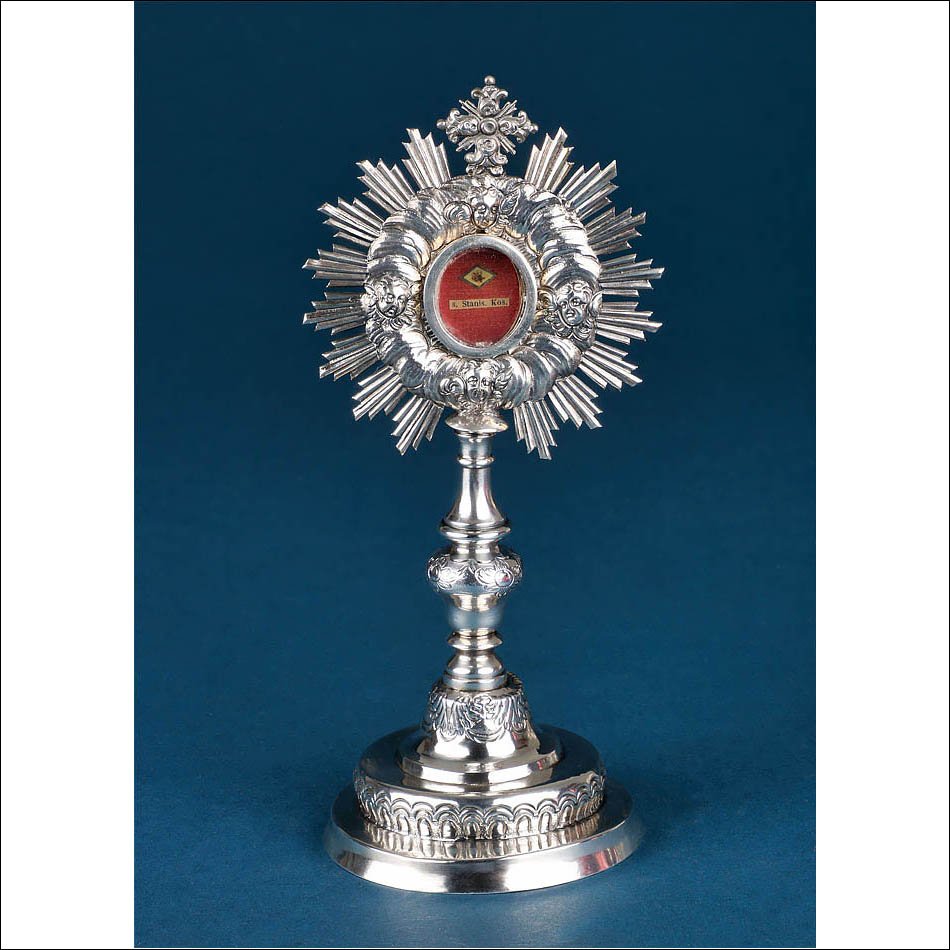
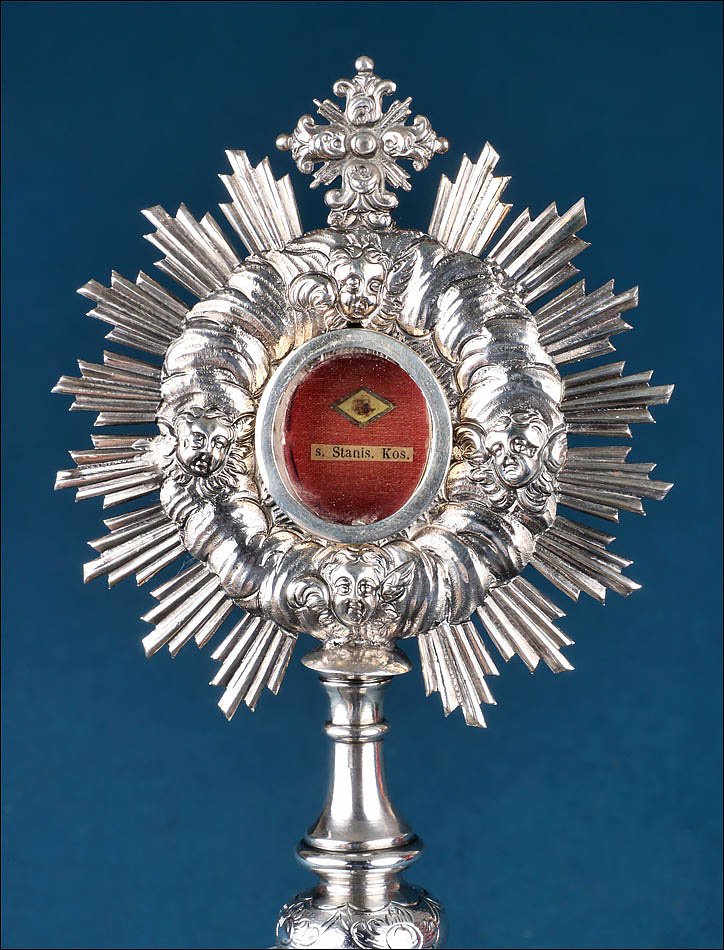
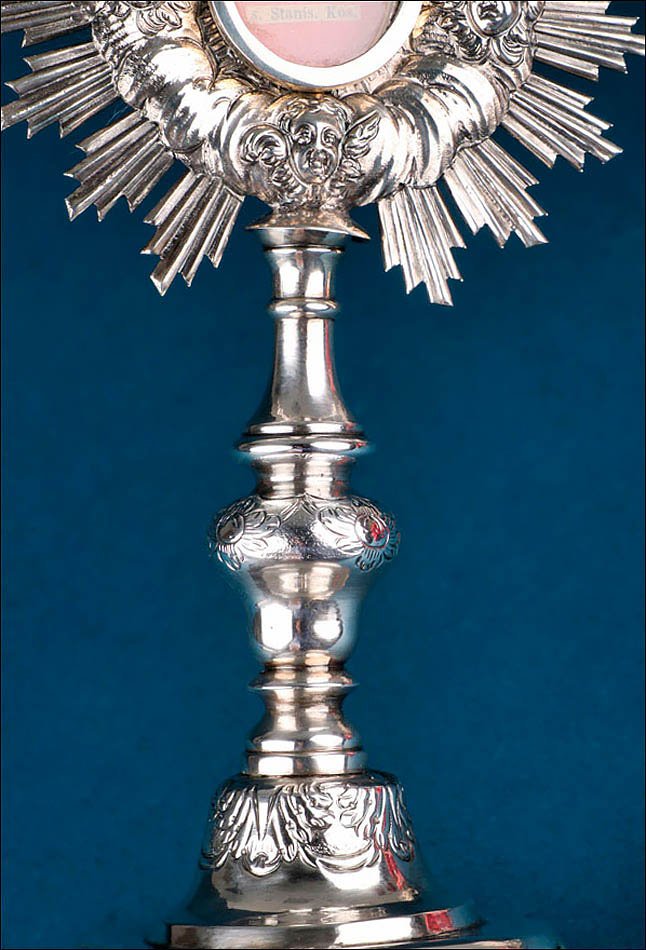
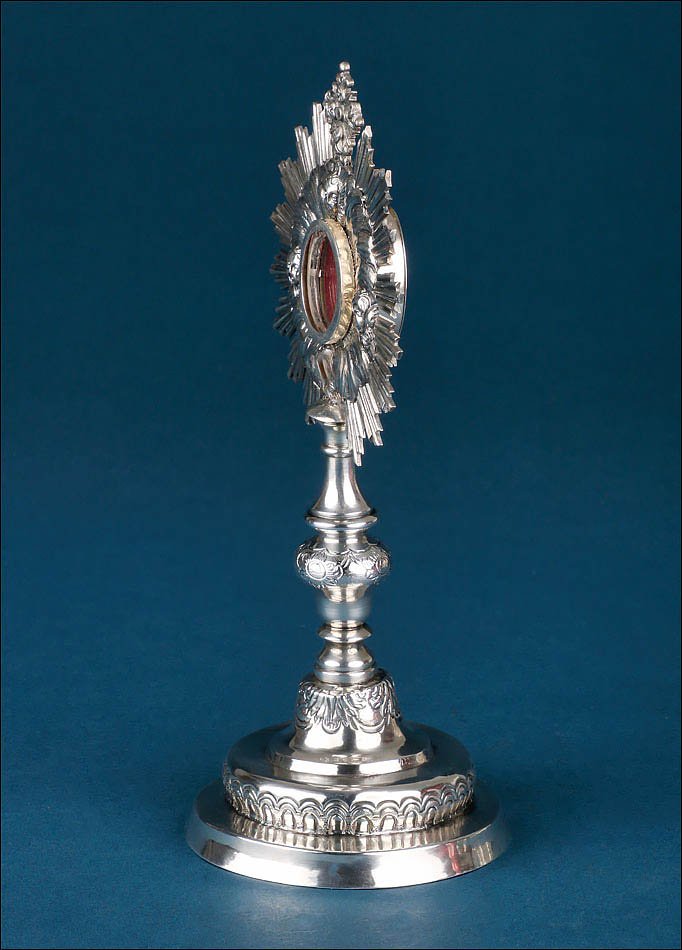
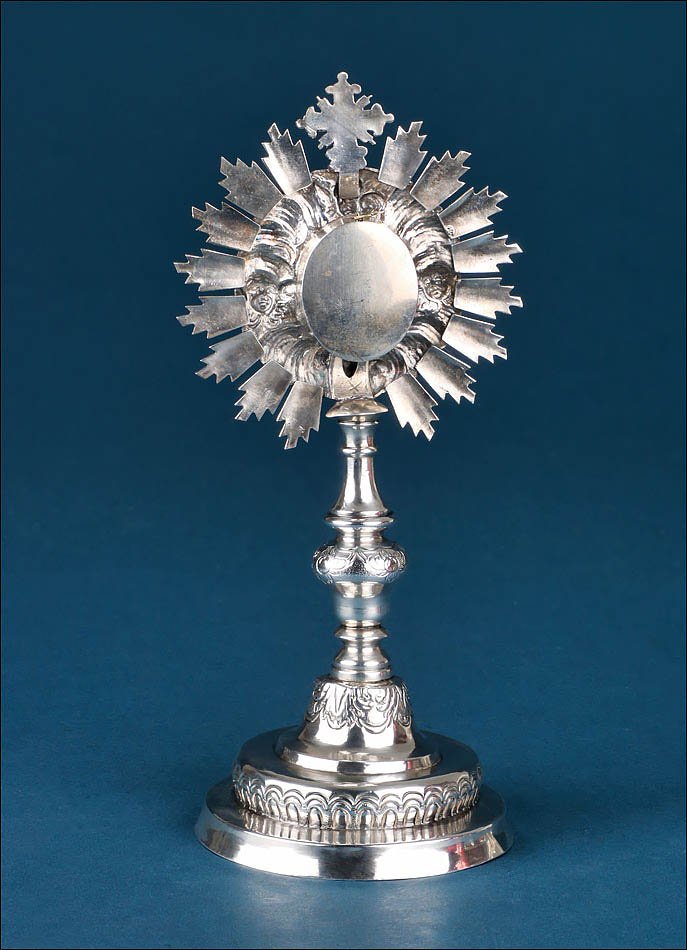
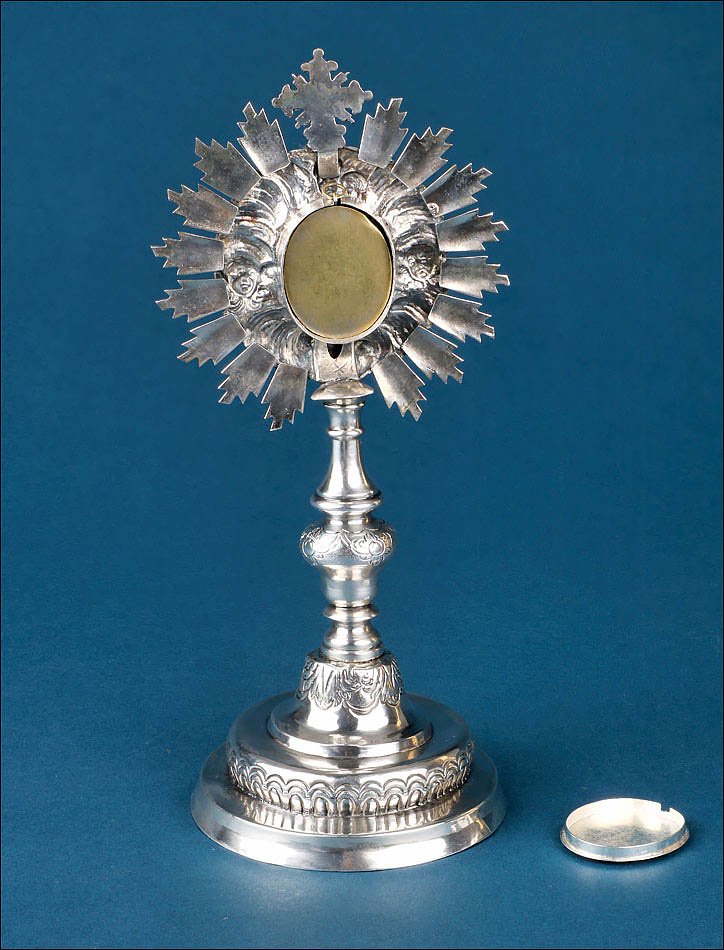
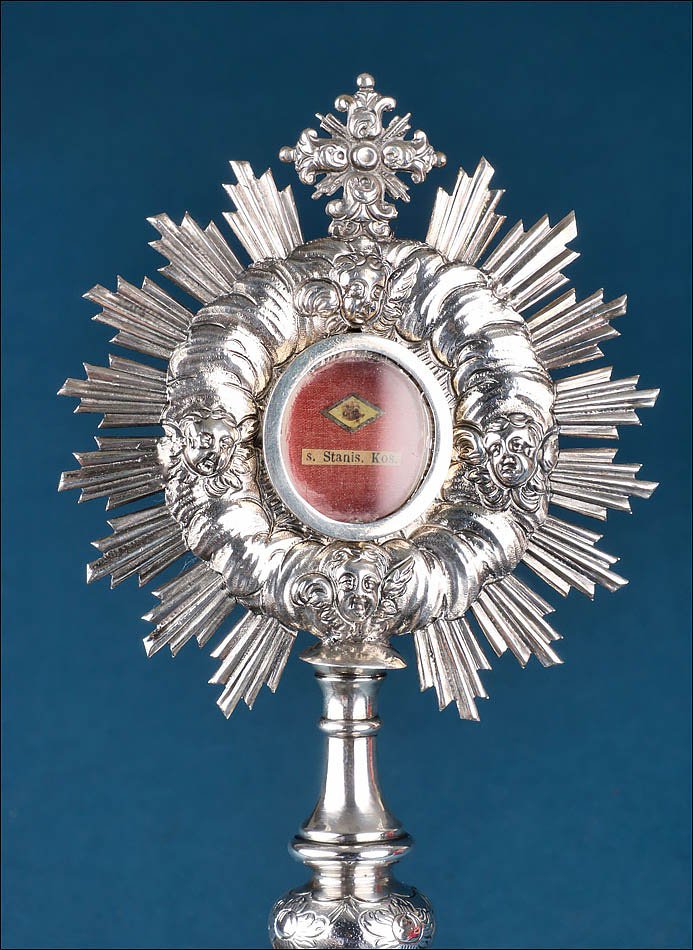
Antique Spanish silver reliquary from the mid-19th century, of ostensorium type or small monstrance form, entirely handmade and with a very striking appearance. It is a piece of strong devotional character, executed in a clearly Neo-Baroque style, with the upper part being especially beautiful, where the composition gains richness through a burst of rays, cherubs and clouds around the central compartment. This upper section concentrates all the visual strength of the piece and gives it a very attractive presence.
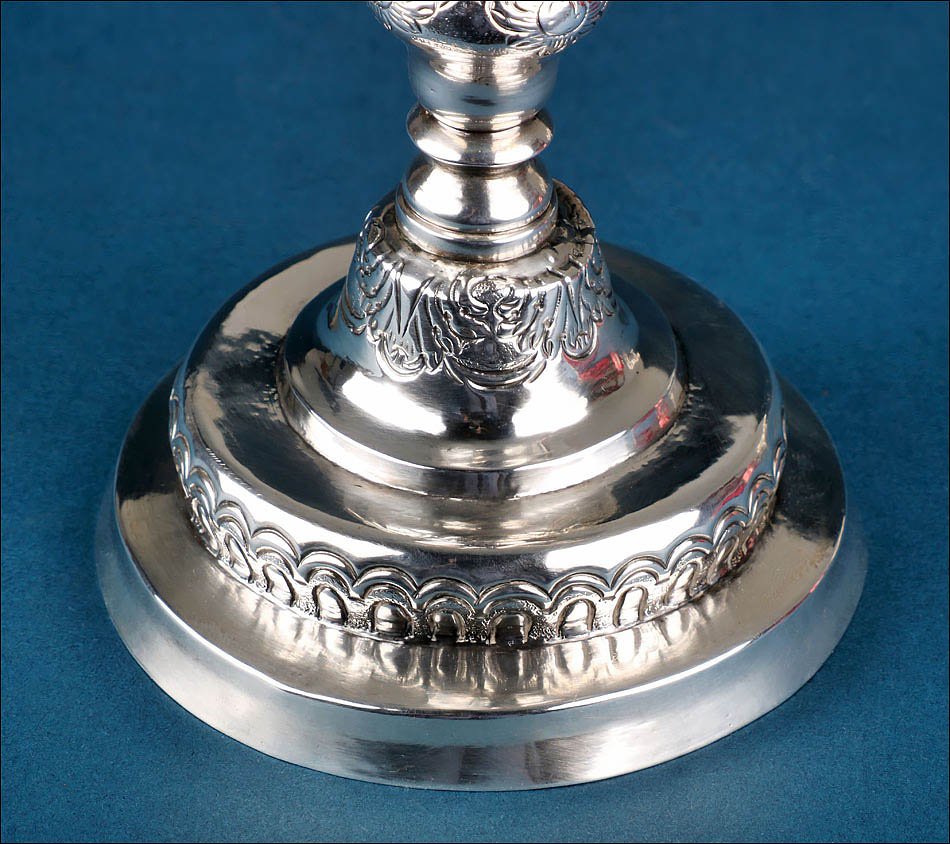
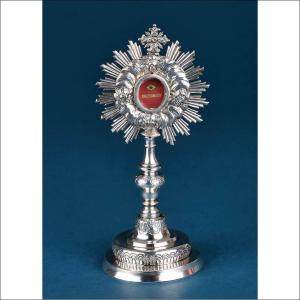
The structure rises from a simple circular base, with hand-engraved decoration of restrained and elegant design. This sobriety in the base contrasts well with the much more elaborate upper section and helps the reliquary to appear balanced, guiding the eye towards the top. The stem and the joining area also maintain a line in keeping with that historicist taste of the 19th century, accompanying the whole piece very well.
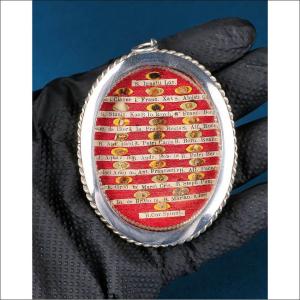
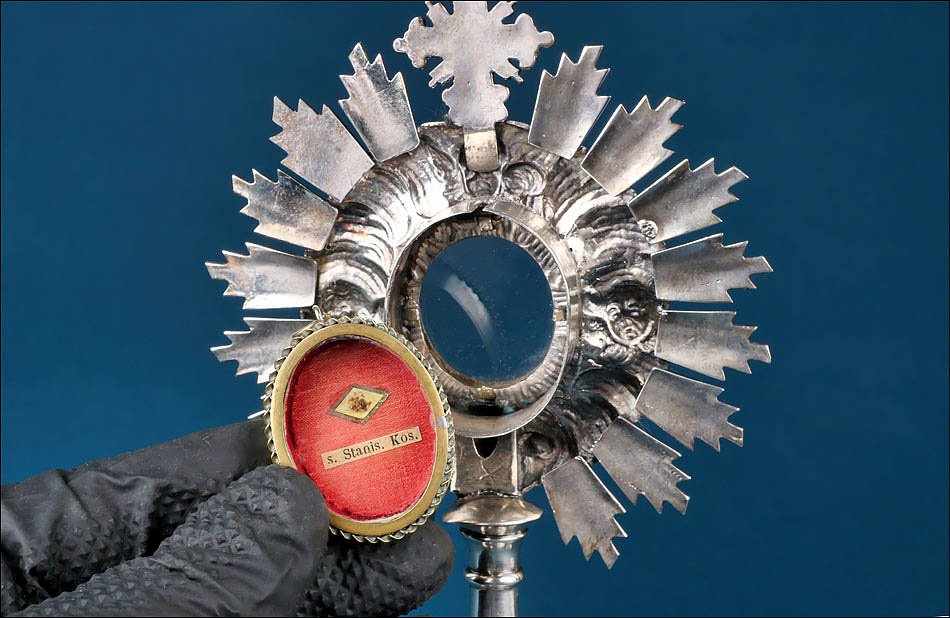
In the centre appears the relic with its identifying label. The inscription can be read as "S. Stanis. Kos.", a Latin abbreviation referring to Saint Stanislaus Kostka, Patron of Youth and Students.
Saint Stanislaus Kostka, a young Polish Jesuit of the 16th century, is a figure especially linked to youth, students and the spirituality of the Society of Jesus. His short life, marked by a deep religious vocation, devotion to the Virgin and his entry into the Jesuit order despite family opposition, gave rise to a widespread devotion within the Catholic and Jesuit world.
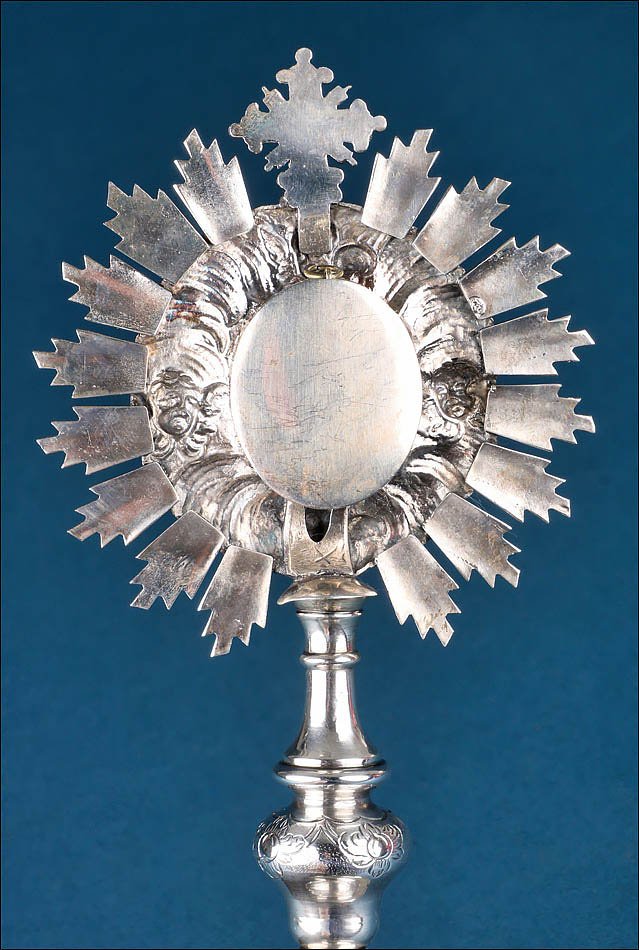
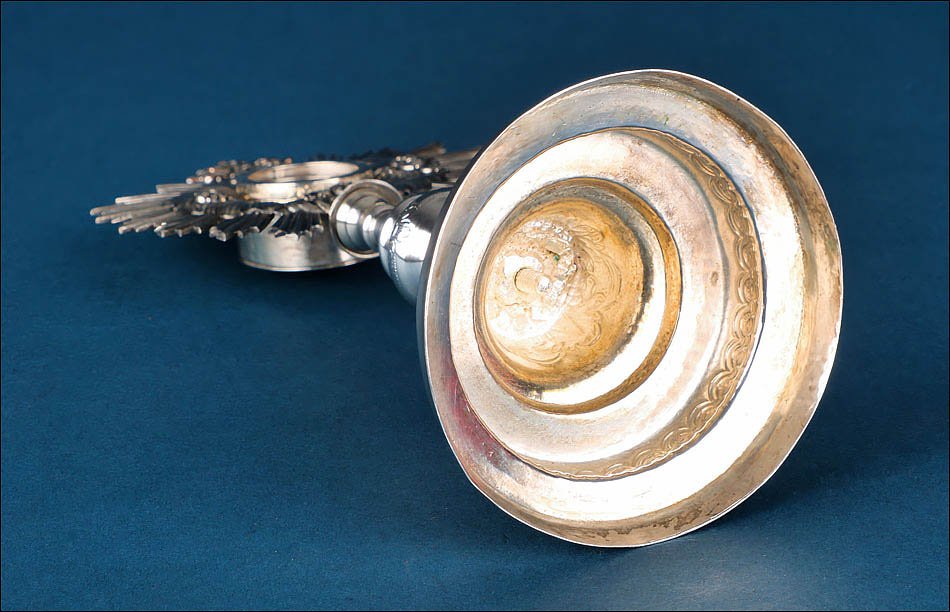
At the back it retains its cover, which can be removed to access the interior of the reliquary. This allows the current relic to be removed and, if desired, replaced by another one that fits into the central space. This is an important detail, because it makes the piece not only a reliquary of good presence, but also a devotional object that can be reused and adapted to the taste or specific devotion of its future owner.
It preserves a very good general condition in keeping with its age. It is a piece entirely made of silver, without visible hallmarks but confirmed by silver testing in all its parts, with excellent presence and careful execution. It is a very attractive reliquary for a collection of 19th-century Spanish religious silverwork or to return it with full dignity to a devotional context.
In addition to its appeal as a piece of 19th-century Spanish religious silverwork, this reliquary stands out for its altar presence and for the devotional interest of the relic of Saint Stanislaus Kostka, a saint especially linked to youth, students and Jesuit spirituality. Its size, its weight in silver and its form as a small monstrance make it a very appropriate piece for a private chapel, an oratory, a religious community or a collection of sacred art. The fact that the theca can be removed also adds a very interesting possibility of use, allowing the reliquary to be adapted to a specific devotion without losing the value of an antique silver piece, noble and fully religious.
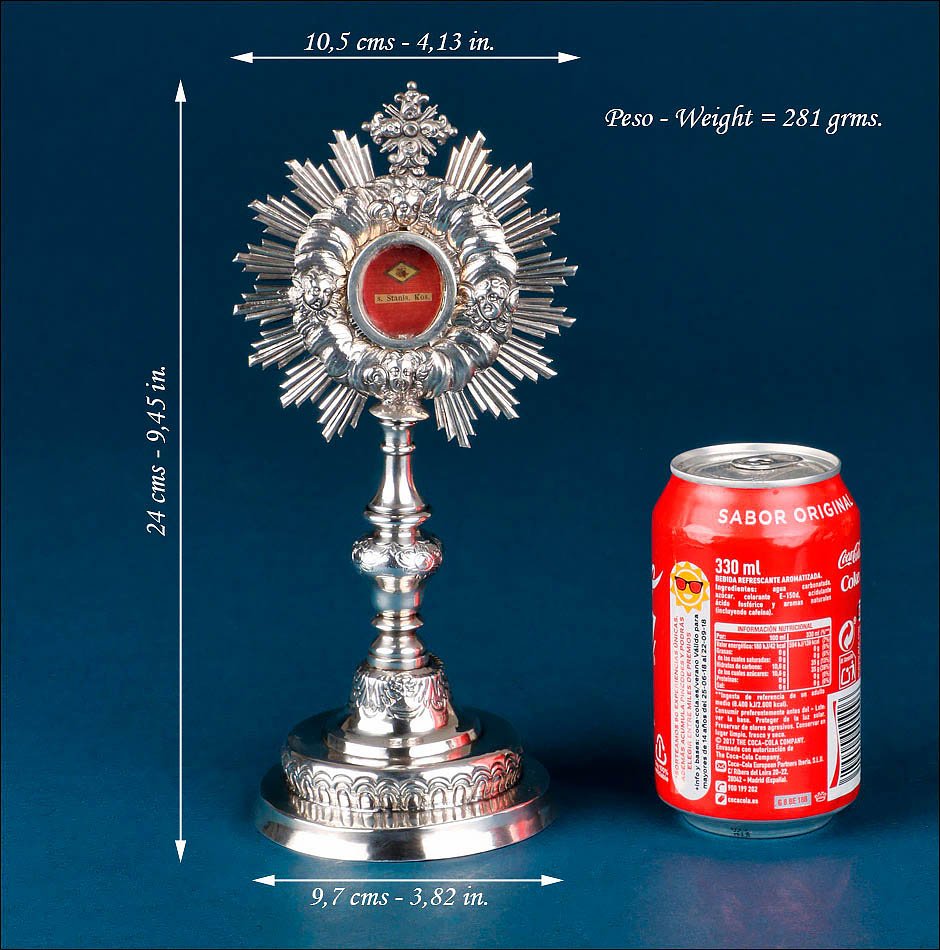
Measurements: height 24 cm (9.45 in), diameter of the rays 10.5 cm (4.13 in), diameter of the base 9.7 cm (3.82 in). Weight: 281 g (9.91 oz).
History of Saint Stanislaus Kostka
Saint Stanislaus Kostka was born in 1550 in Rostkowo, Poland, into a noble family. From a very young age he stood out for his deep spiritual life, his serene character and a marked inclination towards prayer, purity and religious dedication.
During his adolescence he was sent to study in Vienna, where he came into contact with the intellectual and religious environment of the time. There his vocation matured strongly and he felt the desire to enter the Society of Jesus, founded only a few decades earlier by Saint Ignatius of Loyola. His family, however, opposed his following the religious life, so Stanis?aw decided to leave Vienna and undertake a long journey on foot in order to seek admission among the Jesuits.
After passing through Germany, he finally arrived in Rome, where he was received by Saint Francis Borgia and entered the Society of Jesus as a novice. His religious life was very brief, but he left a deep impression on those who knew him because of his humility, fervour, obedience and devotion to the Virgin Mary. He died in Rome in 1568, at barely eighteen years of age.
Over time, his figure became a model of youthful holiness and fidelity to a religious vocation in the face of family and worldly difficulties. He was canonized in 1726 and is especially venerated as patron saint of young people, students and Jesuit novices. His presence in an antique reliquary adds a very specific devotional meaning, linked to purity, vocation, youth and the spirituality of the Society of Jesus.
The structure rises from a simple circular base, with hand-engraved decoration of restrained and elegant design. This sobriety in the base contrasts well with the much more elaborate upper section and helps the reliquary to appear balanced, guiding the eye towards the top. The stem and the joining area also maintain a line in keeping with that historicist taste of the 19th century, accompanying the whole piece very well.
In the centre appears the relic with its identifying label. The inscription can be read as "S. Stanis. Kos.", a Latin abbreviation referring to Saint Stanislaus Kostka, Patron of Youth and Students.
Saint Stanislaus Kostka, a young Polish Jesuit of the 16th century, is a figure especially linked to youth, students and the spirituality of the Society of Jesus. His short life, marked by a deep religious vocation, devotion to the Virgin and his entry into the Jesuit order despite family opposition, gave rise to a widespread devotion within the Catholic and Jesuit world.
At the back it retains its cover, which can be removed to access the interior of the reliquary. This allows the current relic to be removed and, if desired, replaced by another one that fits into the central space. This is an important detail, because it makes the piece not only a reliquary of good presence, but also a devotional object that can be reused and adapted to the taste or specific devotion of its future owner.
It preserves a very good general condition in keeping with its age. It is a piece entirely made of silver, without visible hallmarks but confirmed by silver testing in all its parts, with excellent presence and careful execution. It is a very attractive reliquary for a collection of 19th-century Spanish religious silverwork or to return it with full dignity to a devotional context.
In addition to its appeal as a piece of 19th-century Spanish religious silverwork, this reliquary stands out for its altar presence and for the devotional interest of the relic of Saint Stanislaus Kostka, a saint especially linked to youth, students and Jesuit spirituality. Its size, its weight in silver and its form as a small monstrance make it a very appropriate piece for a private chapel, an oratory, a religious community or a collection of sacred art. The fact that the theca can be removed also adds a very interesting possibility of use, allowing the reliquary to be adapted to a specific devotion without losing the value of an antique silver piece, noble and fully religious.
Measurements: height 24 cm (9.45 in), diameter of the rays 10.5 cm (4.13 in), diameter of the base 9.7 cm (3.82 in). Weight: 281 g (9.91 oz).
History of Saint Stanislaus Kostka
Saint Stanislaus Kostka was born in 1550 in Rostkowo, Poland, into a noble family. From a very young age he stood out for his deep spiritual life, his serene character and a marked inclination towards prayer, purity and religious dedication.
During his adolescence he was sent to study in Vienna, where he came into contact with the intellectual and religious environment of the time. There his vocation matured strongly and he felt the desire to enter the Society of Jesus, founded only a few decades earlier by Saint Ignatius of Loyola. His family, however, opposed his following the religious life, so Stanis?aw decided to leave Vienna and undertake a long journey on foot in order to seek admission among the Jesuits.
After passing through Germany, he finally arrived in Rome, where he was received by Saint Francis Borgia and entered the Society of Jesus as a novice. His religious life was very brief, but he left a deep impression on those who knew him because of his humility, fervour, obedience and devotion to the Virgin Mary. He died in Rome in 1568, at barely eighteen years of age.
Over time, his figure became a model of youthful holiness and fidelity to a religious vocation in the face of family and worldly difficulties. He was canonized in 1726 and is especially venerated as patron saint of young people, students and Jesuit novices. His presence in an antique reliquary adds a very specific devotional meaning, linked to purity, vocation, youth and the spirituality of the Society of Jesus.
1 570 €
Period: 19th century
Style: Other Style
Condition: Good condition
Material: Sterling silver
Reference (ID): 1780341
Availability: In stock
Print