


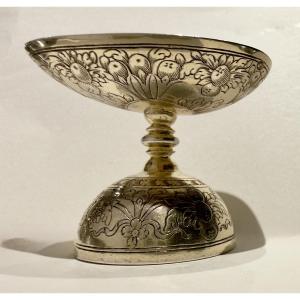


Augsburg 1680-1700 Eggcup Doppeleierbecher Hieronymus Schuch Sterling Silver
Extremely Rare Double Egg Cup in Solid Silver, Originally Gilt (Silver-Gilt) – Augsburg, Late 17th Century – Hieronymus II Schuch (1650–1739)
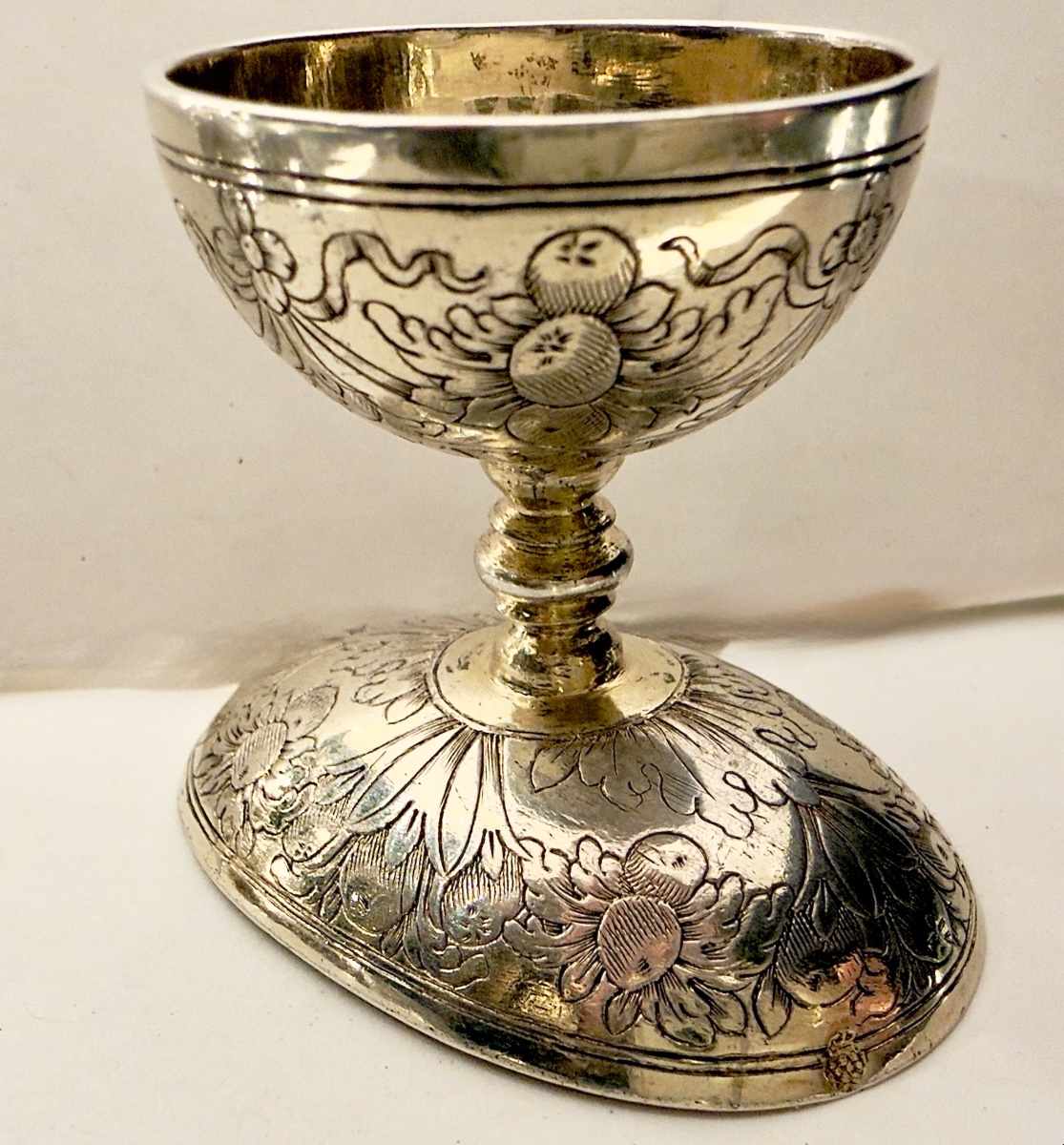
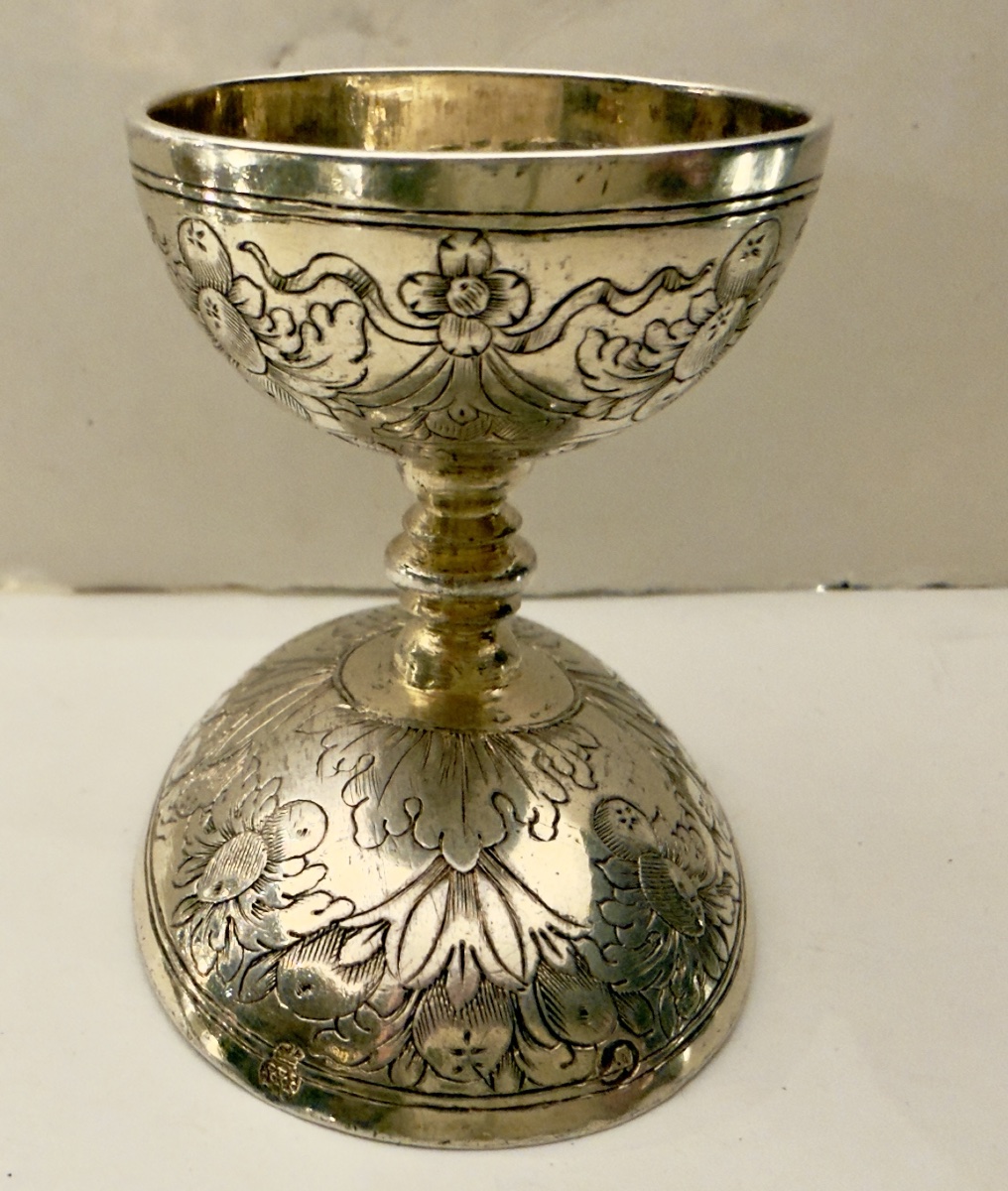
An exceptionally rare double egg cup, known in German as a Doppeleierbecher, made of solid silver, originally entirely gilt, bearing the silver hallmark of the city of Augsburg in Bavaria and the maker’s mark of Hieronymus II Schuch (1650–1739).
Augsburg, late 17th century, circa 1690–1700.
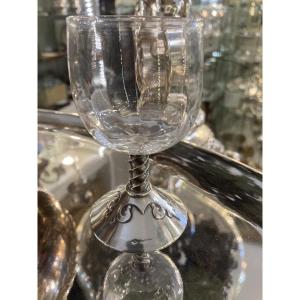
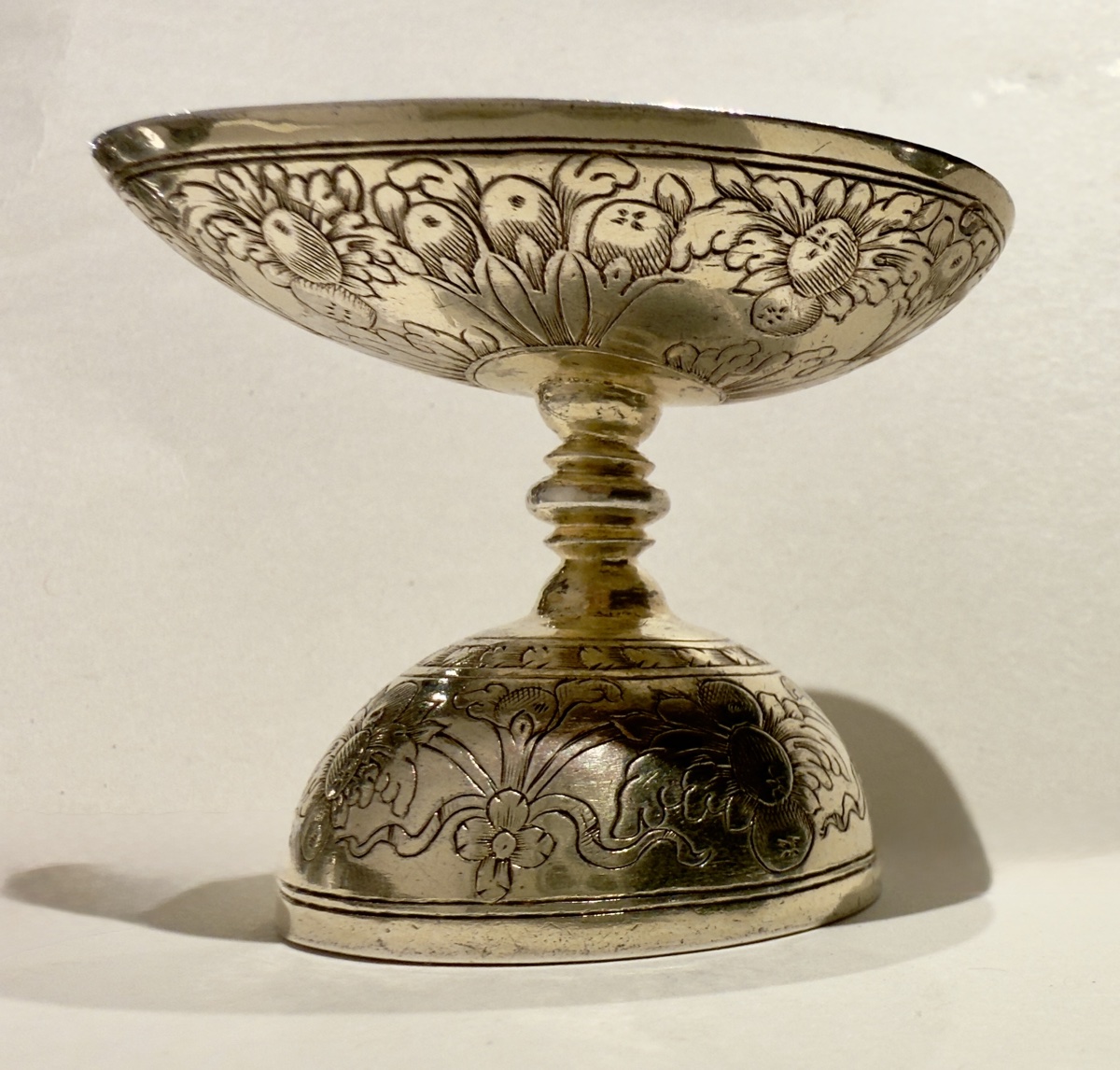
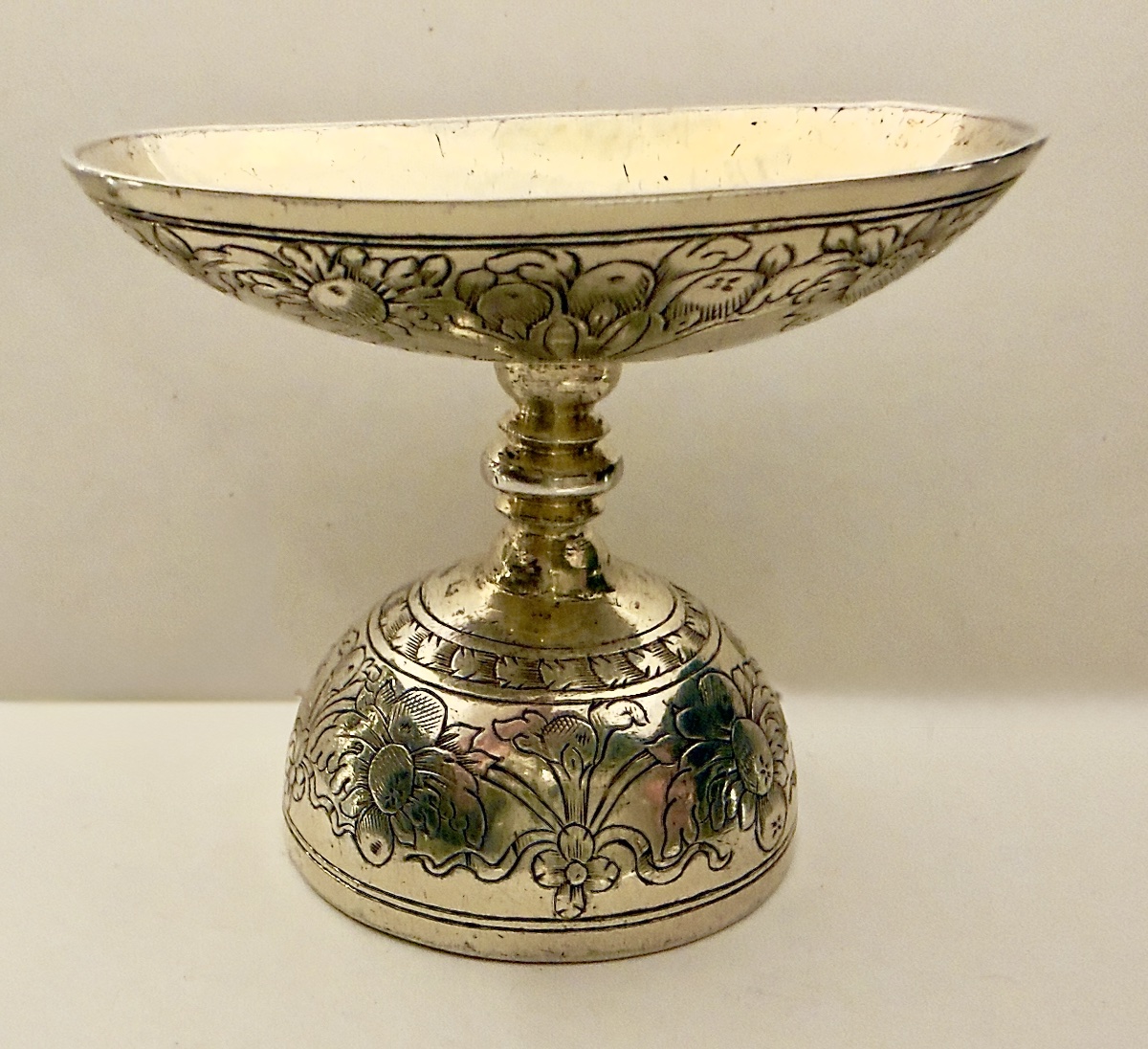
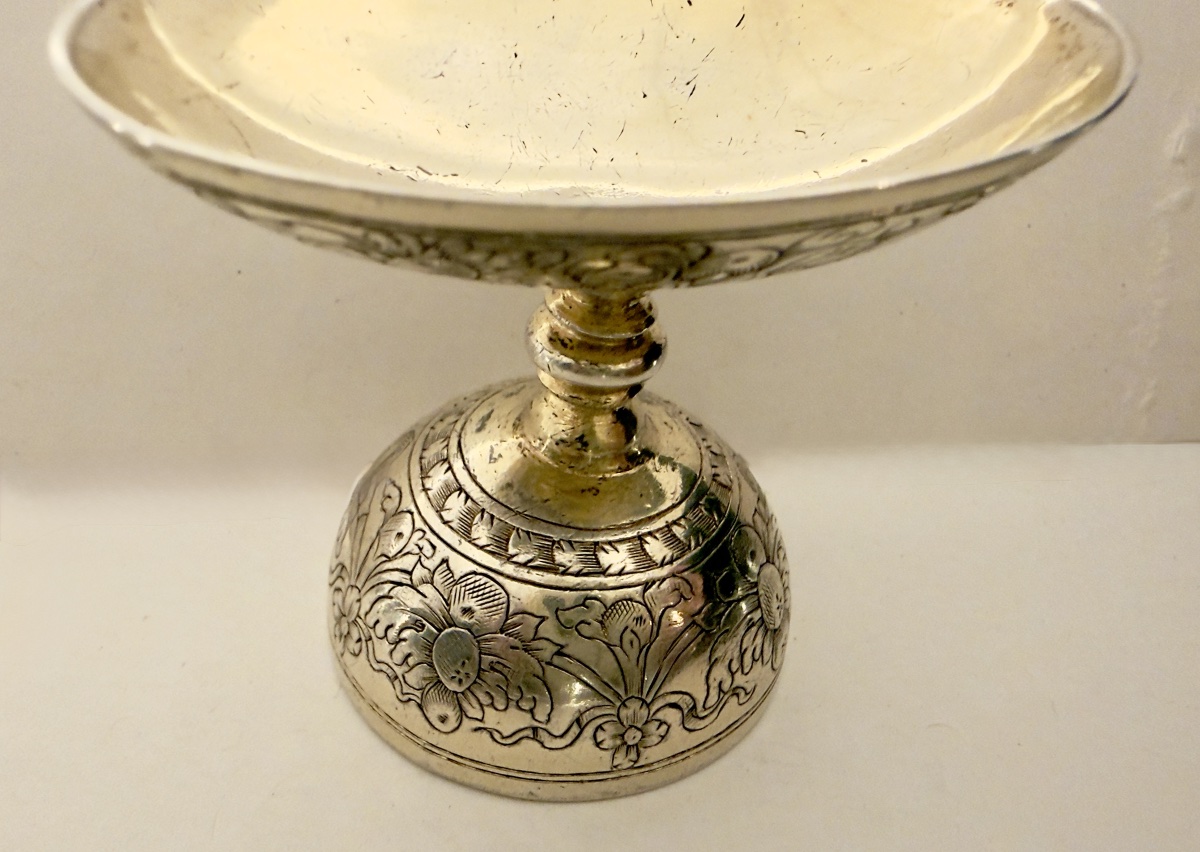
This remarkable double egg cup consists of two opposing hemispherical bowls, joined by a short central stem with moulded baluster elements. Each bowl can alternatively serve as a receptacle for the egg or as a base.
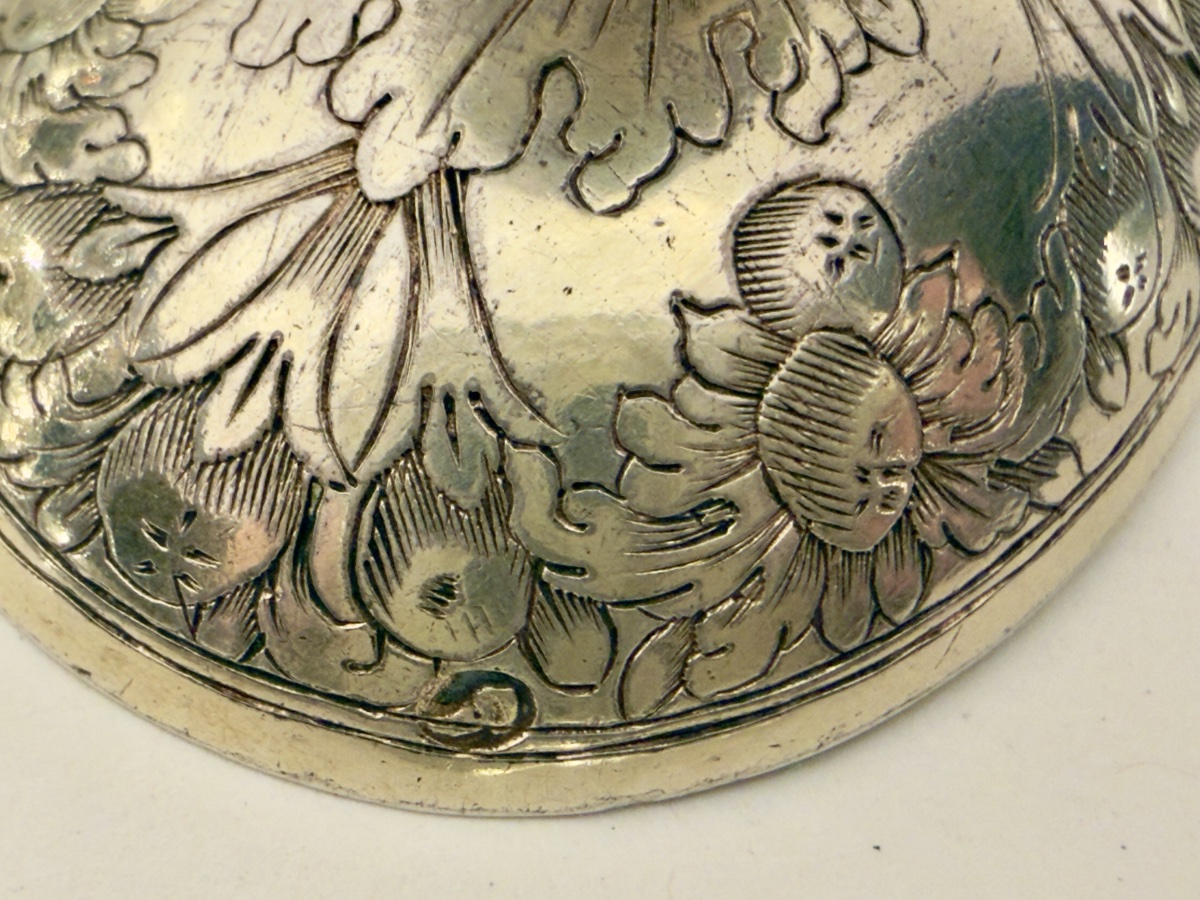
The piece is particularly distinguished by the exceptional quality of its engraved decoration, characteristic of the finest German silverwork of the 17th century. Both bowls are richly decorated with remarkably delicate floral compositions, combining open flowers, finely shaped foliage, scrolling tendrils and vegetal motifs arranged with great skill. The petals and leaves are enhanced by fine engraved hatching, creating depth and accentuating the contrasts. The richness of the engraving, its particularly careful execution and the harmonious balance of the compositions demonstrate the outstanding craftsmanship of the engravers working for Augsburg’s leading silversmiths.
The decoration belongs to the ornamental tradition of the late Renaissance, which remained highly influential in German silverwork during the second half of the 17th century, particularly on ceremonial drinking cups and presentation pieces.
The egg cup was most probably entirely gilded when originally made. A substantial amount of the original gilding survives inside both bowls, as well as on several areas of the exterior surfaces. These surviving traces of silver-gilt, combined with the natural patina of the silver, further emphasise the delicacy of the engraving.
The Silversmith Hieronymus II Schuch
Hieronymus II Schuch was born in 1650 into a family of silversmiths. The son of the goldsmith Hieronymus I Schuch, he was admitted as a master in Augsburg in 1678. In the same year, he married Sibylla Rosina Bantzer. He continued working in this important centre of European silver production until his death in 1739.
His maker’s mark is recorded in the specialist literature on Augsburg silver. Among his documented works is a covered standing cup (Deckelpokal), dated 1697–1699, preserved in the Württembergisches Landesmuseum in Stuttgart, under inventory number 9577.
Double Egg Cups and Their Use in the 17th Century
Double egg cups, generally made of silver or silver-gilt, were intended for serving soft-boiled eggs according to different regional customs. They consist of two opposing bowls, allowing an egg to be presented either upright or horizontally. The unused bowl serves as the base.
These refined objects frequently formed part of the travelling services of princes, noblemen and other distinguished individuals from the 17th to the 19th century. They were kept together with cutlery and other table accessories in fitted cases covered in leather and lined with velvet.
Since the 16th century, different ways of eating boiled eggs had coexisted in European culinary culture.
In 1645, the German Baroque poet Georg Philipp Harsdörffer wrote in the fourth volume of his work Frauenzimmer Gesprächspiele:
“An egg, boiled in its shell, is opened in three different ways: the Jews open the egg at the end (…), the French open the egg at the top, and we Germans open it at the flanks or sides.”
The publication does not further explain the differences between these methods. The “German” manner of eating eggs, which involved dipping pieces of bread into an opening made in the side of the shell, is no longer commonly practised today. However, it is documented in numerous still-life paintings of the 17th and 18th centuries.
The particular construction of the double egg cup made it possible to present the egg in different positions, according to these culinary traditions.
Condition
Very fine state of preservation. The silver displays an attractive old patina and retains all the delicacy of its exceptionally fine engraved decoration. Substantial traces of the original gilding survive inside both bowls and on the exterior surfaces.
An exceptionally rare example of 17th-century German silverwork, remarkable both for its ingenious construction and for the extraordinary quality of its engraving.
Period: 17th century
Style: Renaissance, Louis 13th
Condition: Excellent condition
Material: Sterling silver
Length: 6 cm
Diameter: 4 cm
Height: 5 cm
Reference (ID): 1851767
Availability: In stock