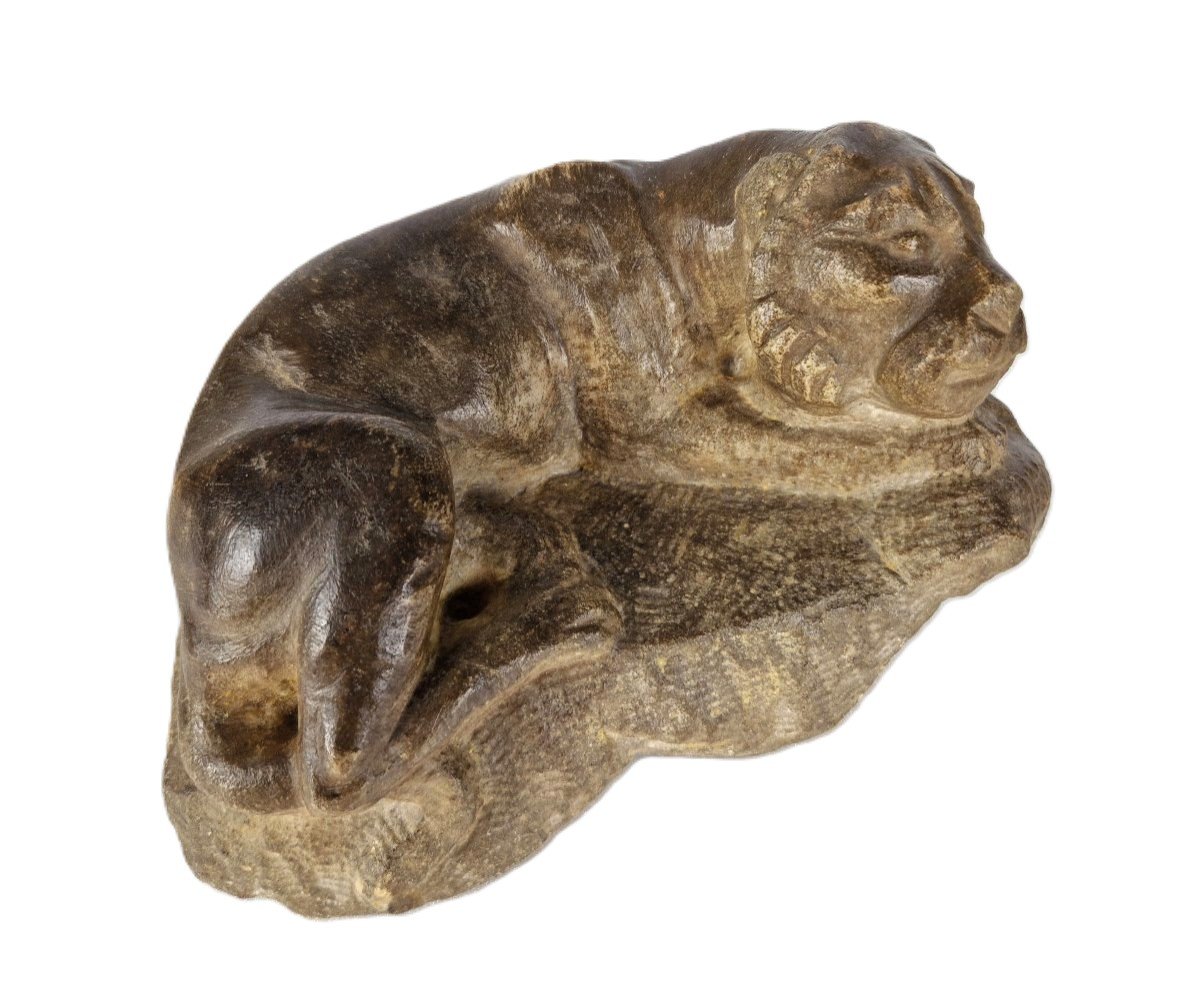
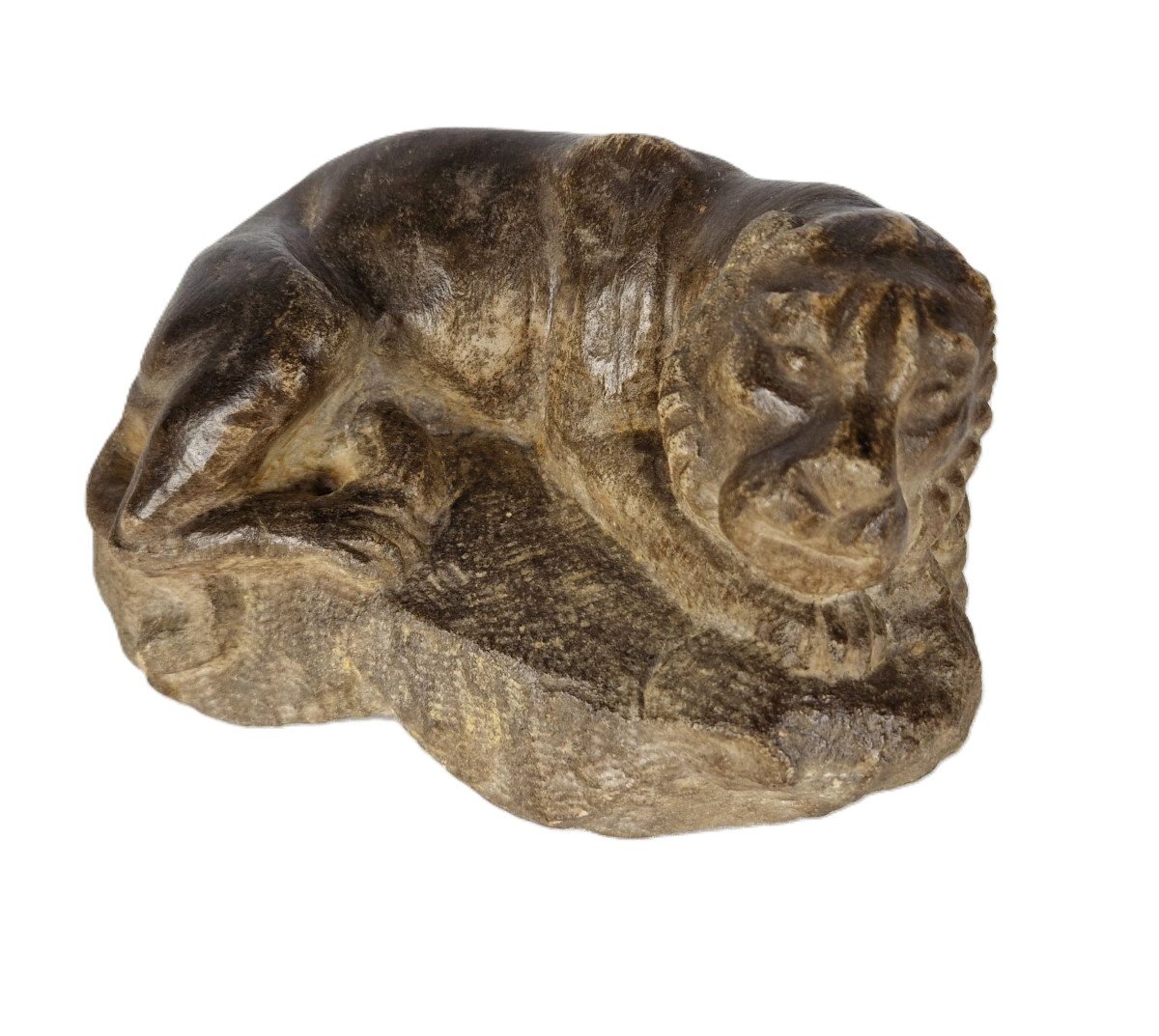
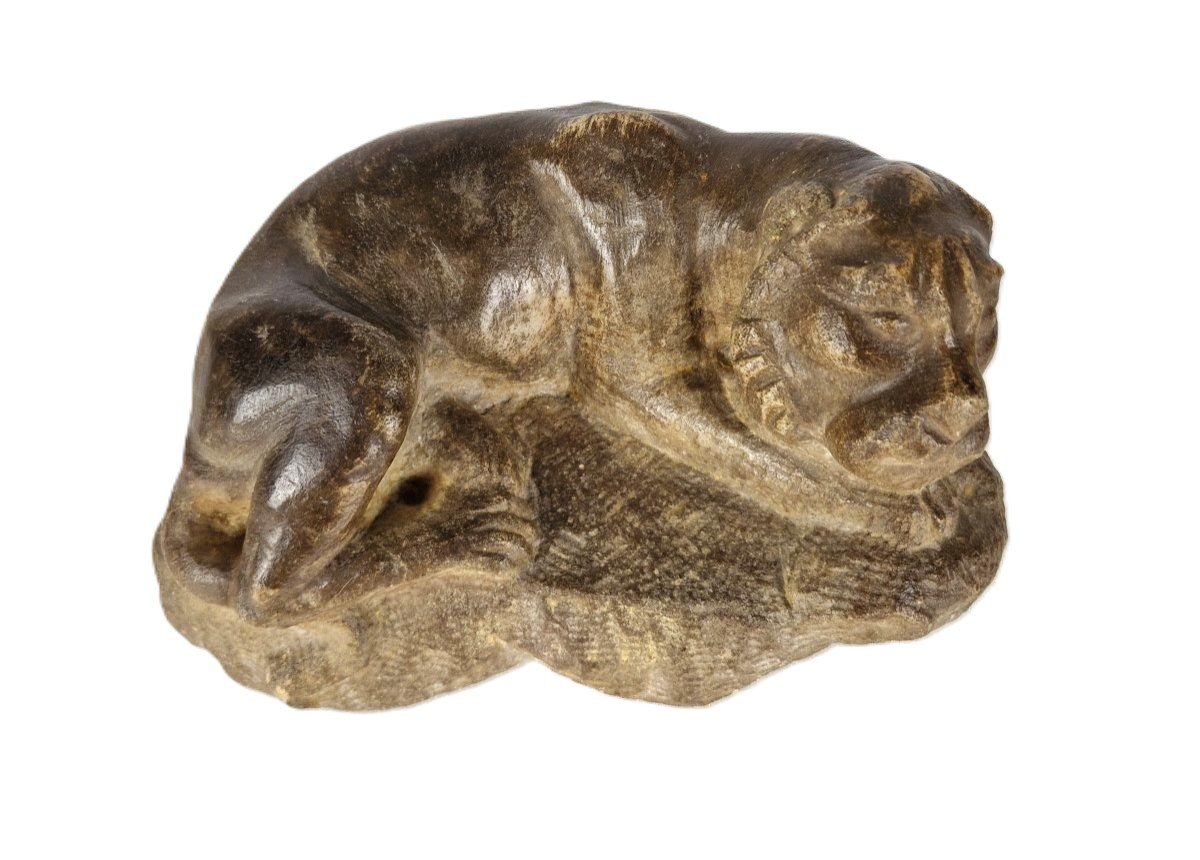
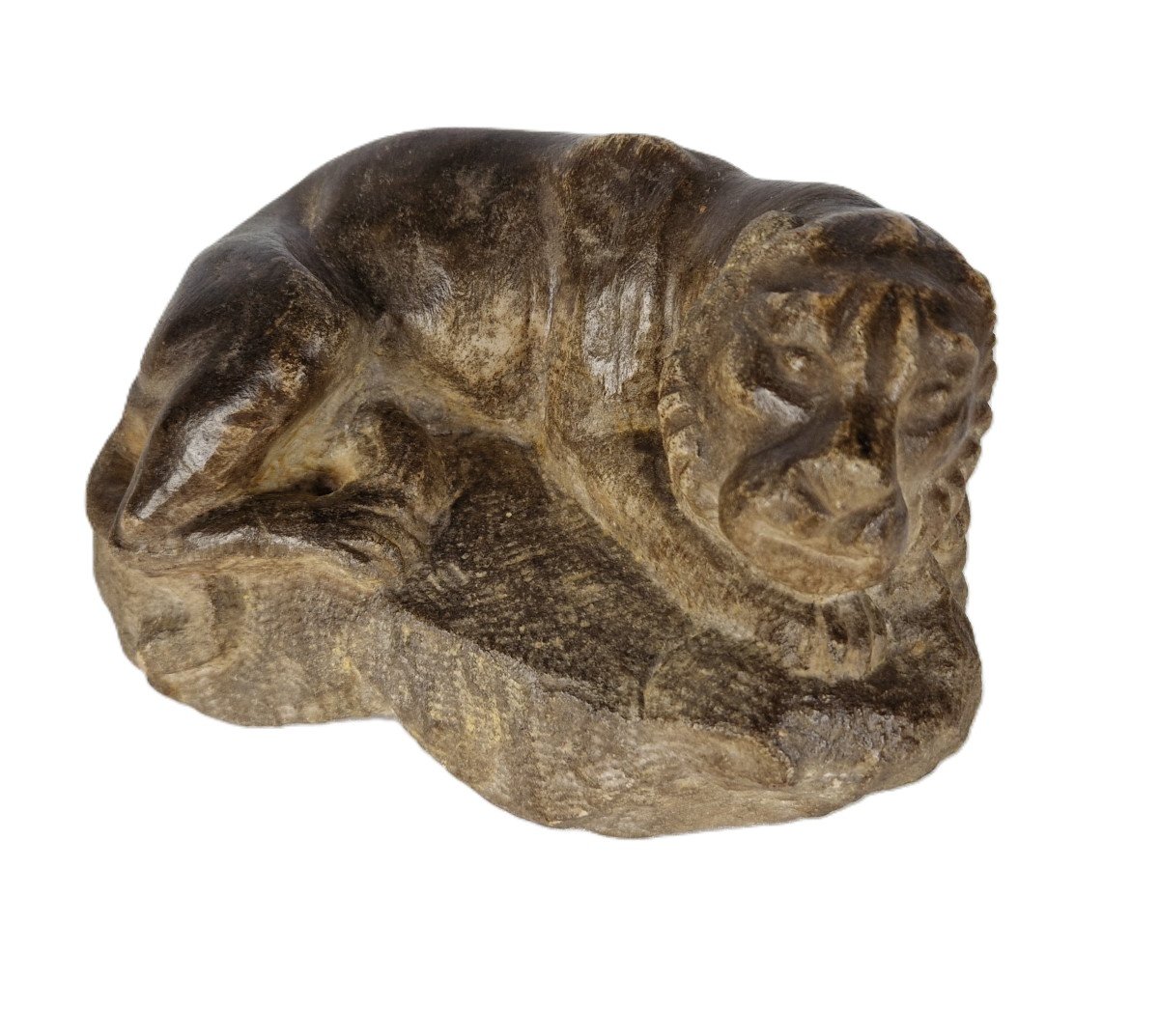
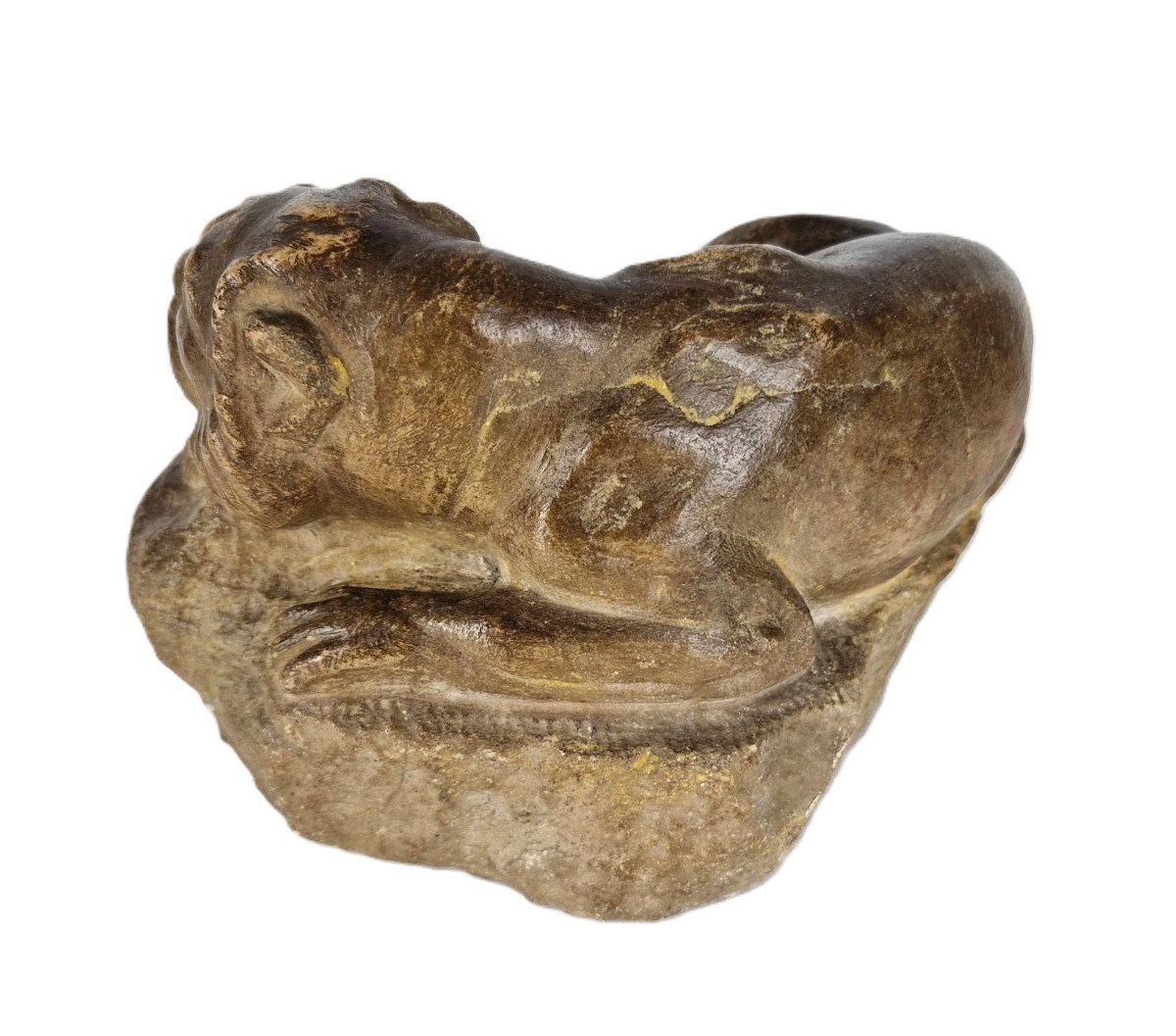
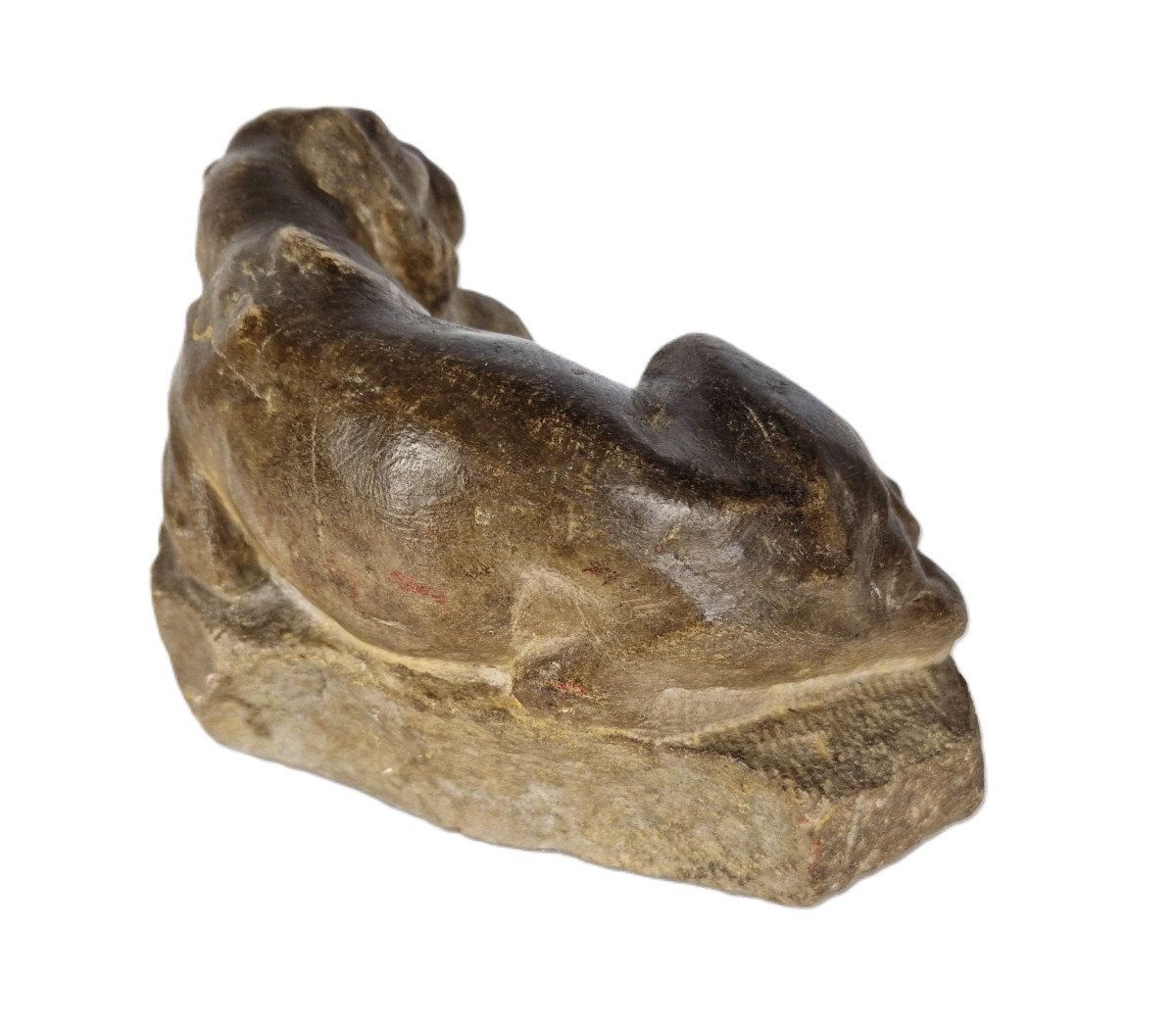
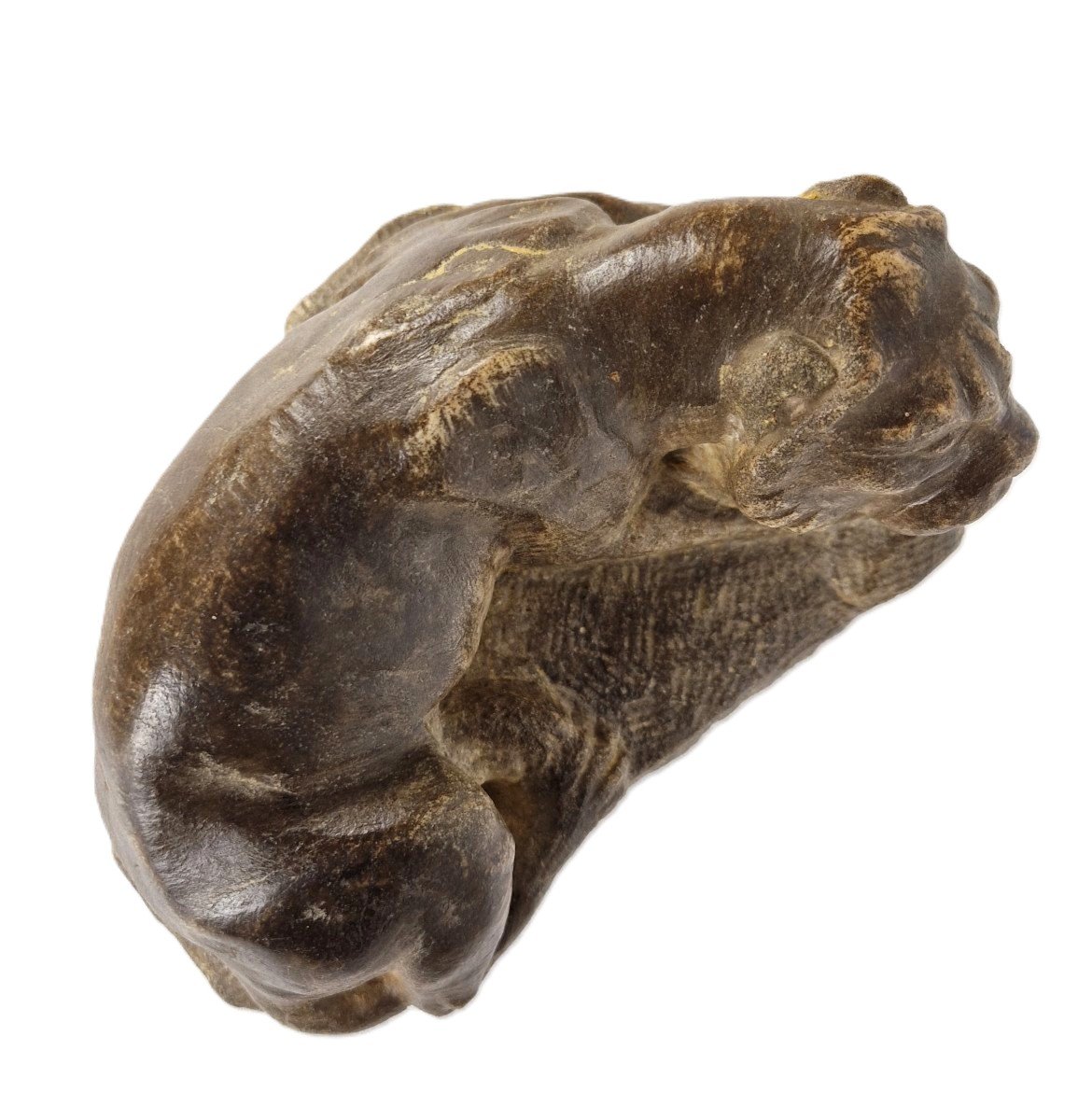
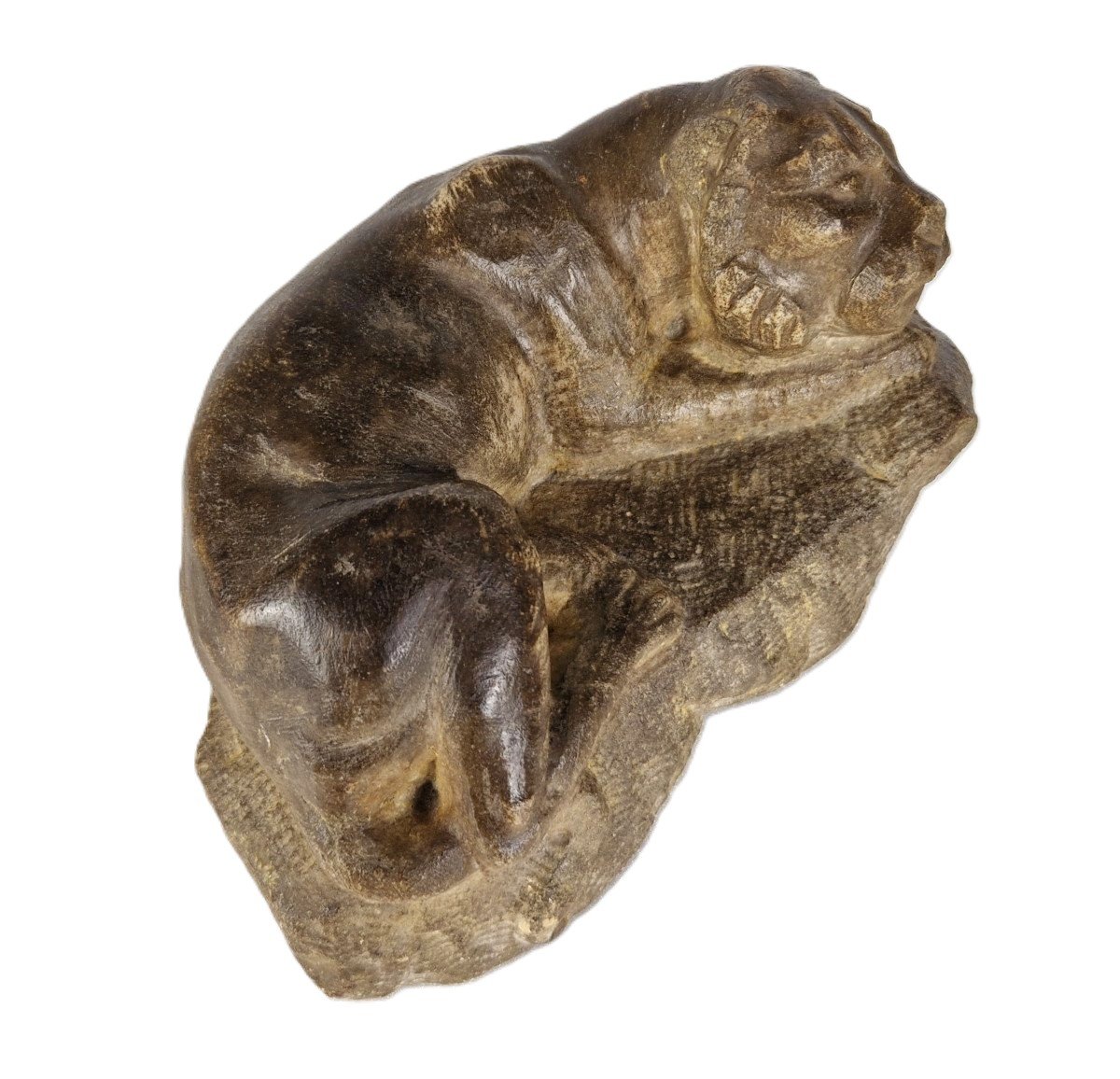
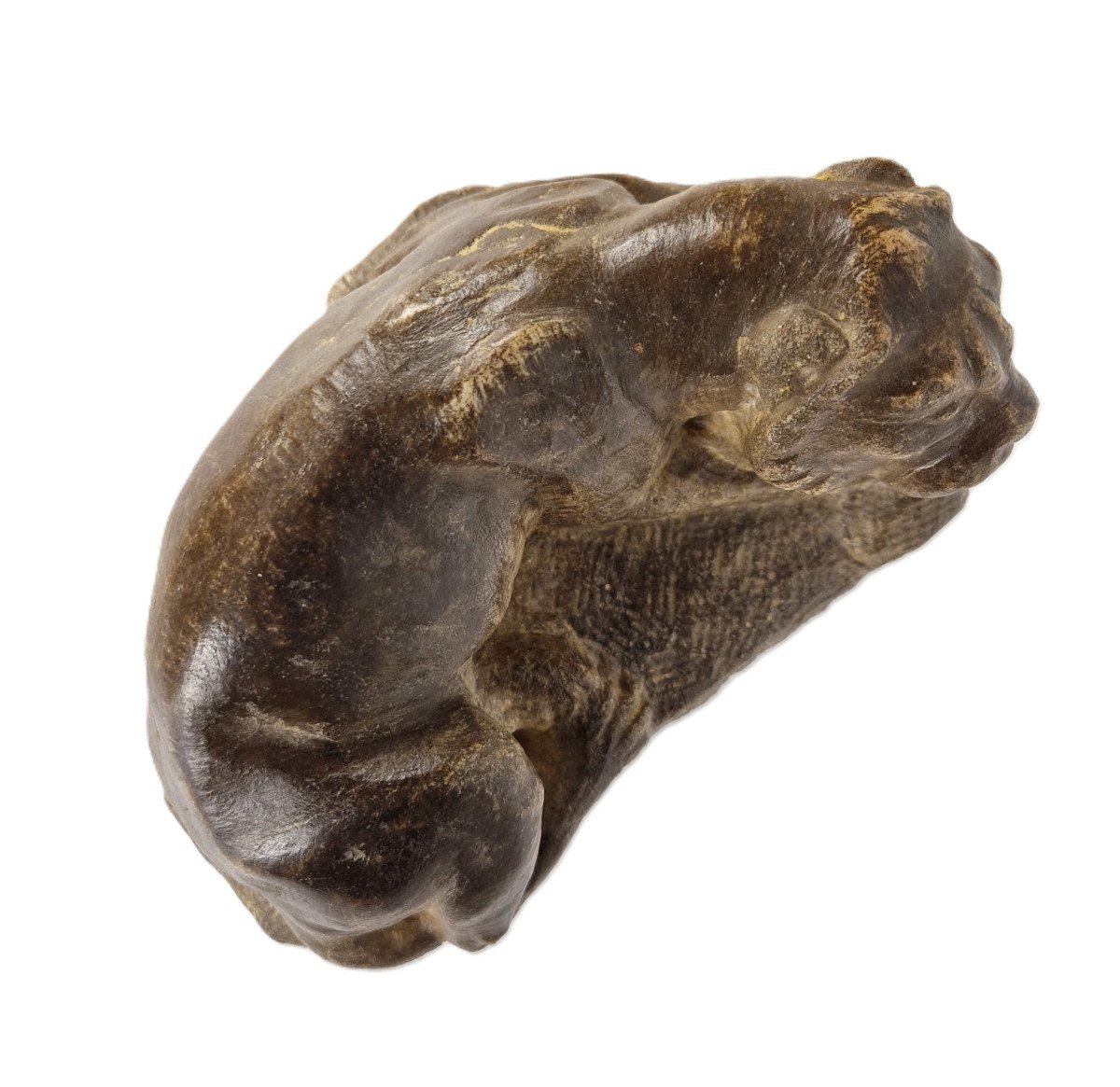


Reclining Lion Carved From Boulogne Marble, Medieval Period.
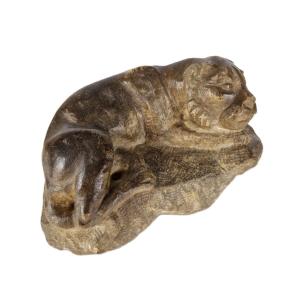
A small reclining lion carved from Boulogne marble, a type of marble from the Boulogne region, measuring 23 cm long, 15 cm wide, and 14 cm high.
With its compact body, legs tucked beneath it, and head slightly raised and resting on a front paw, the lion adopts a resting posture marked by vigilance. The treatment of the forms is understated and stylized: the shapes are full and rounded, and the anatomy is deliberately simplified. A tranquil presence emanates from this figure, which is both animalistic and symbolic.
This sculpture is in the spirit of medieval statuary from the 12th to the 14th century, a period during which the lion held an important place in religious, funerary, and monumental art. At the feet of recumbent figures, it notably accompanies depictions of knights, nobles, and prominent figures. A symbol of strength, courage, nobility, and authority, it becomes a sort of stone companion, guardian of the deceased even into their eternal rest.
This animal presence also carries deep symbolic meaning. The lion is traditionally associated with masculine figures of power and chivalry, while the dog—a symbol of loyalty and devotion—more often accompanies female recumbent figures. The lion is also found at the base of upright statues, where it serves as a protective figure and, at times, a symbolic support. Whether watching over a knight lying on his tomb or accompanying a figure depicted standing, it remains an image of power and protection.
An amusing feature of medieval art lies in the way sculptors depicted exotic animals. The lion, although considered the king of beasts, was not necessarily a familiar subject for medieval sculptors. Many had probably never observed one up close. They therefore depicted it based on bestiaries, ancient tales, legends, illuminated manuscripts, and engravings of their time. This sometimes resulted in lions with striking features—almost human heads, highly stylized bodies, and unexpected expressions. The main goal was not always to faithfully reproduce the animal, but to convey what it represented: strength, nobility, courage, and vigilance. This is also what gives these sculptures their unique charm, blending observation, imagination, and tradition.
The position and format of this small piece are consistent with the conventions of monumental and funerary sculpture of this period. Two interpretations accompany its presentation: that of a lion placed at the feet of a recumbent figure, in the tradition of funerary monuments, or that of an element belonging to the lower part of a statue or a sculpted monument.
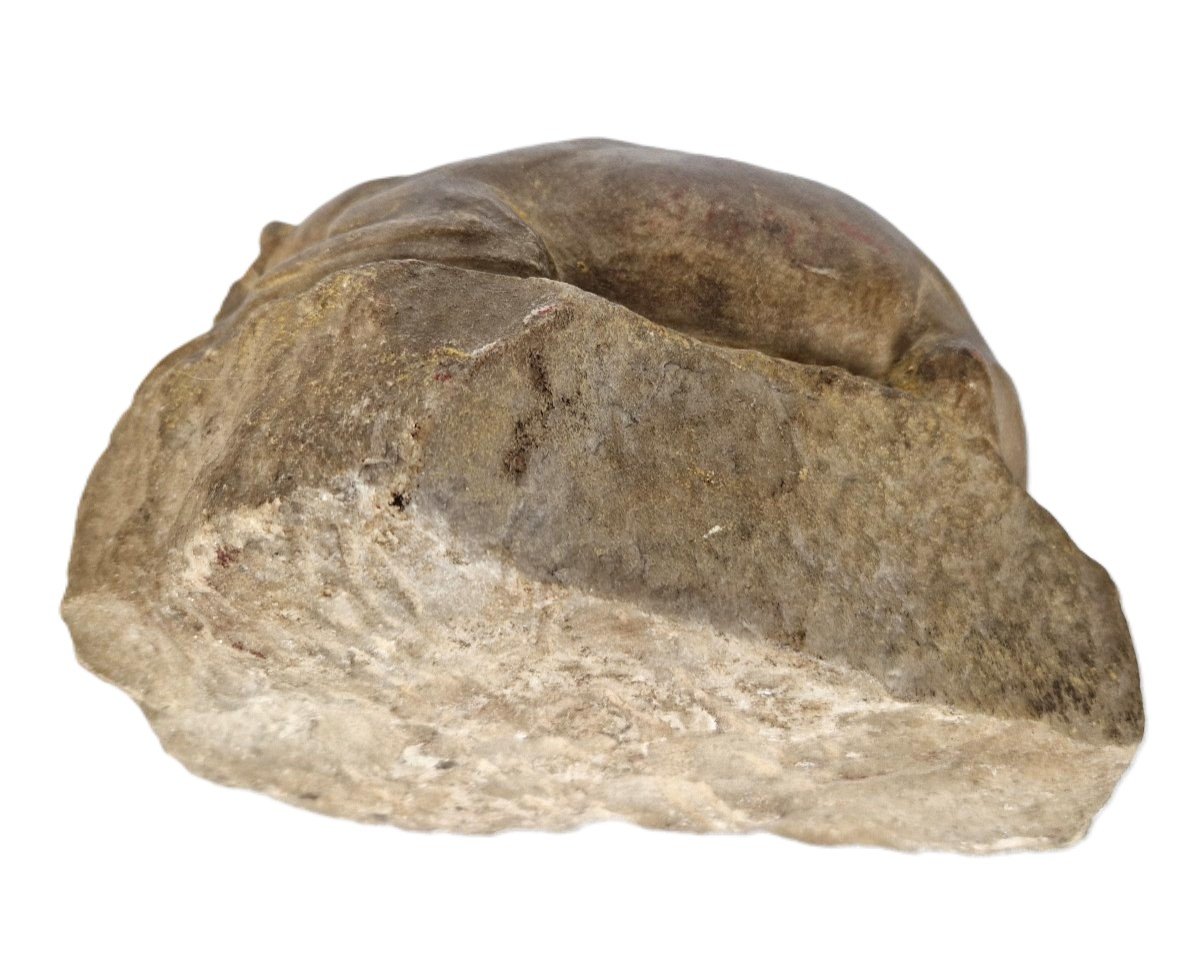
The choice of Boulogne marble is noteworthy. This marble from the Boulogne region, quarried primarily at Marquise, is part of a long regional tradition of stone extraction and craftsmanship. Prized for its workability and finish, it has found its place in religious architecture, monumental decoration, and sculpture. Its use is notably documented at the medieval construction site of Notre-Dame Cathedral in Saint-Omer, where stone from Marquise was combined with stone from Tournai in the 12th century. These major religious construction projects attest to the importance of this stone in the monumental heritage of northern France.
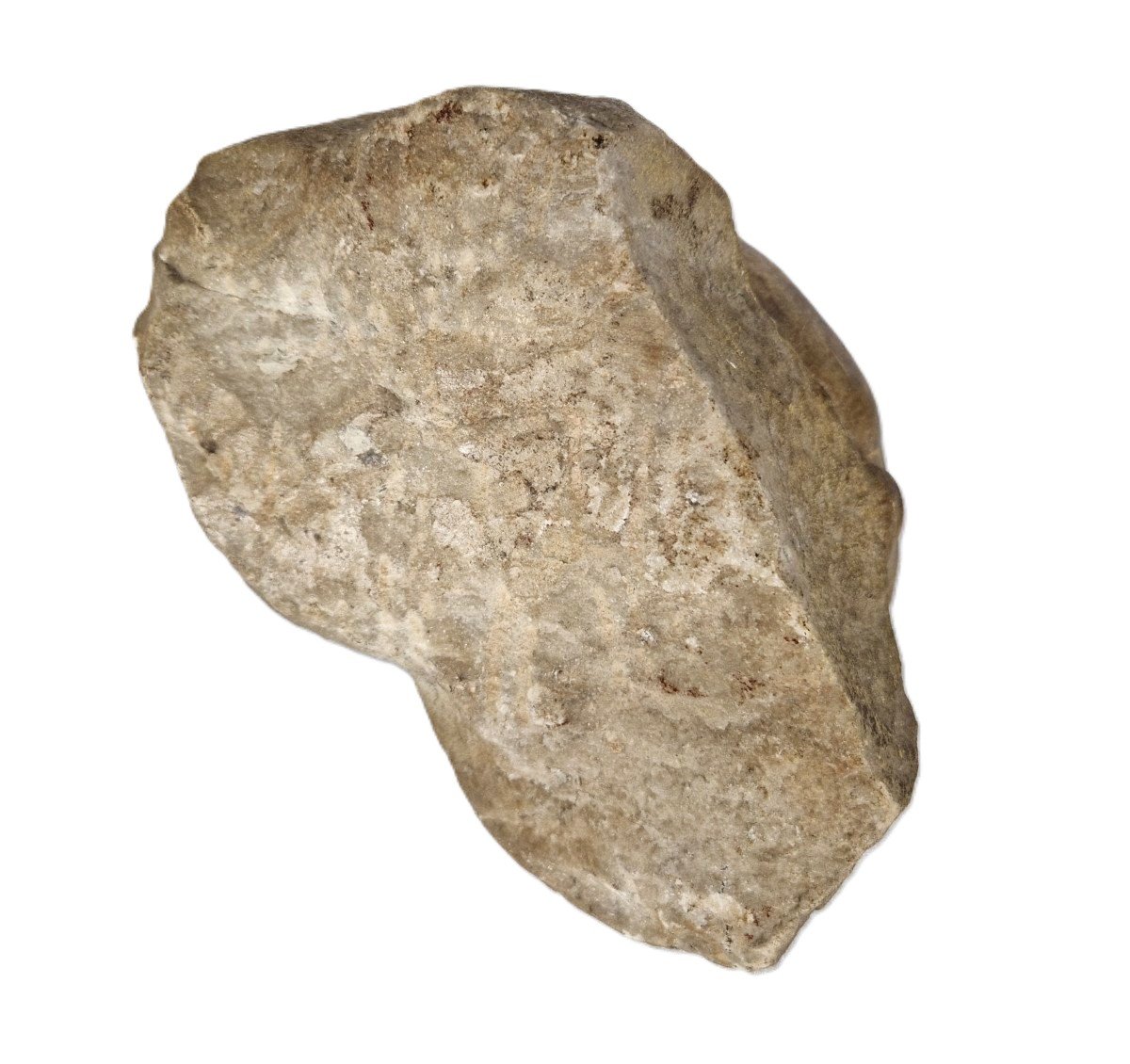
The differences in finish are also striking. The visible parts display more meticulous workmanship, while the side and back surfaces retain a rougher, more irregular appearance. A few striations remain visible in the stone, recalling the cutting process and the various stages of shaping.
With its weathered surface, compact silhouette, and peaceful demeanor, this small lion retains the unique character of a fragment of an ancient sculpture. A symbol of strength and protection, it seems to have retained something of its original purpose: that of a silent guardian, placed beside a figure or monument of which perhaps only this stone witness remains today.
6 800 €
Period: Before 16th century
Style: Renaissance, Louis 13th
Condition: Excellent condition
Material: Marble
Length: 23
Width: 15
Height: 14
Reference (ID): 1848136
Availability: In stock
Print