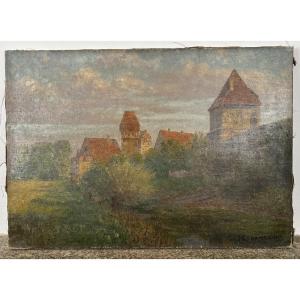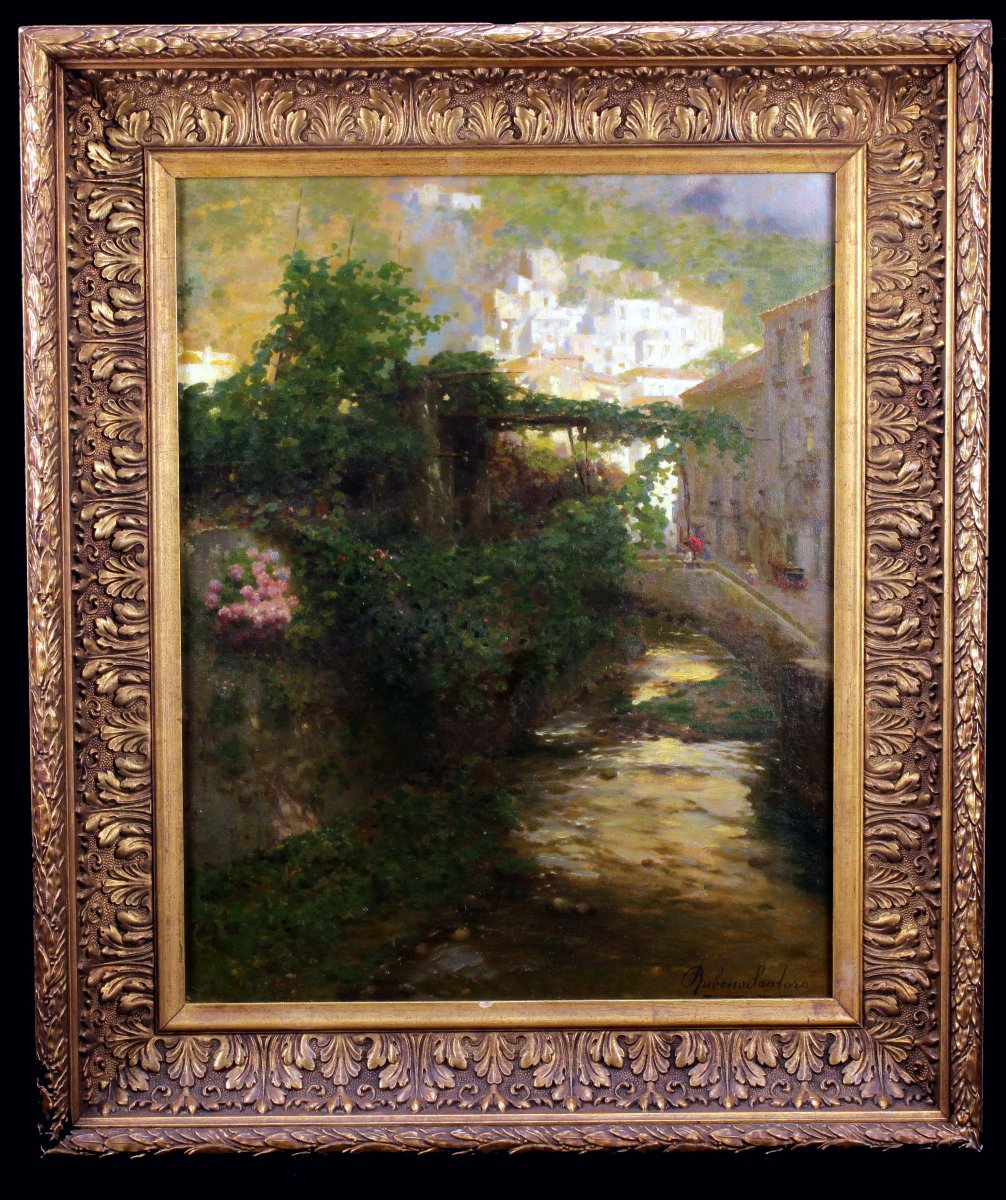
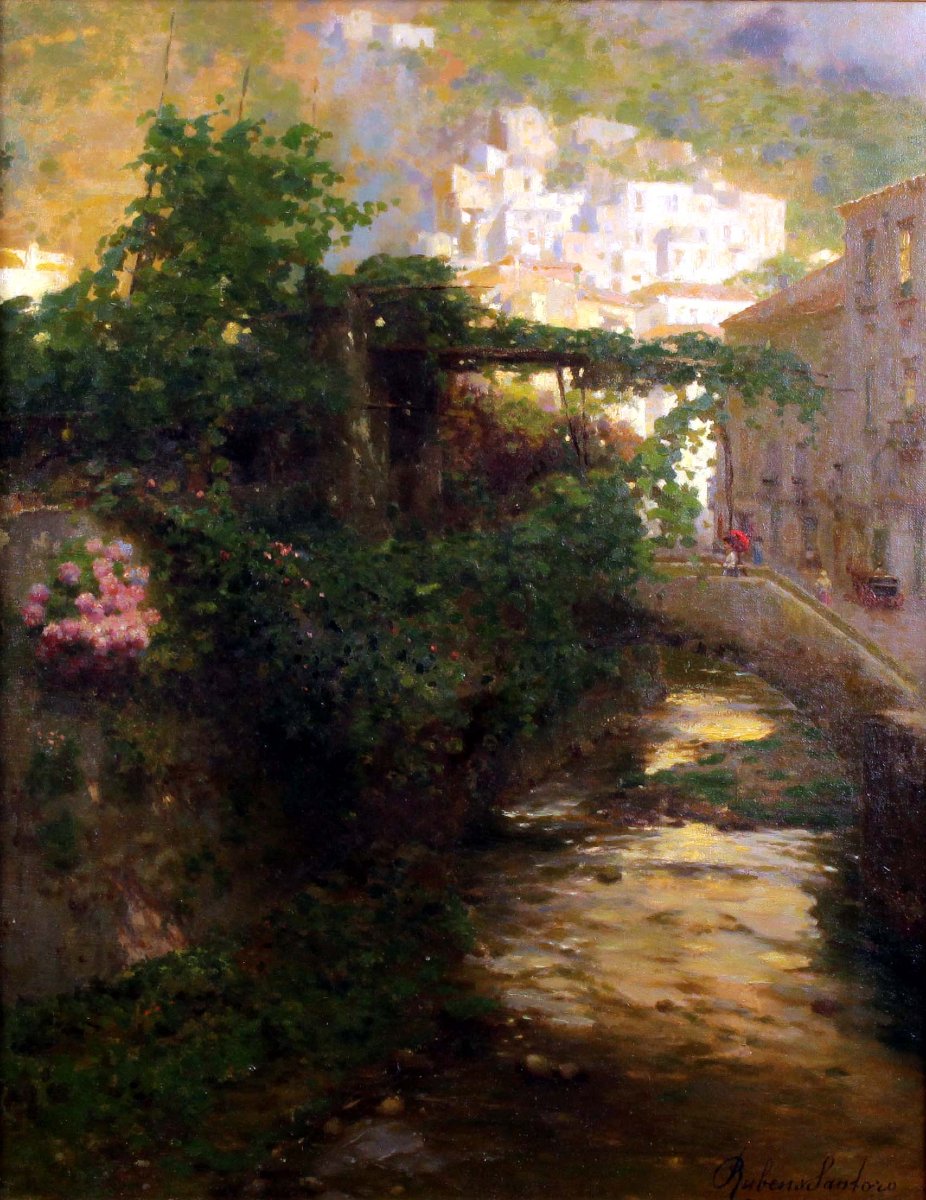
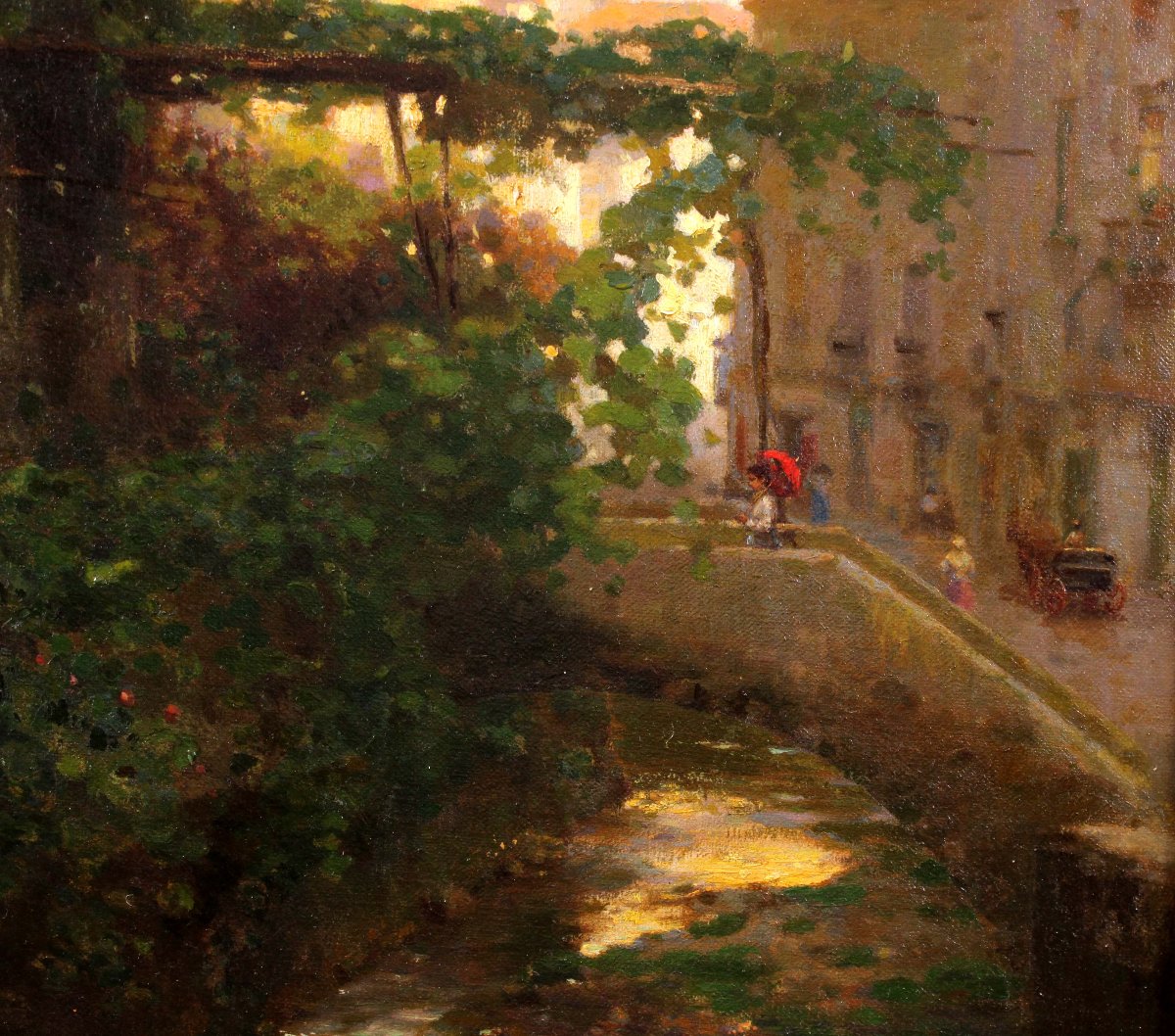
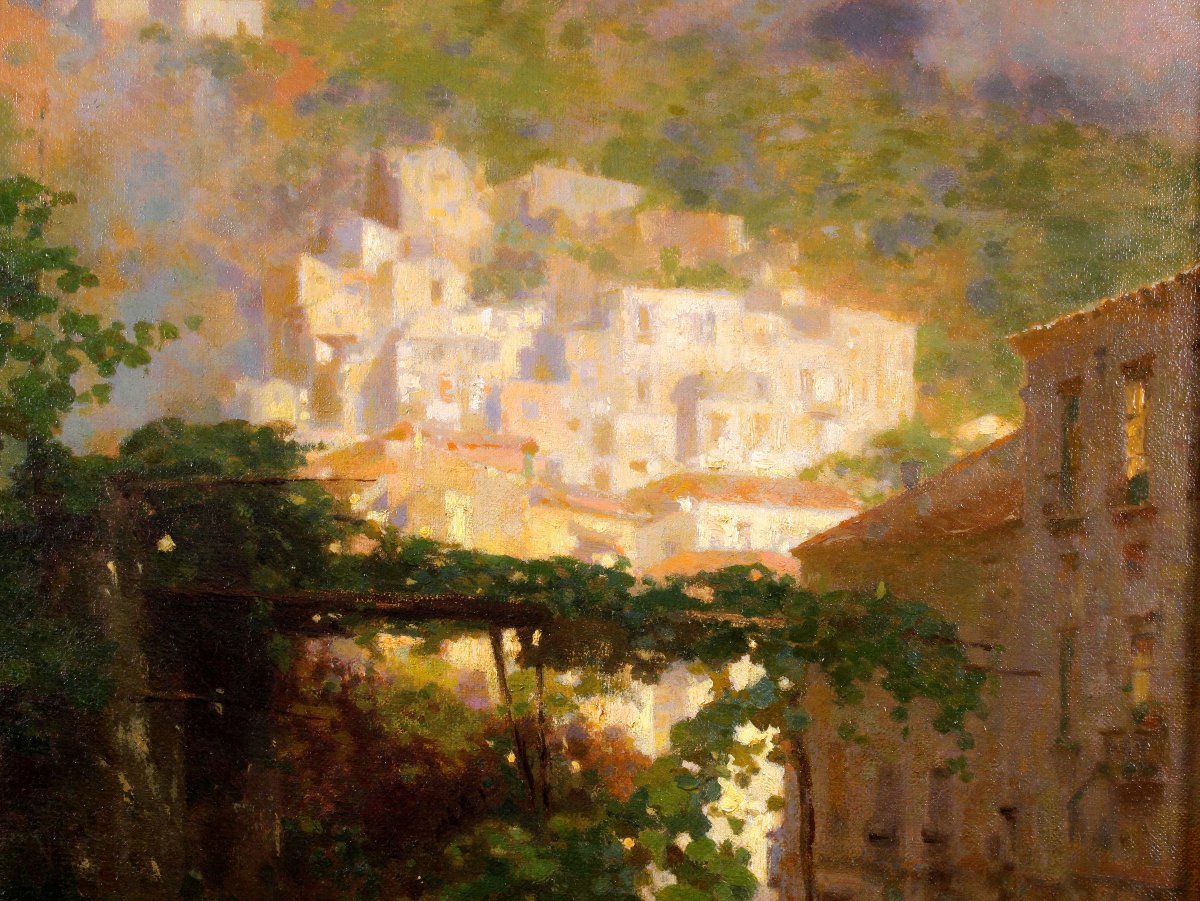
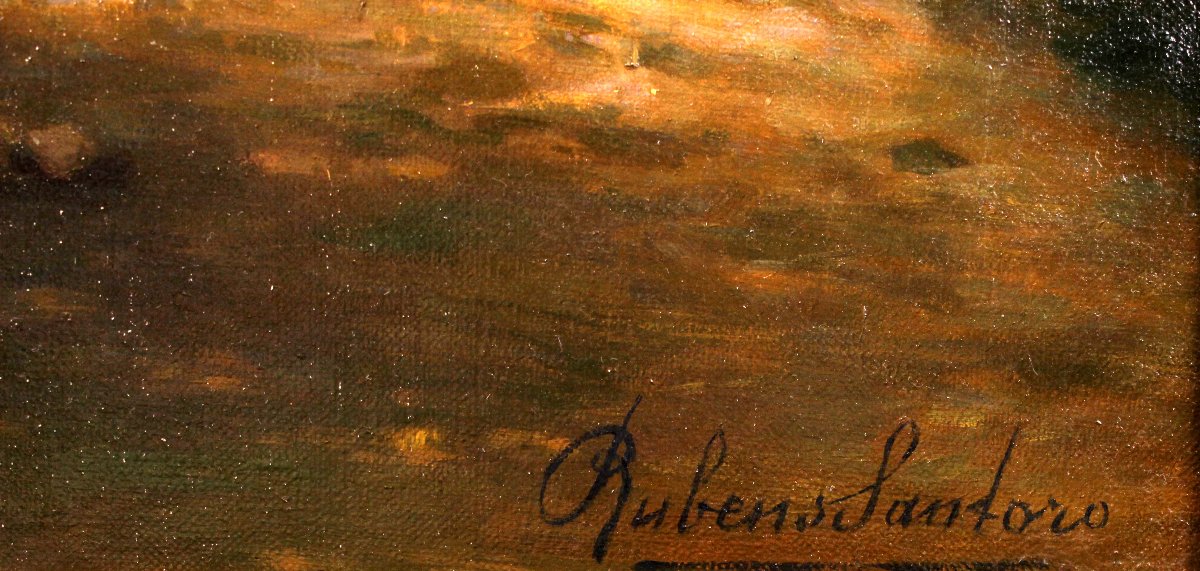
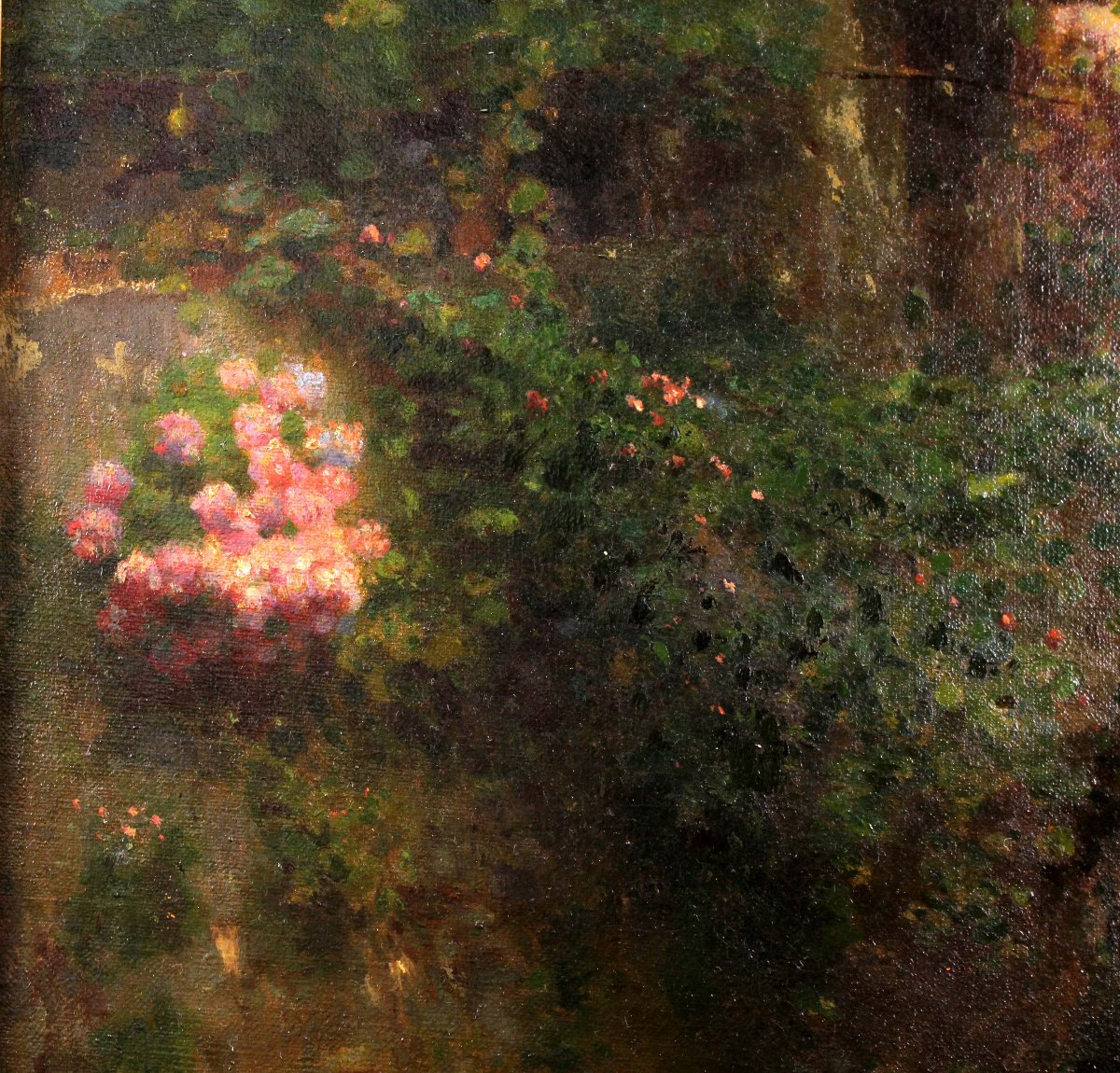
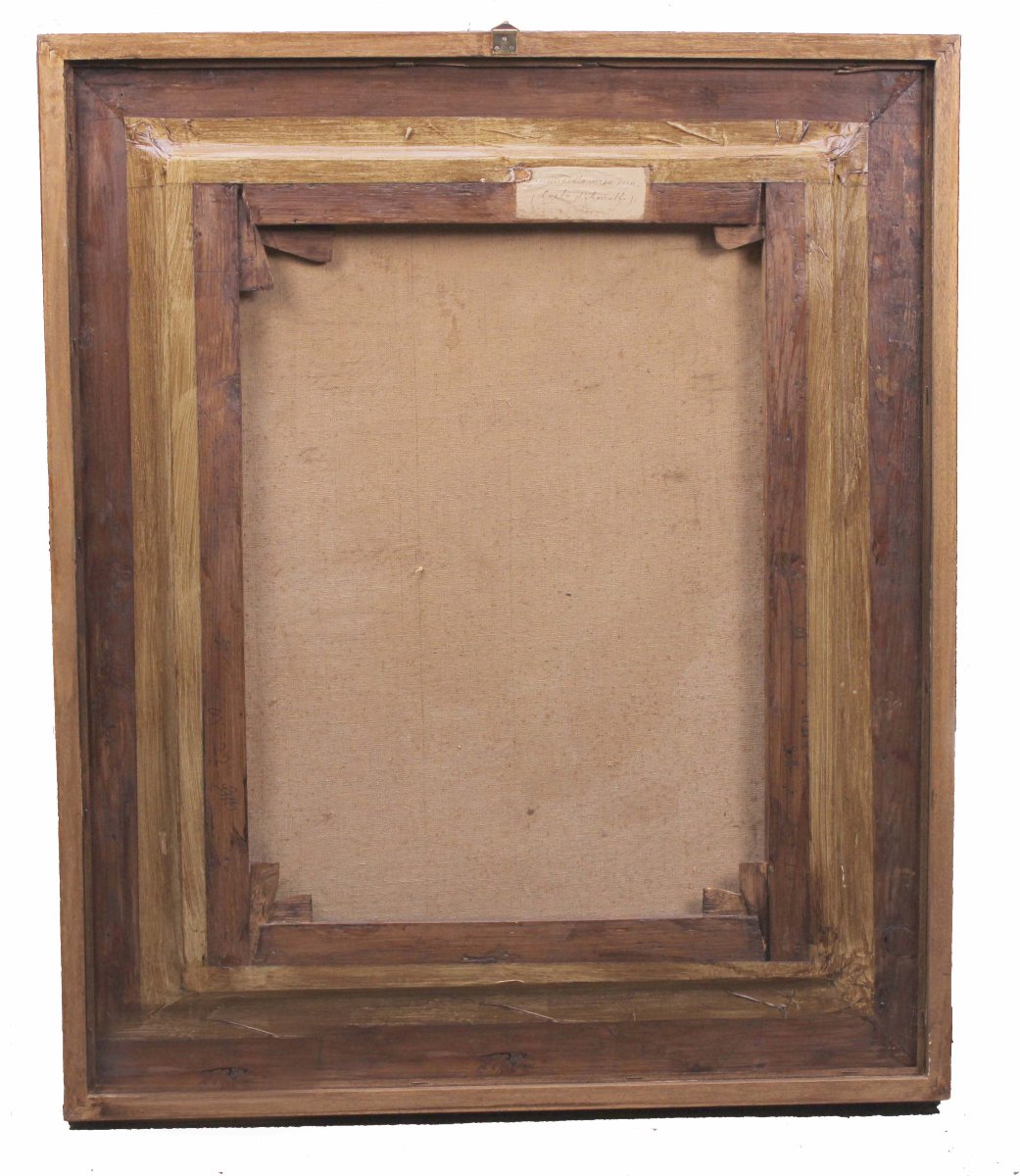


Oil On Canvas, 56 X 44.5, Signed By Rubens Santoro (1859–1841)
Artist: Rubens Santoro
Oil on canvas by Rubens Santoro (1859–1941)
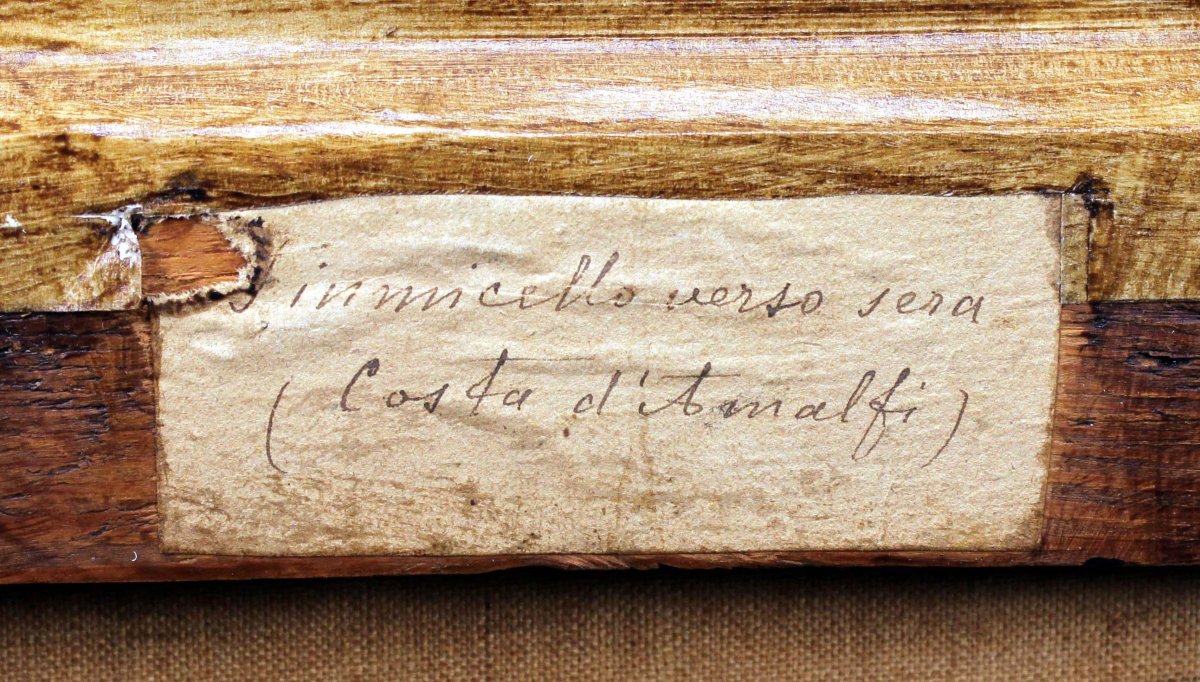
Titled “Fiumicello at Dusk (Amalfi Coast)”
Dimensions including frame: 73.5 x 62.5
Born in Mongrassano, in the province of Cosenza, where his father worked as a woodcarver. He moved to Naples at the age of 10 to study literature, but his true calling was painting[1]. He studied little or nothing at the Academy of Fine Arts in Naples; instead, he taught himself, with nature as his teacher, and began exhibiting his works in 1874. His first work was a small genre scene: *A Laughing Girl*. Domenico Morelli took notice of it and encouraged him. Landscape painting became his primary focus; he began painting landscapes in Granatello, near Naples, where the painter Marià Fortuny was visiting. Fortuny praised him, saying: “Many end up where you began… (you) keep studying more from life; of the ancient painters, only two or three will learn from nature to add something to their art. I had to work for twelve years—and God knows how much effort it took—to break through the gates of the Academy within which I had imprisoned myself, while you breathe the open air and have already attained it.” Santoro constantly changed his subjects, painting in Torre Annunziata, Castellammare di Stabia, Procida, the Amalfi Coast, and Resina. During his long trips to the countryside, he entertained himself by playing the mandolin. Many of his Amalfi Coast landscapes were purchased by the Goupil Gallery. Two were exhibited at the 1877 Naples Exhibition: *Marina di Maiuri* and *Grotta degli Zingari*. On the island of Capri, he completed the following paintings, which were sent to the 1880 Turin Exhibition: *Marina di Napoli*; *Pozzo*; *Zingara*; *Zingare*; *Cavalcavia*; Monte Tiberio; Tranquility (half-length portrait of a woman); Youth; and Old Age. King Umberto I, during his visit to the aforementioned exhibition in Turin, requested that the young artist be introduced to him. The king shook his hand and offered him words of encouragement[2]. Queen Margherita, on the other hand, purchased the painting *Youth*, for which the jury had also awarded a prize[3]. In Venice, he painted the following cityscapes: *Cloister of San Gregorio*; *Via di Piccioni*; *Wooden House*; *San Barnaba*; *Ponte de Turchetti*; In the Sun; The Coral Workers; Blue House; and the Grand Canal. He then moved to Paris and, after a trip to England, returned to Naples, where he became even more prolific. Colnaghi, the London art dealer, commissioned paintings from the artist for Stewart Gardner. His painting *Verona*, exhibited at the 1911 Barcelona Exposition, won a silver medal.
8 500 €
Period: 19th century
Style: Other Style
Condition: Good condition
Material: Oil painting
Width: 44.5
Height: 56
Reference (ID): 1847233
Availability: In stock
Print