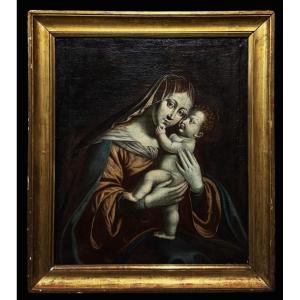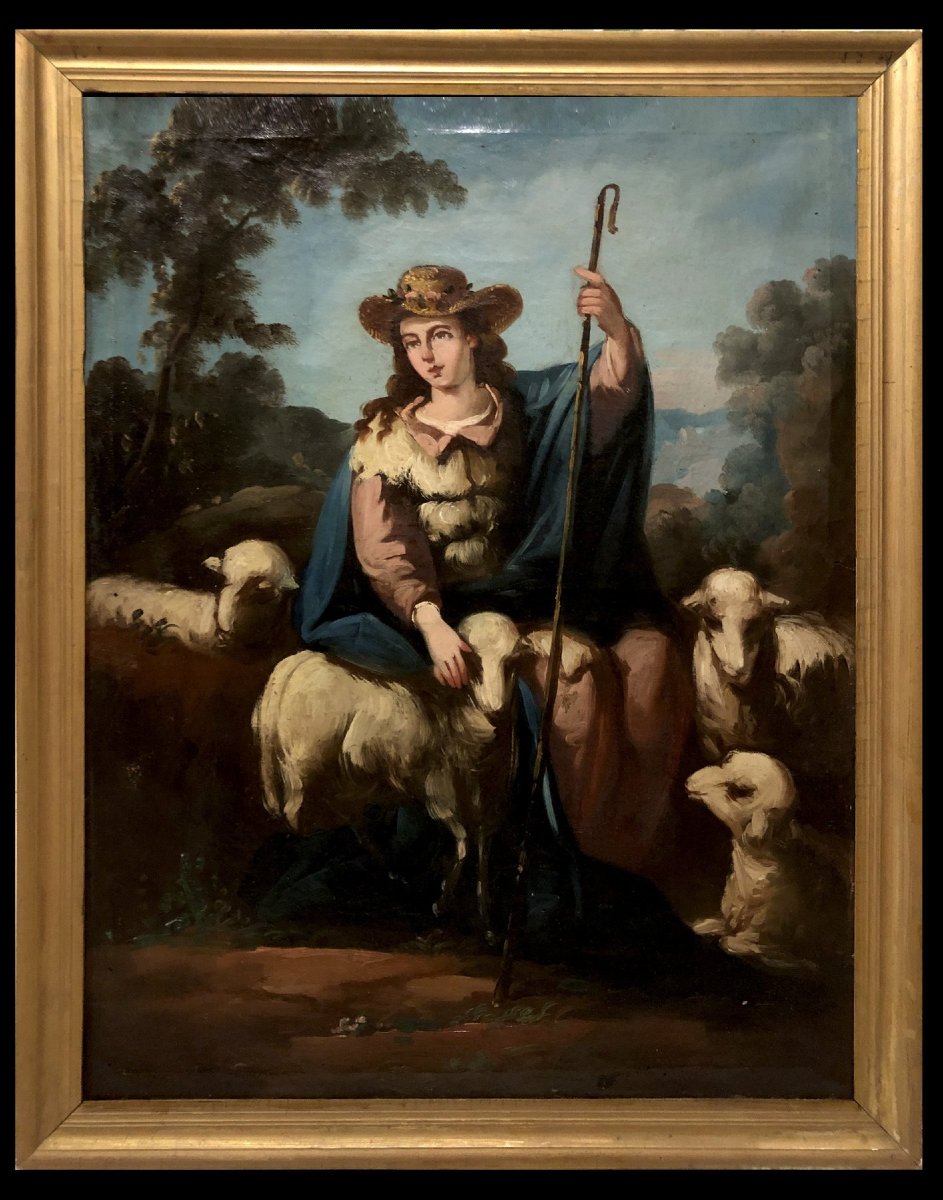
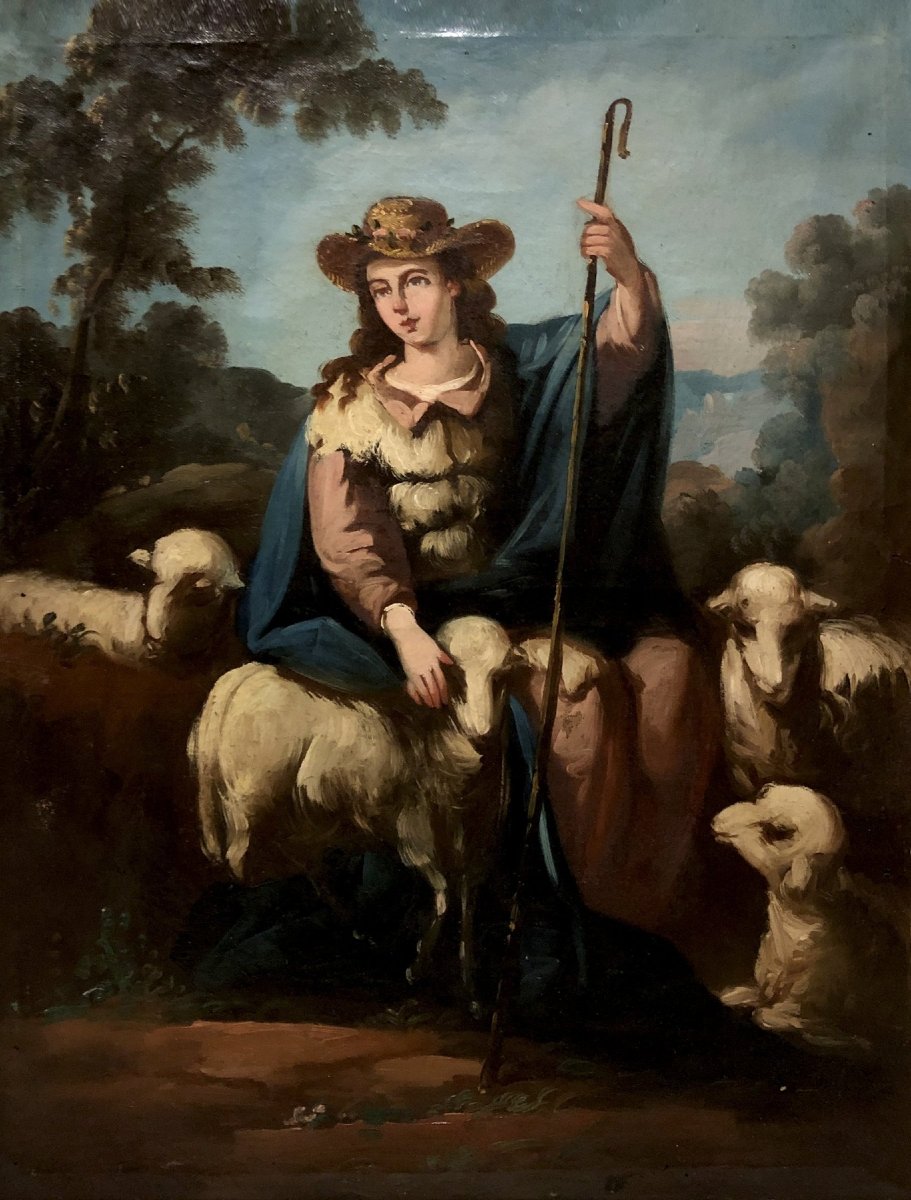


Spanish School (c. 1820) - Our Lady, The Good Shepherdess Of Souls
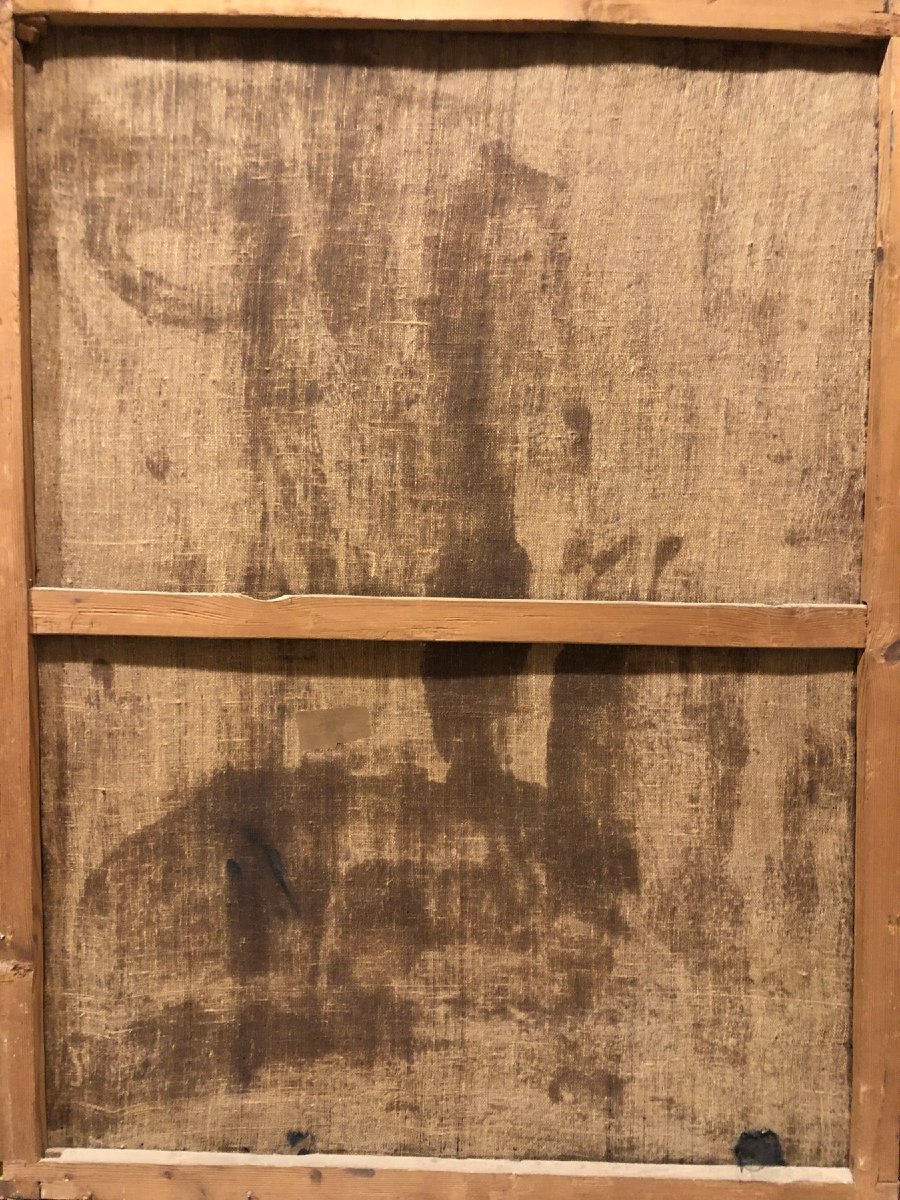
- Oil on canvas. Original canvas.
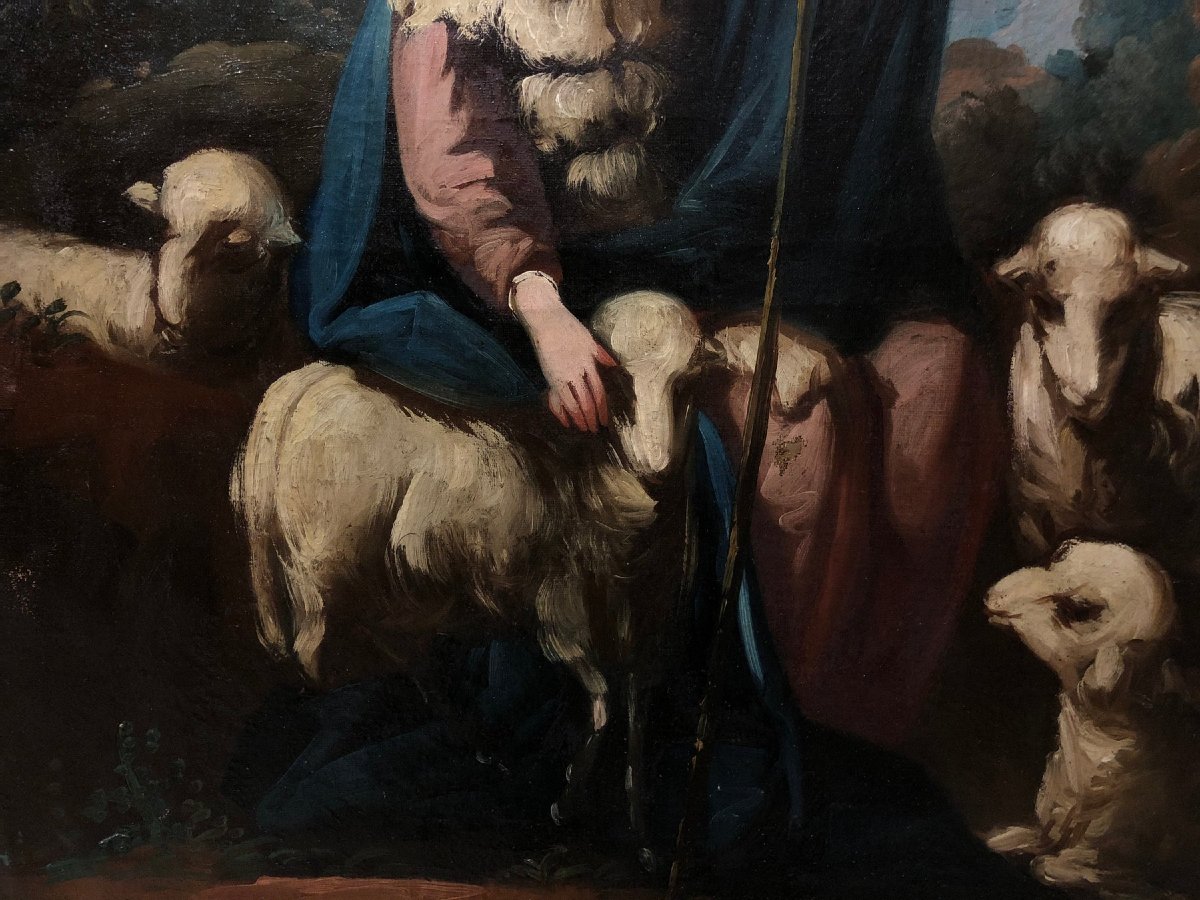
- The mystical origin of the invocation of the “Divine Shepherdess” (*Divina Pastora*) is inextricably linked to the devotion of the Capuchin friars and to a heavenly vision that occurred in Seville in the early 18th century. It was then that Brother Isidoro of Seville, inspired by mystical visions and a desire to spread devotion to the Virgin under this endearing title, conceived the iconography that would define her cult. Tradition holds that, following a revelation, the friar commissioned the sculptor Francisco Antonio Ruiz Gijón to create the first image of the Virgin: in it, she is depicted wearing a shepherdess’s jacket and a straw hat, with a blue cloak draped over her pink tunic; she holds a shepherd’s crook and is crowned with flowers, while sheep graze peacefully around her, symbolizing the flock of humanity. This humble beginning, born within the walls of a convent, soon transcended the confines of the religious building to take root, with unprecedented force, in the hearts of the people, thus becoming the emblem of Andalusian and Iberian devotion.
In its theological dimension—both unfathomable and sublime—the metaphor of Mary as the shepherdess of souls could only fully blossom within Spanish devotion; a tradition in which the mysticism of the Counter-Reformation successfully combined dogmatic depth with an earthly closeness marked by absolute tenderness and striking humanity. Elevating the figure of the shepherd—the quintessential Gospel archetype—to Marian dignity meant conceiving of the Mother of God not only as a heavenly queen, but as a guide in daily life, watchful and compassionate, traversing the rugged terrain of the world to rescue the lost sheep, sheltering it under the protection of her crook and her fur cloak. In this early 19th-century painting, imbued with a romantic and folk-art patina, the metaphor takes on an undeniable pictorial form: the Virgin sits at the heart of a misty and wild landscape, surrounded by lambs who gaze upon her with a docility steeped in devotion, embodying the absolute triumph of a sacred tenderness that protects humanity and leads it toward the eternal pastures.
- Dimensions of the artwork without frame: 61 x 82 cm / 70 x 89 cm with an exclusive, custom-made frame.
800 €
Period: 19th century
Style: Other Style
Condition: Excellent condition
Material: Oil painting
Reference (ID): 1847220
Availability: In stock
Print