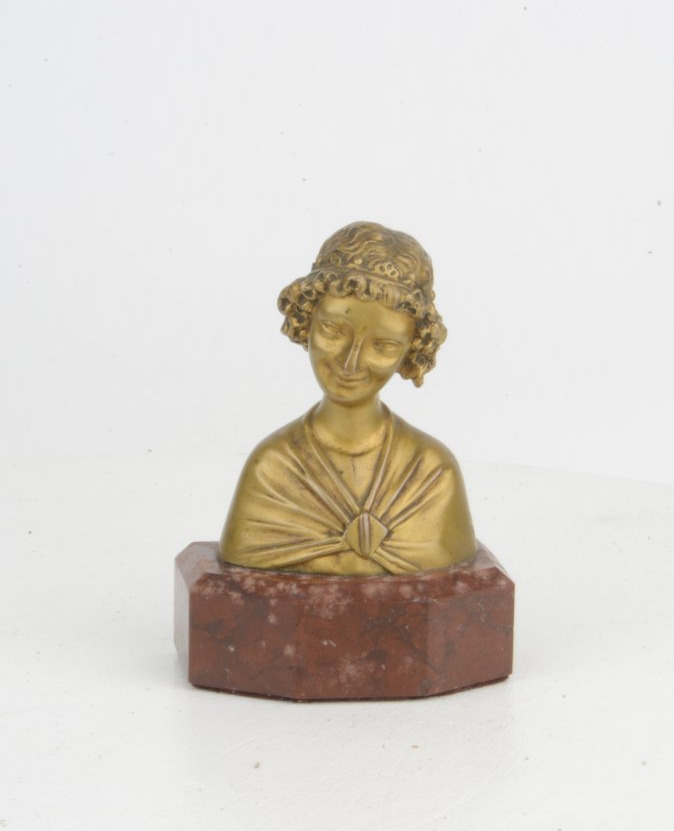
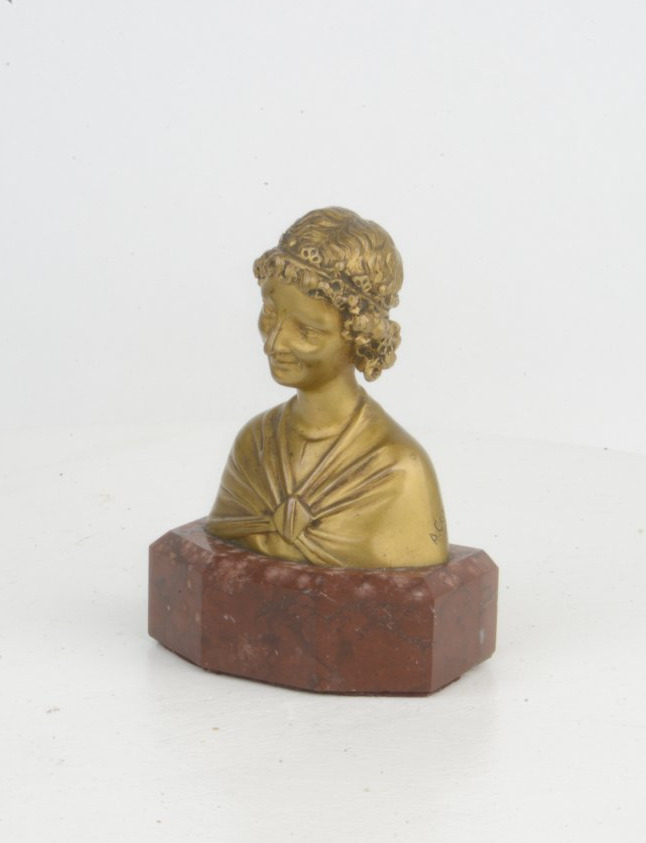
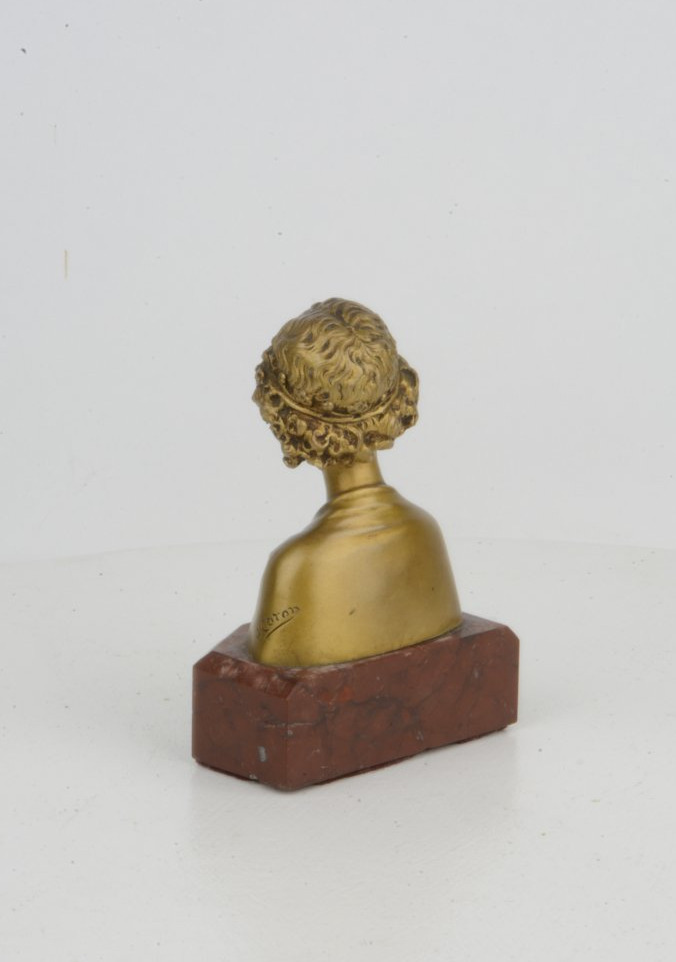
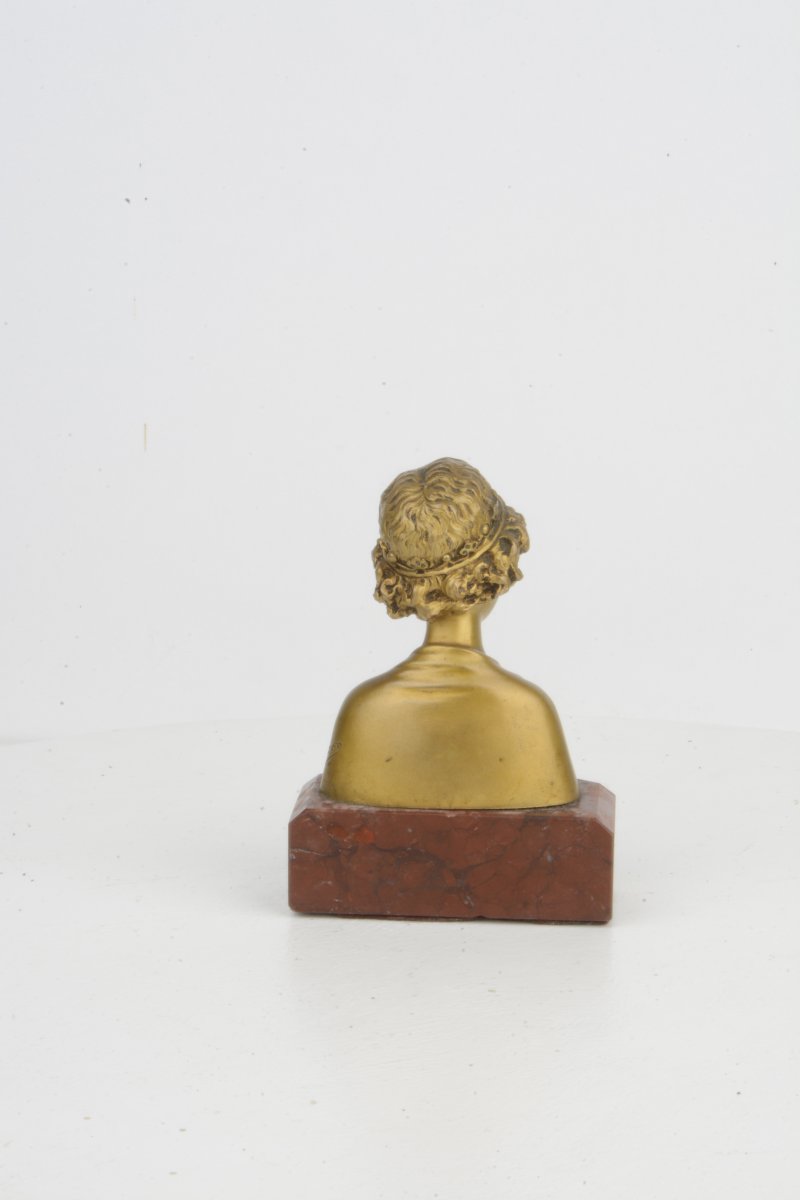
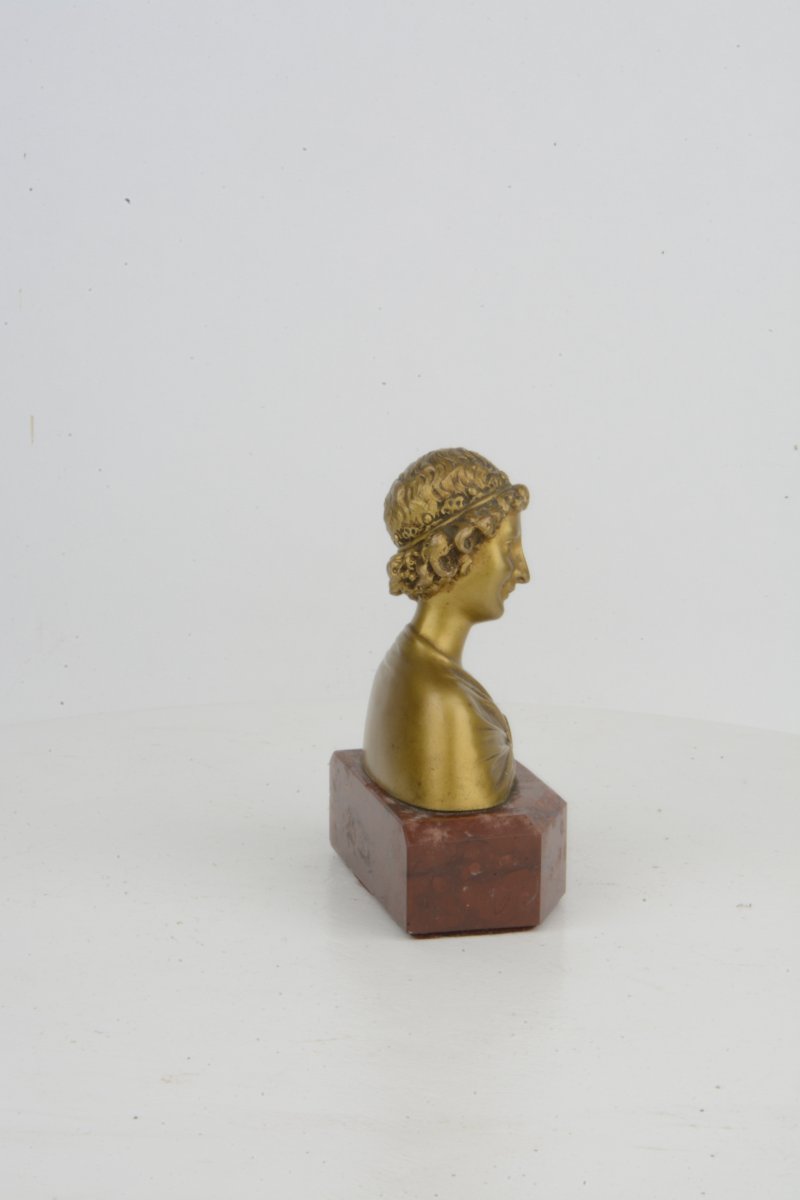
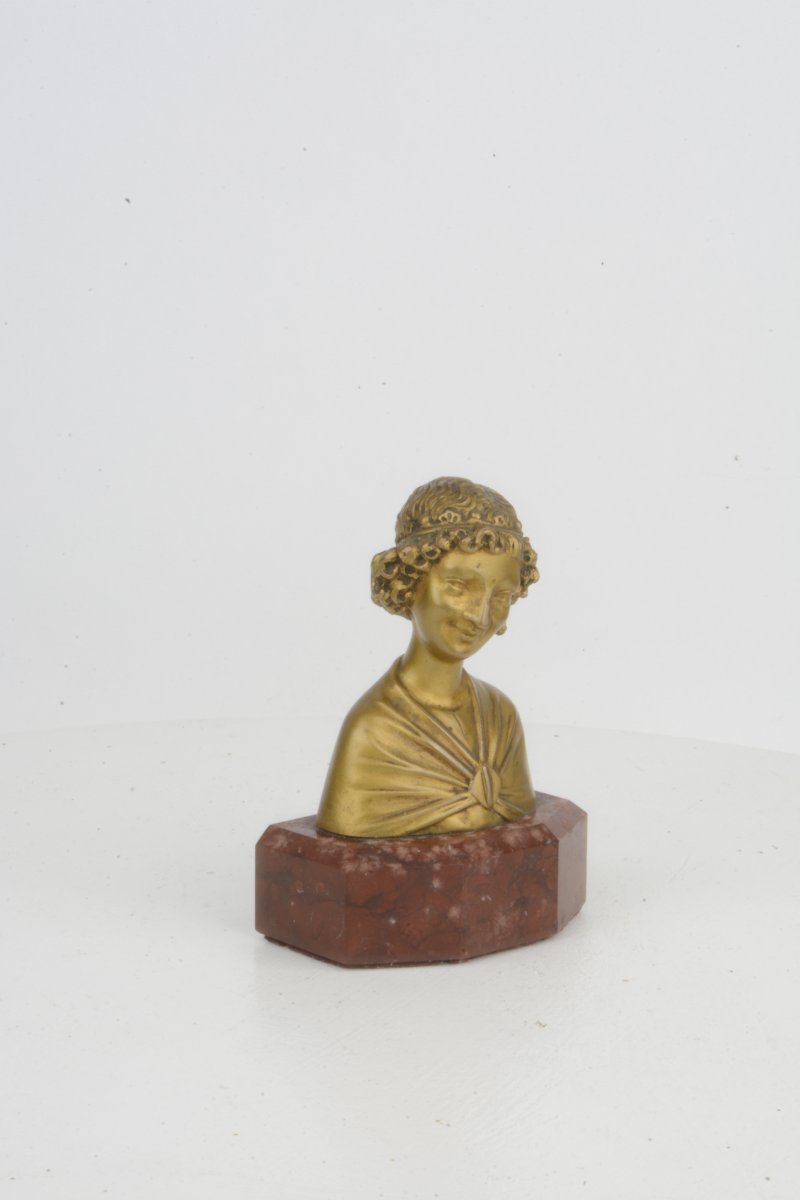
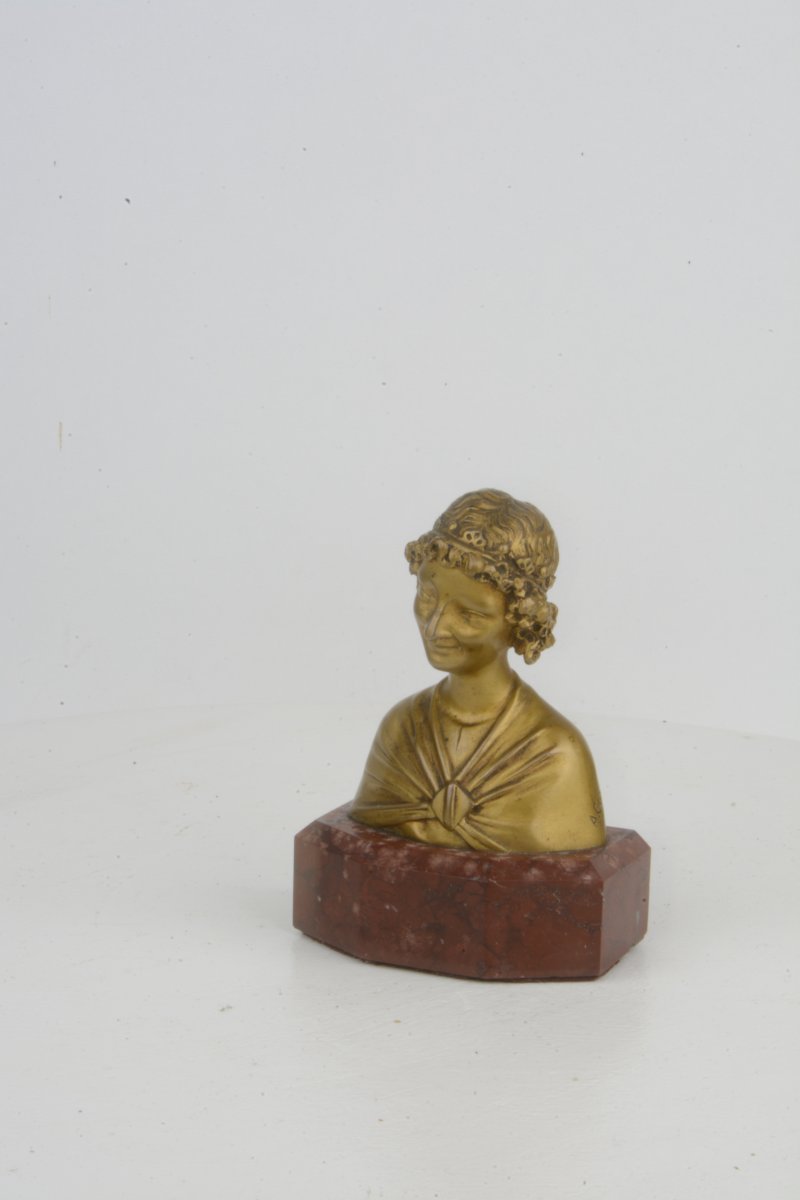
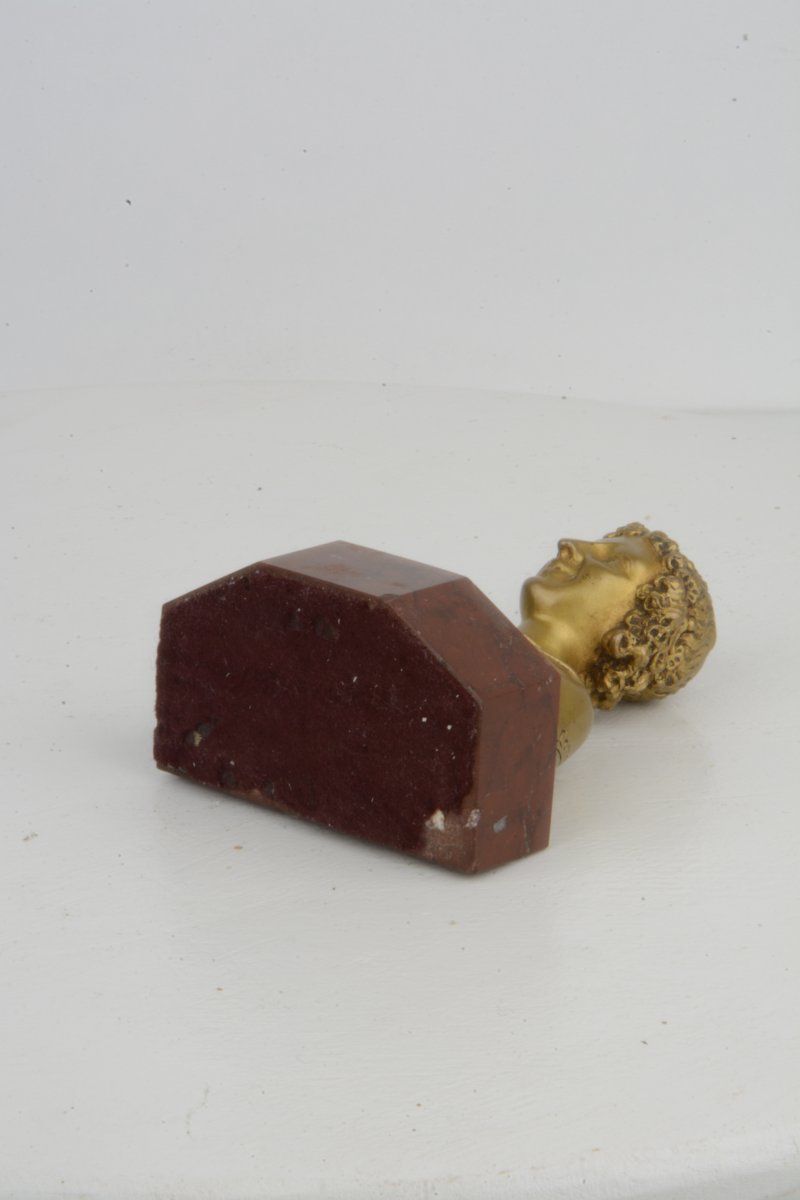


Smiling Angel - Auguste Caron 1857–1932
Dimensions
Height: 10 cm
Width: 7 cm
Depth: 5 cm
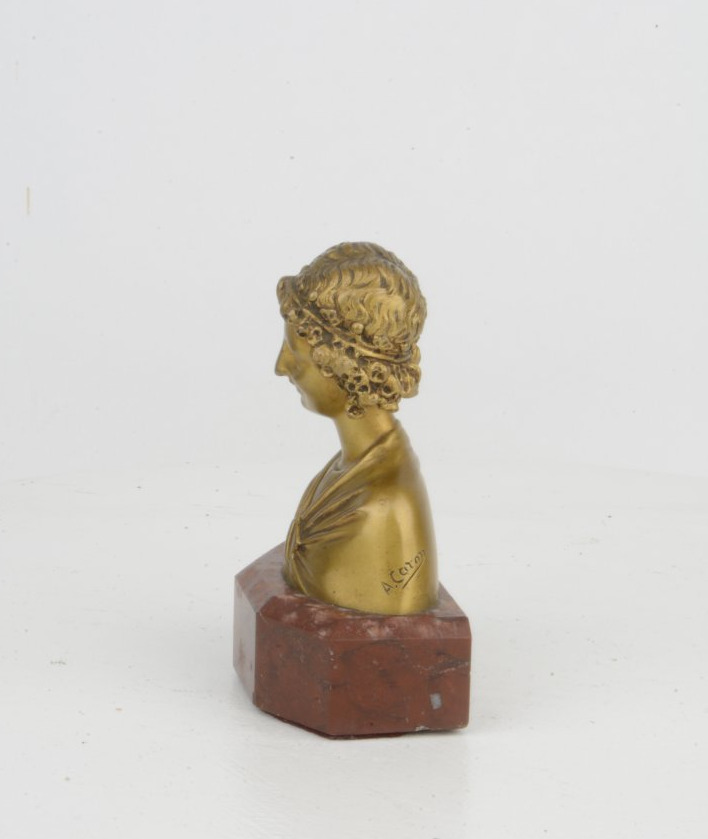
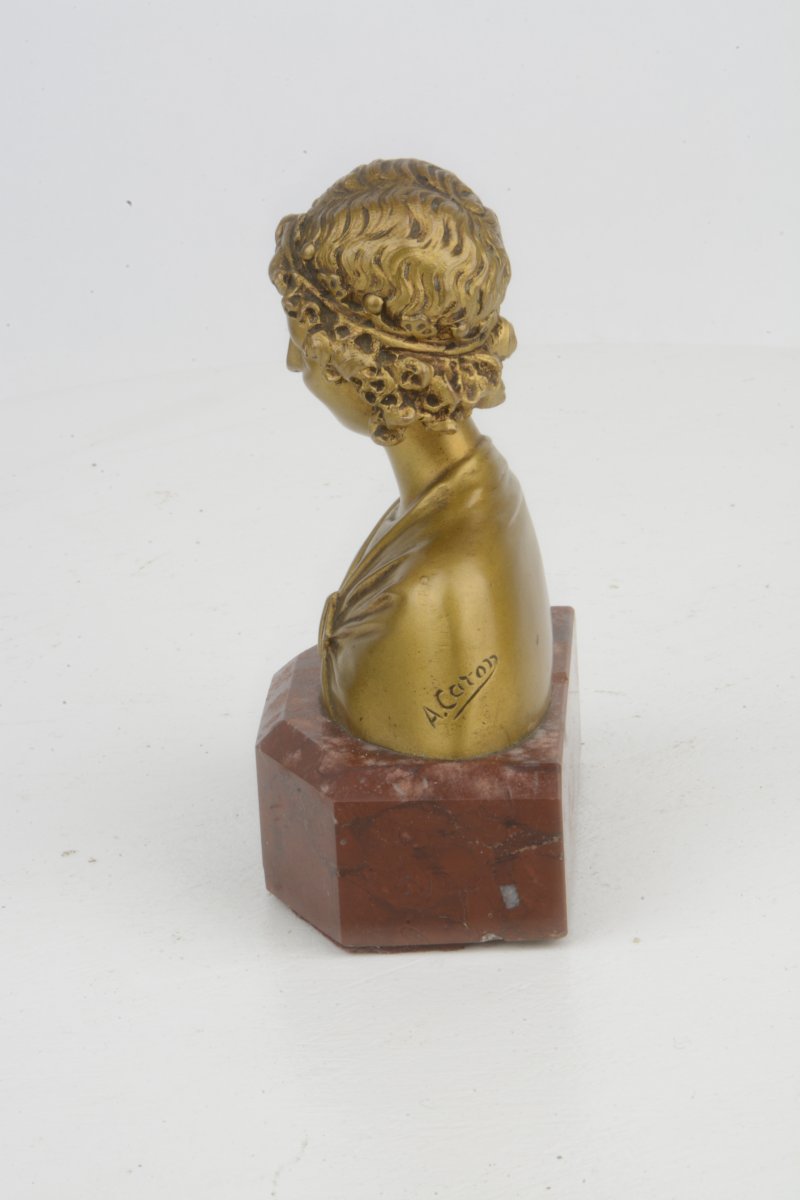
Signature
signed below the right shoulder
Alexandre Auguste Caron
Little is known about this Parisian, who was born in 1857 and died in 1932. He studied sculpture under Théophile Barrau (1848–1913) of Carcassonne, himself a student of the renowned Alexandre Falguière (1831–1900). With finesse and refinement, Alexandre Auguste Caron sculpted small, always mischievous figurines, working equally well in marble, bronze, and ivory. Deeply drawn to jewelry, he gilded the vast majority of his works with gold leaf.
Alexandre Auguste Caron loved to sculpt delicate subjects—smiling and just a touch mischievous. The Smiling Angel of Reims Cathedral could not help but inspire him!
The Smiling Angel
Here, he focuses primarily on the angel’s smile, setting aside its main attribute—its wings. Like his distant counterpart, he gently chisels the youthful features, the curly hair held back by a ribbon, and that famous—so famous—smile, which is at once joyful, benevolent, and slightly enigmatic, as if imbued with a secret known only to angels
In 1211, work began on the “new” Notre-Dame Cathedral in Reims. It was not completed until three centuries later. And even today, the cathedral remains partially unfinished, since the spires that were originally intended to crown the towers have not been erected.
The north portal (the one on the left) of the western façade is adorned with 2,303 sculptures created between 1236 and 1245.
Carved from a single block of stone with grace and delicacy by one of the master sculptors of this immense project, the Smiling Angel stands on the left side of this north portal. With his wings spread, clad in a cloak fastened by a diamond-shaped brooch and a simple long tunic cinched at the waist—which presents the eye with a swirl of vertical tubular folds showcasing the skill of the master sculptor who created him— his face is slightly tilted, turned past Saint Nicaise, who stands beside him, toward another smiling angel.
In the West, and more specifically in Christian art, the smile disappeared as early as the 5th century. The 12th and 13th centuries saw its revival in cathedral statuary. The smile is now the symbol of reconciliation between man and God, who became incarnate for the redemption of suffering humanity.
The statuary, created in the 13th century, abounds in a unique style that has come to be known as the “Reims workshop.” The fluidity of the drapery, the rendering of the fabrics, the facial expressions, the highly realistic poses, the statues’ movement that never appears frozen, and the details brought to perfection are the work of a few master sculptors at the height of their art. However, alongside this workshop, other workshops stand out, each corresponding to different periods.
To learn more: https://www.lestresorsdegamaliel.com/sculptures/562-ange-au-sourire-a-caron.html
Period: 20th century
Style: Other Style
Condition: Good condition
Material: Bronze
Width: 7
Height: 10
Depth: 5
Reference (ID): 1844992
Availability: In stock