THIS OBJECT WAS SOLD
Potpourri/incense Burner In Gilded Bronze Supported By A Kneeling Putto—charles X Period.

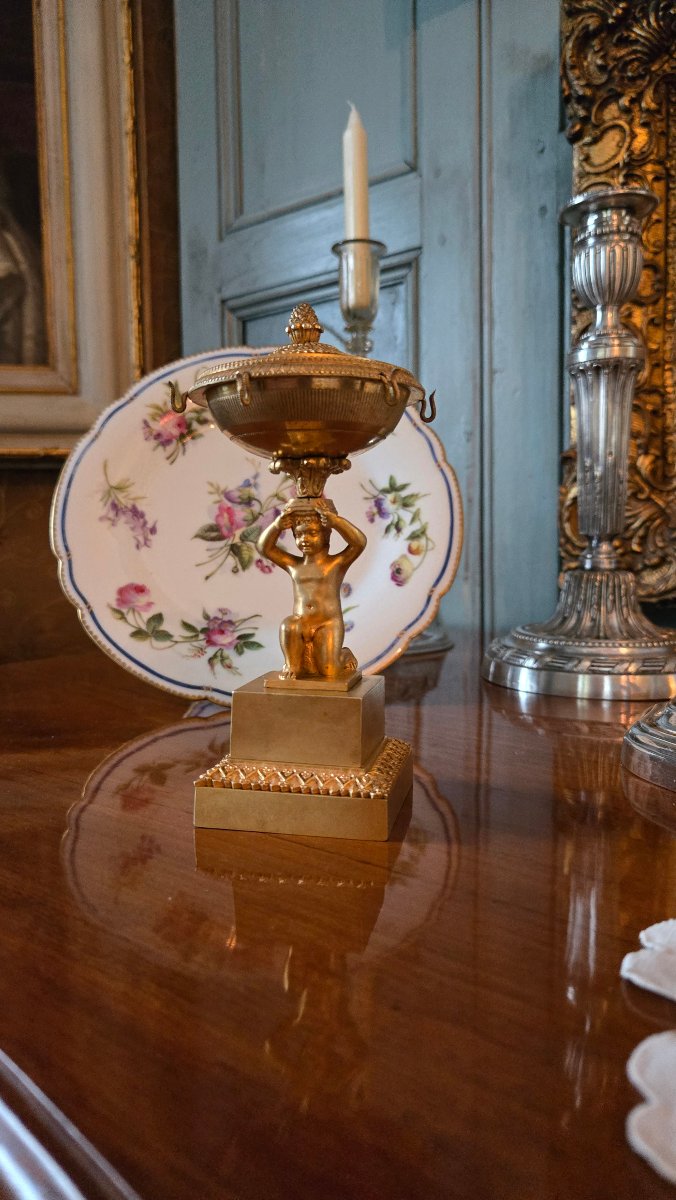

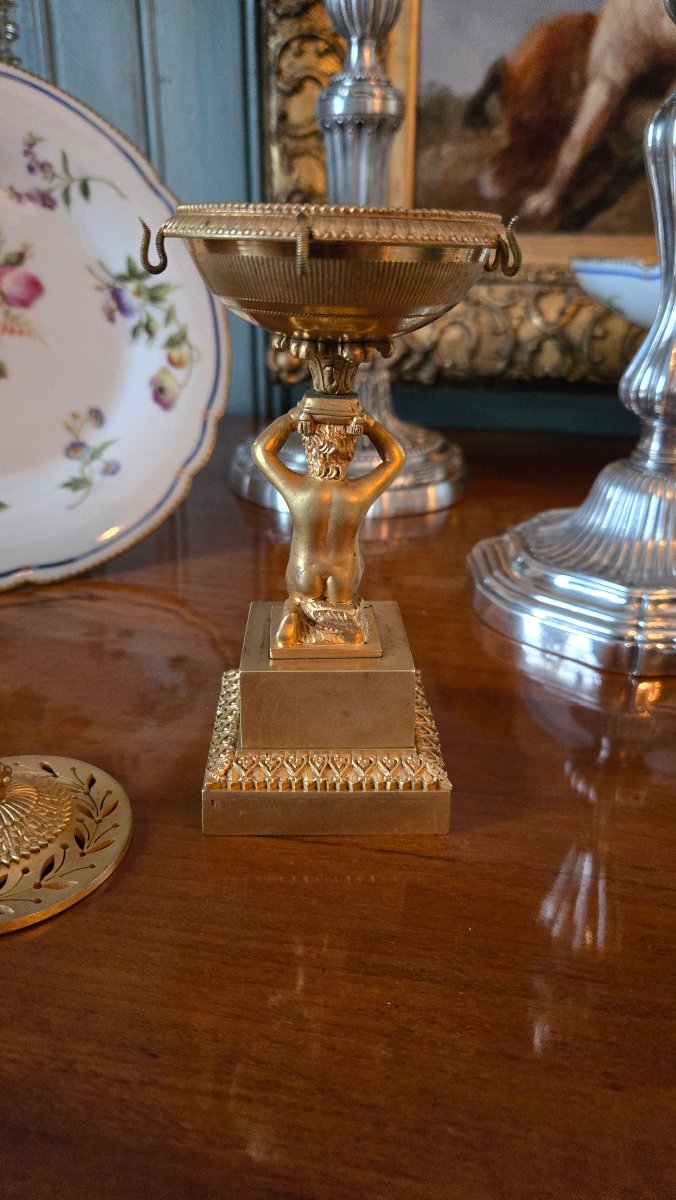
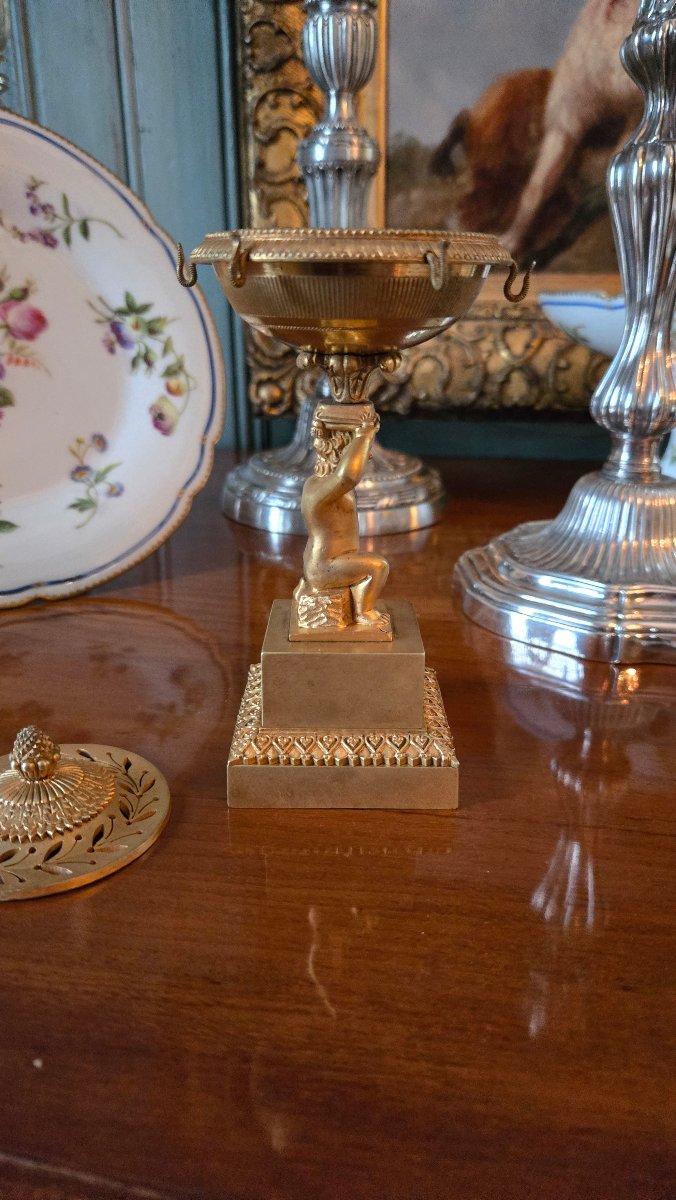
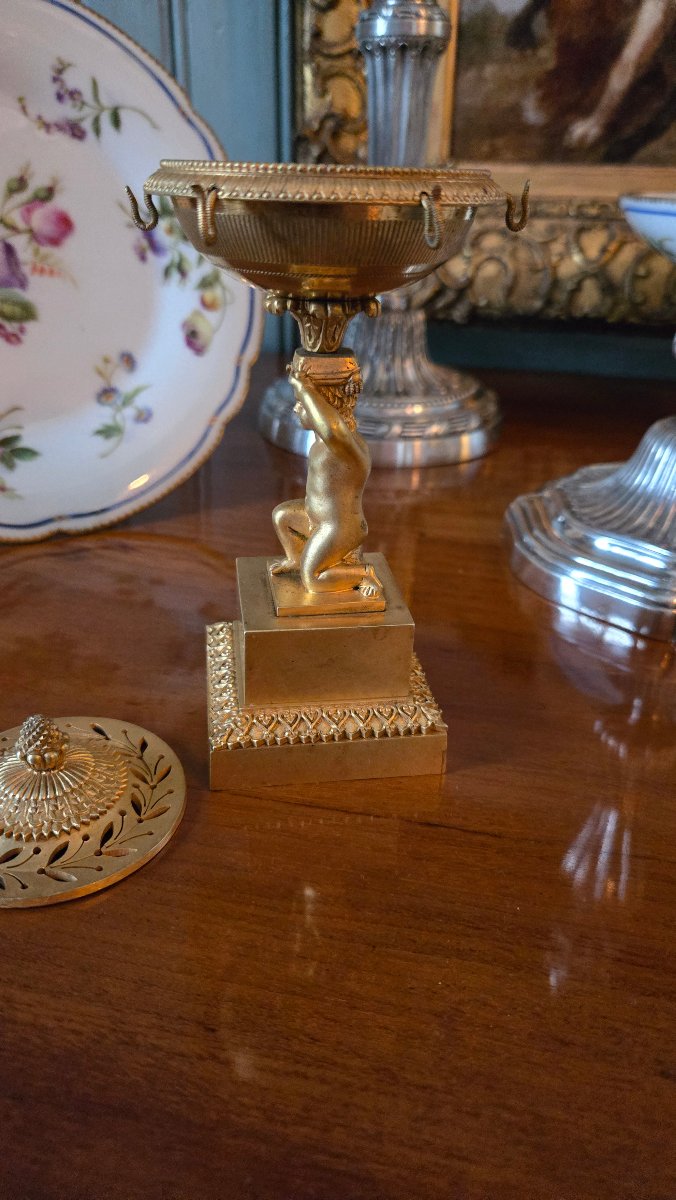

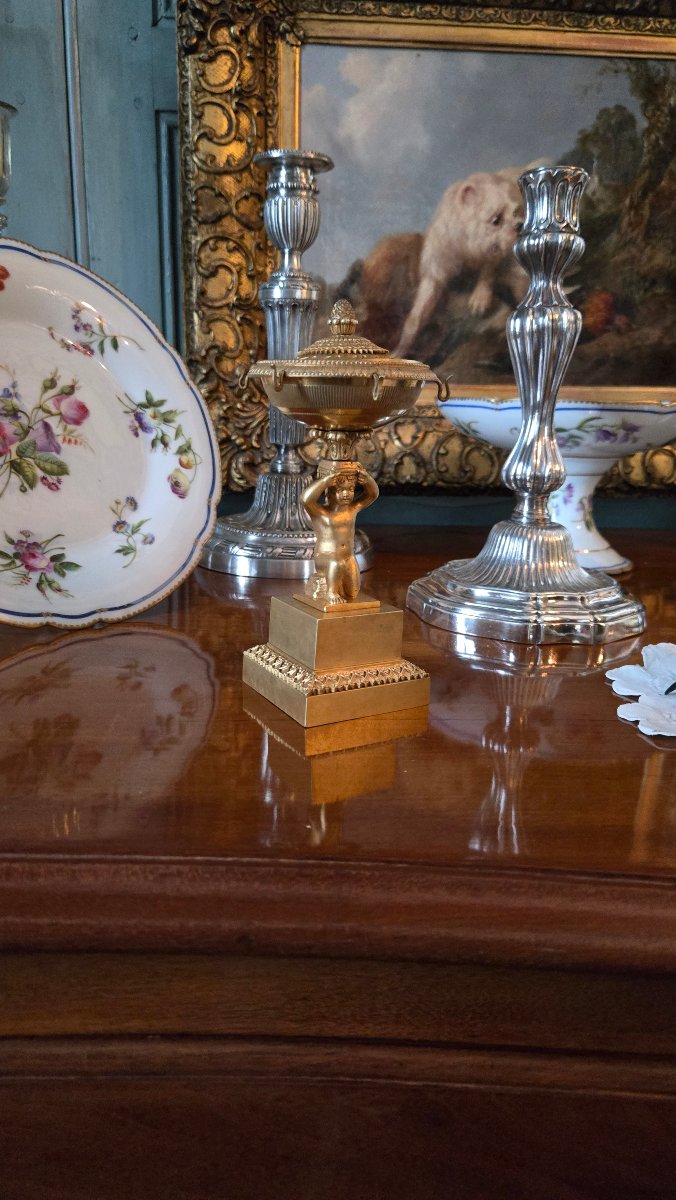


A charming little potpourri jar with a ring holder, made of finely chased and gilded bronze, dating from the Charles X period, circa 1825–1835. It features an elegant composition combining a kneeling putto with an antique-inspired cassolette, in a design particularly representative of the eclectic taste of French decorative arts during the Restoration.
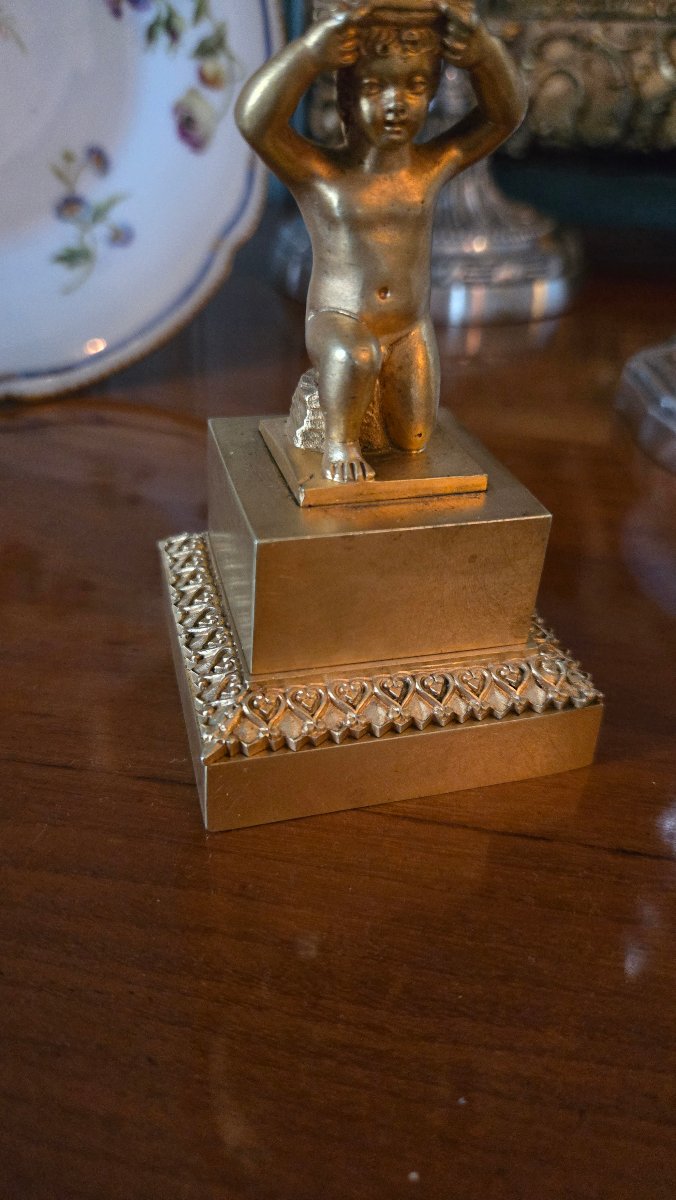
The piece rests on a stepped quadrangular base, accented by a delicate frieze of heart-shaped motifs and stylized fleurons. The geometric design and sharp cutouts of this ornamentation evoke the Neo-Gothic influences and the troubadour style that developed during the Restoration and continued into the July Monarchy.
In the center, a nude putto with curly hair is depicted kneeling, one leg bent and the other raised. With his arms raised, he supports on his head a quadrangular cushion adorned with tassels of passementerie, surmounted by an elegant flared base featuring finely chiseled acanthus leaves, reminiscent of a small Corinthian capital.
This childlike figure is part of a long decorative tradition inherited from antiquity and extensively developed during the Renaissance. Putti are frequently depicted in this tradition as supporting figures, holding cups, baskets, garlands, or architectural elements. Here, the kneeling position and the cushion placed between the head and the object being supported lend the composition a particularly graceful quality.
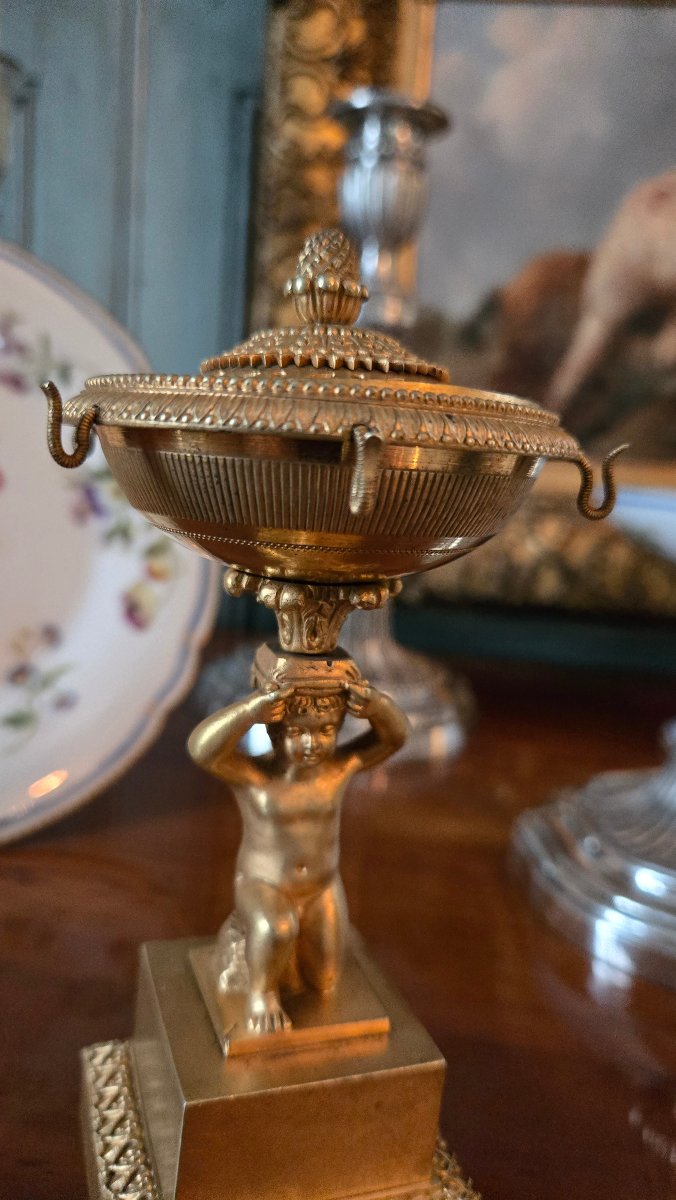
The upper section takes the form of a cassolette with a flared body, entirely adorned with a succession of fine, radiating godrons, highlighted at their base by a delicate beaded frieze.
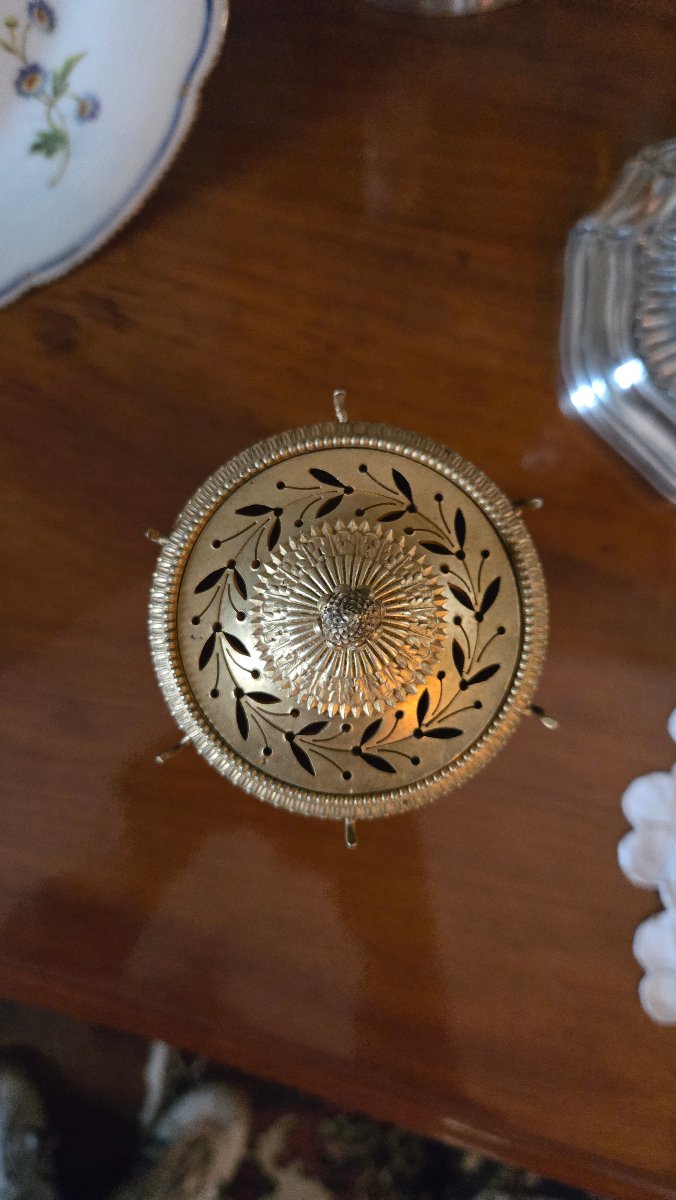
Its removable lid features a rich concentric design. At the center rises a knob in the shape of a stylized pinecone, resting on a corolla of fine godrons, surrounded by several rows of acanthus leaves with sharp, geometric cutouts. Their ornamental treatment, almost architectural in nature, evokes certain Neo-Gothic influences of the period. A radiating serrated crown extends this design.
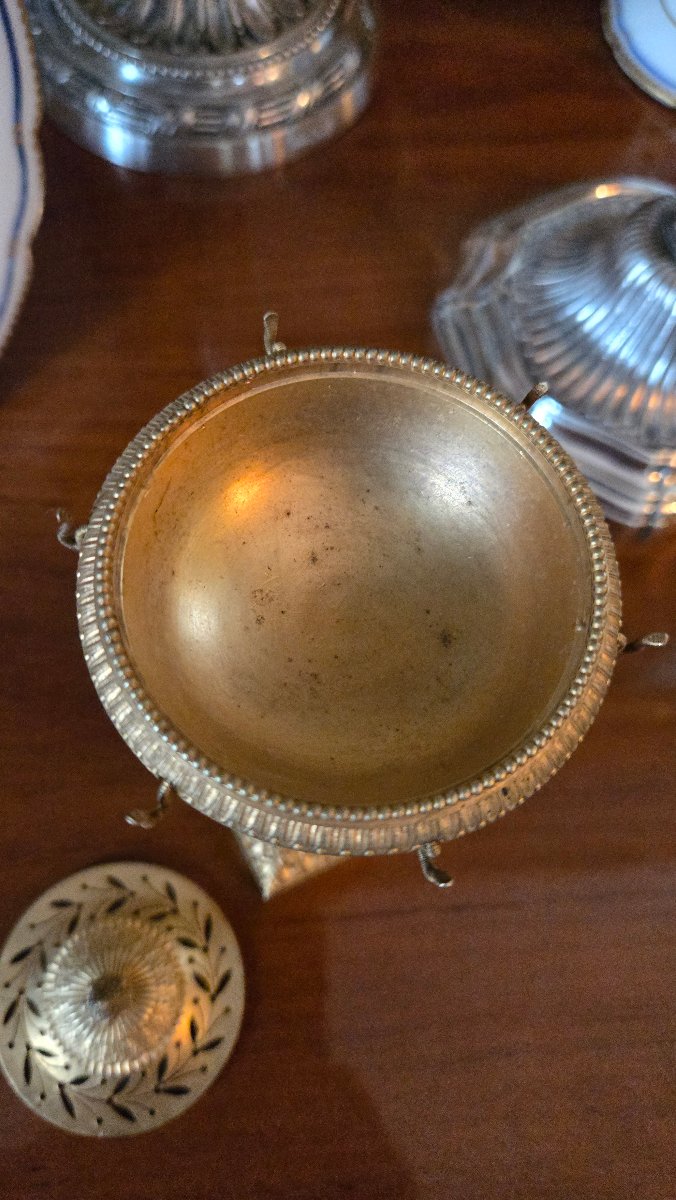
The lid is delicately openworked with laurel branches and berries arranged in a wreath, motifs directly borrowed from the classical repertoire. A row of pearls highlights its rim, while the peripheral molding of the cassolette is adorned with a continuous frieze of finely chiseled water leaves.
Small, striated hooks, evenly spaced around the bowl, allow rings or small pieces of jewelry to be hung, giving this object a particularly ingenious secondary function.
The lid reveals a small inner compartment made of gilded bronze, likely intended to hold fragrant mixtures of dried flowers, plants, or aromatic substances, whose scents could diffuse through the openwork of the lid.
The shape of this cassolette draws direct inspiration from the incense burners of Greek and Roman antiquity, which were used to diffuse fragrant substances during religious ceremonies, offerings, or in domestic settings. This reference to the ancient world, a prominent feature in neoclassical decorative arts, is adapted here to a small toiletries item that combines the pleasures of fragrance and jewelry.
The appeal of this piece also lies in the convergence of several artistic influences: antiquity, as seen in the cassolette, the godrons, and the laurel wreaths; the Renaissance, in the figure of the putto; and the Neo-Gothic style, evident in certain friezes and the sharply defined foliage.
This ornamental freedom illustrates the evolution of the decorative arts under Charles X, and later under Louis-Philippe, when bronze casters gradually enriched the neoclassical vocabulary inherited from the Empire with medieval and Renaissance references, characteristic of the emerging historicist taste.
With its beautiful proportions, the finesse of its chiseling, and the richness of its decoration, this small potpourri box, which doubles as a ring holder, attests to the refinement of toiletries intended for dressing tables and boudoirs in the early 19th century.
The piece has retained its original gilding and is in excellent condition, with slight signs of wear that are entirely normal given its age.
Total height: 16 cm.
Explore similar pieces and discover your ideal find:
Objets d'Art