



Maurice Boutterin - Sloping Street In A Village - Watercolor - Signed And Dated 1913
Artist: Boutterin Maurice (1882 – 1970, France)
Maurice Boutterin (1882–1970)
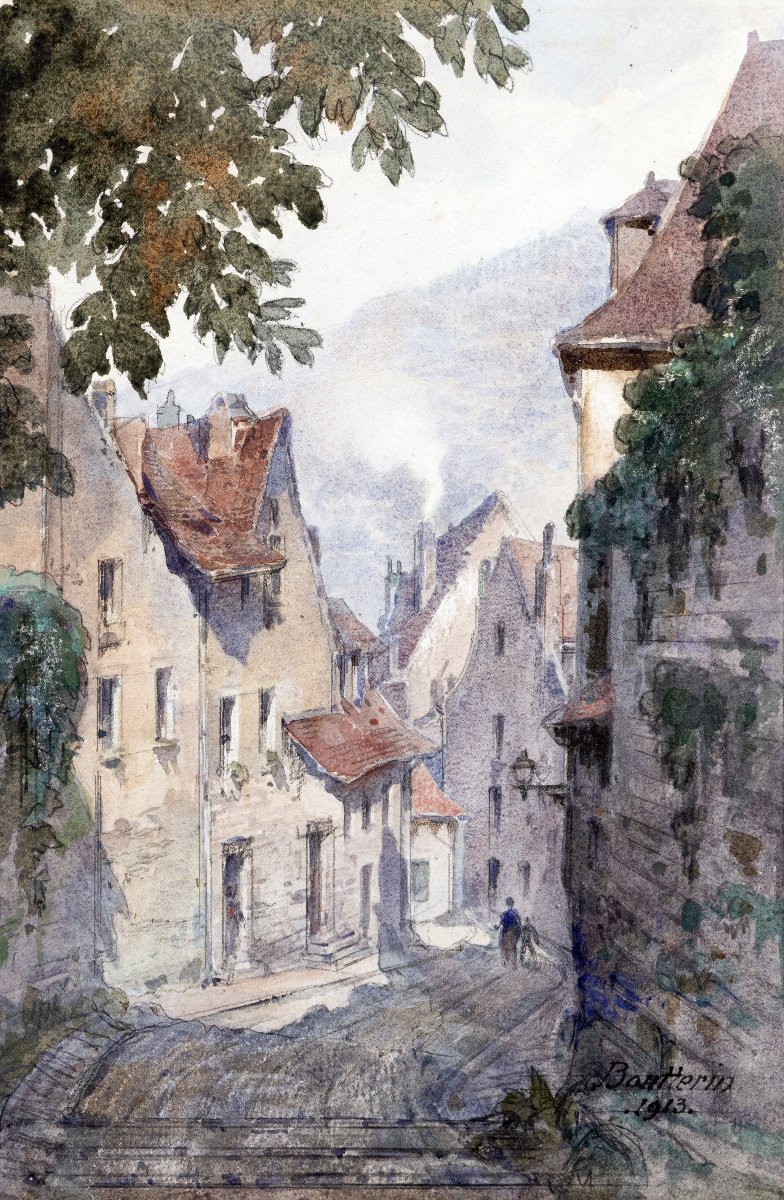
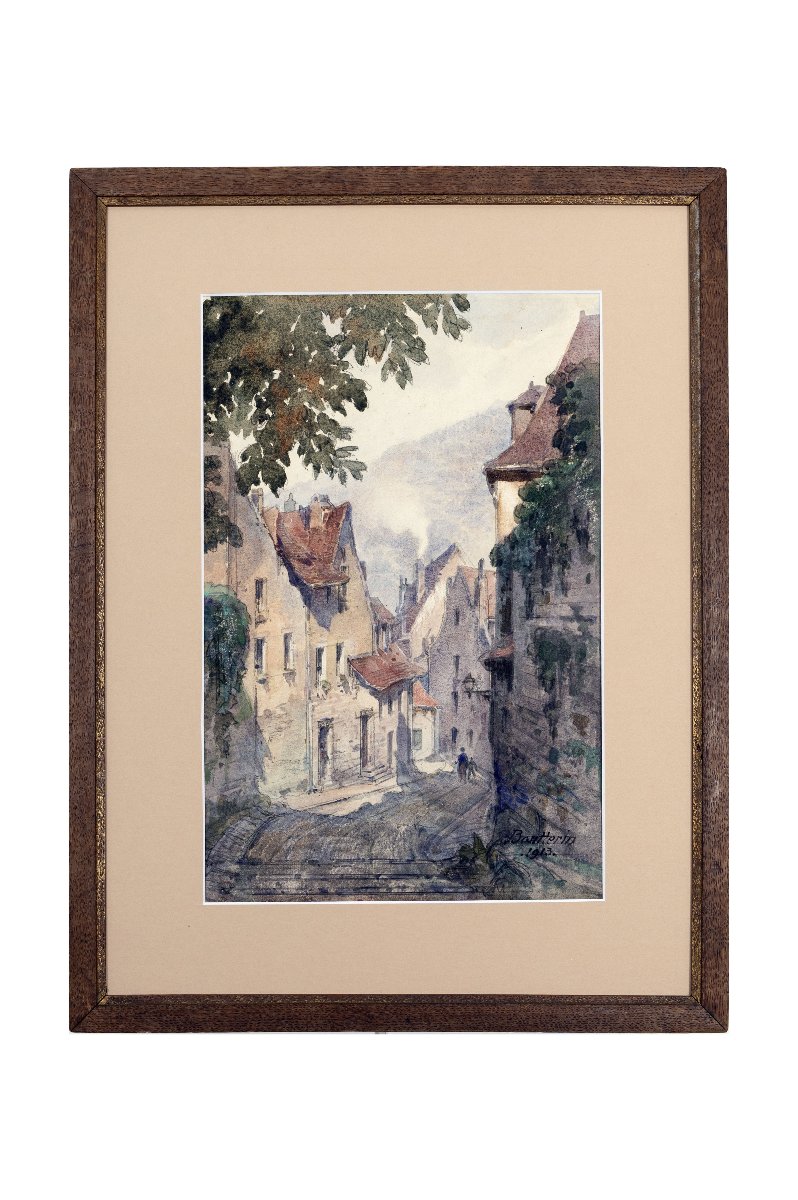
A Sloping Street in a Village, 1913
Watercolor and pencil on paper
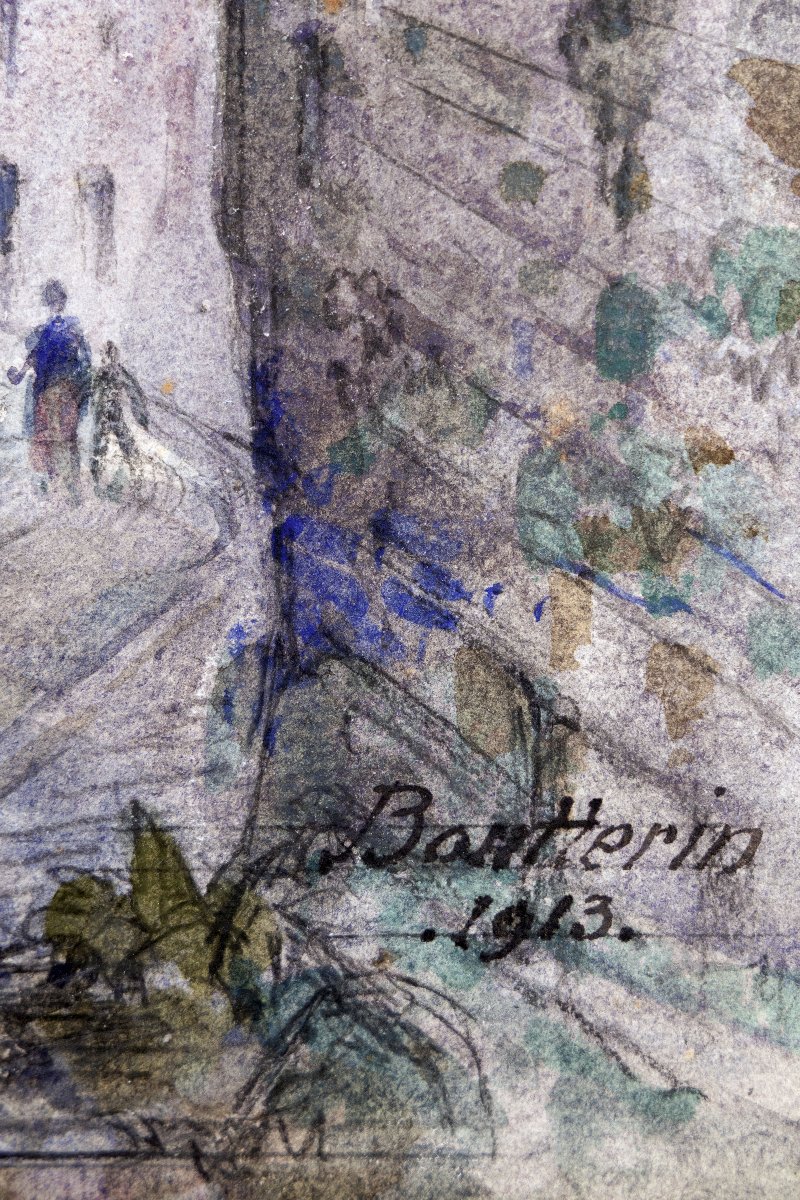
Signed and dated “Boutterin 1913” in the lower right corner
31.5 x 20.5 cm (image size) – 45 x 34 cm with frame
Very good condition
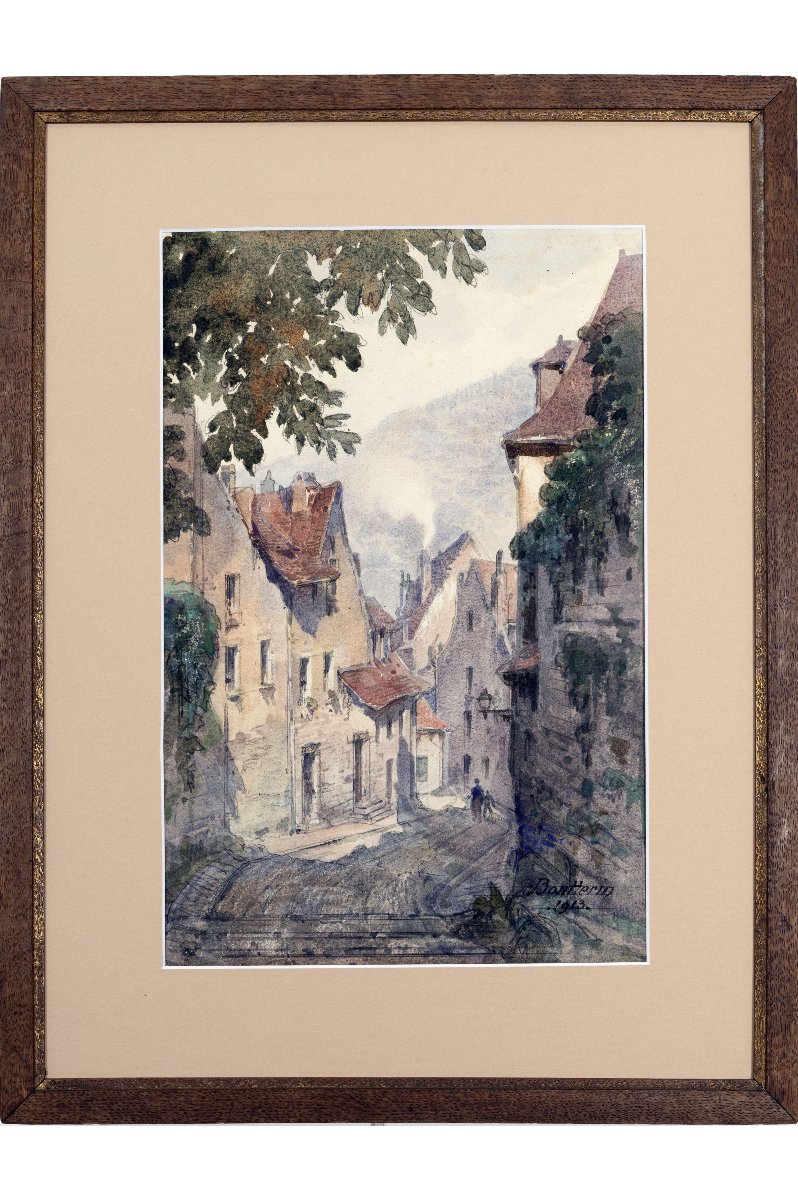
Wooden frame with fine gilded molding, in good condition; pinkish-beige mat
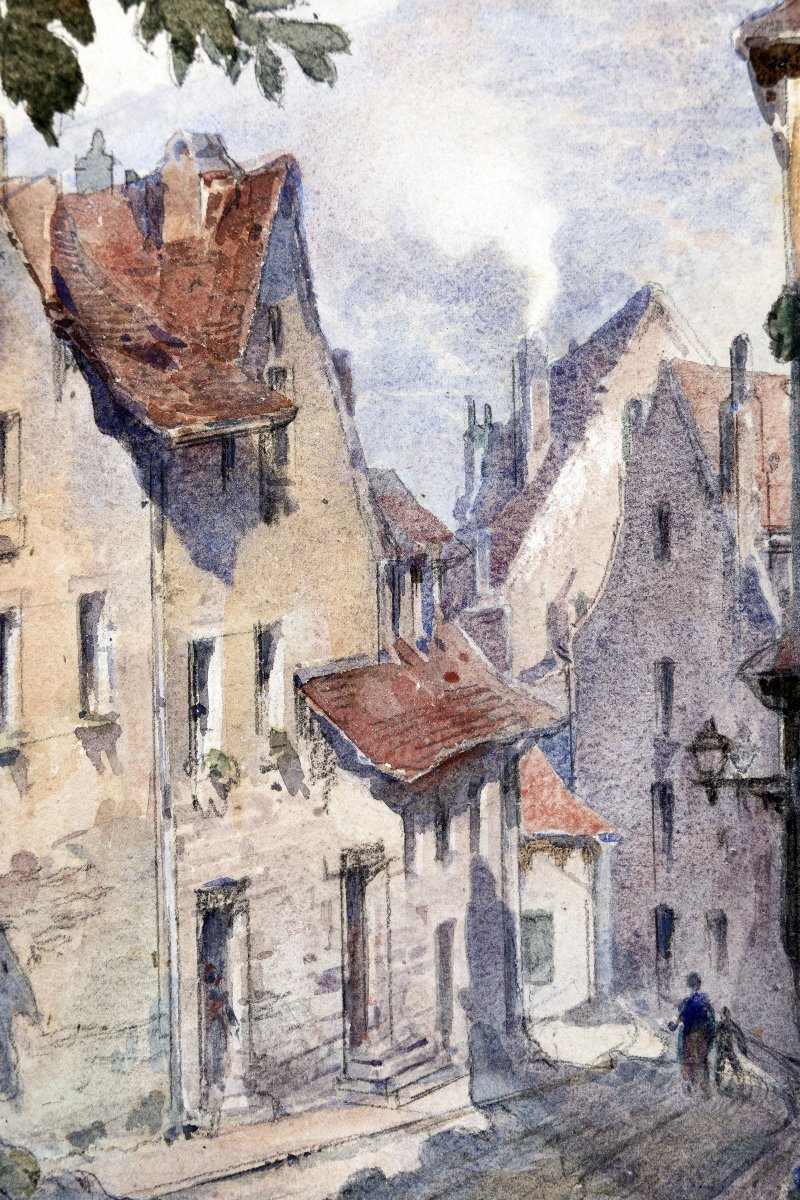
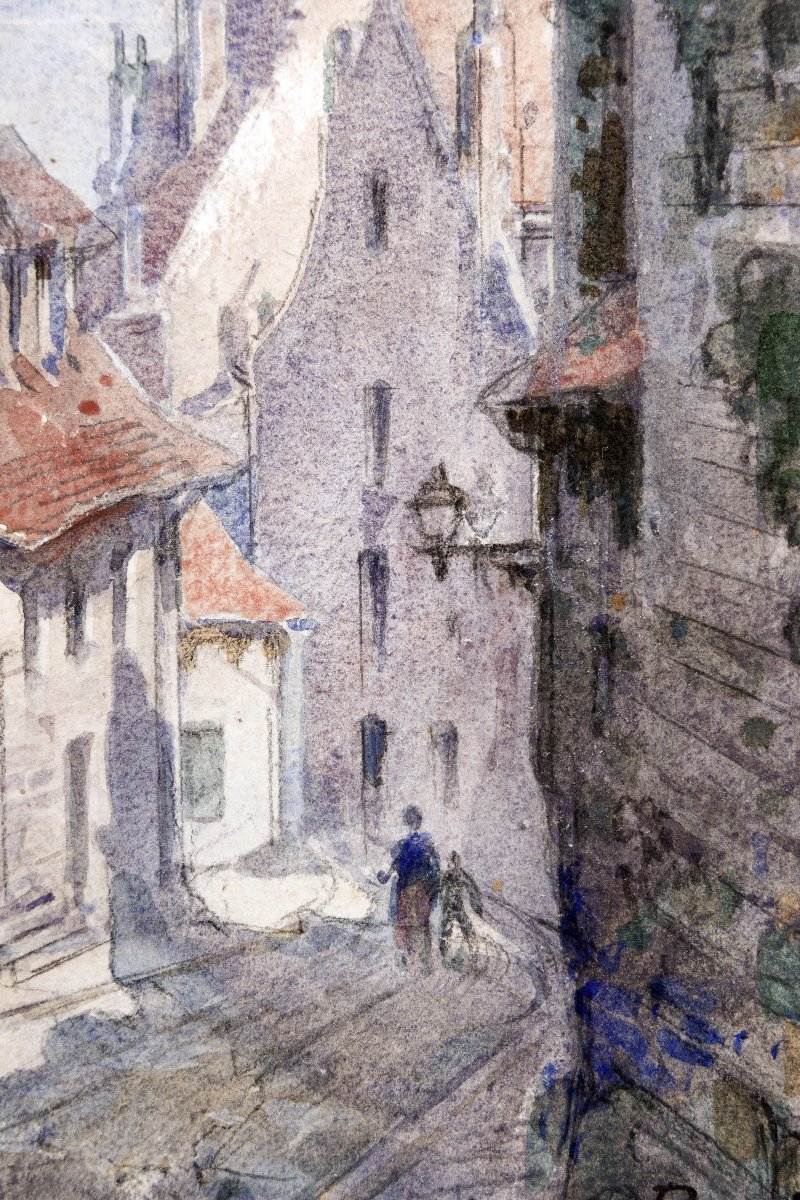
A branch in the foreground frames the scene like a curtain. Beneath it, a few stone steps, then the street that slopes down and winds between the houses. In the far background, a woman in blue walks away, a small figure at her side. White smoke rises from a chimney and dissipates into the mist on the hill.
The village is likely in the Franche-Comté region, not far from Besançon, the painter’s hometown: it features the steep red-tiled roofs, dormer windows, and the stepped gable that frames the view. On the right, a tall wall covered in ivy supports a lantern on its iron bracket. On the left, framed by a doorway, a figure can be seen standing on the threshold.
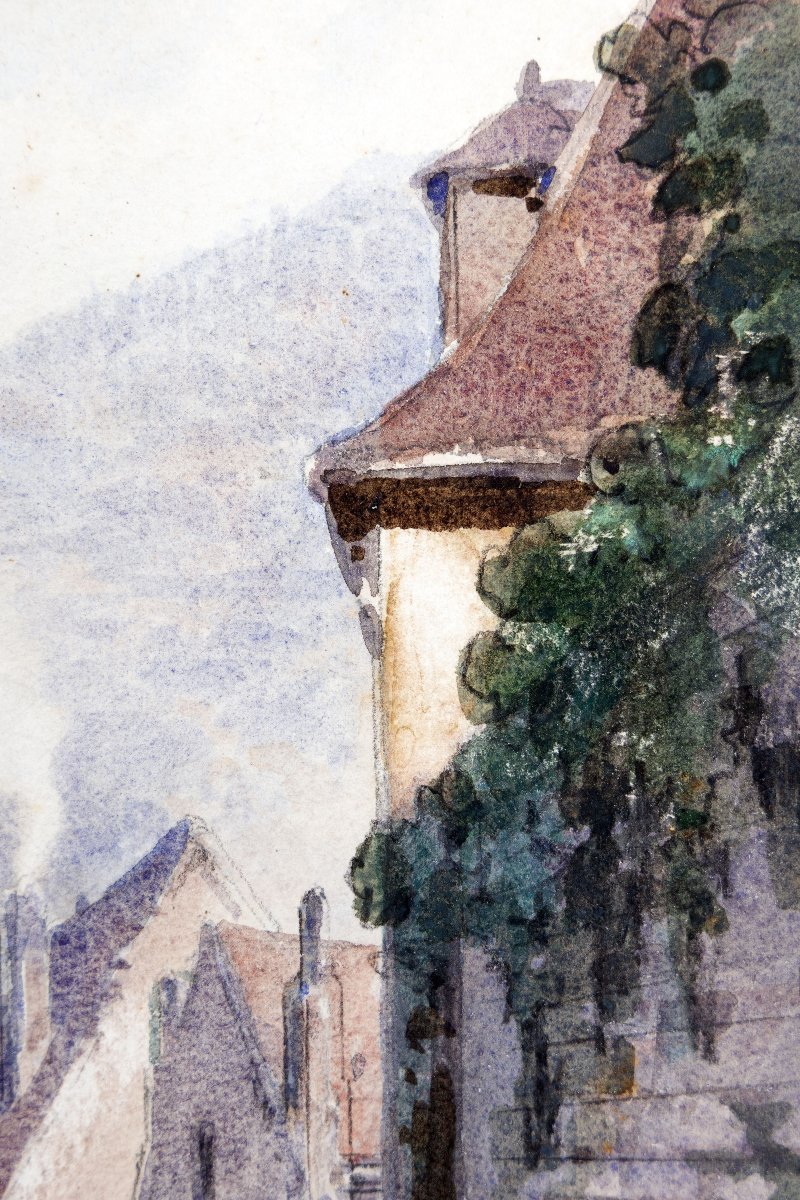
One can sense the architect’s touch. The pencil sketch, still visible beneath the paint, places each facade, each window, and each step with great precision. The perspective is accurate, without any stiffness. Over it, the watercolor is applied freely: warm ochres on the sunlit facades, violet shadows in the street, and the deep greens of the ivy and foliage. It is this interplay between the golden light and the mauve shadows that gives the street its depth and its atmosphere of a quiet late morning.
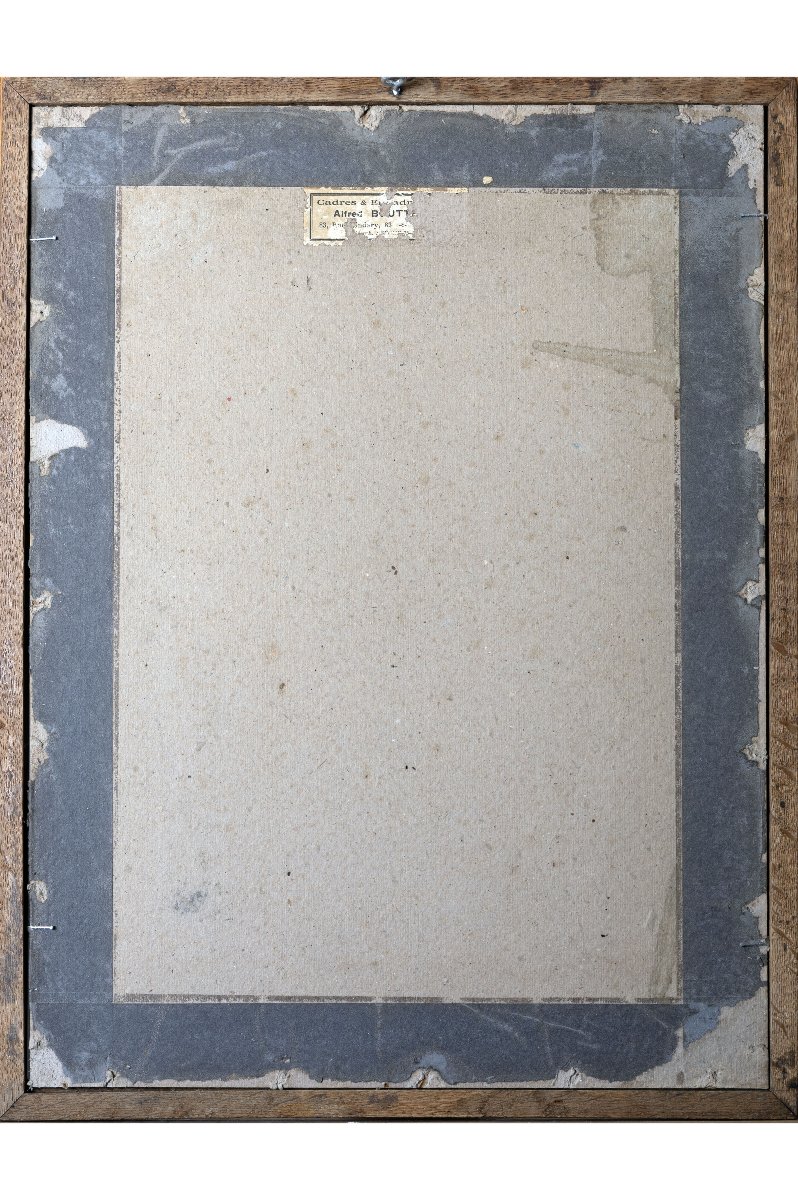
The watercolor is mounted on a pinkish-beige mat, in a wooden frame accented with a thin gold molding; it is in good condition. On the back, part of a label from a Parisian framer remains.
The Artist
Maurice Boutterin was an architect born in Besançon. He was the son of architect Marcel Boutterin (1842–1915), who designed the Grand Hôtel des Bains and the city’s thermal baths.
Admitted to the École des Beaux-Arts in Paris in 1902, he won the Grand Prix de Rome in 1909 and resided at the Villa Medici from 1910 until the end of 1913. A brilliant draftsman and watercolorist, he sketched ancient monuments there: his *Arc de Constantin*, executed in 1912 in pencil, ink, and watercolor and surrounded by greenery, is now housed at the Musée d’Orsay.
He later settled in Paris, where he became an architect for civil buildings and national palaces, and in the 1930s designed the expansion plan for Besançon. He died in Paris in 1970.
Work on view at the gallery (07240)
Shipping: Please contact us for shipping rates within France and internationally.
200 €
Period: 20th century
Style: Other Style
Condition: Excellent condition
Material: Water color
Width: 20,5 cm à vue, 34 cm encadrée
Height: 31,5 cm à vue, 45 cm encadrée
Reference (ID): 1844152
Availability: In stock
Print