
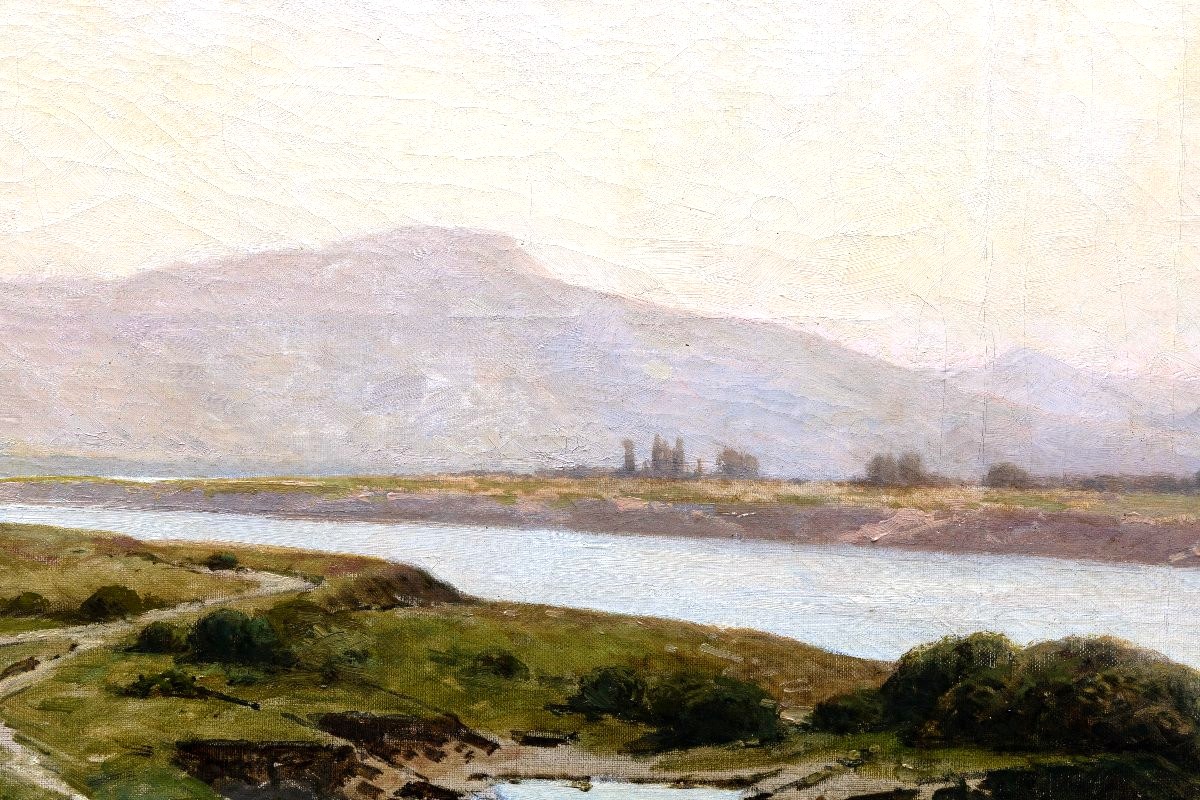
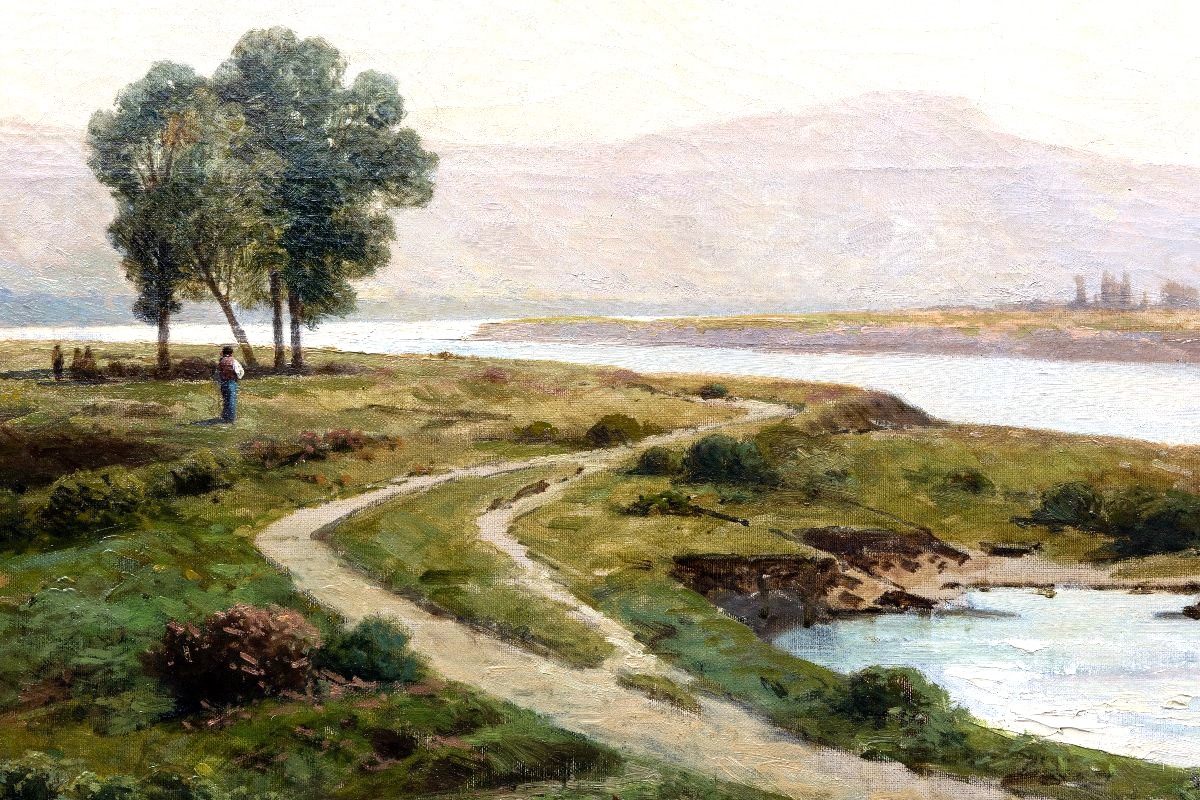
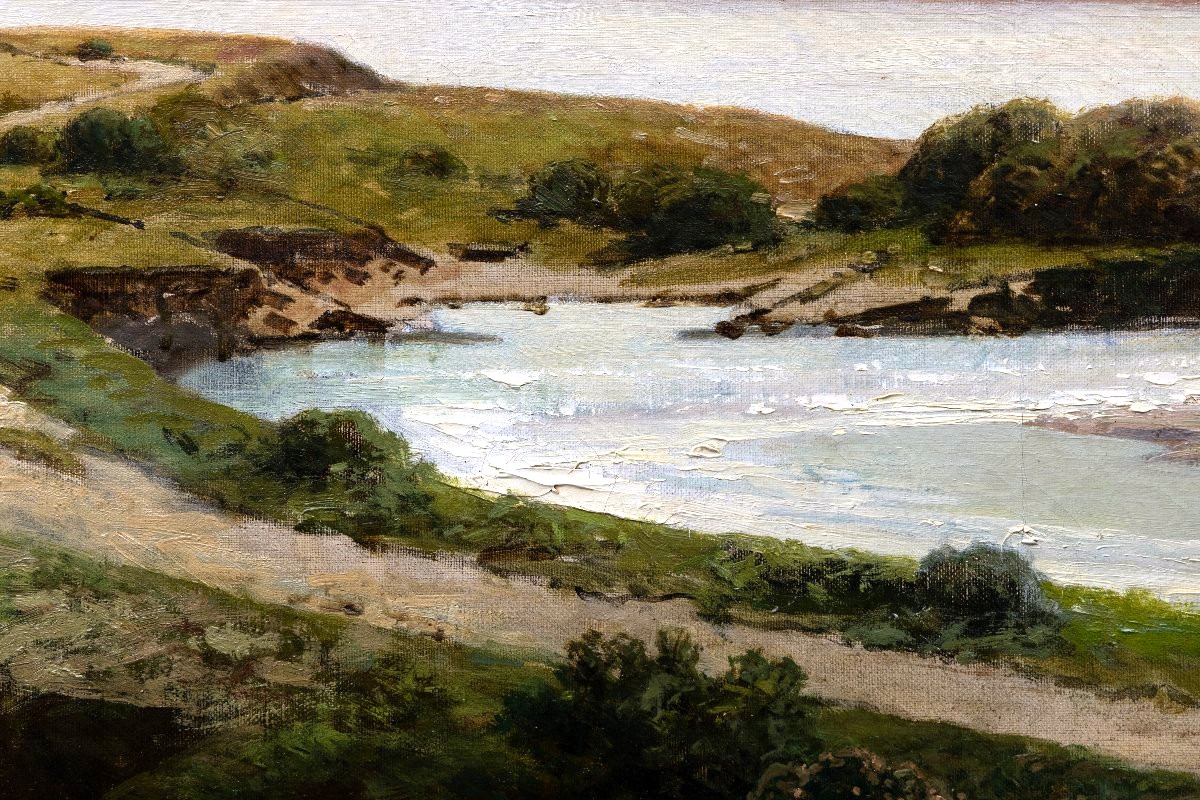
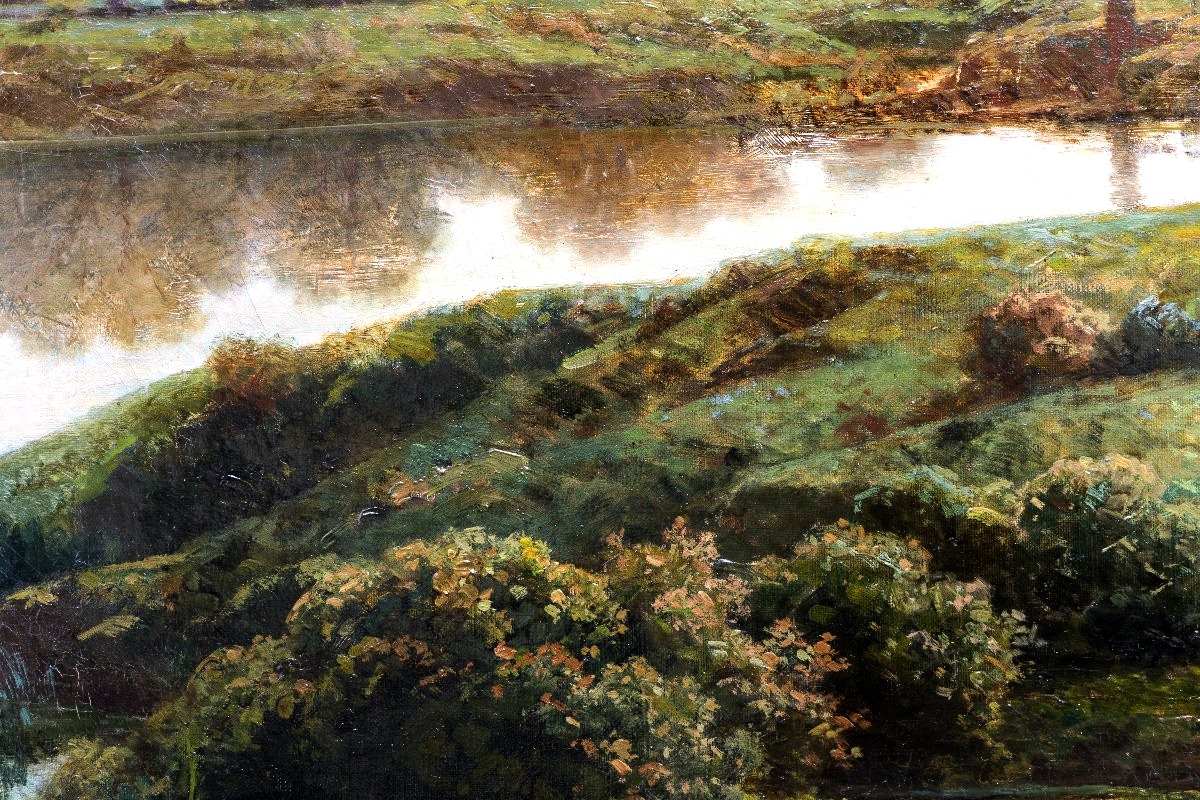


Antoine Ponthus-cinier – The Allier River And Its Lakes - Oil On Canvas - Signed
Artist: Ponthus-cinier Antoine Claude (1812 – 1885, France)
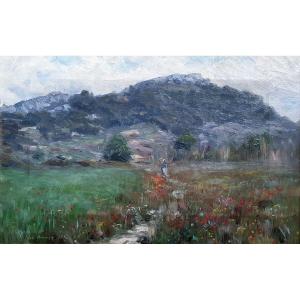
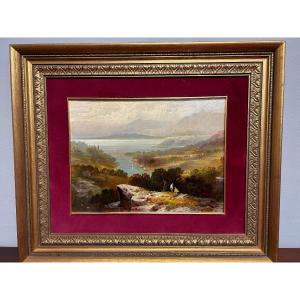
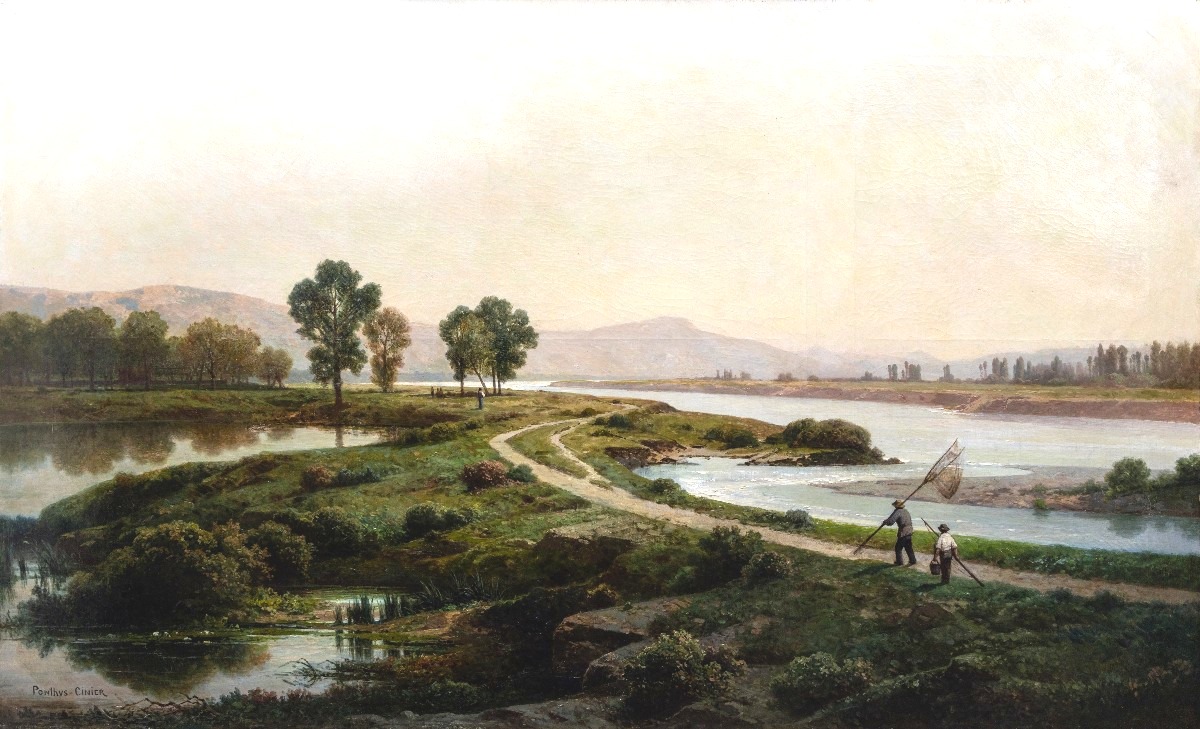
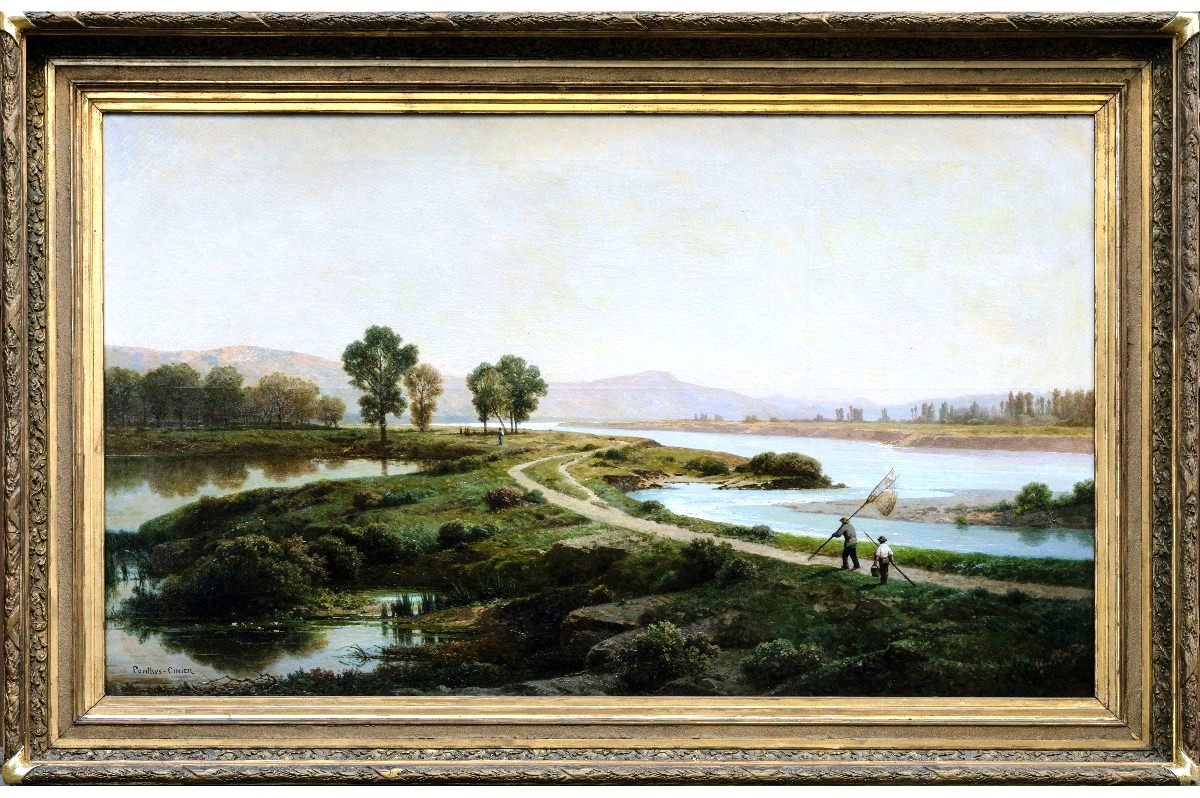
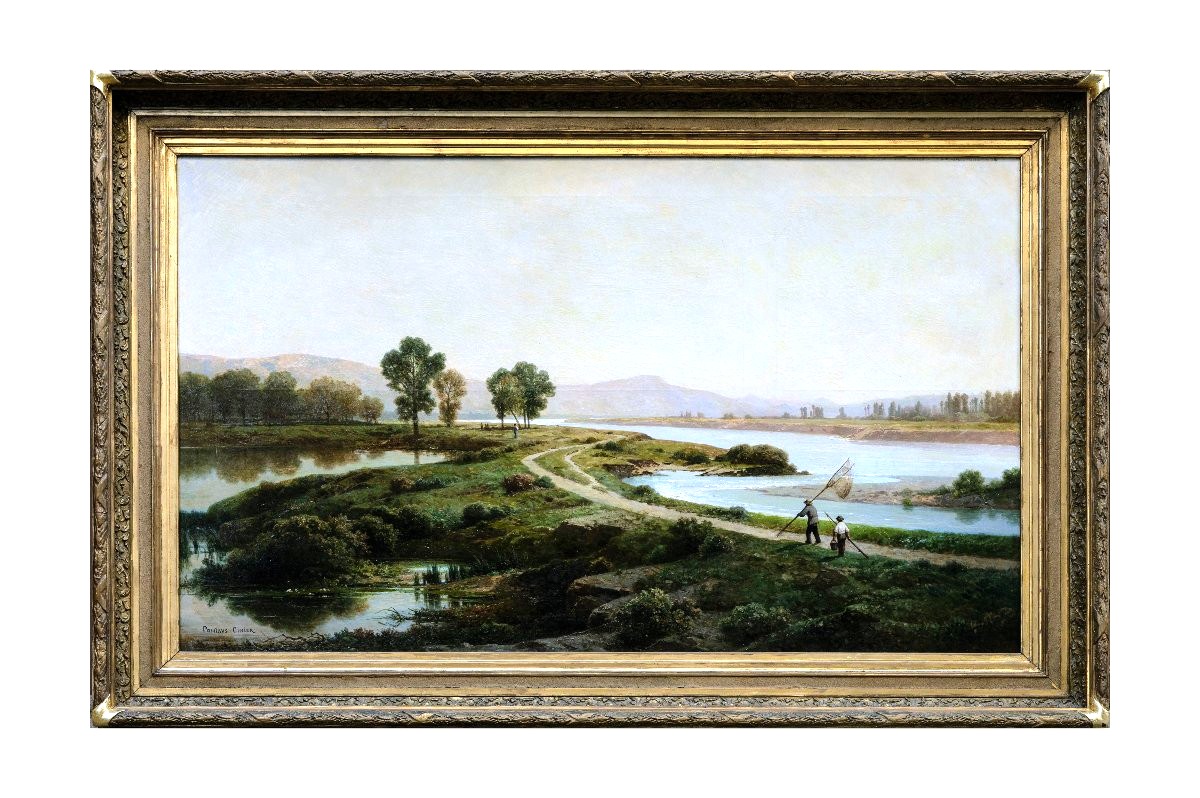
This remarkable work from Antoine Claude Ponthus-Cinier's late mature period showcases the mastery of a neoclassical landscape painter from Lyon at the height of his career. Painted a year before his death, the canvas depicts the oxbow lakes of the Allier River on the outskirts of Vichy, a famous spa town in Auvergne.
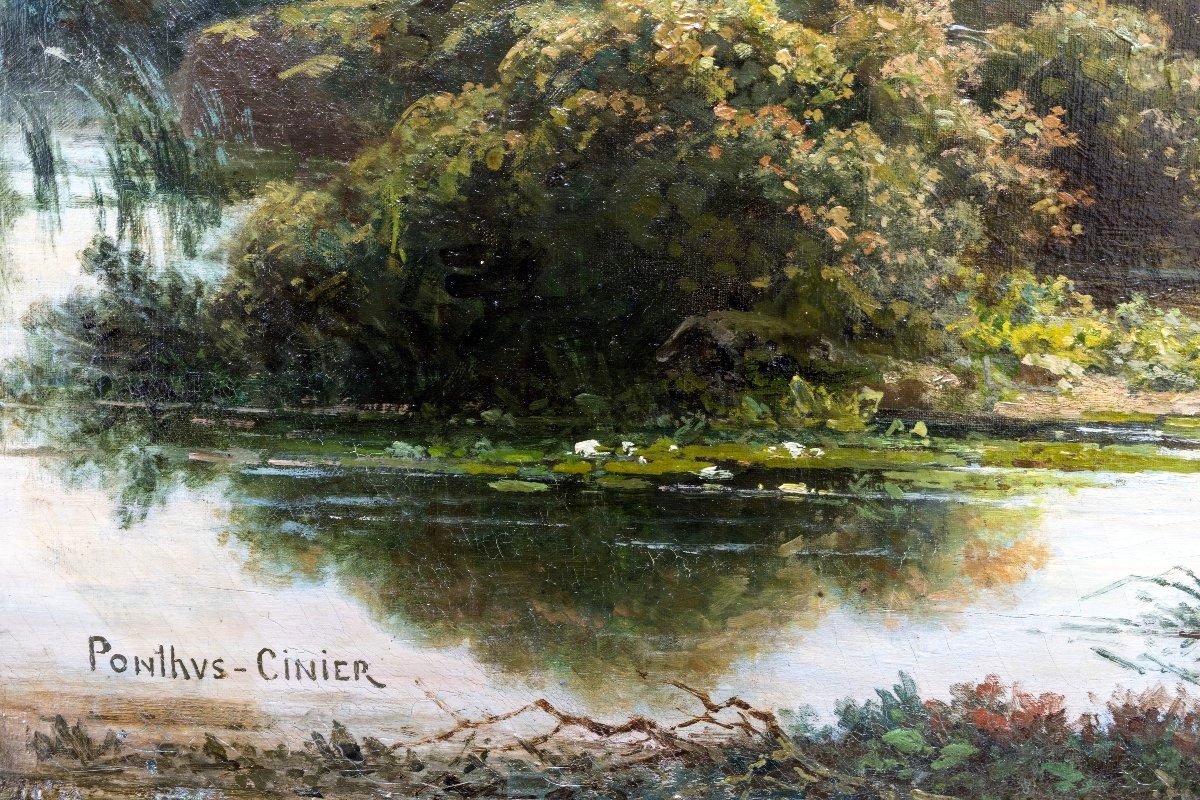
It perfectly illustrates the artist's Arcadian style and characteristic qualities: an exceptional sense of perspective guiding the eye along the winding path; light bathing the scene in a peaceful atmosphere; and the emblematic combination of water and vegetation defining his work. The abandoned reaches of the Allier—former meanders transformed into ponds—create subtle reflections characteristic of his luminous palette.
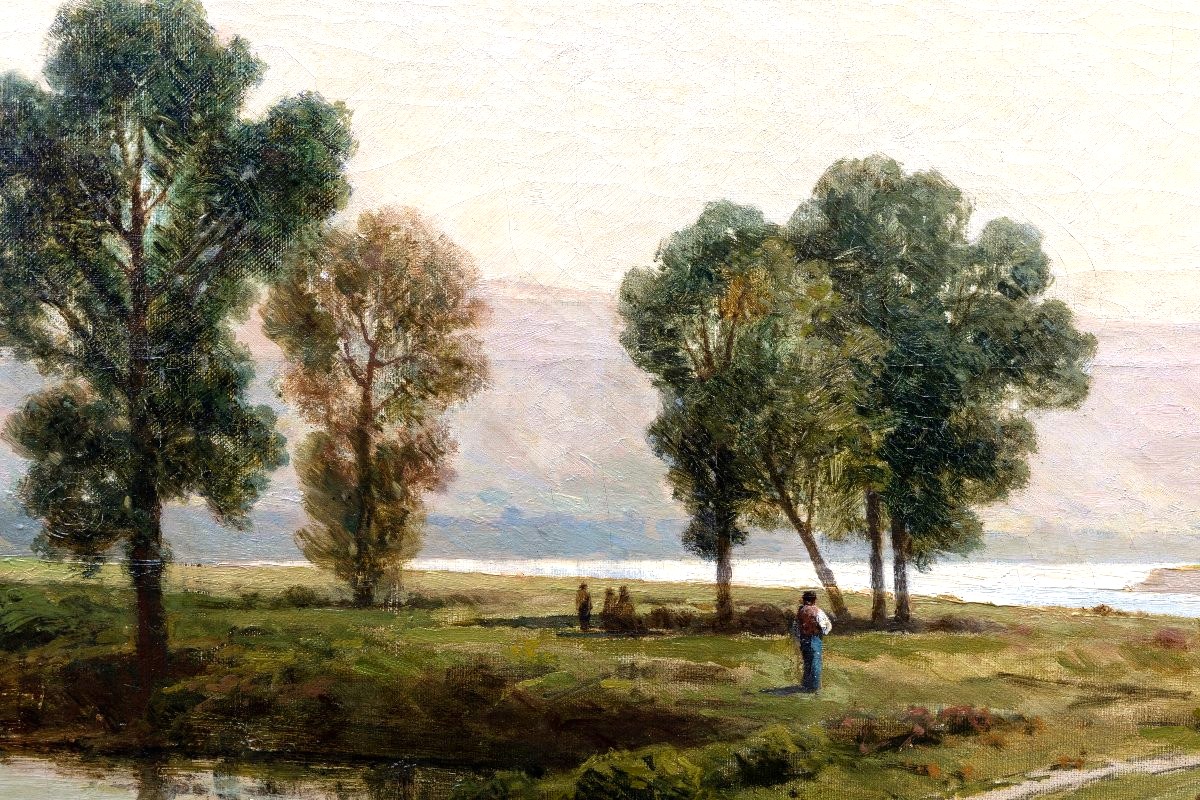
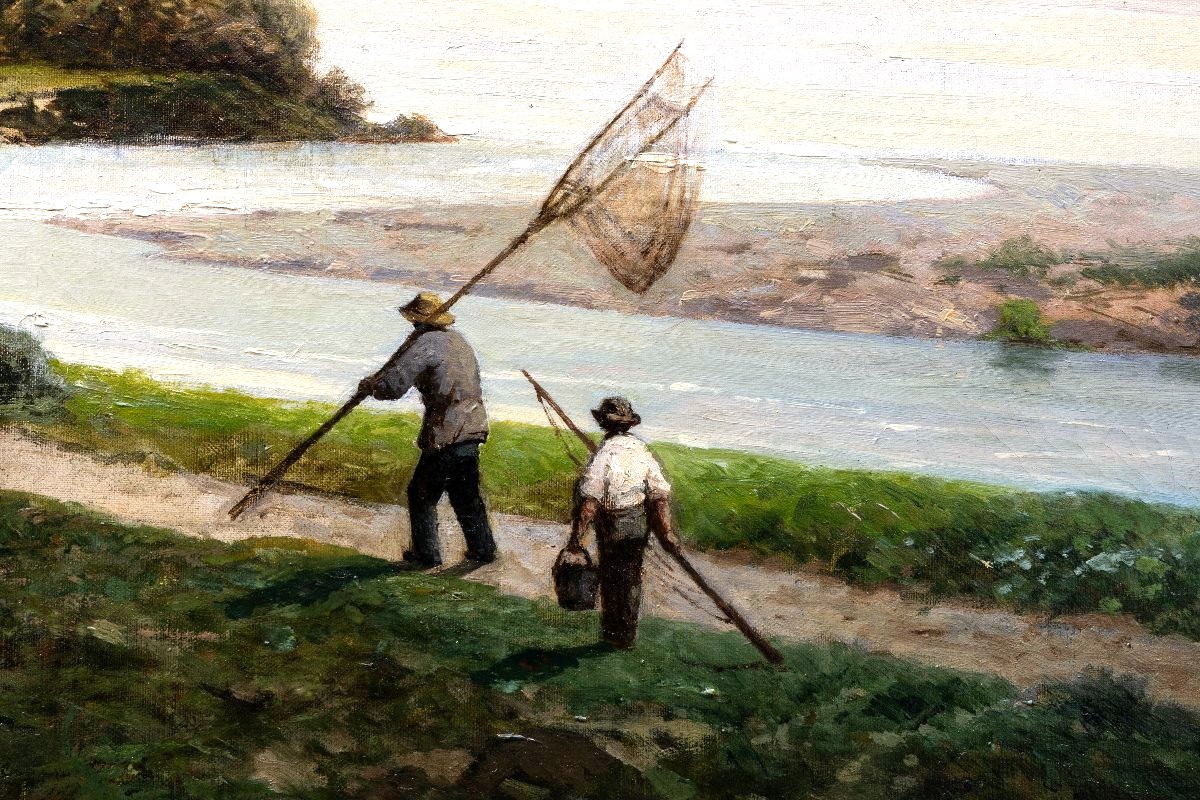
The skillfully balanced composition contrasts the dark masses of trees with the hazy brightness of distant hills. The two fishermen in the foreground carrying their nets bring a narrative dimension and human scale to this serene landscape. Lush vegetation enlivens the scene while the pale sky, rendered delicately, diffuses the soft light characteristic of the neoclassical style.
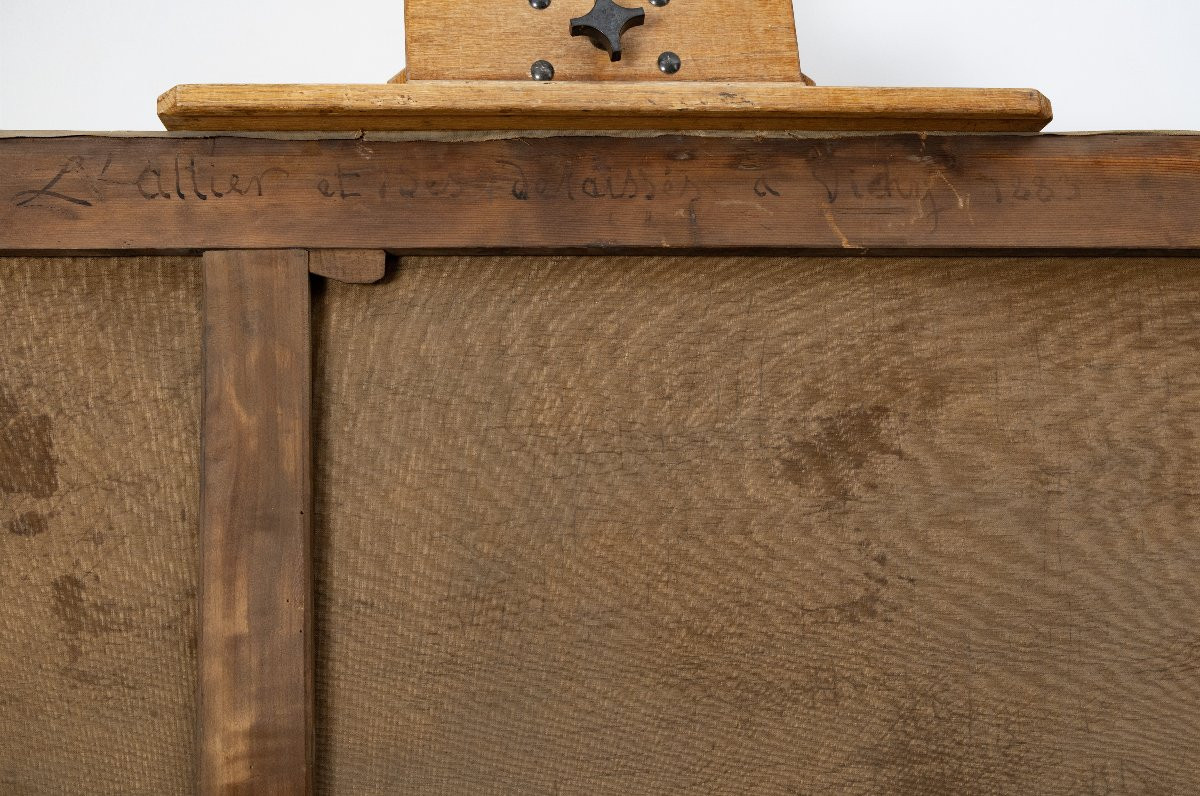
The work is signed in the lower left corner. The painter also signed and dated it on the back of the stretcher bar.
The painting has been cleaned and remains on its original canvas, which shows no signs of restoration. It is presented in what appears to be its original frame, which is in very good condition.
Provenance
Ponthus-Cinier considered this painting to be one of his major works and reproduced it in his Librum Veritatis (Volume 3, p. 61 verso), which is currently held in the municipal library of Lyon. Ponthus-Cinier noted its dimensions and the name of the buyer, Mr. Martin-Gadot. Ponthus-Cinier exhibited the painting at the Salon de Lyon in 1884.
More recently, the painting was located in the large hall on the first floor of the Château de La Bruyère in Saint-Bernard, Ain. Former residents of the château indicate that the painting had been in this location for over 50 years. It was loaned to the Musée des Beaux-Arts in Lyon in 1985 for an exhibition devoted to Lyon landscape painters. I acquired the painting when the château was sold by the family.
The artist
Antoine Ponthus-Cinier, a prominent French painter, was born in Lyon on August 29, 1812, and died on January 17, 1885. He is recognized as the leader of the Neoclassical movement in Lyon and distinguished himself by adopting an Arcadian style that sought the ideal in nature. His works depict real landscapes of southeastern France and central and southern Italy, often embellished with ruins and historical monuments. Inspired by 18th-century veduta painting, as exemplified by Giovanni Antonio Canaletto, he focused on wide views filled with detail. However, Ponthus-Cinier brought a more romantic atmosphere to his work. His artistry lies in his ability to light a canvas and his sense of perspective. He enjoyed combining rocks with water and enlivening his compositions with vegetation, while the sky illuminated them.
In 1829, he enrolled at the École des Beaux-Arts in Lyon, though it does not appear that he attended classes there. He continued his training in Paris under Paul Delaroche. His career took a decisive turn in 1841 when he won second place in the Grand Prix de Rome competition for historical landscape painting with his work, "Adam and Eve Expelled from the Garden of Eden" (now in the Musée des Beaux-Arts in Lyon). From 1842 to 1844, he spent two years in Italy, visiting Florence, Rome, Genoa, and Naples. This trip was pivotal in shaping his artistic style.
Upon returning from Italy, Ponthus-Cinier embarked on an extended journey through Dauphiné, Dombes, Provence, the Alps, Savoie, and the Pyrenees. He ultimately settled in Lyon, where he lived until his death. He became a member of the lithographers' section of the Société des Aquafortistes de Paris, and his engravings were highly successful. From 1837 to 1885, he regularly exhibited his works, including historical and simple landscapes, in Lyon. From 1841 to 1867, he exhibited his works in Paris and at various regional salons. His paintings attracted the interest of collectors and critics, who emphasized the balance between precise drawing and poetic sensitivity.
The diversity of his work is reflected in the variety of techniques he employed, including oils on canvas, ink drawings with wash and gouache highlights, watercolors, and a few engravings. After his death, his studio was sold in Lyon in March 1885.
Today, his works are in the collections of museums such as the Fine Arts Museums of Lyon, Chalon-sur-Saône, Besançon, Bourg-en-Bresse, Valence, Chambéry, Chantilly, Toulon, and Le Puy-en-Velay, as well as the Cleveland Museum of Art in Ohio. His engravings are also held by the Geneva Museum of Art and History, the British Museum in London, and the National Gallery of Canada.
Works on display at the gallery (07240).
Please contact us for delivery rates in France and Europe.
It perfectly illustrates the artist's Arcadian style and characteristic qualities: an exceptional sense of perspective guiding the eye along the winding path; light bathing the scene in a peaceful atmosphere; and the emblematic combination of water and vegetation defining his work. The abandoned reaches of the Allier—former meanders transformed into ponds—create subtle reflections characteristic of his luminous palette.
The skillfully balanced composition contrasts the dark masses of trees with the hazy brightness of distant hills. The two fishermen in the foreground carrying their nets bring a narrative dimension and human scale to this serene landscape. Lush vegetation enlivens the scene while the pale sky, rendered delicately, diffuses the soft light characteristic of the neoclassical style.
The work is signed in the lower left corner. The painter also signed and dated it on the back of the stretcher bar.
The painting has been cleaned and remains on its original canvas, which shows no signs of restoration. It is presented in what appears to be its original frame, which is in very good condition.
Provenance
Ponthus-Cinier considered this painting to be one of his major works and reproduced it in his Librum Veritatis (Volume 3, p. 61 verso), which is currently held in the municipal library of Lyon. Ponthus-Cinier noted its dimensions and the name of the buyer, Mr. Martin-Gadot. Ponthus-Cinier exhibited the painting at the Salon de Lyon in 1884.
More recently, the painting was located in the large hall on the first floor of the Château de La Bruyère in Saint-Bernard, Ain. Former residents of the château indicate that the painting had been in this location for over 50 years. It was loaned to the Musée des Beaux-Arts in Lyon in 1985 for an exhibition devoted to Lyon landscape painters. I acquired the painting when the château was sold by the family.
The artist
Antoine Ponthus-Cinier, a prominent French painter, was born in Lyon on August 29, 1812, and died on January 17, 1885. He is recognized as the leader of the Neoclassical movement in Lyon and distinguished himself by adopting an Arcadian style that sought the ideal in nature. His works depict real landscapes of southeastern France and central and southern Italy, often embellished with ruins and historical monuments. Inspired by 18th-century veduta painting, as exemplified by Giovanni Antonio Canaletto, he focused on wide views filled with detail. However, Ponthus-Cinier brought a more romantic atmosphere to his work. His artistry lies in his ability to light a canvas and his sense of perspective. He enjoyed combining rocks with water and enlivening his compositions with vegetation, while the sky illuminated them.
In 1829, he enrolled at the École des Beaux-Arts in Lyon, though it does not appear that he attended classes there. He continued his training in Paris under Paul Delaroche. His career took a decisive turn in 1841 when he won second place in the Grand Prix de Rome competition for historical landscape painting with his work, "Adam and Eve Expelled from the Garden of Eden" (now in the Musée des Beaux-Arts in Lyon). From 1842 to 1844, he spent two years in Italy, visiting Florence, Rome, Genoa, and Naples. This trip was pivotal in shaping his artistic style.
Upon returning from Italy, Ponthus-Cinier embarked on an extended journey through Dauphiné, Dombes, Provence, the Alps, Savoie, and the Pyrenees. He ultimately settled in Lyon, where he lived until his death. He became a member of the lithographers' section of the Société des Aquafortistes de Paris, and his engravings were highly successful. From 1837 to 1885, he regularly exhibited his works, including historical and simple landscapes, in Lyon. From 1841 to 1867, he exhibited his works in Paris and at various regional salons. His paintings attracted the interest of collectors and critics, who emphasized the balance between precise drawing and poetic sensitivity.
The diversity of his work is reflected in the variety of techniques he employed, including oils on canvas, ink drawings with wash and gouache highlights, watercolors, and a few engravings. After his death, his studio was sold in Lyon in March 1885.
Today, his works are in the collections of museums such as the Fine Arts Museums of Lyon, Chalon-sur-Saône, Besançon, Bourg-en-Bresse, Valence, Chambéry, Chantilly, Toulon, and Le Puy-en-Velay, as well as the Cleveland Museum of Art in Ohio. His engravings are also held by the Geneva Museum of Art and History, the British Museum in London, and the National Gallery of Canada.
Works on display at the gallery (07240).
Please contact us for delivery rates in France and Europe.
7 000 €
Period: 19th century
Style: Napoleon 3rd
Condition: Excellent condition
Material: Oil painting
Width: 170 cm/ 200 cm encadré
Height: 105 cm / 130 cm encadré
Reference (ID): 1653567
Availability: In stock
Print