

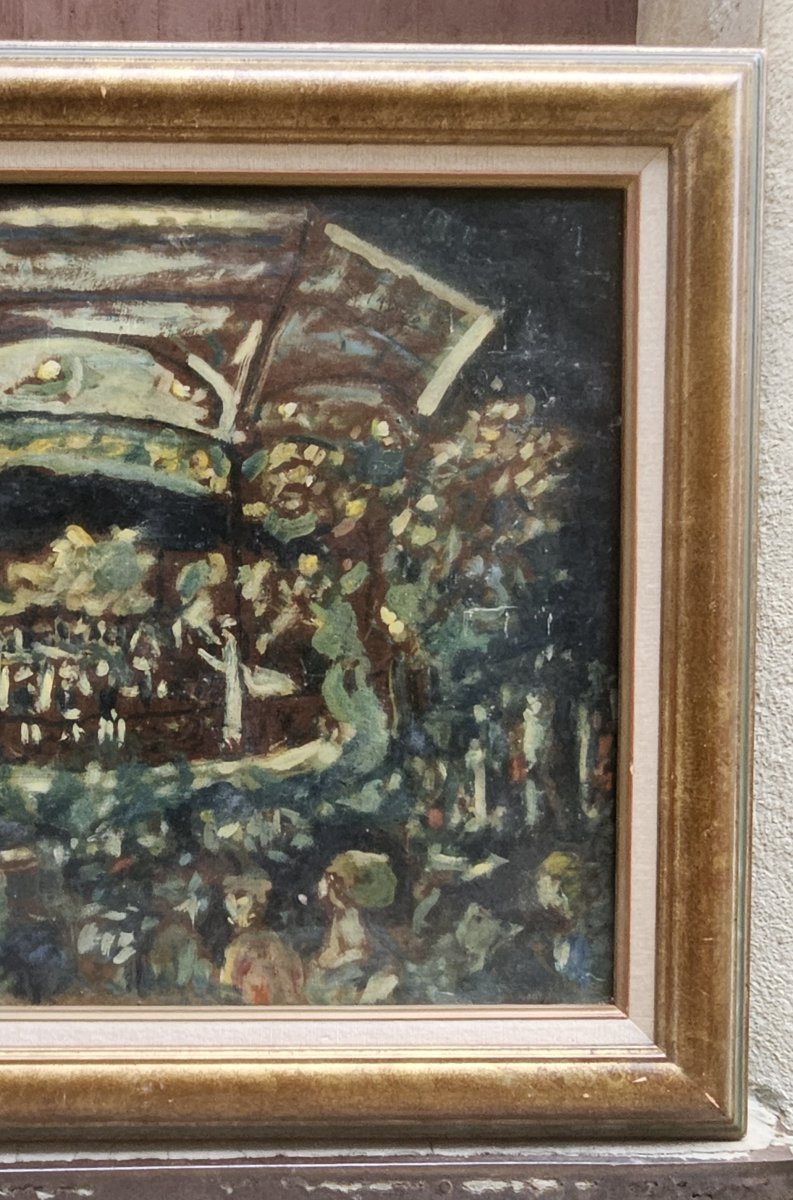


The Toulon Bandstand By José Mange
Artist: José Mange 1866-1935
José Mange 1866–1935
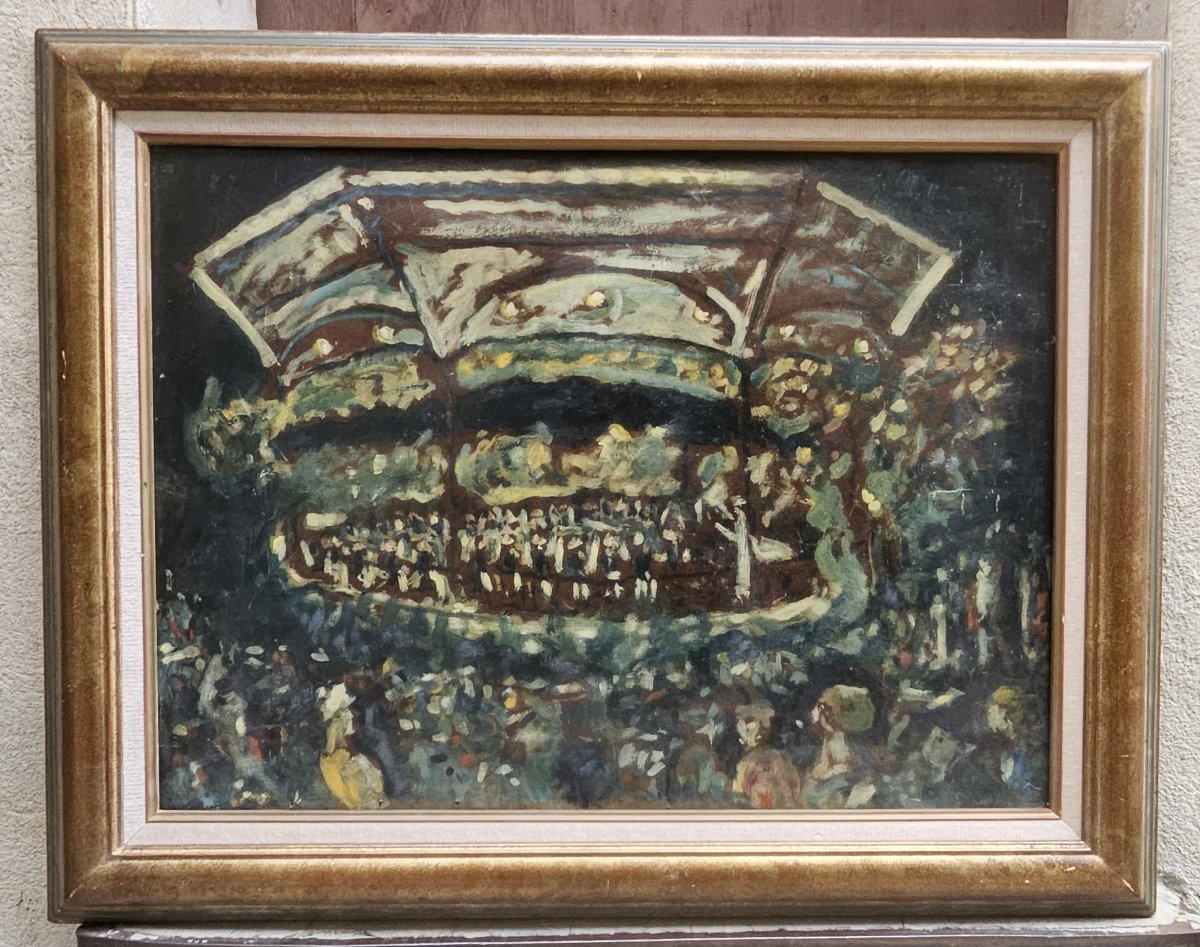
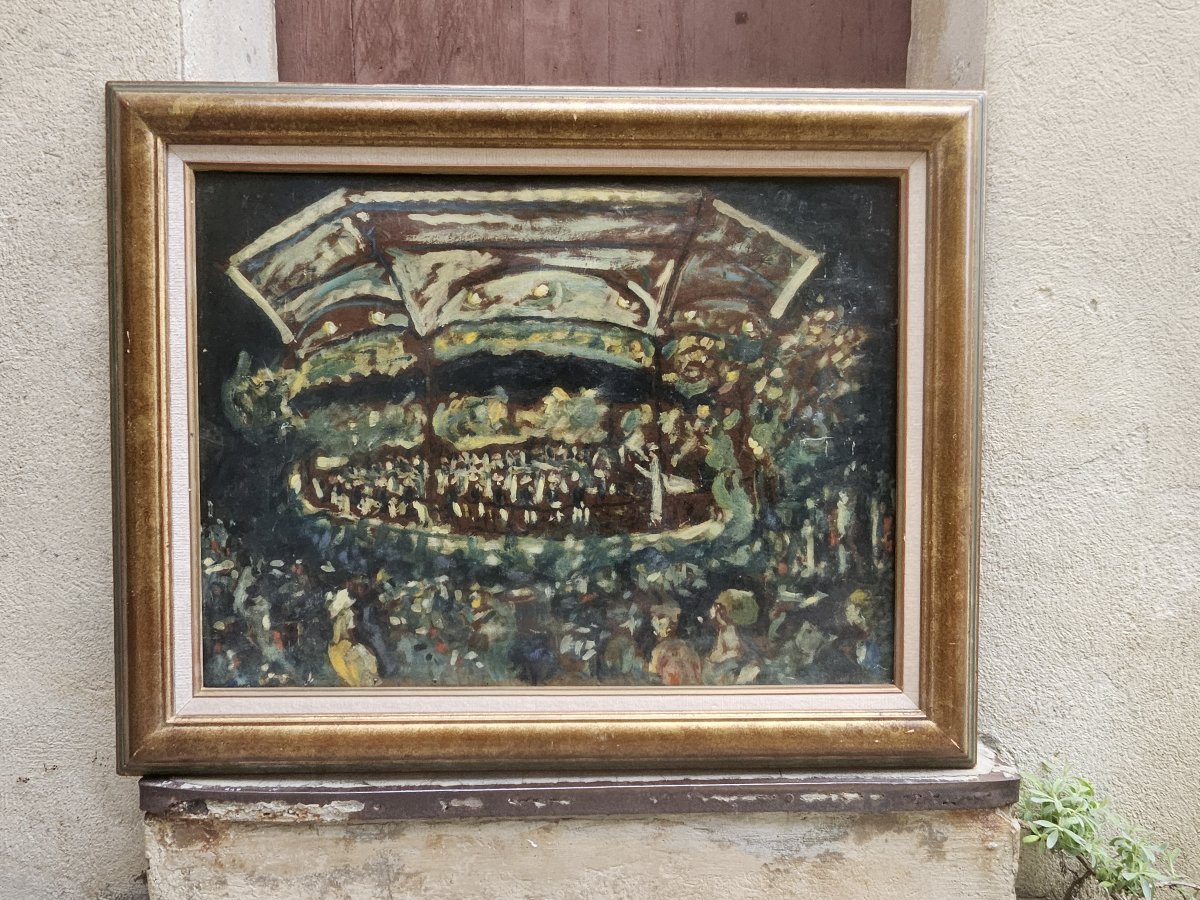
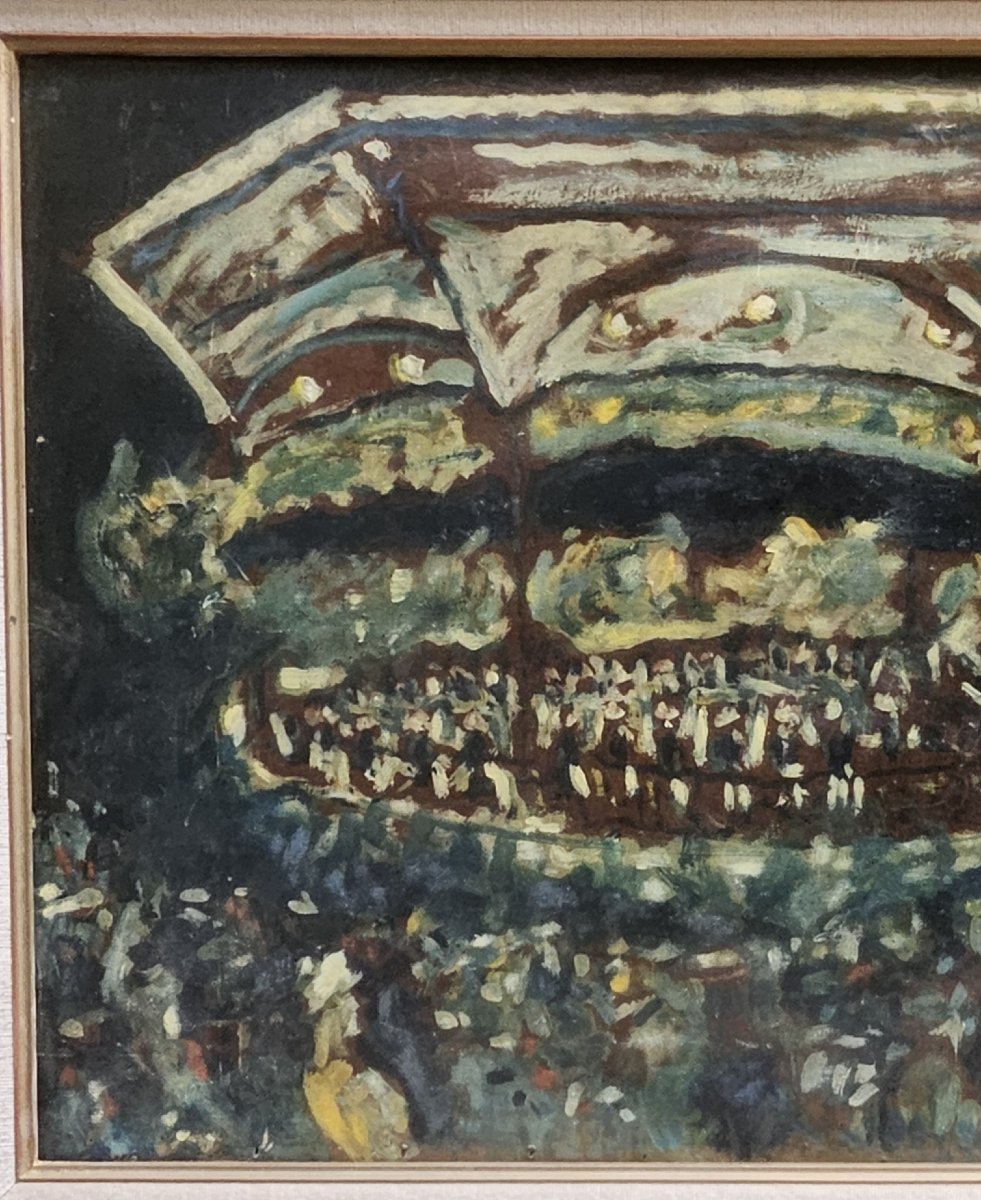
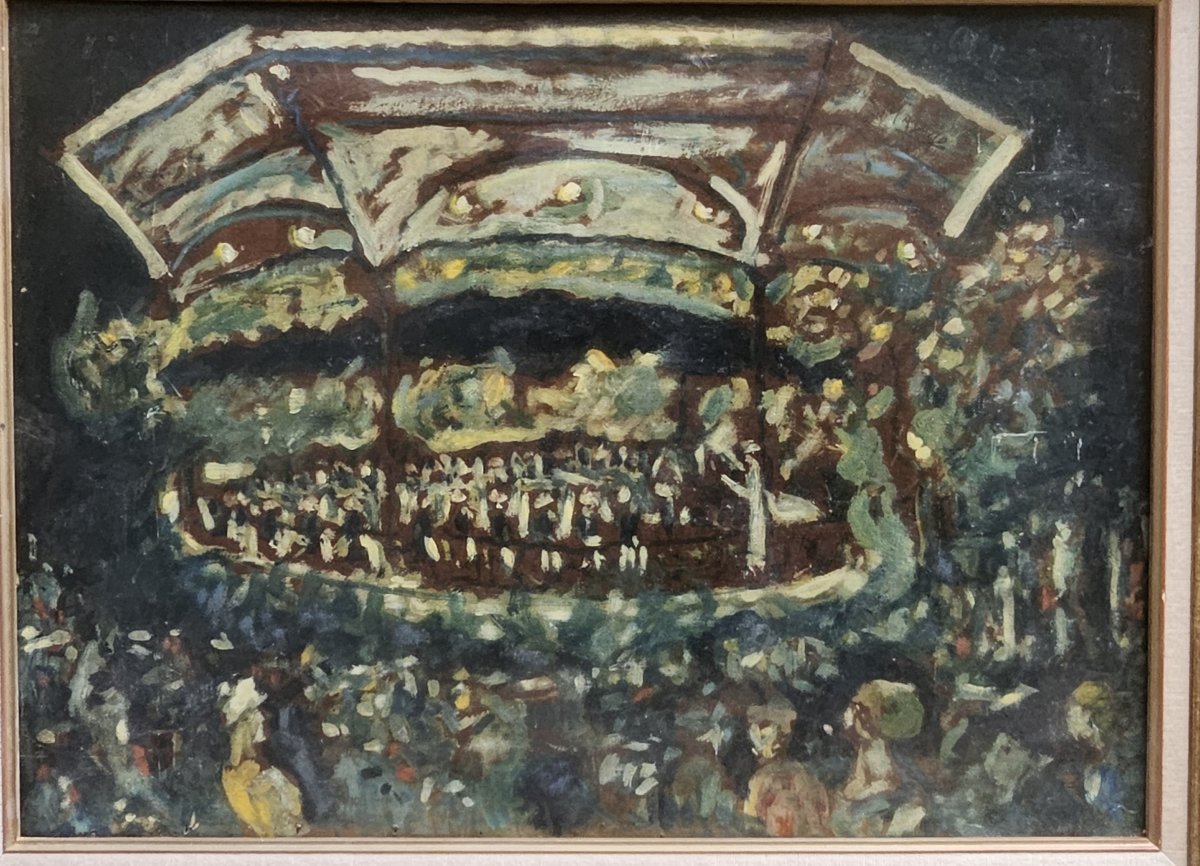
Oil on cardboard mounted on canvas, measuring 54 cm x 73 cm plus frame
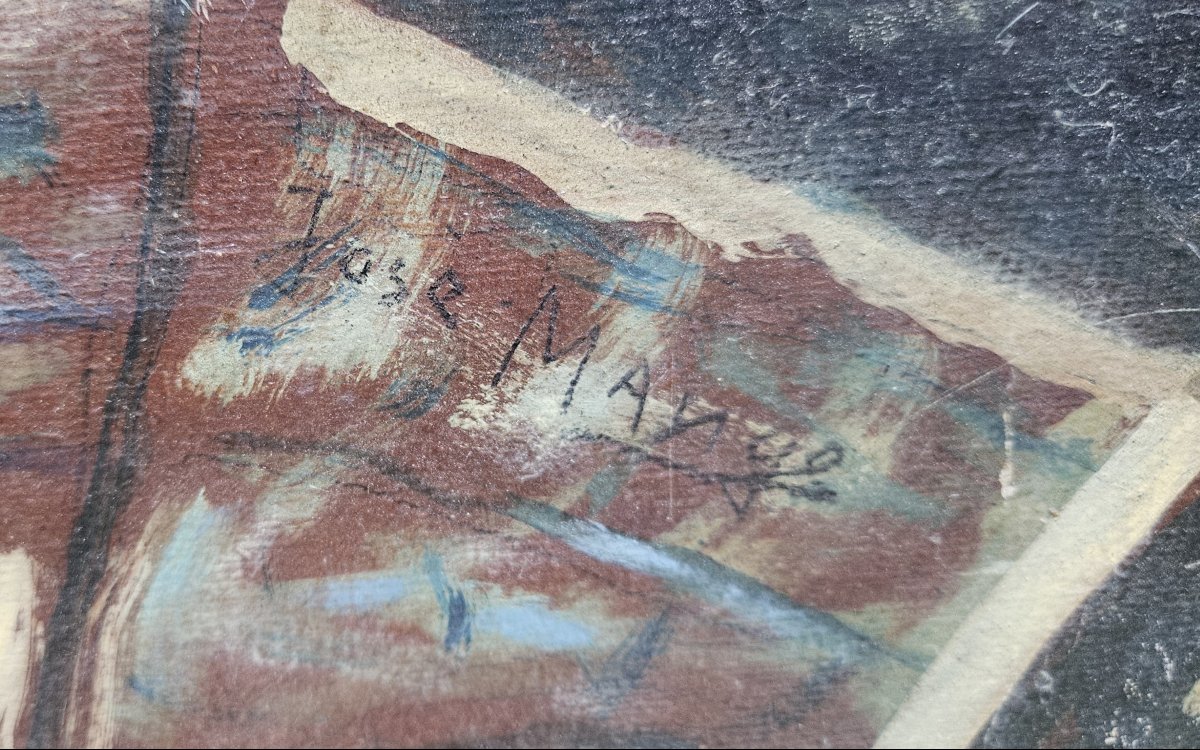
Signed in the upper right corner
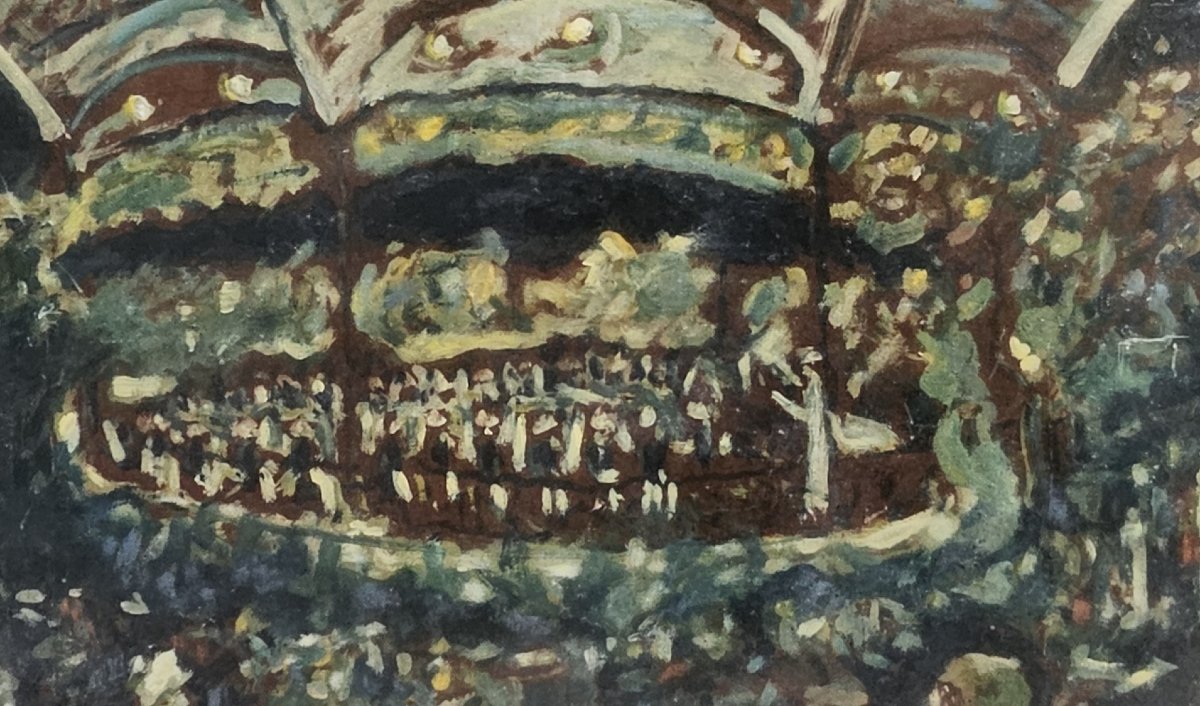
depicting The Bandstand, Place d’Armes in Toulon, circa 1930
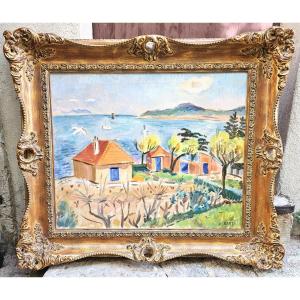
This painting was sold in 1990 at an auction house in Verrières-le-Buisson for 4,800 euros (see photo)
Free shipping within theEuropean Union
350 euros for international shipping
Joseph Julien Casimir Mange, known as José Mange, born on October 10, 1866, and died on January 7, 1935, in Toulon, was a French landscape painter and Félibre poet.
José Mange was born in Toulon on October 10, 1866, at 10:00 a.m., on the first floor of a house located at 74 Boulevard de Strasbourg (formerly Boulevard Bonaparte). He was the son of Eugène Auguste, born in Hyères in 1836, a lawyer admitted to the Toulon Bar, and Marie Louise Bonniot, born in 1839.
From childhood onward, José received a most thorough education. From 1876 to 1886, he studied at the Catholic high school in Aix-en-Provence, then headed by Monsignor Guillebert. He visited the Granet Museum, where he met Paul Cézanne. He earned his baccalaureate in 1886.
His Early Years as a Painter in Paris
In 1886, at the age of 18, José Mange confided to Paul Cézanne his desire to become an artist and, to that end, to go study in Paris as soon as he finished his studies.
He moved to Paris in 1886 to study painting until 1890. A student of Jean-Paul Laurens and Jean-Joseph Benjamin-Constant, he became friends with Louis Denis-Valvérane. Their shared admiration for Frédéric Mistral led them to join the Société des Félibres de Paris.
In 1892, Mange founded the Escolo Parisienco (the Parisian School) with Maurras, a circle that presented itself as a society of young Félibres free from the influence of their elders.
In 1893, he participated for the first time in the Salon des Artistes Indépendants and sold a painting. Accompanied by Denis Valvérane, he stayed in Toulon that same year during the visit of the Russian fleet.¹
From 1894 to 1897, he exhibited at the Salon des Artistes Indépendants, and in 1900, he exhibited at the Salon d’Automne and the Salon des Tuileries.
He returned to Toulon in 1900, to 2 Rue Marchand, and continued to send works to Paris for exhibitions at salons and galleries.
In 1902, he participated in the first Salon des Amis des Arts de Toulon (Place de la Liberté). He exhibited alongside his mentor, Cézanne. Dissatisfied with the placement of his mentor’s painting, Mange withdrew his own work. From 1903 to 1909, he participated in the annual exhibitions of the Amis des Arts de Toulon.
He gradually surrounded himself with a small group of painter friends: Olive-Tamari, Friesz, Mintchine, Baboulène, Sabatier, Segal, and Échevin. In June, he published a poetic pamphlet titled “Oh Palamède!” in the Toulon weekly *Je dis tout*.
In 1928, during an exhibition at the Salle Apollo (Boulevard de Strasbourg), he was noticed by Bruno Bassano alongside Bianchieri, Chardeyron, Meurise, Latapie, Salvado, Saint-Paul, and Segal.
Léon Vérane spoke of him in these terms: “José Mange—I really must introduce him to you. Imagine Mistral or Buffalo Bill, around sixty years old, tall, with a slightly stooped posture, a smiling face framed by a royal mustache; beneath a wide-brimmed felt hat, his eyes are gentle and forgiving, with a certain youthful, carefree quality that captivates at first glance.”
José Mange died on January 7, 1935, in Toulon.
Public Collections
Toulon Art Museum, Simon Segal Museum in Aups (Var),
Retrospectives and Posthumous Exhibitions
In February 1935 at the “Le Trident” Gallery in Toulon (with a foreword by Léon Vérane). In June 1941 at the Toulon Museum, organized by the city. In May 1948 at the “Galerie de Paris” in Toulon. In July 1950 at the “Les Amis des Arts” Gallery in Aix-en-Provence.
In January 1961 at the Toulon Museum, organized by “Les Amis de l’Art Vivant” (with a preface by the poet Philippe Chabaneix).
21st Painting Biennial, July 6–28, 1985, Le Revest-les-Eaux (Var) - Excerpt from *Poésies et Peintures* by Paul Lanza [archive]
Exhibition in Toulon, July 4, 2003
Following the retrospective organized in 1961 by the Société des amis de l’art vivant, José Mange was the subject of a major exhibition at the Toulon Museum of Art from July 5 to November 3, 2003. “The Art Museum, with its rich collection of Provençal paintings, is paying a well-deserved tribute this summer of 2003 to a man who was a prominent figure in Toulon’s artistic life at the beginning of the last century,” declared Hubert Falco
“ “To the people of Toulon, José Mange is seen as an original painter, a ‘character’ who, through his appearance—reminiscent of Frédéric Mistral—his powerful and colorful style of painting that is instantly recognizable, and his political ideas, left his mark on the local art scene between 1900 and 1930.” ”
2 800 €
Period: 20th century
Style: Modern Art
Condition: Excellent condition
Material: Oil painting on cardboard
Reference (ID): 1843417
Availability: In stock
Print