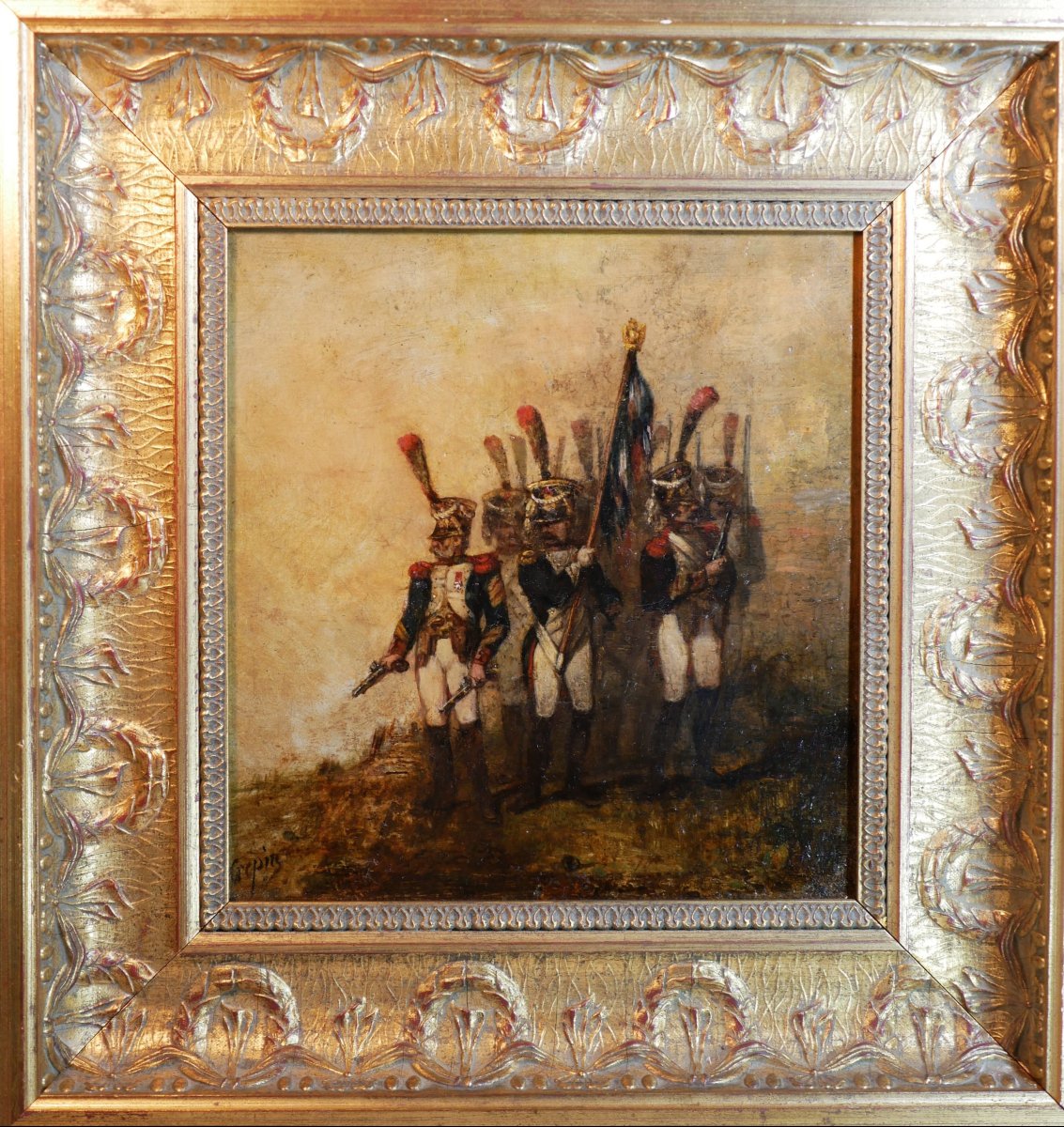



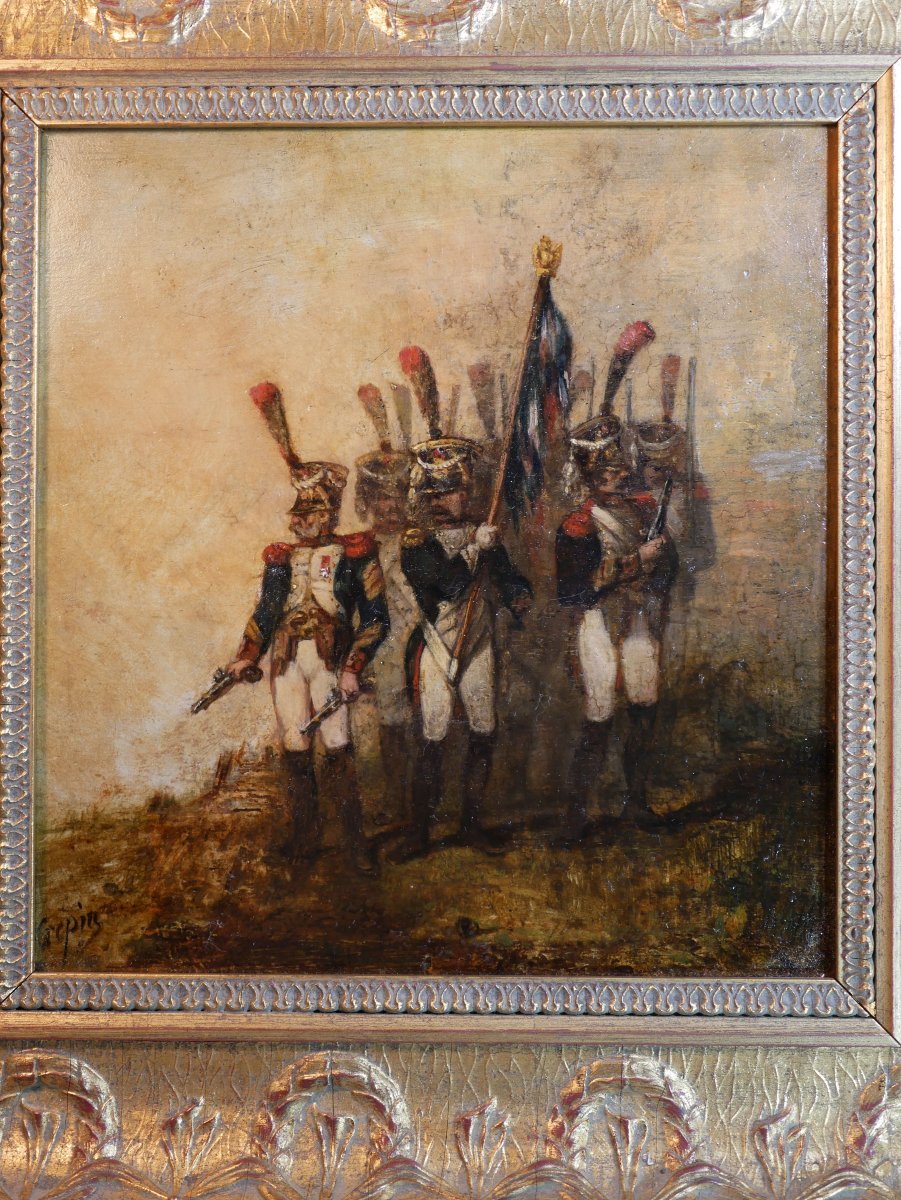


Louis-philippe Crépin D’orléans (1772–1851), First Empire Guard Infantry, Defending The Flag
Early 19th-century French school – Military scene – First Empire SSL26CRE002
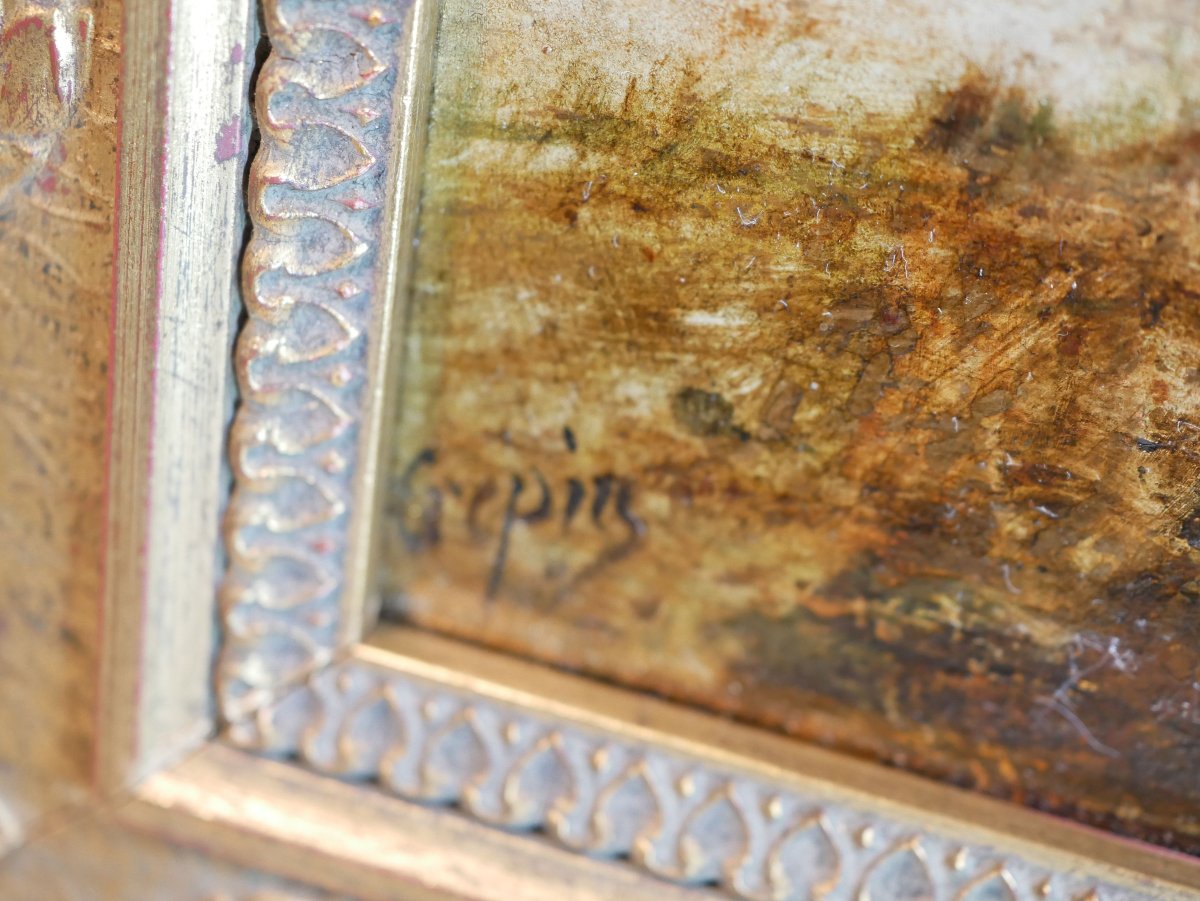
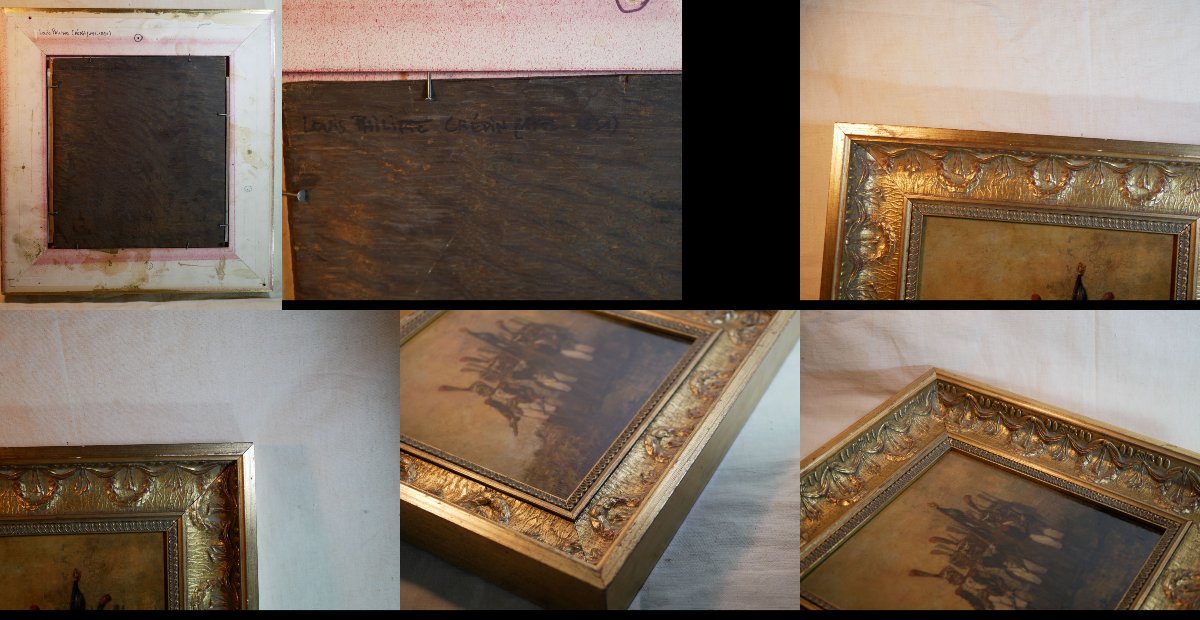
Oil on wooden panel, signed “Crépin” in the lower left corner, with a handwritten note on the reverse reading “Louis Philippe Crépin.”
Panel dimensions: approximately 24.5 × 22 cm
Frame dimensions: approximately 35.5 × 37 cm
Born in Paris in 1772, Louis-Philippe Crépin, known as Crépin d’Orléans, belonged to a generation of artists who lived through the upheavals of the French Revolution, the Napoleonic campaigns, and the political transformations of the early 19th century.
His career path has a remarkable feature: before becoming a recognized painter, Crépin himself served in the navy for several years, notably as a topman and helmsman. He thus gained firsthand knowledge of military life, crew discipline, and the realities of service at sea. He would draw on this experience throughout his artistic career, particularly during the Algerian campaign of 1830.
Specializing in marine painting, he began exhibiting at the Salon as early as 1796. In 1830, he was appointed painter to the Department of the Navy alongside Théodore Gudin, becoming one of the first holders of this official position. He was made a Knight of the Legion of Honor in 1832.
While his work is primarily known for his seascapes and large-scale naval compositions, his name is also associated with military and historical scenes. His personal background, closely tied to the military world, lends particular interest to this type of composition.
Crépin’s auction results vary widely depending on the subject, format, quality of execution, and degree of certainty regarding attribution. For example, the Battle of the “Lys” and the “Gloire” against the “Cumberland” sold for €193,500
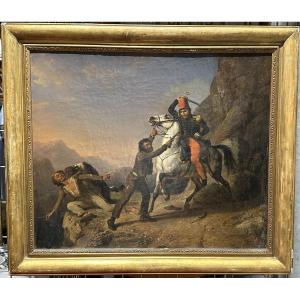
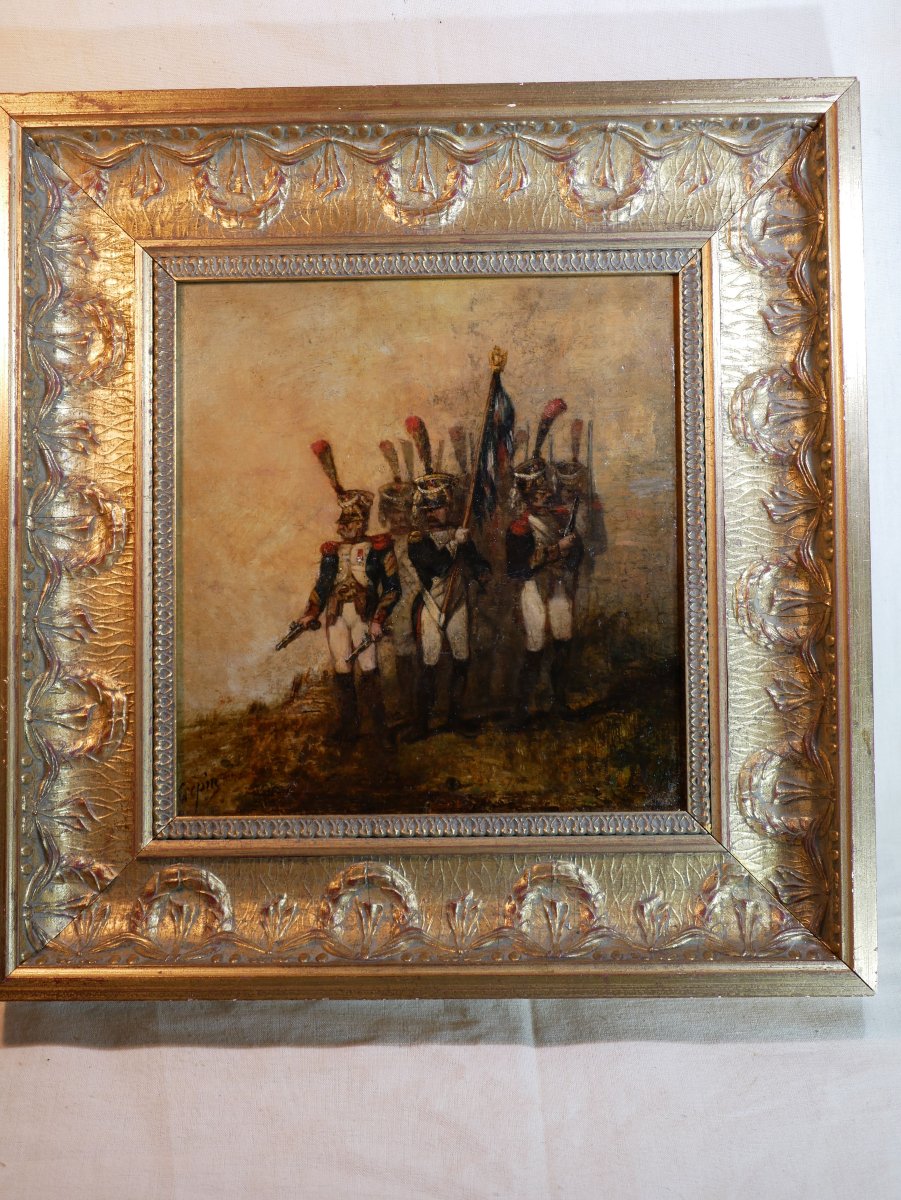
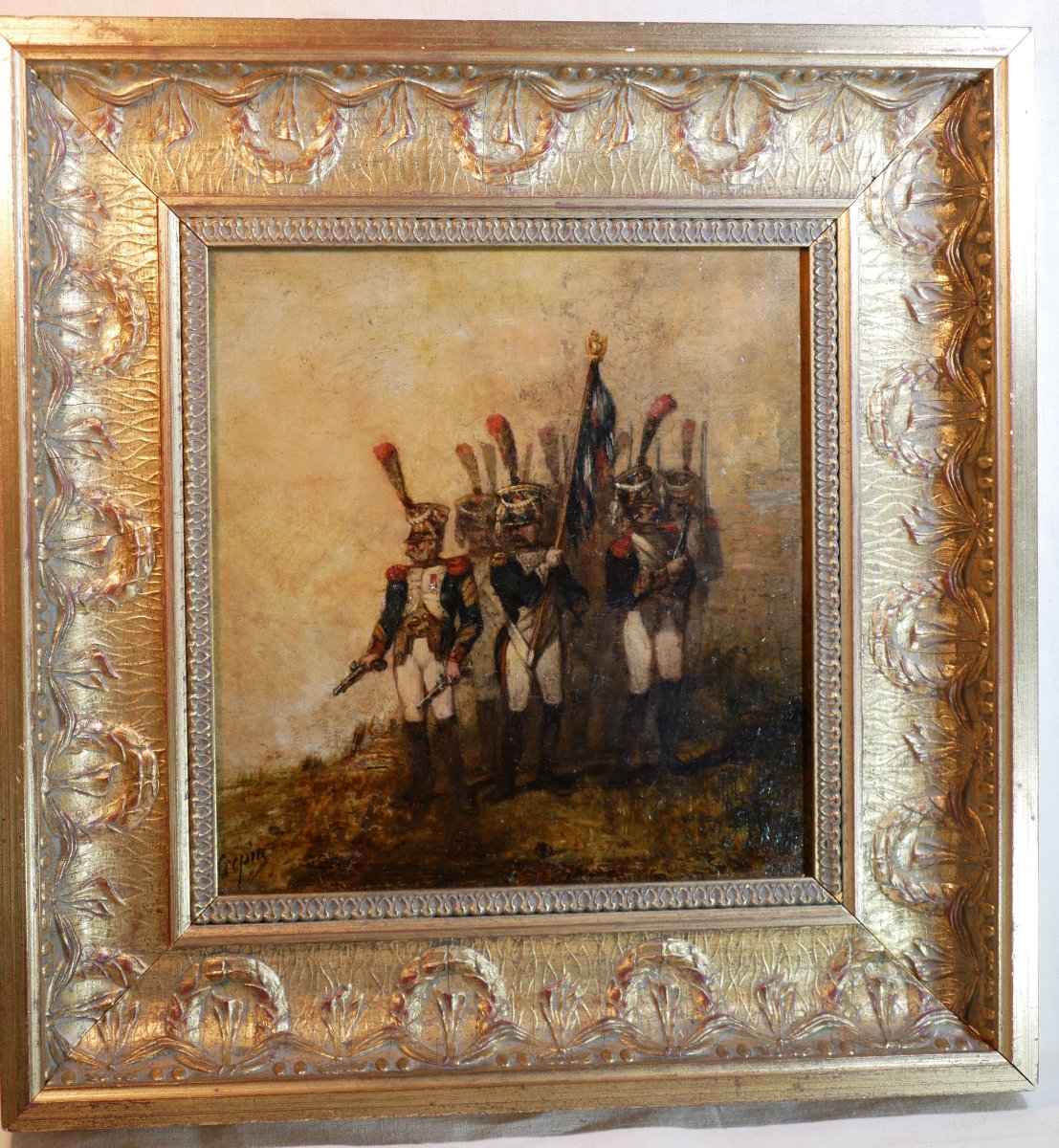
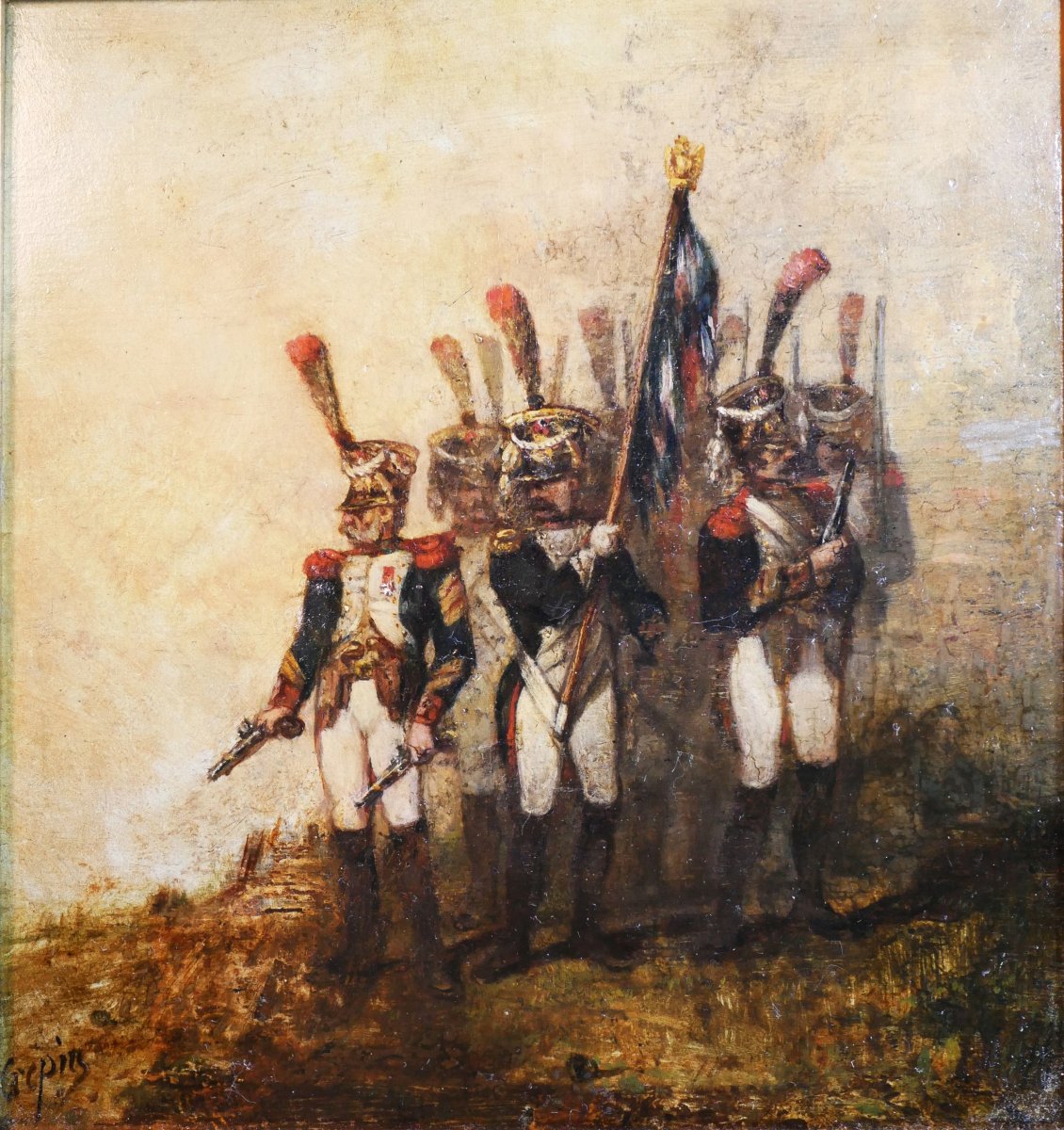
This oil on panel depicts a group of soldiers from the Imperial Guard Infantry gathered around their flag. The men, in uniforms characteristic of the Napoleonic era, stand in the dark, smoky, and turbulent atmosphere of a battle scene, while the standard-bearer holds his tattered flag; following the fighting; the standard stands at the center of the composition.
Crépin’s auction results vary widely depending on the subject, format, and quality of execution; for example, a naval battle scene, *The Battle of the “Lys” and the “Gloire” against the “Cumberland”* sold for €193,500
The painter favors a free and expressive style: the figures stand out against a deliberately simplified background, with the reds of the headdresses and the contrasts in the uniforms drawing the eye toward the group. The tattered flag, the focal point of the scene, symbolizes the regiment’s cohesion, courage, and military loyalty.
The work has a lively and evocative quality, prioritizing the intensity of the scene over meticulous detail. This composition reflects the 19th-century taste for military episodes and the legacy of the Napoleonic armies.
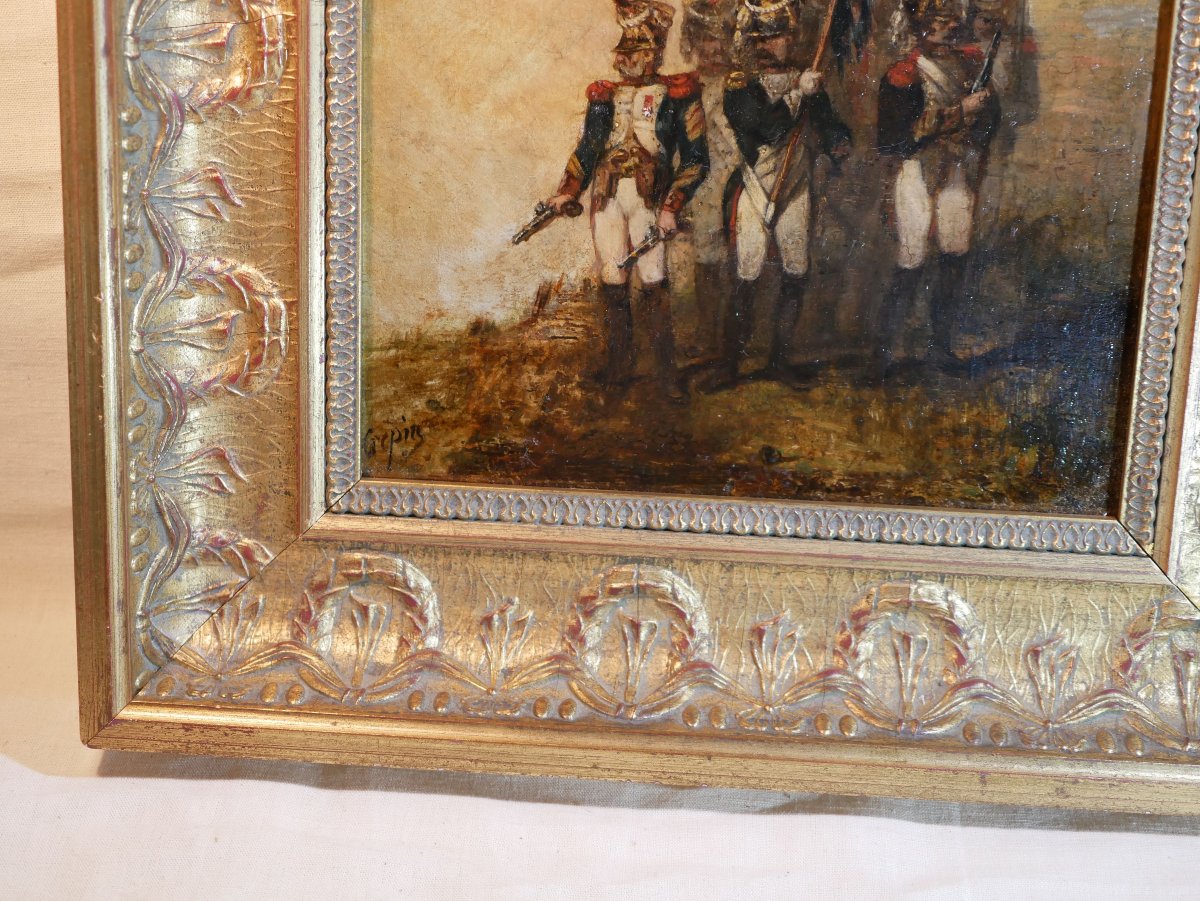
The painting is signed “Crépin” in the lower left corner. It also bears a handwritten inscription on the reverse reading “Louis Philippe Crépin.”
The painted panel is in good condition.
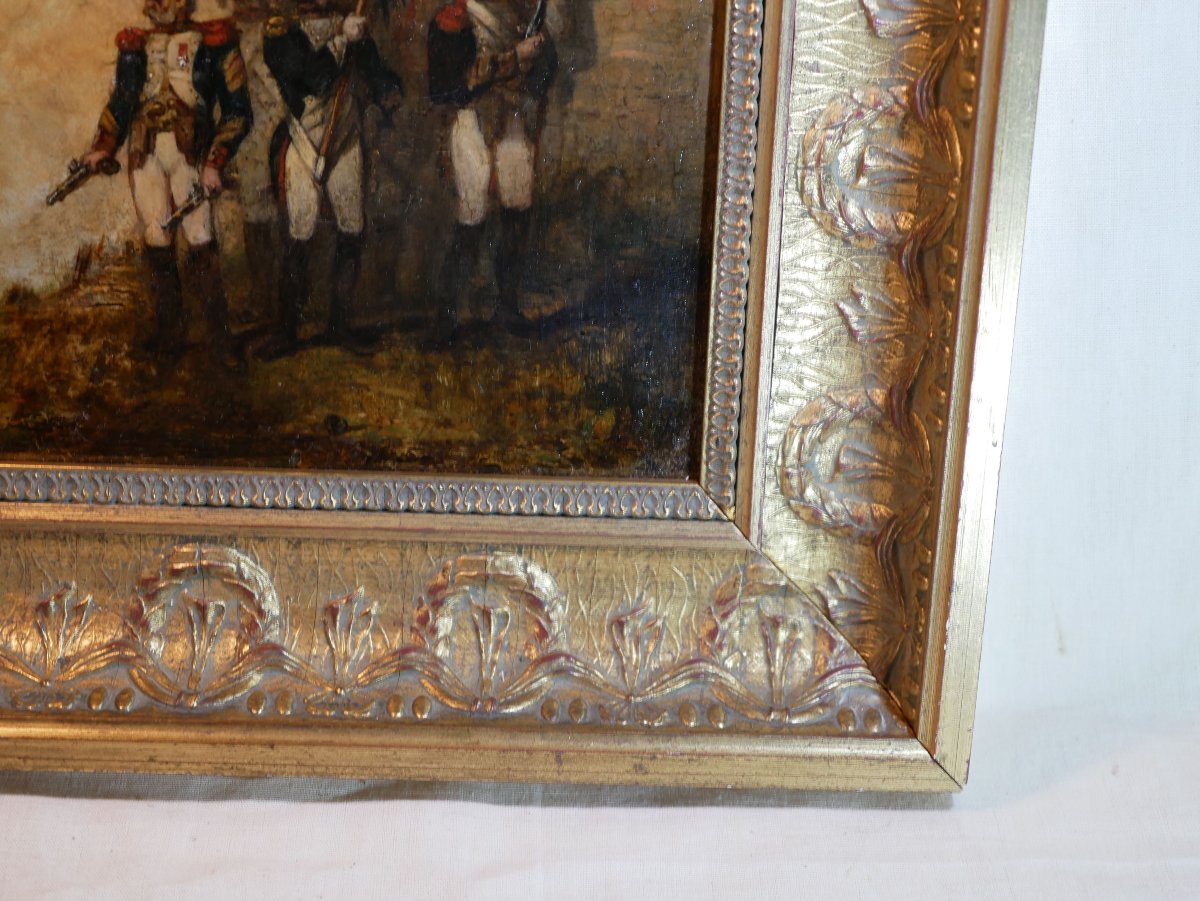
The painting is set in a wooden frame with gilded stucco, which dates from after the work was created but is particularly well chosen: its carved decoration and gilding harmonize beautifully with the painting’s historical character.
The entire piece is solid and stable, with no reported woodworm damage. The frame contributes to an elegant and immediately decorative presentation.
A Collector’s PieceThis military scene will appeal to enthusiasts of Napoleonic history, collectors of 19th-century French painting, and enthusiasts of military uniforms.
Its intimate format, historical subject matter, and signature make it an interesting piece to feature in a collection dedicated to the Empire, military history, or old French painting.
A composition full of character, combining historical memory, a sense of movement, and the charm of old master painting
Period: 19th century
Style: Consulat, Empire
Condition: Excellent condition
Material: Oil painting on wood
Height: 37 cm
Reference (ID): 1843258
Availability: In stock