

Louis XIV Era Folk Art, Walnut All Sides Carved Mastery Or Wedding Box, George Soubeyrou
Artist: Lozère, Haute Loire, Cantal ?
FOLK ART
Late 17th or early 18th century
Lozère / Cantal / Haute Loire
MUSEUM:
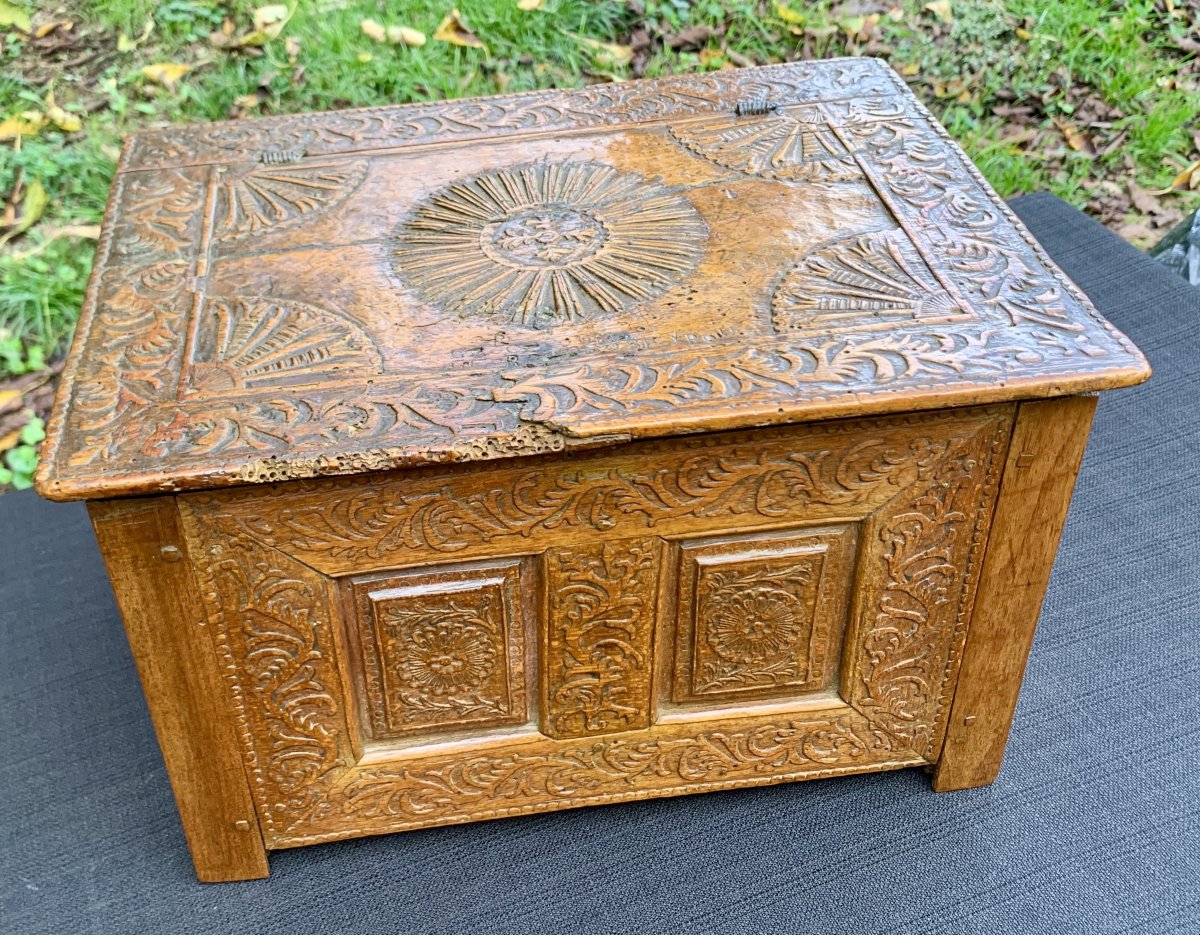
Superb walnut (rather than fruitwood?) mastery or marriage box, entirely hand-carved, and bearing the engraved name of Georges SOUBEYROU
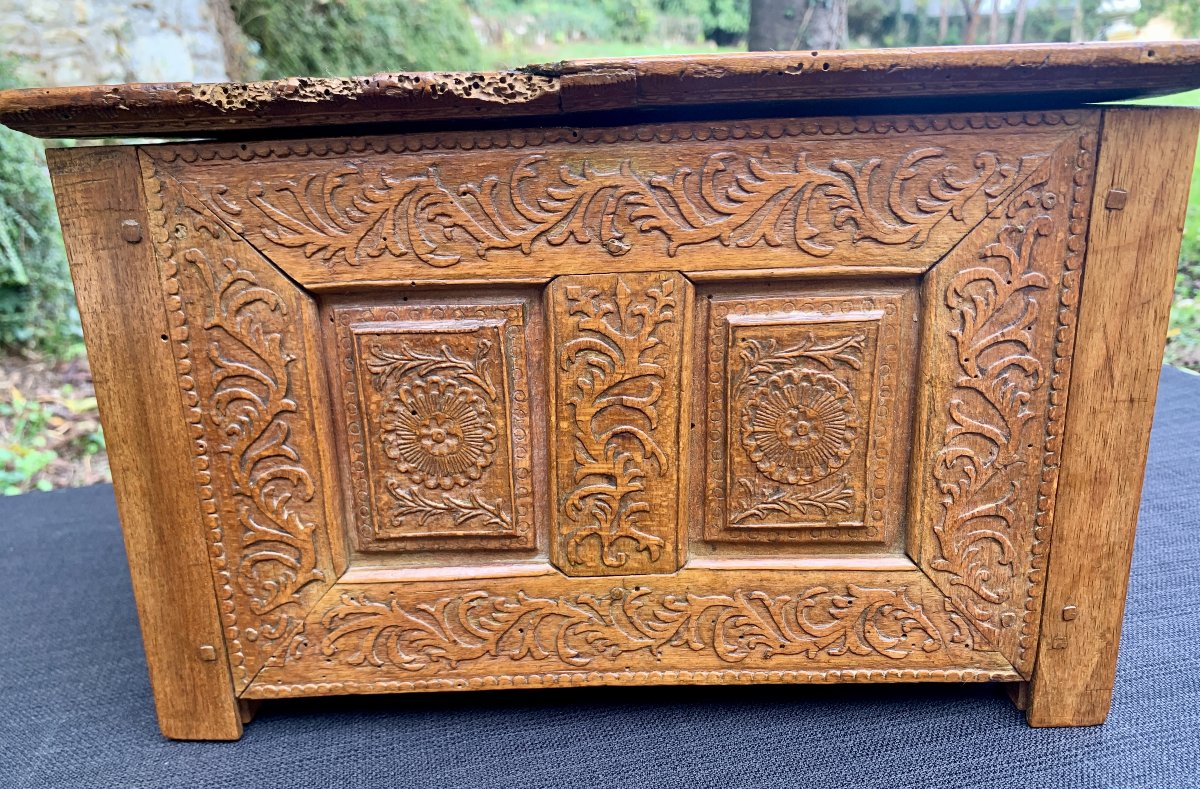
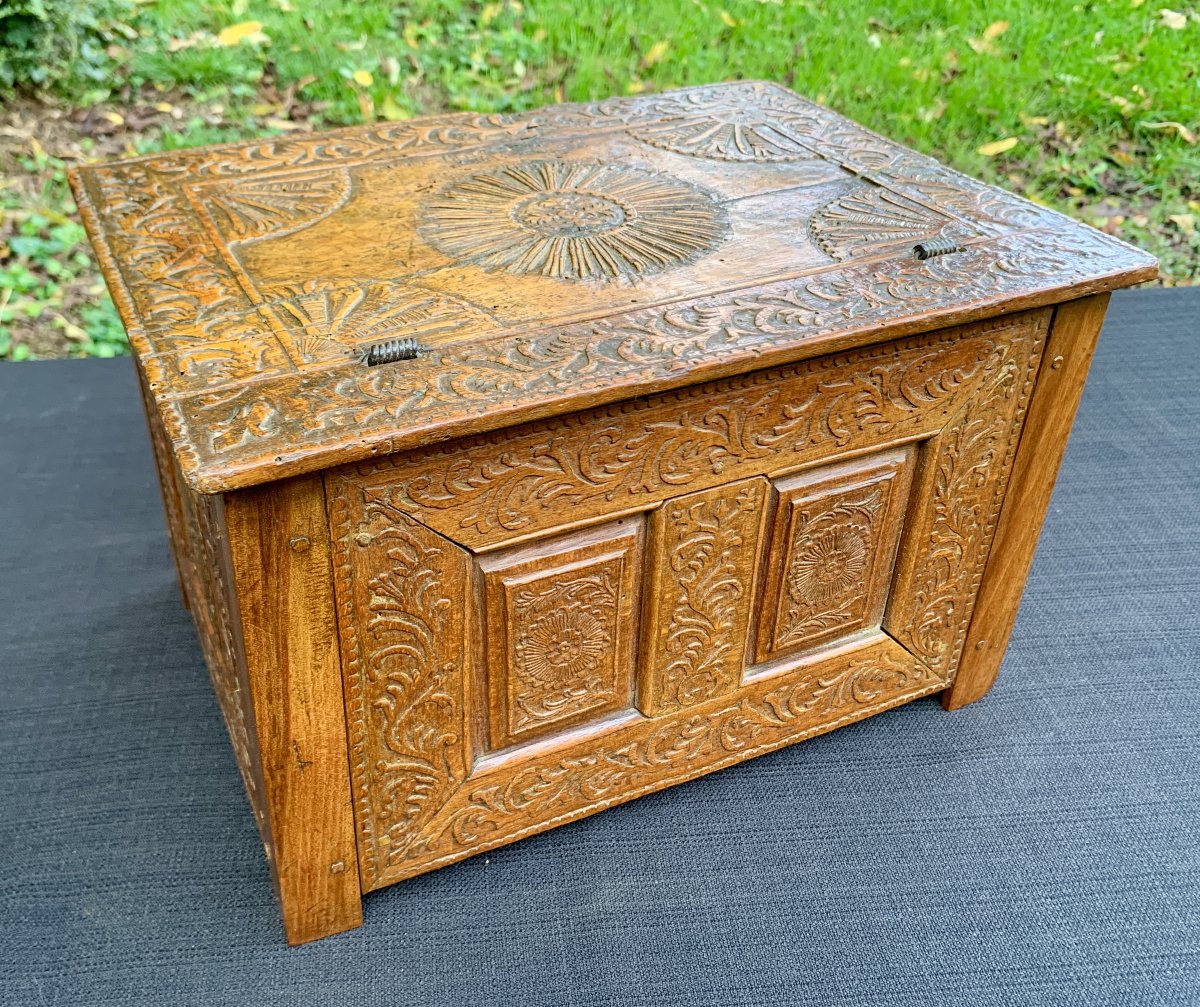
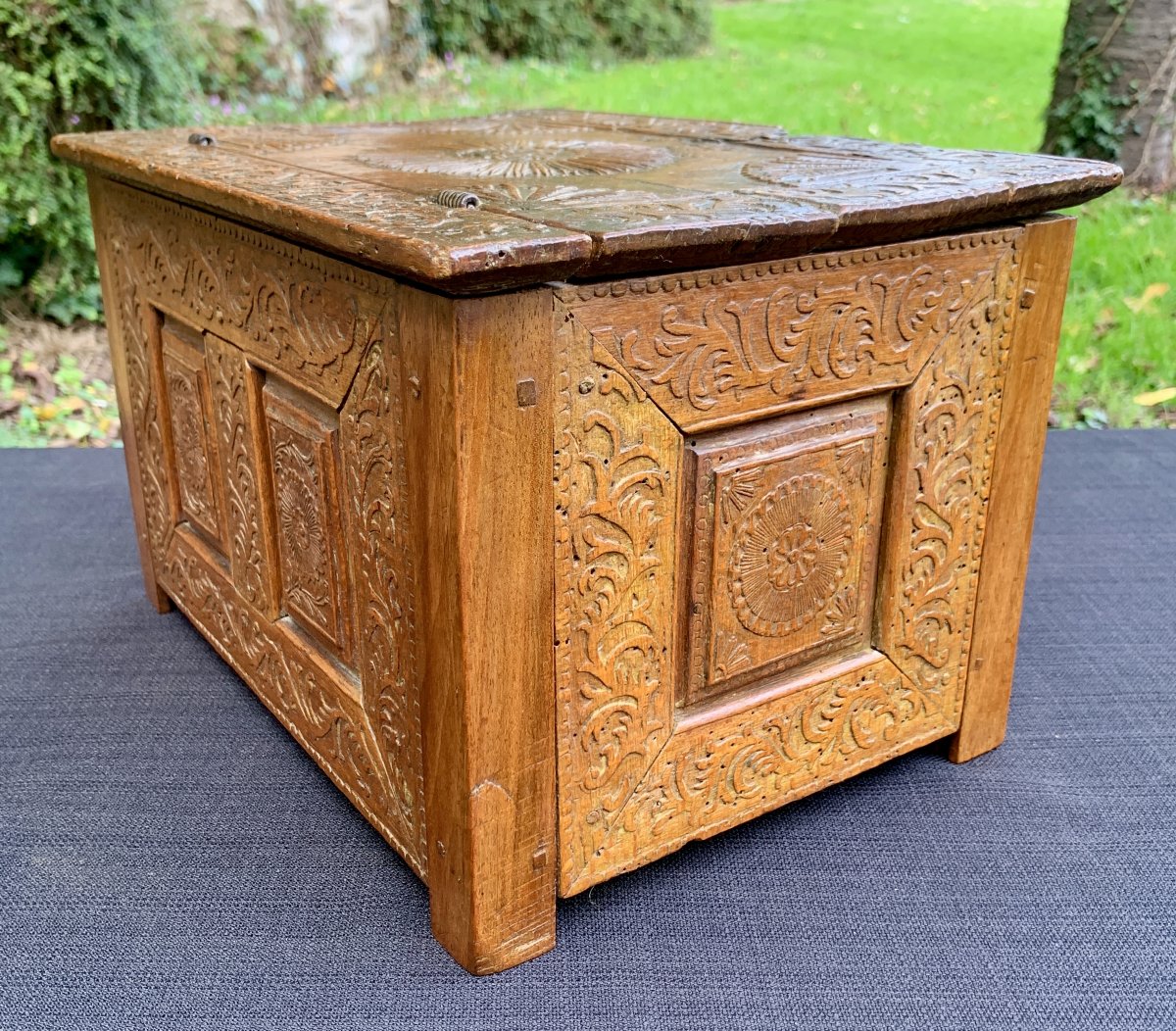
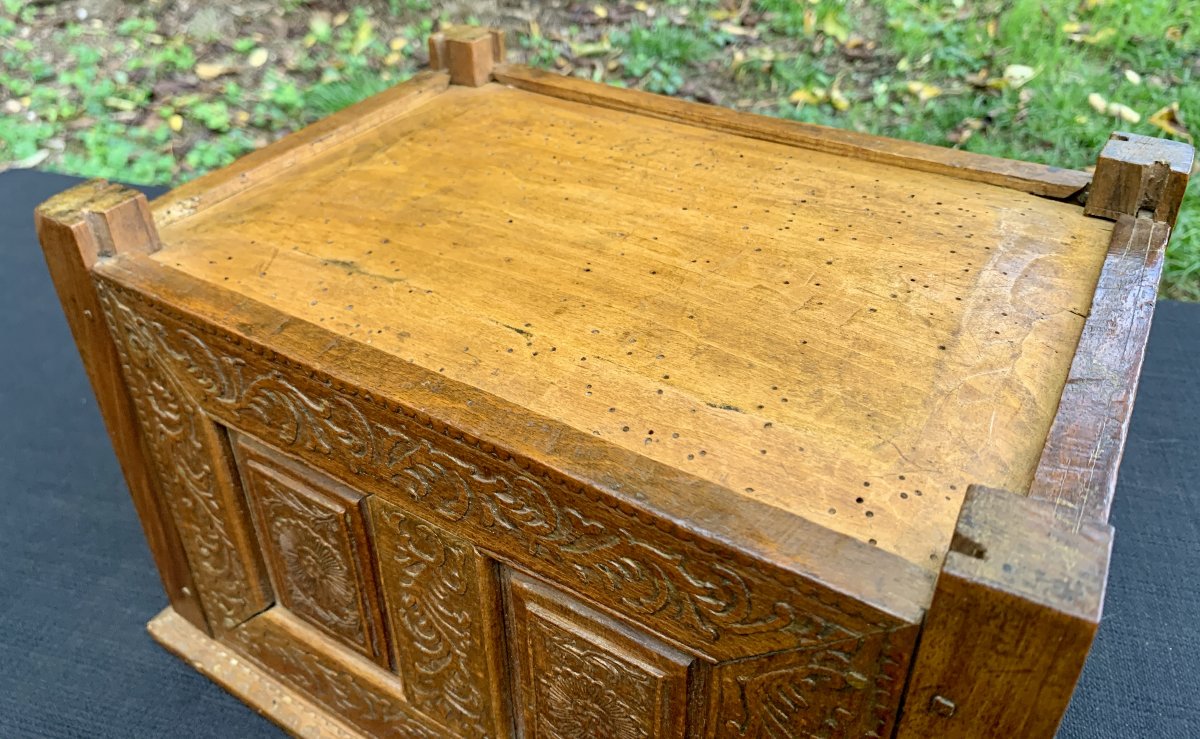
The box is very richly decorated on all sides (including the back) with floral and radiant patterns. This means that the box was meant to be placed in the center of a room, probably on a table.
It’s a miniature reproduction of a typical regional chest from the Louis XIV era.
The lid, as well as the four panels of the belt, all have a fleur-de-lis in its corners.
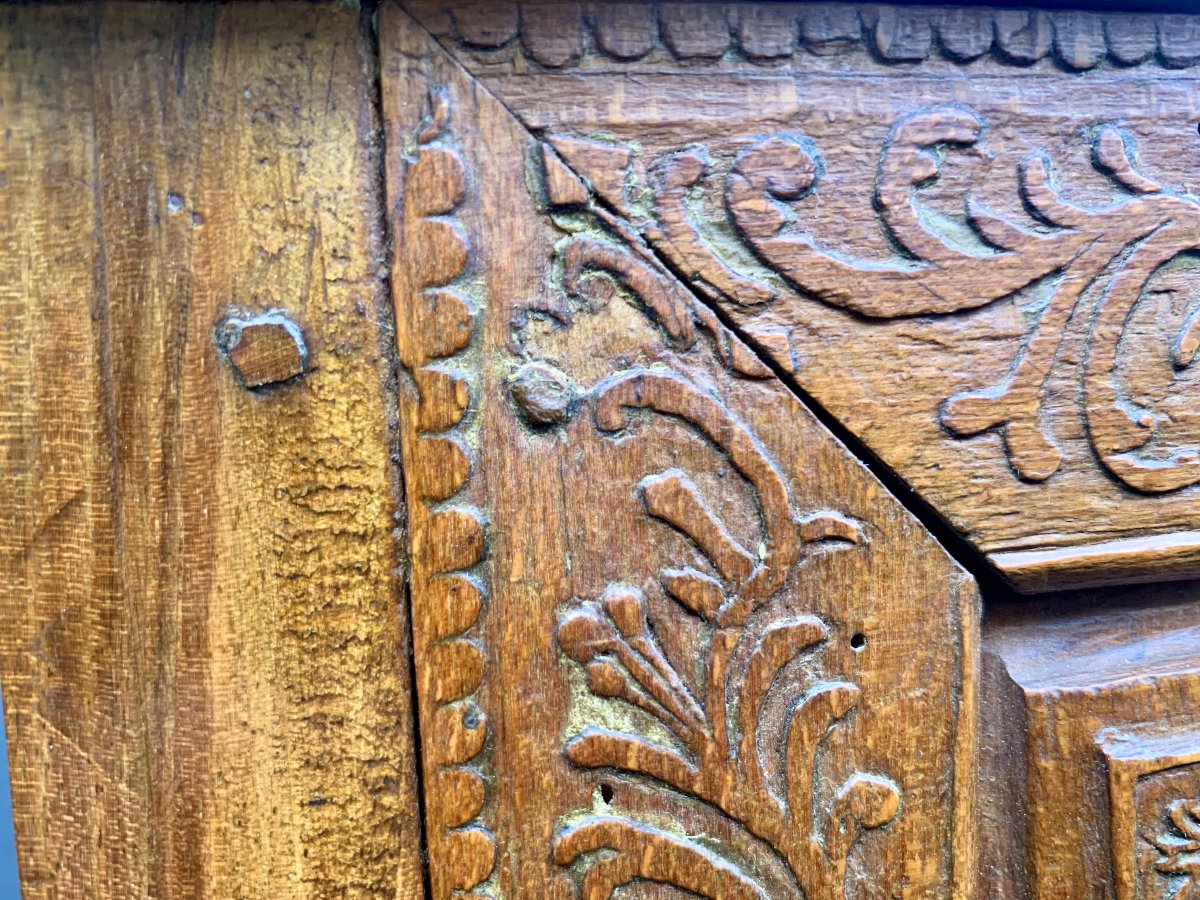
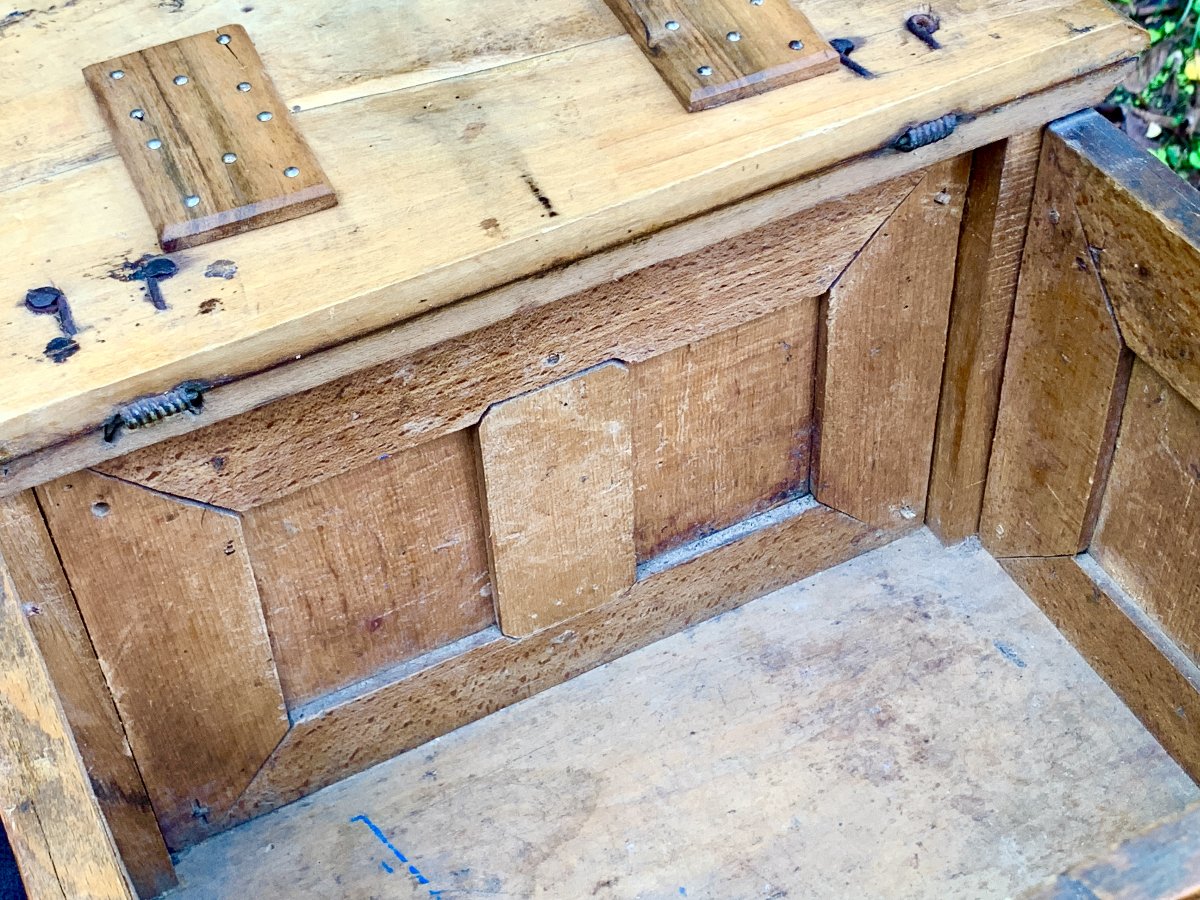
The assembly of the chest shows very precise traditional woodworking, with panels set into the uprights, typical of small chests from the High Era. You can also notice the use of small polygonal pegs made in a practical yet precise way.
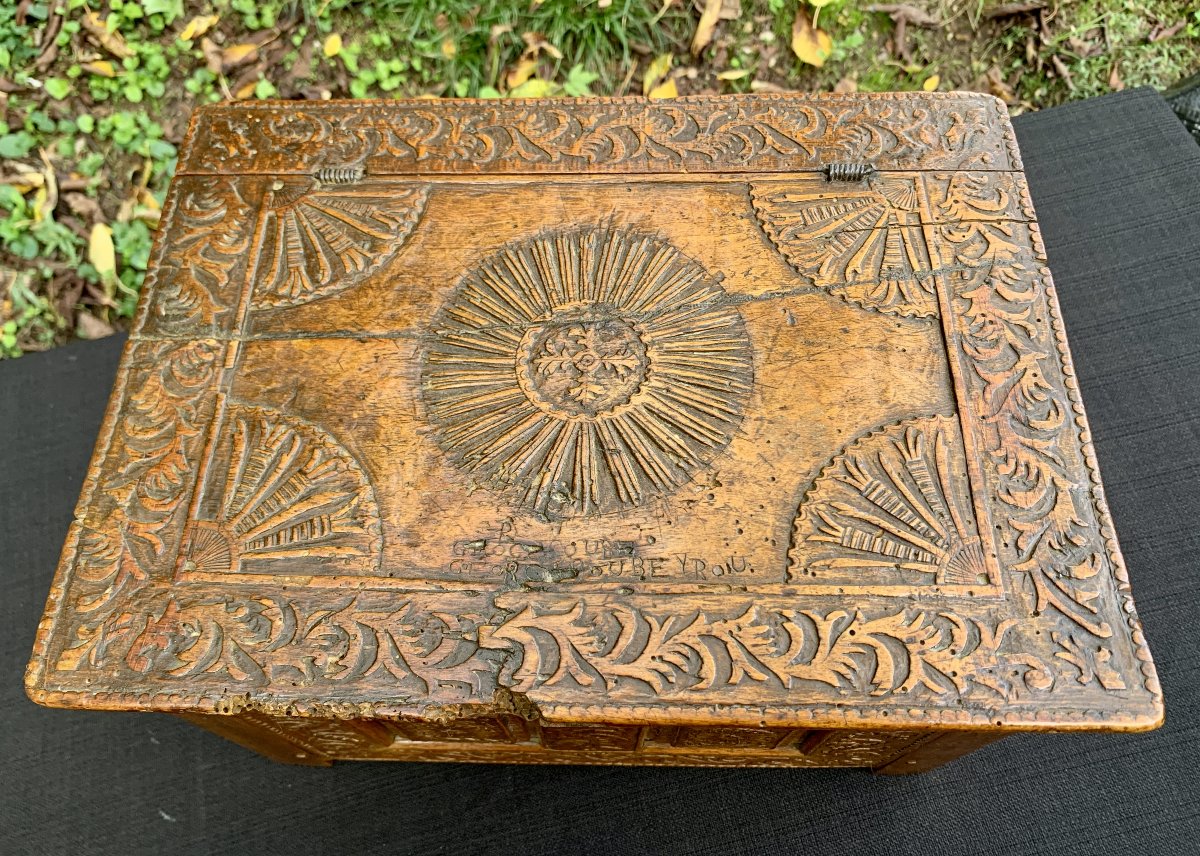
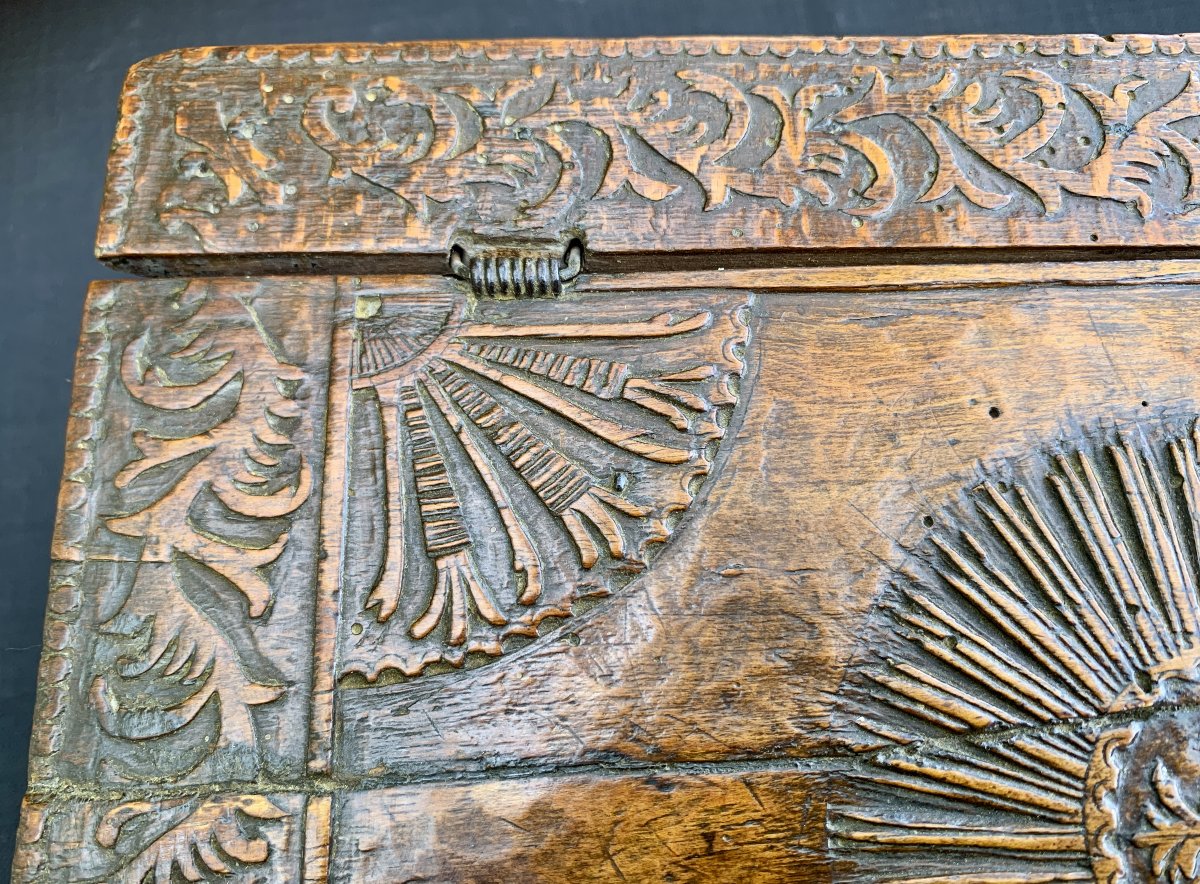
* The lid is decorated in the center with a large radiant sun-like motif flanked by 4 sections featuring the same fan-shaped rosette pattern.
The whole is framed by a wide border with a band showing leafy scrolls.
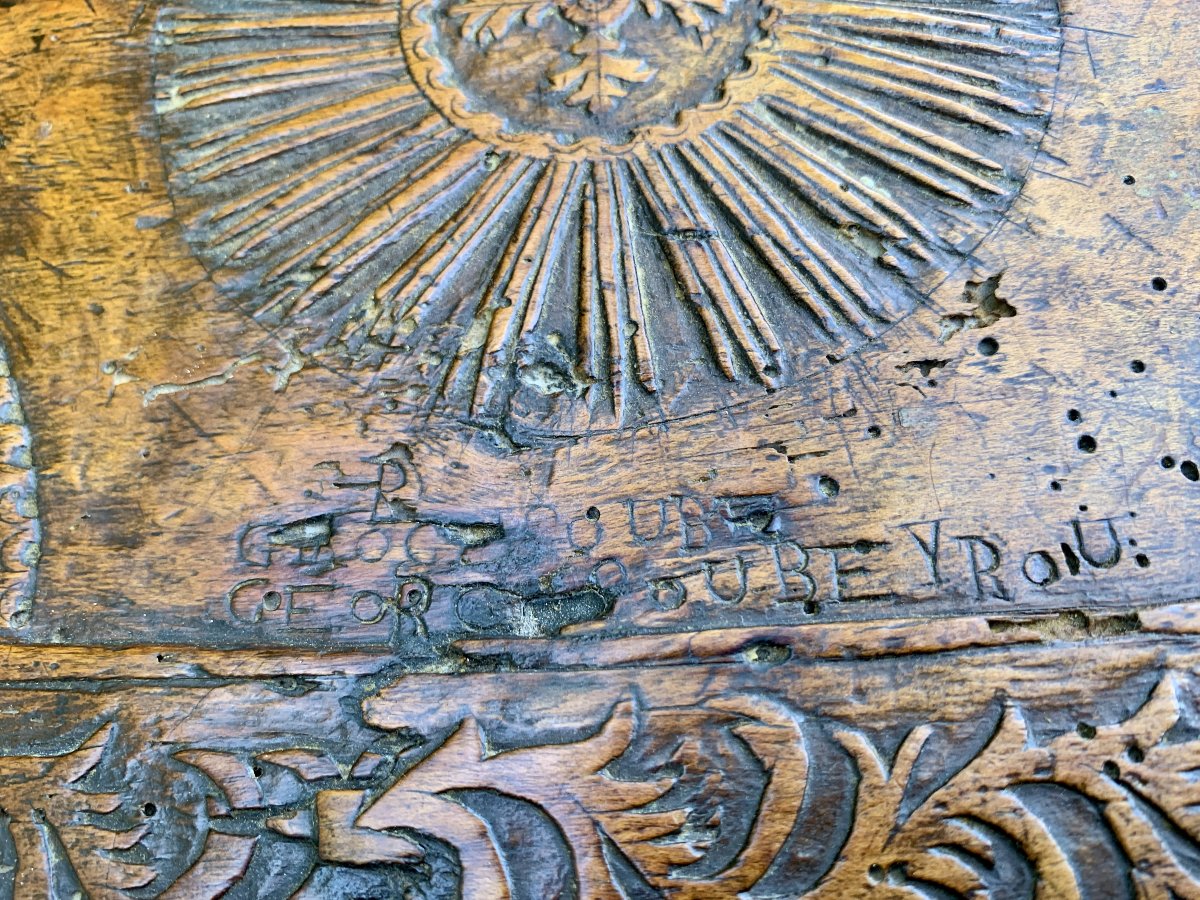
The chest amusingly shows the engraved name of its creator and/or owner…but on 3 lines !!!
- The middle line: "GEOGE SOUBE...", seemingly stopped by a flaw in the wood.
- The missing R in the first name was added later above...
- And finally, below, the full surname GEORGE SOUBEYROU!
The craftsman therefore preferred to start his line below to ensure the best readability of this name, given the imperfections of the wooden panel on his lid. This is a typical signature of genuine folk art, far from the rigid standards of court cabinetry !
The name SOUBEYROU (or its variant SOUBEYROUX) is typical of the Occitan language. It comes from the Occitan words 'sobiran' or 'soubeiran,' which mean 'superior' or 'situated above.' It’s a topographic name originally given to a family living 'at the top of the village' or on a farm at a higher elevation.
The main historical centers of this name at the end of the 17th and beginning of the 18th centuries are precisely in the regions of Lozère (especially around Mende and La Margeride), Ardèche, and Haute Loire (the Velay, around Le Puy en Velay). It might actually be interesting to look for traces of this surname in the relevant departmental archives to find records of Sieur George SOUBEYROU around that period (1680-1730).
The box, on the other hand, isn’t dated like you might have expected.
The spiral hinges made of twisted wire, called "pig-tail" hinges, are embedded into the thickness of the wood. They are typical of the late 17th and first half of the 18th century. The hinge pins go all the way through the wood and are bent back on the inside to securely hold the lid.
Inside the lid, recent reinforcements or repairs have been made with two light wood plates attached with modern steel nails. The goal was to stabilize and secure a crack by bringing the two parts of the lid panel together, while fully respecting the original spirit of this folk art box.
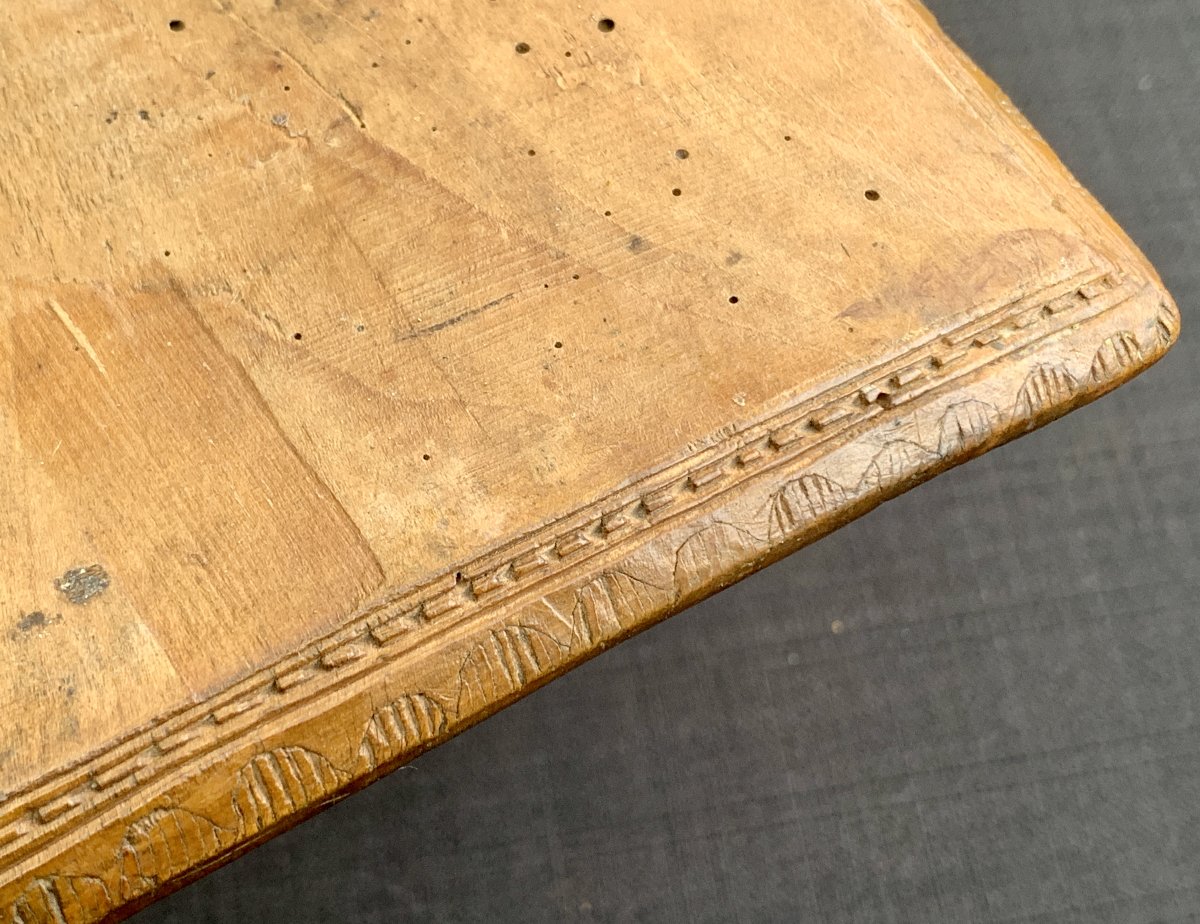
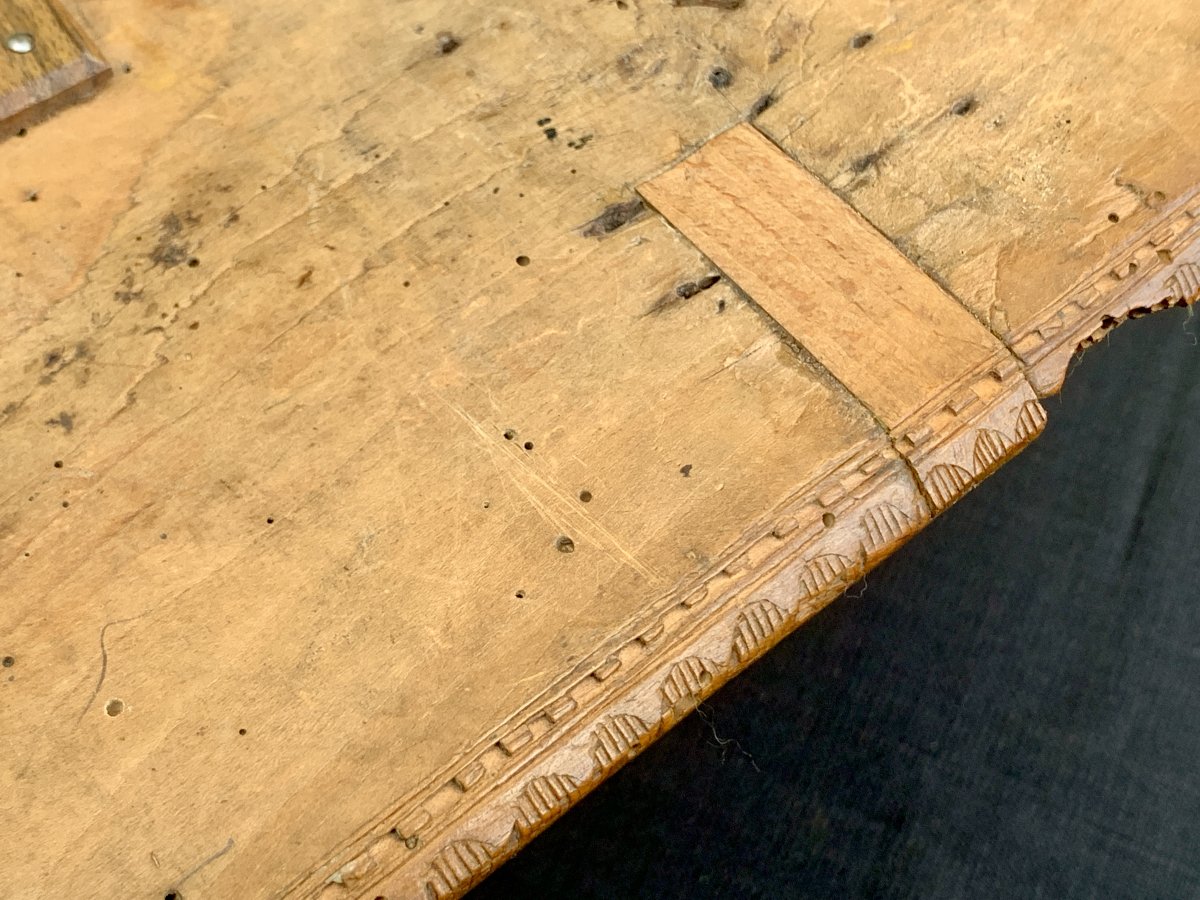
The back of the lid is decorated with a fine, subtle ornamental border carved around the panel
* The underside of the lid is enhanced by a fine and discreet ornamental frieze carved around the panel. Both the front and back faces feature the same two framed panels adorned with flowers carved into rosettes, bordered by a continuous frieze of plant motifs. The ornamental plant repertoire, including fleur-de-lis flowers and central rosette motifs in the shape of radiating suns, is directly inspired by the provincial Louis XIV style.
The fleur-de-lis marks a strong royalist connection, showing allegiance to the French Crown.
In addition, artisans in the provinces also used the fleur-de-lis to 'enhance' a piece of custom furniture intended for a notable local family.
The very careful and detailed carving of the fleur-de-lis in the corner blocks, spanning the two corner posts of the front panels, shows the extreme attention given to this element, which also fits perfectly with the ornamental balance of the box.
* The side panels of the chest feature the same patterns as the two main fronts, this time with a single carved panel, slightly simplified.
Dimensions :
33 cm length
* 24,5 cm width
* 20,5 cm height
Condition :
An old join under the lid panel where a possible hasp might have been. This joint isn't visible on the top of the lid, which means it wasn't made through the full thickness of the panel. The chest might actually have been made this way ?!
Traces of woodworm on the front right edge of the lid have been stabilized.
The box's carving is lively, incised directly into the solid wood.
This box is a genuine piece of folk art collection, touching, whose engraving imperfections on the lid give it all its historical value and charm.
Its quality of assembly and carving make it a true museum piece for its region of origin, between Lozère, Cantal, and Haute Loire, which produced some of the most exceptional examples of French folk art.
1 600 €
Period: 18th century
Style: Louis 14th, Regency
Condition: Excellent condition
Material: Wallnut
Length: 33 cm
Width: 24,5 cm
Height: 20,5 cm
Reference (ID): 1841882
Availability: In stock
Print