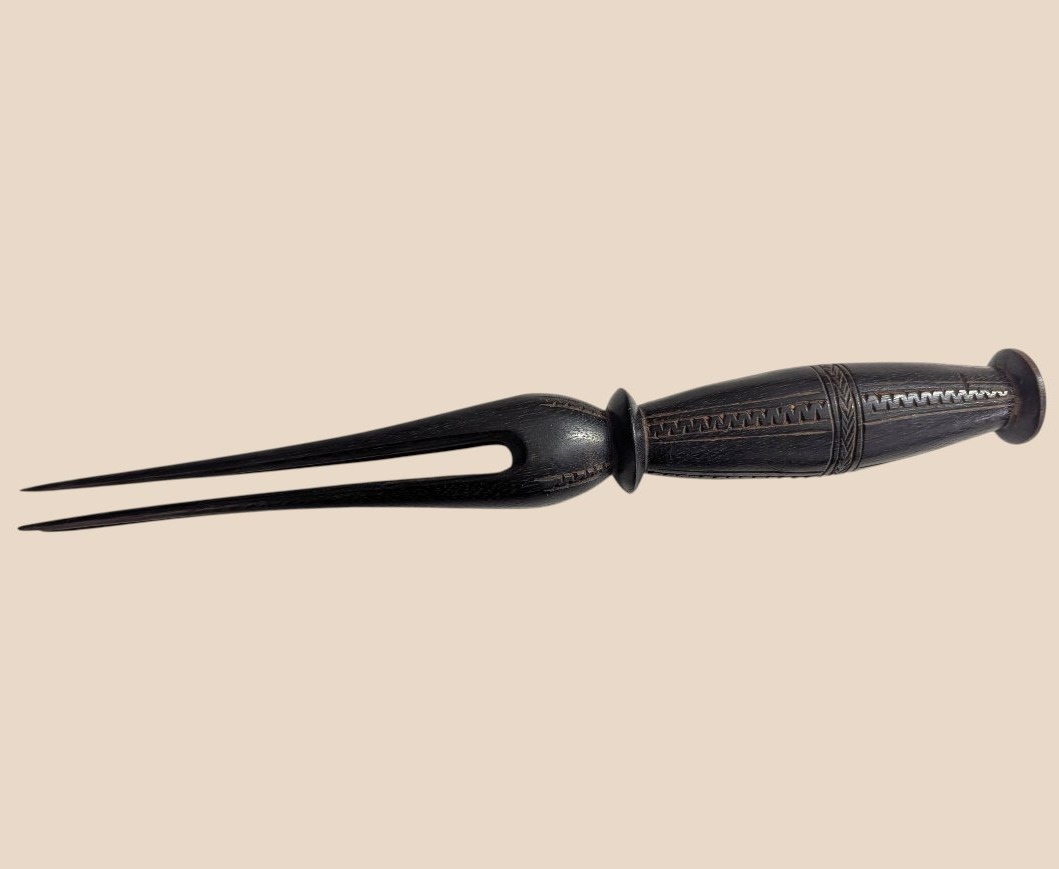


Cannibal's Fork - Bulutoko - Fiji, Viti Levu Island - Late 19th Century
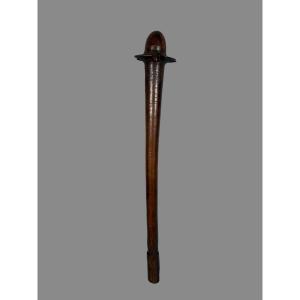
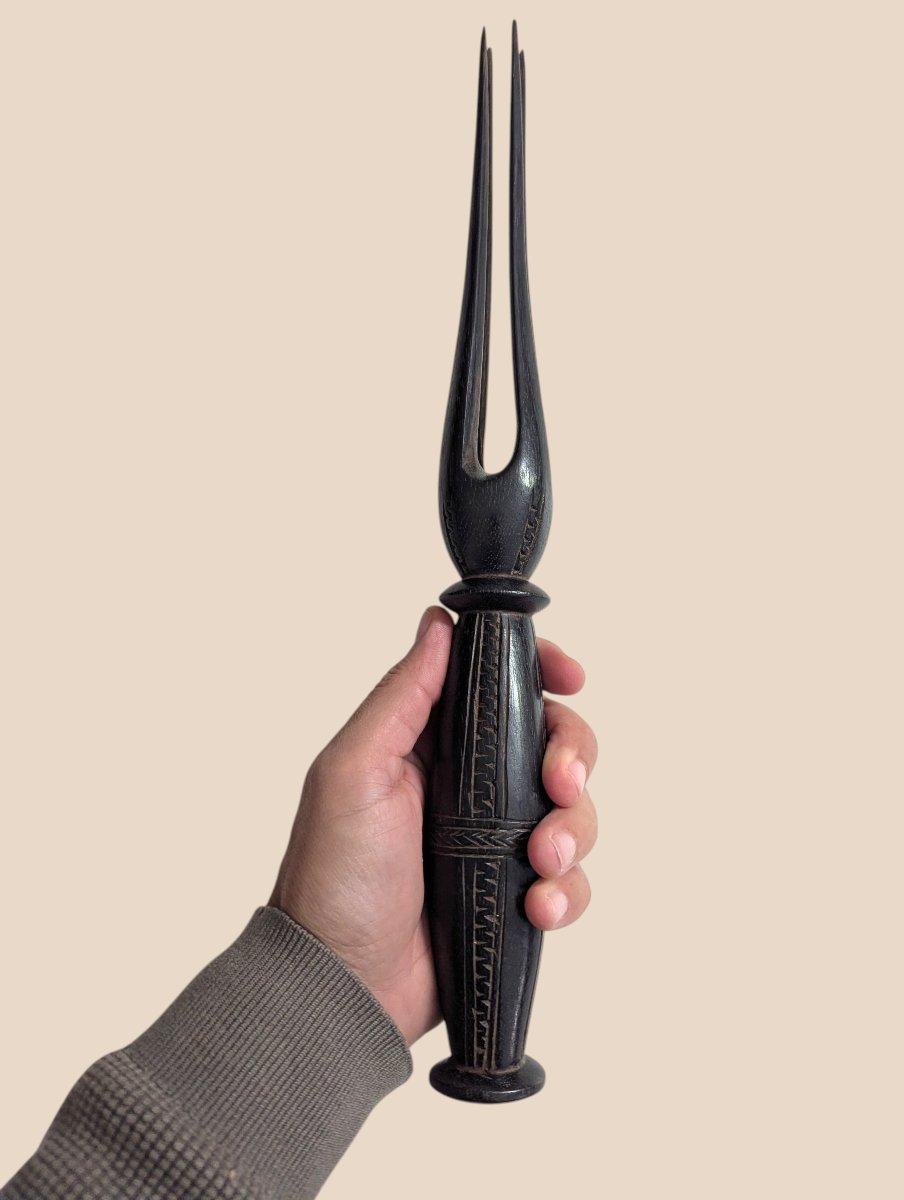
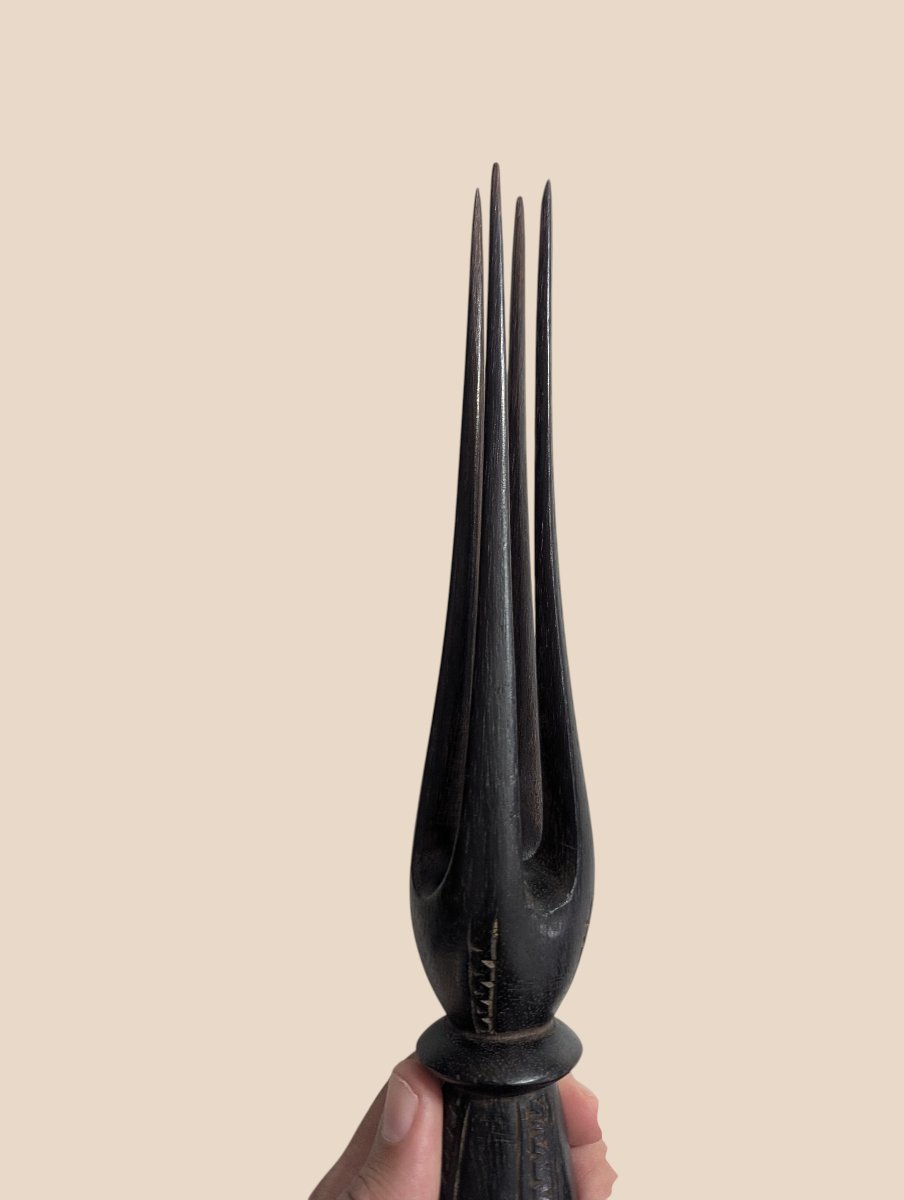
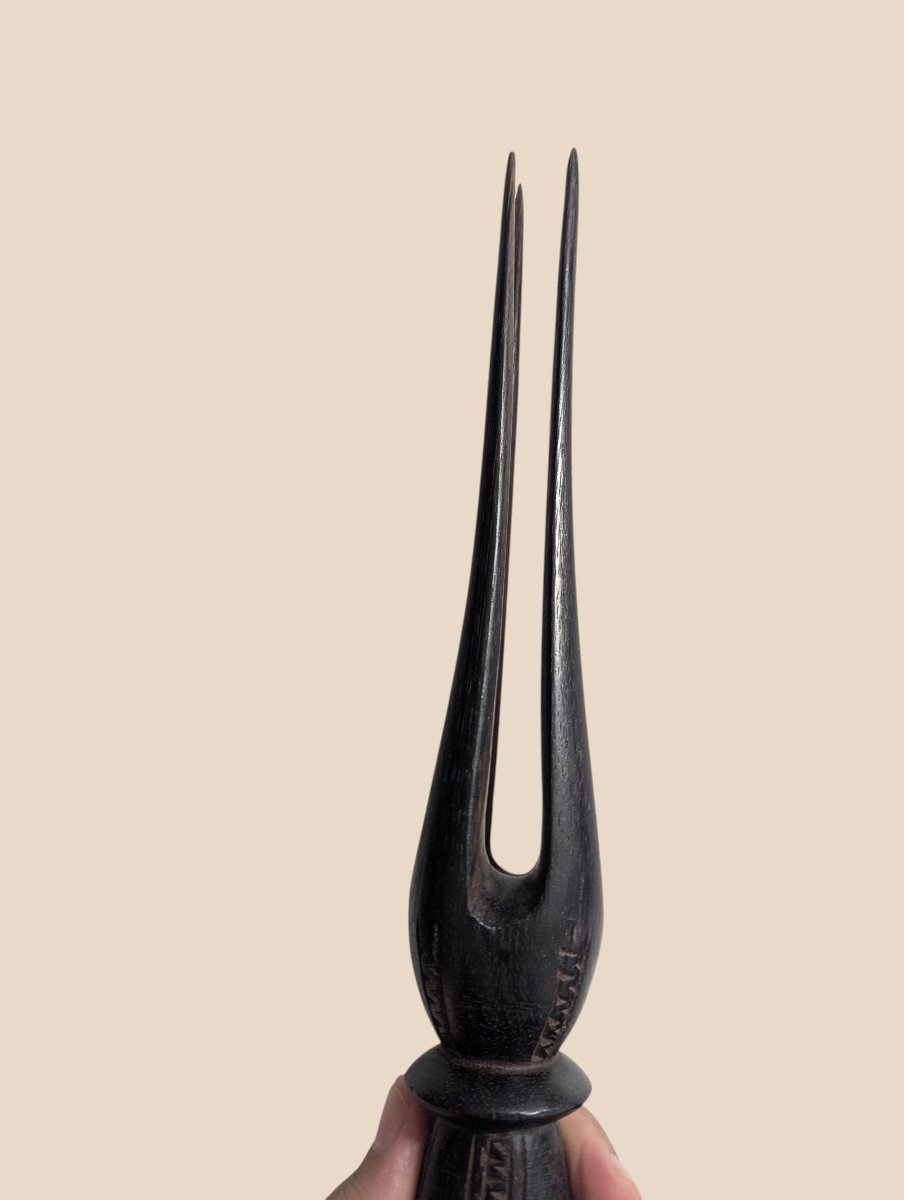
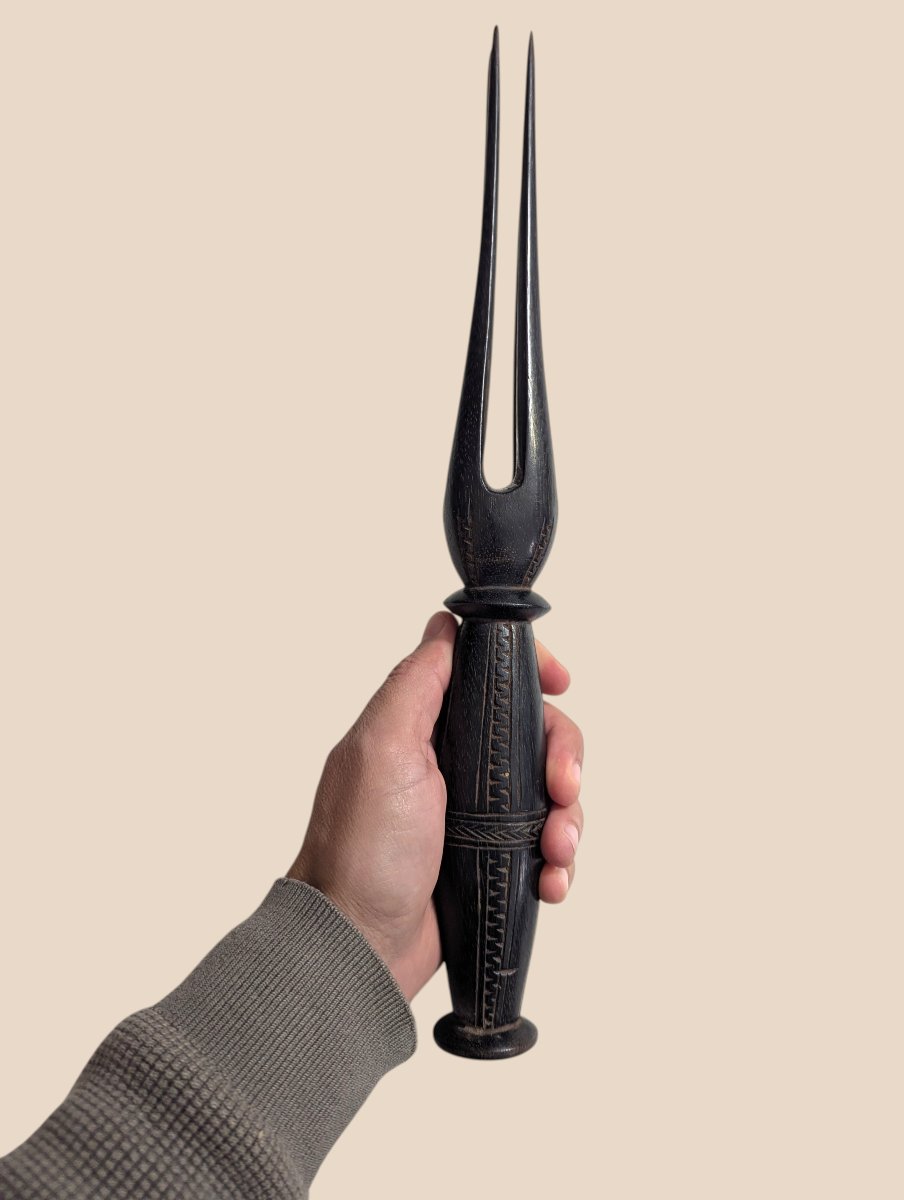
Fiji, Viti Levu Island – “Bulutoko” ceremonial fork with four engraved wooden prongs
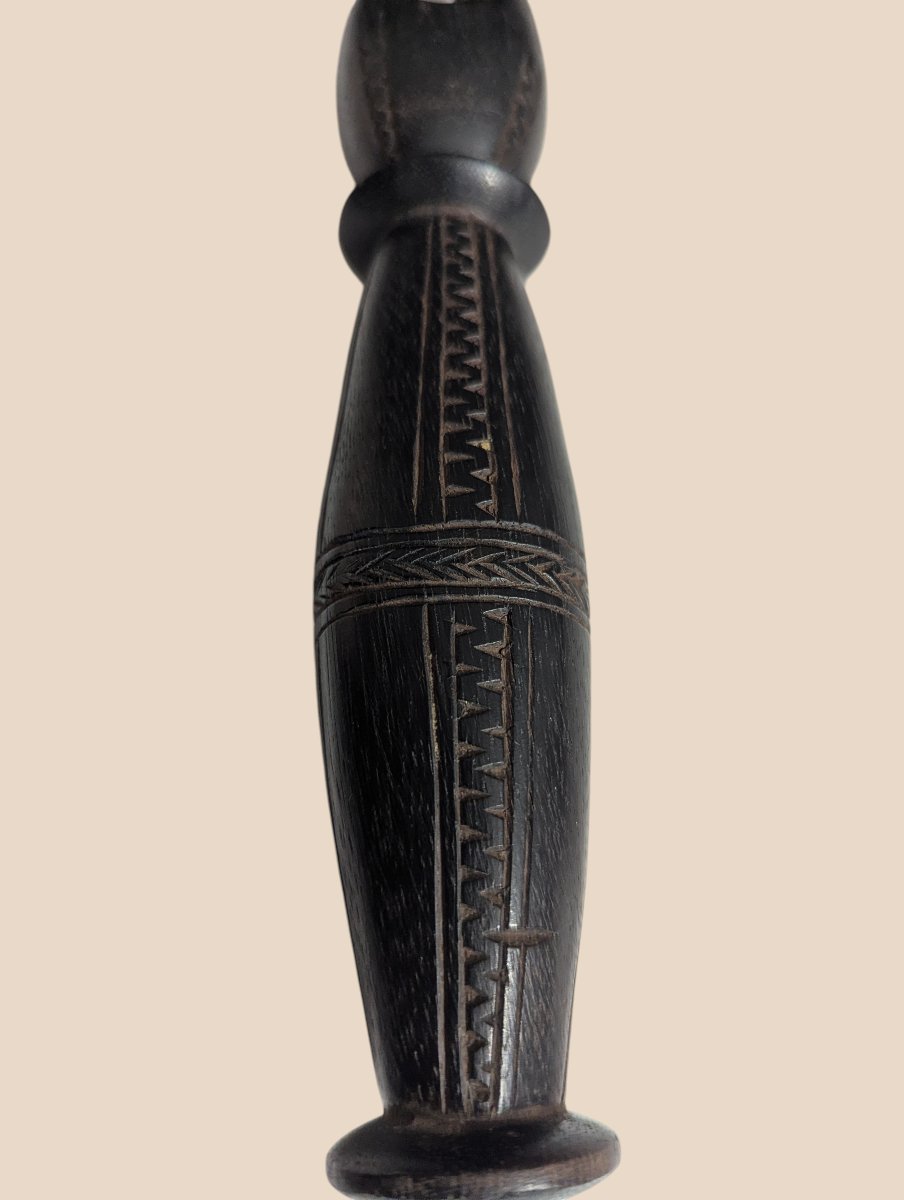
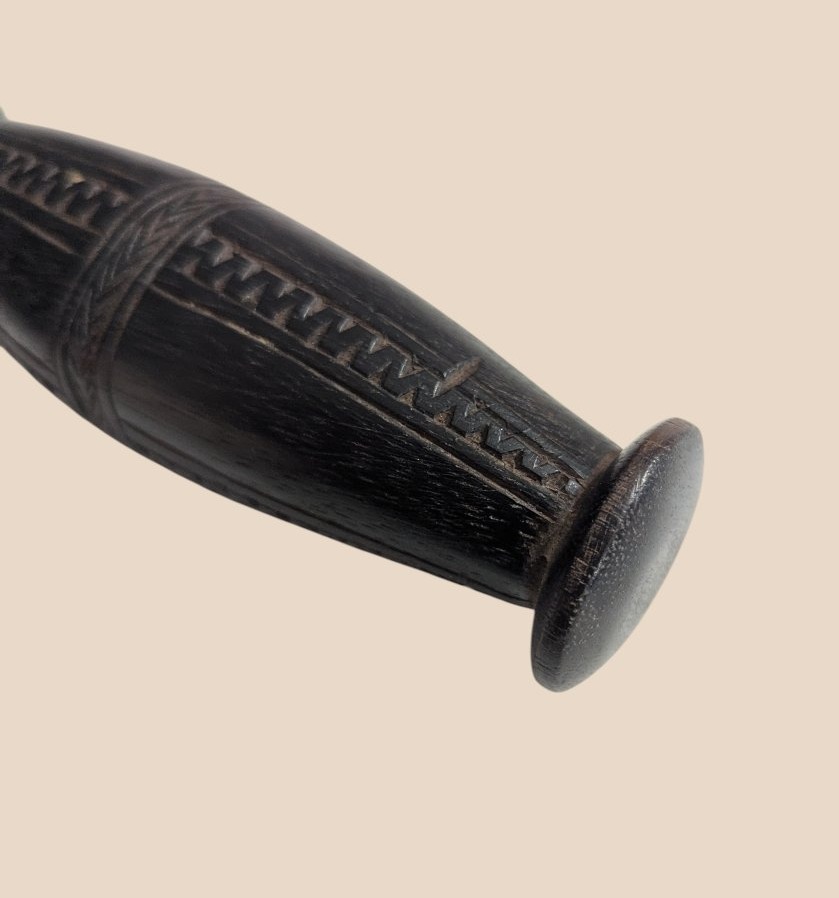
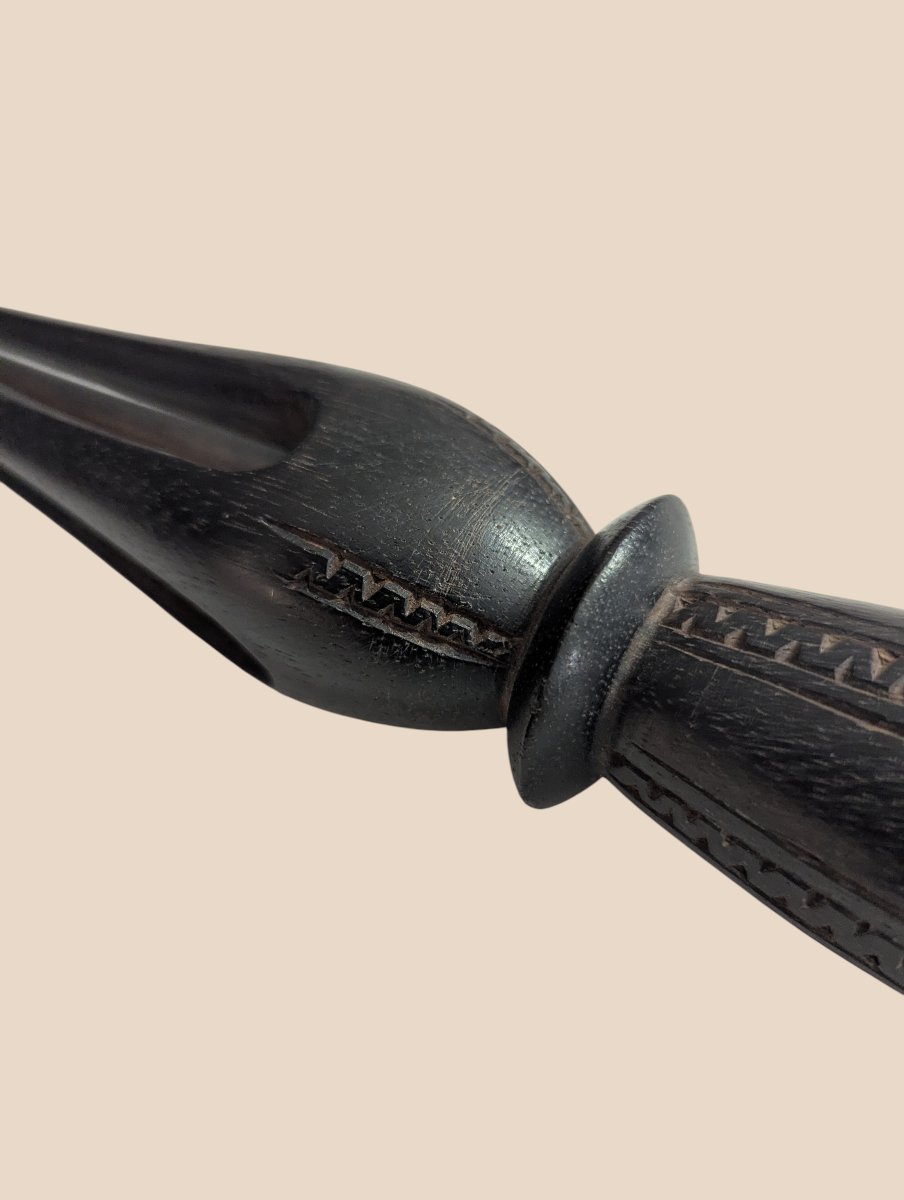
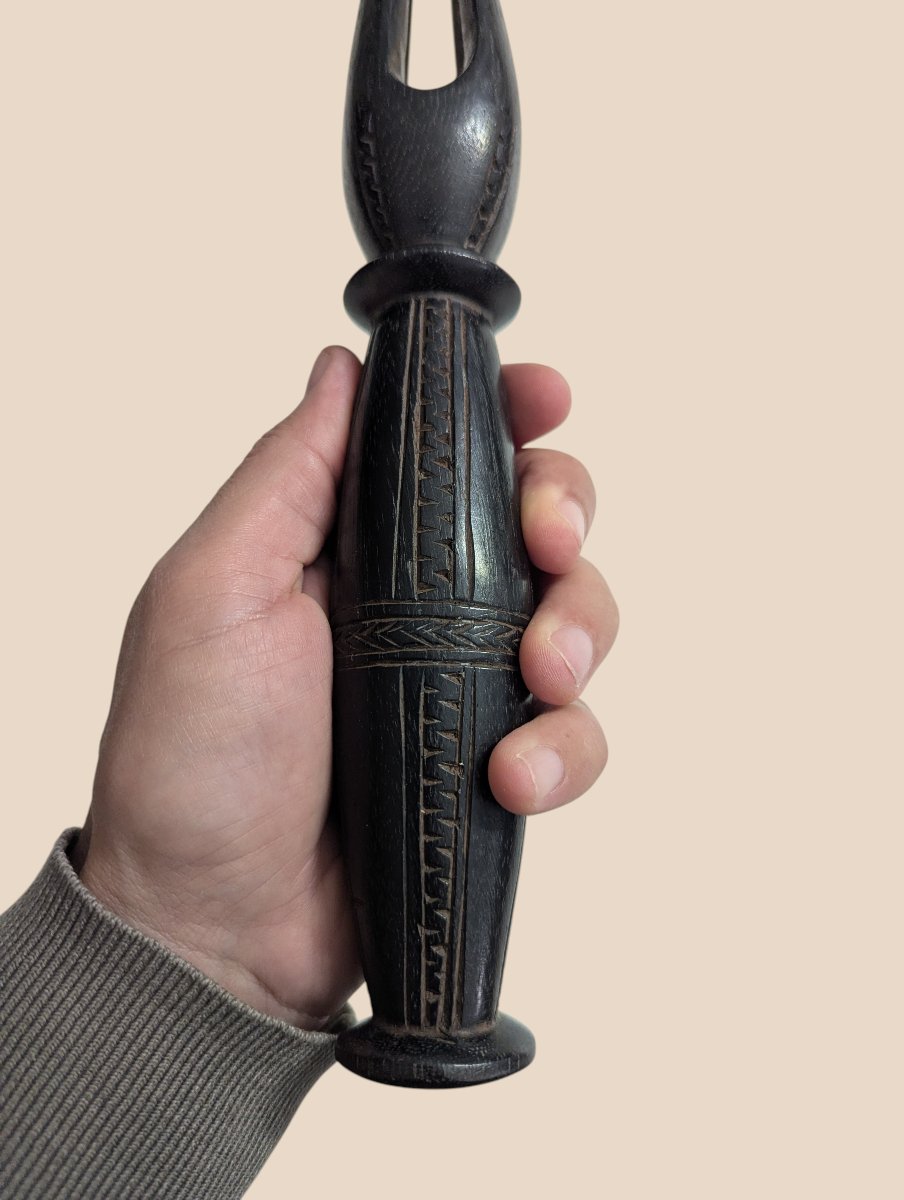
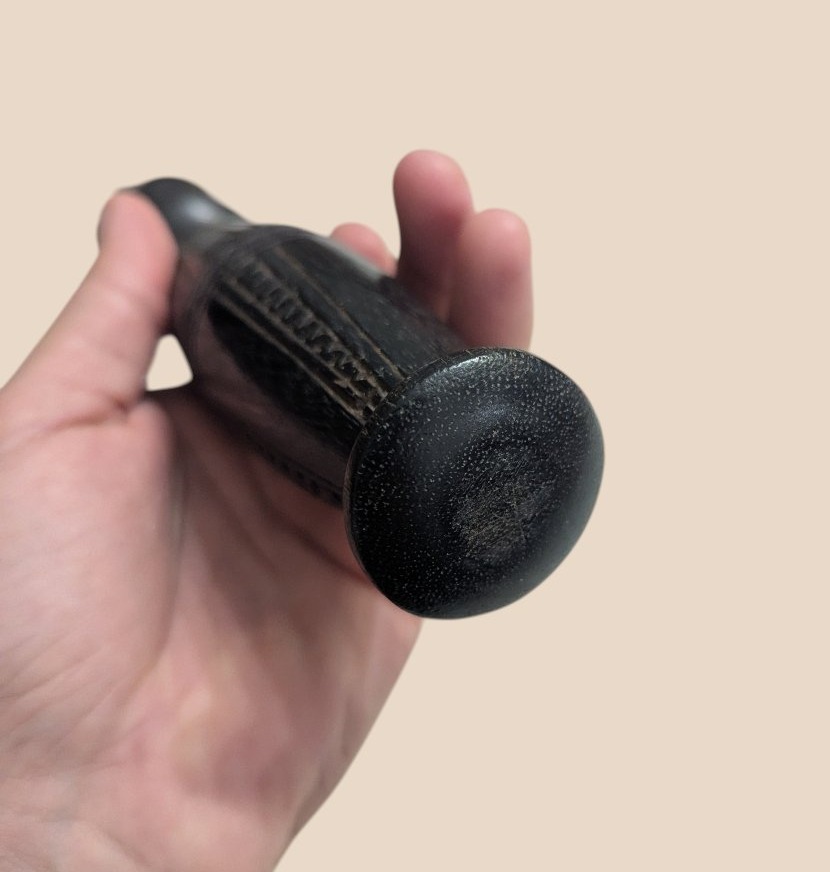
Ceremonial fork with four long, tapered prongs, carved from hardwood with a dark, deep, and glossy patina. The bulbous head features a frieze incised in a sawtooth pattern and is separated from the handle by a protruding ring. The spindle-shaped handle is entirely carved: vertical bands of herringbone and wolf’s-tooth patterns, framed by fillets, are interrupted halfway down by a horizontal band featuring an ear of grain or fern motif. The end terminates in a disc-shaped heel.
An object reserved for priests and chiefs, endowed with a mana too powerful to touch food with their bare hands.
Beautiful patina from use, small signs of handling, and slight pitting at the bottom of the incisions. Good overall condition.
36 cm long
Late 19th – early 20th century
Fiji, Viti Levu Island – Private collection in Nièvre
The fork of the sacred men
Fijian forks are generically known as i cula ni bokola. Europeans have long called them “cannibal forks.” The four-pronged shape is the most characteristic feature of these instruments. The term bulutoko is a dialectal word: according to information from Fergus Clunie recorded by the Cambridge Museum of Archaeology and Anthropology, it belongs to the Nadroga dialect, in the southwest of Viti Levu, and was likely also used in Navosa and the interior of the island.
Their use is subject to a taboo (tapu). The body of a chief or priest was imbued with mana, and his sacred hands were not allowed to come into contact with food. He was either fed by others or used this type of instrument himself. Tradition associates these forks with the ritual consumption of human flesh, linked to war and sacrifice. The Cambridge Museum, in fact, holds an example seized around 1876 in the Wainibuka caves on Viti Levu, along with the remains of a man devoured by his captors. However, they were primarily a sign of their owner’s sacred status. With the Christianization of the archipelago in the 19th century, they lost their ritual function and became sought-after items among travelers and collectors.
Period: 19th century
Style: Tribal Art
Condition: Excellent condition
Material: Solid wood
Length: 36
Reference (ID): 1840765
Availability: In stock