

St. Mary Magdalene, Made Of Nevers Spun Glass – 18th Century
Mary Magdalene in Nevers spun glass – 18th century
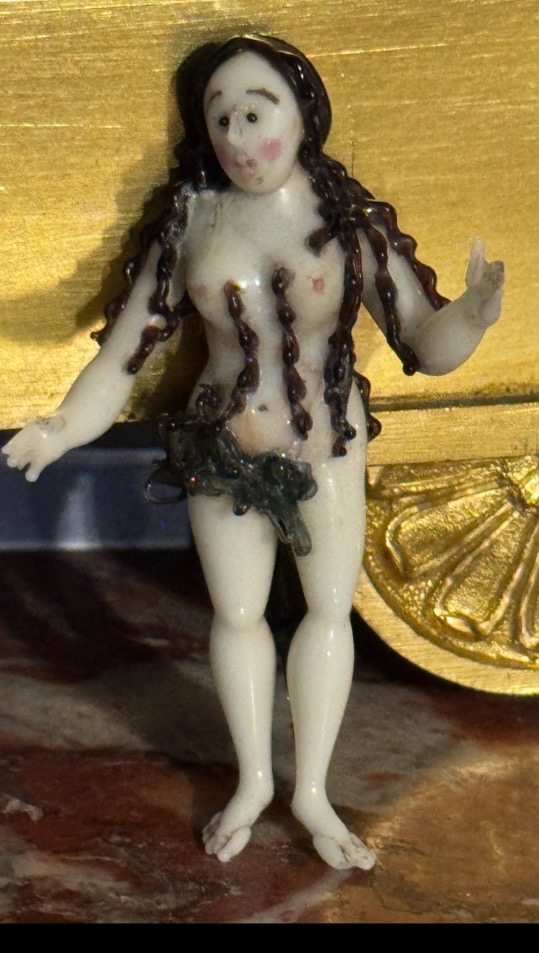
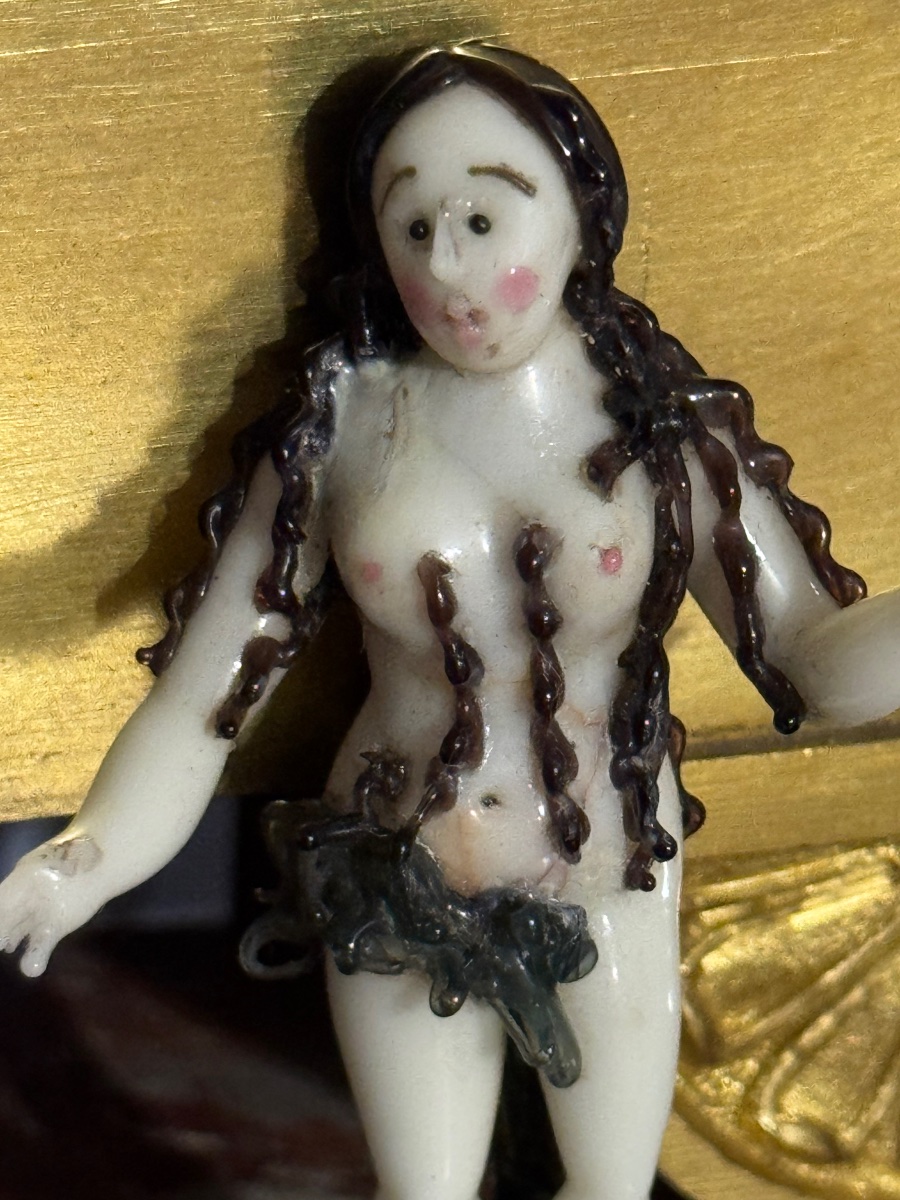
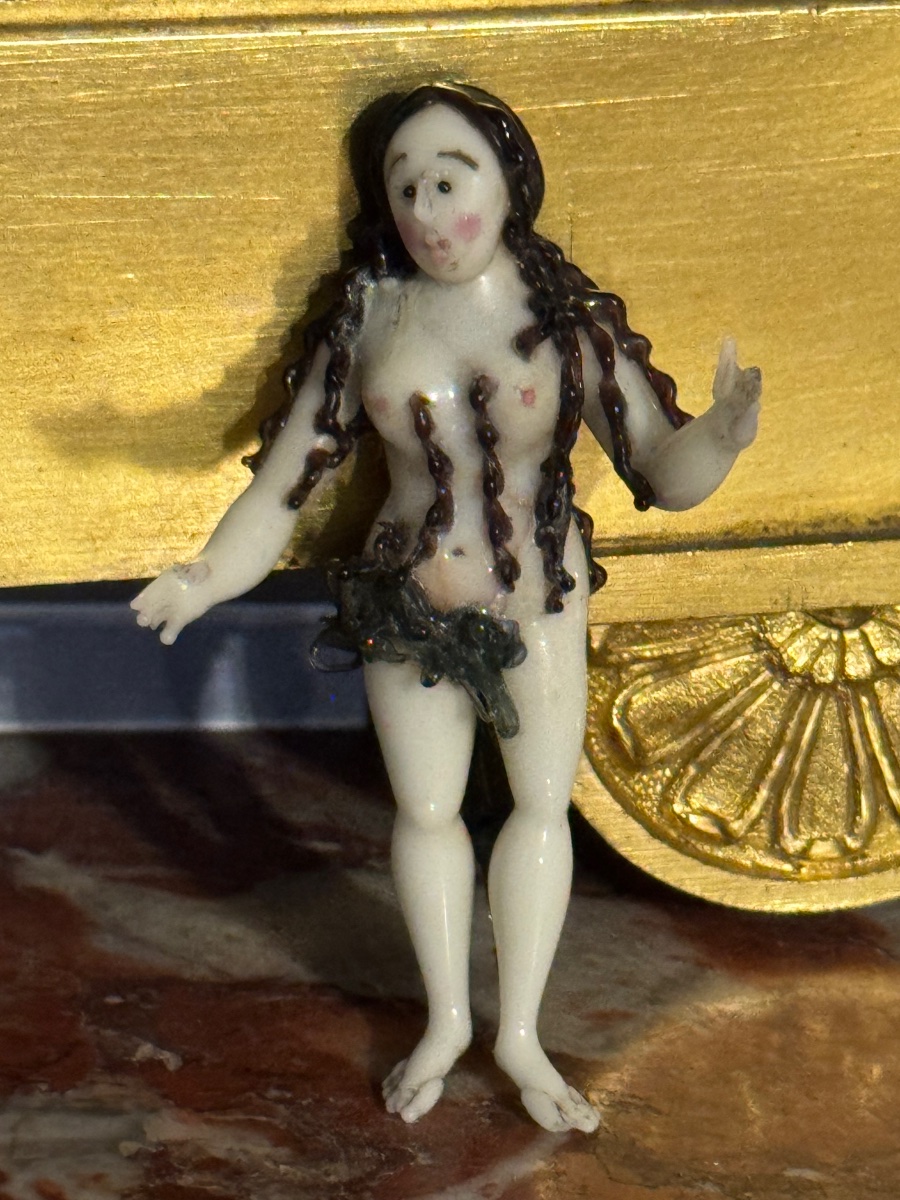
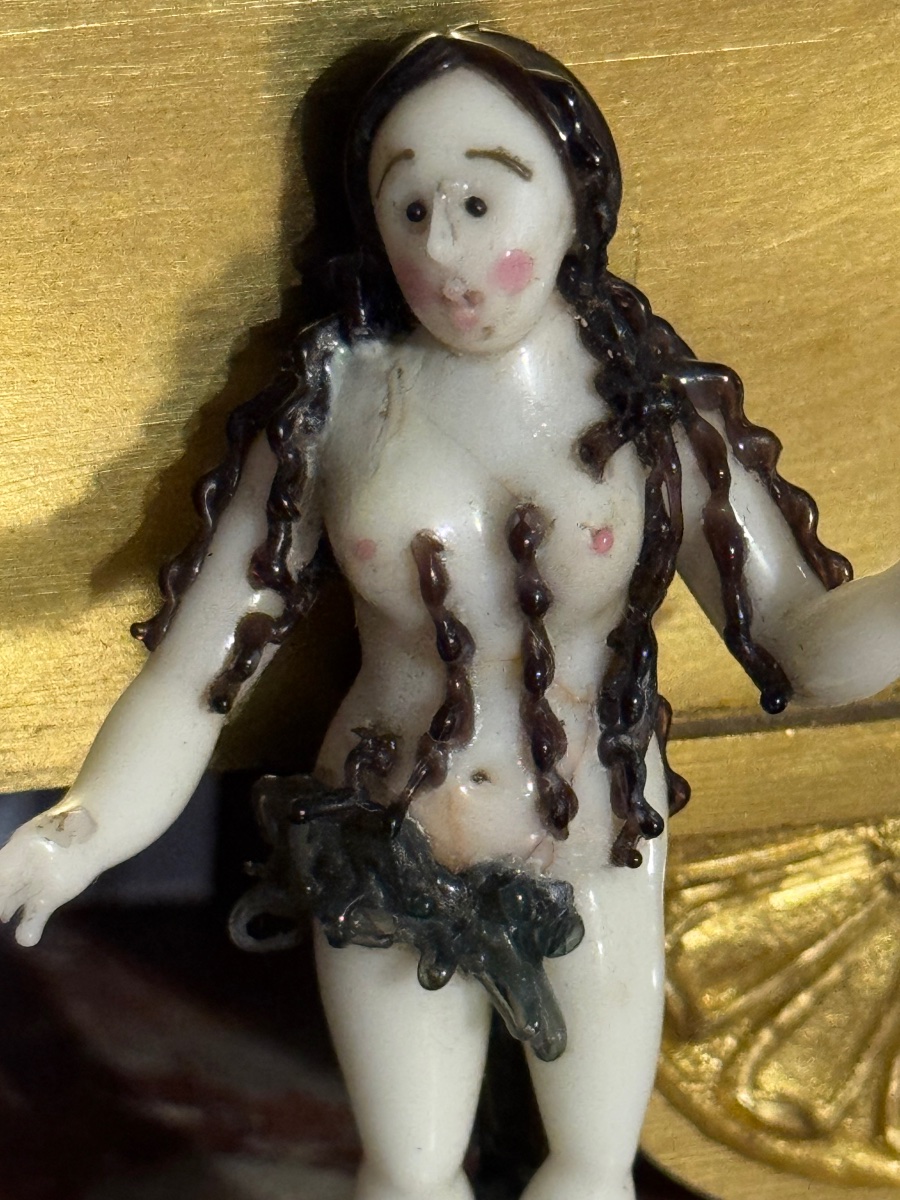
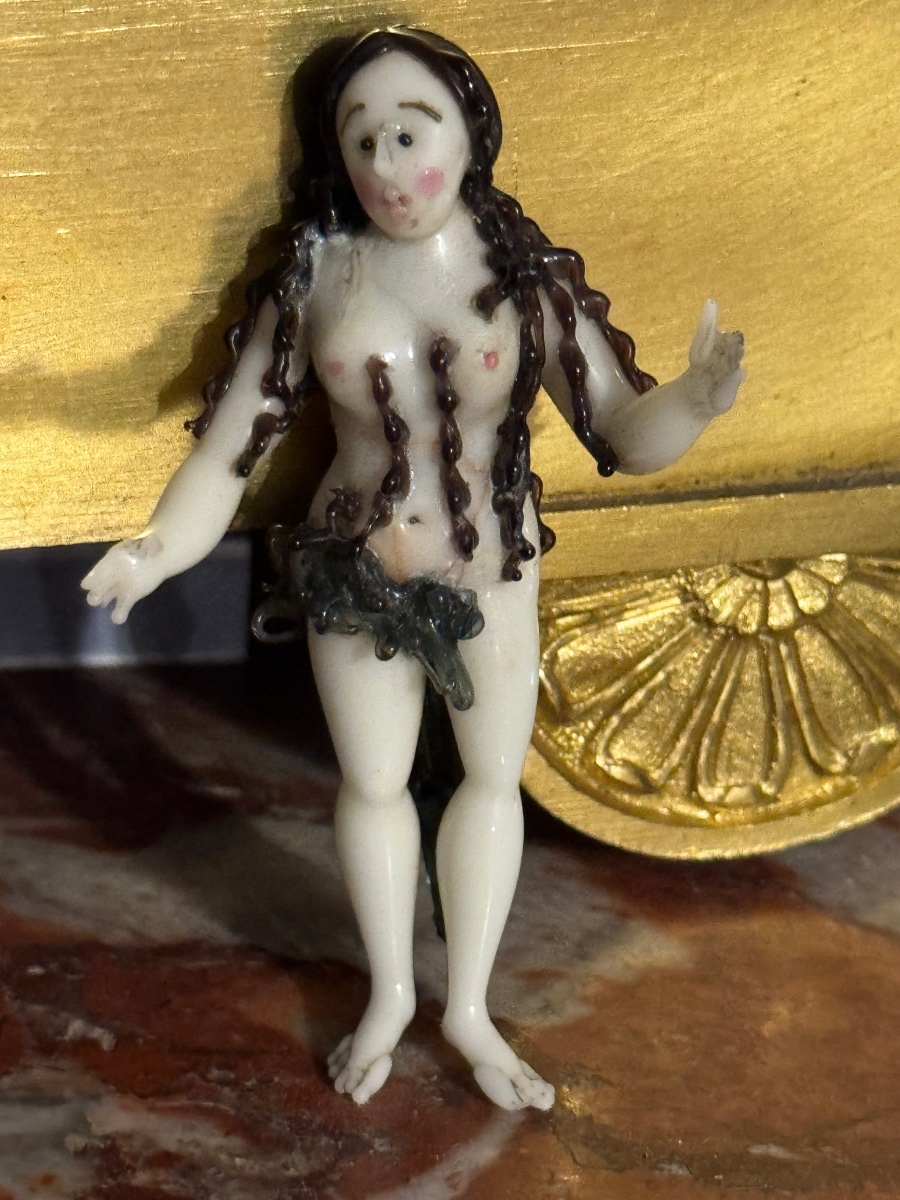
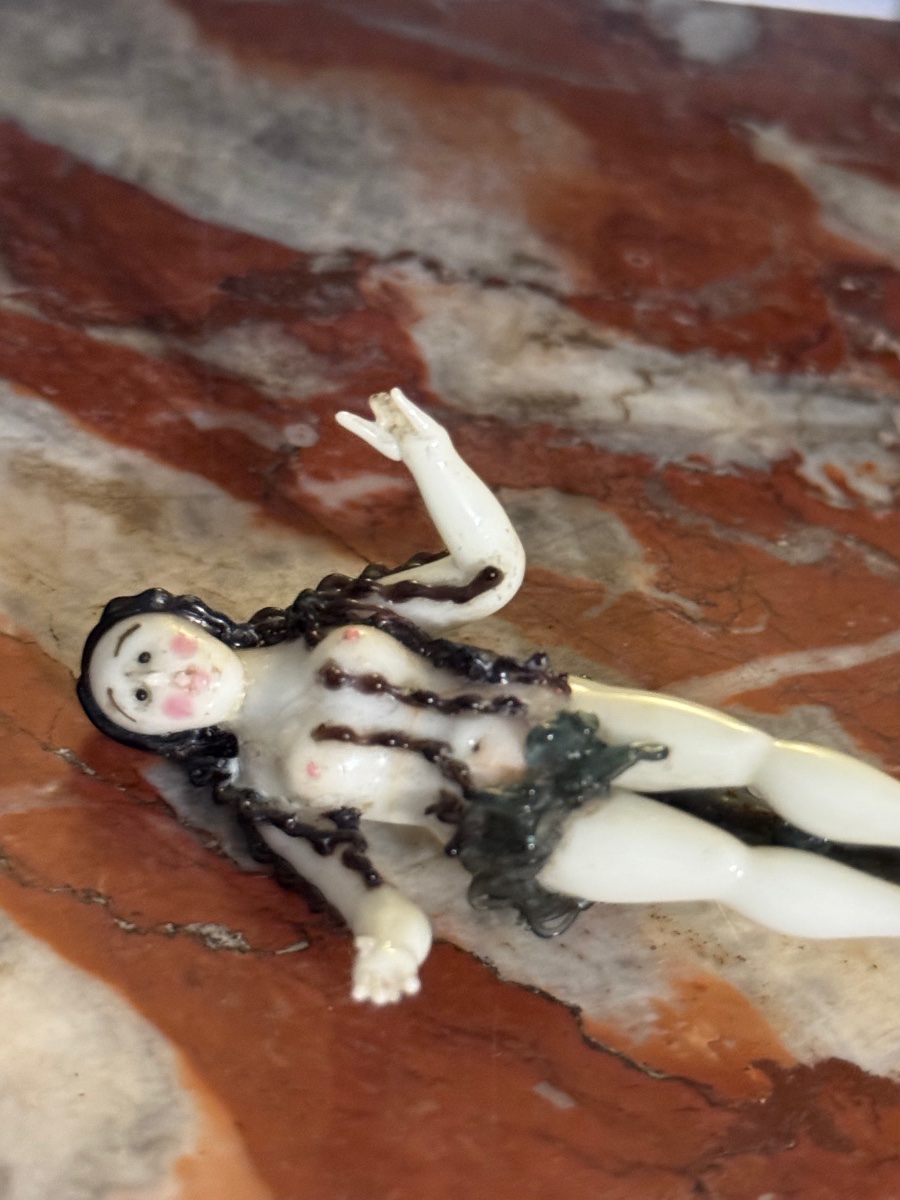
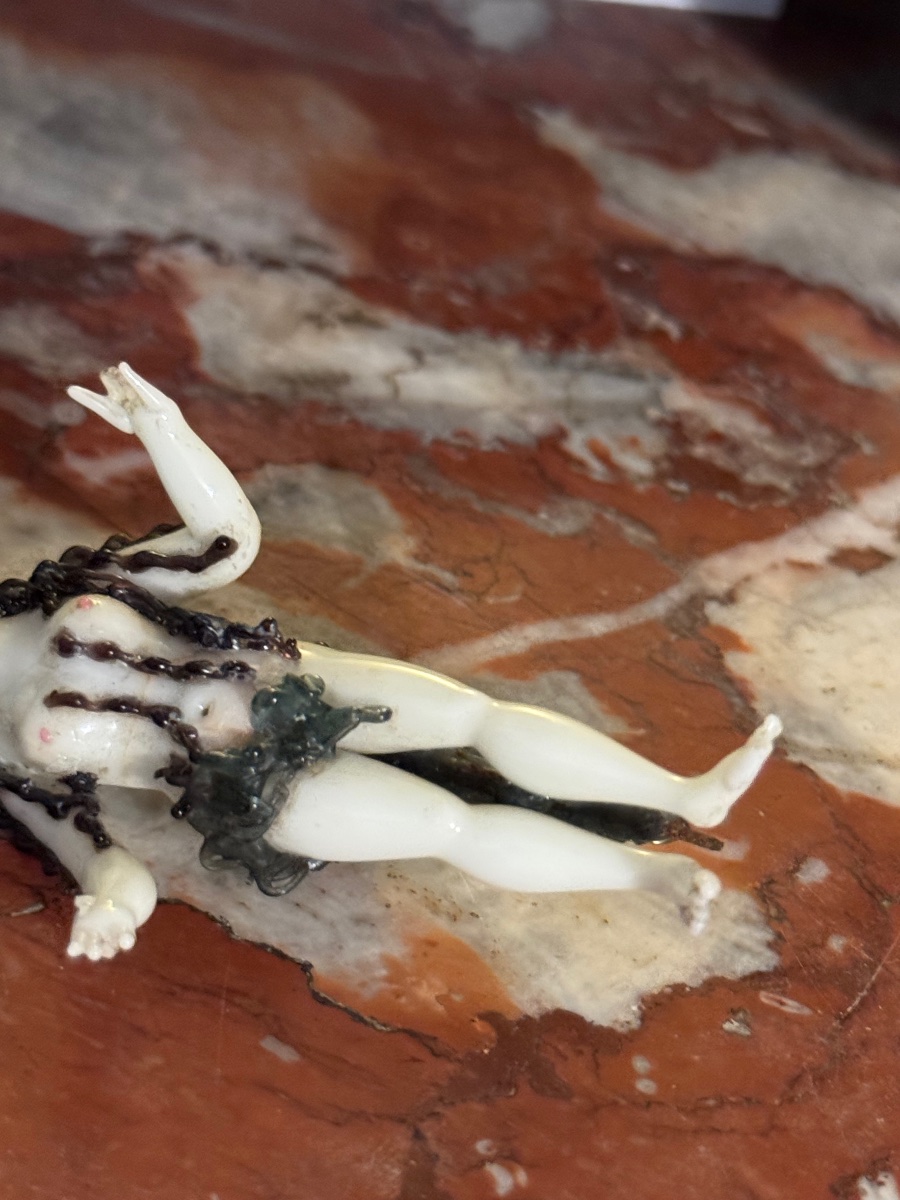
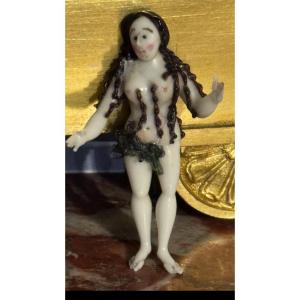
A delicate statuette in Nevers spun glass depicting Mary Magdalene as a penitent, dating from the 18th century.
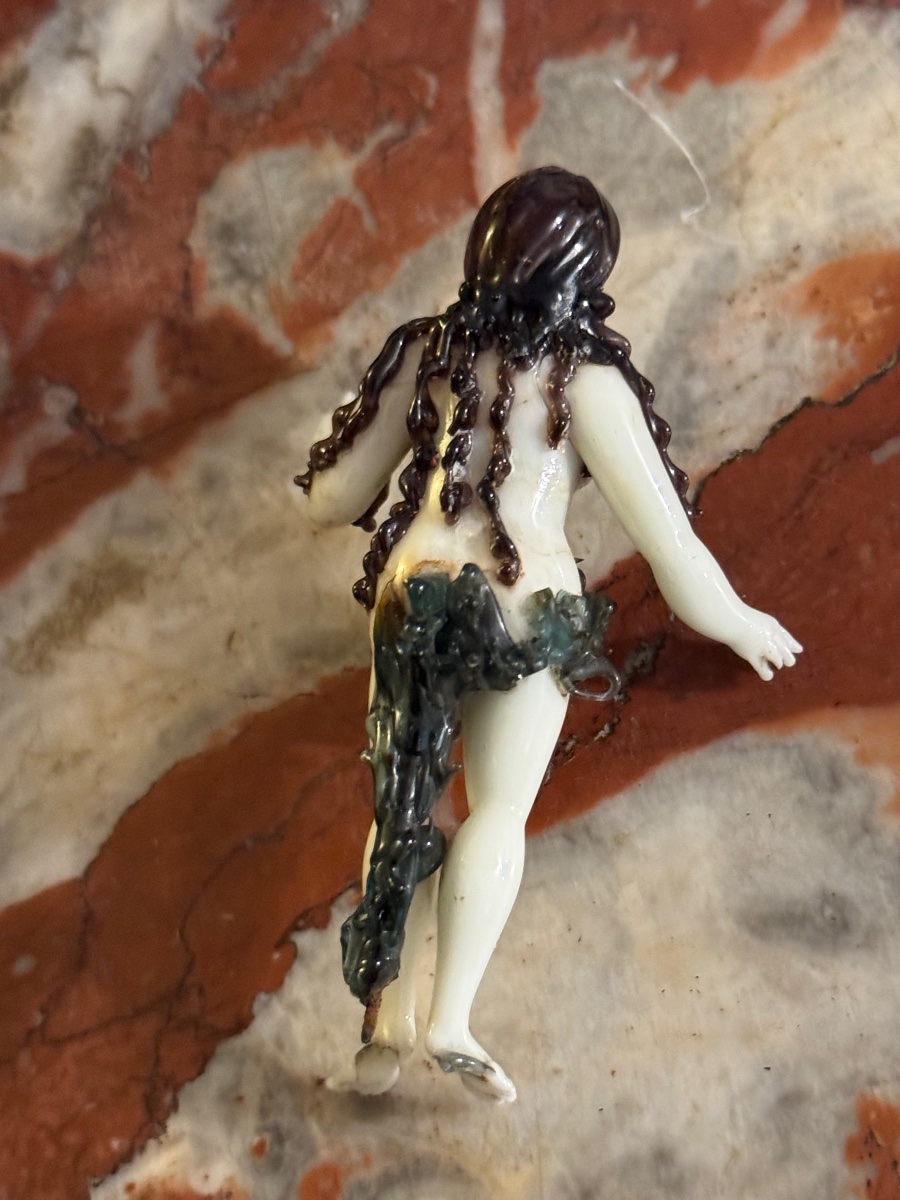
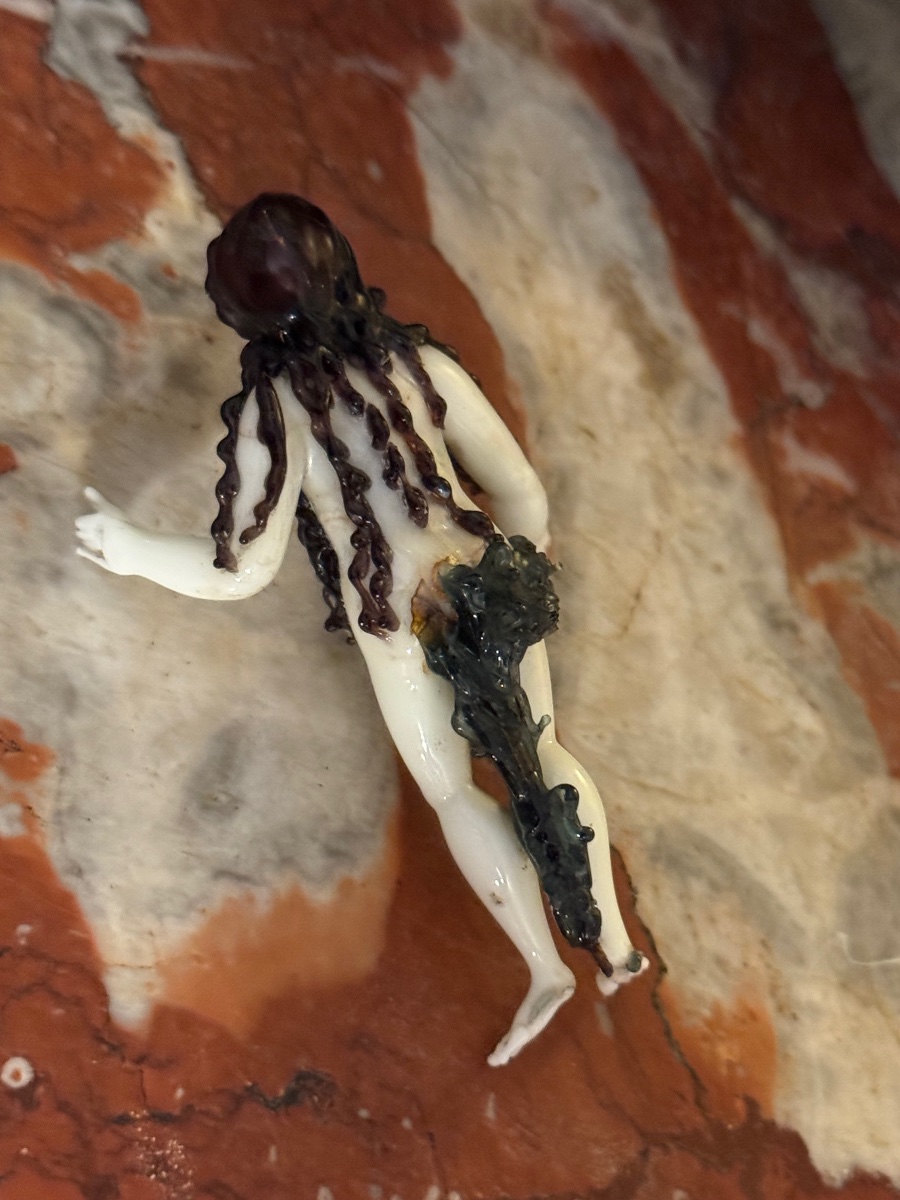
The saint is depicted standing, almost entirely nude, her body partially concealed by her abundant hair, which falls in long, wavy strands down to her thighs.
Her arms are outstretched in a pose that seems to evoke prayer, surrender, or spiritual elevation.
Mary Magdalene occupies an important place in Christian iconography, particularly from the Renaissance onward and during the Baroque period.
According to Provençal tradition, she is said to have ended her life in solitude and penance, living as a recluse in a cave on Sainte-Baume.
In religious art, she is frequently depicted with long hair covering her nakedness, a symbol of her renunciation of earthly vanities and her spiritual conversion.
This iconography, known as the “Penitent Mary Magdalene,” enjoyed great popularity in the 17th and 18th centuries.
Beginning in the 17th century, Nevers became one of France’s leading centers for the production of small figures made of drawn glass, a craft tradition that continued into the 18th century.
These statuettes were made from rods of colored glass, softened over the flame of a lamp, then stretched, shaped, and assembled using small tools.
This work required remarkable manual dexterity and great precision in the artisan’s movements.
The artisans depicted religious figures as well as scenes from everyday life, animals, flowers, and more elaborate compositions.
These small sculptures could be displayed individually or incorporated into full-fledged miniature compositions, particularly religious scenes known as “paradises.”
These “paradises” were decorative and devotional ensembles bringing together various sacred figures, sometimes arranged within miniature landscapes evoking gardens, grottoes, or celestial scenes.
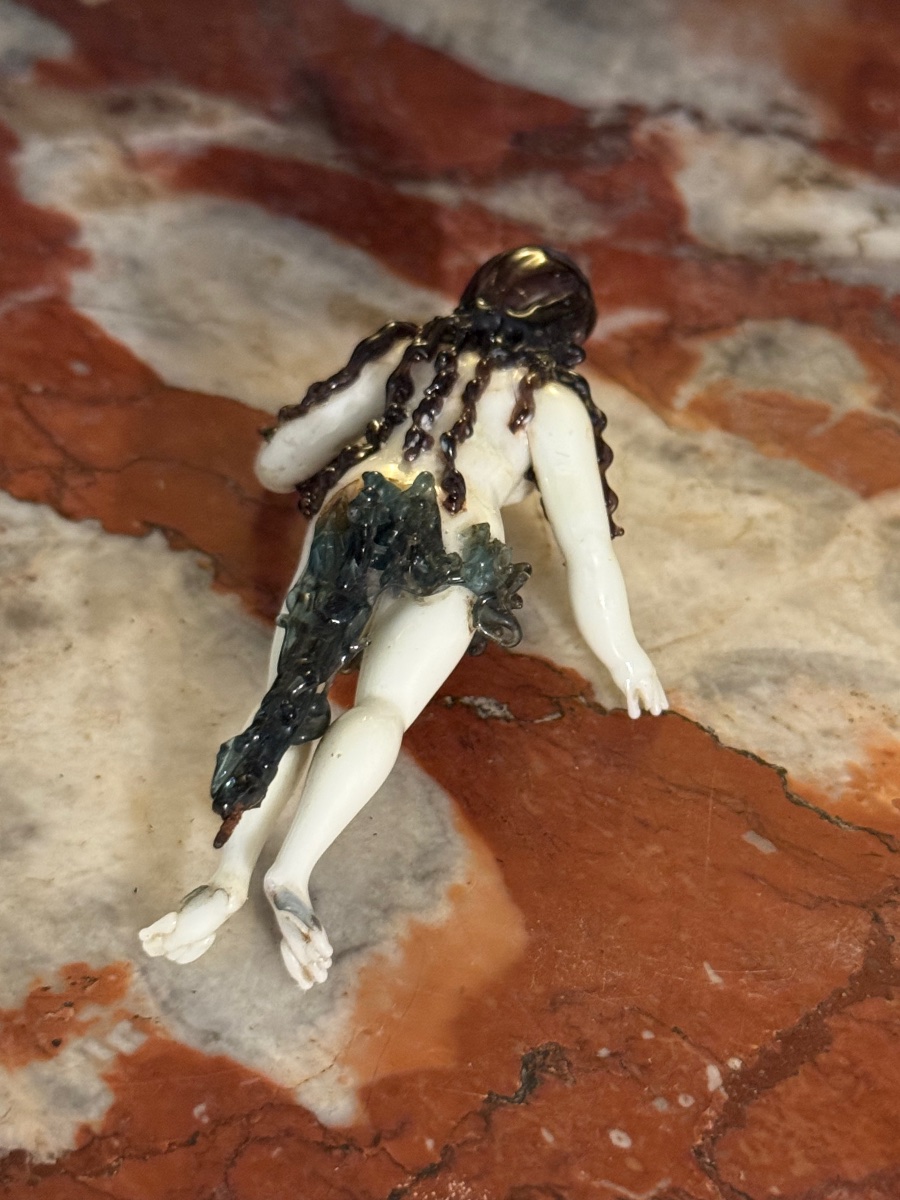
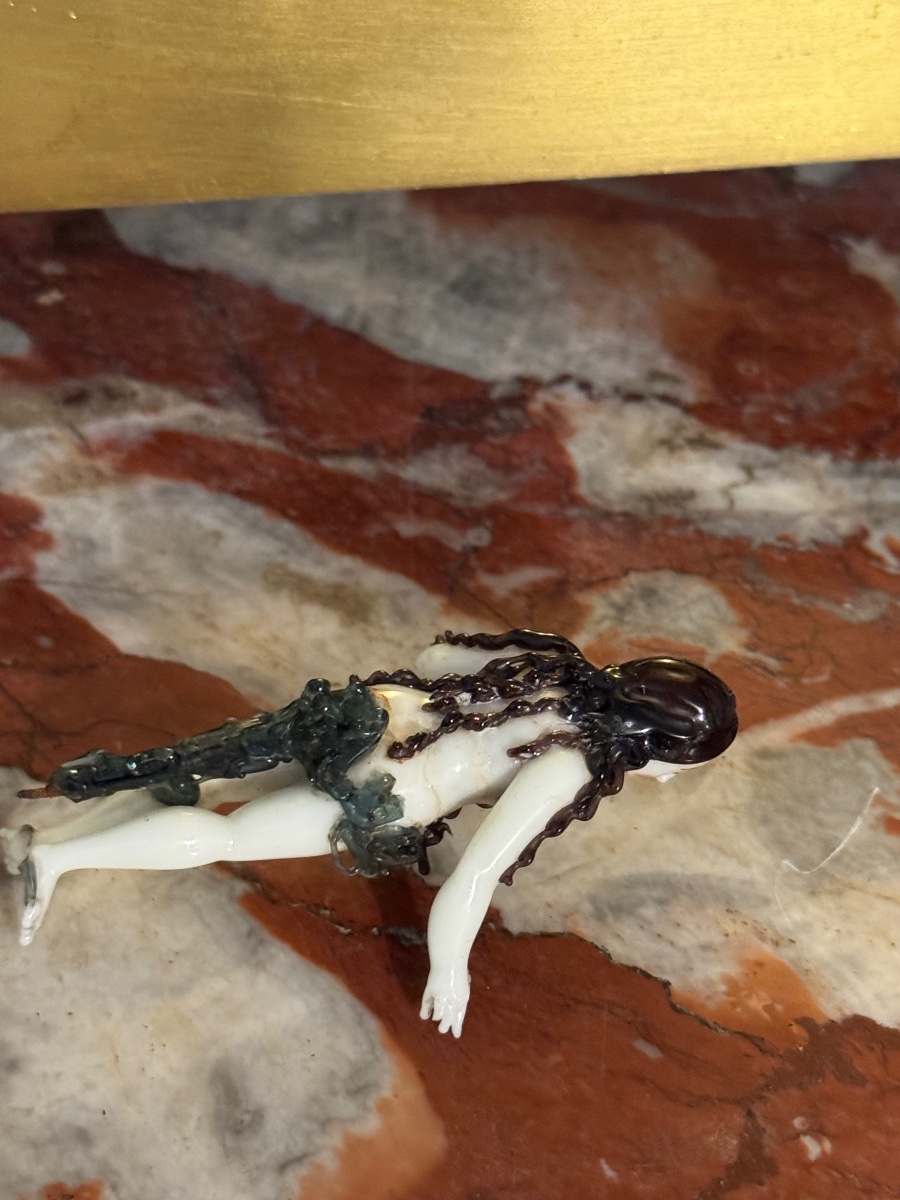
Our Mary Magdalene has an interesting feature: she has no base and cannot stand on her own.
This suggests that she was originally intended to be mounted on a support or incorporated into a larger composition, most likely a “paradis” made of Nevers spun glass.
Her posture, with arms outstretched, and her iconography as a penitent saint support this hypothesis.
Separated from its original ensemble, it now serves as a particularly evocative example of these miniature compositions, whose fragility explains the difficulty of preserving them.
Period: 18th century
Style: Other Style
Condition: En l'etat
Material: Glass
Height: 6
Reference (ID): 1835724
Availability: In stock