

The Discobolus, A Marble Sculpture By Guglielmo Pugi From The Late 19th Century
Guglielmo Pugi (1850–1915)
The Discobolus
White Carrara marble
late 19th century
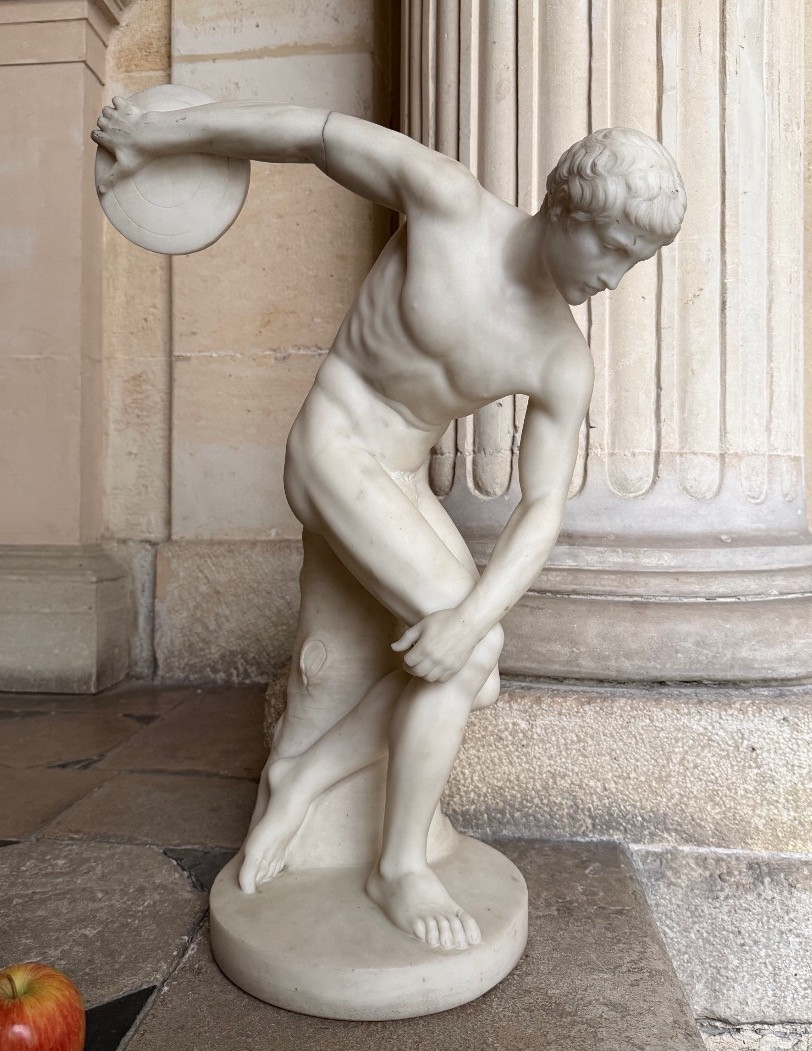
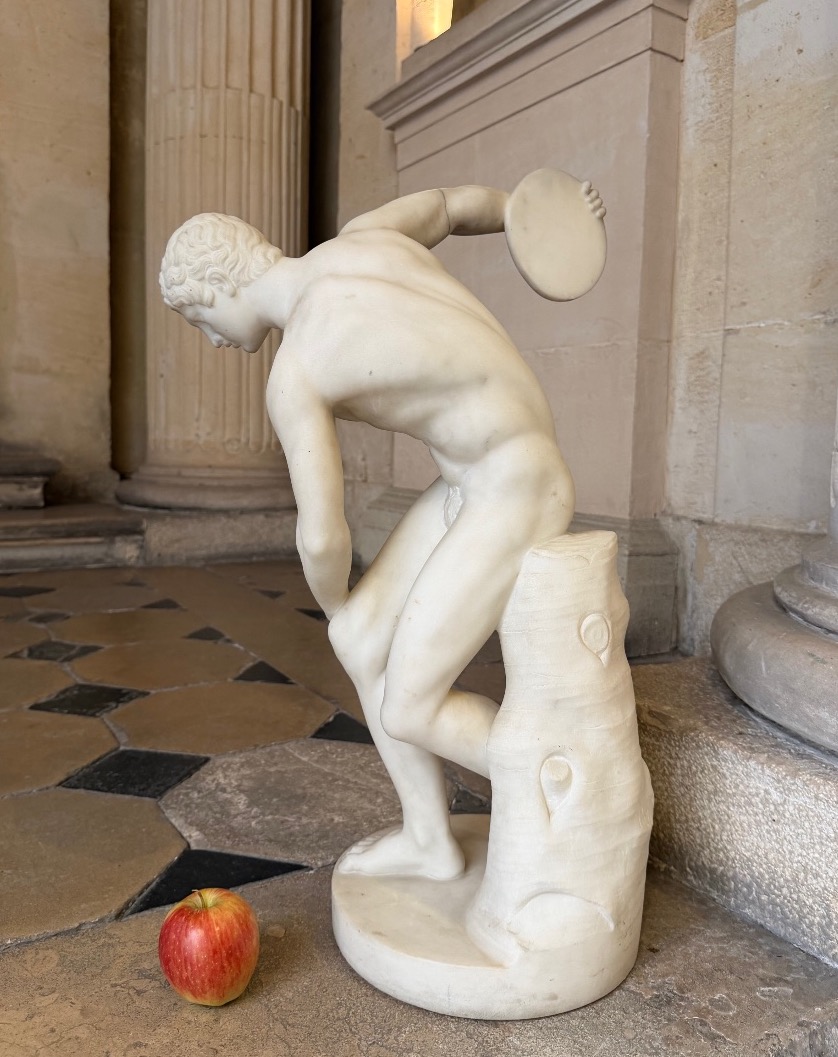
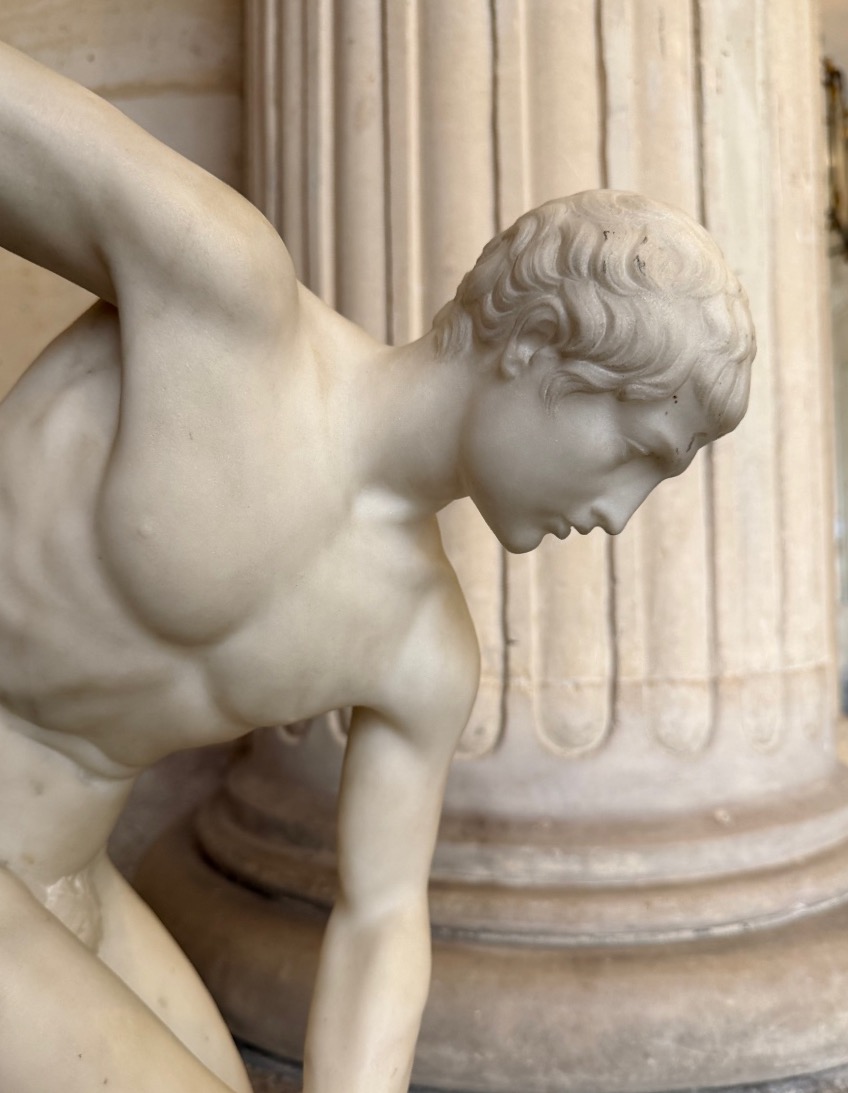
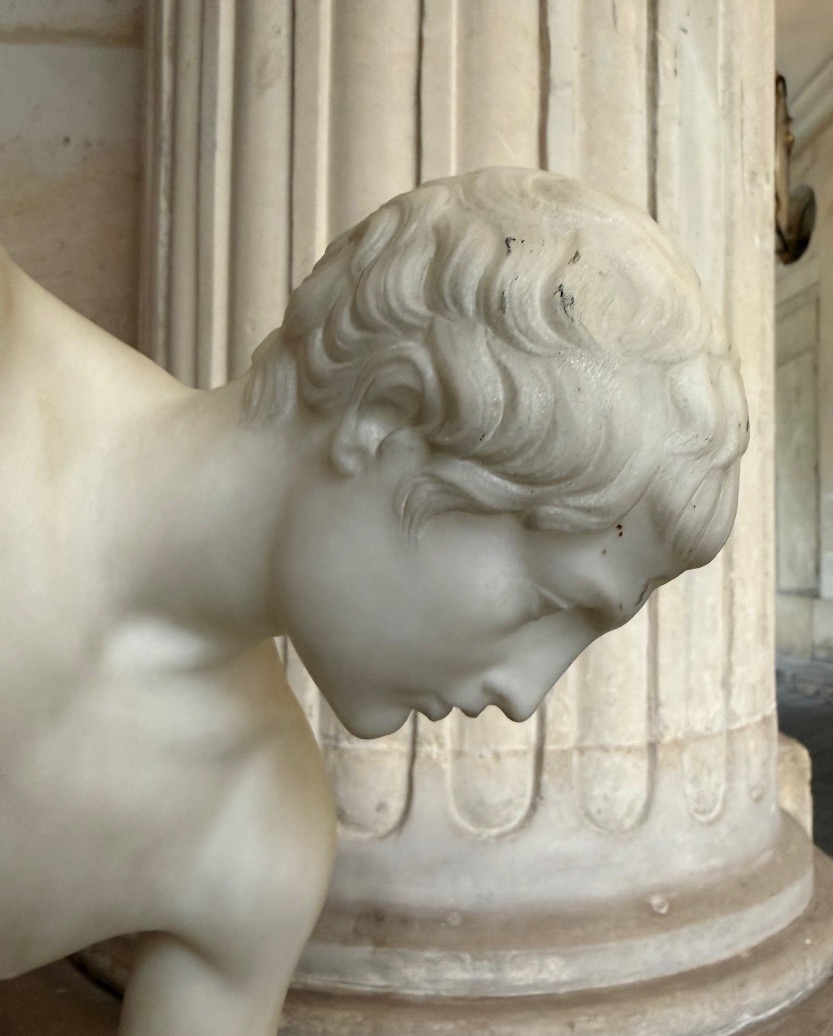
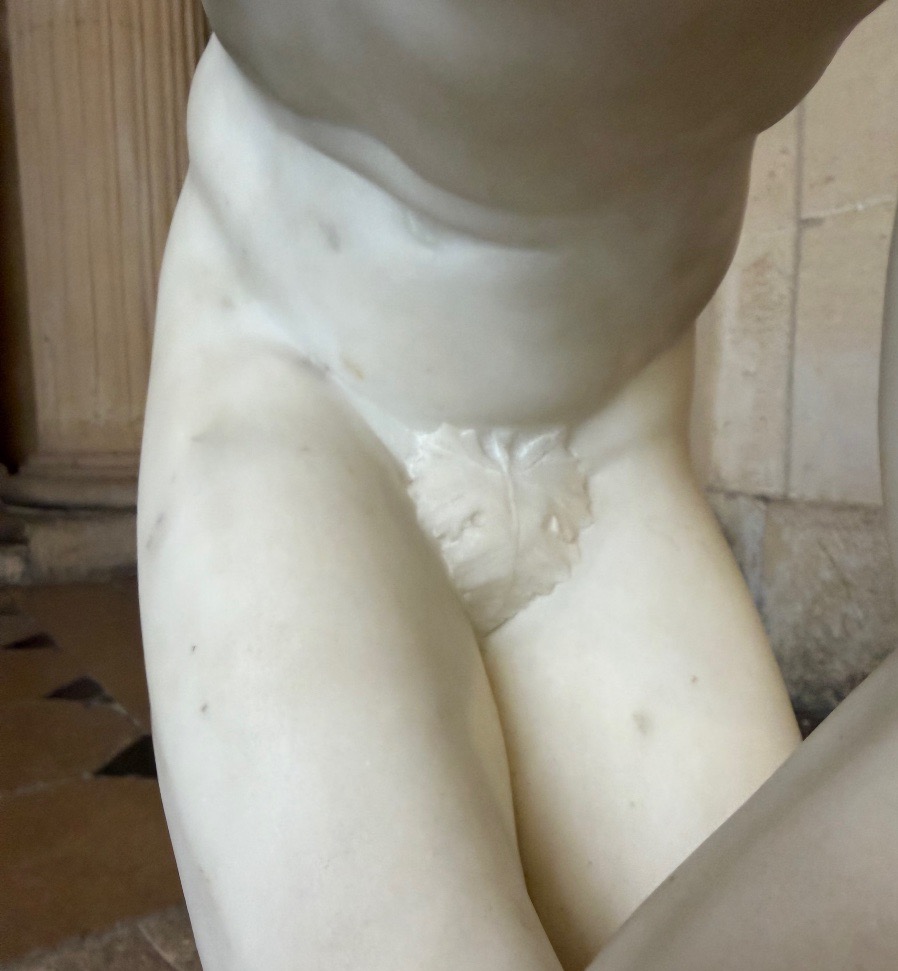
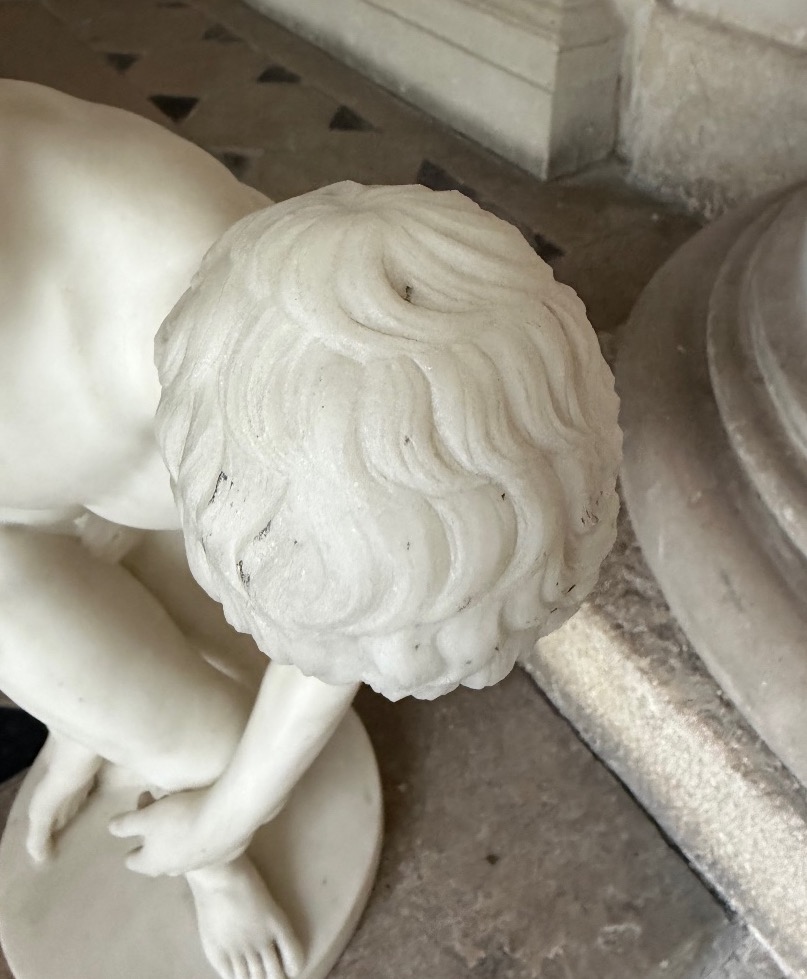
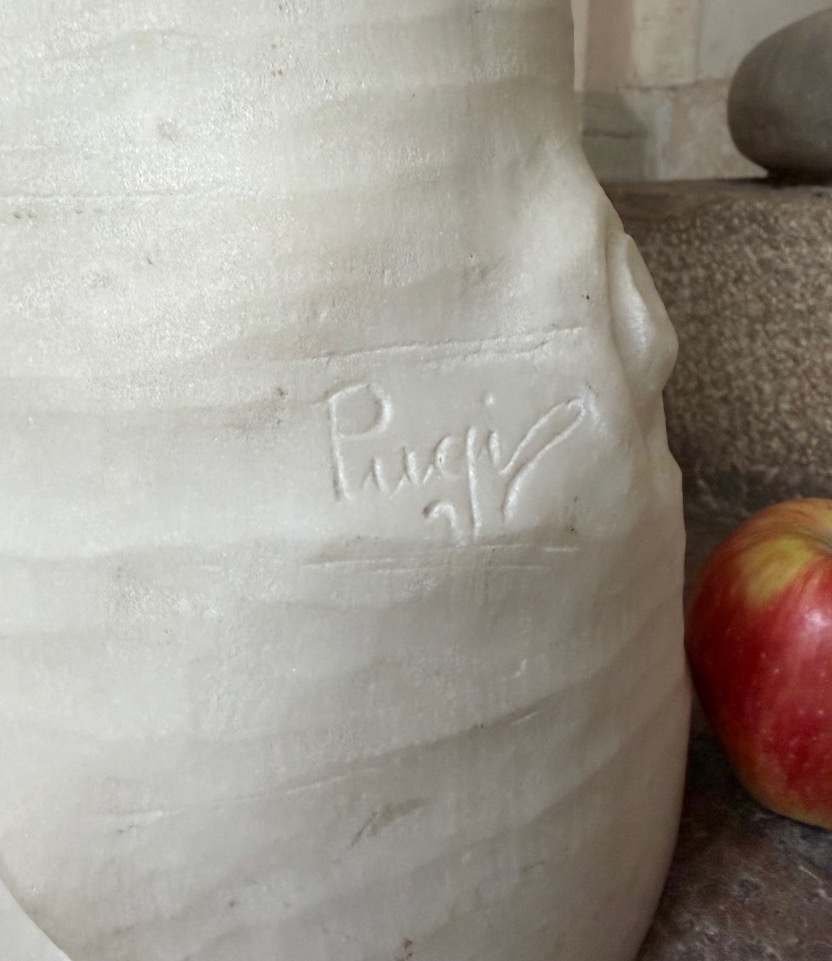
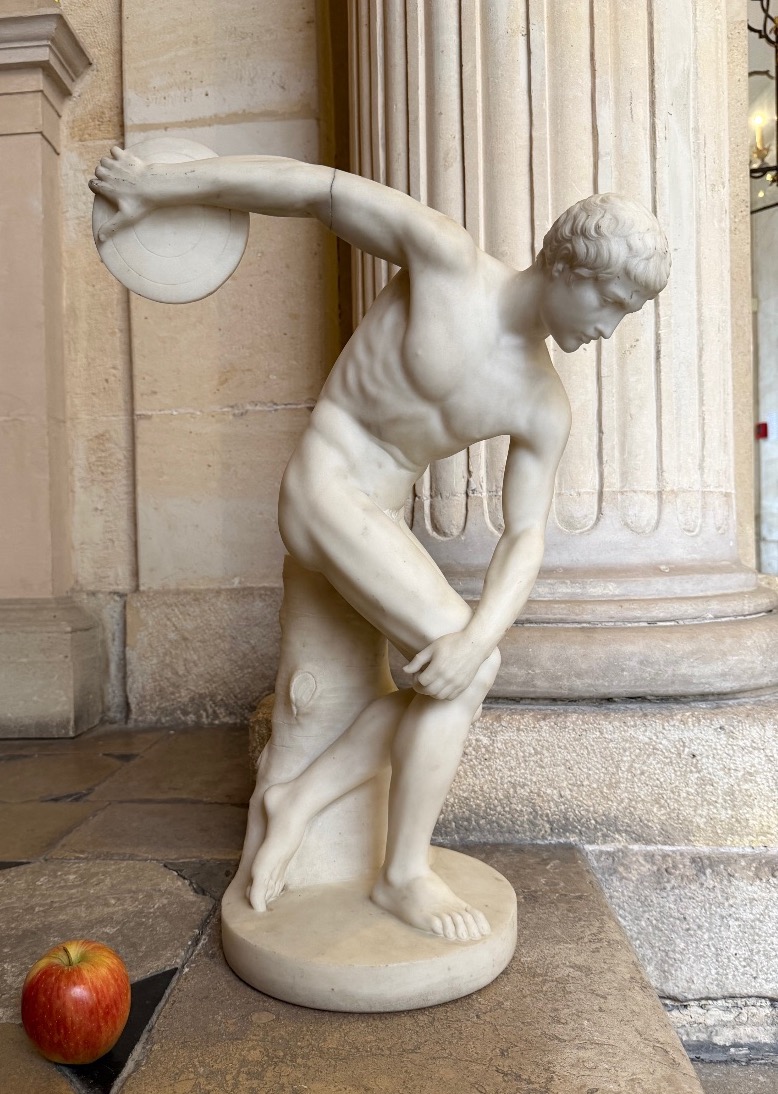
Sculpture in white Carrara marble depicting a discobolus, signed “Pugi” on the tree trunk serving as a support. Italian work, Florence, late 19th century
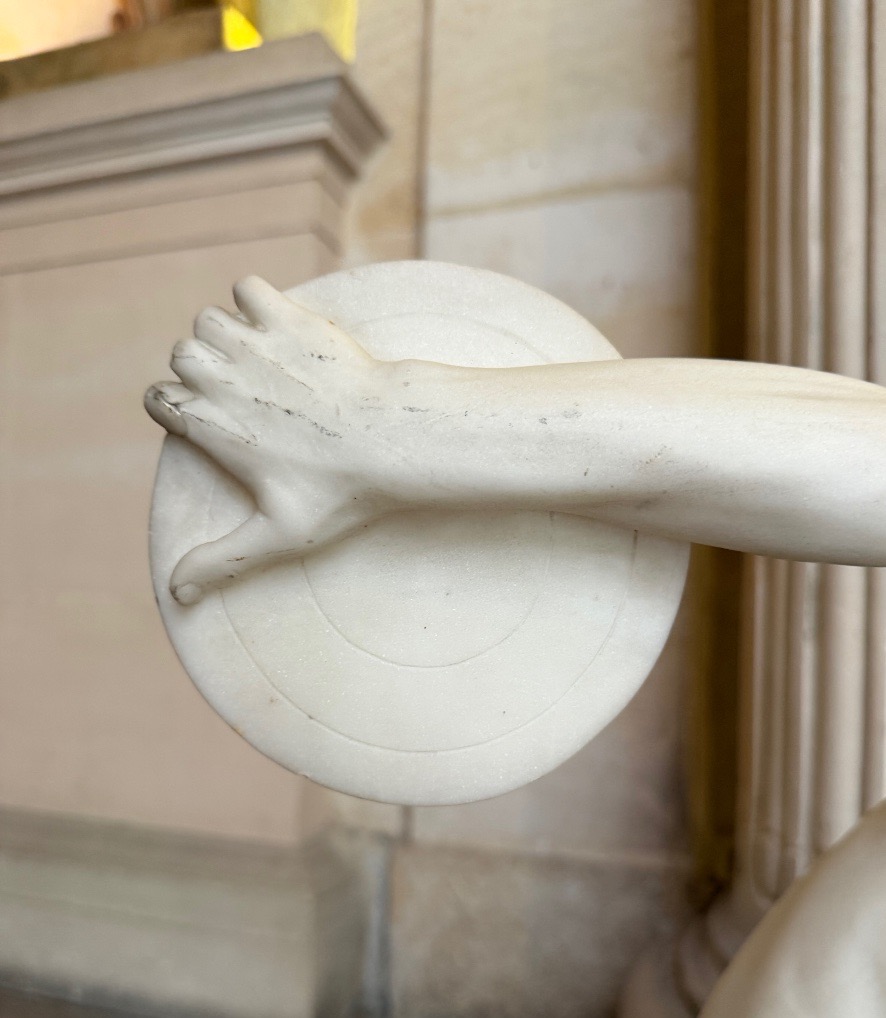
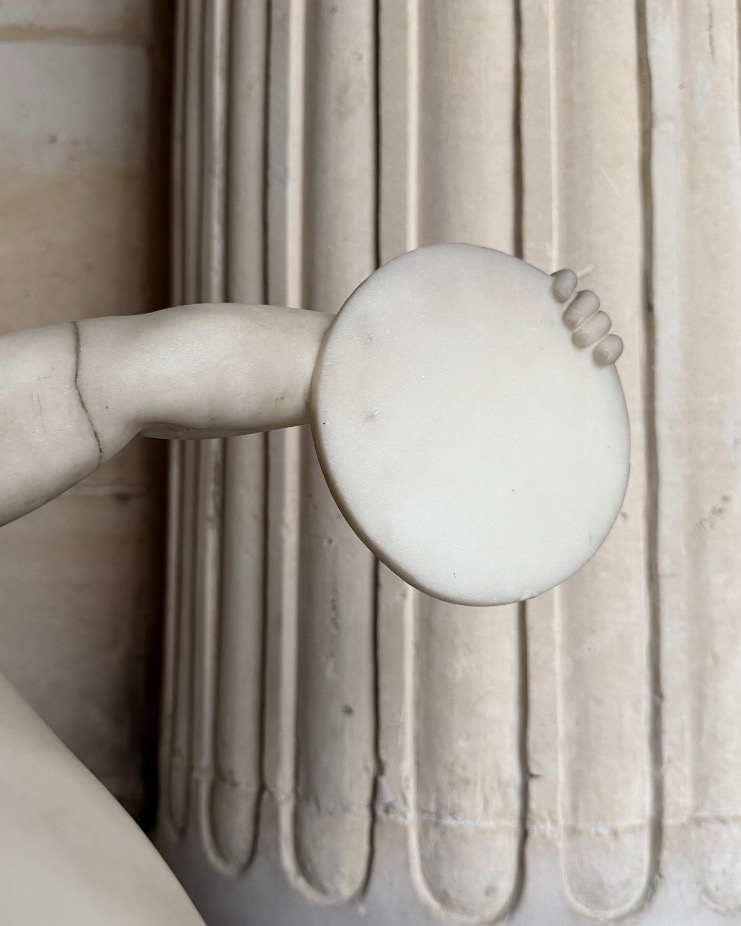
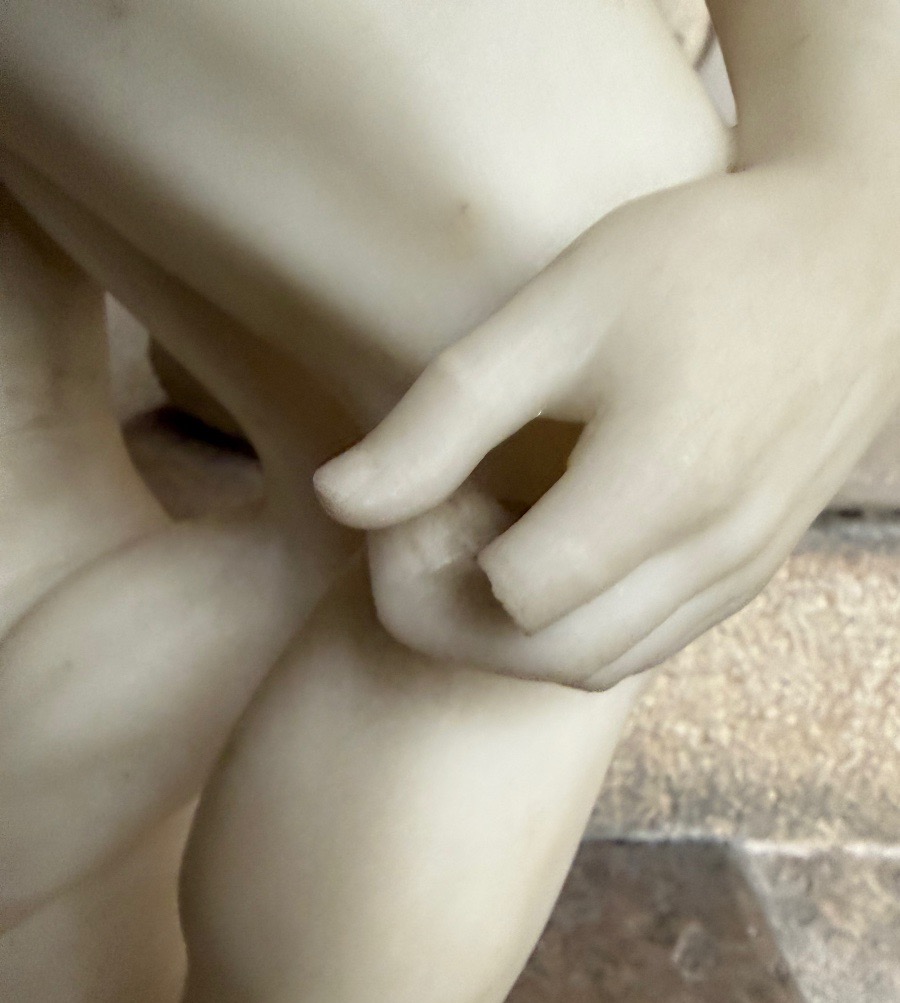
The athlete, depicted nude with his body leaning forward, holds a discus in his right hand, his arm thrown back, while his left hand rests on his right leg. The composition conveys the athlete’s muscular tension and concentration in the moment before the throw.
The theme of the discus thrower has its origins in ancient Greece, where the discus throw was one of the events in the pentathlon, a discipline of the ancient Olympic Games. It is particularly associated with the famous Discobolus by the Greek sculptor Myron, created around 460–450 B.C., the original bronze version of which has been lost.
This work, known today thanks to several Roman marble copies—notably the Lancellotti Discobolus housed at the Palazzo Massimo alle Terme in Rome—is one of the most famous depictions of movement in classical Greek sculpture. Myron captures the athlete at the moment when his body, fully tensed, is about to release the discus.
Rediscovered through ancient collections and archaeological excavations, this model exerted a considerable influence on European sculptors beginning in the 18th century. In the 19th century, the development of academic education and a renewed interest in the Olympic Games contributed to the spread of this subject in sculpture.
Pugi’s Discobolus follows this tradition, while offering a personal interpretation of the athlete’s posture that differs from that envisioned by Myron.
Guglielmo Pugi (1850–1915) was born in Fiesole, near Florence. He was active during the second half of the 19th century and the early 20th century. He ran a studio in Florence specializing in marble sculpture, producing mainly mythological and allegorical subjects, female figures, and compositions inspired by antiquity.
His work, representative of the Florentine tradition of academic sculpture, was largely intended for an international clientele.
The studio participated in major international events of the early 20th century, including the Pan-American Exposition in Buffalo in 1901 and the World’s Fair in St. Louis in 1904.
His sons Gino (1877–1955) and Fiorenzo (1880–1964) were involved in the studio’s operations and continued its work after his death, under the name “Fratelli G. e F. Pugi.”
Works by Guglielmo Pugi are notably included in the collections of the Musée d’Orsay in Paris.
Please note that this beautiful Carrara marble sculpture has some imperfections: the arm has been repaired, and a finger on the right hand is broken. The face is intact.
Period: 19th century
Style: Rome and Antic Greece
Condition: En l'etat
Material: Marble
Width: 45
Height: 67
Reference (ID): 1835533
Availability: In stock