



Marble Table Lamp, Inspired By The Flaminio Obelisk In Rome, 20th Century
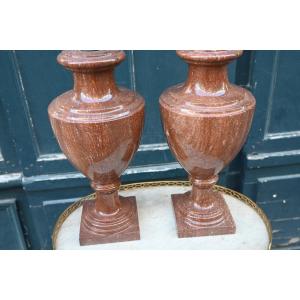
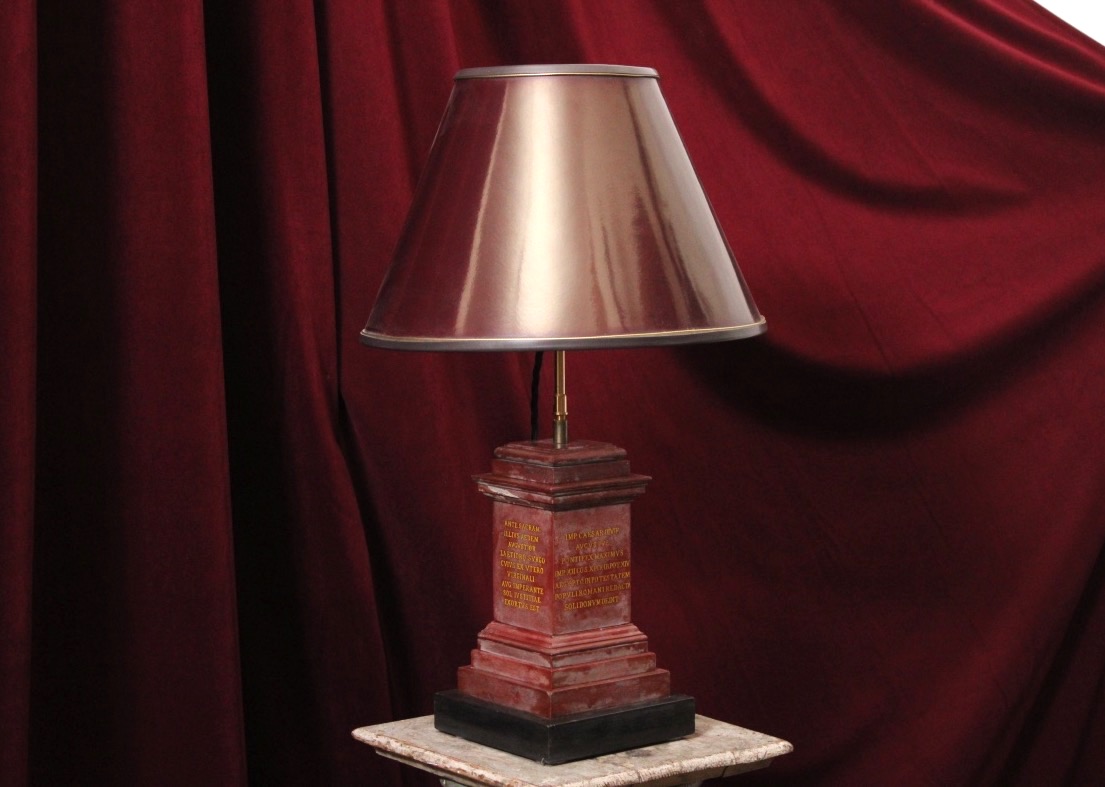
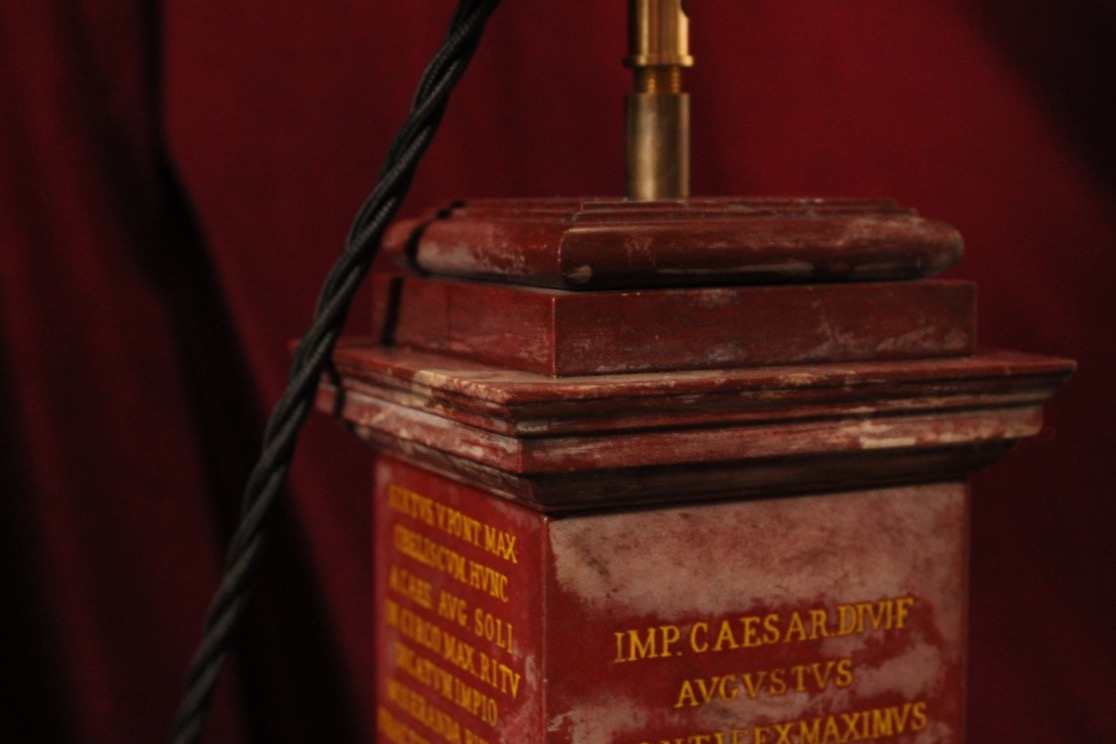
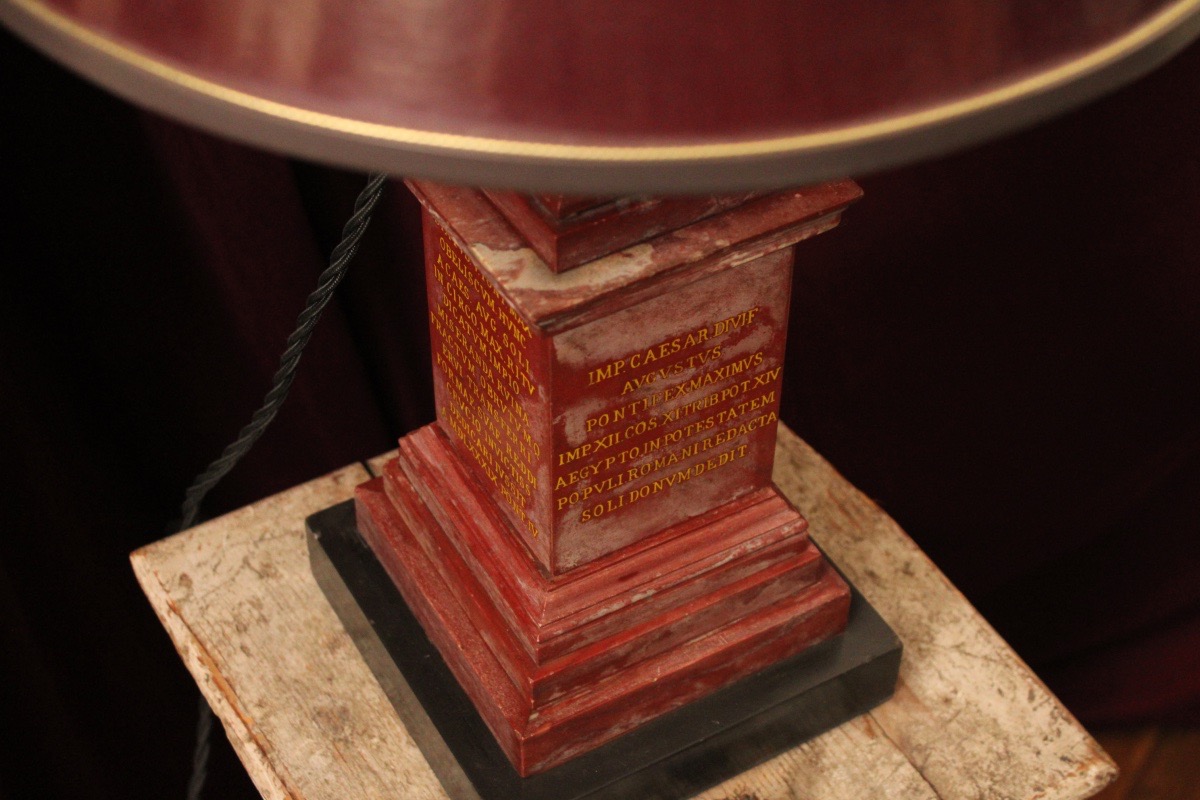
- Table lamp with a black and Rosso Antico red marble base featuring Latin inscriptions on each side, referencing the pedestal of the Flaminio Obelisk in Rome. A 20th-century piece, with a gold-colored inner shade and a burgundy outer shade.
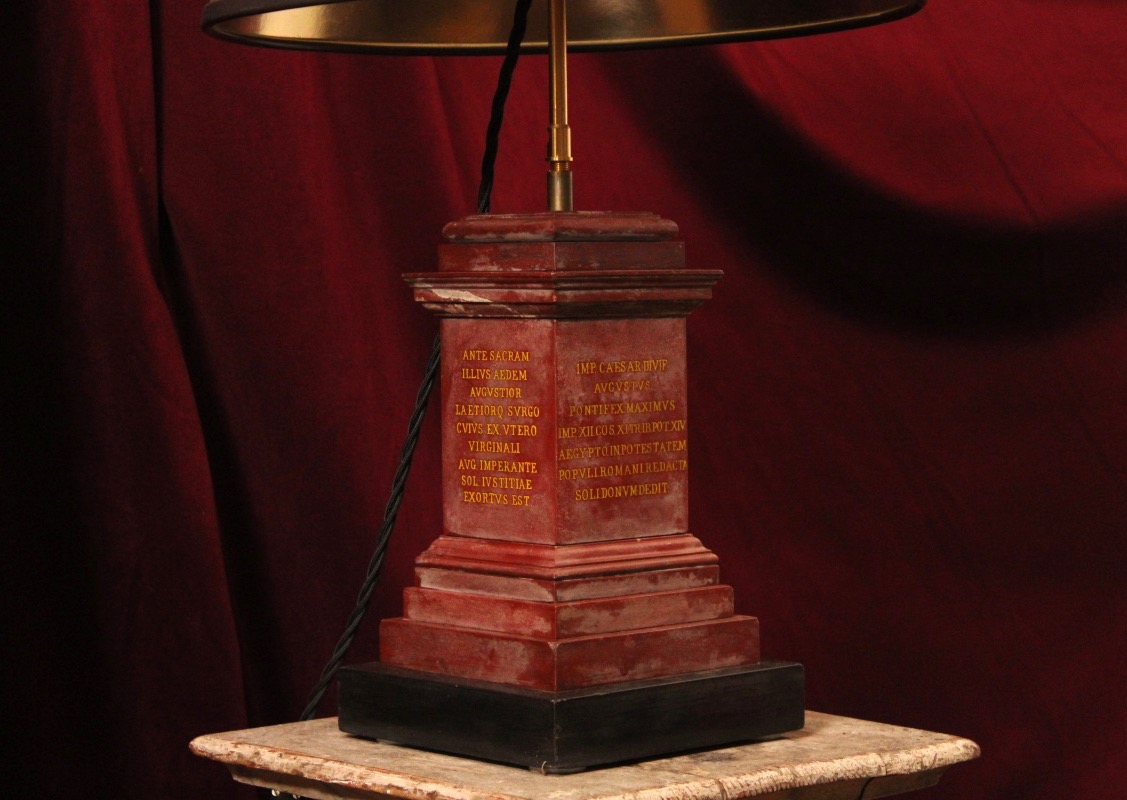
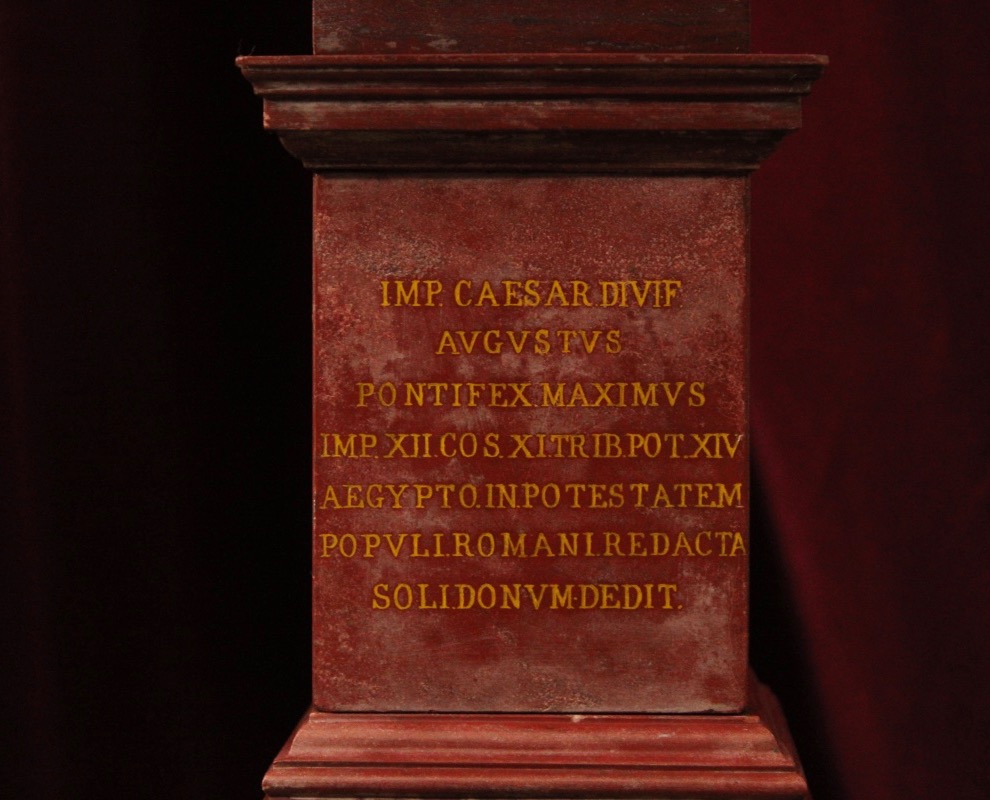
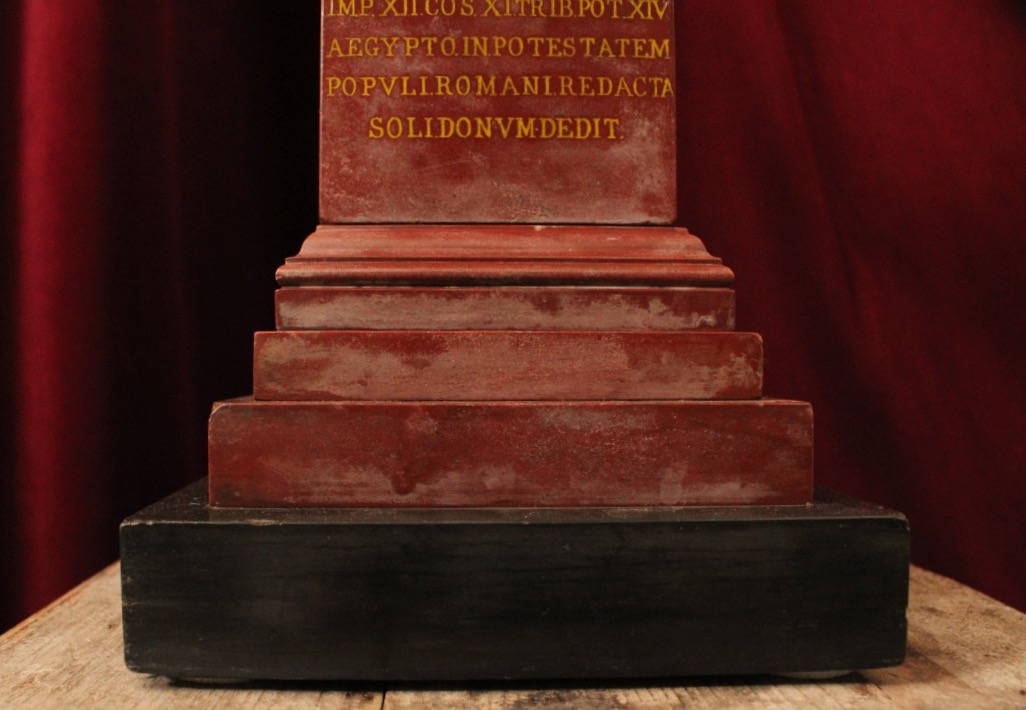
- The red marble lamp base is a wide column with a square base, rising on stepped moldings, each side bearing a Latin inscription engraved in golden yellow. This is a direct reference to the obelisk in Piazza del Popolo, the Flaminian Obelisk (obelisco Flaminio), which was one of the first Egyptian obelisks transported to Rome. The red marble evokes the red granite of Aswan from which the obelisk was carved; the shape of the base and the moldings are identical to those of the obelisk’s pedestal, as are the engraved Latin inscriptions.
- The Flaminian Obelisk was transported from Egypt around 1 B.C. on the orders of Augustus. It was erected on the spina of the Circus Maximus. When Augustus decided to consecrate this obelisk, he chose to maintain its dedication to the deification of the Sun—assimilated to Apollo, the emperor’s patron deity—and had inscriptions engraved on the north and south faces of the pedestal.
Later, after the fall of Rome, the obelisk collapsed and broke into three pieces, and it was buried over the years. It was not until 1471 that the obelisk was rediscovered and unearthed by the architect Leon Battista Alberti during work on Piazza Navona. It sparked renewed interest in 1587 during the pontificate of Sixtus V; this pope had this obelisk, among others, reconstructed to serve as urban landmarks, particularly for the pilgrimage to the Seven Churches of Rome. It was installed in 1589 in Piazza del Popolo, marking the beginning of the Via Flaminia.
- The inscriptions carved into the marble of the lamp base are therefore identical—including in their arrangement—to those on the pedestal of the Flaminio Obelisk. One of the inscriptions on the pedestal dates back to the time when the obelisk was erected in the Circus Maximus, around the year 10 B.C. Augustus decided to retain the monument’s original dedication to the Sun—a deity who, for both the Romans and the Greeks, corresponded to Apollo, the emperor’s tutelary deity—and had two identical dedications added, engraved on the north and south faces of the base. They read: IMP CAESAR DIVIF / AVGVSTVS / PONTIFEX MAXIMVS / IMP. XII COS. XITRIB POT XIV / AEGYPTO IN PO TES TATEM / POPVLIROMANLREDACTA / SOLIDONVMDEDIT. For: Emperor Caesar Augustus, son of the Divine, Supreme Pontiff, Imperator for the 12th time, Consul for the 11th time, invested with tribunician power for the 14th time, having brought Egypt under the power of the Roman people, dedicated this obelisk to the Sun.
- Next, the transcriptions of the inscriptions on the west and east sides, added in the 16th century by Pope Sixtus V. The inscription on the west side reads: SIXTVS. V. PONT. MAX / OBELISCVM HVNC / ACAES. AVG. SOLI / IN. CIRCO MAX. RITV / DICATVM IMPIO / MISERANDA RVINA / FRACTVM OBRVTV MQ / ERVI TRANS FERRI / FORMAE SVAE REDDI / CRVCIO INVICTISS / DEDICARI IVSSIT / A MDLXXXIX PONT IV. For: Sixtus V, Supreme Pontiff, ordered that this obelisk—dedicated to the sun in the Circus Maximus by Caesar Augustus according to an impious rite, then shattered and buried beneath pitiful ruins—be exhumed, transferred, restored to its former beauty, and dedicated to the most invincible Cross, in the year 1589, the fourth year of his pontificate.
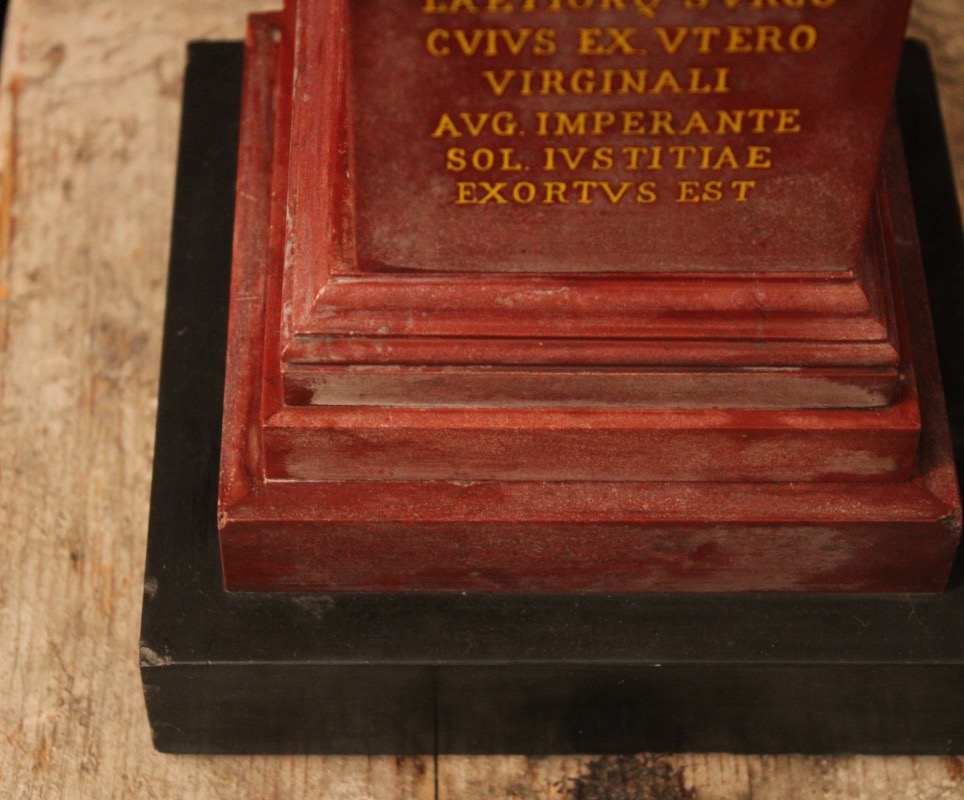
- And finally, the inscription on the east face reads: ANTE SACRAM / ILLIVS AEDEM / AVGVSTIOR / LAETIORO SVRGO / CVIVS EX. VTERO / VIRGINALI / AVG. IMPERANTE / SOL IVSTITIAE / EXORTVS EST, meaning: More august (exalted) and more joyful, I rise before the sacred sanctuary of her whose virginal womb, during the reign of Augustus, gave birth to the Sun of Justice.
This is a play on words. The obelisk, originally consecrated to the Sun God by the Roman Emperor Augustus at the Circus Maximus, is now dedicated to Christianity by the papacy. The obelisk stands opposite the church of Santa Maria del Popolo, which explains the reference to the “sacred temple of her [the Virgin].” The “Sun of Justice” (Sol Iustitiae) refers to Jesus Christ, born precisely during the reign of Augustus, thereby eclipsing the pagan glory of the Roman Empire in favor of the Christian faith.
- In good condition; note that there are some small chips in the marble. The lamp is electrified and in working order.
- Dimensions - Height (with lampshade): 59 cm, width of square base: 16.5 cm
- The red marble lamp base is a wide column with a square base, rising on stepped moldings, each side bearing a Latin inscription engraved in golden yellow. This is a direct reference to the obelisk in Piazza del Popolo, the Flaminian Obelisk (obelisco Flaminio), which was one of the first Egyptian obelisks transported to Rome. The red marble evokes the red granite of Aswan from which the obelisk was carved; the shape of the base and the moldings are identical to those of the obelisk’s pedestal, as are the engraved Latin inscriptions.
- The Flaminian Obelisk was transported from Egypt around 1 B.C. on the orders of Augustus. It was erected on the spina of the Circus Maximus. When Augustus decided to consecrate this obelisk, he chose to maintain its dedication to the deification of the Sun—assimilated to Apollo, the emperor’s patron deity—and had inscriptions engraved on the north and south faces of the pedestal.
Later, after the fall of Rome, the obelisk collapsed and broke into three pieces, and it was buried over the years. It was not until 1471 that the obelisk was rediscovered and unearthed by the architect Leon Battista Alberti during work on Piazza Navona. It sparked renewed interest in 1587 during the pontificate of Sixtus V; this pope had this obelisk, among others, reconstructed to serve as urban landmarks, particularly for the pilgrimage to the Seven Churches of Rome. It was installed in 1589 in Piazza del Popolo, marking the beginning of the Via Flaminia.
- The inscriptions carved into the marble of the lamp base are therefore identical—including in their arrangement—to those on the pedestal of the Flaminio Obelisk. One of the inscriptions on the pedestal dates back to the time when the obelisk was erected in the Circus Maximus, around the year 10 B.C. Augustus decided to retain the monument’s original dedication to the Sun—a deity who, for both the Romans and the Greeks, corresponded to Apollo, the emperor’s tutelary deity—and had two identical dedications added, engraved on the north and south faces of the base. They read: IMP CAESAR DIVIF / AVGVSTVS / PONTIFEX MAXIMVS / IMP. XII COS. XITRIB POT XIV / AEGYPTO IN PO TES TATEM / POPVLIROMANLREDACTA / SOLIDONVMDEDIT. For: Emperor Caesar Augustus, son of the Divine, Supreme Pontiff, Imperator for the 12th time, Consul for the 11th time, invested with tribunician power for the 14th time, having brought Egypt under the power of the Roman people, dedicated this obelisk to the Sun.
- Next, the transcriptions of the inscriptions on the west and east sides, added in the 16th century by Pope Sixtus V. The inscription on the west side reads: SIXTVS. V. PONT. MAX / OBELISCVM HVNC / ACAES. AVG. SOLI / IN. CIRCO MAX. RITV / DICATVM IMPIO / MISERANDA RVINA / FRACTVM OBRVTV MQ / ERVI TRANS FERRI / FORMAE SVAE REDDI / CRVCIO INVICTISS / DEDICARI IVSSIT / A MDLXXXIX PONT IV. For: Sixtus V, Supreme Pontiff, ordered that this obelisk—dedicated to the sun in the Circus Maximus by Caesar Augustus according to an impious rite, then shattered and buried beneath pitiful ruins—be exhumed, transferred, restored to its former beauty, and dedicated to the most invincible Cross, in the year 1589, the fourth year of his pontificate.
- And finally, the inscription on the east face reads: ANTE SACRAM / ILLIVS AEDEM / AVGVSTIOR / LAETIORO SVRGO / CVIVS EX. VTERO / VIRGINALI / AVG. IMPERANTE / SOL IVSTITIAE / EXORTVS EST, meaning: More august (exalted) and more joyful, I rise before the sacred sanctuary of her whose virginal womb, during the reign of Augustus, gave birth to the Sun of Justice.
This is a play on words. The obelisk, originally consecrated to the Sun God by the Roman Emperor Augustus at the Circus Maximus, is now dedicated to Christianity by the papacy. The obelisk stands opposite the church of Santa Maria del Popolo, which explains the reference to the “sacred temple of her [the Virgin].” The “Sun of Justice” (Sol Iustitiae) refers to Jesus Christ, born precisely during the reign of Augustus, thereby eclipsing the pagan glory of the Roman Empire in favor of the Christian faith.
- In good condition; note that there are some small chips in the marble. The lamp is electrified and in working order.
- Dimensions - Height (with lampshade): 59 cm, width of square base: 16.5 cm
1 800 €
Period: 20th century
Style: Renaissance, Louis 13th
Condition: Good condition
Material: Marble
Width: 16,5 cm
Height: 59 cm avec abat-jour
Reference (ID): 1831543
Availability: In stock
Print