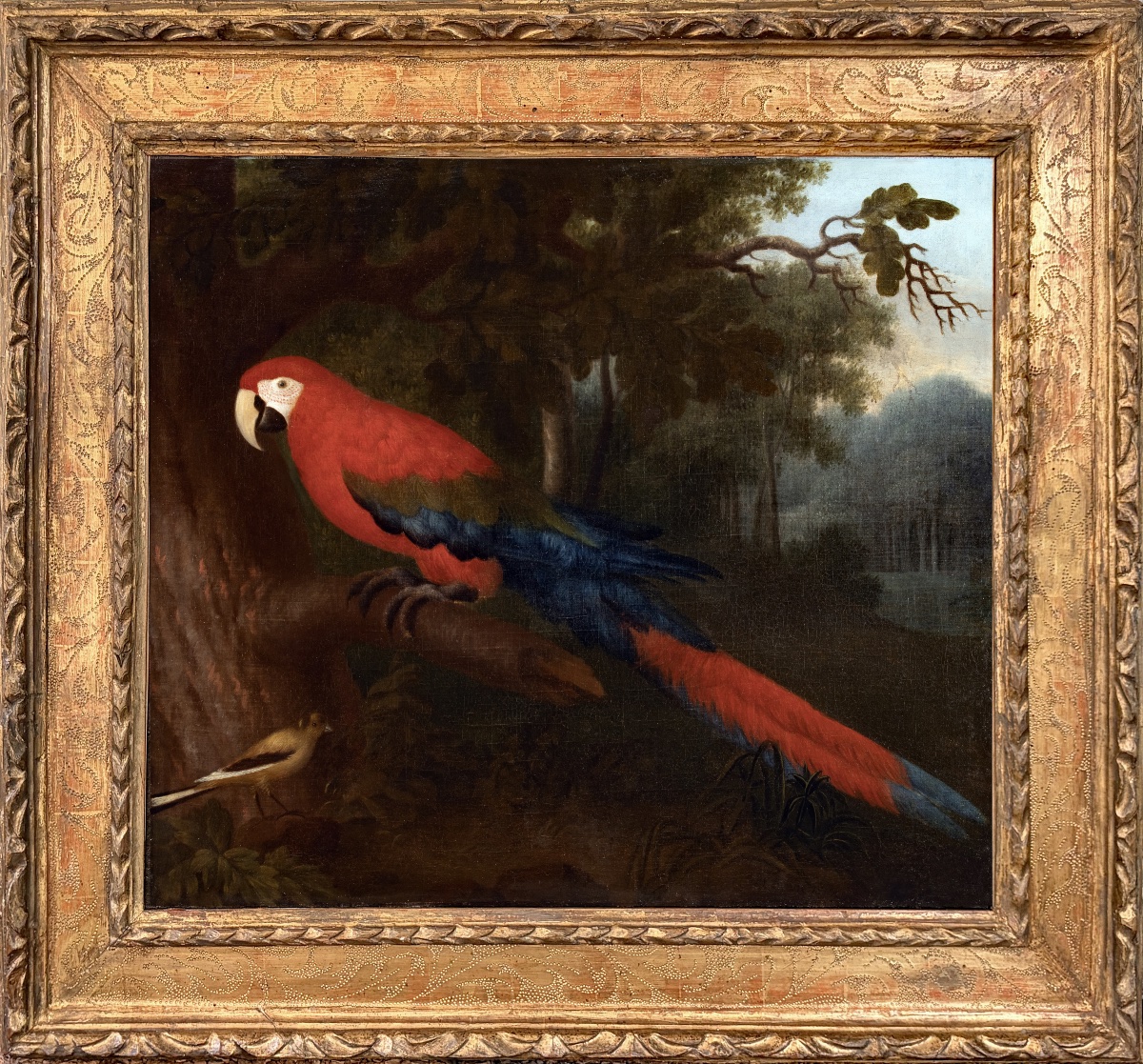
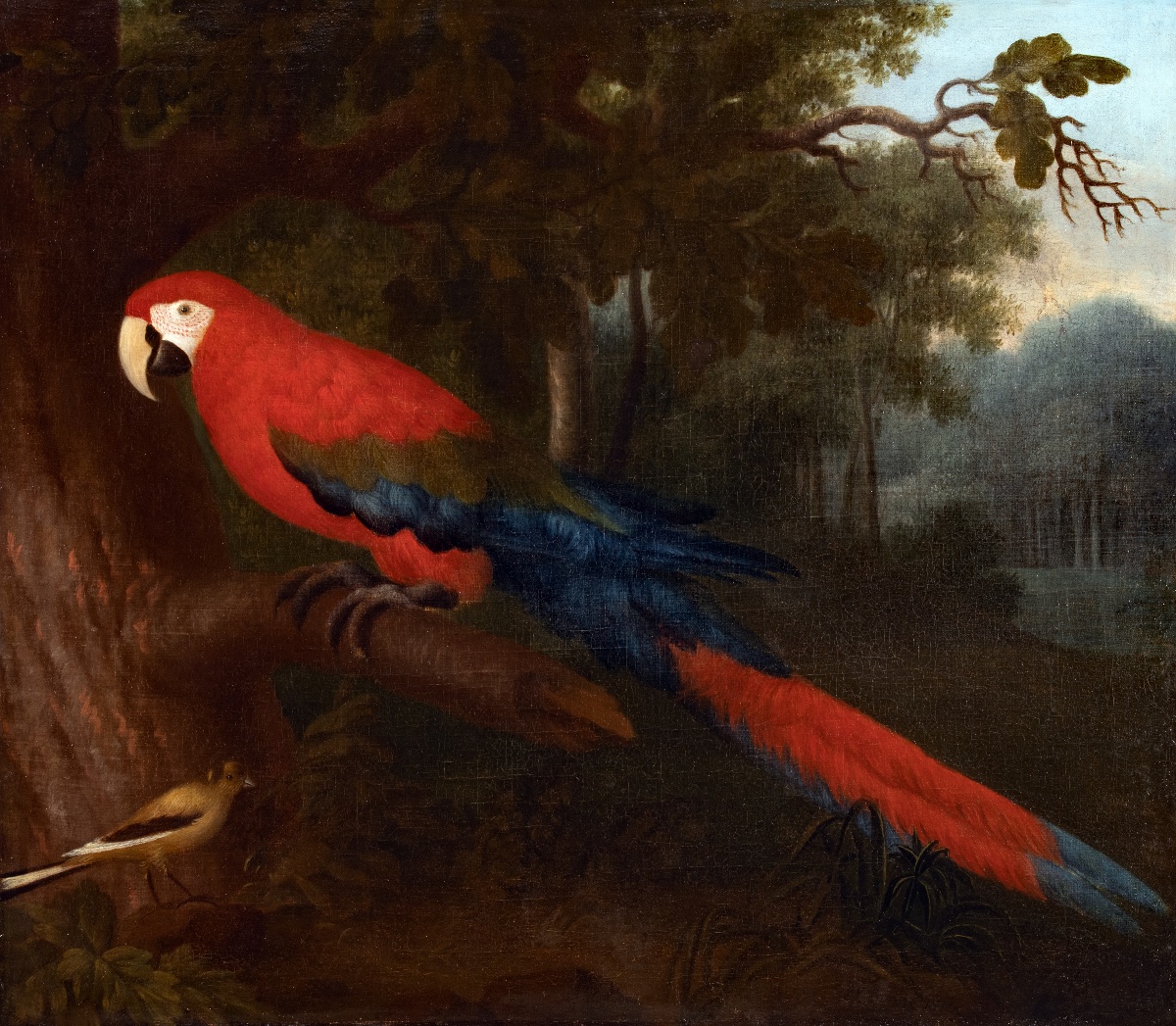


Red Macaw In A Brazilian Landscape. Albert Eckhout (1607-12 – 1665) Attributed To
Red Macaw in a Brazilian Landscape. Albert Eckhout (1607-12 – 1665) Attributed
17th-century Dutch School
*Original oil on canvas
Presented in a superb period frame made of gilded and carved wood, known as a “cassetta” style
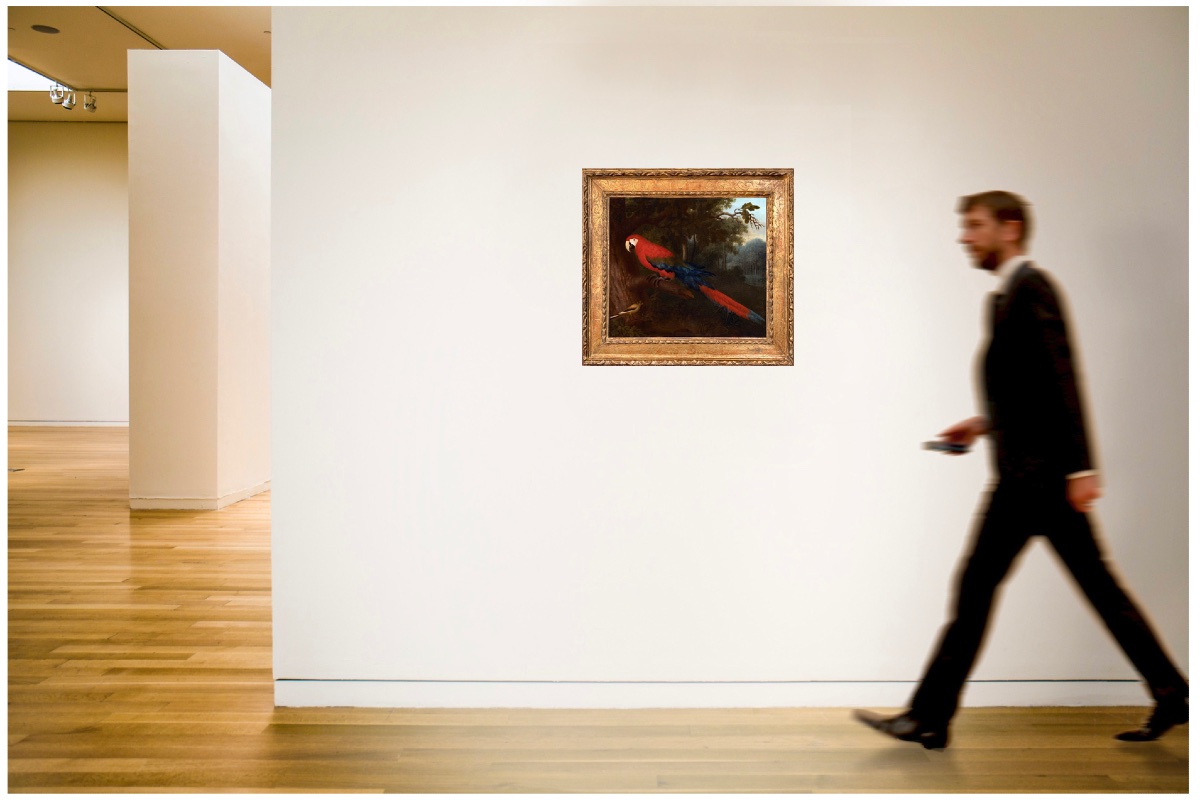
Total dimensions with frame: 82 x 92 cm. Canvas dimensions: 60 x 70 cm
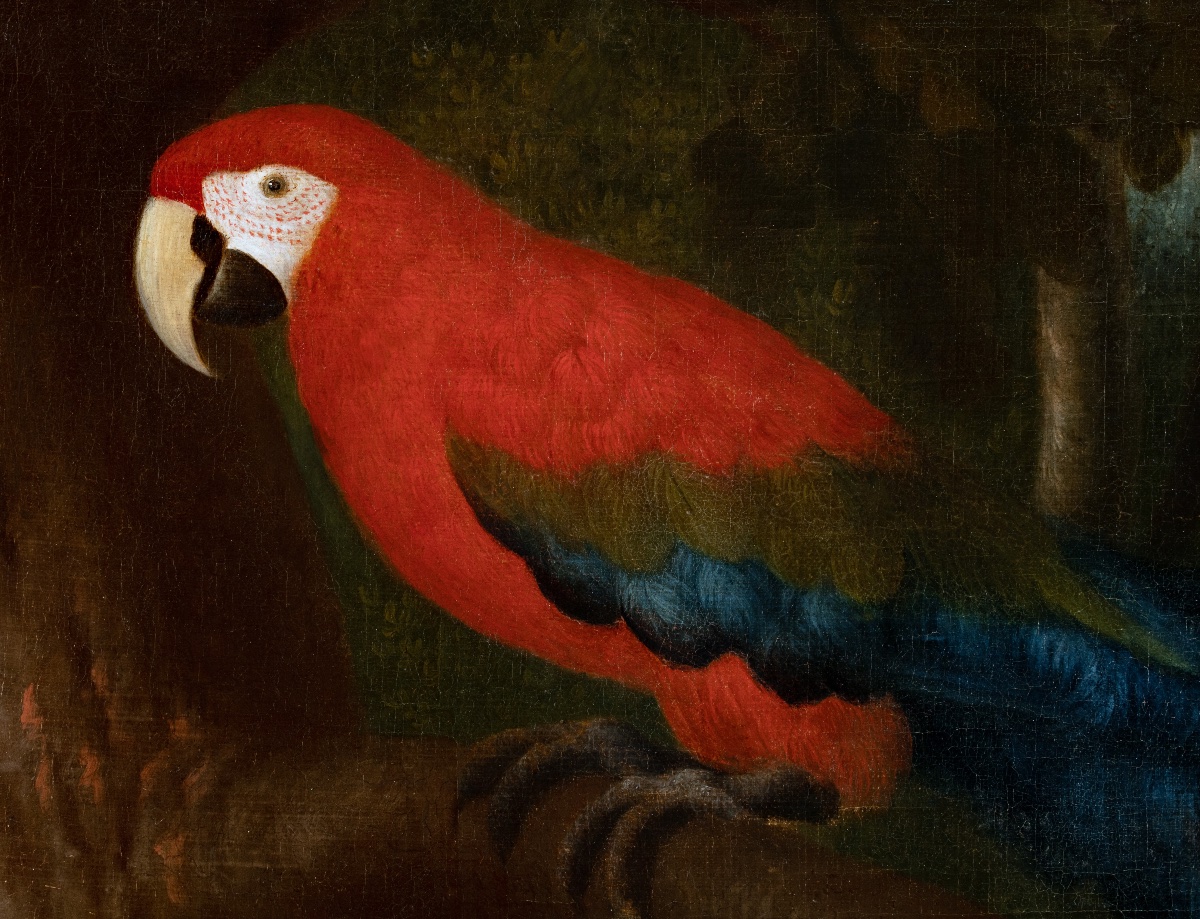
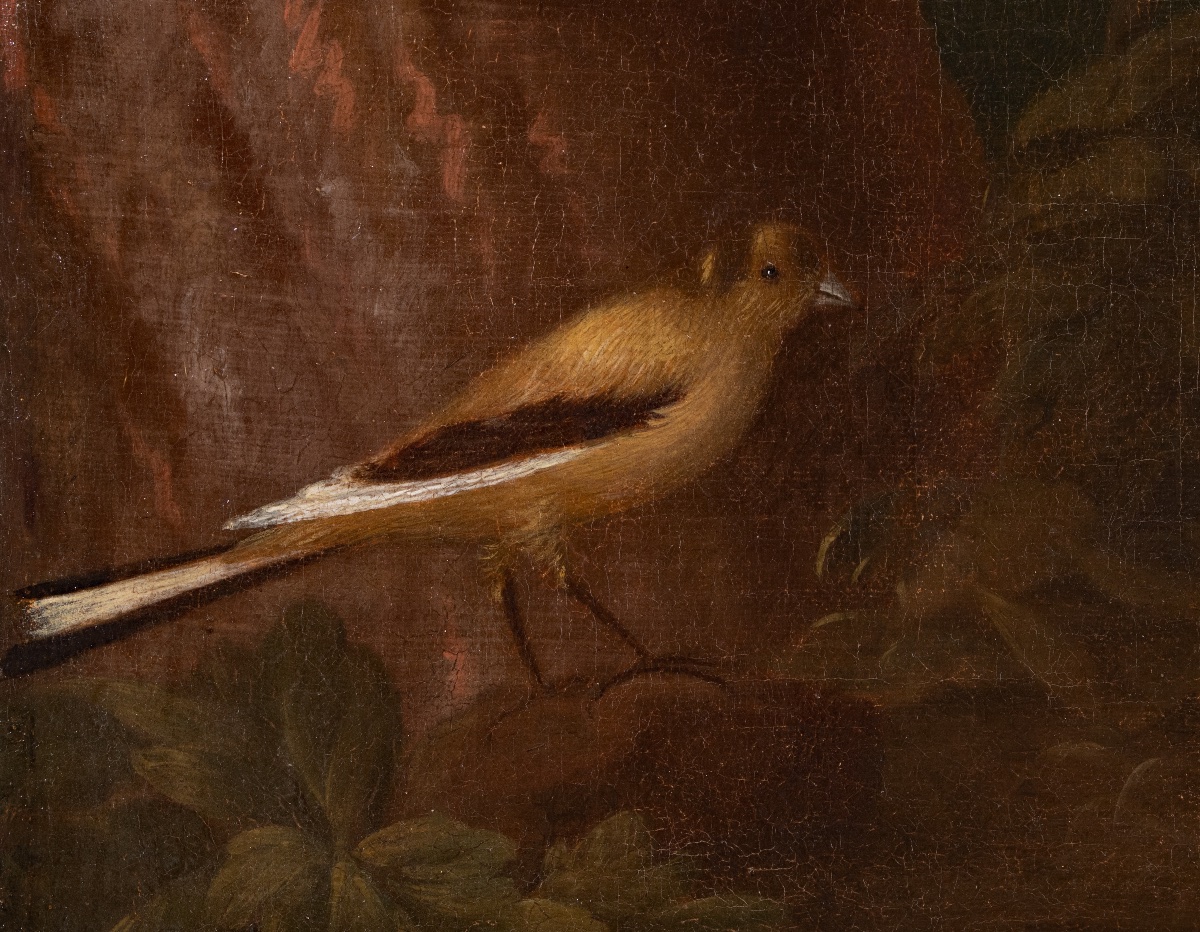
This painting depicts a scarlet macaw perched on a branch in a lush tropical landscape reminiscent of the forests of South America, likely Brazil. The warm, humid light, dense vegetation, and atmospheric depth reflect a direct observation of exotic nature—a rarity among 17th-century European painters.
The artist—likely a Flemish painter who spent time in Brazil, perhaps in the wake of Maurice of Nassau’s Dutch expeditions to Recife (1637–1644) — conveys here a sense of wonder at the local wildlife. The precision of the plumage, the monumental scale of the parrot, and the vibrant color palette are reminiscent of the works of Albert Eckhout, court painter in Recife.
The balanced composition, the delicate, glazed texture, and the contrast between the golden light and the deep shadows lend this painting a dimension that is both scientific and decorative. This painting is a rare testament to the encounter between Flemish painting and the Brazilian world, at a time when exoticism fueled the curiosity of private collections.
Albert Eckhout, born in Groningen between 1607 and 1612 and died around 1665, is one of the most distinctive painters of the 17th century, famous for being among the first European artists to accurately depict the peoples, landscapes, and wildlife of Brazil. Sent in 1636 by Governor Johan Maurits of Nassau-Siegen, he spent several years in Recife, where he observed the tropical world firsthand, creating life-size portraits of indigenous peoples, ethnographic scenes, and vast naturalistic compositions devoted to the fruits, plants, and animals of the New World. His perspective, blending scientific curiosity with artistic sensibility, gave rise to a body of work of exceptional importance, constituting the first realistic depictions of colonial Brazil. Upon his return to Europe in 1644, Eckhout continued his career in Groningen and then in Dresden, where he worked for the Saxon court before returning to his hometown. His rare and valuable body of work remains an essential testament to the encounter between Flemish painting and the tropics, and has profoundly shaped the history of ethnographic and naturalistic representation.
*Please note that this type of subject matter is extremely rare on the art market!
In good condition. Sold with a certificate of authenticity
Period: 17th century
Style: Louis 14th, Regency
Condition: Perfect condition
Material: Oil painting
Width: 92
Height: 82
Reference (ID): 1830595
Availability: In stock