

"the Bath Of Bathsheba," Attributed To Cornelius Van Polenburgh (1594–1667)
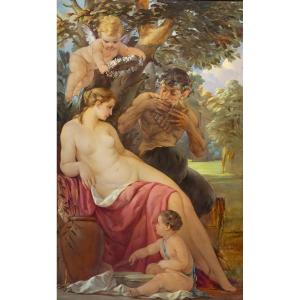
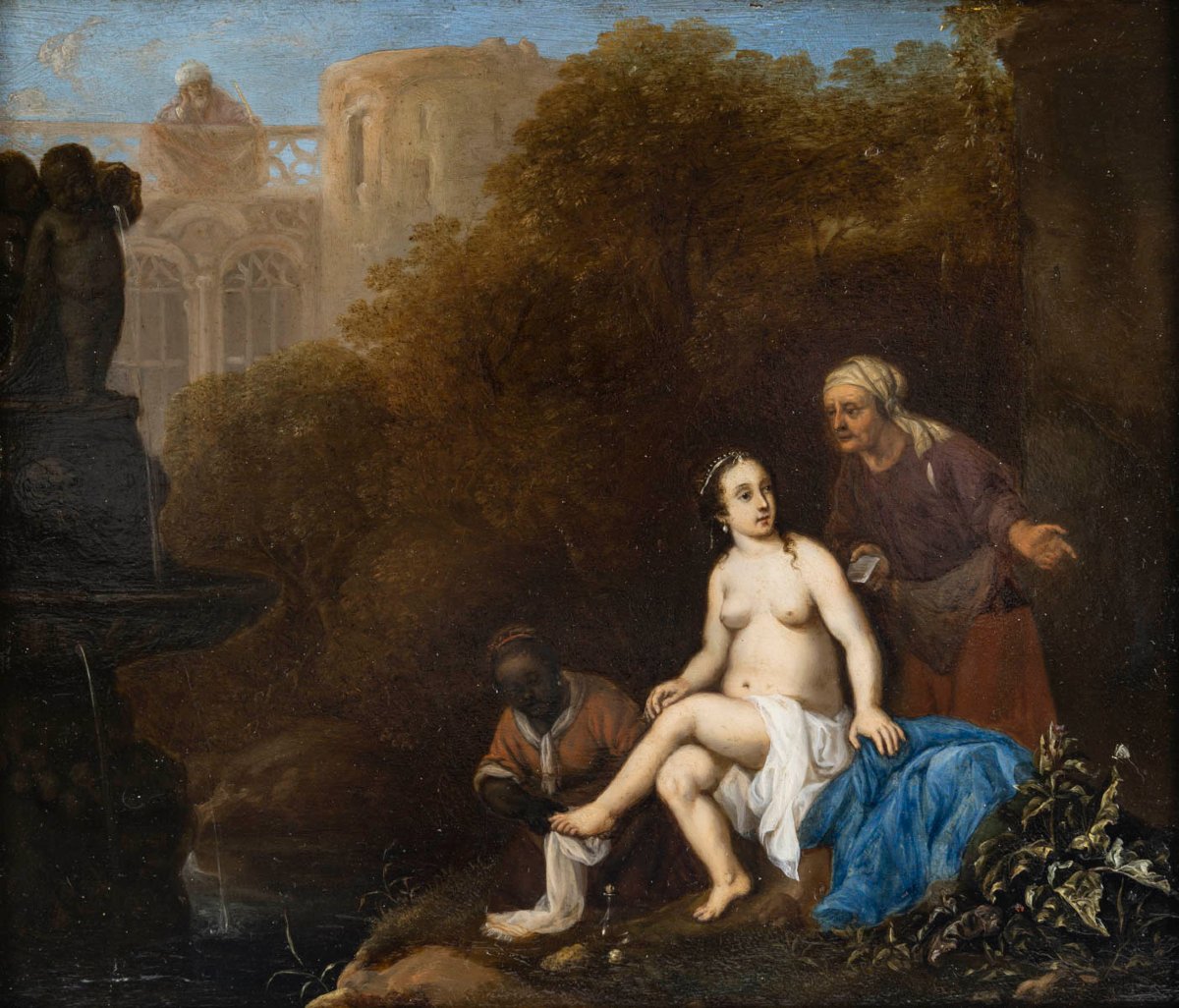
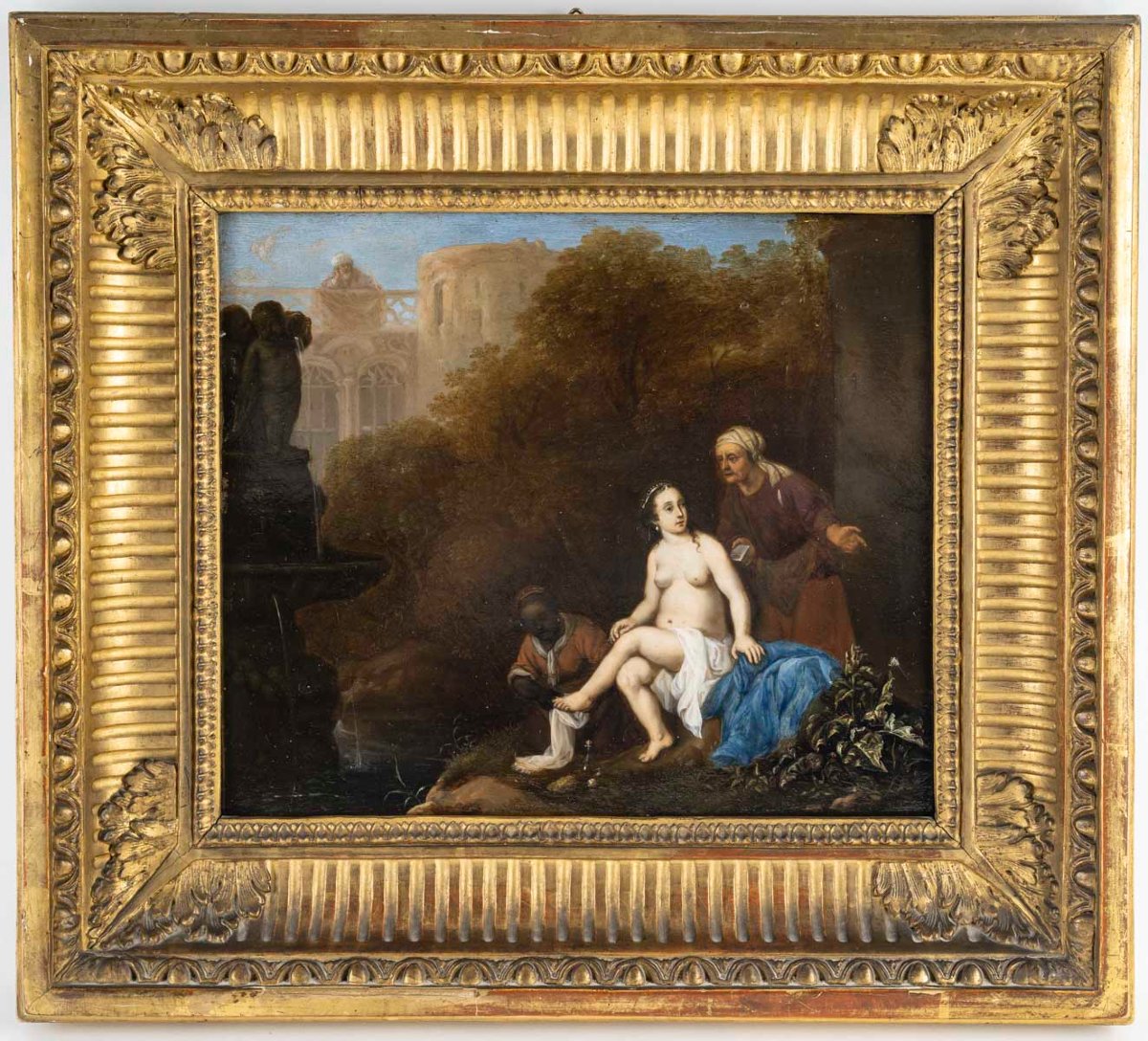
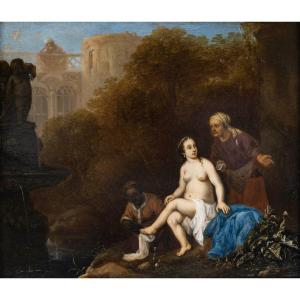
The Bath of Bathsheba, attributed to Cornelius Van POELENBURGH
Born in 1594 in Utrecht, Cornelius Van Poelenburgh died in 1667.
Oil on copper
Dimensions: 27 x 24 cm unframed and 40 x 37 cm
Gilded wood frame
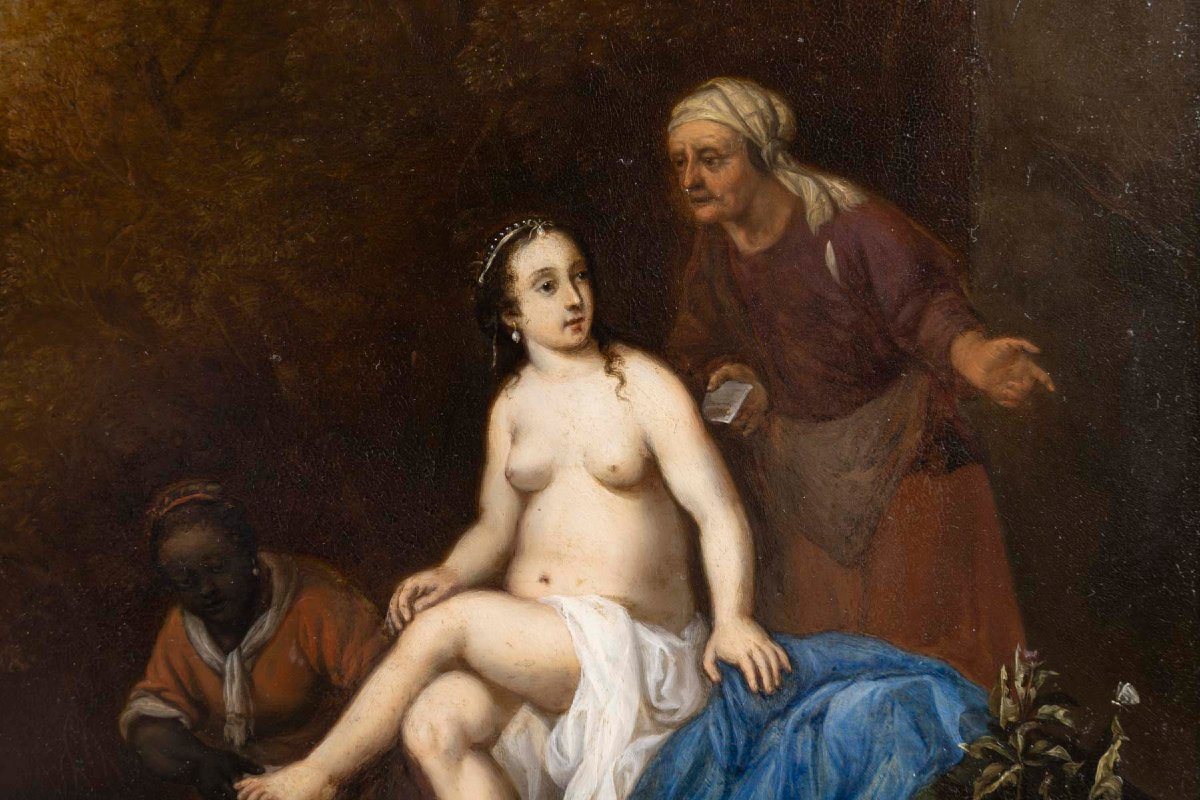
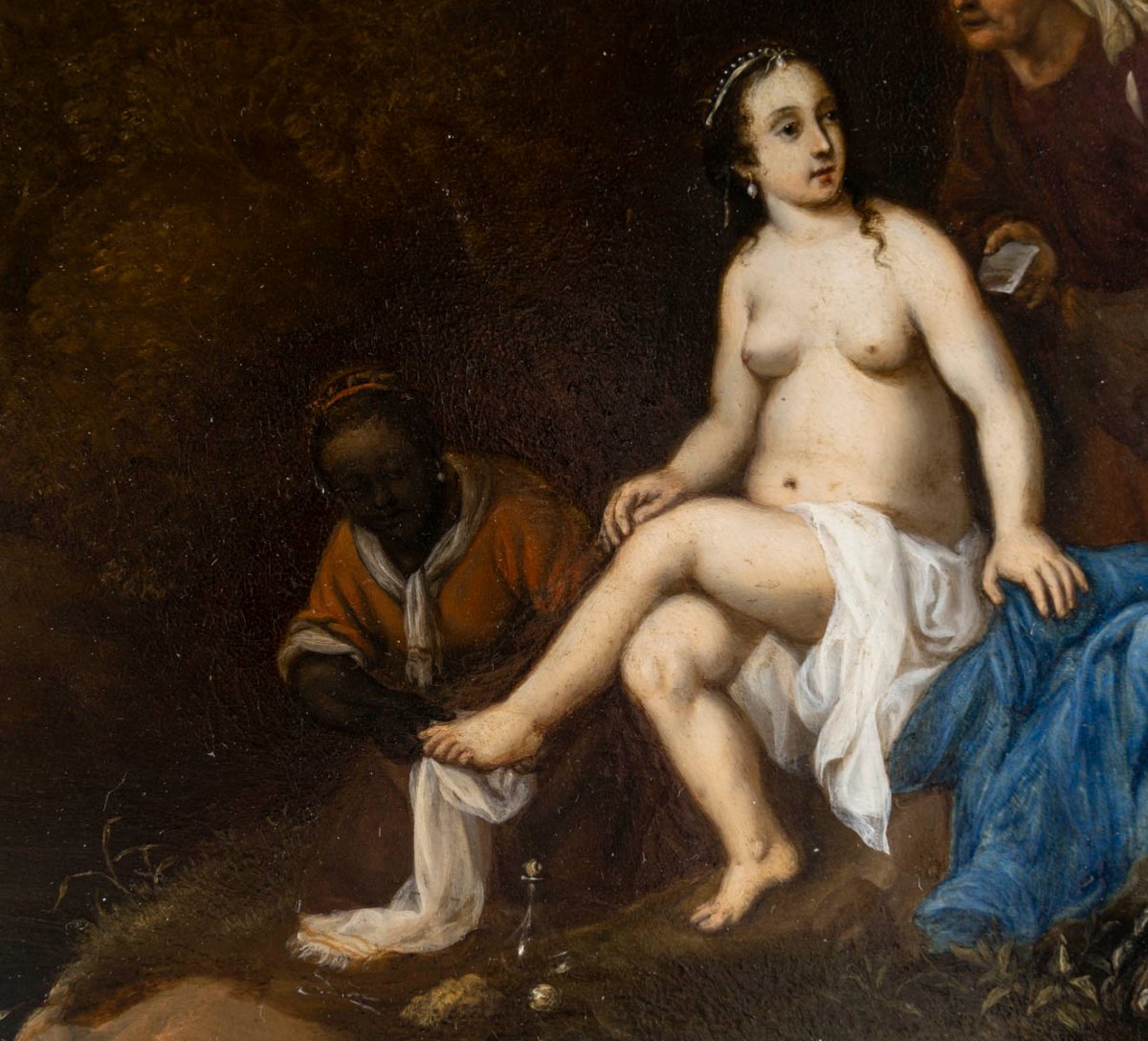
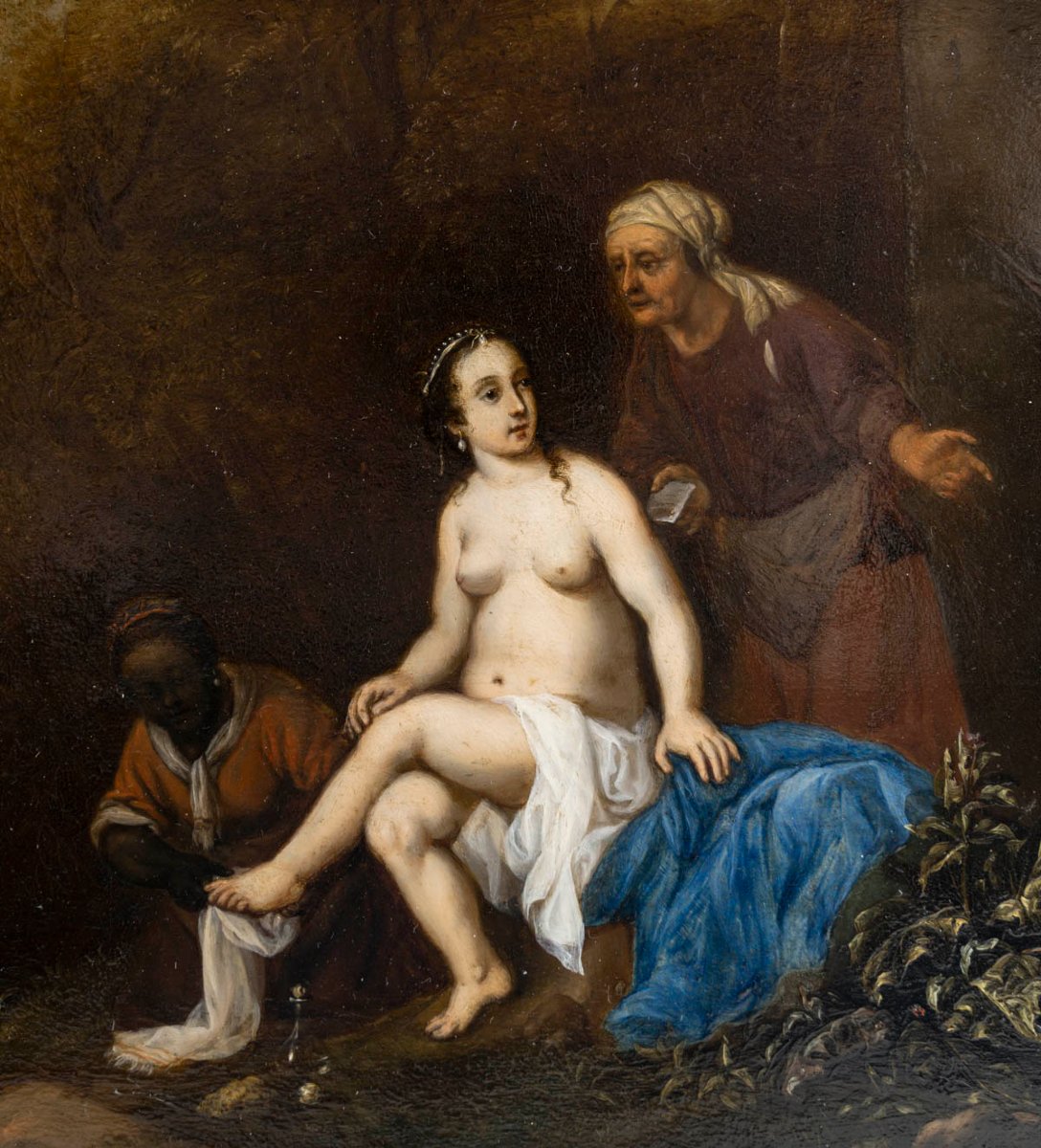
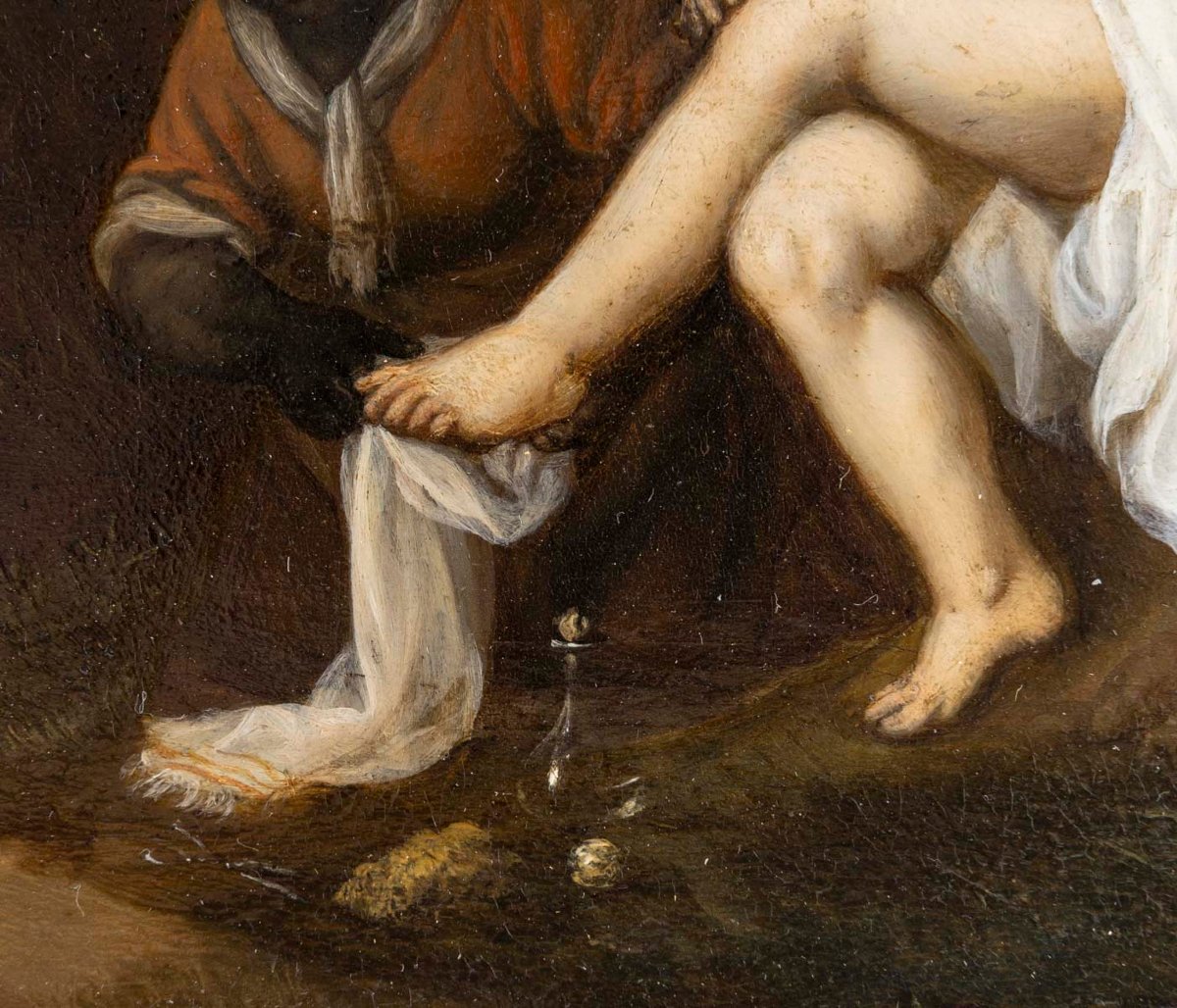
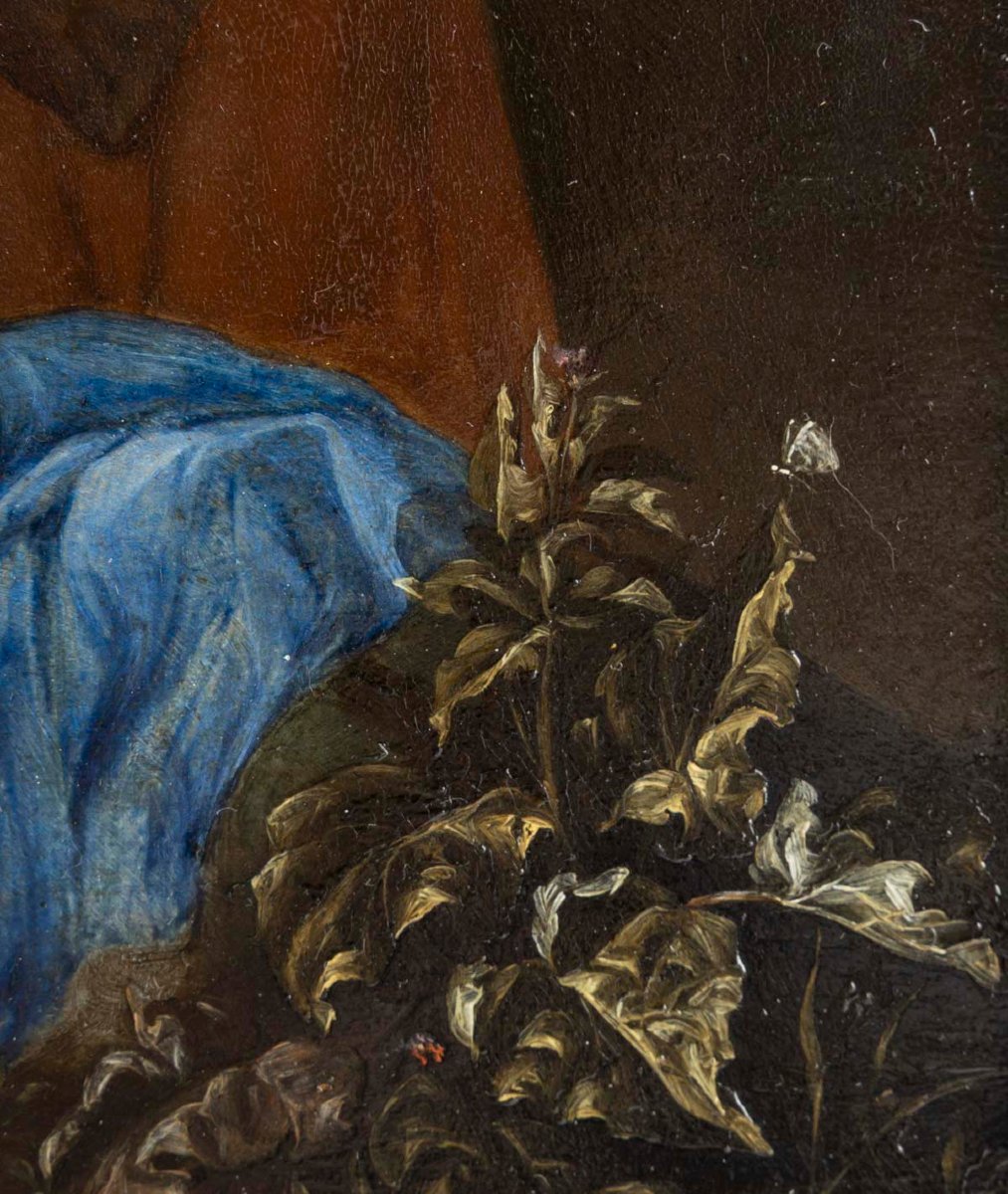
Bathsheba, wife of Uriah the Hittite, an officer in King David’s army, sits naked after her bath, a veil draped over her thighs. A young woman on her knees is drying her feet, while Bathsheba, her upper body turned toward King David’s messenger—who desires her and wishes to marry her—resignedly eventually consents to his request.
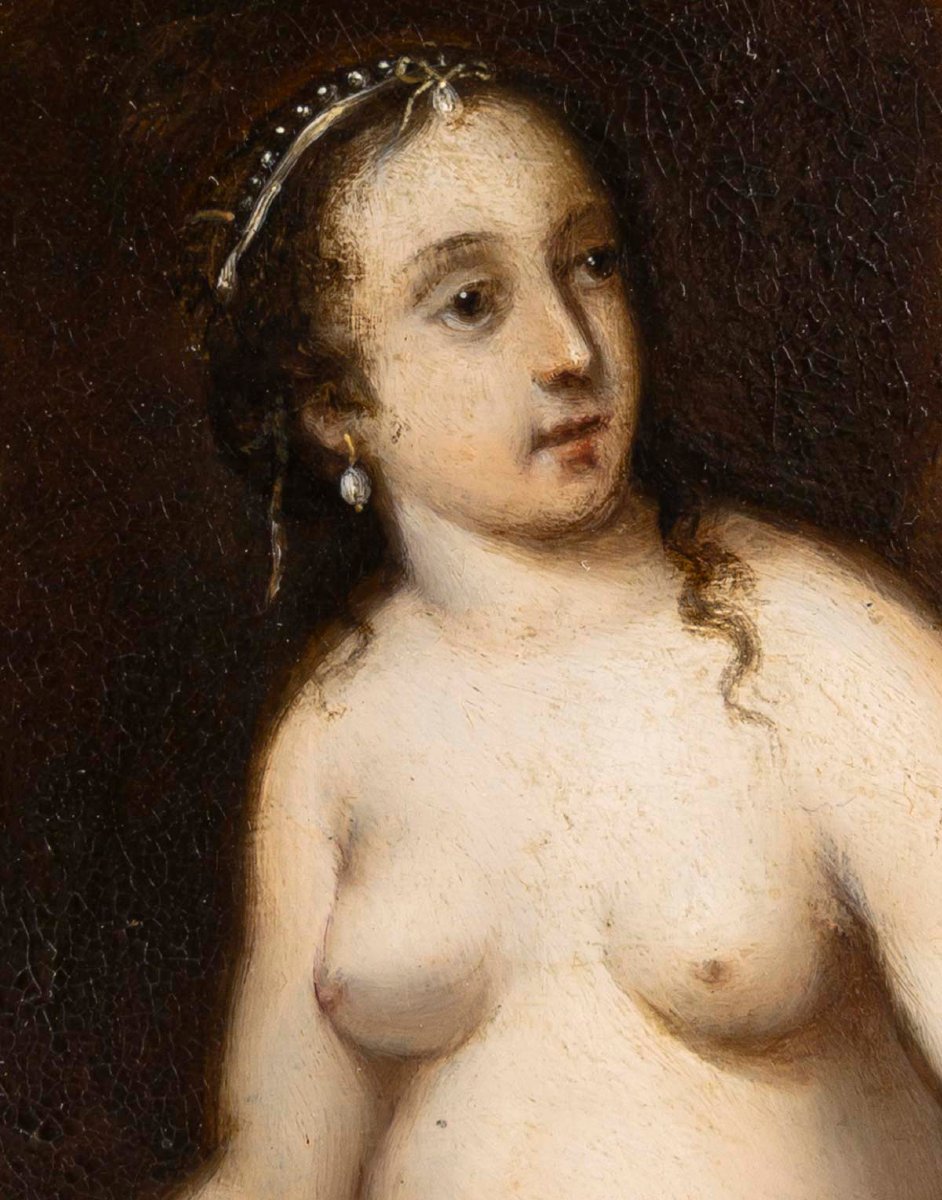
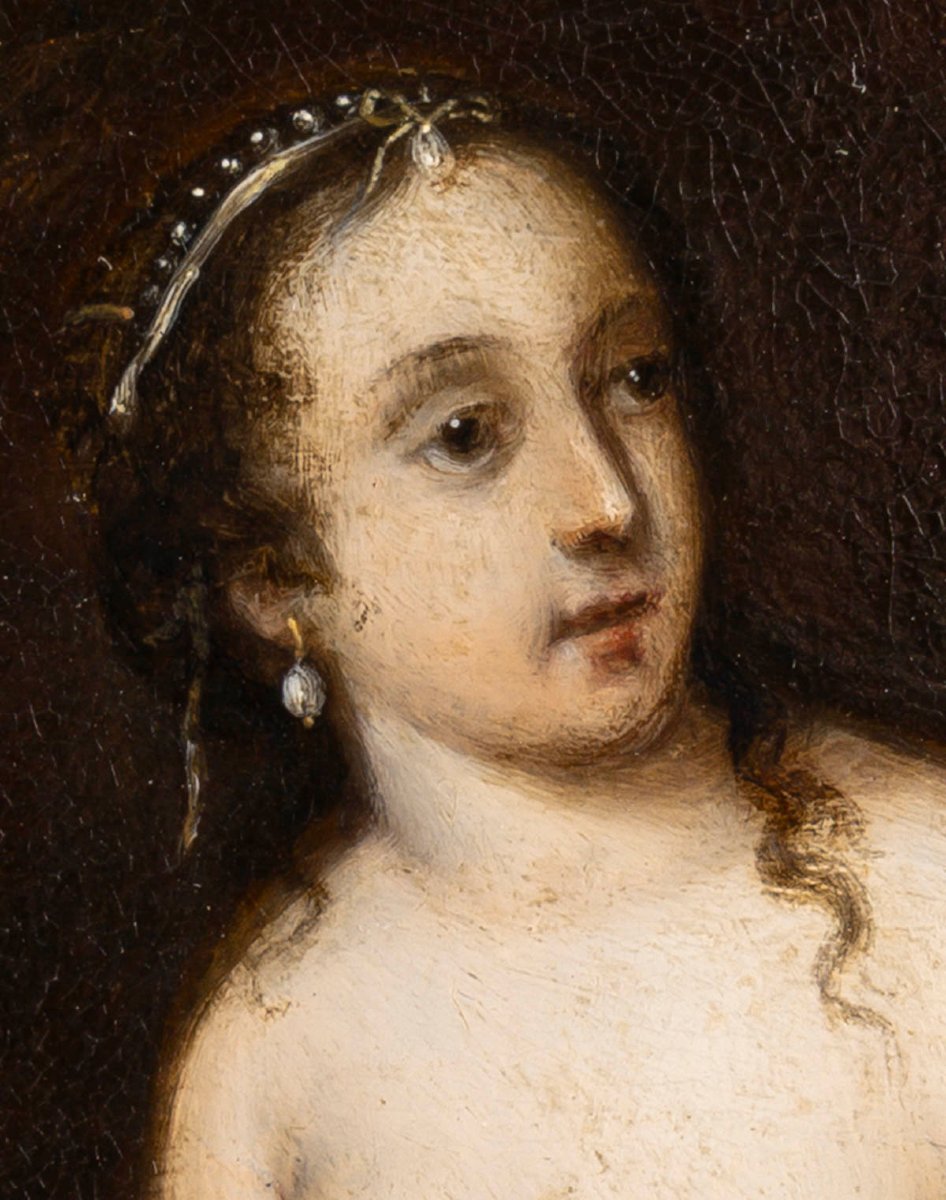
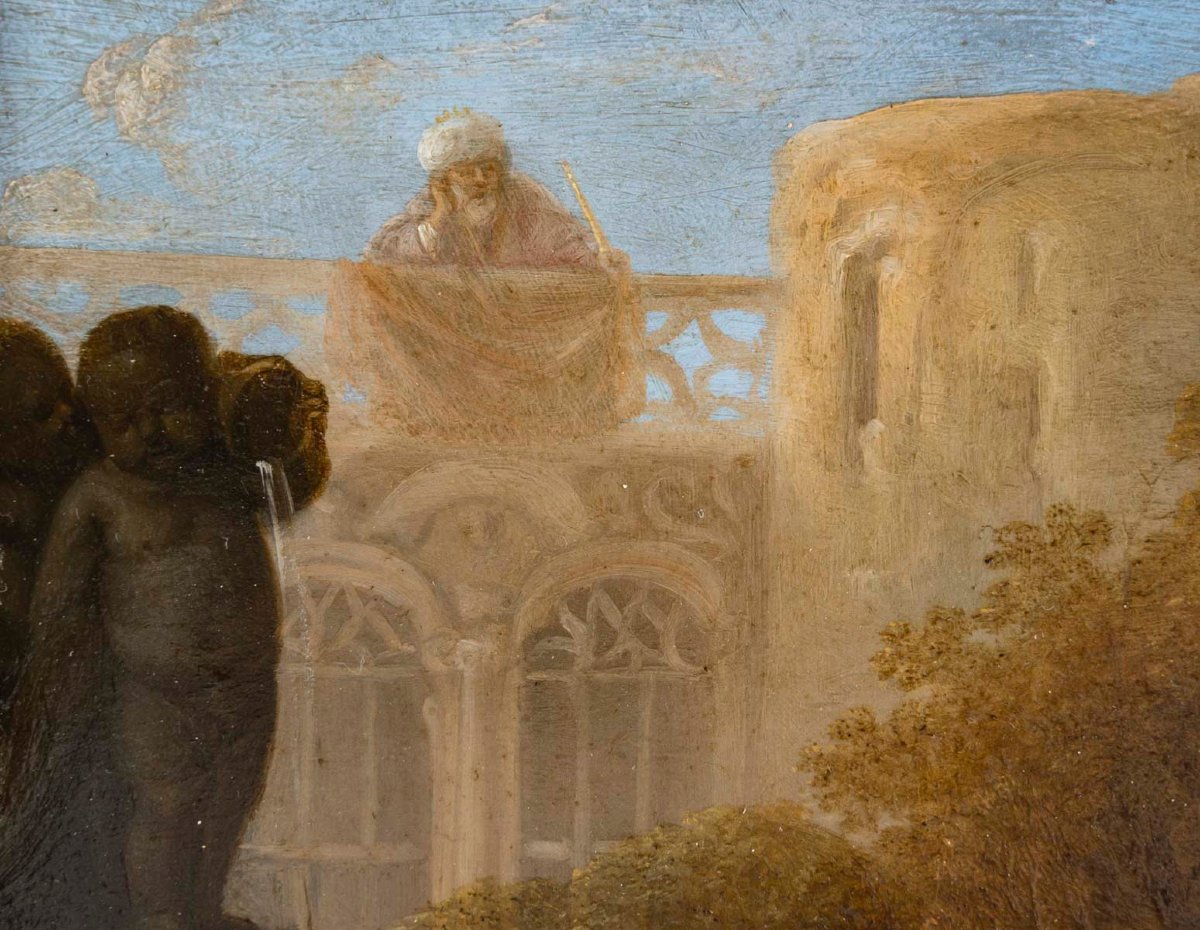
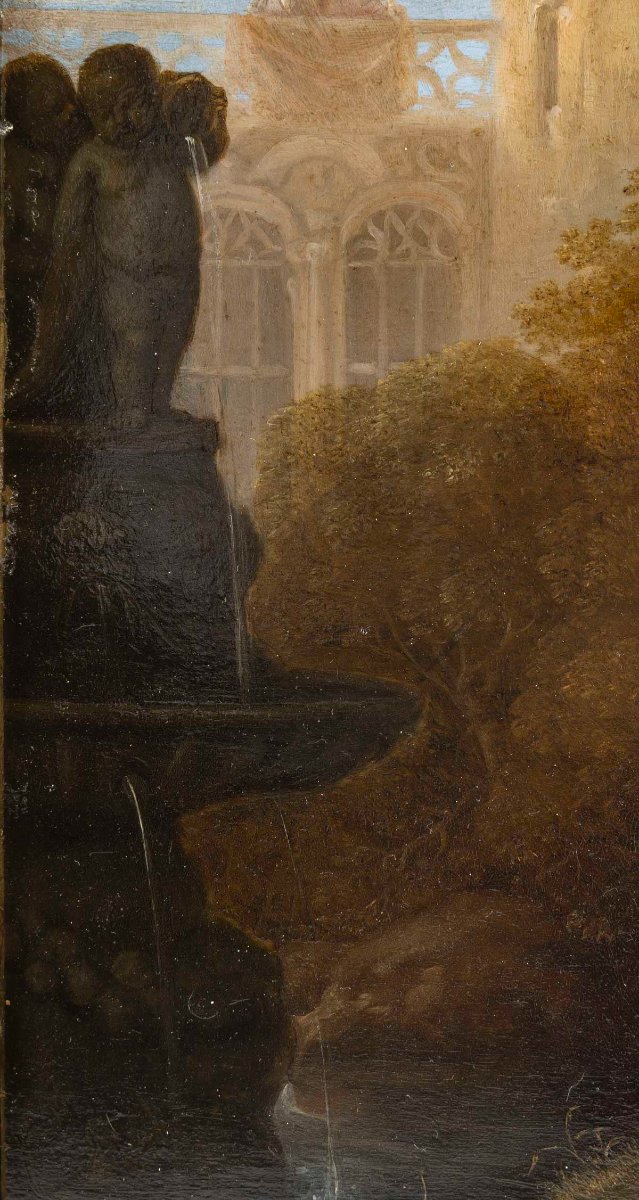
She wears a tiara and fine pearls in her ears; her white body at the center of the painting contrasts with the shaded landscape. A magnificent fountain carved with putti provides the cool water for Bathsheba’s bath.
From the balcony of his palace, King David admires the woman who will become his wife after the death of Uriah, who was killed in battle during an attack ordered by Joab.
The painter Cornelius Van Poelenburgh created numerous highly refined small-format landscapes on copper; ours is one such example, featuring a biblical theme in which figures, architecture, and nature intertwine.
Cornelius van Poelenburgh trained under Abraham Bloemaert, a Mannerist painter in Utrecht, and left for Rome in 1617 to further his studies; where he remained for 10 years, deeply influenced by Paul Bril and Adam Elsheimer; his Italian landscapes were a great success, and he was part of the first generation of Italianate Dutch landscape painters.
In Florence, he worked for Grand Duke Cosimo II de’ Medici; upon his return to Utrecht, he established a studio and surrounded himself with numerous students, including Daniel Vertangen, Dirck van der Lisse, and Jan van Haensberge.
His small ceremonial paintings earned him recognition from the authorities; “The Banquet of the Gods on Earth” was acquired and then presented to Amalia van Solms, the wife of Frederick Henry of Orange-Nassau.
Rubens, while passing through Utrecht, also purchased several of his works in 1627.
He then left for England to work regularly for King Charles I.
Museums: Utrecht, Florence, the Louvre, the Getty Museum, …
Period: 17th century
Style: Louis 14th, Regency
Condition: Perfect condition
Material: Copper
Length: 27 cm
Width: 24 cm
Reference (ID): 1796929
Availability: In stock