


Empire-period Inkwell Attributed To Ravrio
Artist: Attribué à Ravrio
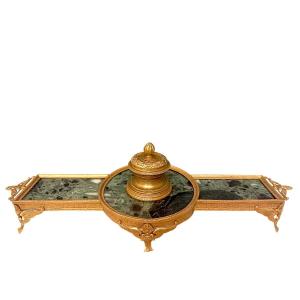
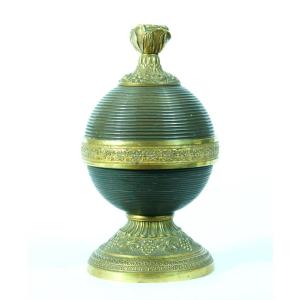
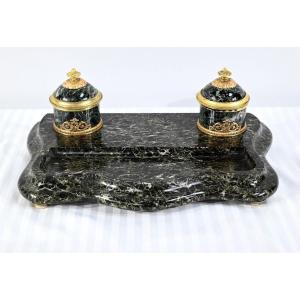
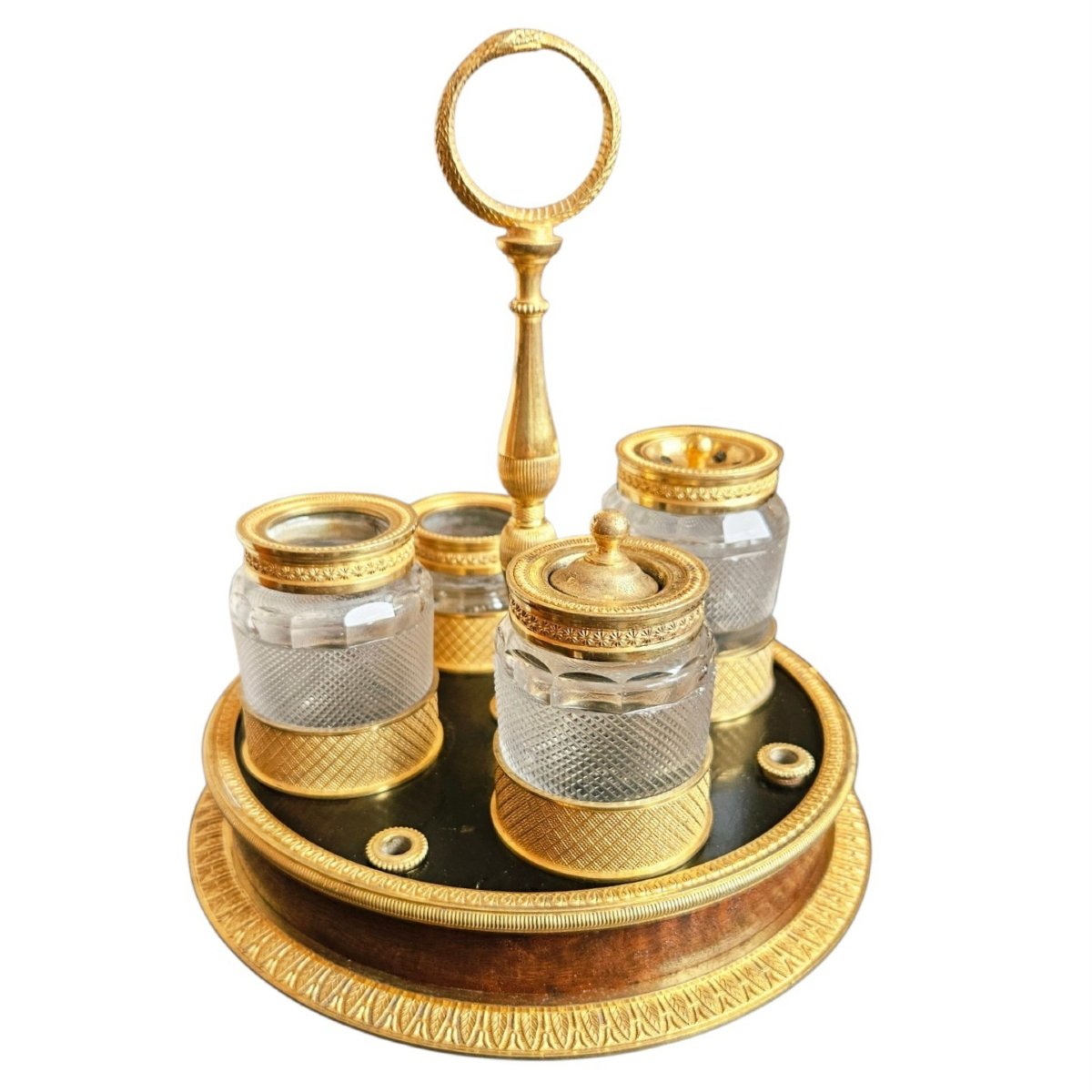
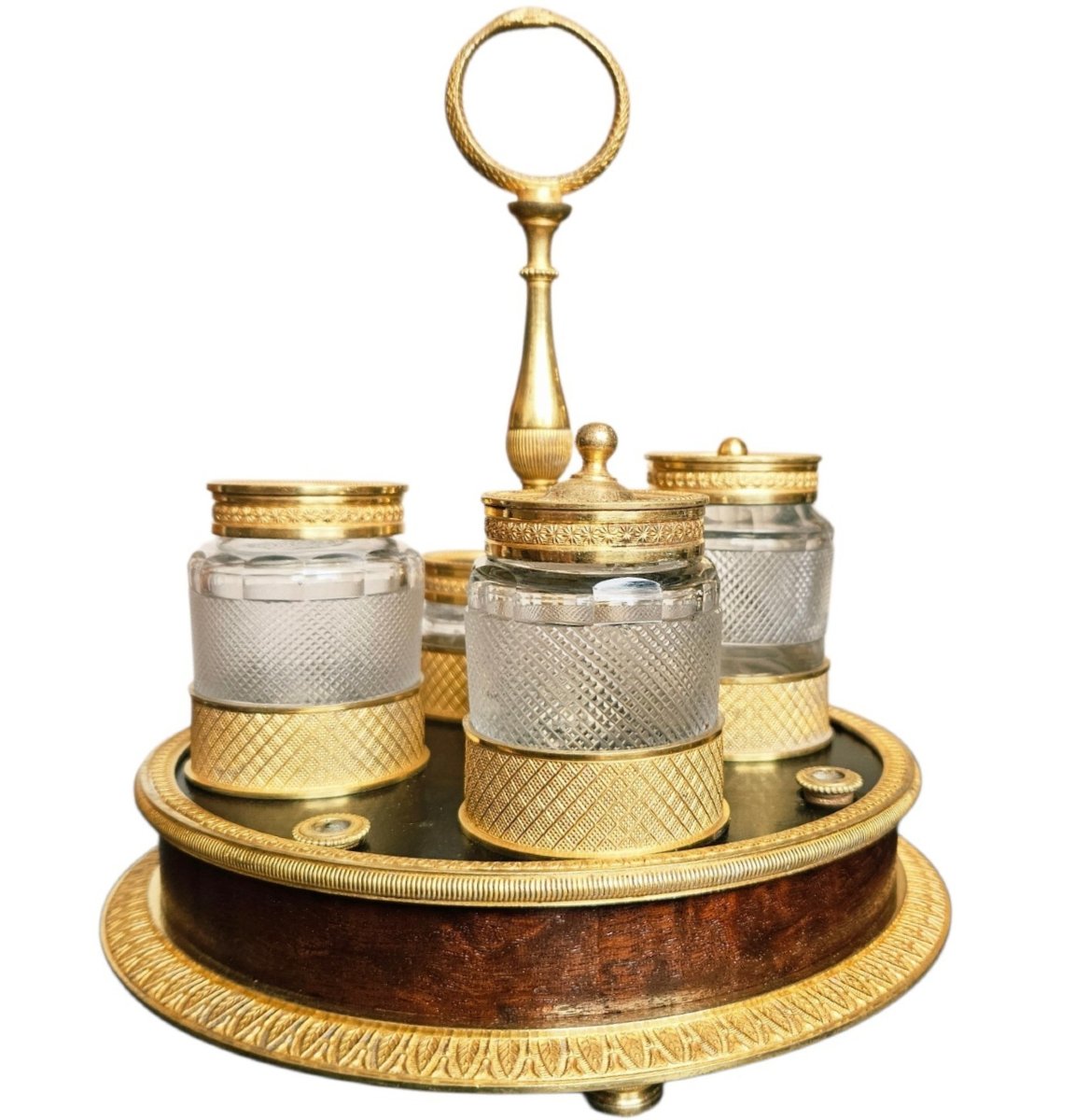
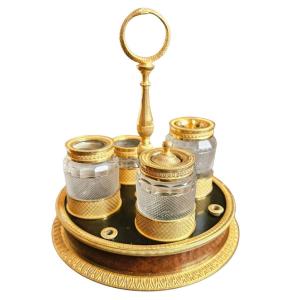
A circular, freestanding writing set or writing desk (also known as an inkwell tray) from the Empire period, attributed to the bronze artist André-Antoine Ravrio (1759–1814).
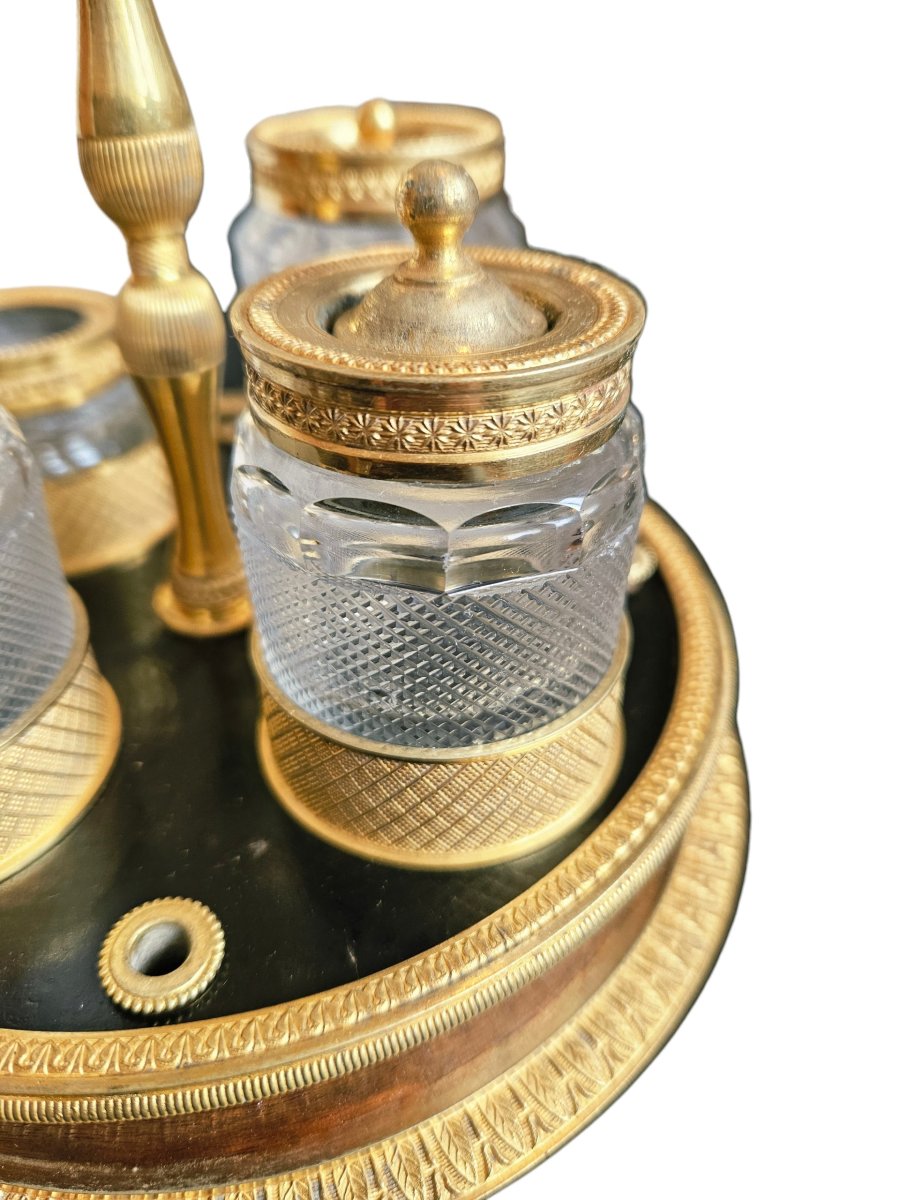
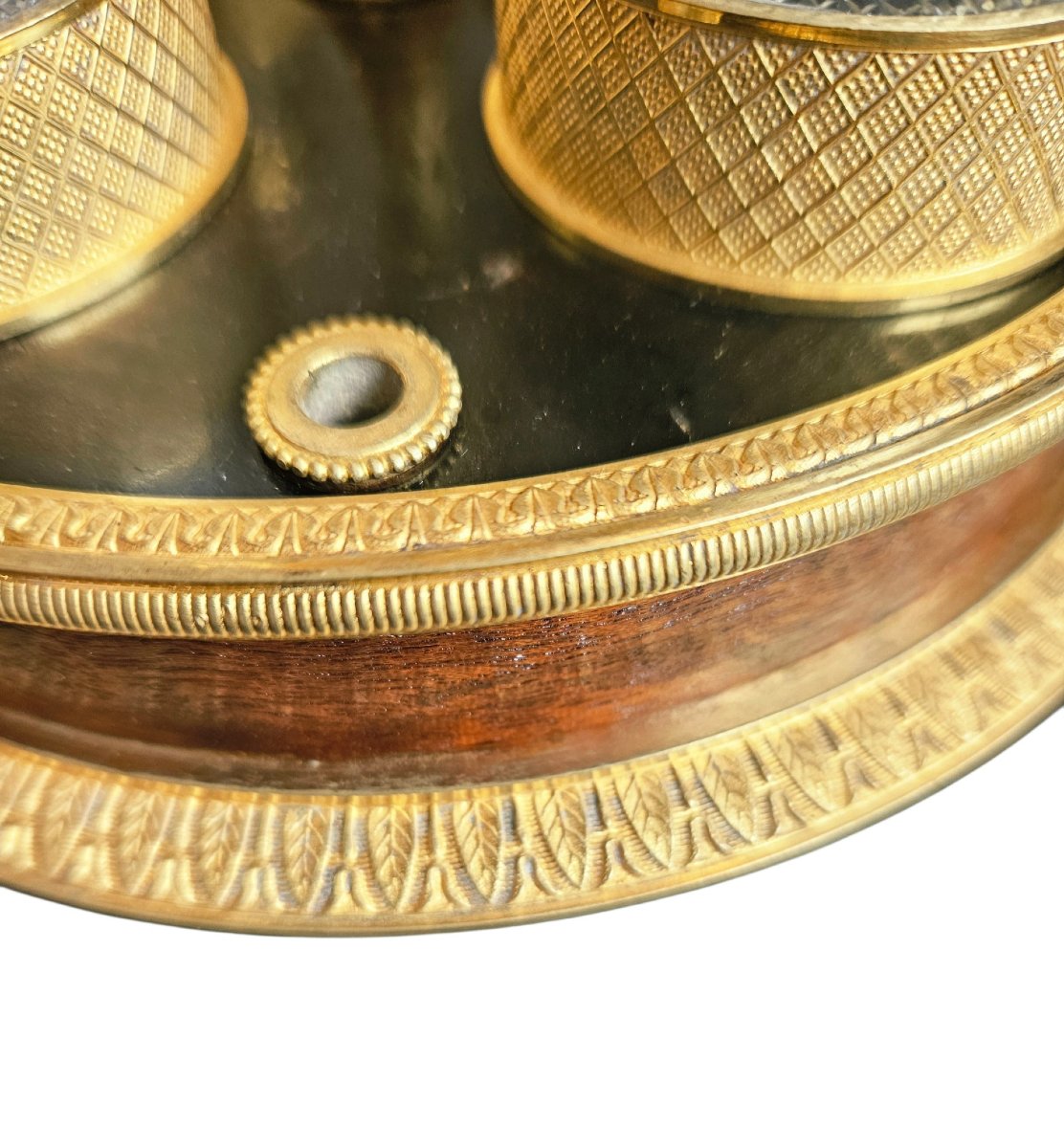
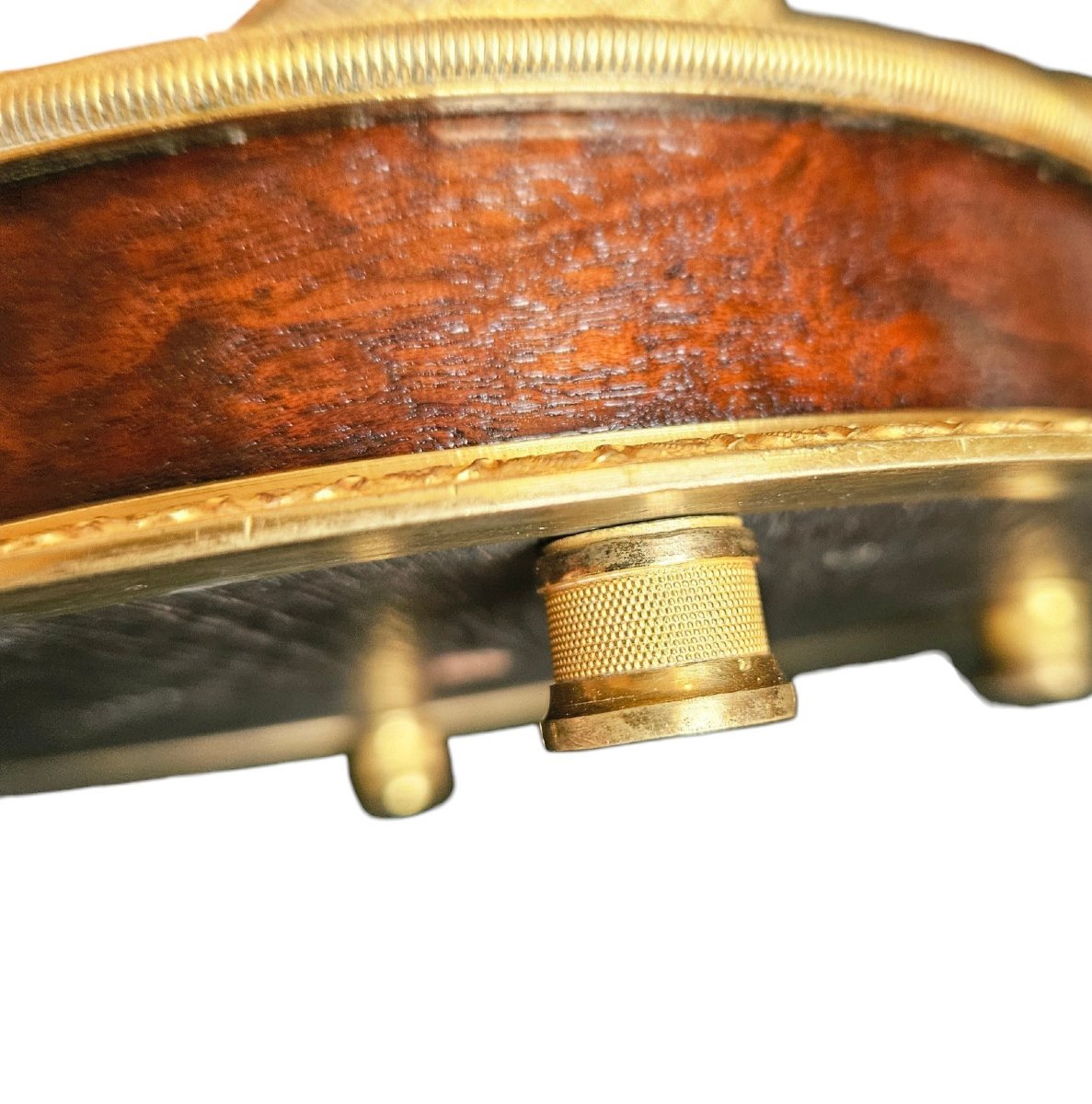
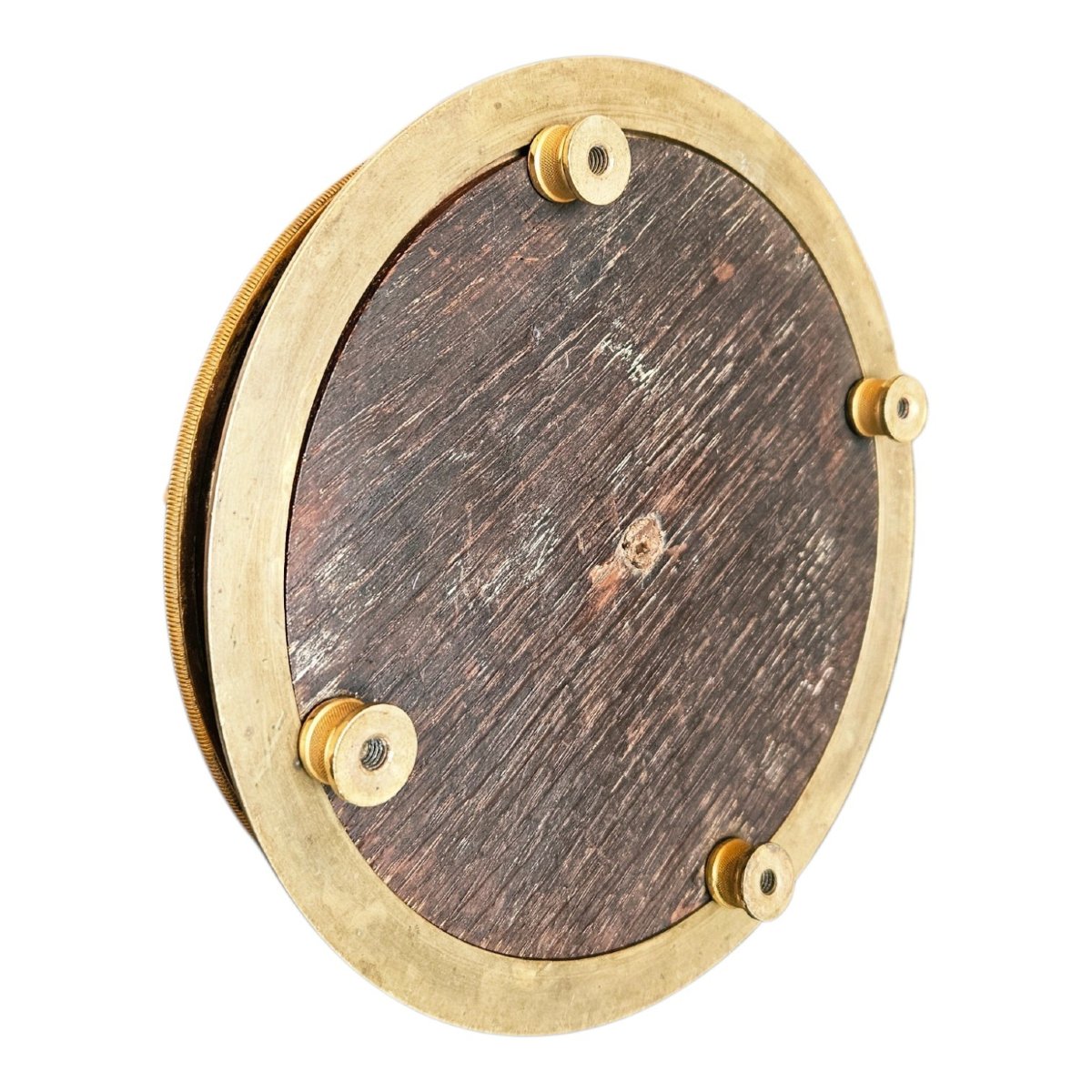
Base and structure: Circular top edged with burl mahogany, set between two friezes of chiseled gilded bronze. The base rests on small, finely guilloché-engraved glide feet.
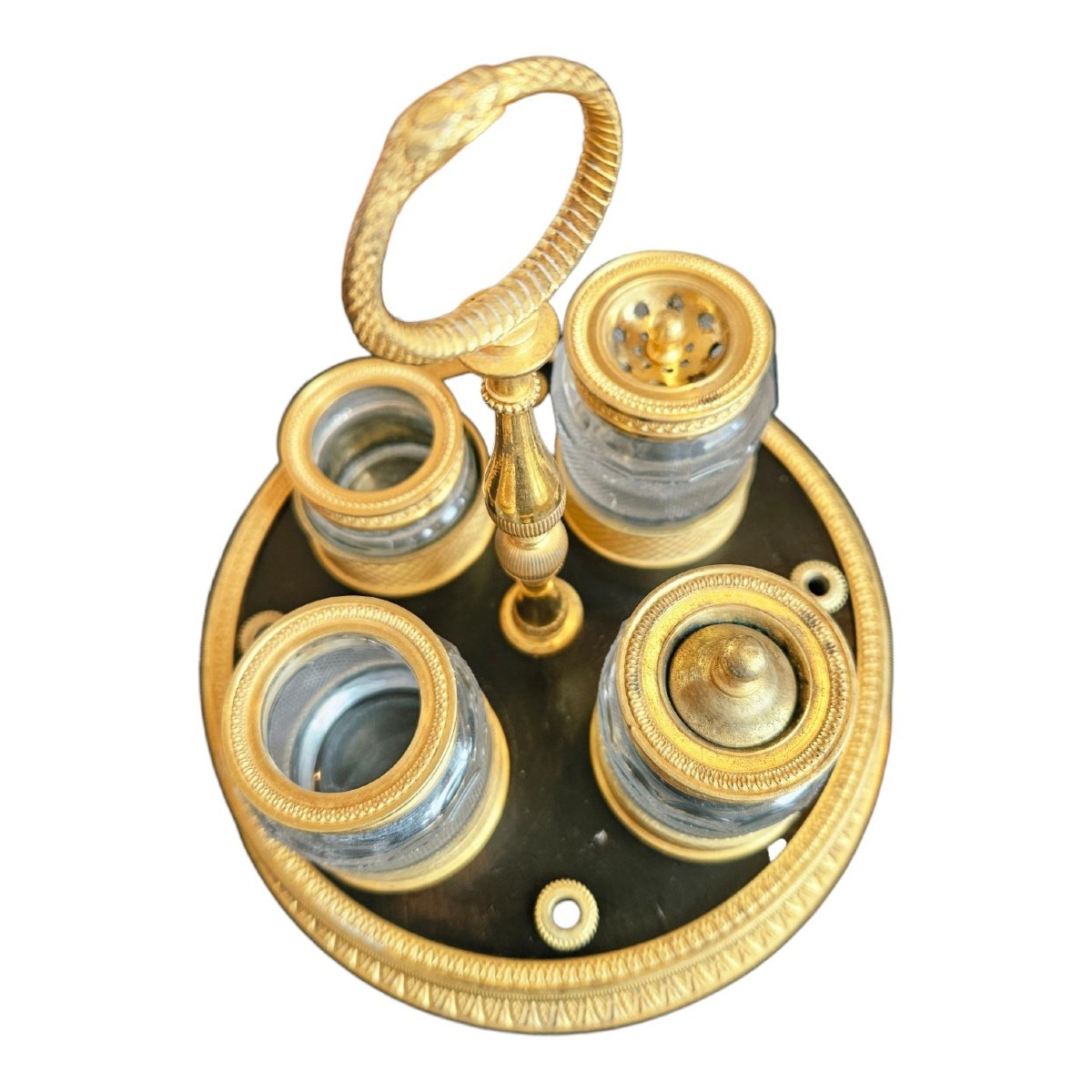
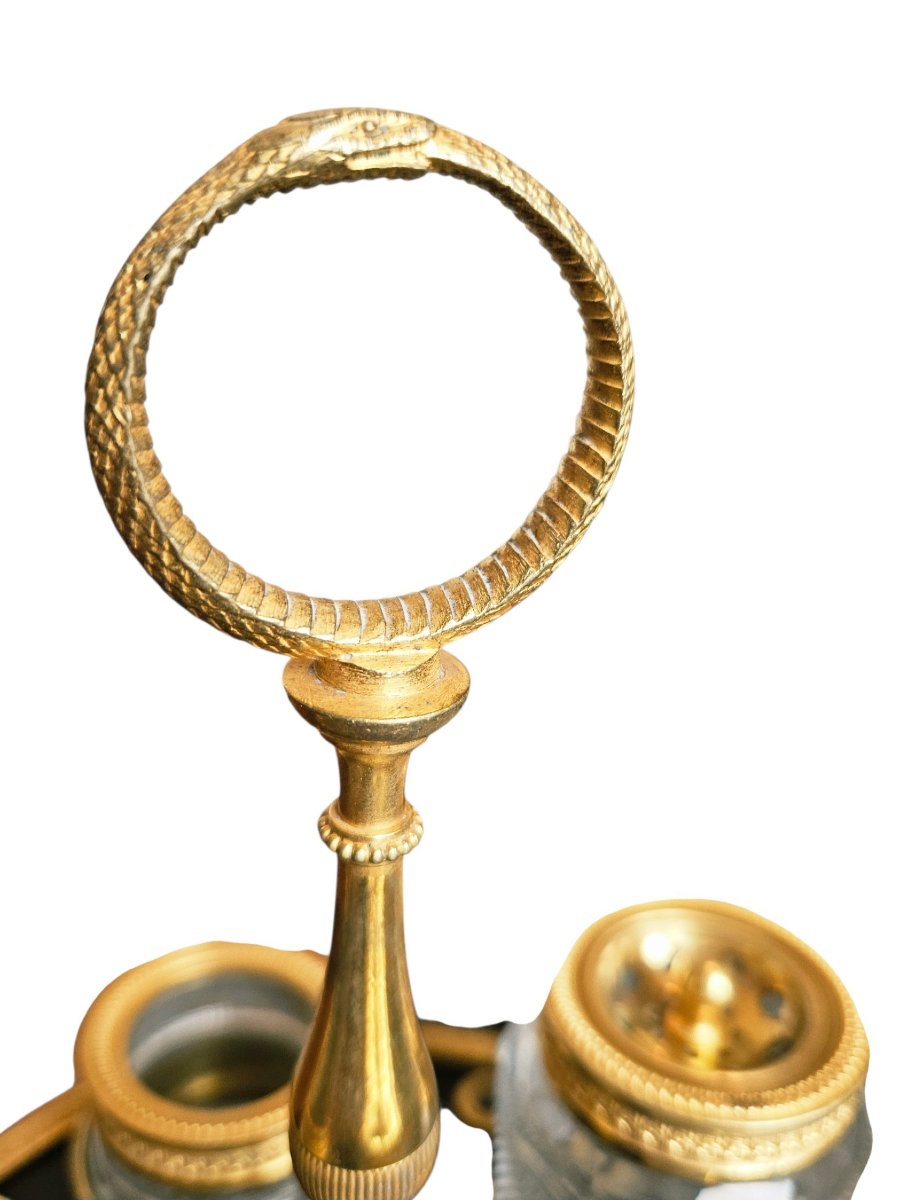
Gilded bronze (ormolu) trim: Fine chiseled work gilded with mercury-based gold in matte and burnished finishes. The central section features a baluster-shaped shaft serving as a handle, topped by a circular knob depicting an Ouroboros (a serpent biting its own tail, a Neoclassical symbol of immortality and eternity).
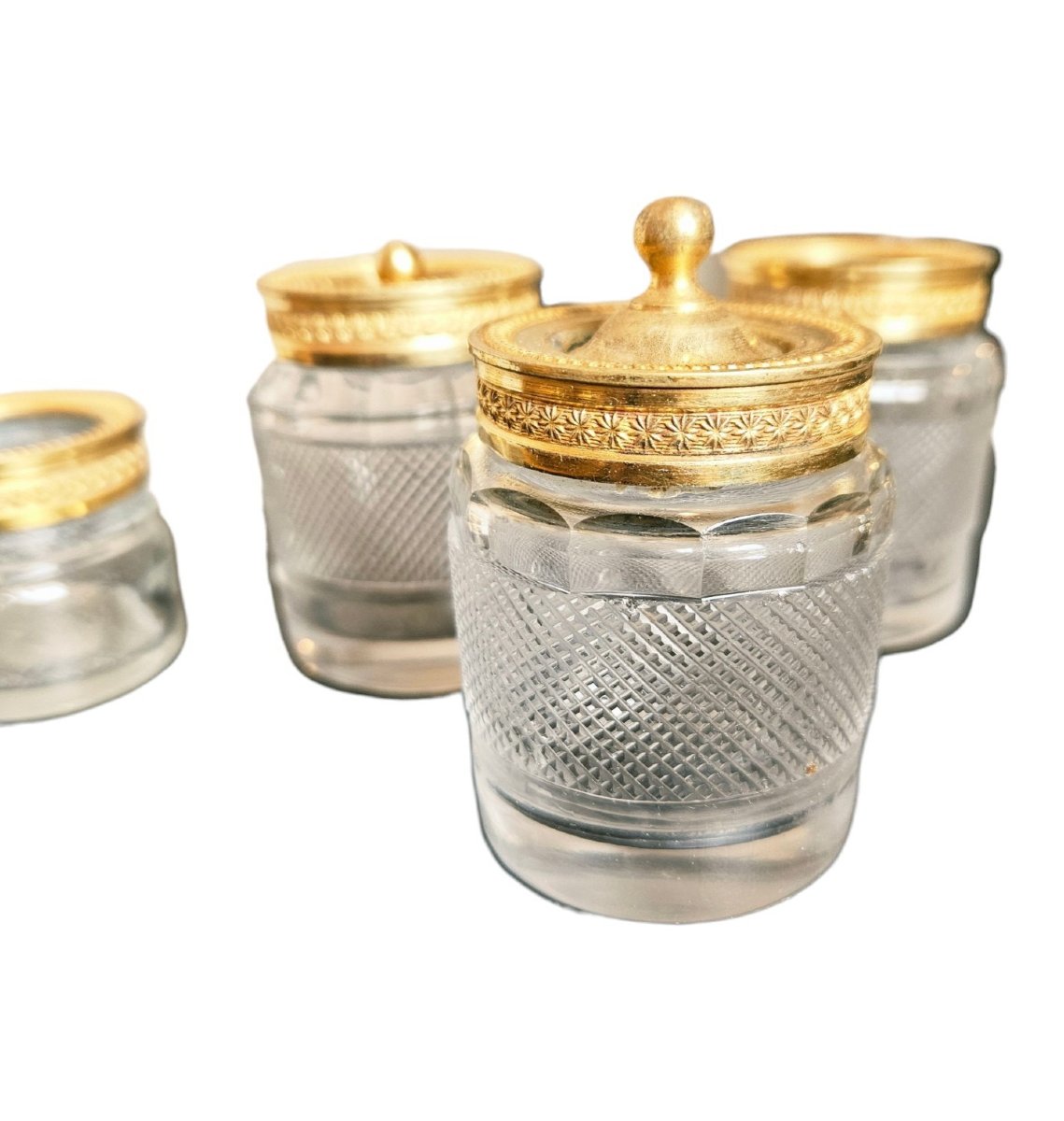
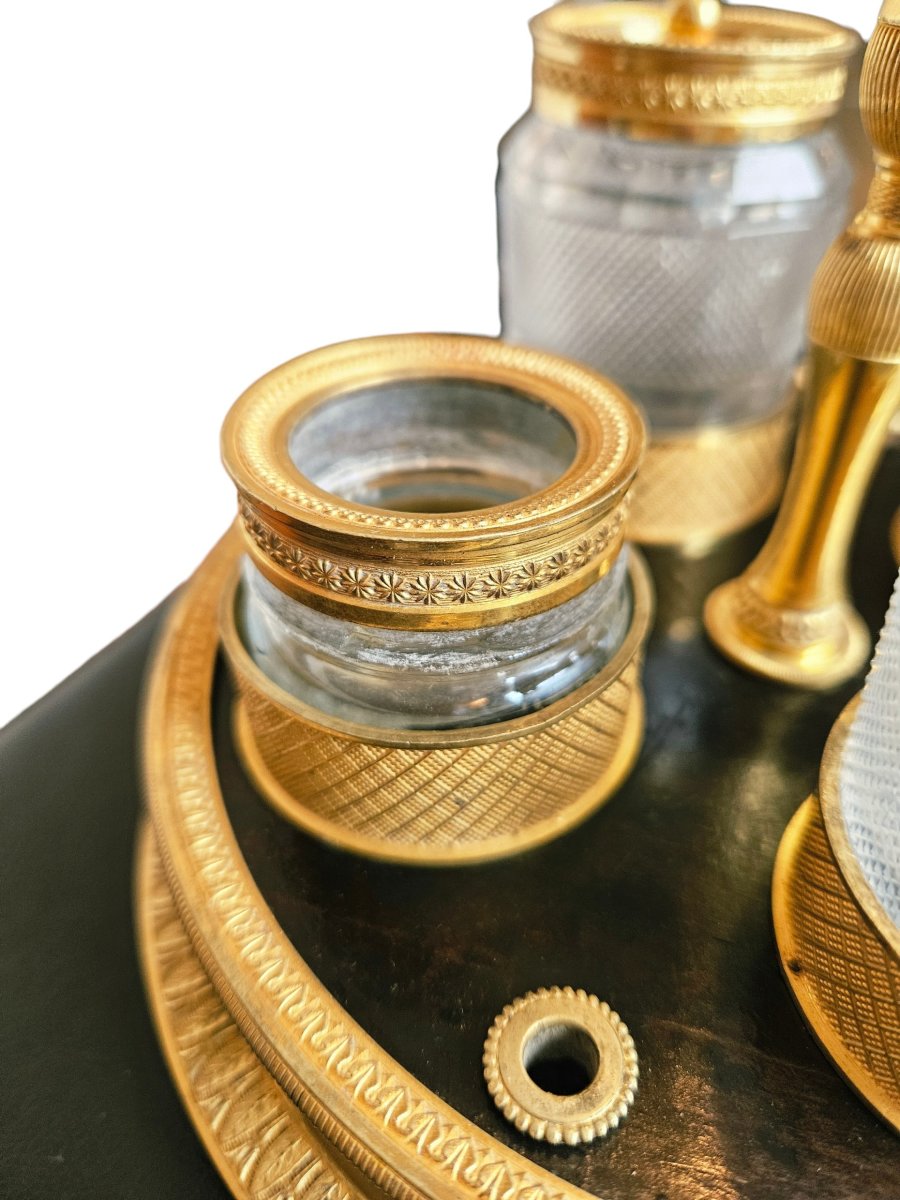
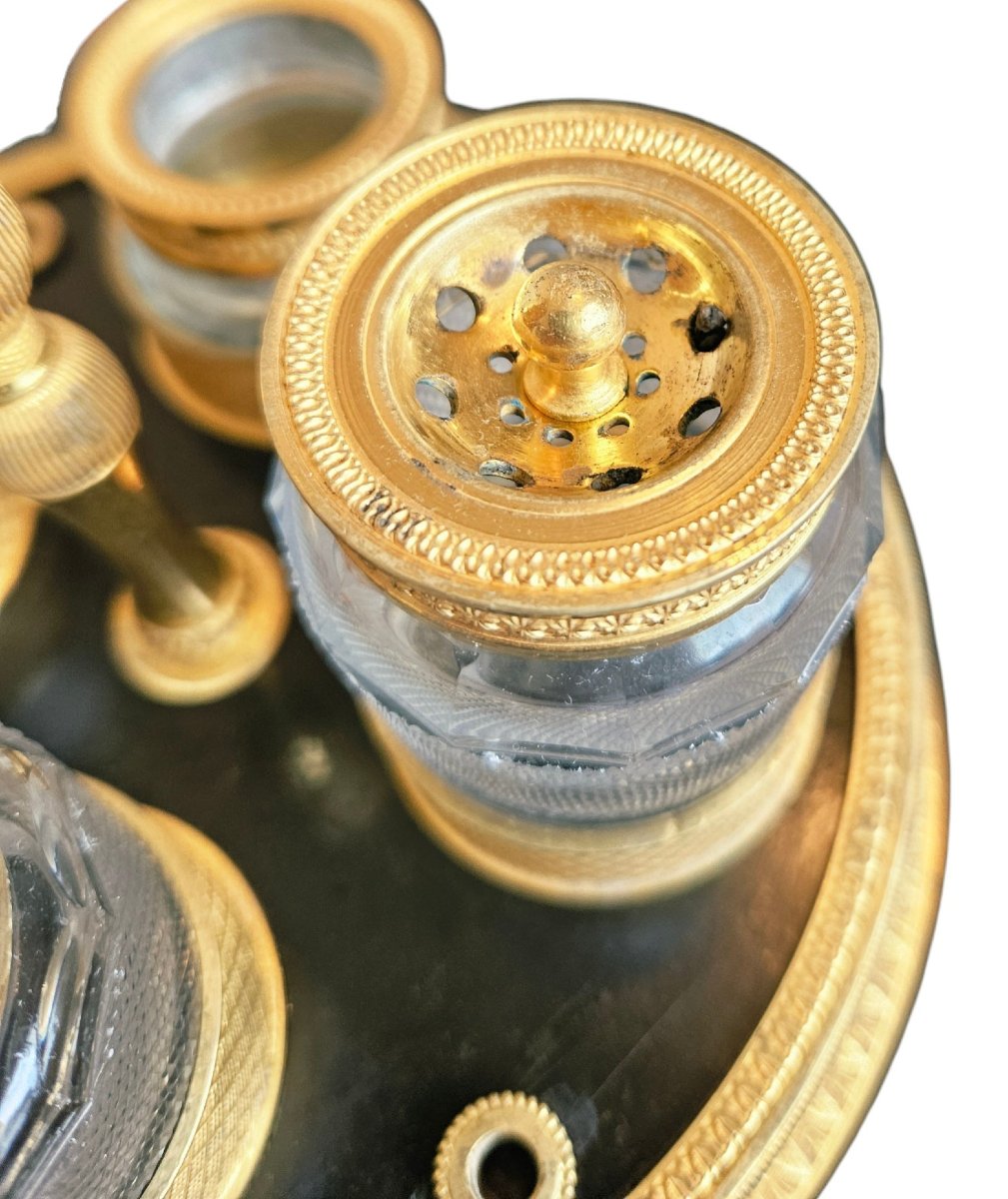
Containers: A set of removable containers (including one that is attached) made of cut crystal with diamond-point crosshatch patterns and facets, set into rings or cups of gilded bronze with crosshatch guilloché engraving.
Composition of the tray’s elements
The tray comprises 4 main receptacles and additional compartments:
An inkwell: A crystal bottle with a solid lid or an inlaid knob.
An hourglass / powder dish: A crystal bottle topped with a lid perforated with small holes used to sprinkle sand to dry fresh ink.
A cup / pen holder or sponge holder: A small container open in the center.
Lids or stopper caps / seal holders inserted directly onto the tray.
The bronze finish (fine guilloché, godron and palmette friezes) as well as the use of the serpent/ouroboros motif as a handle are decorative hallmarks characteristic of the Parisian productions of André-Antoine Ravrio’s workshop during the First Empire (circa 1805–1815).
Similar models still bear the label of the famous bronze artist.
Base and structure: Circular top edged with burl mahogany, set between two friezes of chiseled gilded bronze. The base rests on small, finely guilloché-engraved glide feet.
Gilded bronze (ormolu) trim: Fine chiseled work gilded with mercury-based gold in matte and burnished finishes. The central section features a baluster-shaped shaft serving as a handle, topped by a circular knob depicting an Ouroboros (a serpent biting its own tail, a Neoclassical symbol of immortality and eternity).
Containers: A set of removable containers (including one that is attached) made of cut crystal with diamond-point crosshatch patterns and facets, set into rings or cups of gilded bronze with crosshatch guilloché engraving.
Composition of the tray’s elements
The tray comprises 4 main receptacles and additional compartments:
An inkwell: A crystal bottle with a solid lid or an inlaid knob.
An hourglass / powder dish: A crystal bottle topped with a lid perforated with small holes used to sprinkle sand to dry fresh ink.
A cup / pen holder or sponge holder: A small container open in the center.
Lids or stopper caps / seal holders inserted directly onto the tray.
The bronze finish (fine guilloché, godron and palmette friezes) as well as the use of the serpent/ouroboros motif as a handle are decorative hallmarks characteristic of the Parisian productions of André-Antoine Ravrio’s workshop during the First Empire (circa 1805–1815).
Similar models still bear the label of the famous bronze artist.
1 280 €
Period: 19th century
Style: Consulat, Empire
Condition: Excellent condition
Material: Bronze
Diameter: 18.5
Height: 21
Reference (ID): 1830319
Availability: In stock
Print