Romanesque Chapel Carved From Stone, Weather Vane Or Ridge Finial, 19th Century, Folk Art
Romanesque Chapel Carved From Stone, Weather Vane Or Ridge Finial, 19th Century, Folk Art-photo-2
Romanesque Chapel Carved From Stone, Weather Vane Or Ridge Finial, 19th Century, Folk Art-photo-3
Romanesque Chapel Carved From Stone, Weather Vane Or Ridge Finial, 19th Century, Folk Art-photo-4
Romanesque Chapel Carved From Stone, Weather Vane Or Ridge Finial, 19th Century, Folk Art-photo-1
Romanesque Chapel Carved From Stone, Weather Vane Or Ridge Finial, 19th Century, Folk Art-photo-2
Romanesque Chapel Carved From Stone, Weather Vane Or Ridge Finial, 19th Century, Folk Art-photo-3
Romanesque Chapel Carved From Stone, Weather Vane Or Ridge Finial, 19th Century, Folk Art-photo-4

Romanesque Chapel Carved From Stone, Weather Vane Or Ridge Finial, 19th Century, Folk Art

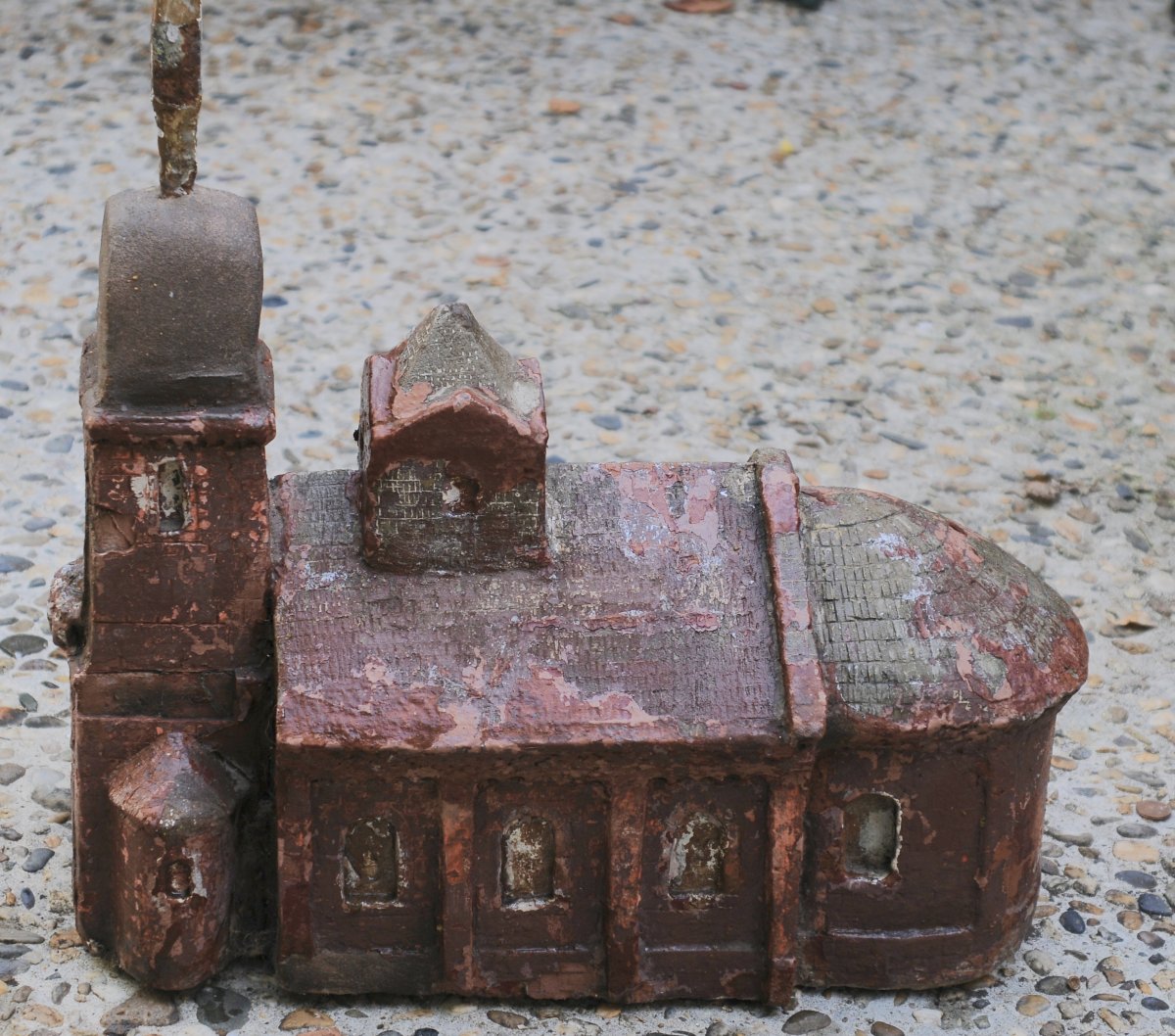
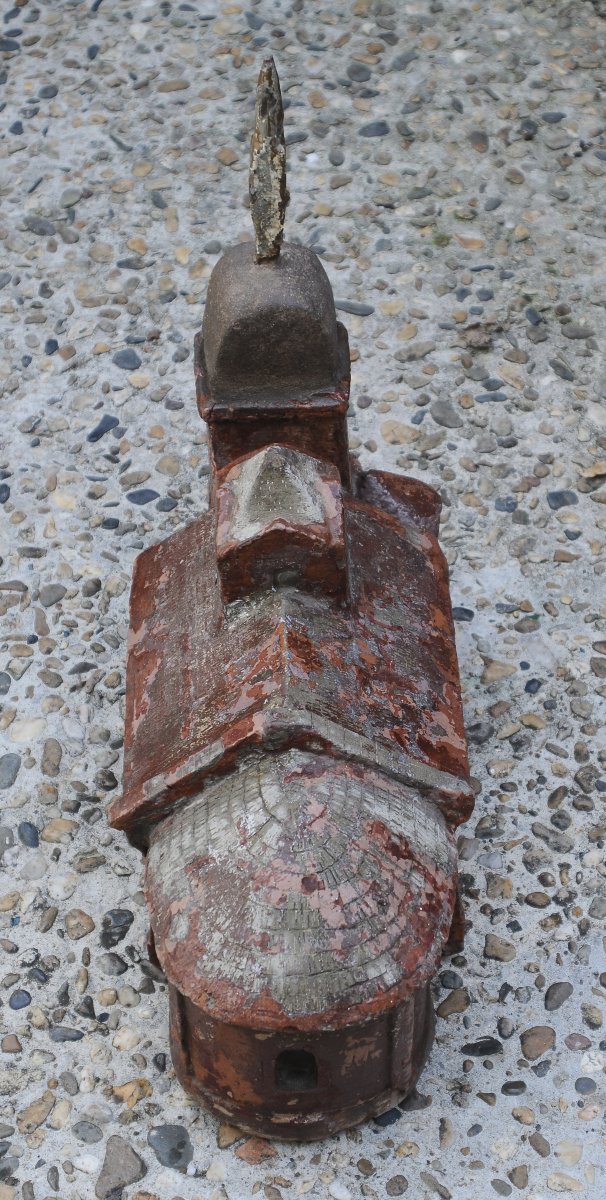
  • Material and weight: The fact that it is “very heavy” and that its rough base is visible indicates that it was carved from a single monolithic block.
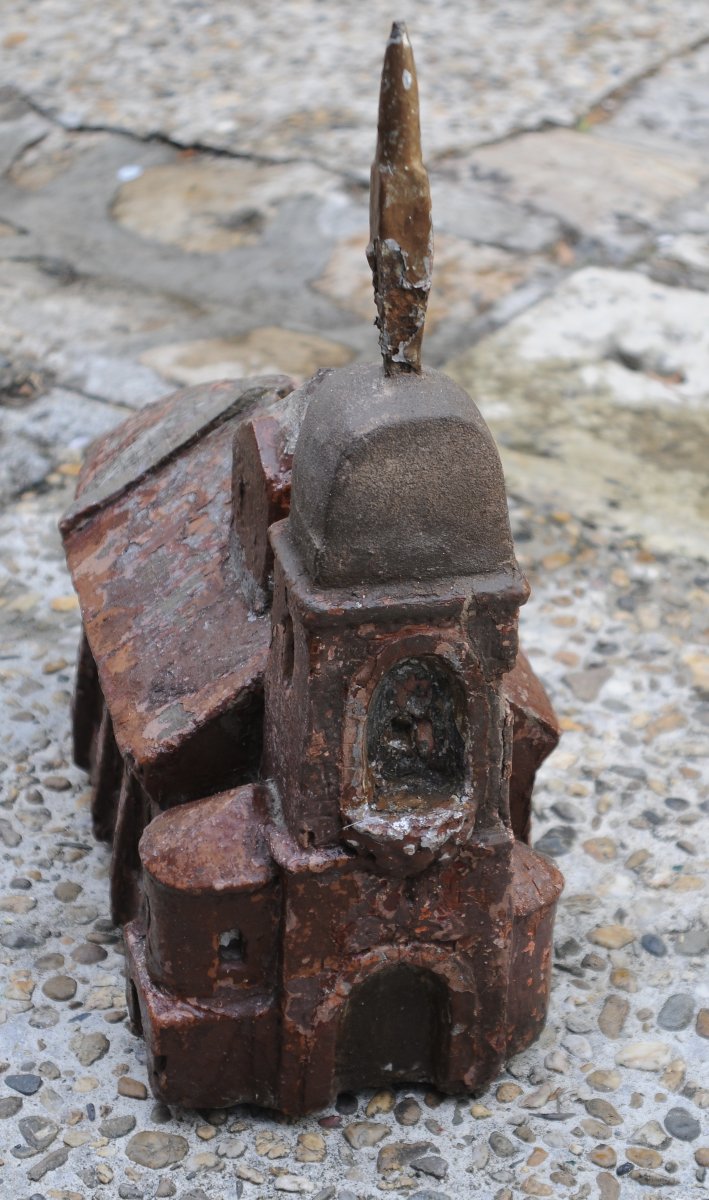
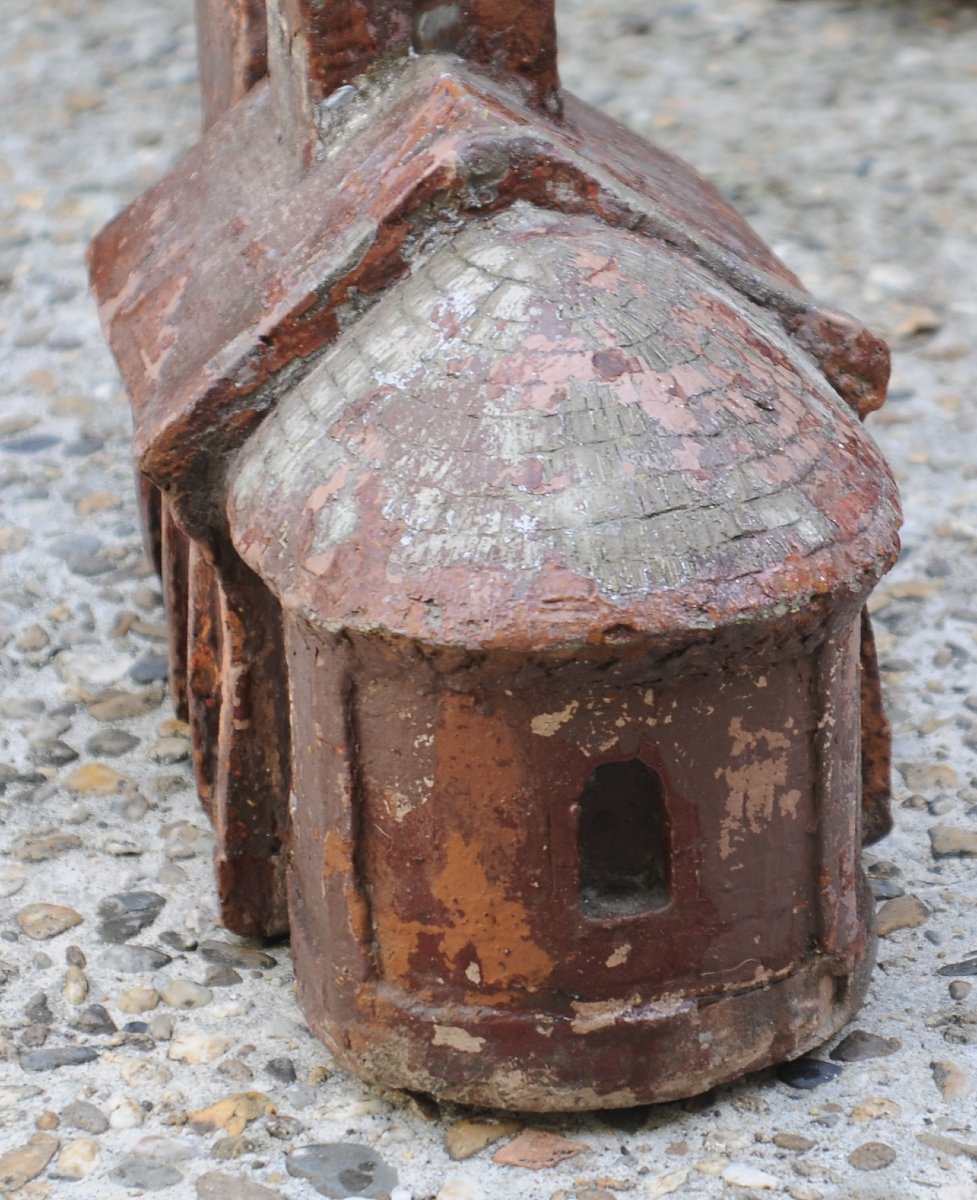
  • Architecture: The structure faithfully follows Romanesque conventions: a single nave punctuated by arched openings (windows), a semicircular apse (the rounded chancel at the rear), and a bell tower on the façade topped by a dome.
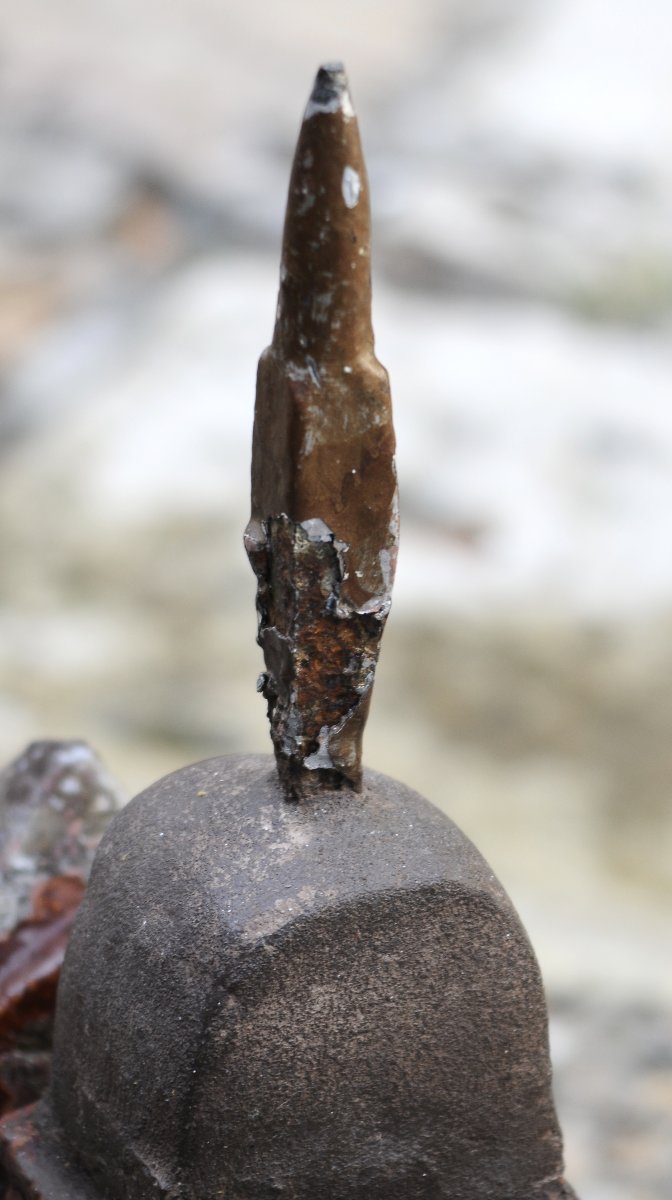
  • The blunted iron rod: This metal reinforcement embedded in the structure (often called a pin or dowel) was originally used to secure the bell tower cross or a weathercock, both of which are now missing.
  • An axis for a rotating element (weather vane): The bell towers of Romanesque or Gothic churches are traditionally topped by a weather vane rooster or a spire. Here, the tapered and rounded section of the iron tip served as a rotation axis. A small figure made of wrought iron or cut zinc (often a rooster or a banner) would be fitted onto it from above to rotate freely with the wind
  • Or it is an ornamental ridge finial: If the element was not designed to rotate, this rod was used to support and secure a miniature ridge finial made of terracotta, lead, or wrought iron, cushioning the top of the dome while providing a decorative finish
  • Finish: The stone was originally painted in a polychromatic scheme (brick-red paint to simulate walls or plaster, gilding, or gray for the shingle/slate roof) that has flaked off over time, giving it an “original” patina.
  • The red polychrome visible throughout the structure is a characteristic element of folk art and ancient religious statuary. On this stone model, this brick-red or “ochre red” color serves several historical and aesthetic functions:
    • Imitation of materials: This red was frequently used to imitate brick, red sandstone (very common in religious architecture in certain regions such as Alsace or Limousin), or to simulate a protective plaster coating that once covered many medieval churches.
    • Preparation technique (the base coat): In fine statuary, a layer of red paint (often Armenian bol) served as a base (“assiette”) before the application of gold leaf. Here, the residual traces of gold or yellow over the red suggest that certain parts of the church (such as the roofs or cornices) were originally accented with gilding to catch the light.
  • 650 €

    Period: 19th century

    Style: Renaissance, Louis 13th

    Condition: En l'etat

    Material: Stone

    Reference (ID): 1829864

    Availability: In stock

    Print

    7 rue Théophile Serviere, Bazas 33430
    Bazas 33430, France

    06 07 34 10 82

    Follow the dealer

    CONTACT

    SIGN UP TO OUR NEWSLETTER

    facebook
    instagram

    Fourrel de Frettes
    Romanesque Chapel Carved From Stone, Weather Vane Or Ridge Finial, 19th Century, Folk Art
    1829864-main-6abcbc51df97e.jpg

    06 07 34 10 82


    *We will send you a confirmation email from info@proantic.com .
    Please check your messages, including the spam folder.