

Marcion - "return From Egypt" Chest Of Drawers From The Empire Period, Made Of Mahogany And Gilded Bronze, Circa 1808
Artist: Pierre-benoit Marcion
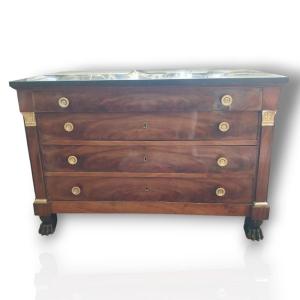
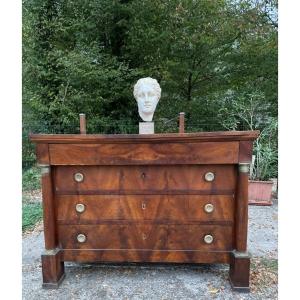
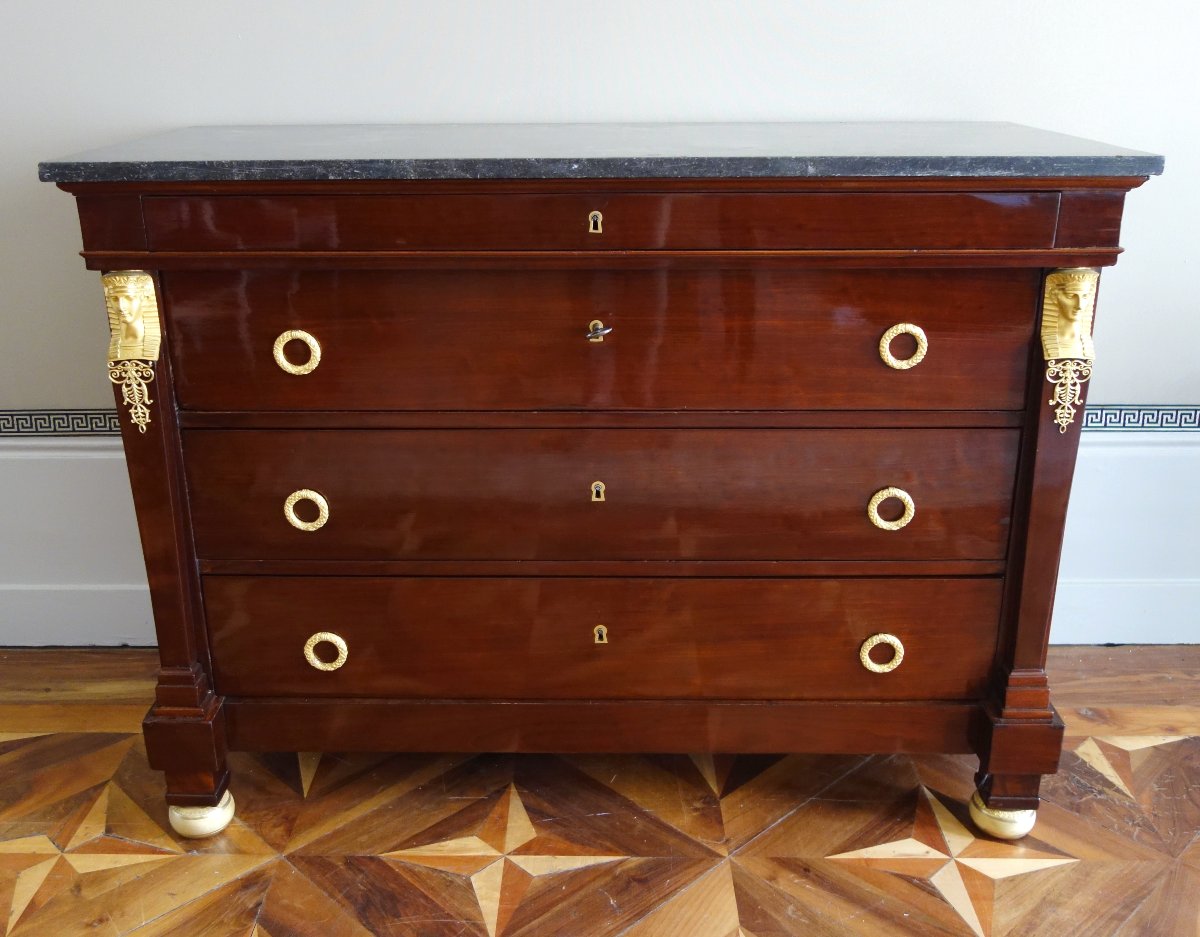
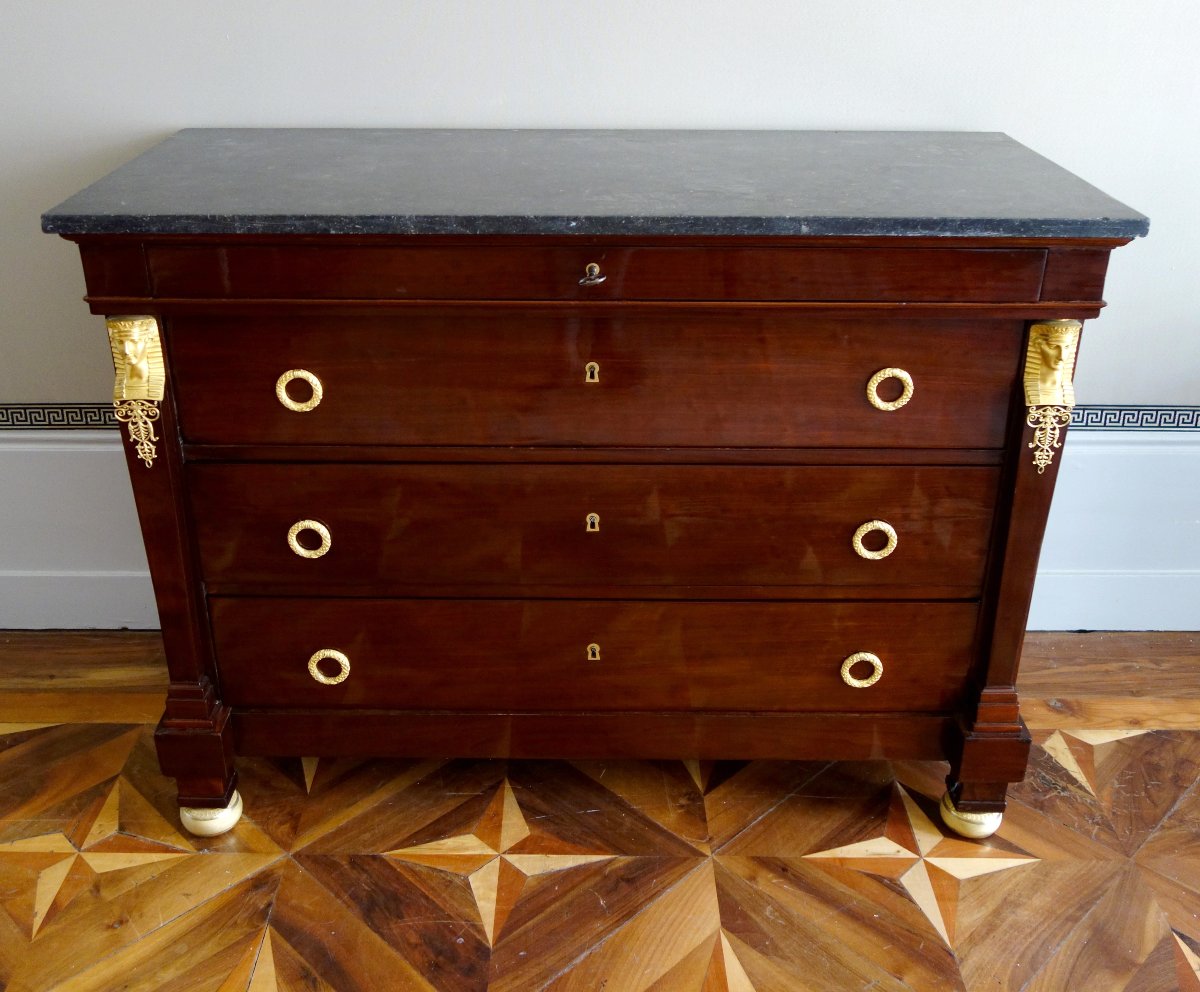
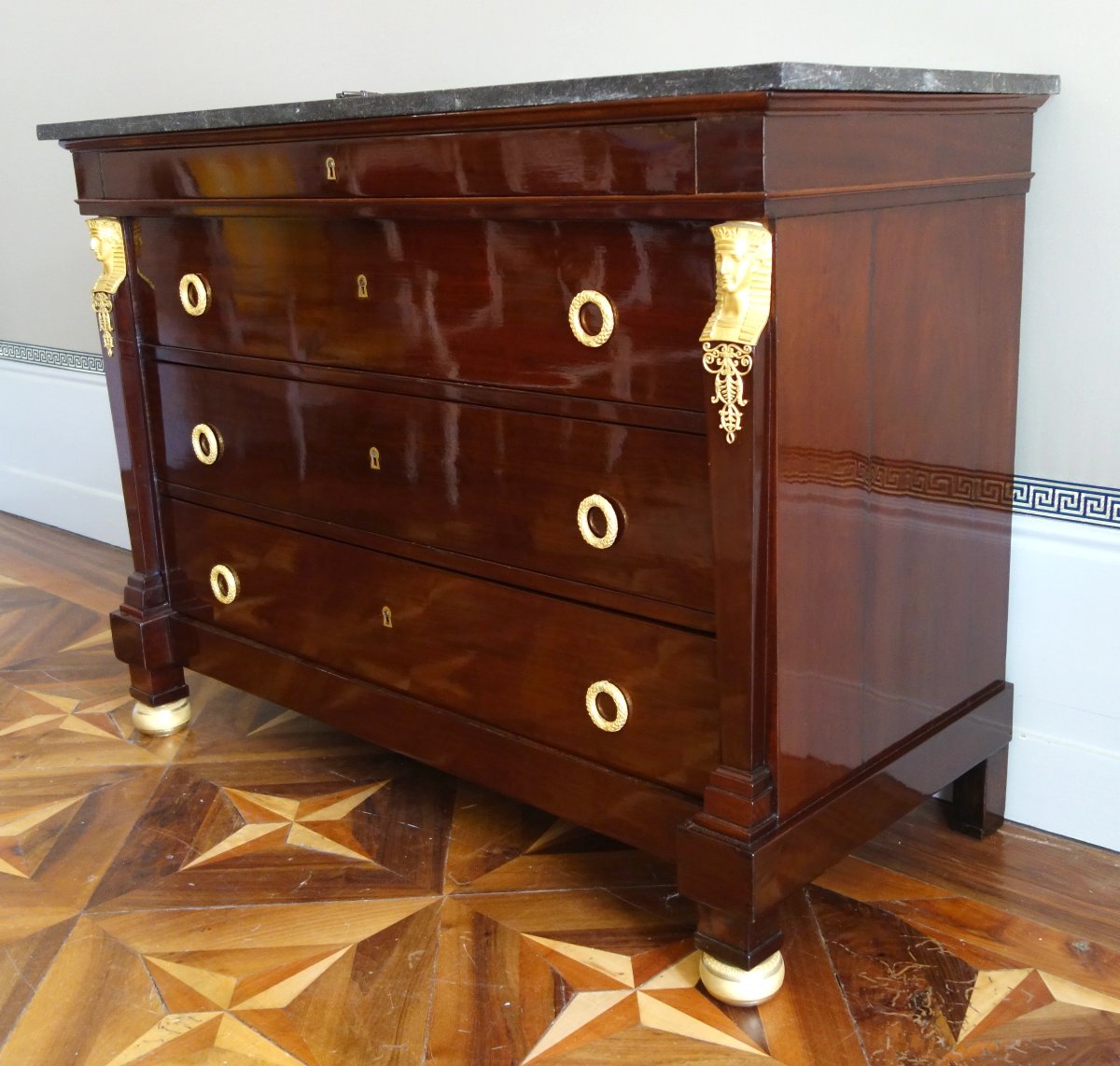
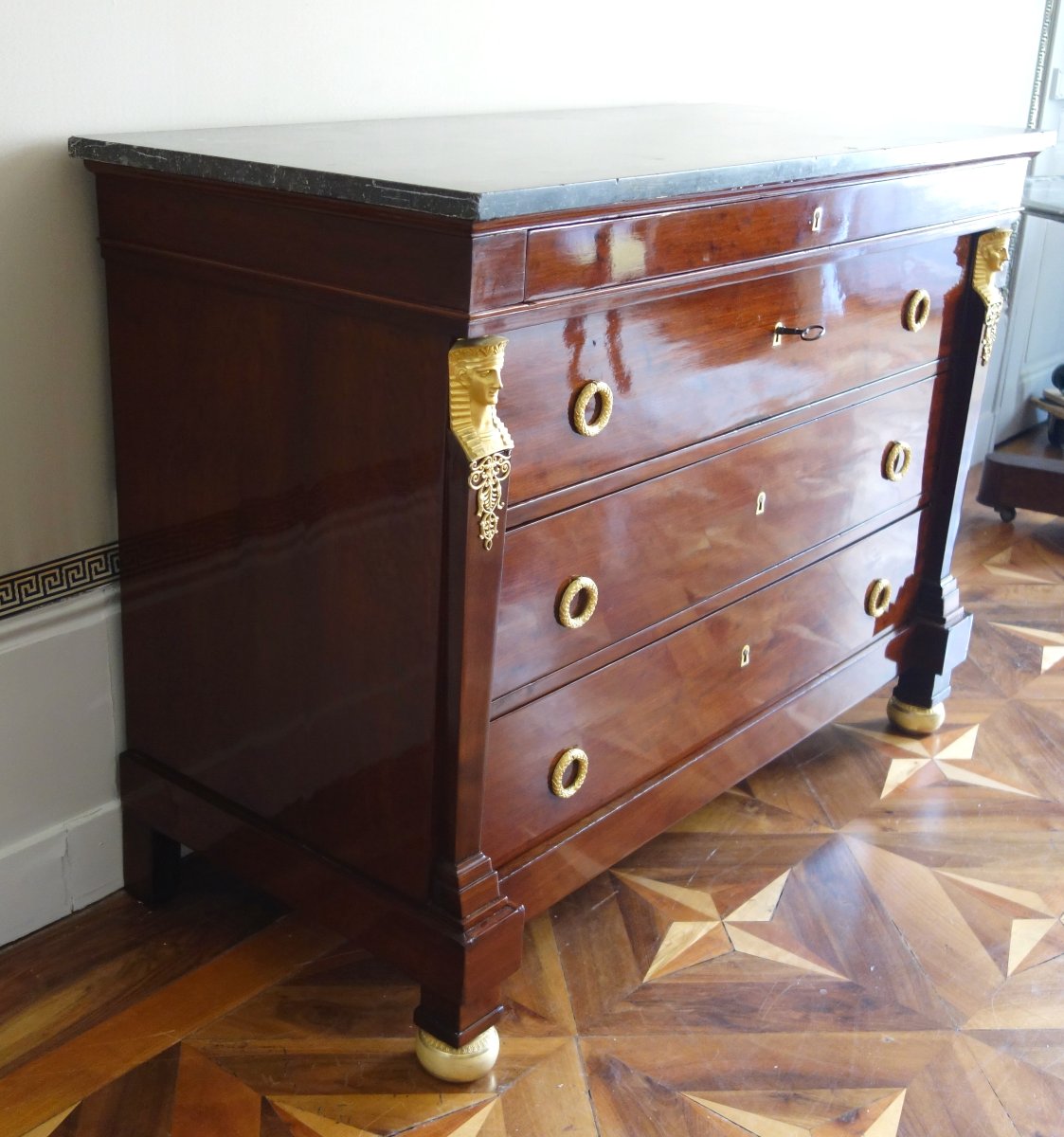
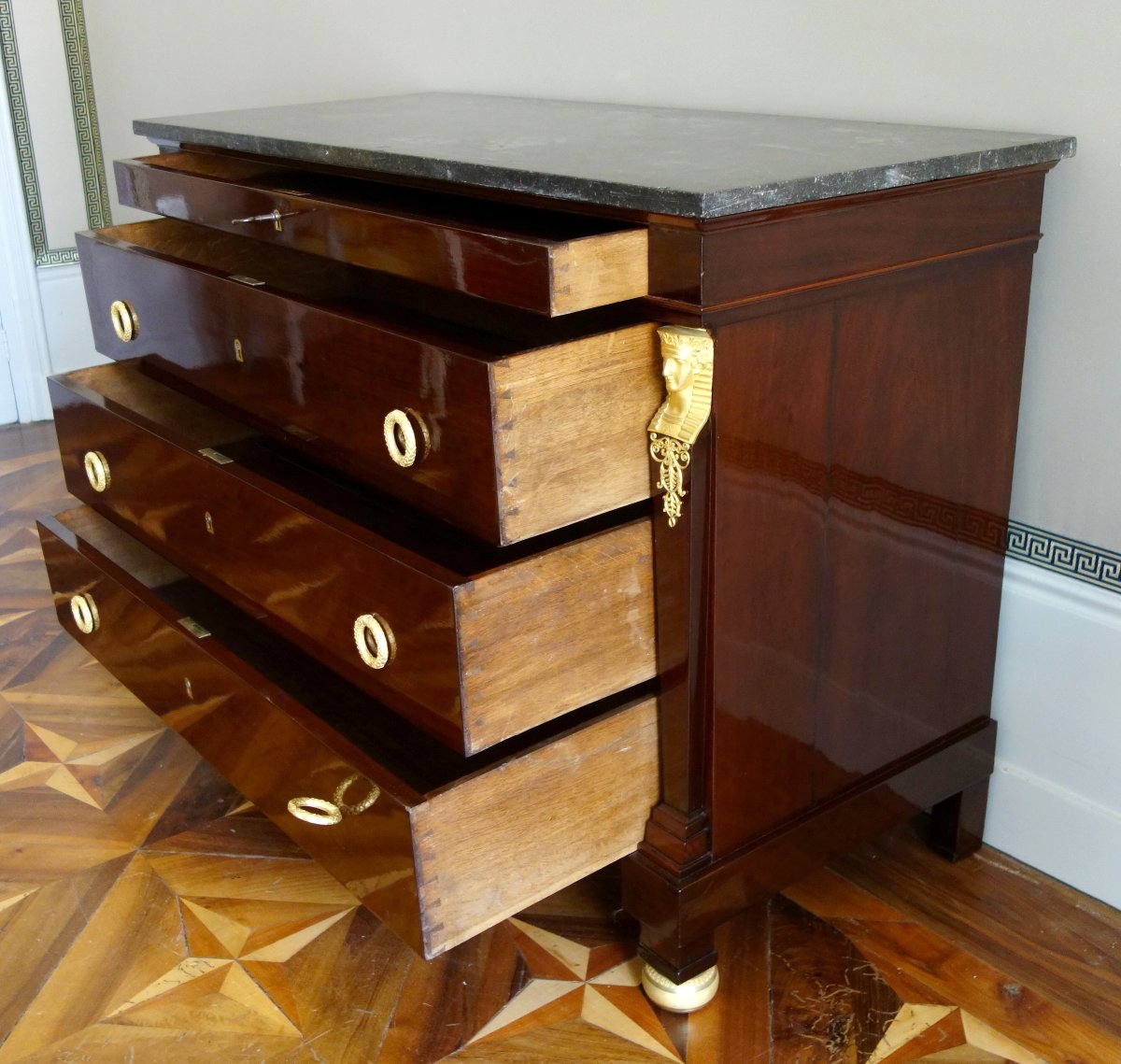
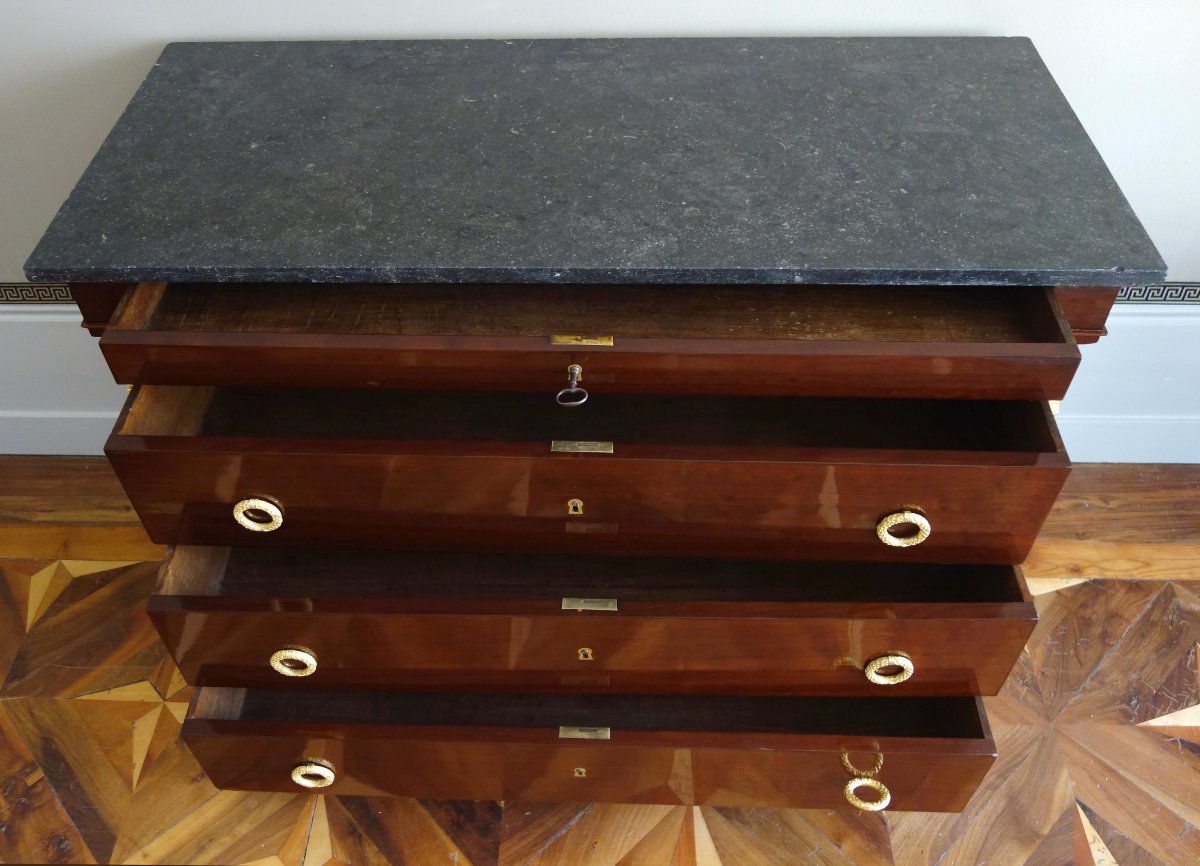
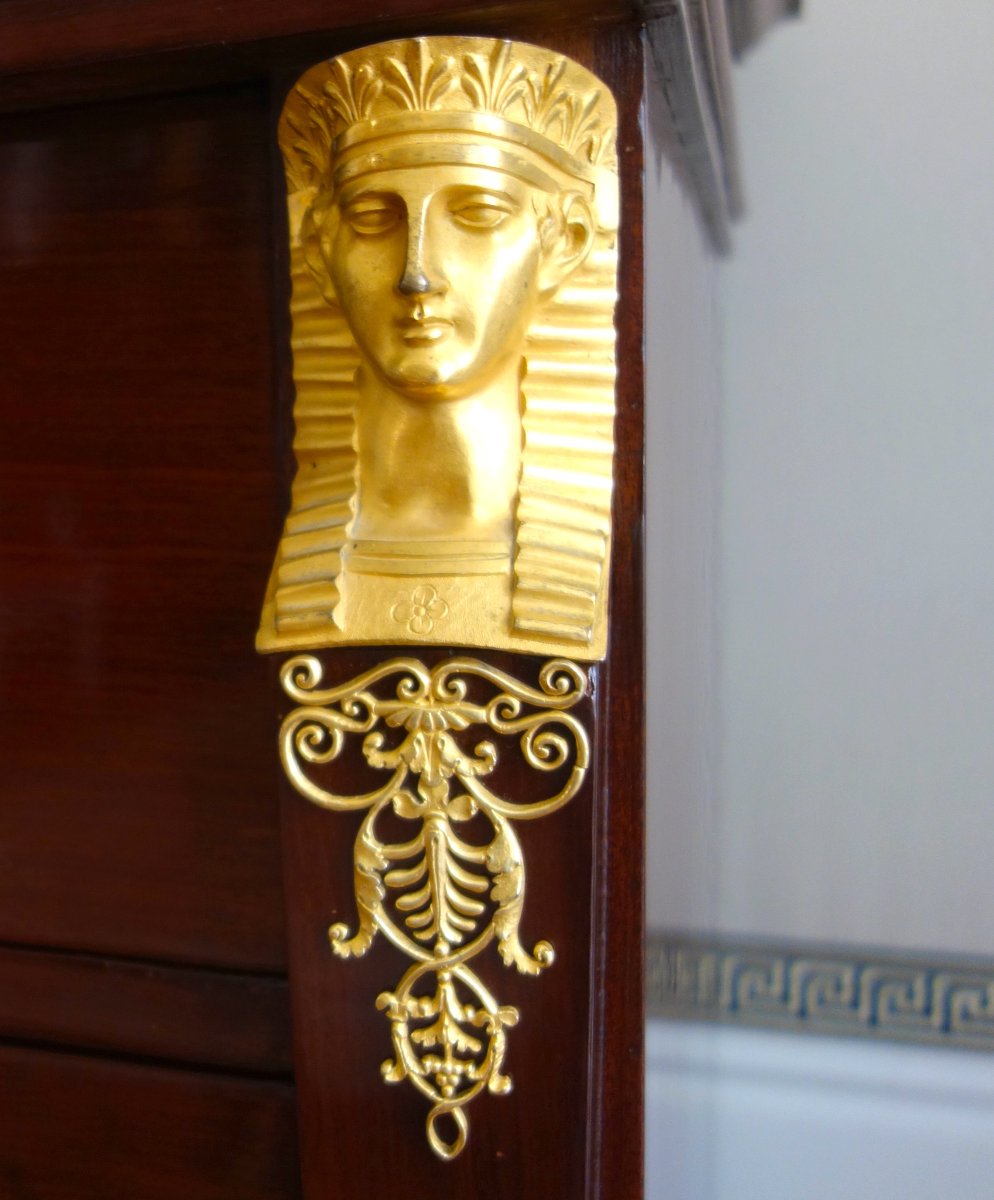
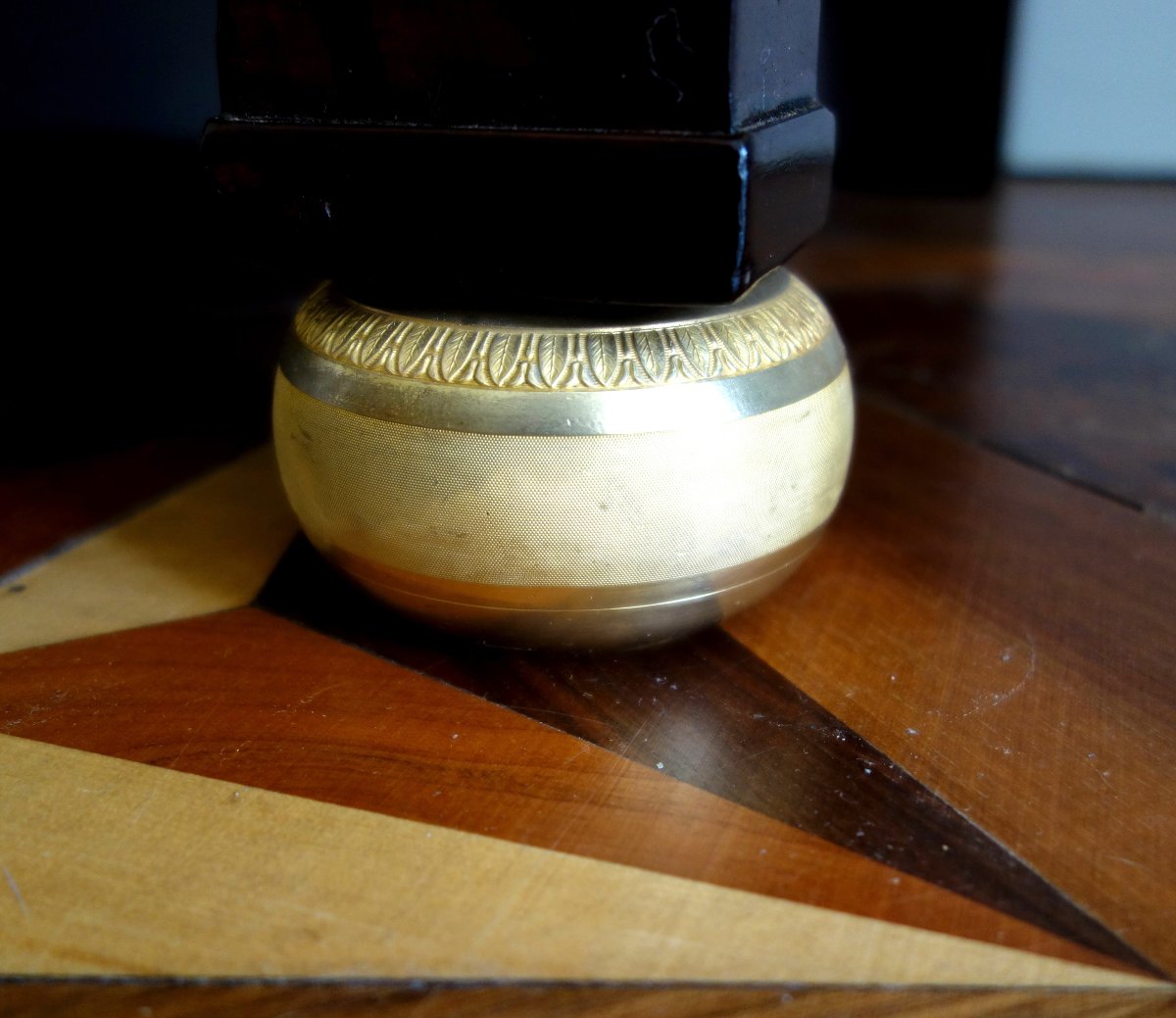
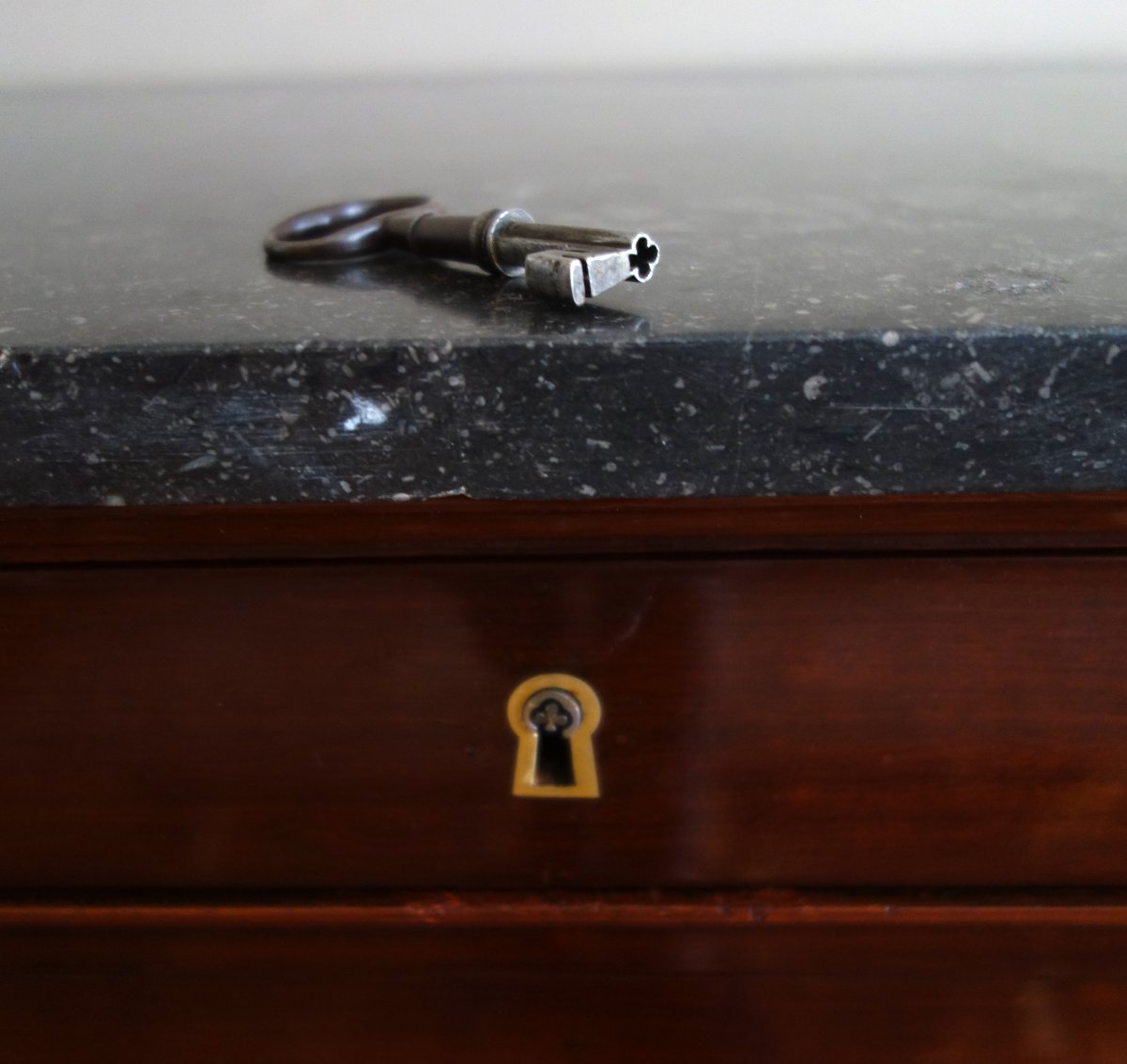
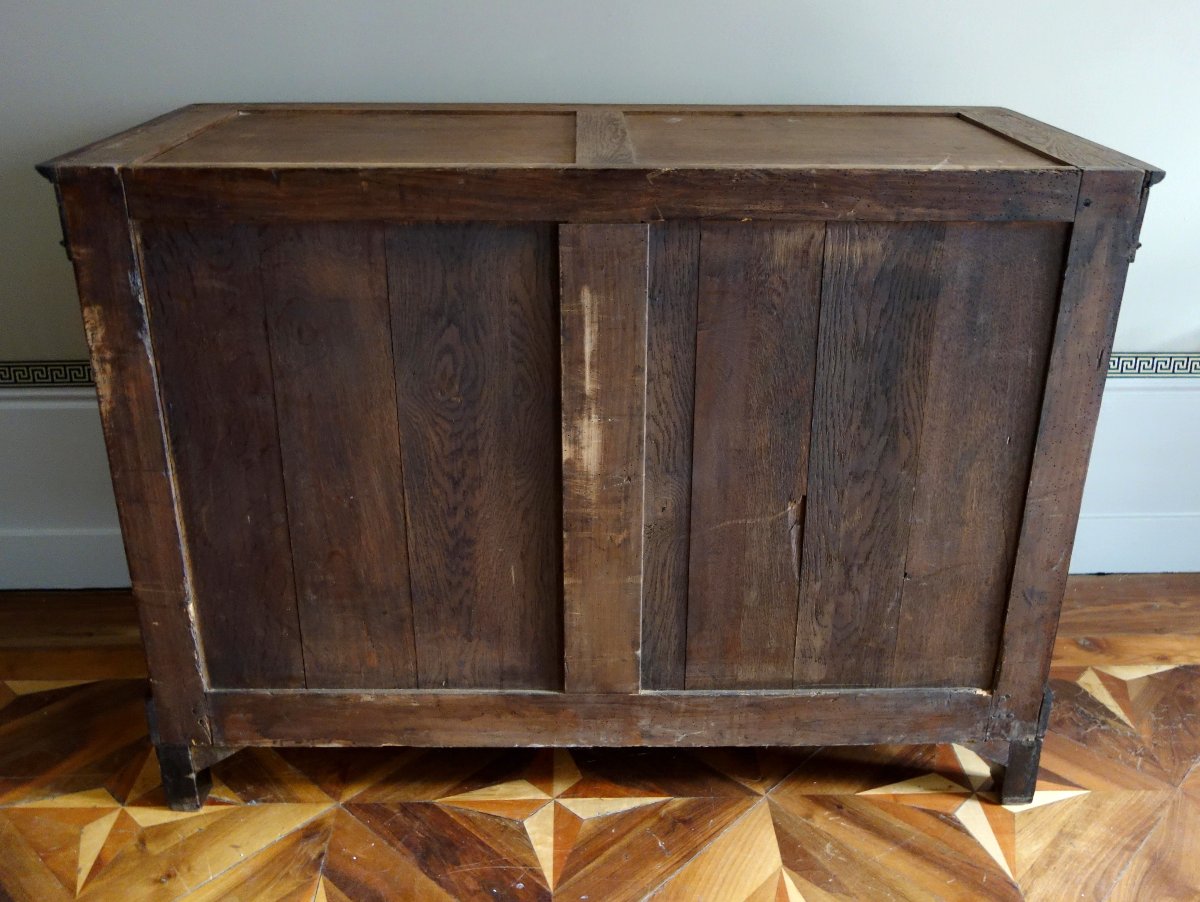
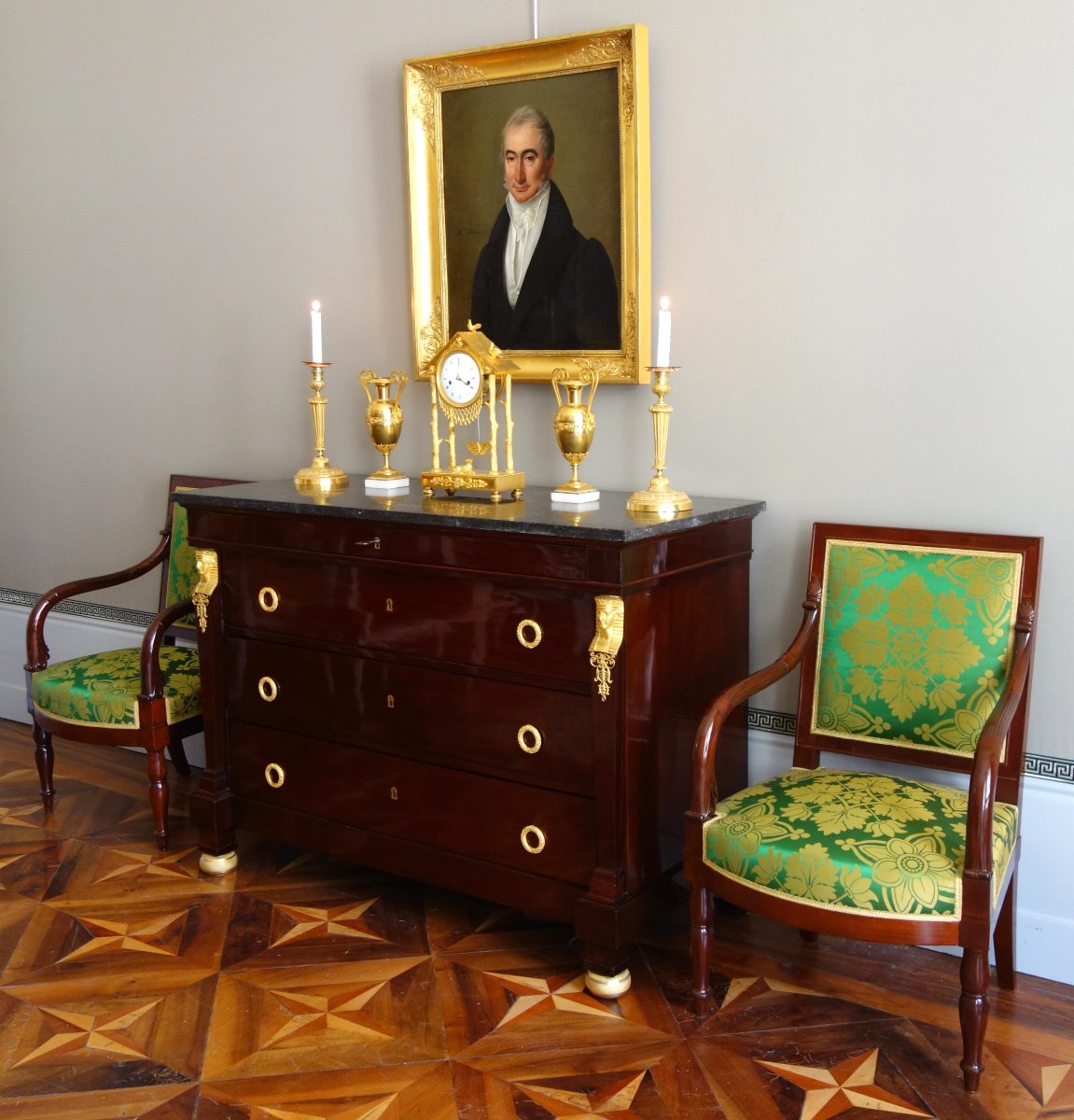
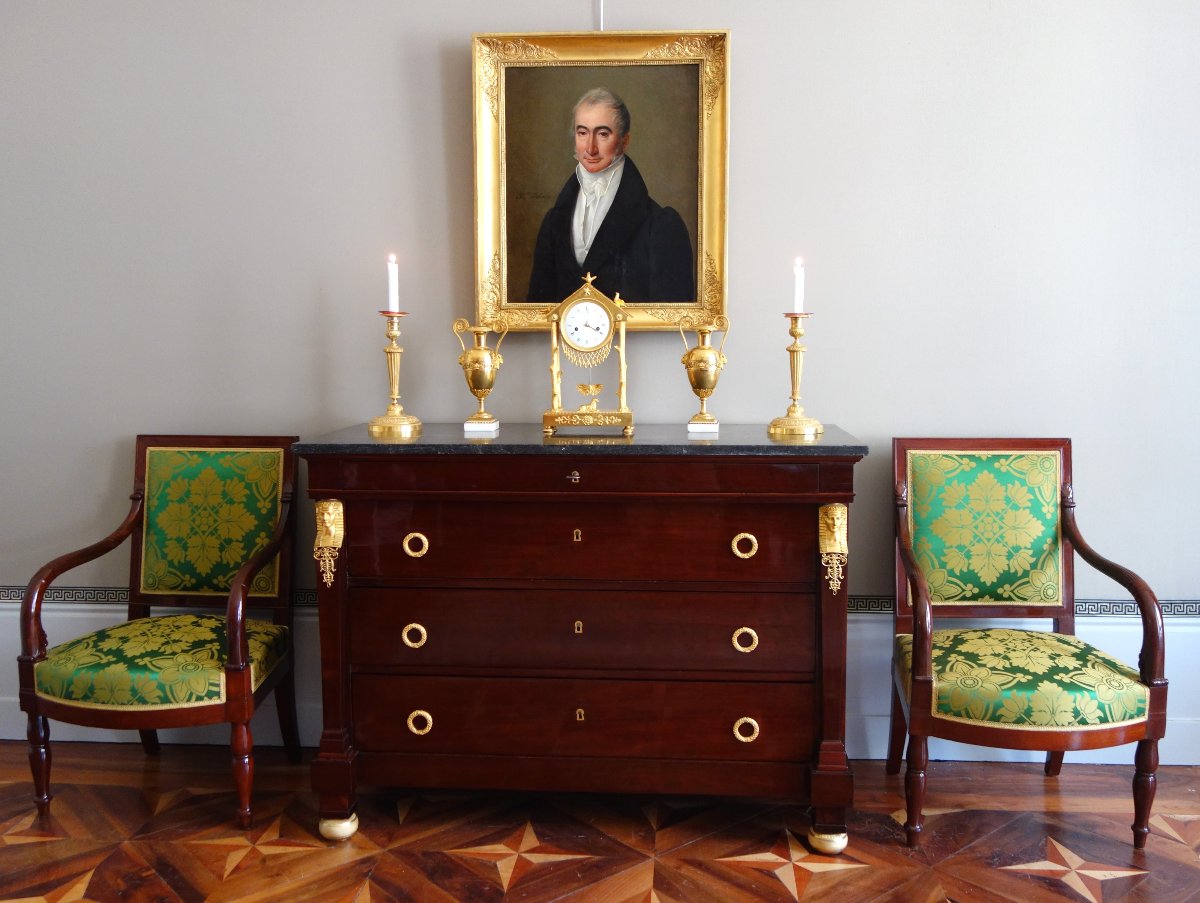
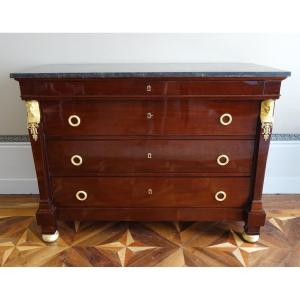
A beautiful chest of drawers made of mahogany veneer on an oak frame, with legs featuring chiseled bronze Egyptian heads gilded with mercury. The bronze trim is complemented by two palmette motifs in cut copper and pull rings shaped like laurel wreaths. The front legs are adorned with a flattened ball in chiseled and gilded bronze, while the rear legs are made of mahogany. It features four drawers with clover-shaped locks, including a smaller one at waist level. Black “petit granit” marble. By Pierre-Benoit Marcion, Empire-period work circa 1808, unmarked.
A chest of drawers with the same structure, the same bronze fittings, and variations on the other bronze elements—stamped by Marcion—was located in the bedroom of the Petit Trianon in 1810, and later became part of the collections at the Palace of Compiègne.
The heads are adorned with a very complete nemes that extends down to the front. It is held in place on the forehead by a sort of diadem decorated with palmettes, and a series of small curls spill out from beneath it. The oval face is of Greco-Roman inspiration; the nose is straight, the lips are full and well-defined, and the eyes are large. In contrast, the ears are set wide apart. This head design is similar to those found on other chests of drawers or consoles produced by Marcion. The carving is original (to Marcion) and is not found in the work of other cabinetmakers or bronze casters. (Bibliography: *Marcion, Napoleon’s Cabinetmaker* by Jean-Pierre Planchon)
Thus, although it is not stamped, there is no doubt that our chest of drawers is the work of Marcion.
Pierre-Benoit Marcion (1769–1840) was, along with Jacob, the principal supplier to the Imperial Palaces and the dignitaries of the Empire.
Our chest of drawers is a beautiful collector’s piece, a rare example that can be unequivocally dated to the Empire period. The Empire style is generally understood to span from the Consulate period (when furniture still had a structure and finishes influenced by the 18th century) to the beginning of the Restoration (Empire furniture, but with bronzes that adopt a less martial, more “graceful and ornate” stylistic repertoire). Our chest of drawers, however, undoubtedly belongs to the period between these two styles: the pure Empire style. Its straight, martial forms are inspired by antiquity but with a focus on detail that borders on the archaeological.
It is an interesting and uncommon model in terms of its attention to detail and finish. The presence of bronze feet on the front is original and rare.
Length: 131.5 cm
Height: 96 cm
Depth: 57.5 cm
A chest of drawers with the same structure, the same bronze fittings, and variations on the other bronze elements—stamped by Marcion—was located in the bedroom of the Petit Trianon in 1810, and later became part of the collections at the Palace of Compiègne.
The heads are adorned with a very complete nemes that extends down to the front. It is held in place on the forehead by a sort of diadem decorated with palmettes, and a series of small curls spill out from beneath it. The oval face is of Greco-Roman inspiration; the nose is straight, the lips are full and well-defined, and the eyes are large. In contrast, the ears are set wide apart. This head design is similar to those found on other chests of drawers or consoles produced by Marcion. The carving is original (to Marcion) and is not found in the work of other cabinetmakers or bronze casters. (Bibliography: *Marcion, Napoleon’s Cabinetmaker* by Jean-Pierre Planchon)
Thus, although it is not stamped, there is no doubt that our chest of drawers is the work of Marcion.
Pierre-Benoit Marcion (1769–1840) was, along with Jacob, the principal supplier to the Imperial Palaces and the dignitaries of the Empire.
Our chest of drawers is a beautiful collector’s piece, a rare example that can be unequivocally dated to the Empire period. The Empire style is generally understood to span from the Consulate period (when furniture still had a structure and finishes influenced by the 18th century) to the beginning of the Restoration (Empire furniture, but with bronzes that adopt a less martial, more “graceful and ornate” stylistic repertoire). Our chest of drawers, however, undoubtedly belongs to the period between these two styles: the pure Empire style. Its straight, martial forms are inspired by antiquity but with a focus on detail that borders on the archaeological.
It is an interesting and uncommon model in terms of its attention to detail and finish. The presence of bronze feet on the front is original and rare.
Length: 131.5 cm
Height: 96 cm
Depth: 57.5 cm
6 100 €
Period: 19th century
Style: Consulat, Empire
Condition: Perfect condition
Material: Mahogany
Length: 131,5cm
Height: 96cm
Depth: 57,5cm
Reference (ID): 1829213
Availability: In stock
Print