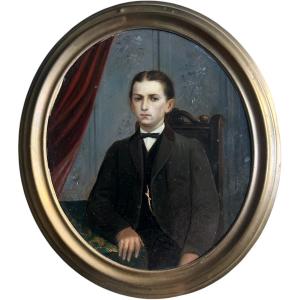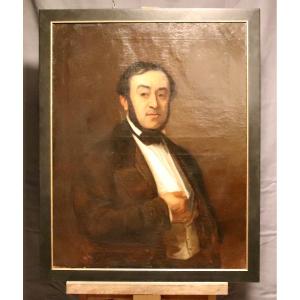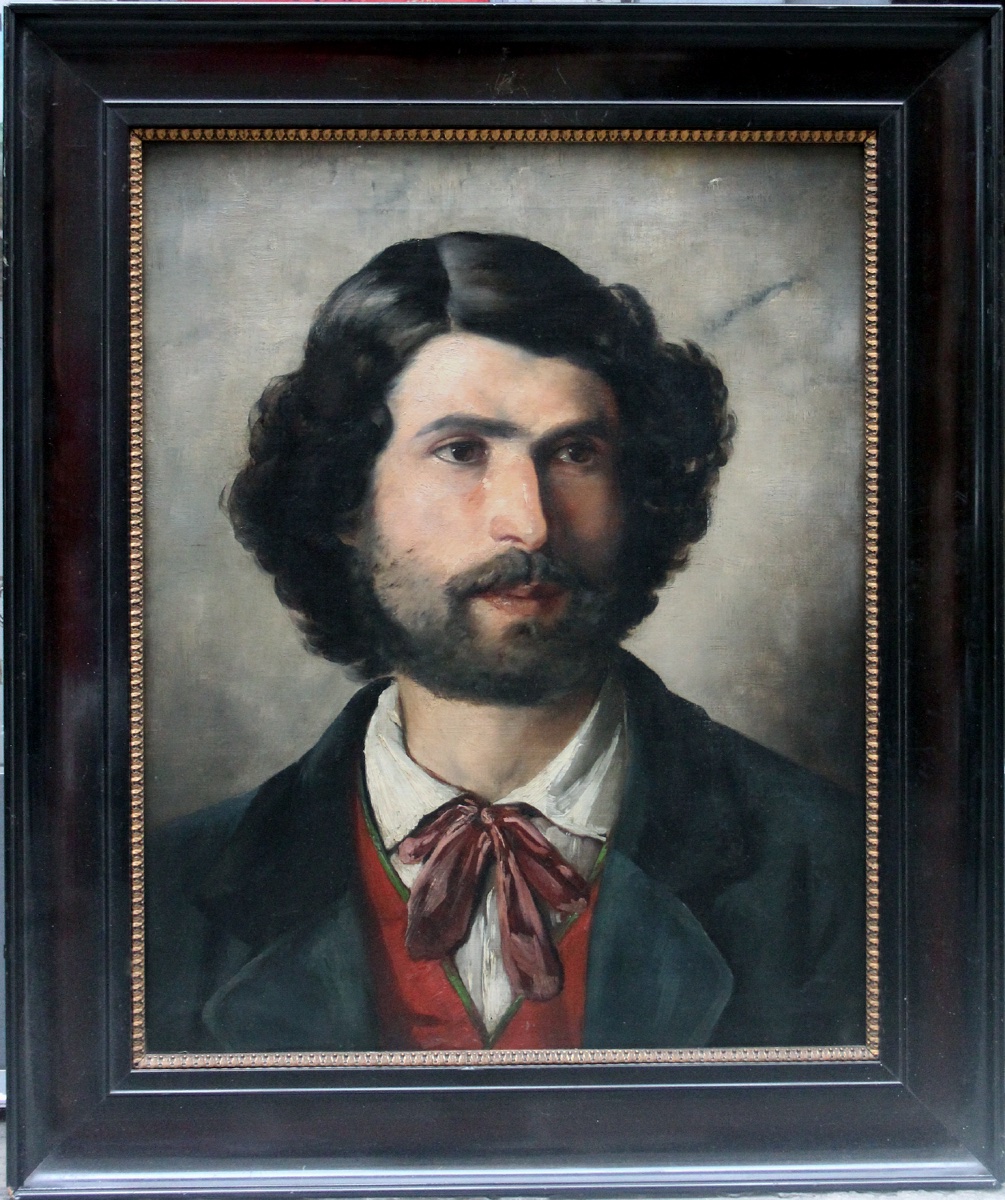
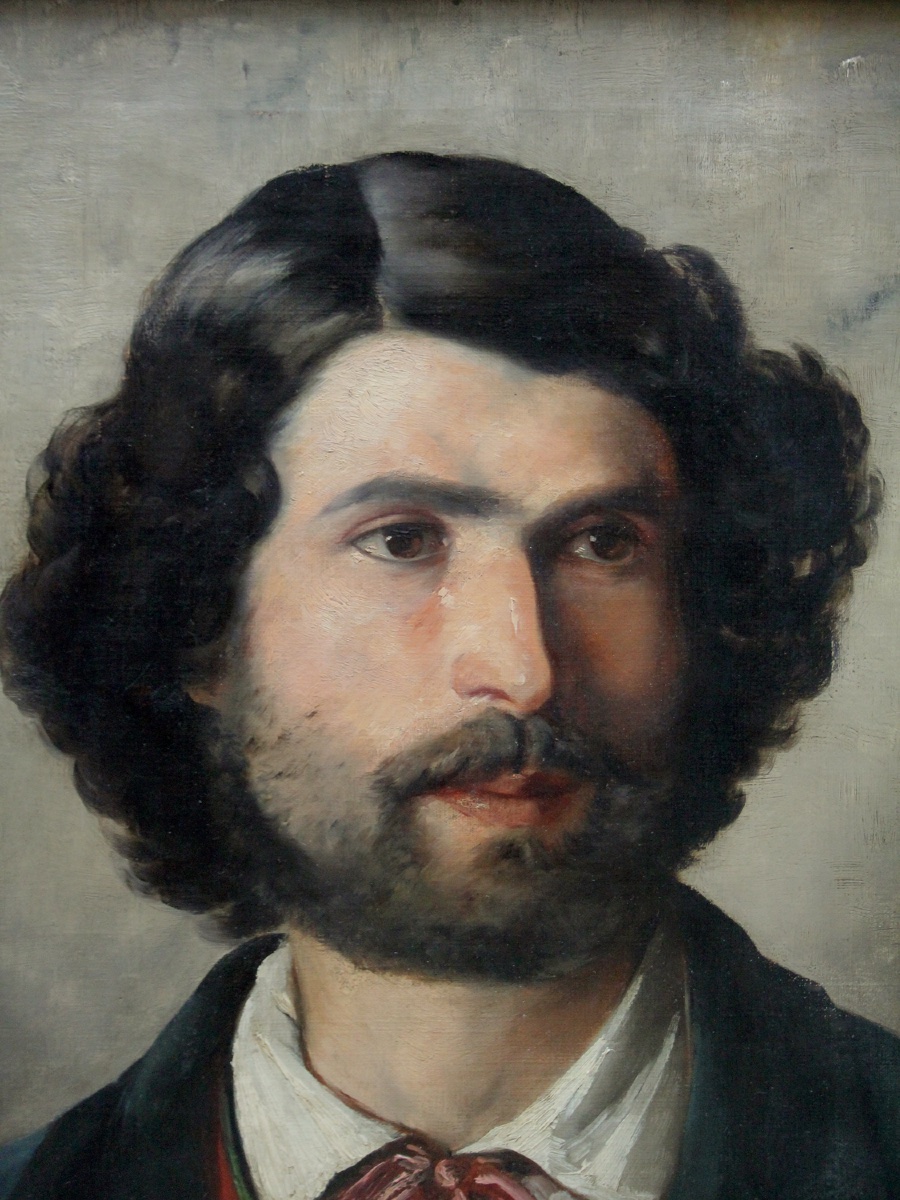
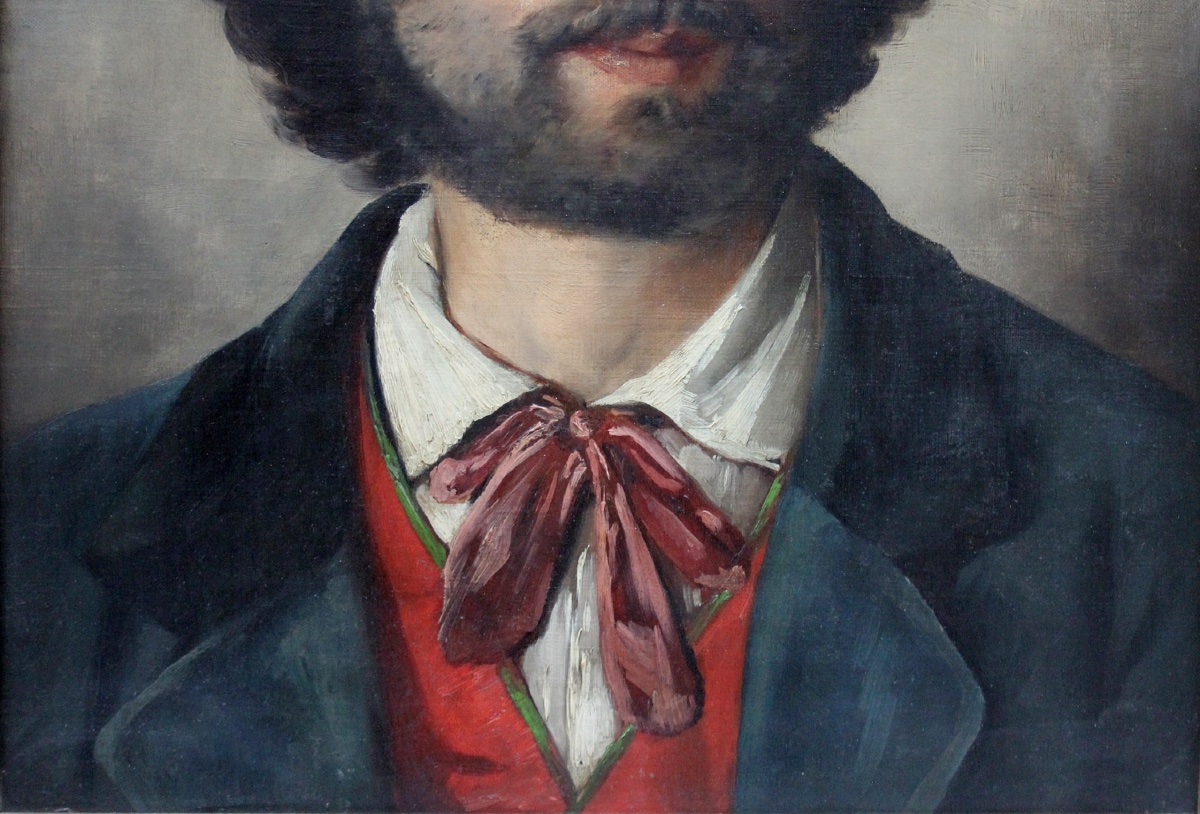
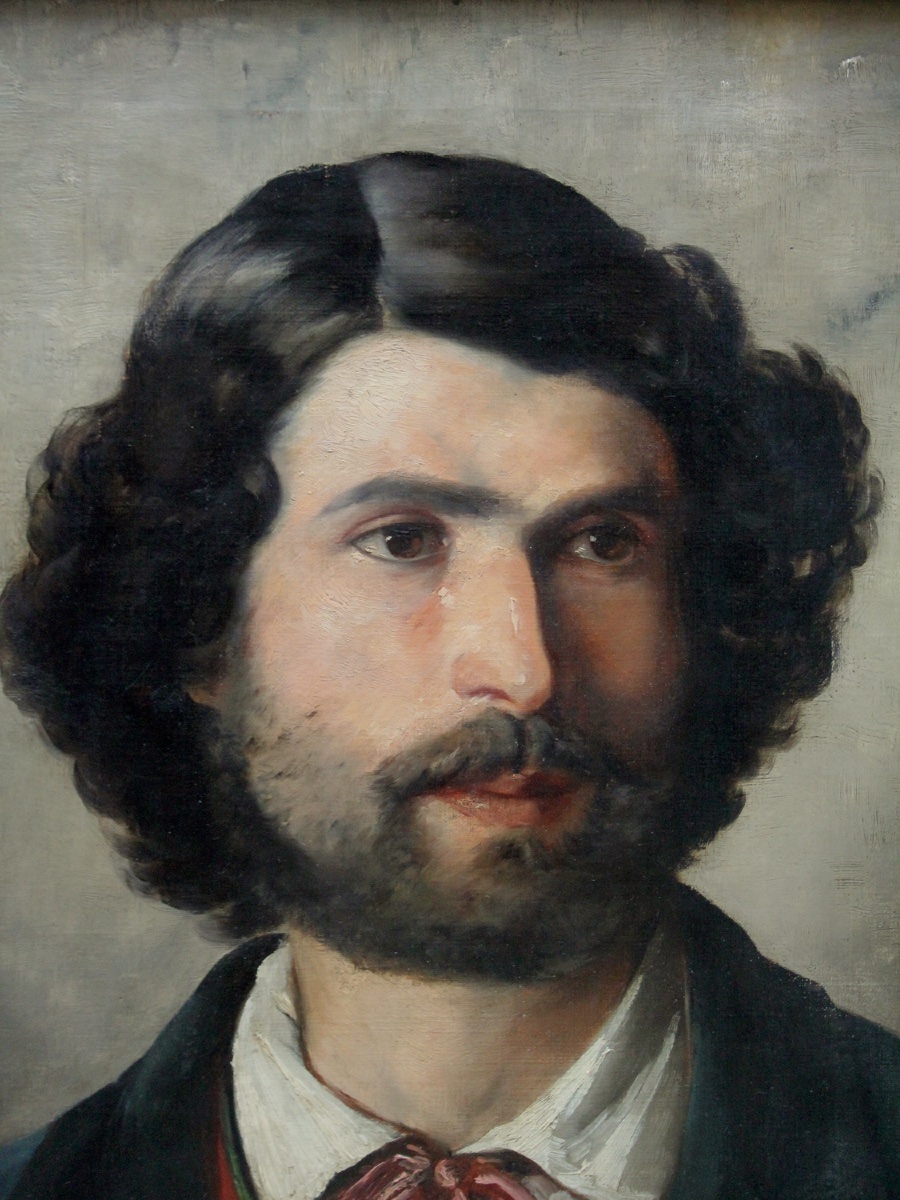
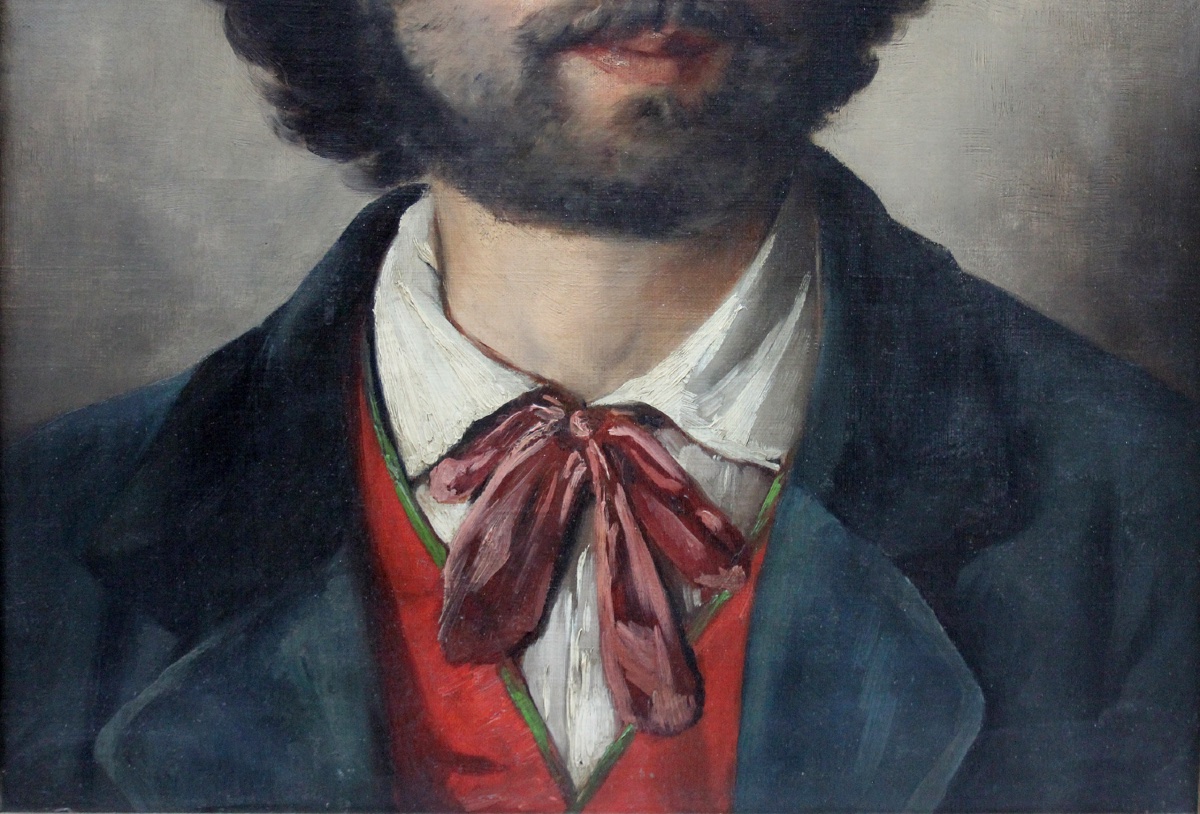
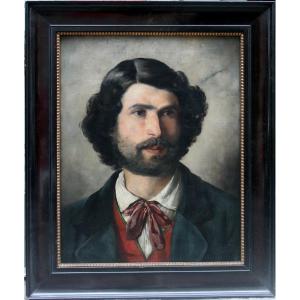


Portrait Of A Young Patriot By Andrea Cefaly (italian, 1827–1907), Attributed To
Artist: Andrea Cefaly (italien, 1827-1907), Attribué à
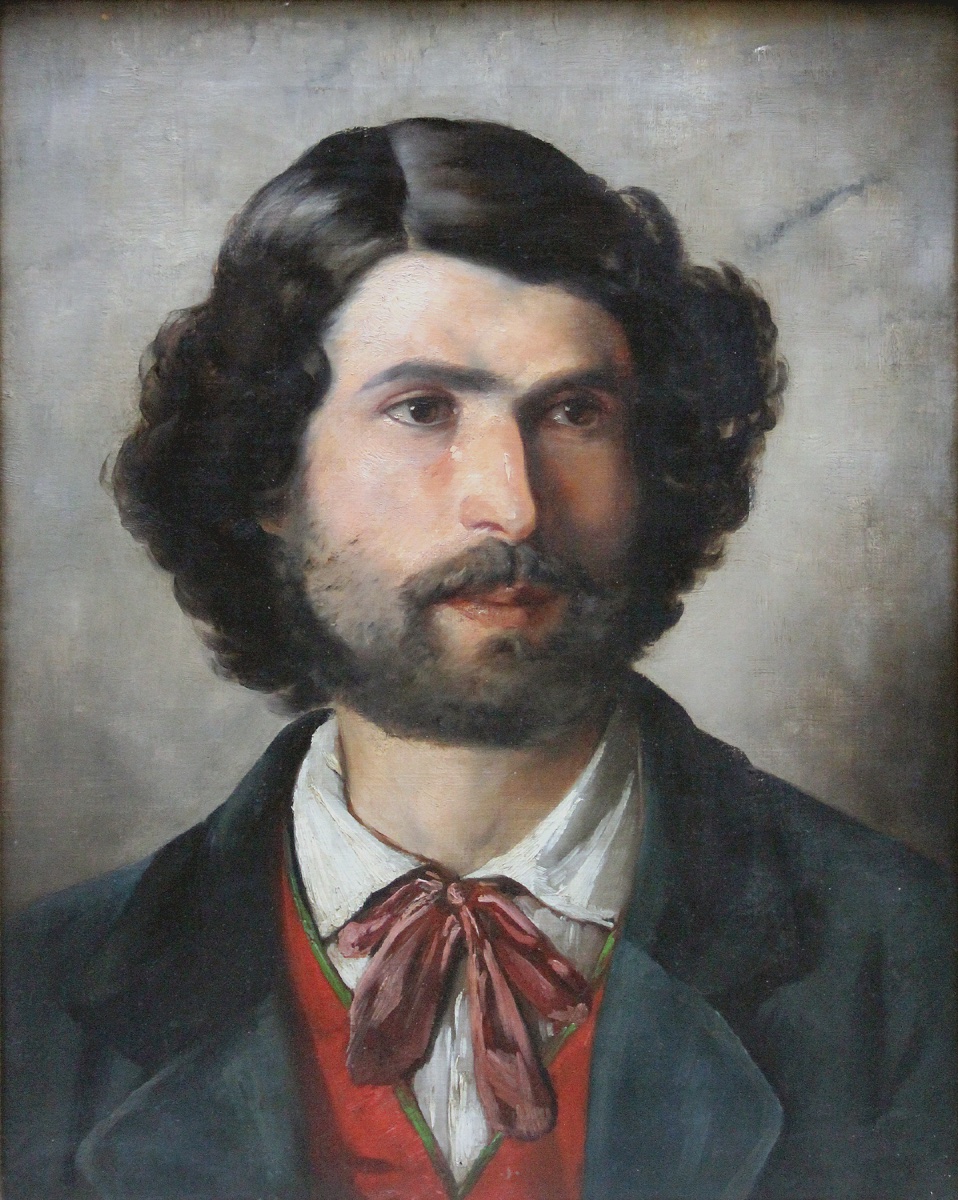
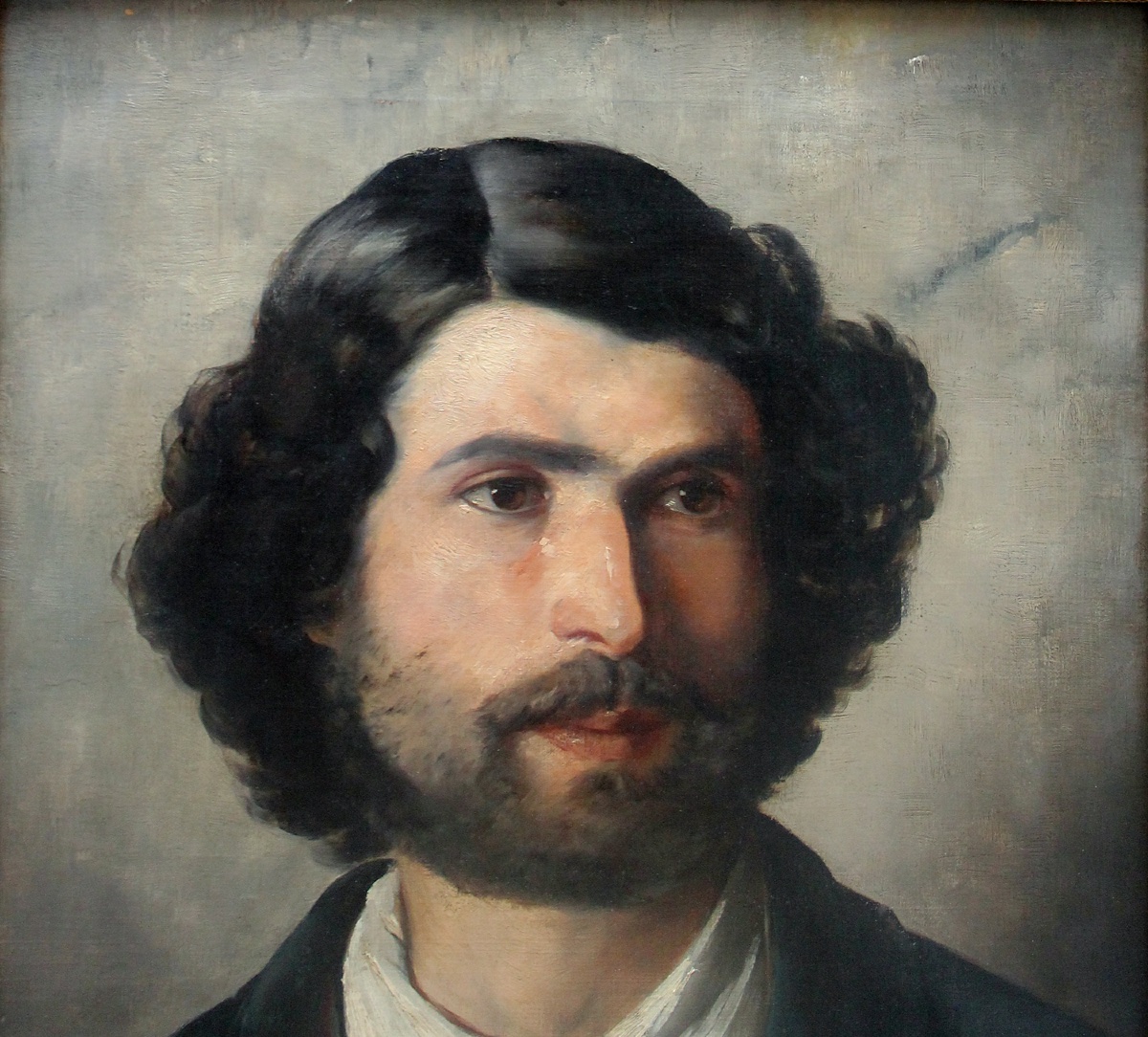
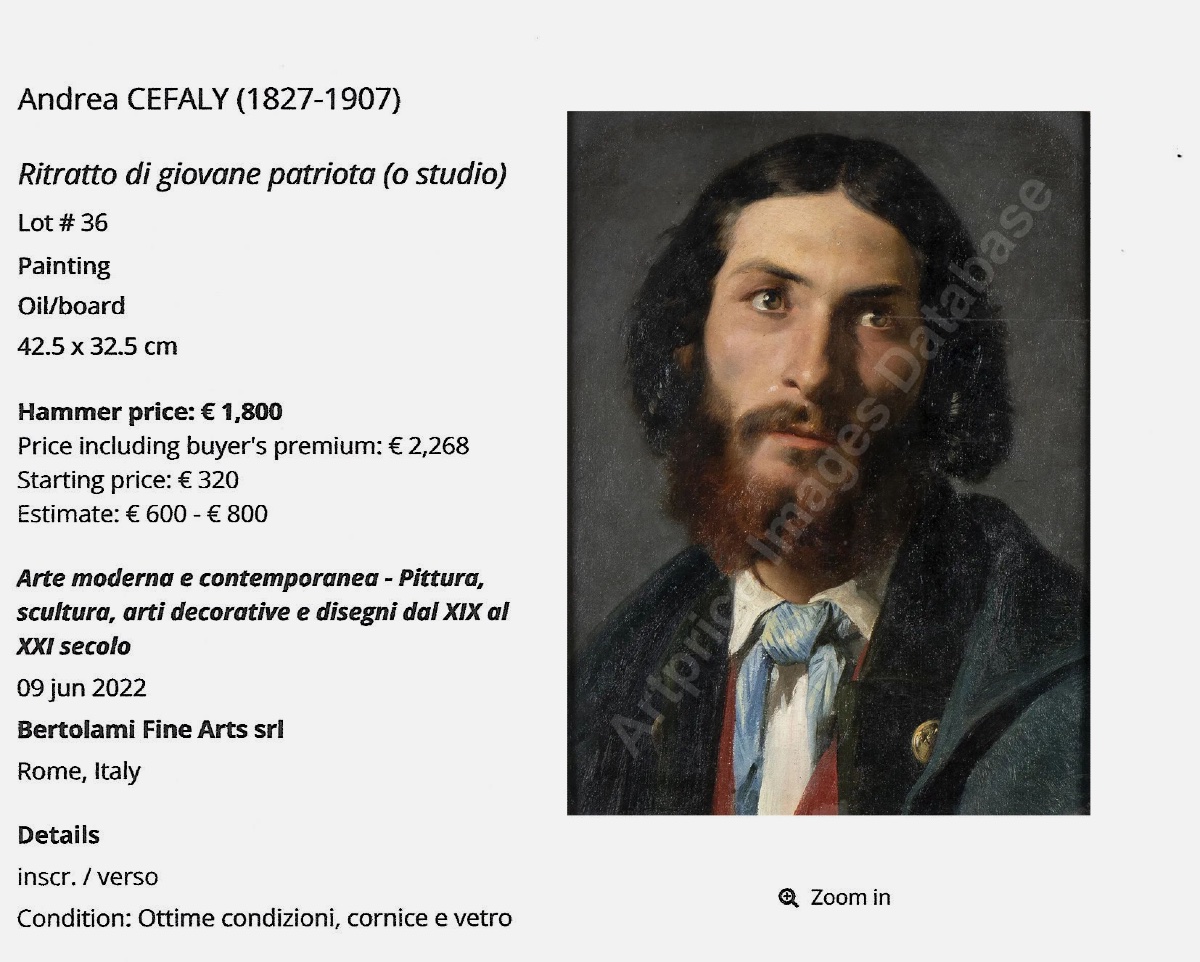
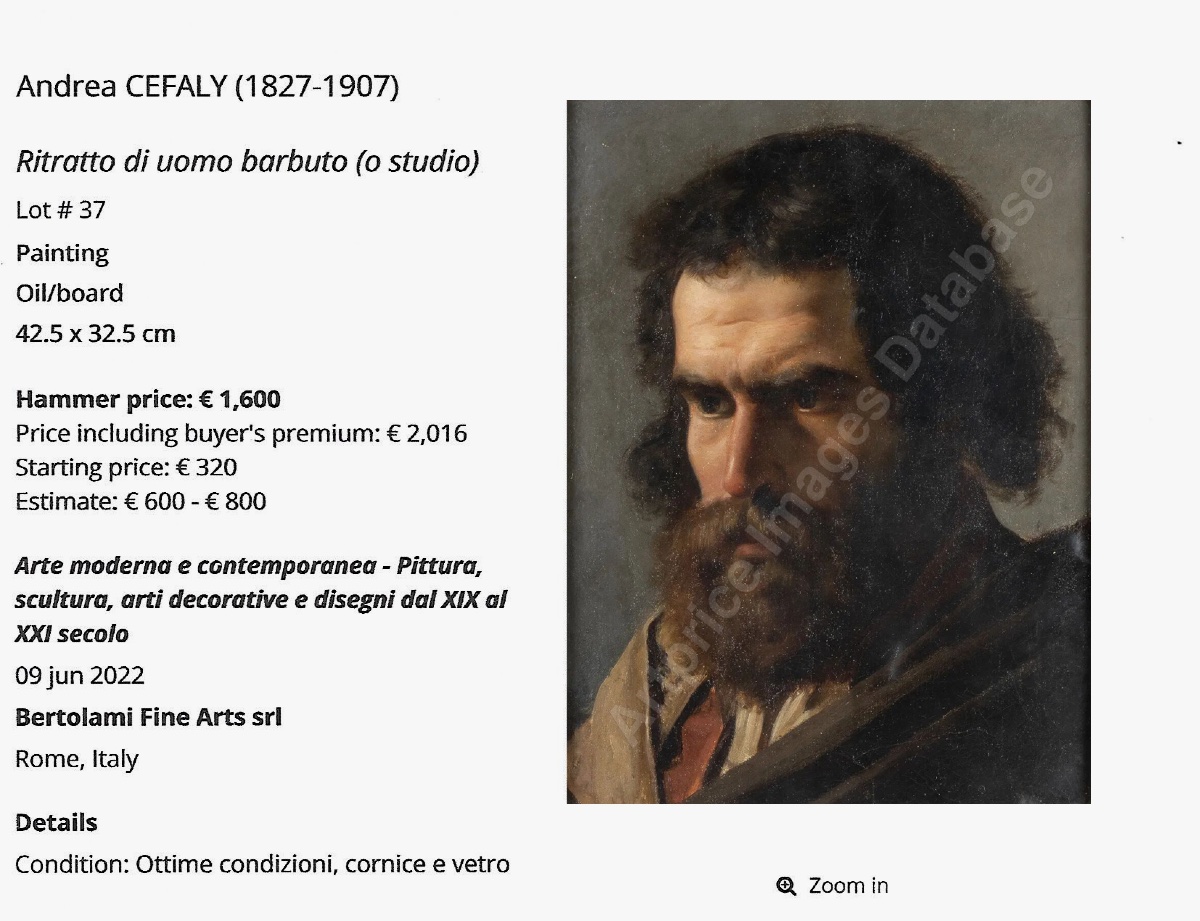
This portrait of a young patriot was painted in the second half of the 19th century and, due to strong stylistic similarities, has been attributed to the Italian painter and politician Andrea Cefaly (1827 – Cortale – 1907). He is sometimes referred to as “the elder” to distinguish him from his nephew, Andrea Cefaly the younger, who was also a painter.
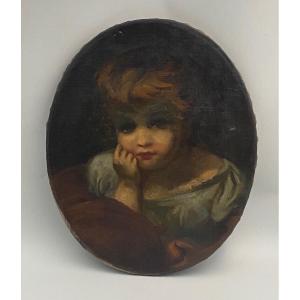
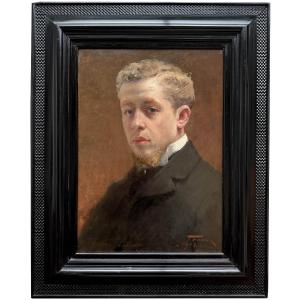
For comparison, see our latest supplementary images.
The artist was born in Cortale, a town in the province of Catanzaro, into an old aristocratic family. After studying at the Scolopi College in Catanzaro, he moved to Naples in 1842 to study law and attended the lectures of the scholars Cesare Malpica and Francesco de Sanctis. Overcoming his father’s opposition, he enrolled at the Academy of Fine Arts, where he studied under Filippo Marsigli, and at Giuseppe Bonolis’s Scuola Libera (Free School). In 1848, he took part in the liberal anti-Bourbon uprisings and fought in the National Guard, where he served as a captain. He also took in the lawyer Carlo Folino, who was being persecuted for his liberal ideas.
In 1855, he returned to Naples at the height of the Verismo art movement. Two years later, he opened a studio in Vicoletto San Mattia, which became a gathering place and forum for painters and writers.
In 1860, he worked with Giuseppe Garibaldi, whom he followed all the way to the Battle of the Volturno, an experience he immortalized in several paintings. Upon his return to Cortale in 1862, he founded a school of painting, with Garibaldi serving as its honorary president. The school welcomed many artists from the city, such as Raffaele Foderaro and Michele Mangani, as well as artists from the surrounding area: Guglielmo Tomaini from San Pietro Apostolo, Antonio Palmieri and Guglielmo De Martino from Lamezia Terme, Carmelo Davoli from Filadelfia, Antonio Migliaccio from Girifalco, and Gregorio and Raffaele Cordaro from Borgia. It closed its doors in 1875.
Complete biography of the artist (in Italian):
https://it.wikipedia.org/wiki/Andrea_Cefaly
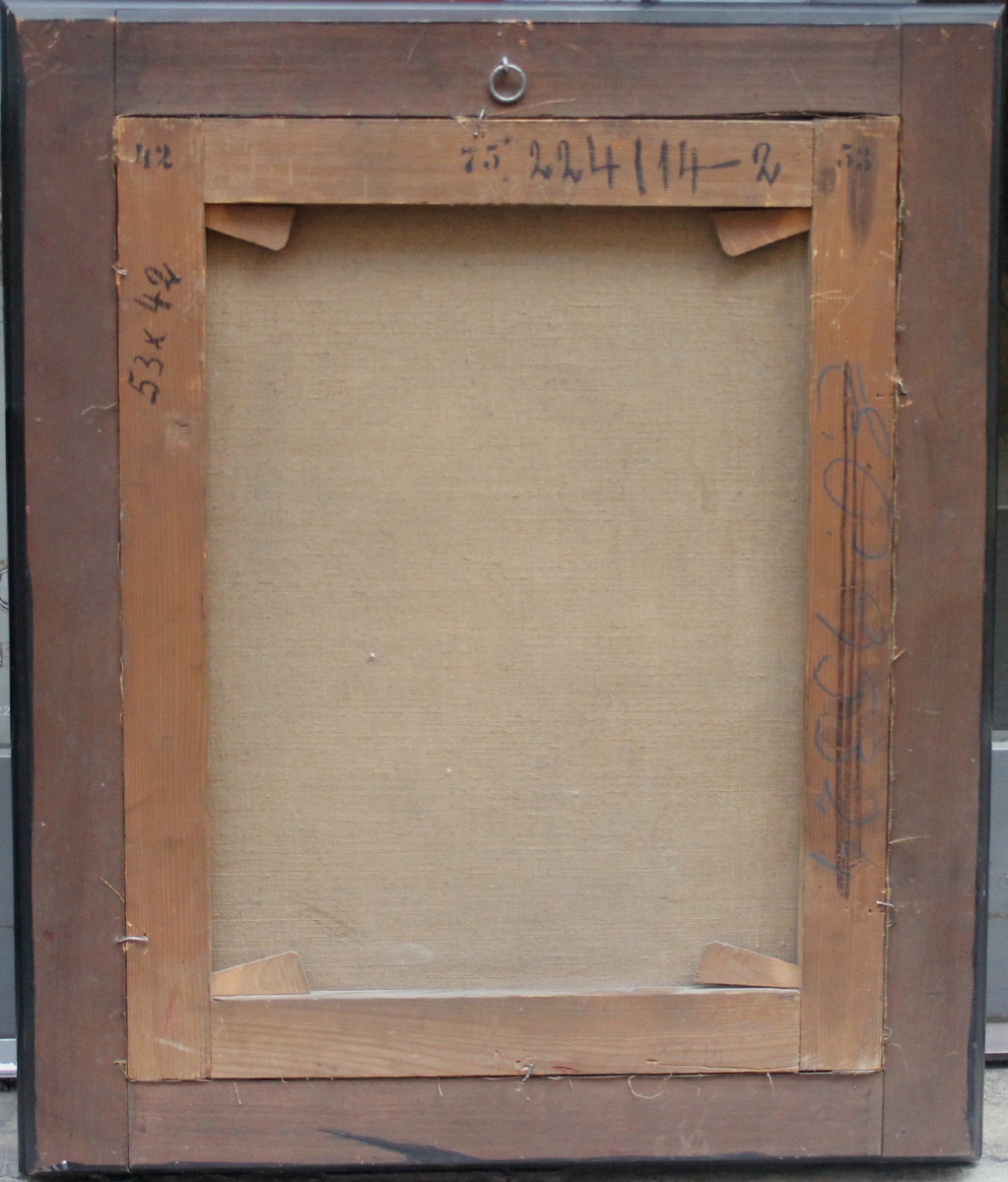
Inscription: unsigned; on the back of the stretcher, various numbers and an indistinct inscription.
Technique: oil on canvas, original frame.
Dimensions: unframed, width 42 cm x height 53 cm; framed, dimensions 55.5 cm x height 66.5 cm.
Condition: good.
For comparison, see our latest supplementary images.
The artist was born in Cortale, a town in the province of Catanzaro, into an old aristocratic family. After studying at the Scolopi College in Catanzaro, he moved to Naples in 1842 to study law and attended the lectures of the scholars Cesare Malpica and Francesco de Sanctis. Overcoming his father’s opposition, he enrolled at the Academy of Fine Arts, where he studied under Filippo Marsigli, and at Giuseppe Bonolis’s Scuola Libera (Free School). In 1848, he took part in the liberal anti-Bourbon uprisings and fought in the National Guard, where he served as a captain. He also took in the lawyer Carlo Folino, who was being persecuted for his liberal ideas.
In 1855, he returned to Naples at the height of the Verismo art movement. Two years later, he opened a studio in Vicoletto San Mattia, which became a gathering place and forum for painters and writers.
In 1860, he worked with Giuseppe Garibaldi, whom he followed all the way to the Battle of the Volturno, an experience he immortalized in several paintings. Upon his return to Cortale in 1862, he founded a school of painting, with Garibaldi serving as its honorary president. The school welcomed many artists from the city, such as Raffaele Foderaro and Michele Mangani, as well as artists from the surrounding area: Guglielmo Tomaini from San Pietro Apostolo, Antonio Palmieri and Guglielmo De Martino from Lamezia Terme, Carmelo Davoli from Filadelfia, Antonio Migliaccio from Girifalco, and Gregorio and Raffaele Cordaro from Borgia. It closed its doors in 1875.
Complete biography of the artist (in Italian):
https://it.wikipedia.org/wiki/Andrea_Cefaly
Inscription: unsigned; on the back of the stretcher, various numbers and an indistinct inscription.
Technique: oil on canvas, original frame.
Dimensions: unframed, width 42 cm x height 53 cm; framed, dimensions 55.5 cm x height 66.5 cm.
Condition: good.
1 800 €
Period: 19th century
Style: Other Style
Condition: Excellent condition
Material: Oil painting
Width: 55,5
Height: 66,5
Reference (ID): 1827759
Availability: In stock
Print