

Venus Callipygia, Marble Sculpture, Roman Workshop, Grand Tour, 19th Century
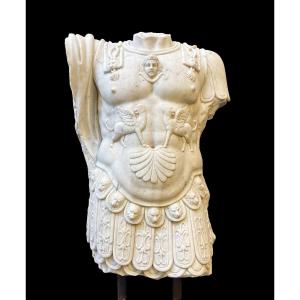
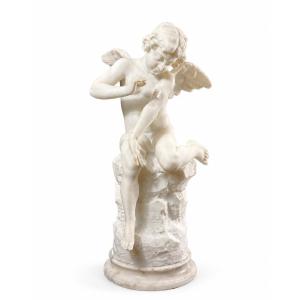
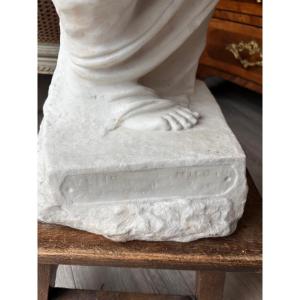
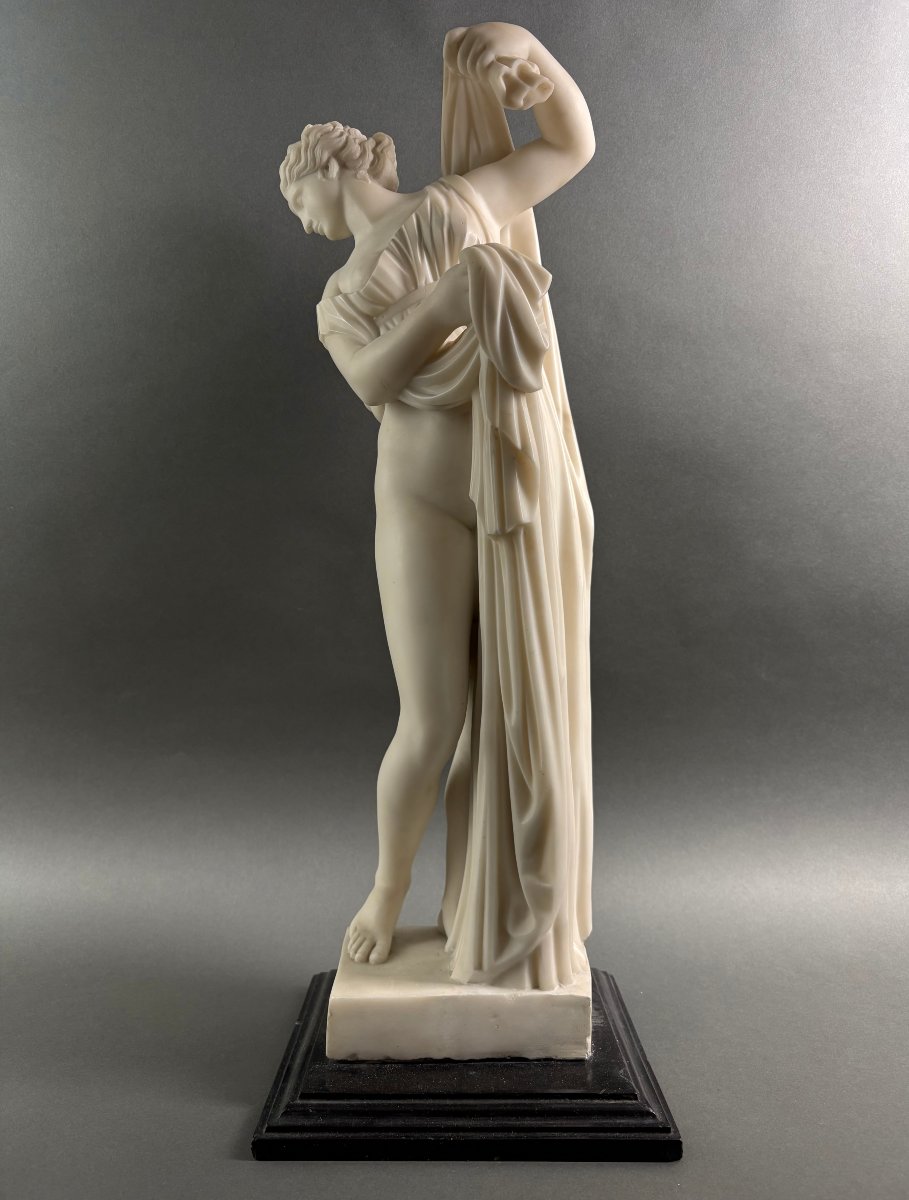
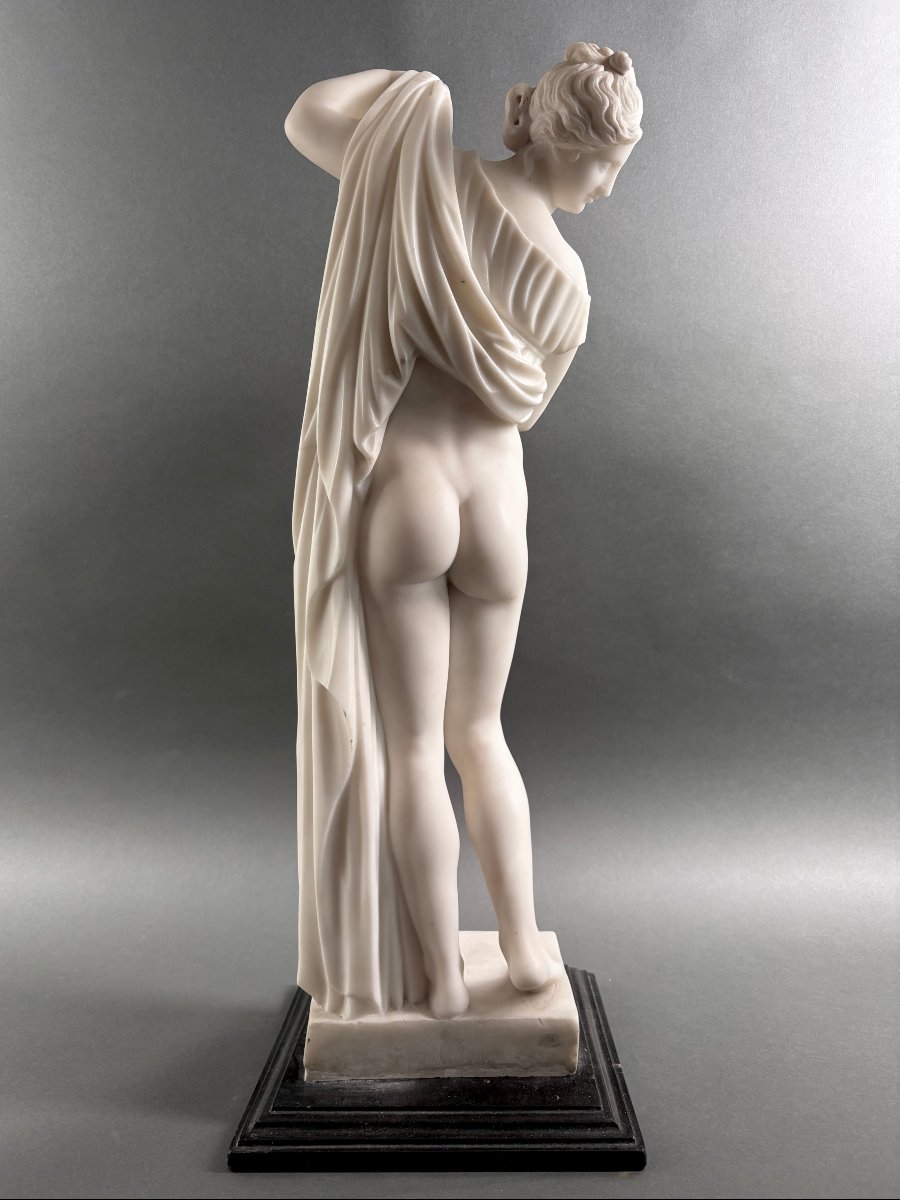
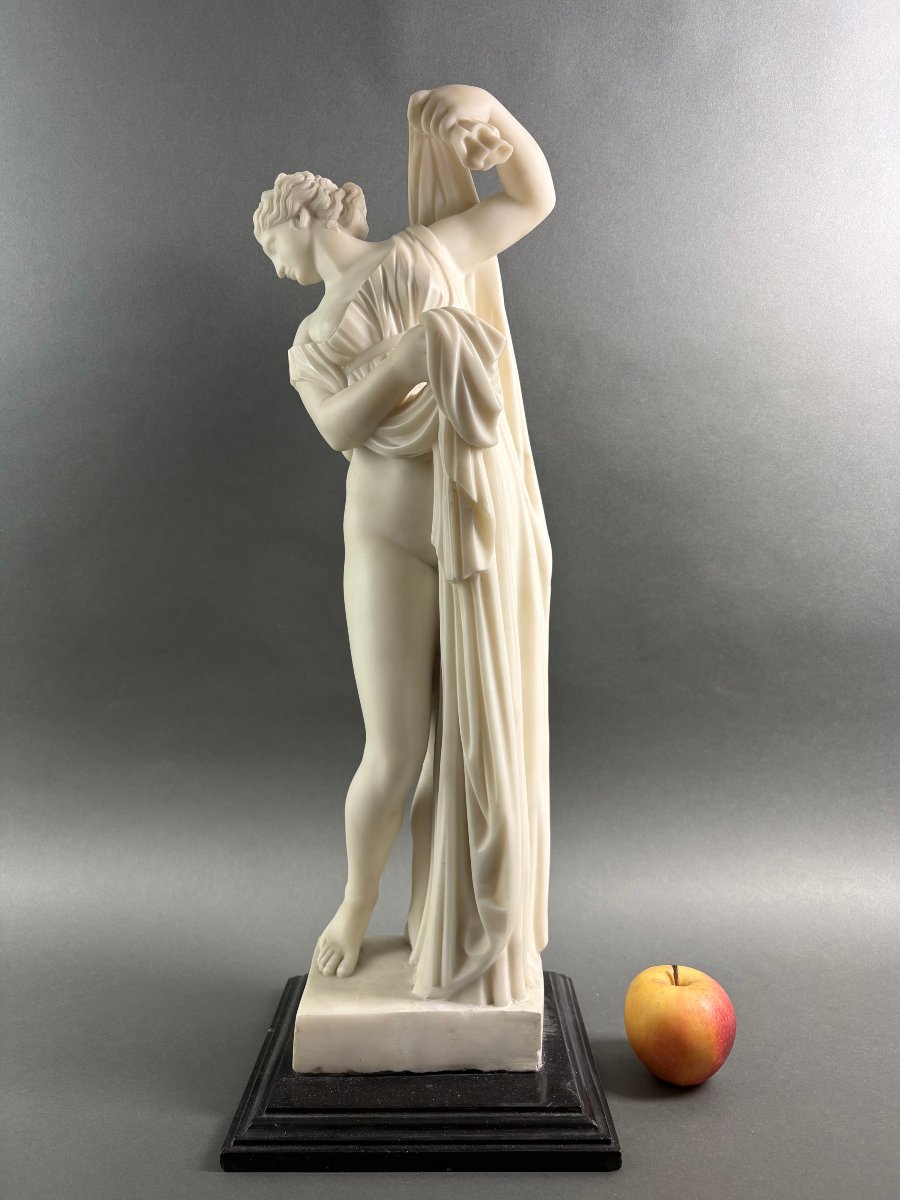
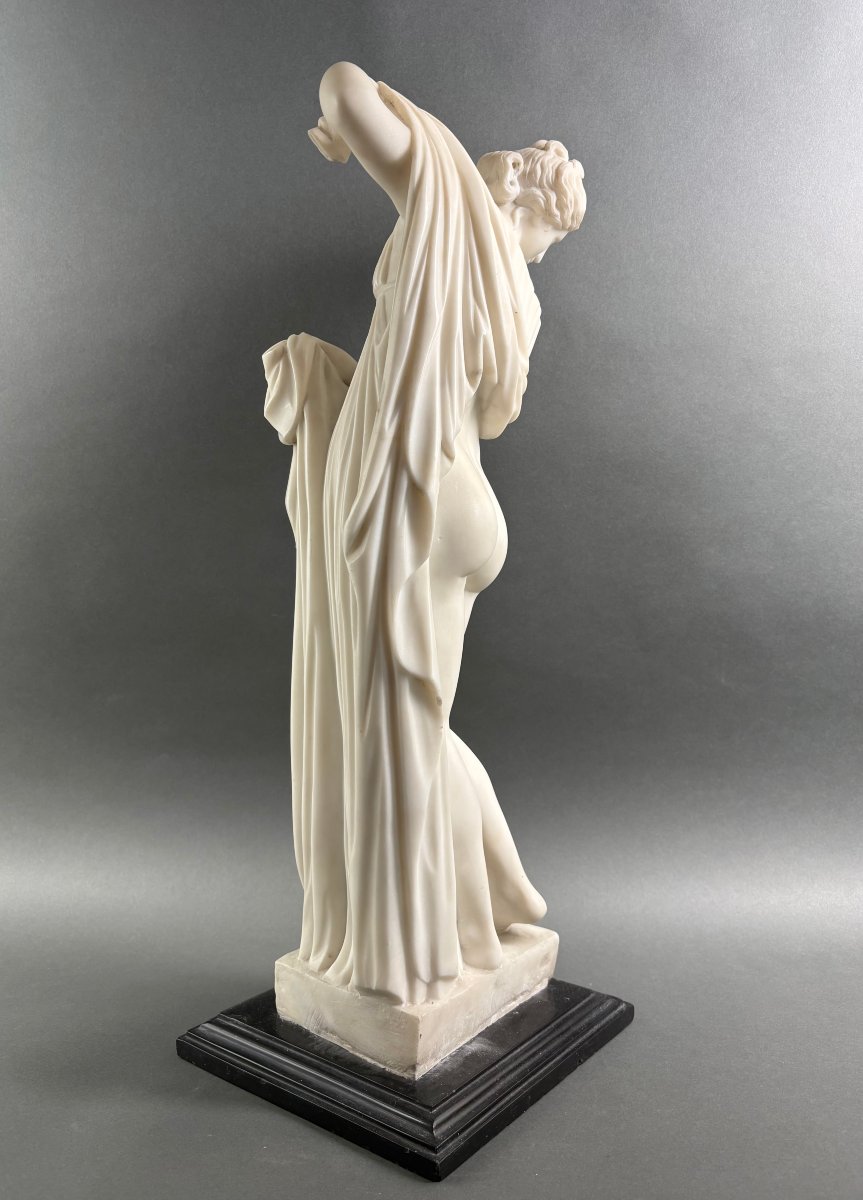
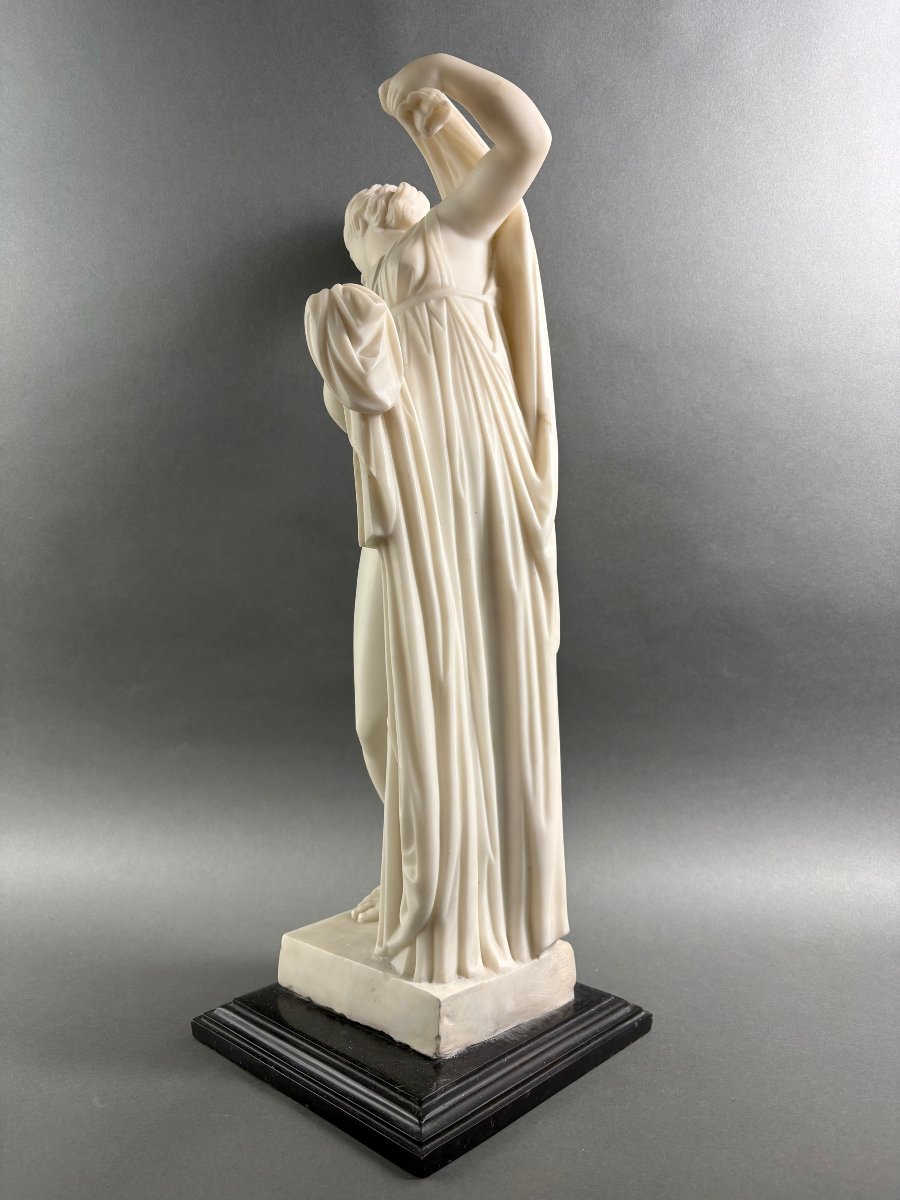
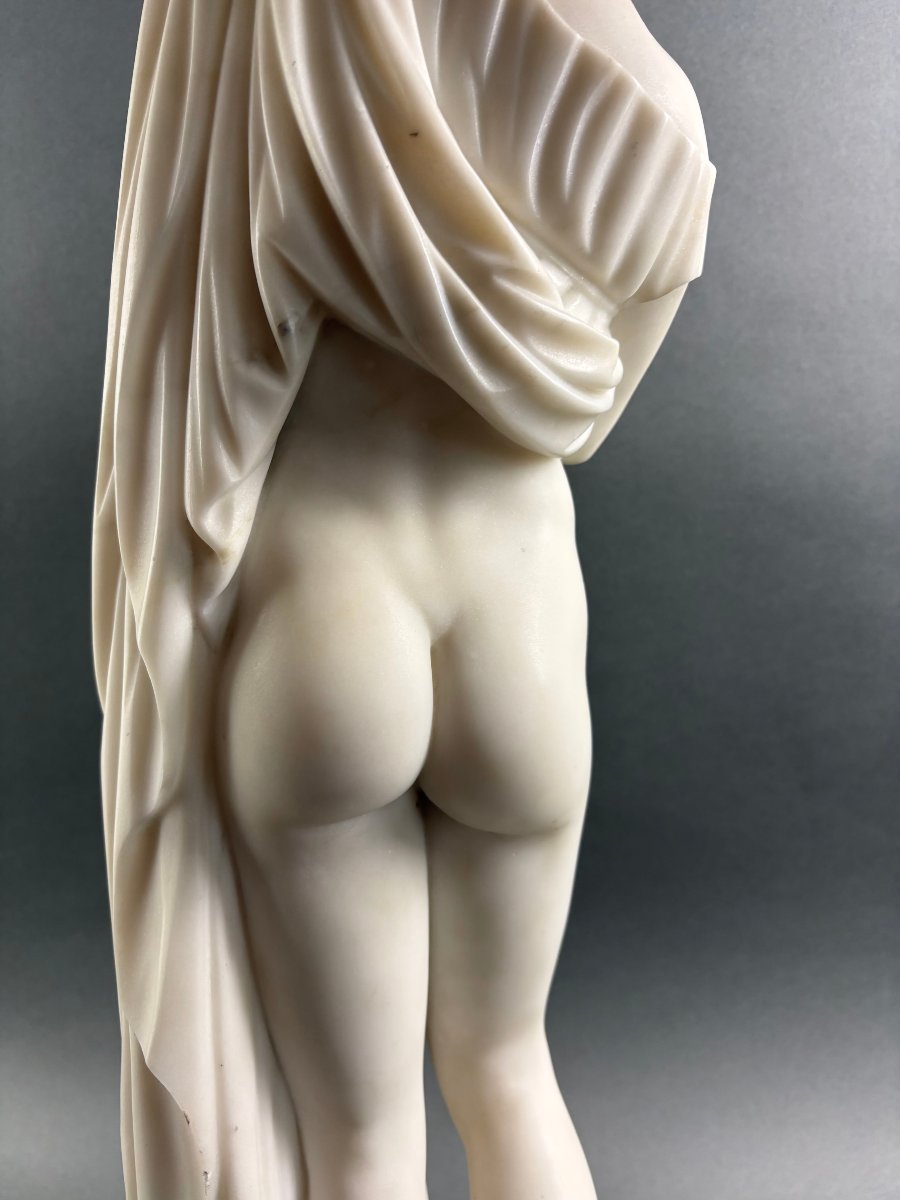
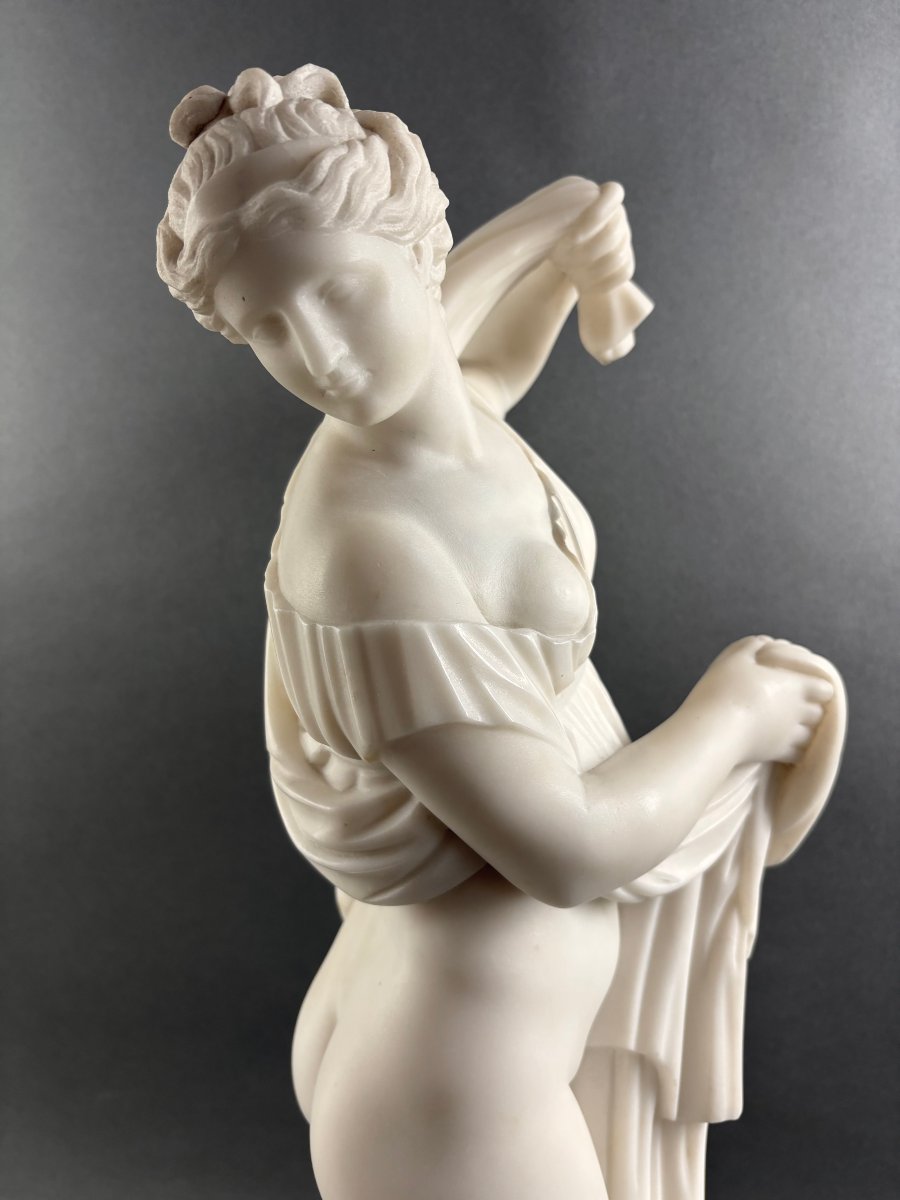
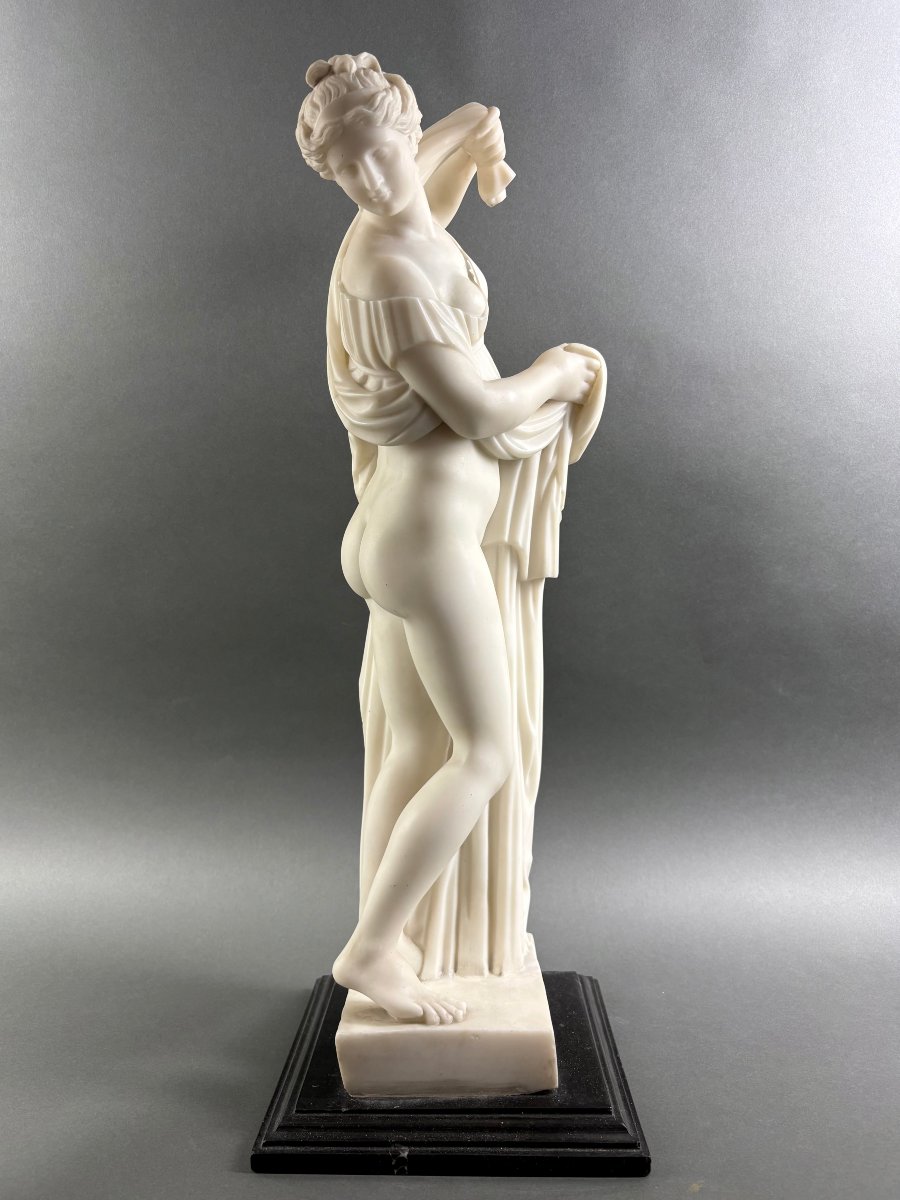
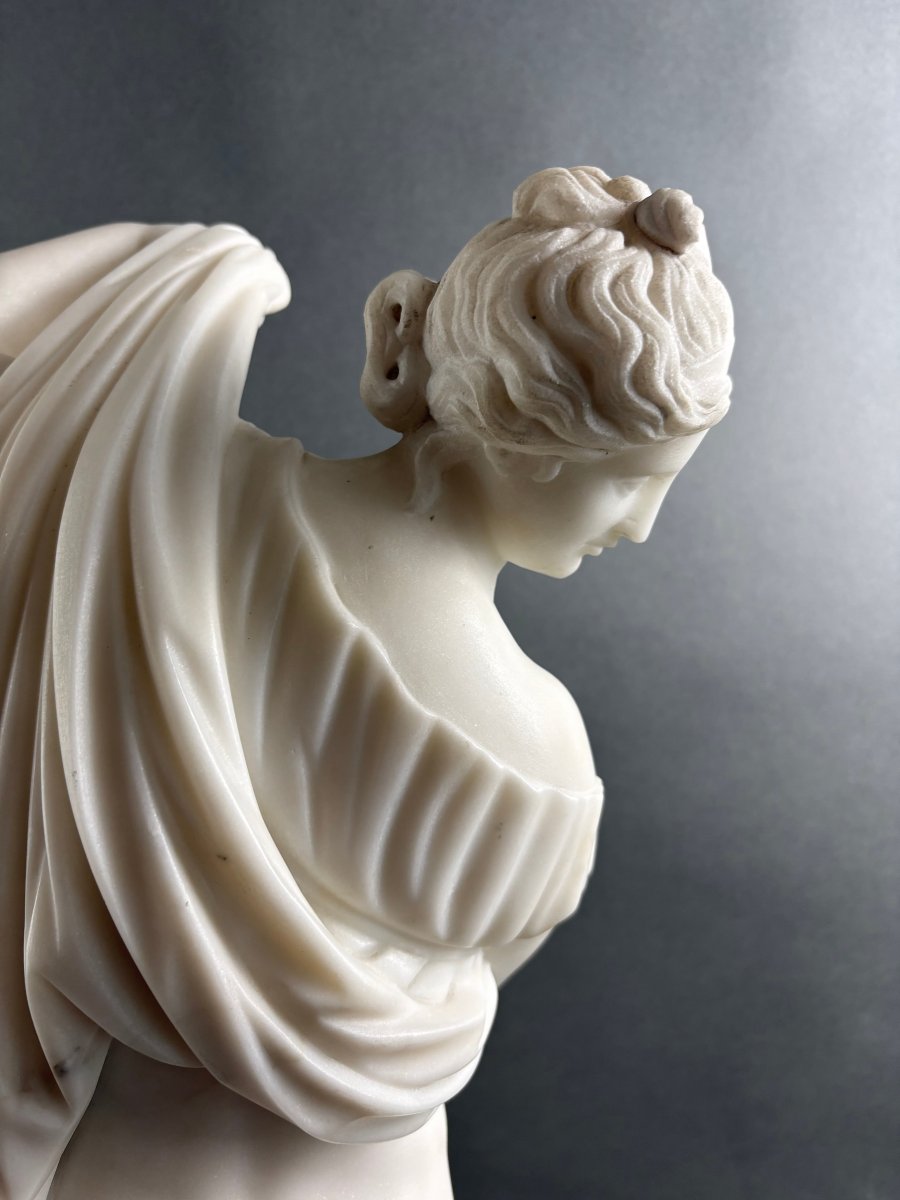
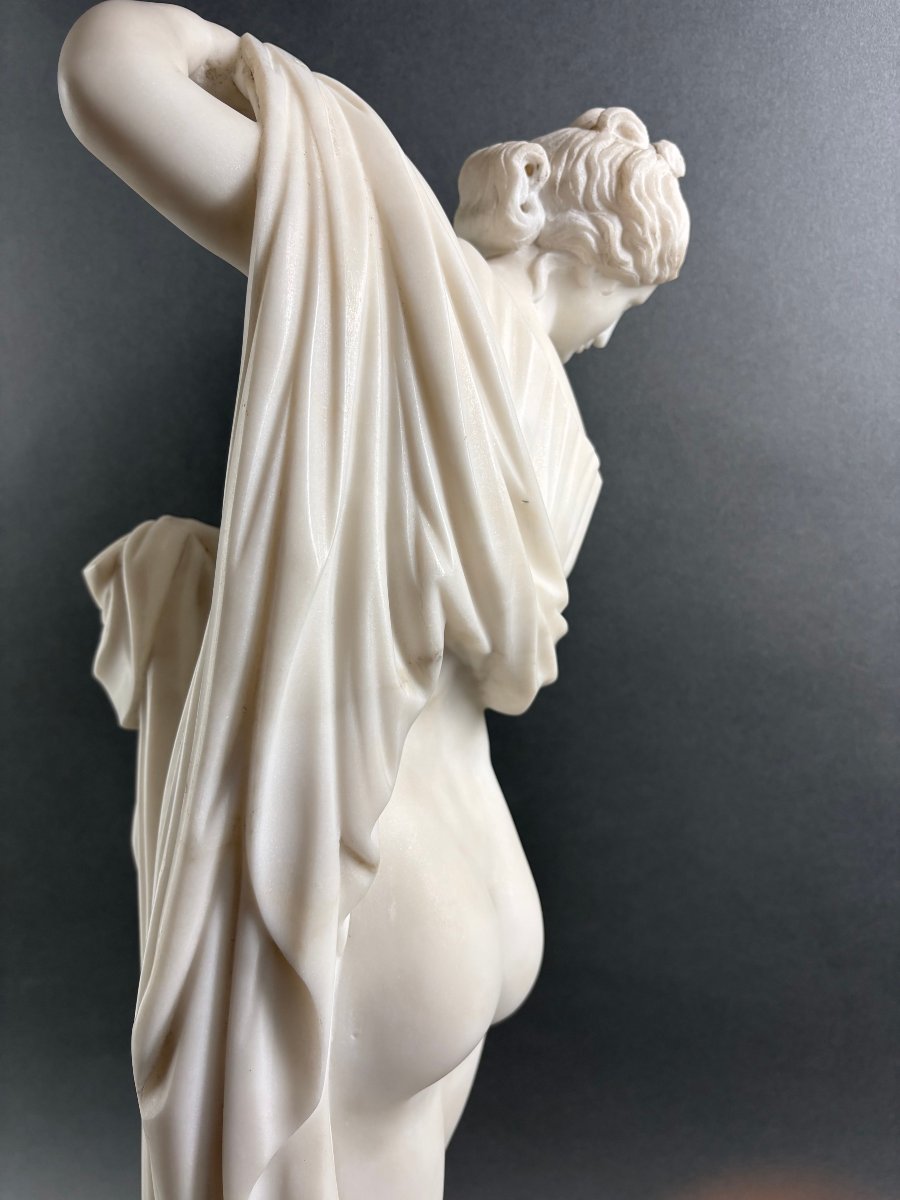
A sculpture in white Carrara marble depicting Venus Callipygia, from a 19th-century Roman workshop.
The Venus Callipygia, literally “with beautiful buttocks,” is a Roman marble copy of a Hellenistic bronze original, discovered in Rome in the 16th century and later added to the Farnese collection. Originally headless, the sculptor Carlo Albacini carried out the integrative restoration in the late 18th century. In 1786, King Ferdinand IV of Bourbon inherited the Farnese estate, and the statue was transferred to the Capodimonte Royal Palace. There, it immediately aroused great admiration, but also deep embarrassment due to the Catholic morality of the Bourbon court, leading to the decision to restrict access to it. Transferred once again to the Marble Gallery of the Archaeological Museum of Naples, in 1820 it was hidden from view once more because it was considered obscene. It was not until the fall of the Bourbons and the unification of Italy that the statue was finally displayed to the general public.
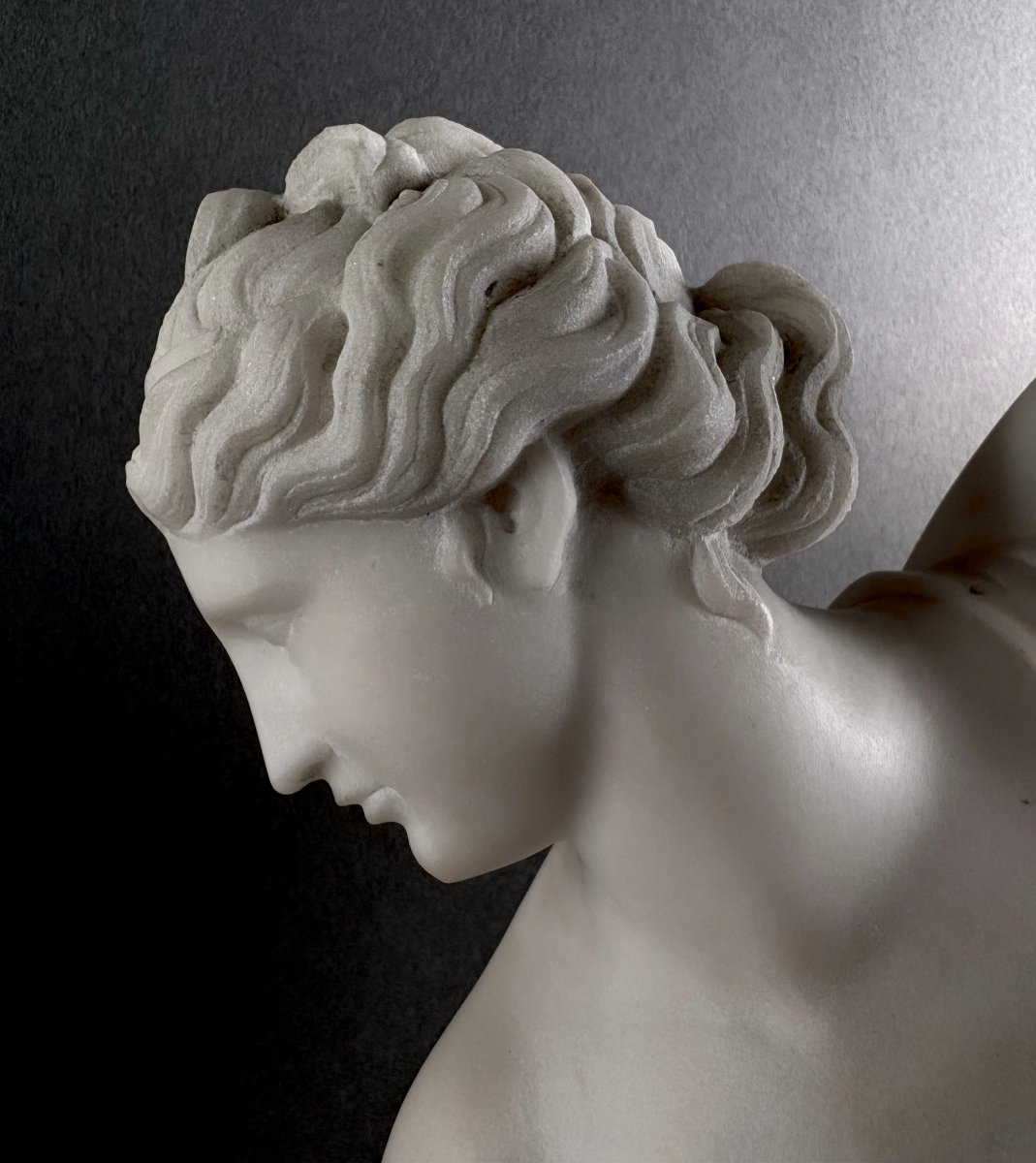
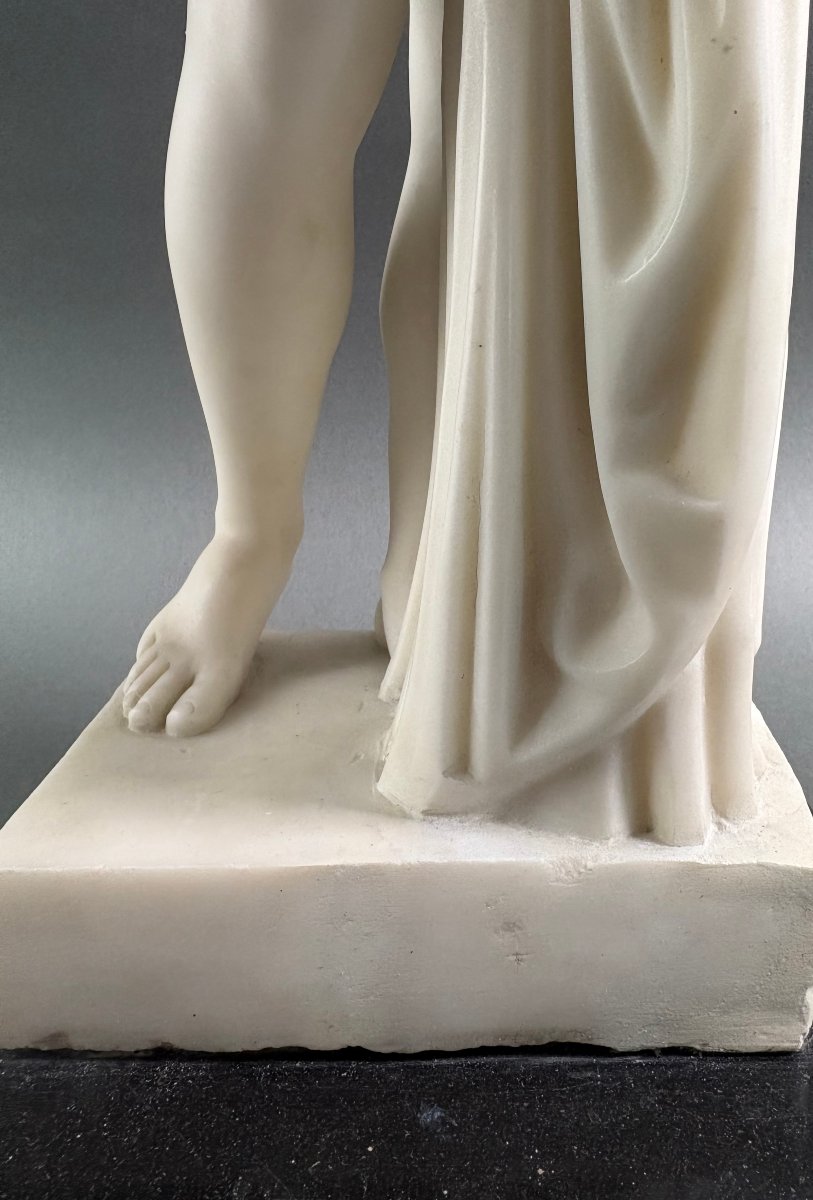
From that time on, copies began to be produced—both in marble and alabaster—intended for wealthy European and American tourists visiting Italy during the later phase of the Grand Tour. Our piece, in particular, is a refined Roman work, crafted from white Carrara marble of exceptional purity. It belongs to the earliest models—featuring a square base and superb craftsmanship—produced shortly after 1860.
In excellent condition, it rests on a black marble pedestal.
Dimensions
Height: 64 cm
Base: 22.5 x 22 cm,5
++++++++++++++++++++++++++++++++++++++++DELIVERY AND PAYMENT++++++++++++++++++++++++++++++++
SHIPPING VIA DHL in a custom-made crate, including INSURANCE, or via a TRUSTED CARRIER
Payment methods: Bank transfer - Online credit card (including AMEX) - PayPal (+3.7%) - NO checks +++++++++++++++++++++++++++++++++++++++++++++++++++++++++++++++++++++++++++++++++++++++++++++++
The Venus Callipygia, literally “with beautiful buttocks,” is a Roman marble copy of a Hellenistic bronze original, discovered in Rome in the 16th century and later added to the Farnese collection. Originally headless, the sculptor Carlo Albacini carried out the integrative restoration in the late 18th century. In 1786, King Ferdinand IV of Bourbon inherited the Farnese estate, and the statue was transferred to the Capodimonte Royal Palace. There, it immediately aroused great admiration, but also deep embarrassment due to the Catholic morality of the Bourbon court, leading to the decision to restrict access to it. Transferred once again to the Marble Gallery of the Archaeological Museum of Naples, in 1820 it was hidden from view once more because it was considered obscene. It was not until the fall of the Bourbons and the unification of Italy that the statue was finally displayed to the general public.
From that time on, copies began to be produced—both in marble and alabaster—intended for wealthy European and American tourists visiting Italy during the later phase of the Grand Tour. Our piece, in particular, is a refined Roman work, crafted from white Carrara marble of exceptional purity. It belongs to the earliest models—featuring a square base and superb craftsmanship—produced shortly after 1860.
In excellent condition, it rests on a black marble pedestal.
Dimensions
Height: 64 cm
Base: 22.5 x 22 cm,5
++++++++++++++++++++++++++++++++++++++++DELIVERY AND PAYMENT++++++++++++++++++++++++++++++++
SHIPPING VIA DHL in a custom-made crate, including INSURANCE, or via a TRUSTED CARRIER
Payment methods: Bank transfer - Online credit card (including AMEX) - PayPal (+3.7%) - NO checks +++++++++++++++++++++++++++++++++++++++++++++++++++++++++++++++++++++++++++++++++++++++++++++++
2 200 €
Period: 19th century
Style: Rome and Antic Greece
Condition: Excellent condition
Material: Marble
Width: 22,5
Height: 64
Depth: 22,5
Reference (ID): 1827708
Availability: In stock
Print