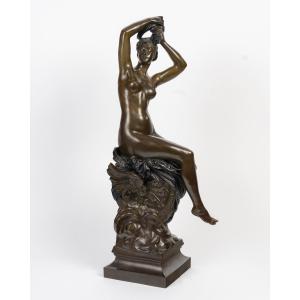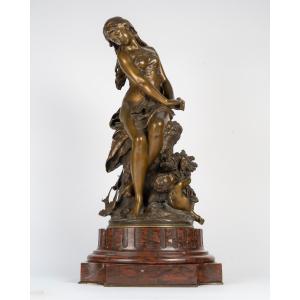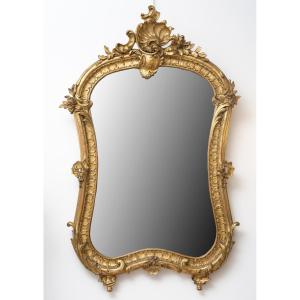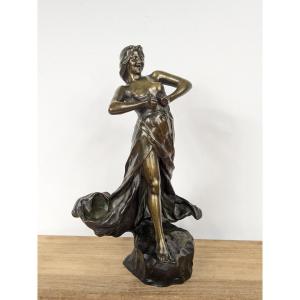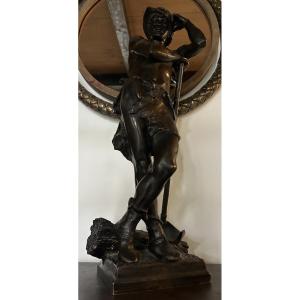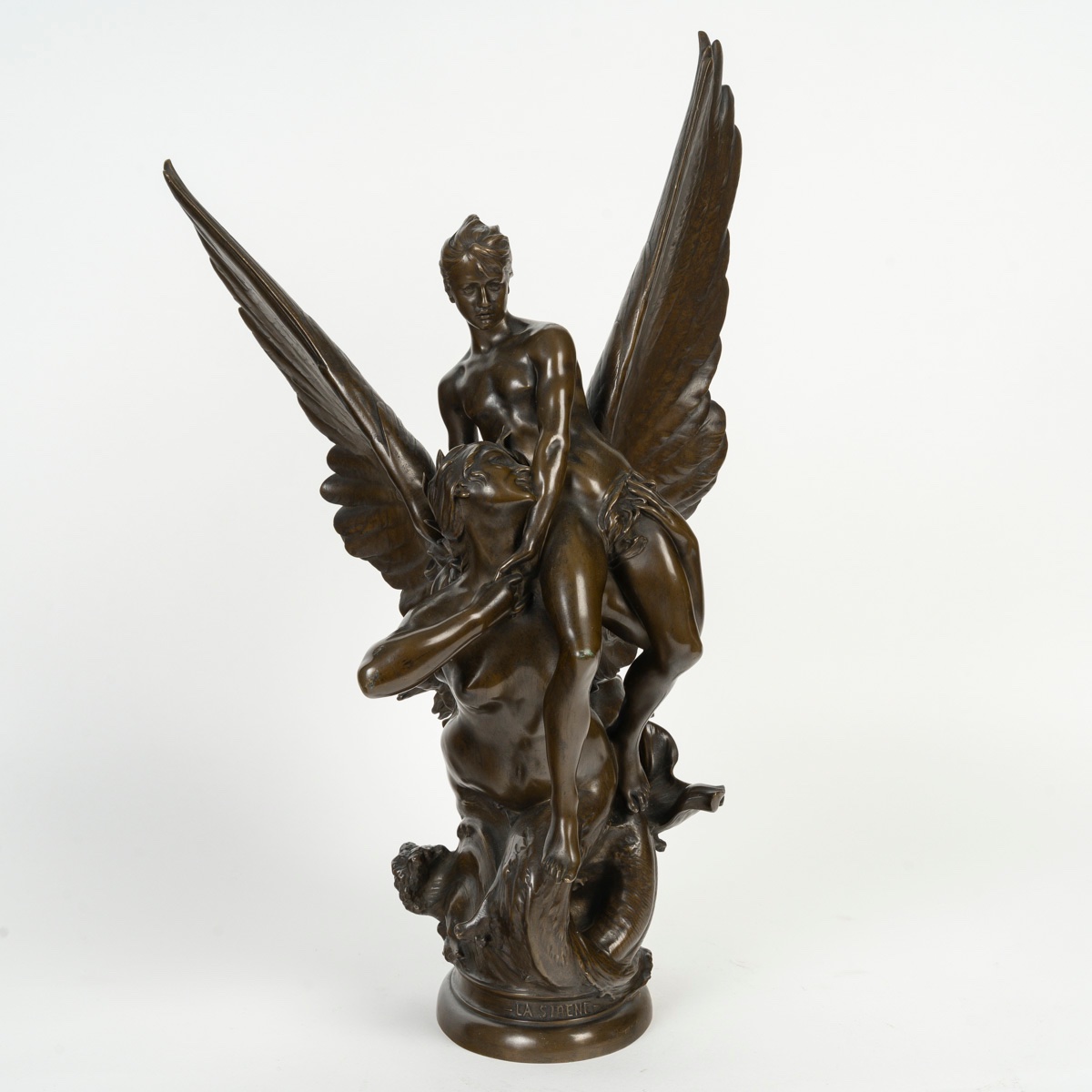
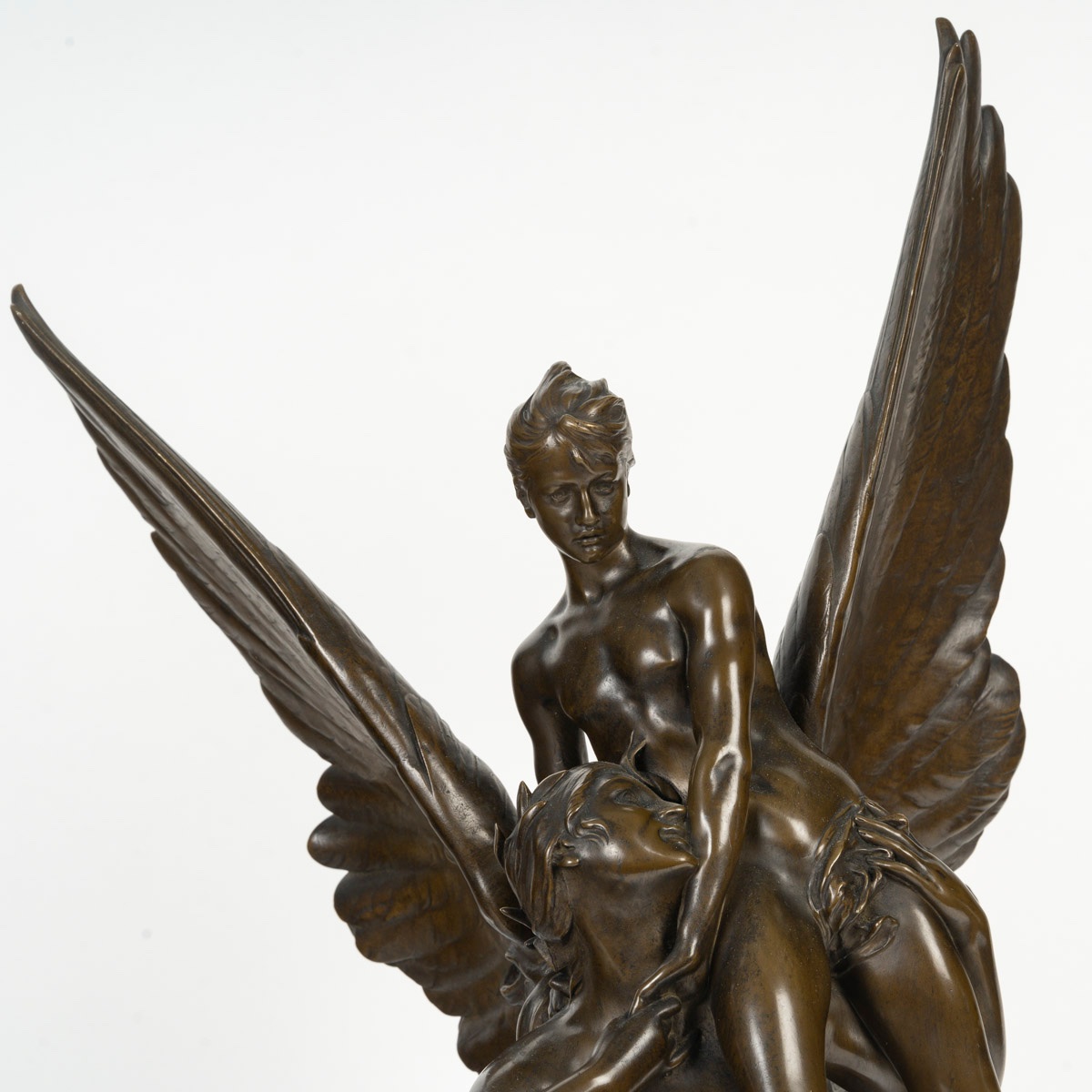


Denys Puech (1854–1942), *the Mermaid*
Artist: Denys Puech (1854-1942)
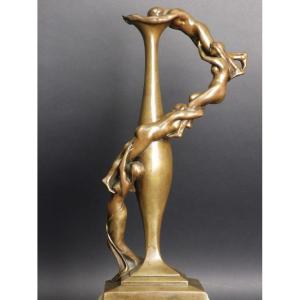
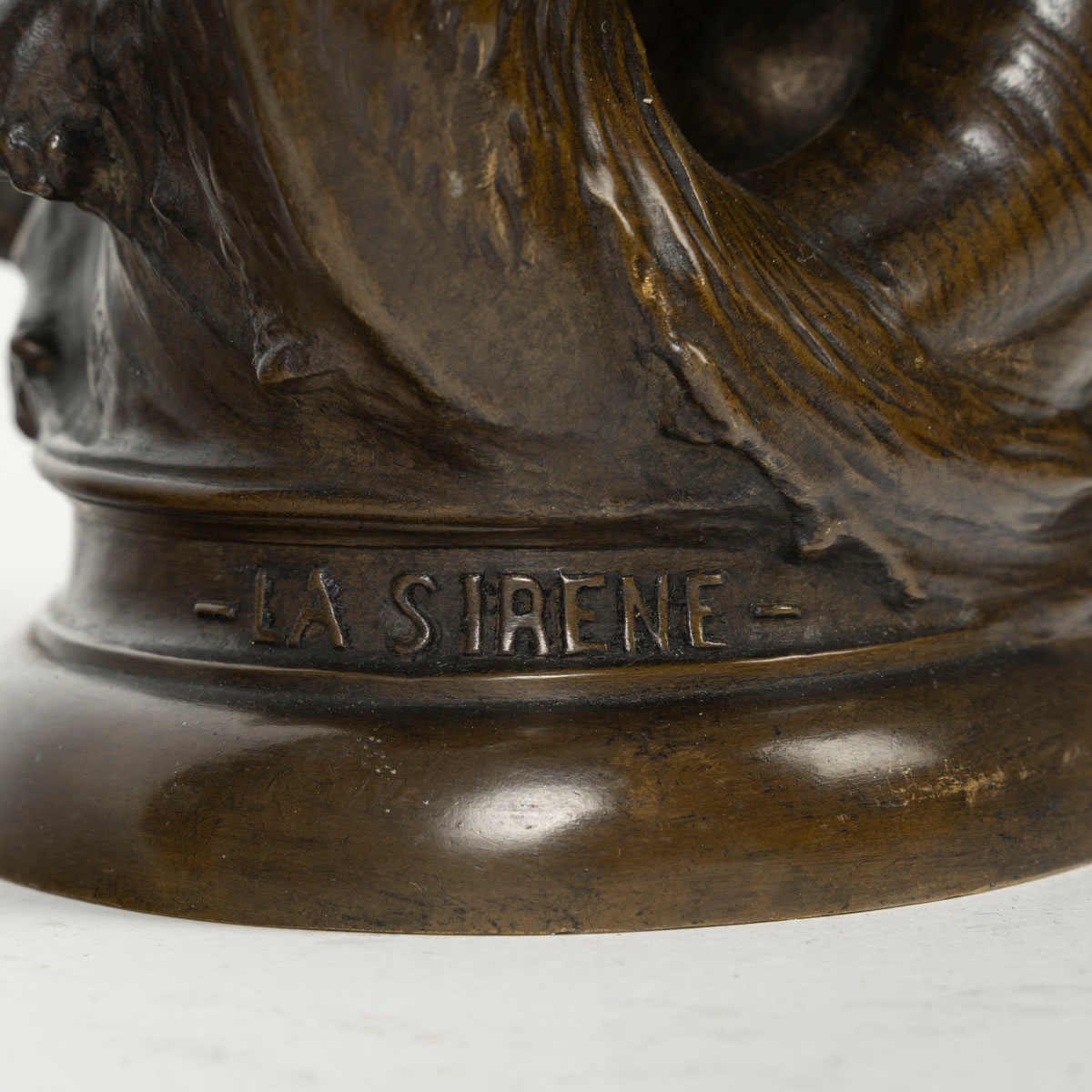
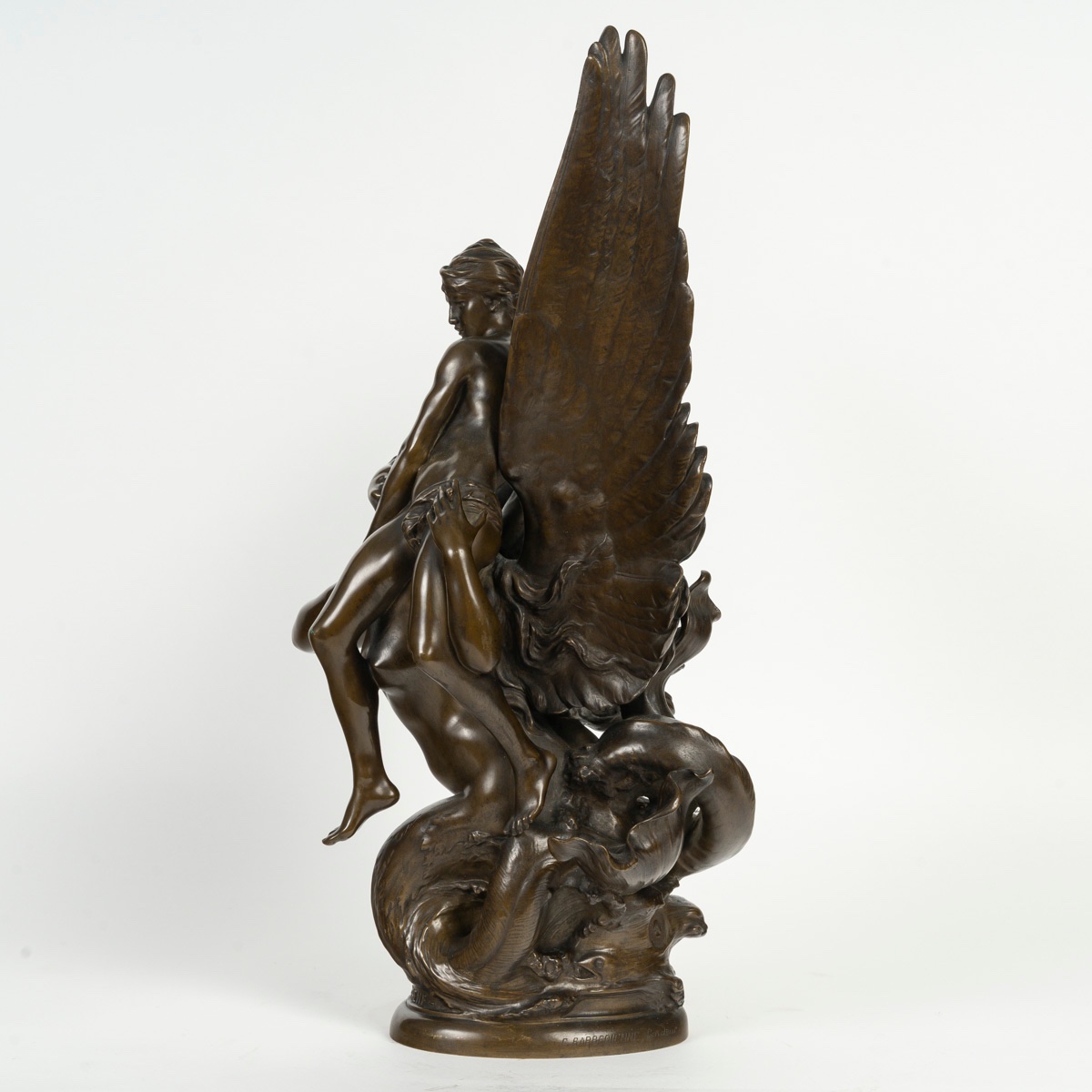
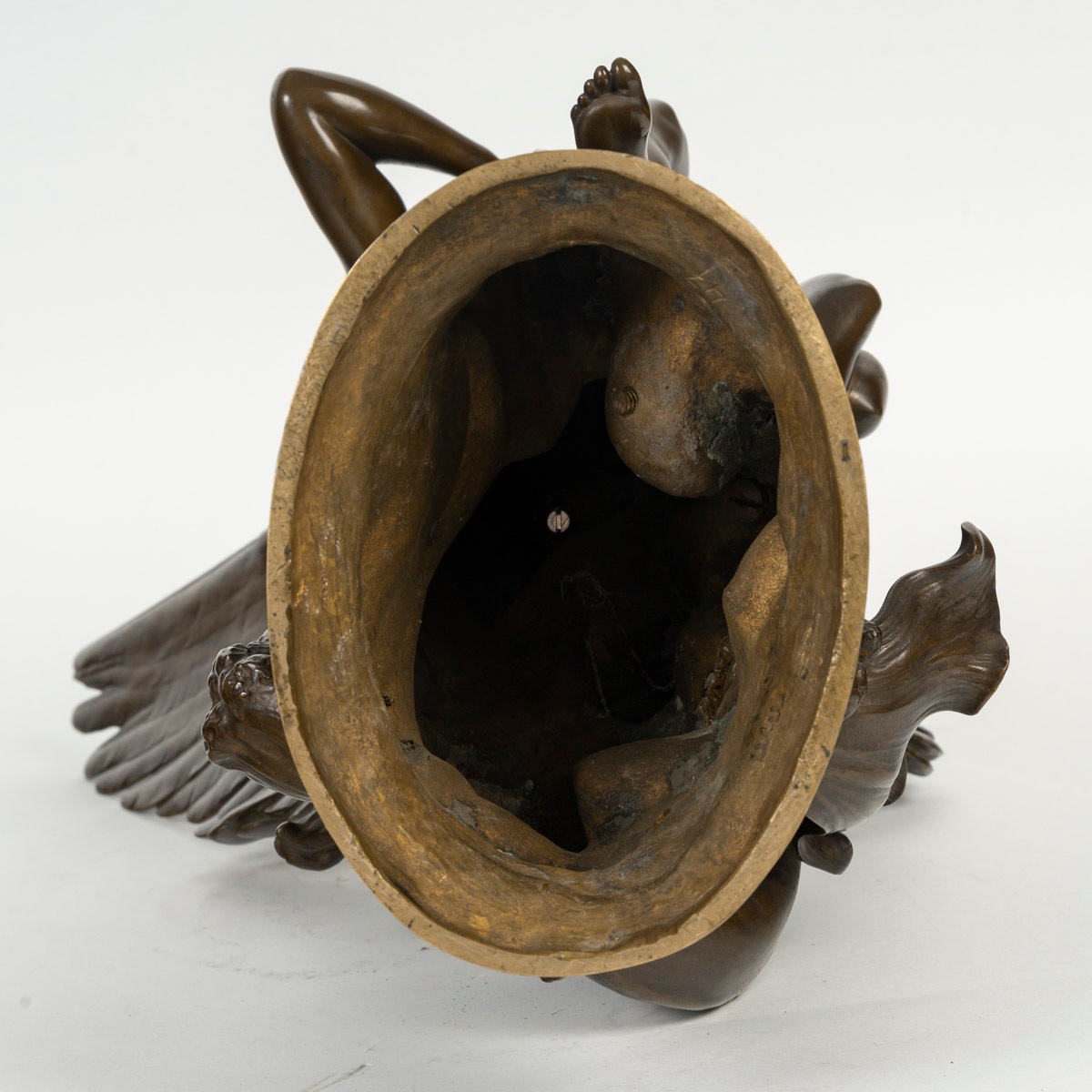
Bronze with a medallic patina, signed "D. PUECH" and located in Rome.
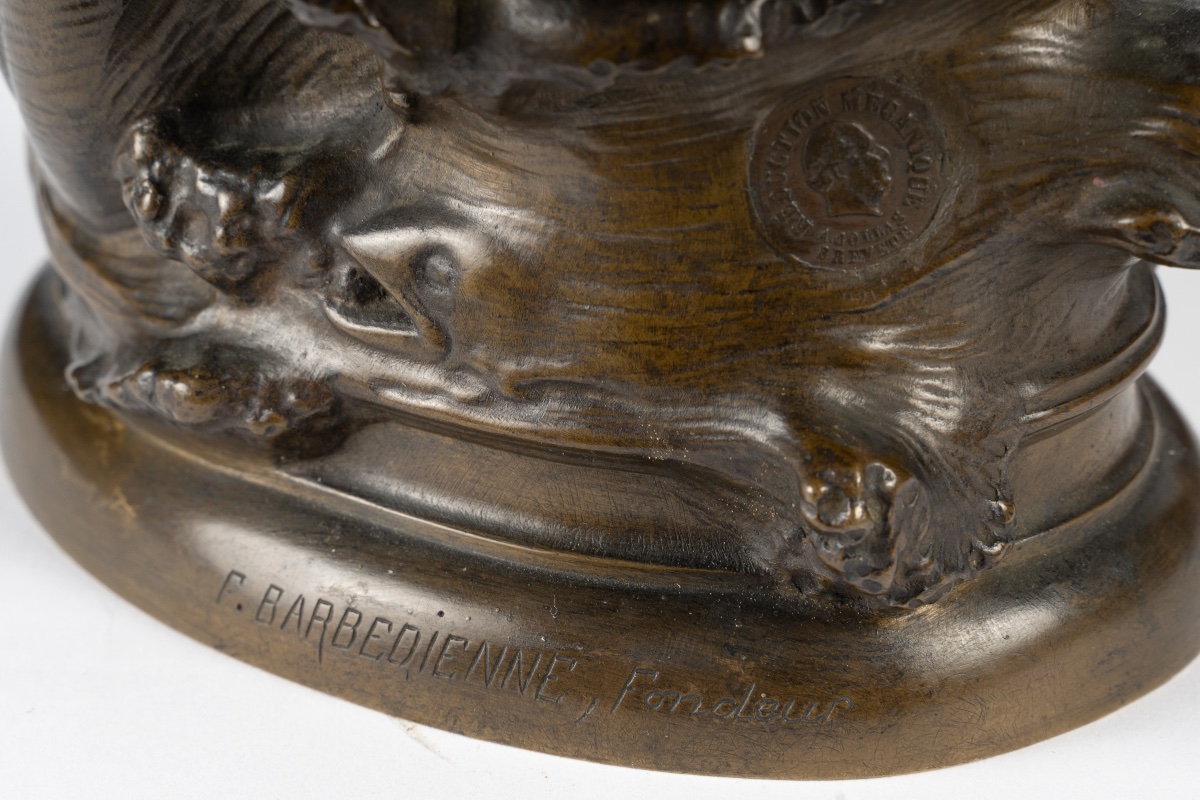
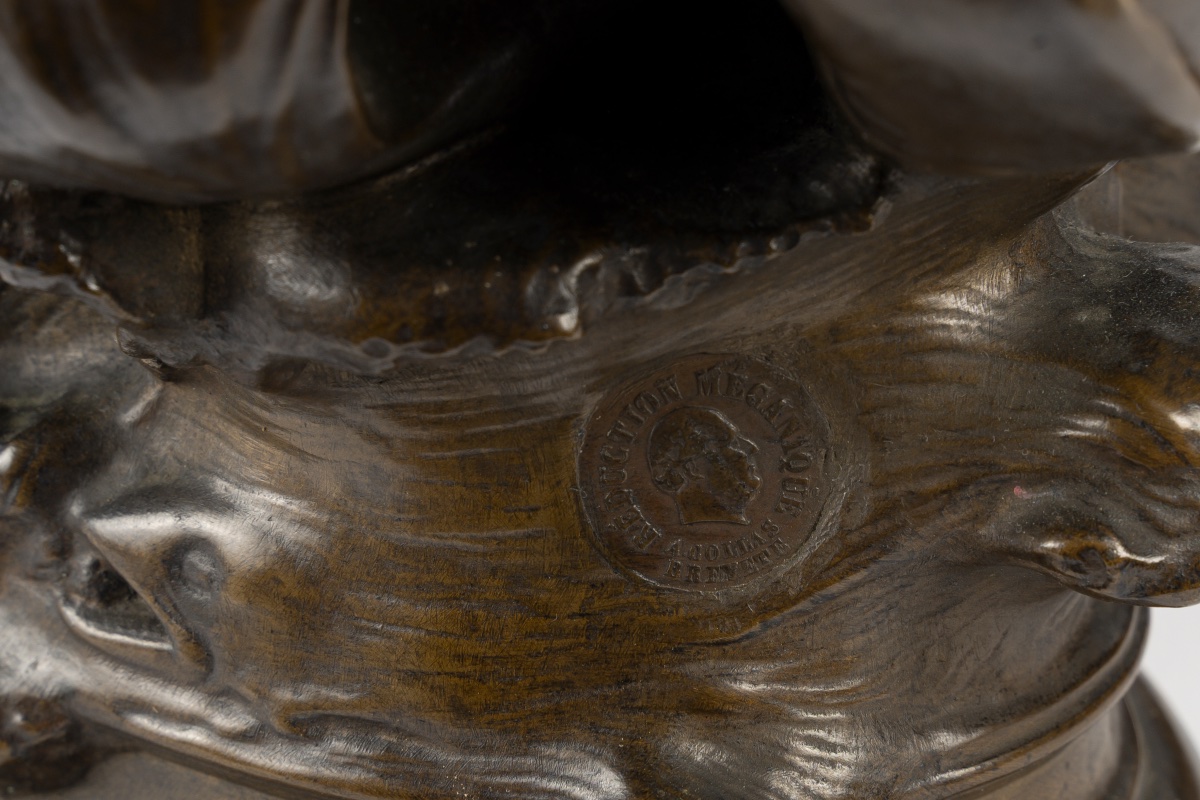
Cast during the artist's lifetime and bearing the stamp of the foundryman Ferdinand Barbedienne.
Circa 1890
Dimensions
Height 49 cm
Width 28 cm
Depth 24 cm
Description
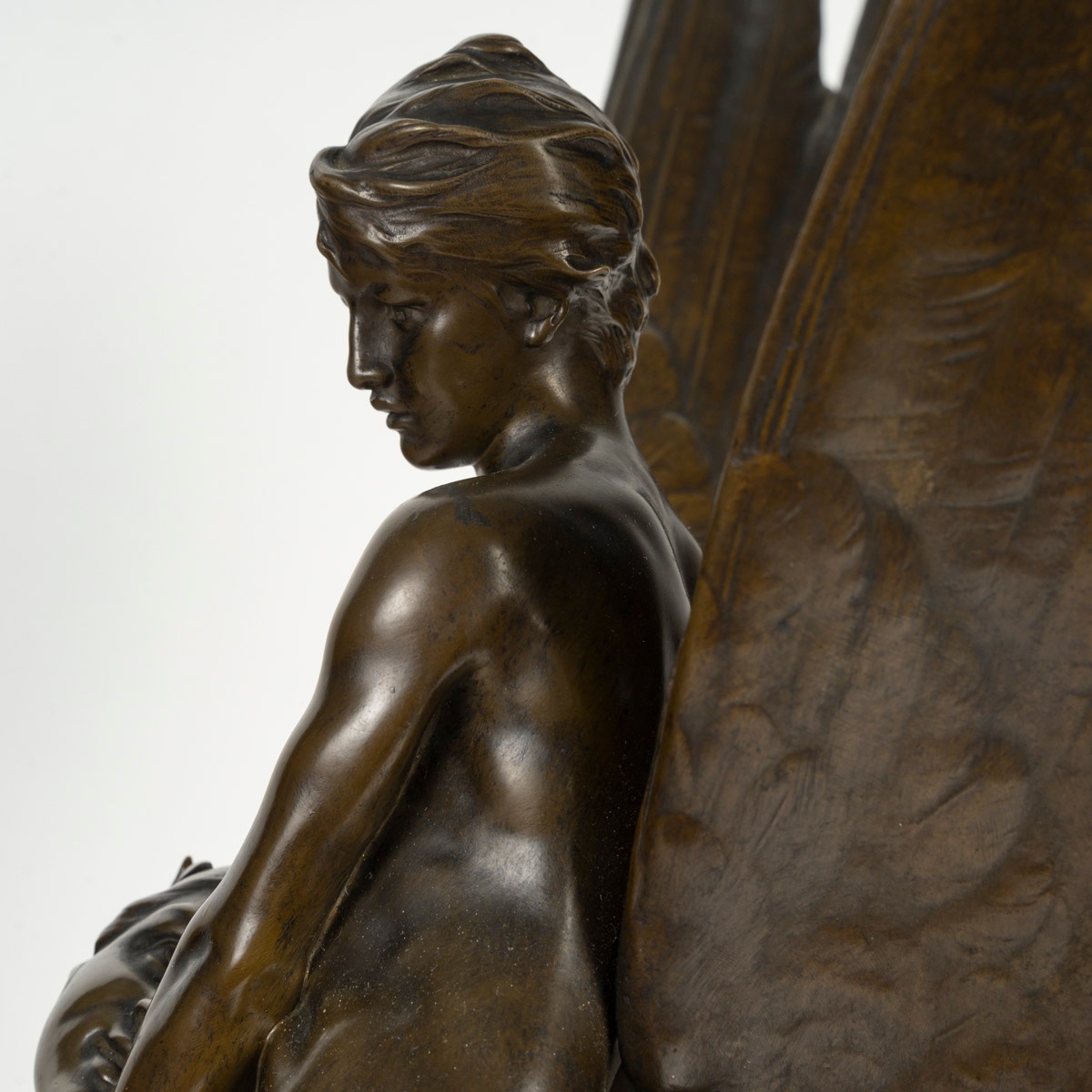
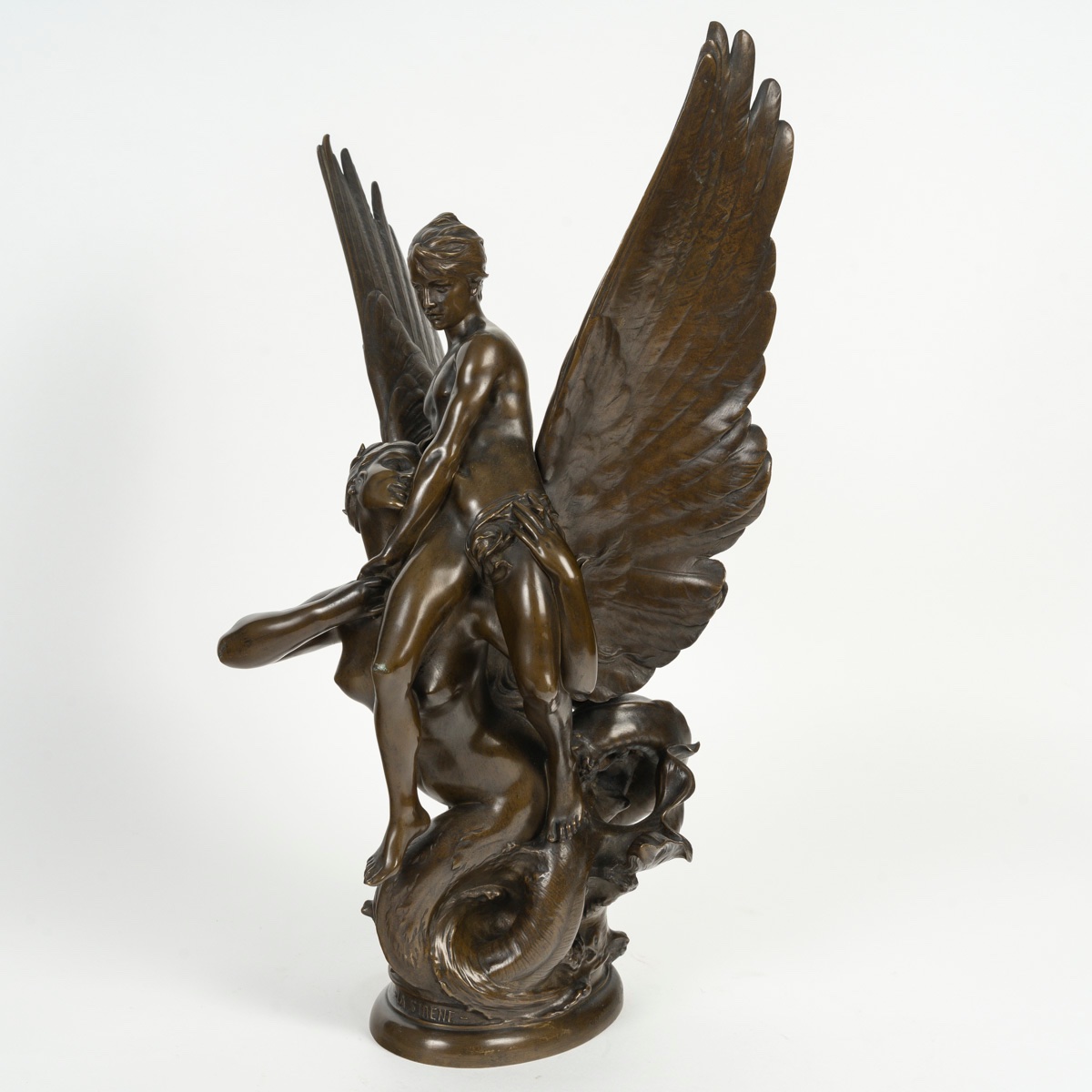
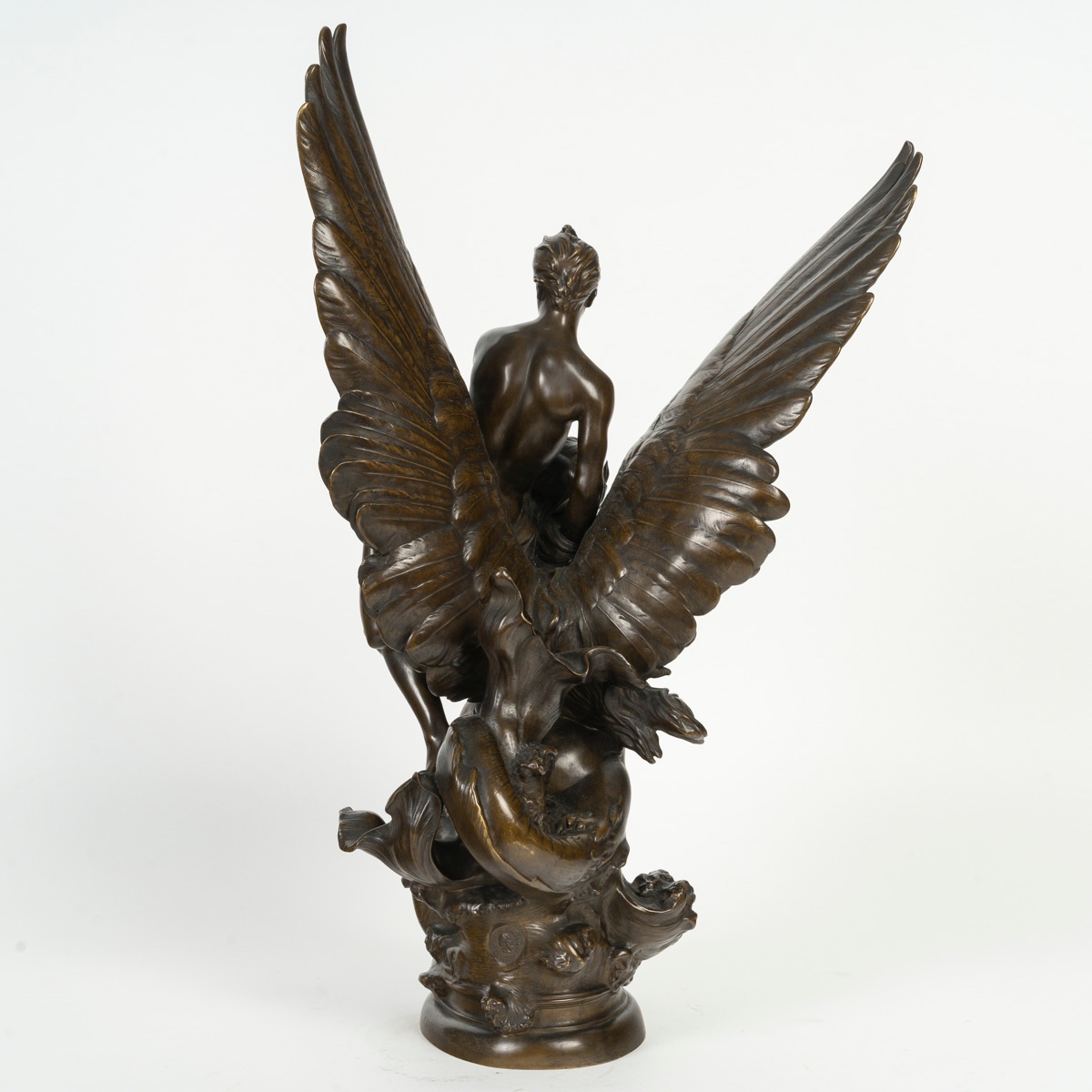
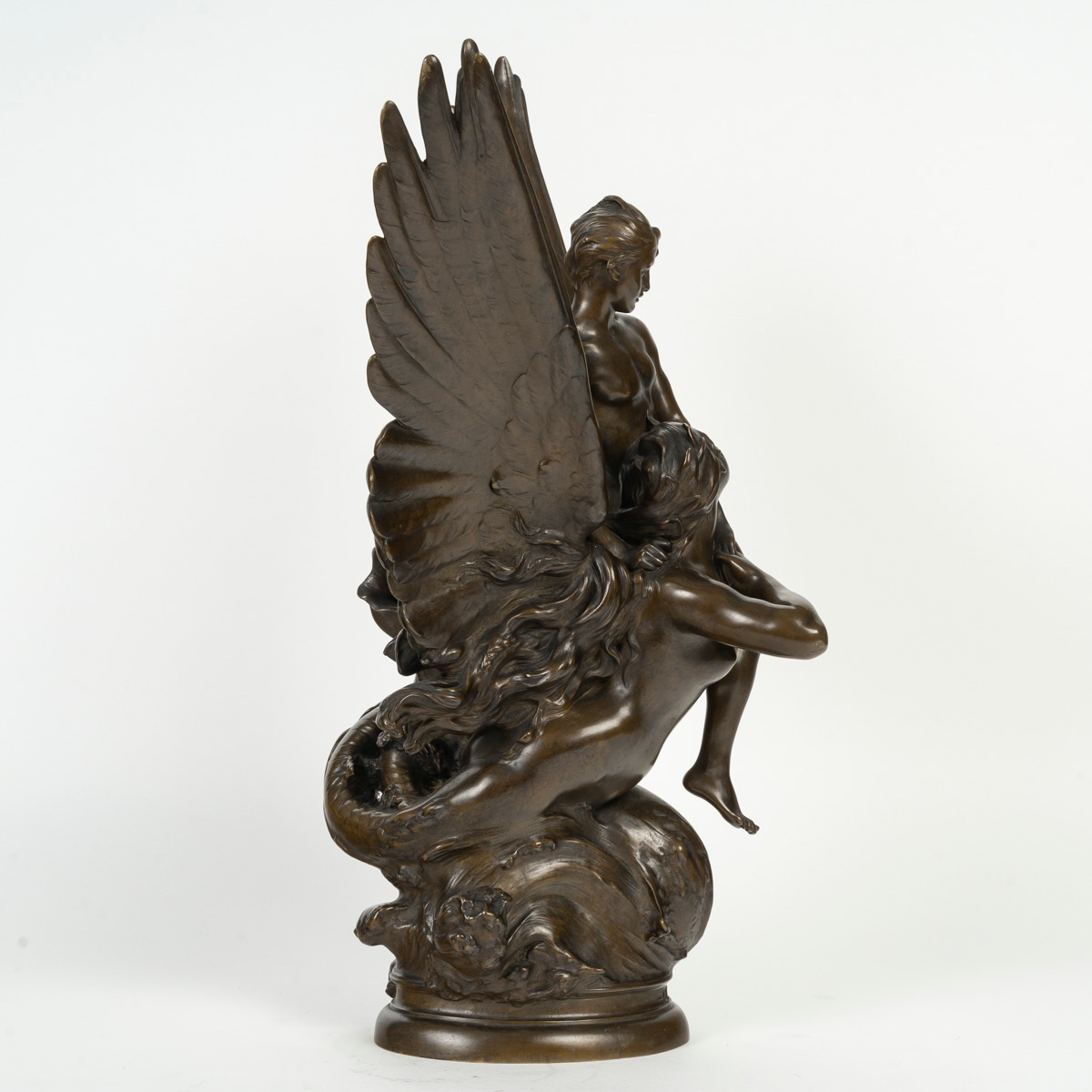
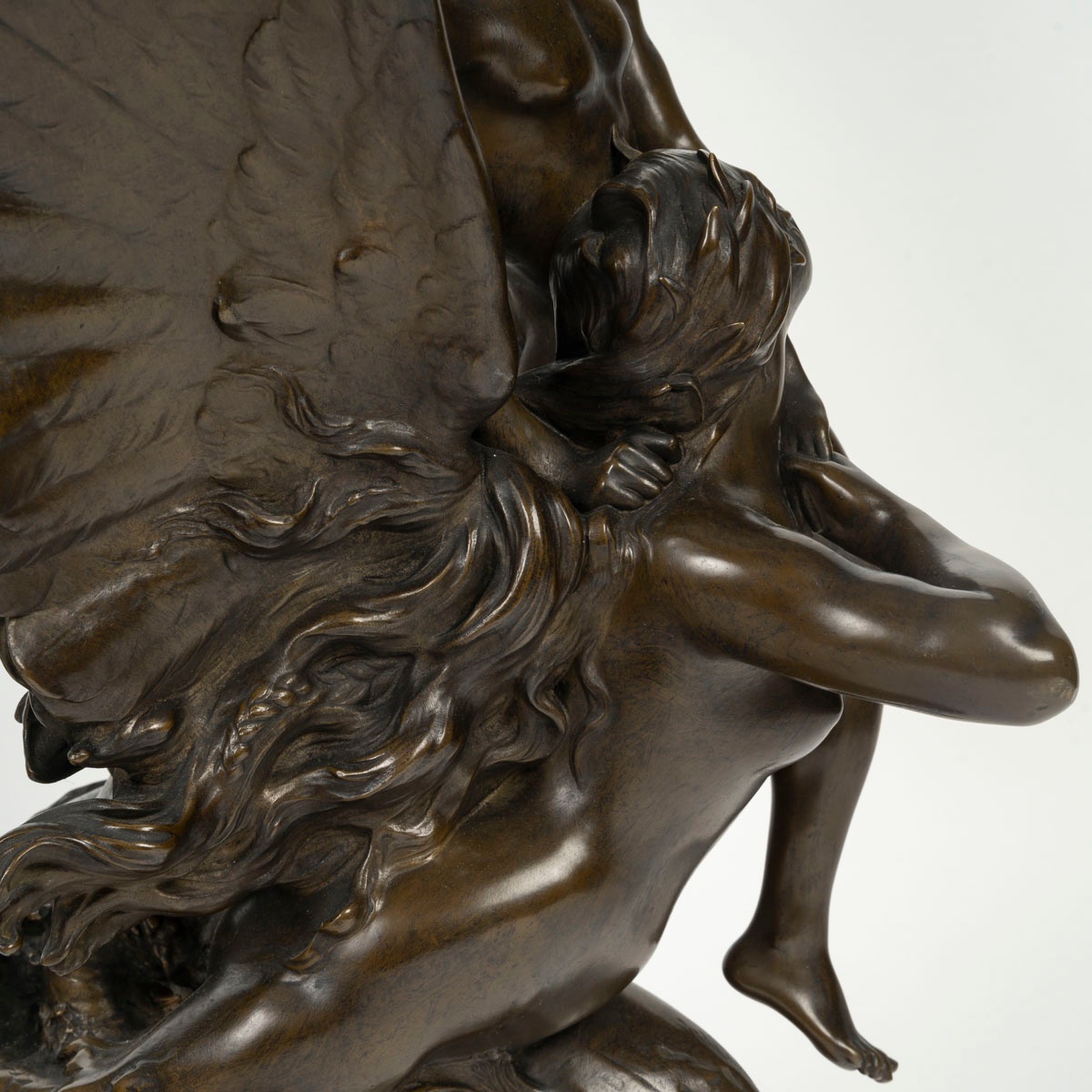
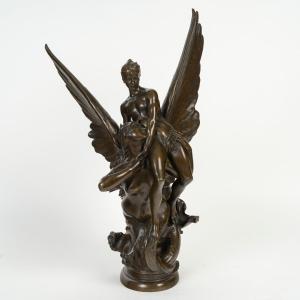
A group depicting the abduction of an ephebe by a siren (an allegory of love), conceived and sculpted by Denys Puech during his stay in Rome at the Villa Medici between 1887 and 1889. The bronze base bears the sculptor’s name, the place of creation—Rome—and the stamp of the foundryman Ferdinand Barbedienne, Paris. The medal-like patina is original, and the piece is in excellent presentation condition.
Sent to Paris, this sculpture earned him a first-class medal at the 1890 Salon des Artistes Français. While the marble version of this same model is on display today at the Musée d’Orsay, a second copy is also exhibited at the Denys Puech Museum in Rodez.
Biography of Denys PUECH (1854–1942)
Born in Gavernac (Aveyron) in 1854, Denys Puech studied under Chapu and Jouffroy at the École des Beaux-Arts in Paris; his talent enabled him to exhibit at the Salon as early as 1875, He won the Prix de Rome in 1884, became a member of the Société des Artistes Français in 1888, and a member of the Institut de France in 1905. A leading artist from the late 19th century through the first quarter of the 20th, he won the Grand Prix at the World’s Fair, and his works adorn some of Paris’s most beautiful buildings. Made a Commander of the Legion of Honor in 1908, he directed the Villa Medici from 1921 to 1933; Paul Landowski succeeded him.
Biography of the Ferdinand BARBEDIENNE Foundry
The Barbedienne Foundry was a renowned 19th-century foundry that quickly gained fame for its productions of statues and works of art. Although primarily a bronze foundry, the company also collaborated with other craft trades and associated its name with a wide variety of works, particularly in the field of furniture. Represented at every World’s Fair of its time, the Barbedienne House was regularly honored with awards, notably at the 1855 World’s Fair, where it received the Grand Medal of Honor.
Bibliography
Pierre Kjellberg, *19th-Century Bronzes: A Dictionary of Sculptors*, Paris, Éditions de l’Amateur, 1989, pp. 37–38;
Bernard Metman, “Small Sculpture in the 19th Century: The Publishers,” *Archives de l’Art français*, 1989, vol. XXX, pp. 184, 195.
Cast during the artist's lifetime and bearing the stamp of the foundryman Ferdinand Barbedienne.
Circa 1890
Dimensions
Height 49 cm
Width 28 cm
Depth 24 cm
Description
A group depicting the abduction of an ephebe by a siren (an allegory of love), conceived and sculpted by Denys Puech during his stay in Rome at the Villa Medici between 1887 and 1889. The bronze base bears the sculptor’s name, the place of creation—Rome—and the stamp of the foundryman Ferdinand Barbedienne, Paris. The medal-like patina is original, and the piece is in excellent presentation condition.
Sent to Paris, this sculpture earned him a first-class medal at the 1890 Salon des Artistes Français. While the marble version of this same model is on display today at the Musée d’Orsay, a second copy is also exhibited at the Denys Puech Museum in Rodez.
Biography of Denys PUECH (1854–1942)
Born in Gavernac (Aveyron) in 1854, Denys Puech studied under Chapu and Jouffroy at the École des Beaux-Arts in Paris; his talent enabled him to exhibit at the Salon as early as 1875, He won the Prix de Rome in 1884, became a member of the Société des Artistes Français in 1888, and a member of the Institut de France in 1905. A leading artist from the late 19th century through the first quarter of the 20th, he won the Grand Prix at the World’s Fair, and his works adorn some of Paris’s most beautiful buildings. Made a Commander of the Legion of Honor in 1908, he directed the Villa Medici from 1921 to 1933; Paul Landowski succeeded him.
Biography of the Ferdinand BARBEDIENNE Foundry
The Barbedienne Foundry was a renowned 19th-century foundry that quickly gained fame for its productions of statues and works of art. Although primarily a bronze foundry, the company also collaborated with other craft trades and associated its name with a wide variety of works, particularly in the field of furniture. Represented at every World’s Fair of its time, the Barbedienne House was regularly honored with awards, notably at the 1855 World’s Fair, where it received the Grand Medal of Honor.
Bibliography
Pierre Kjellberg, *19th-Century Bronzes: A Dictionary of Sculptors*, Paris, Éditions de l’Amateur, 1989, pp. 37–38;
Bernard Metman, “Small Sculpture in the 19th Century: The Publishers,” *Archives de l’Art français*, 1989, vol. XXX, pp. 184, 195.
2 900 €
Period: 19th century
Style: Art Nouveau
Condition: Excellent condition
Material: Bronze
Width: 28 cm
Height: 49 cm
Depth: 24 cm
Reference (ID): 1827309
Availability: In stock
Print