

Large Louis XVI Fireplace Mantelpiece
Artist: Horloger Vincenti, Circa 1855
Louis XVI-style mantelpiece set
Carrara marble, patinated and gilded bronze.
Handcrafted by clockmaker VINCENTI
Circa 1855
Dimensions
Clock
height 54 cm
length 33 cm
depth 28 cm
Candelabra
height 65 cm
width 29 cm
depth 26 cm
Description
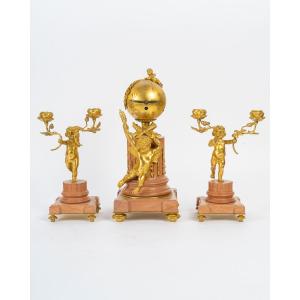
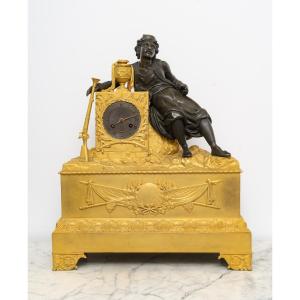
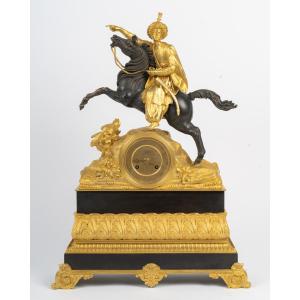
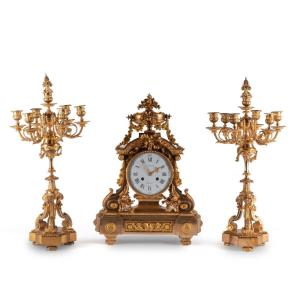
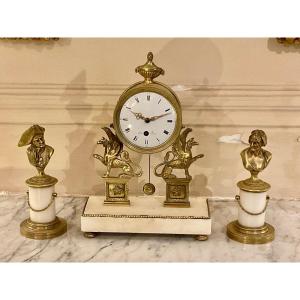
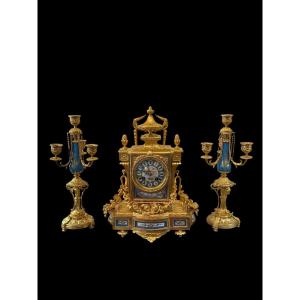
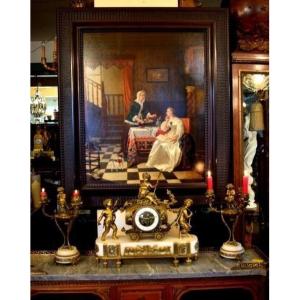
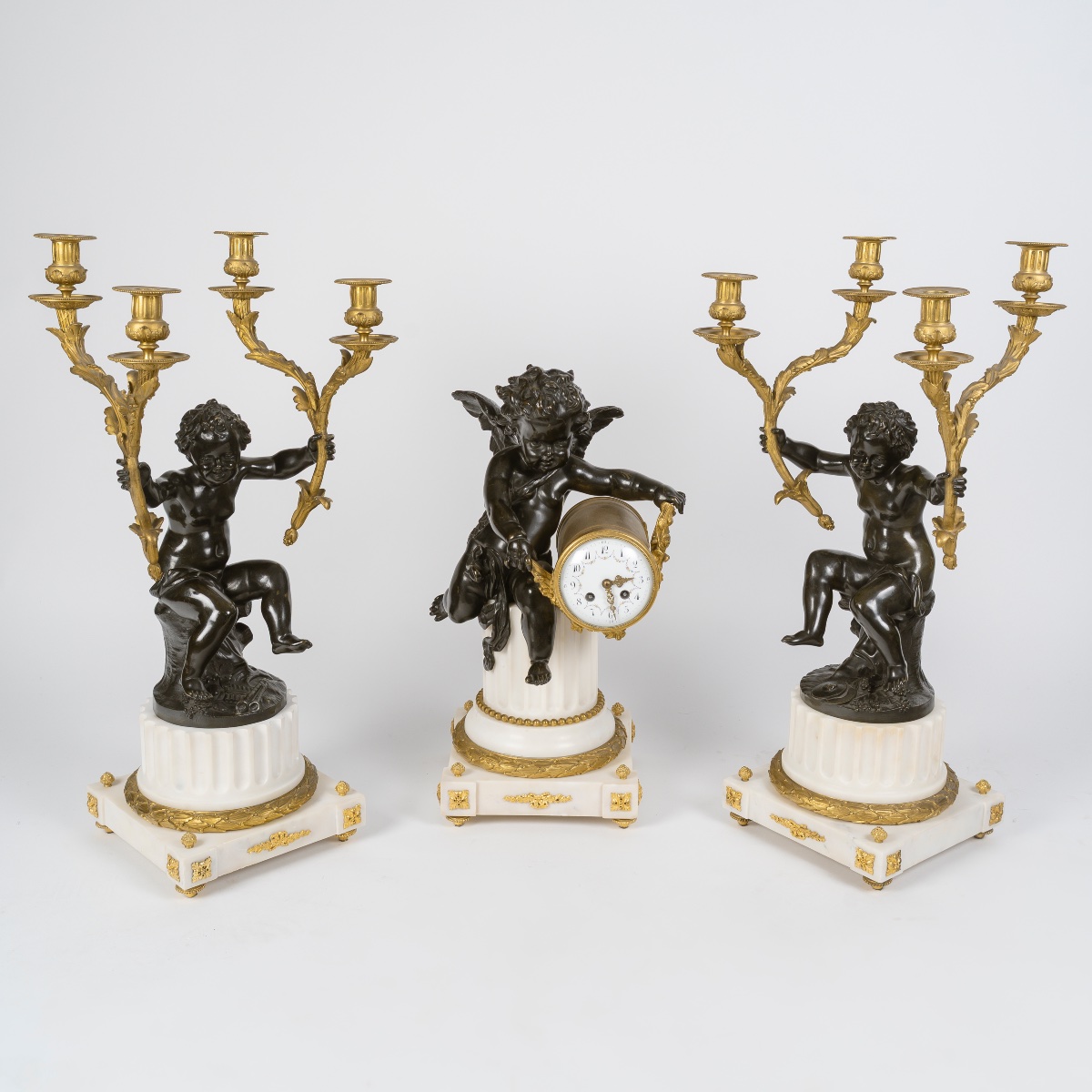
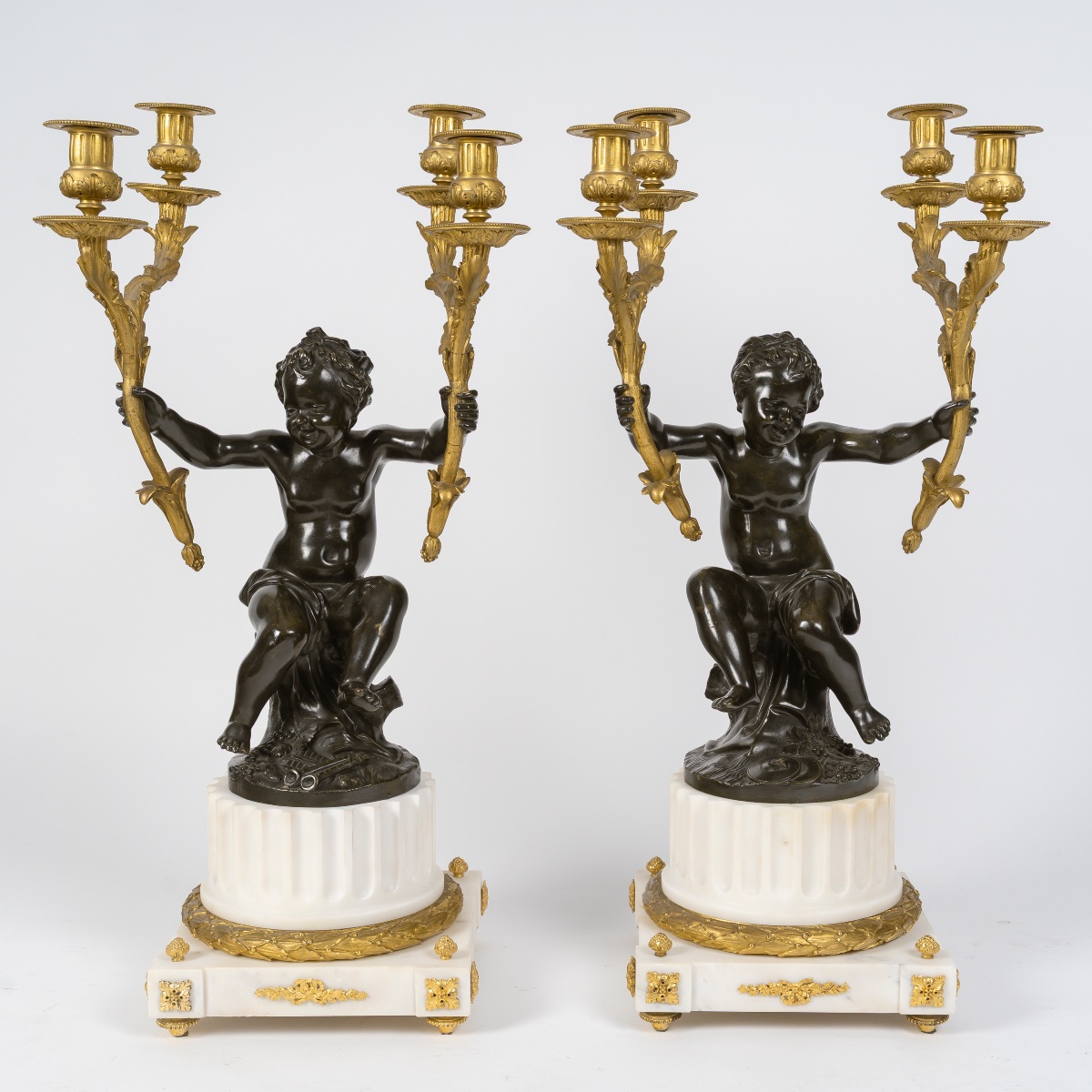
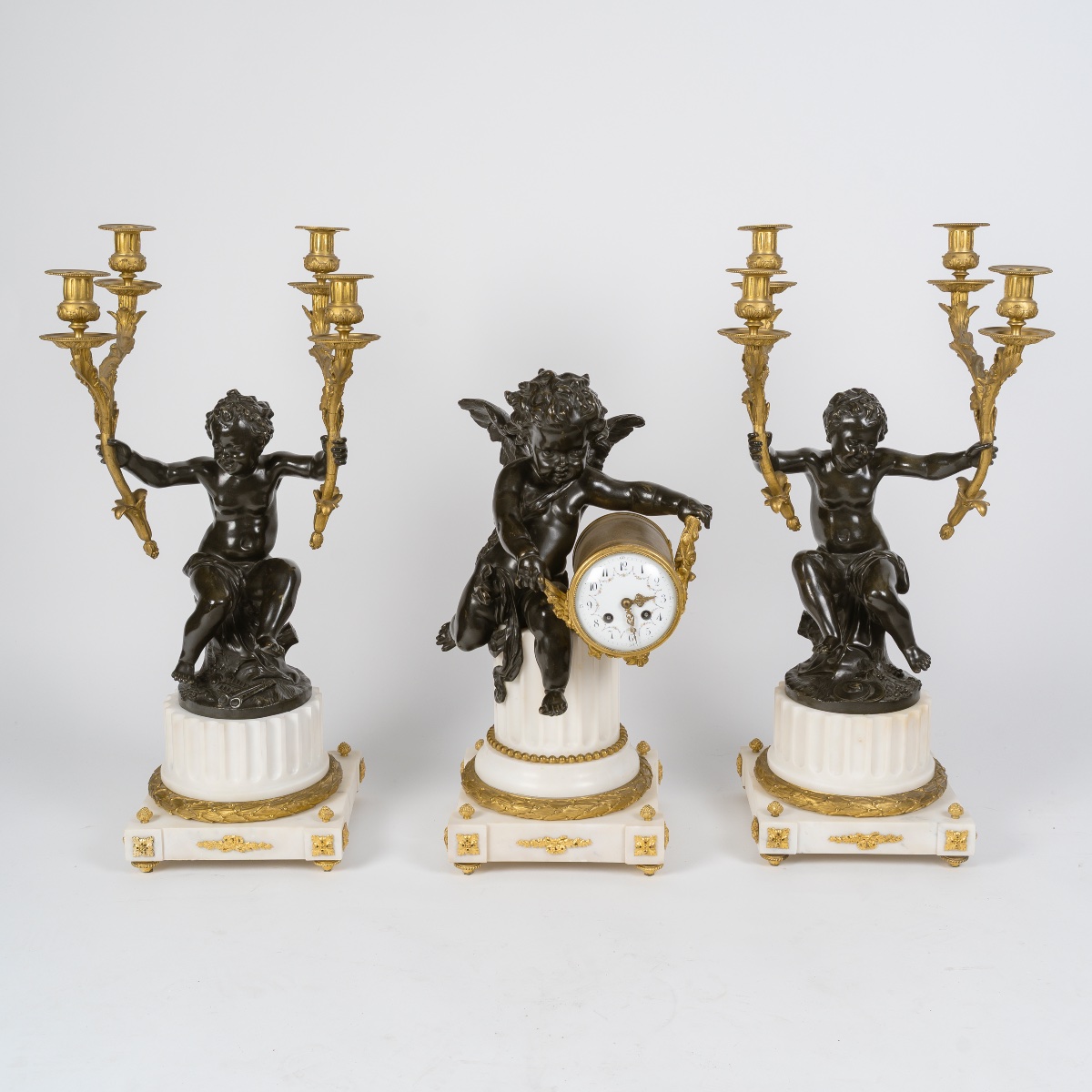
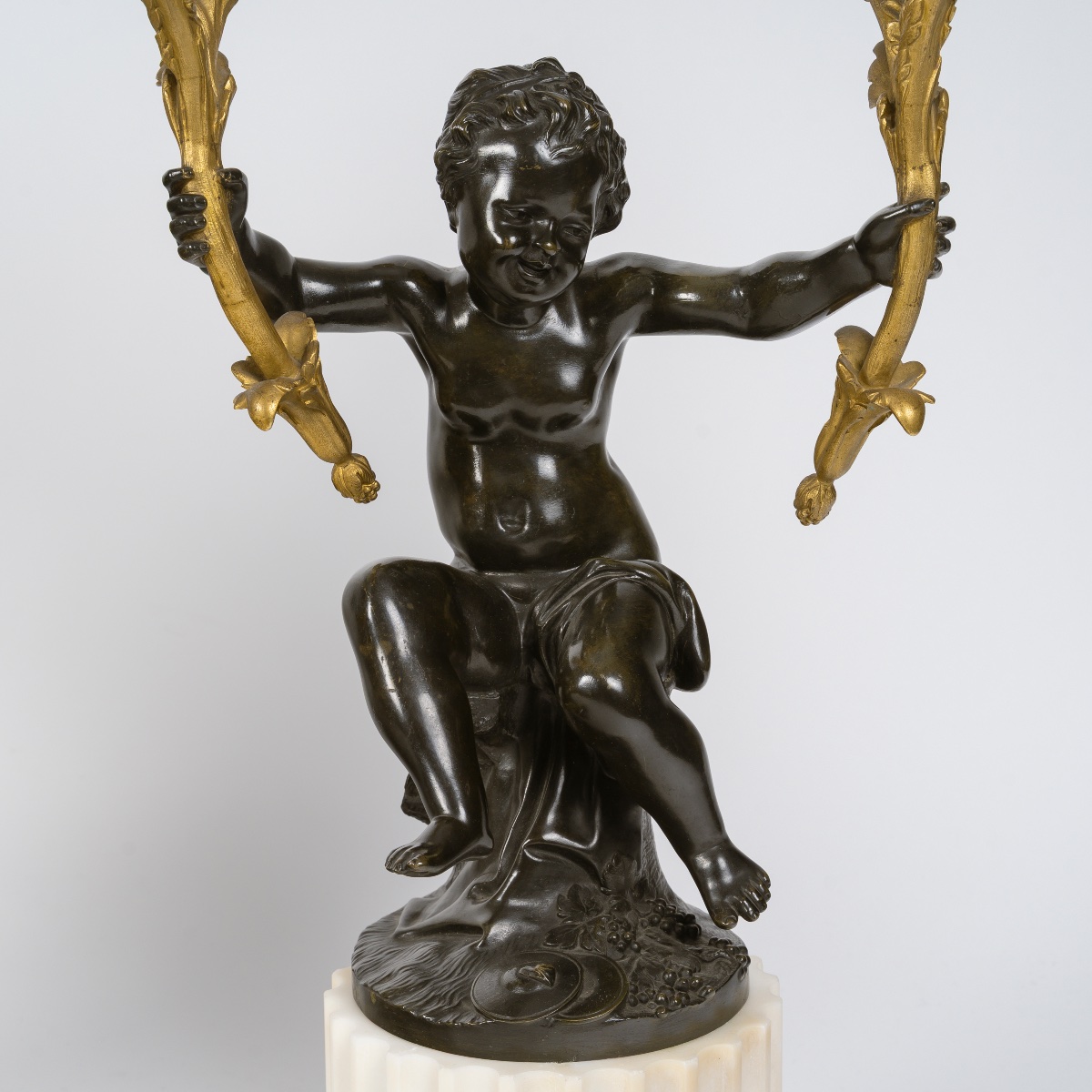
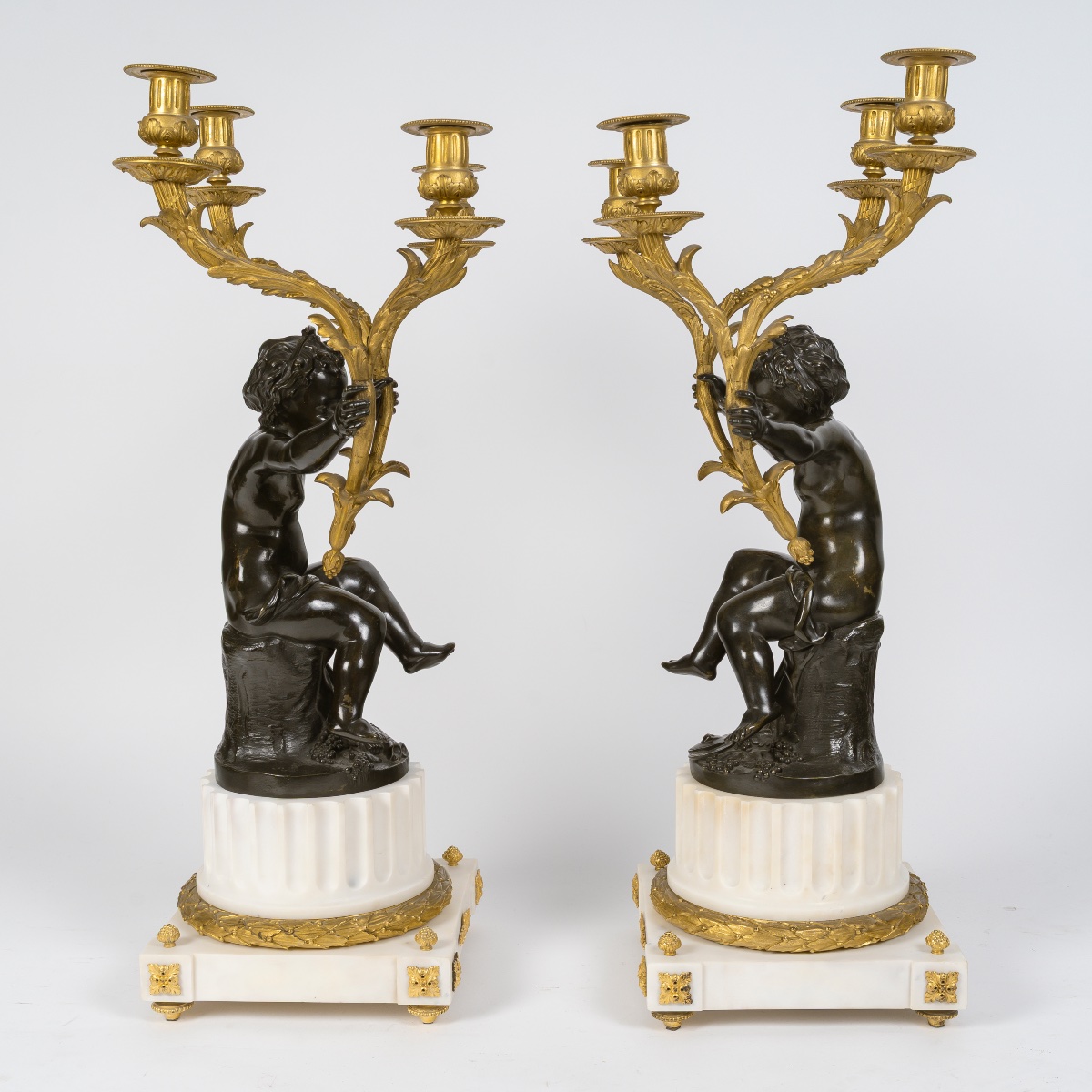
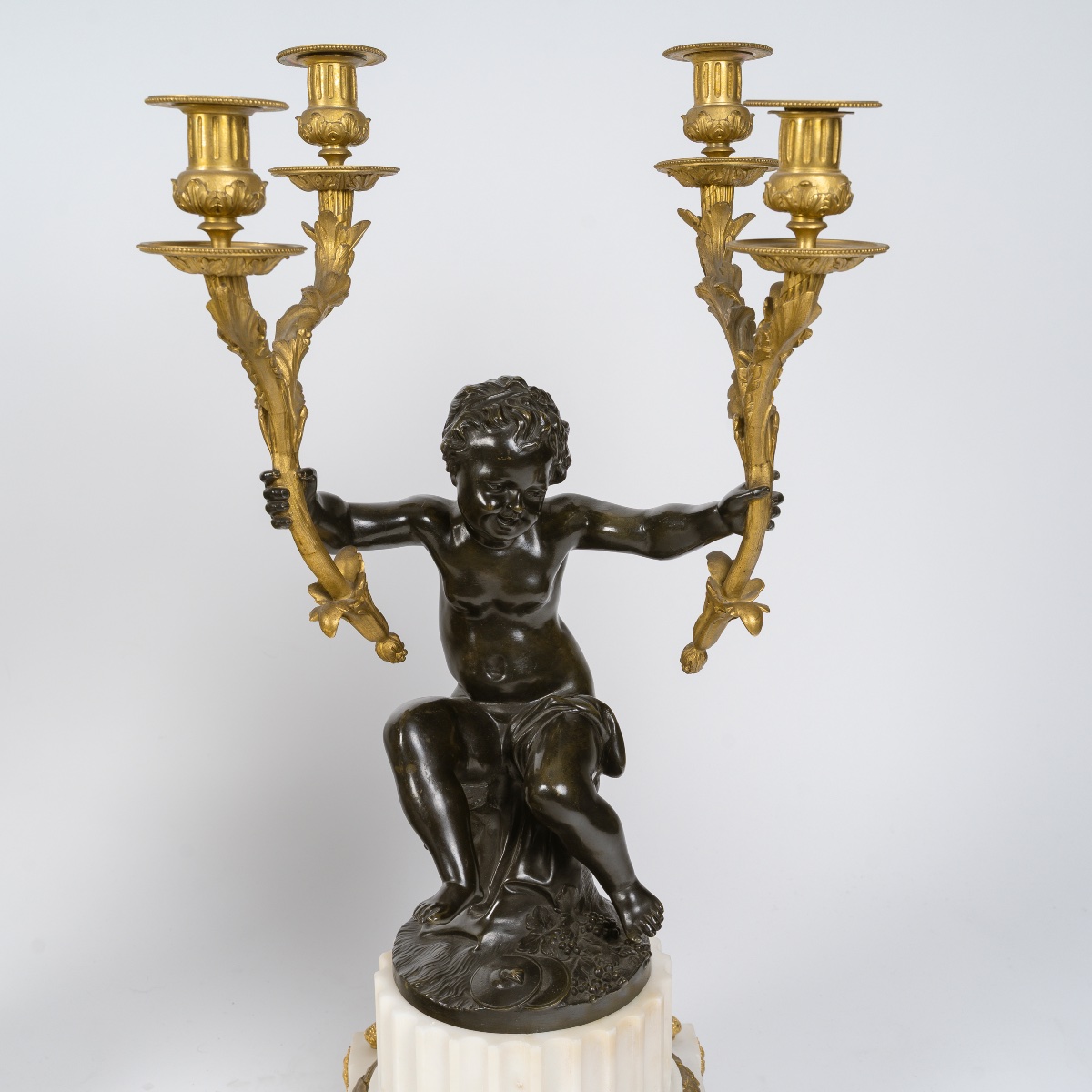
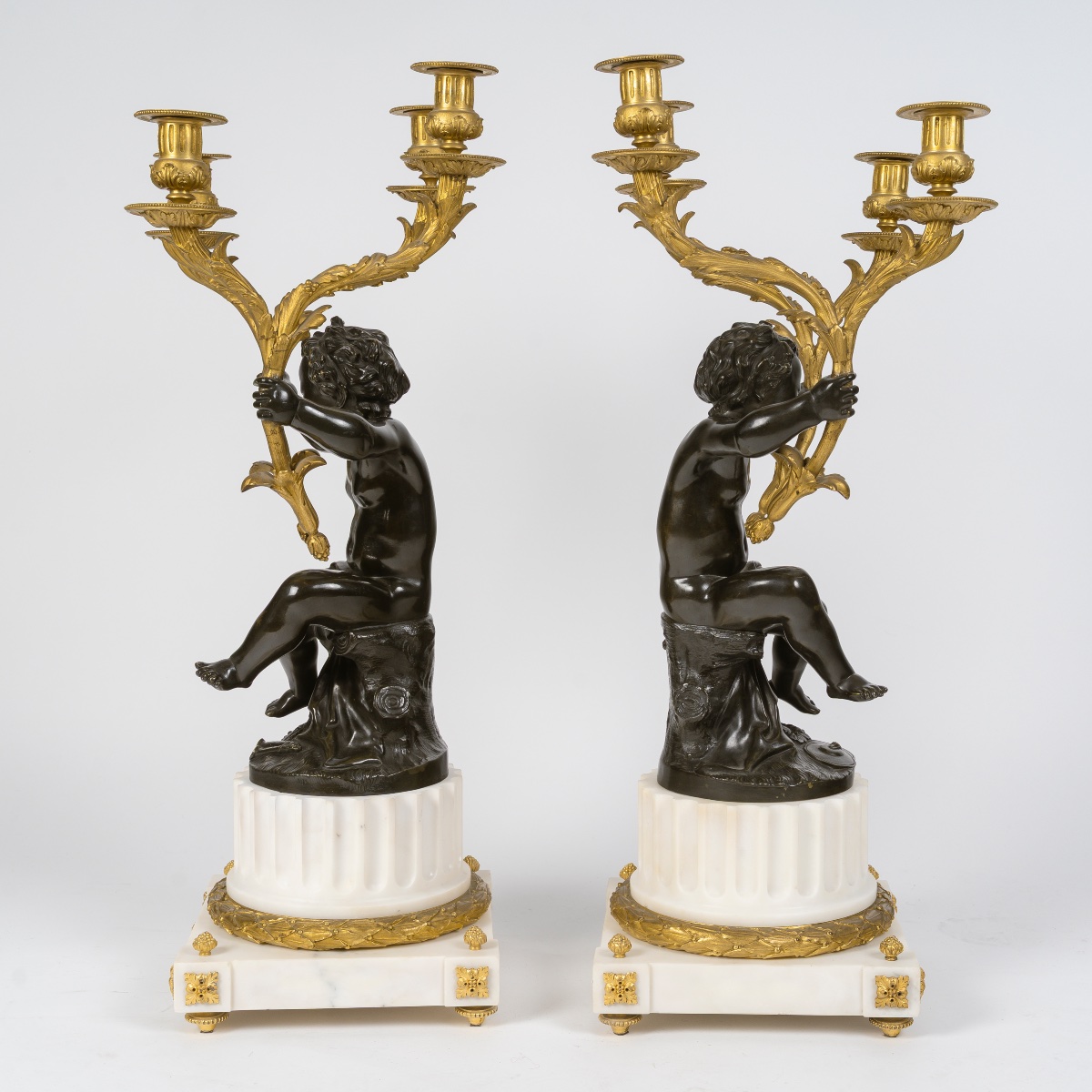
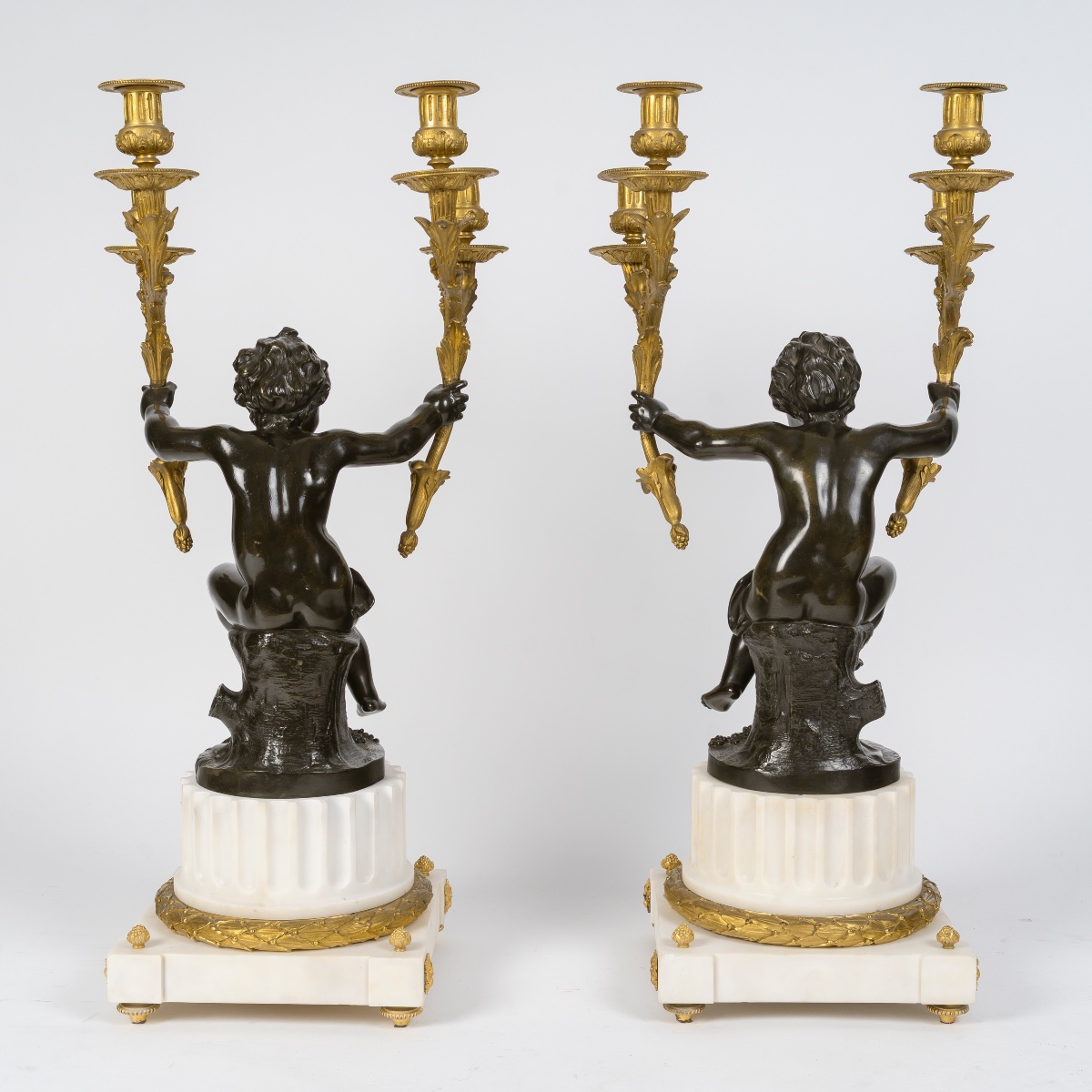
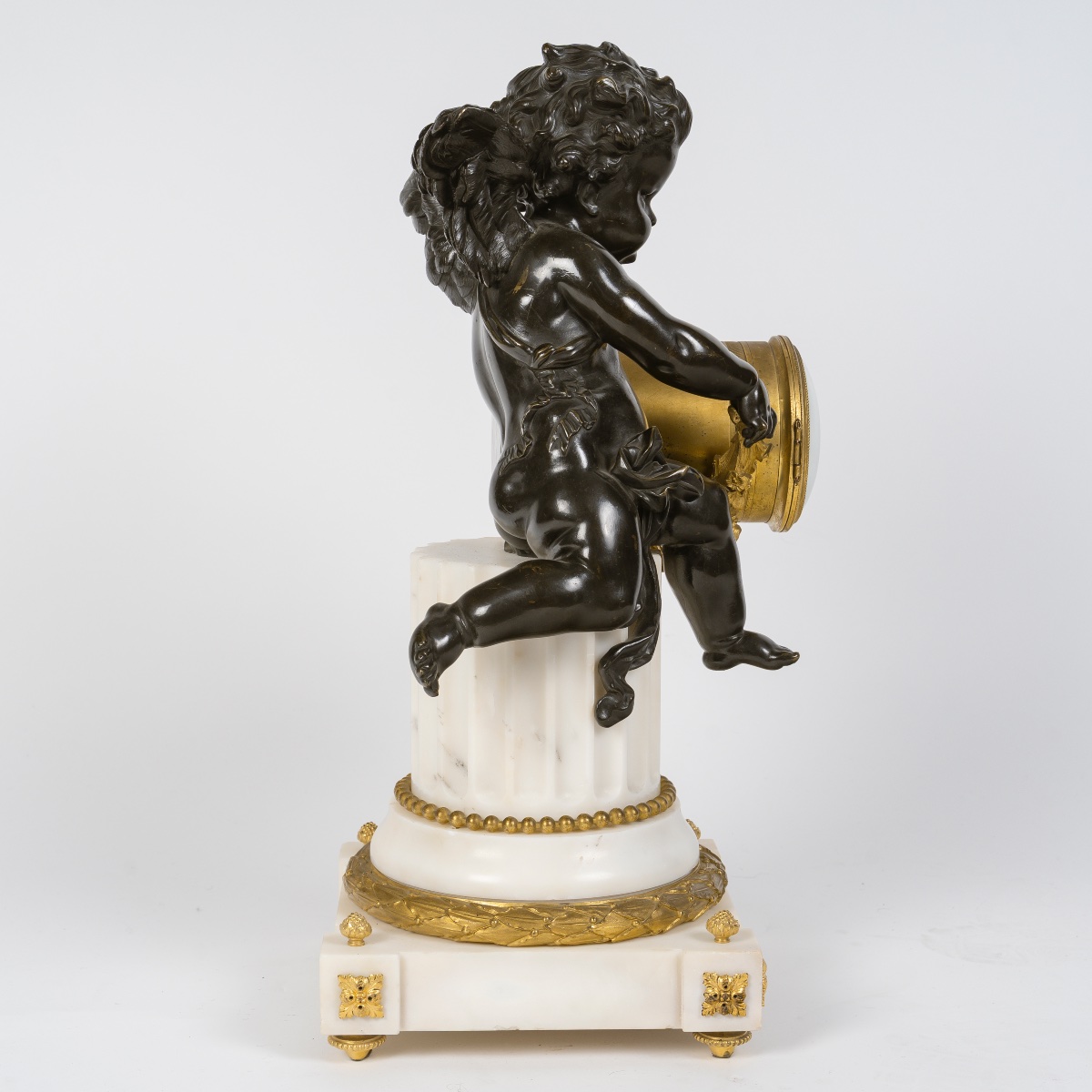
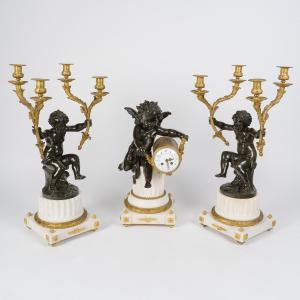
Important white marble mantelpiece set, gilded and patinated bronze, comprising a clock and two four-candle candelabras held by musician putti seated on fluted truncated columns.
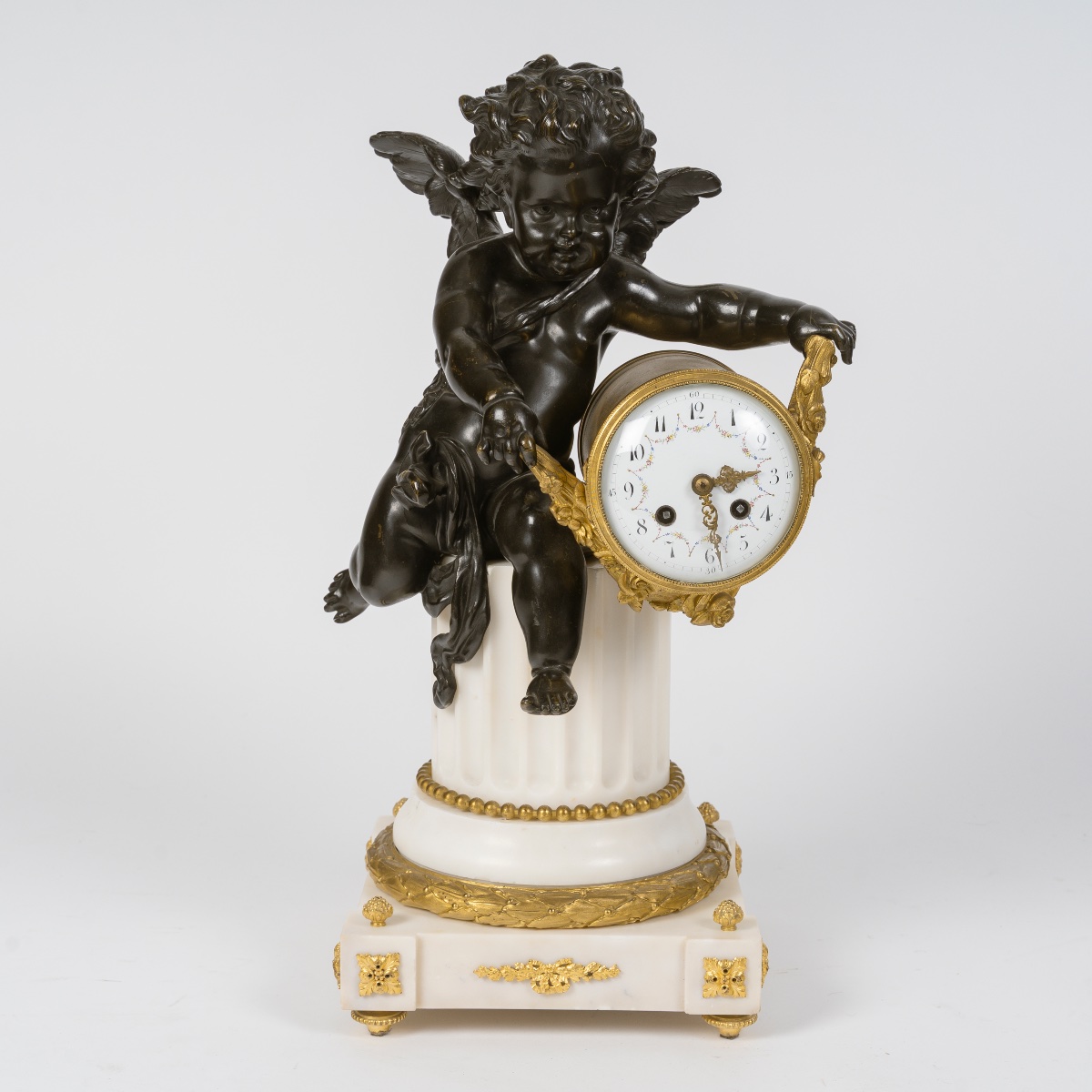
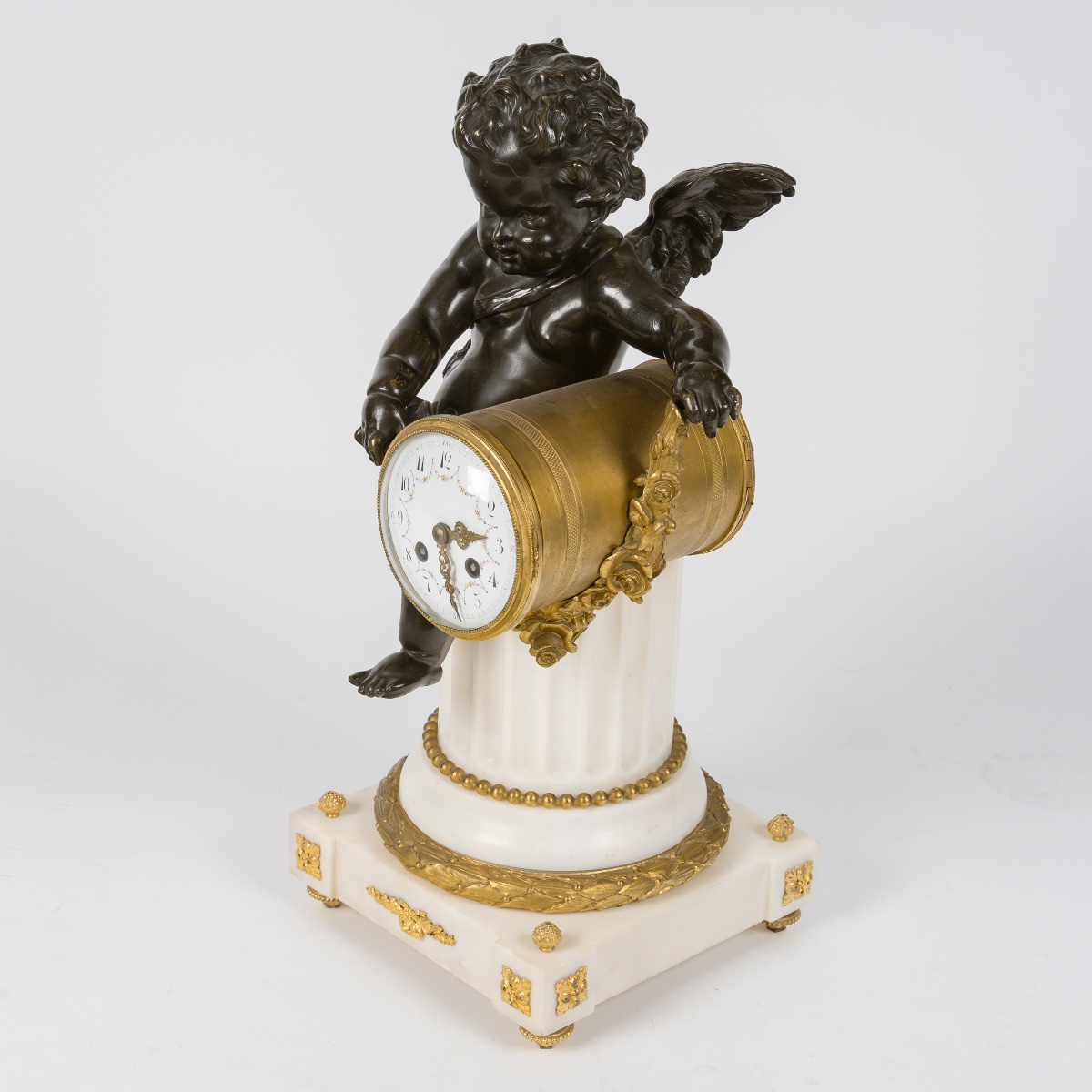
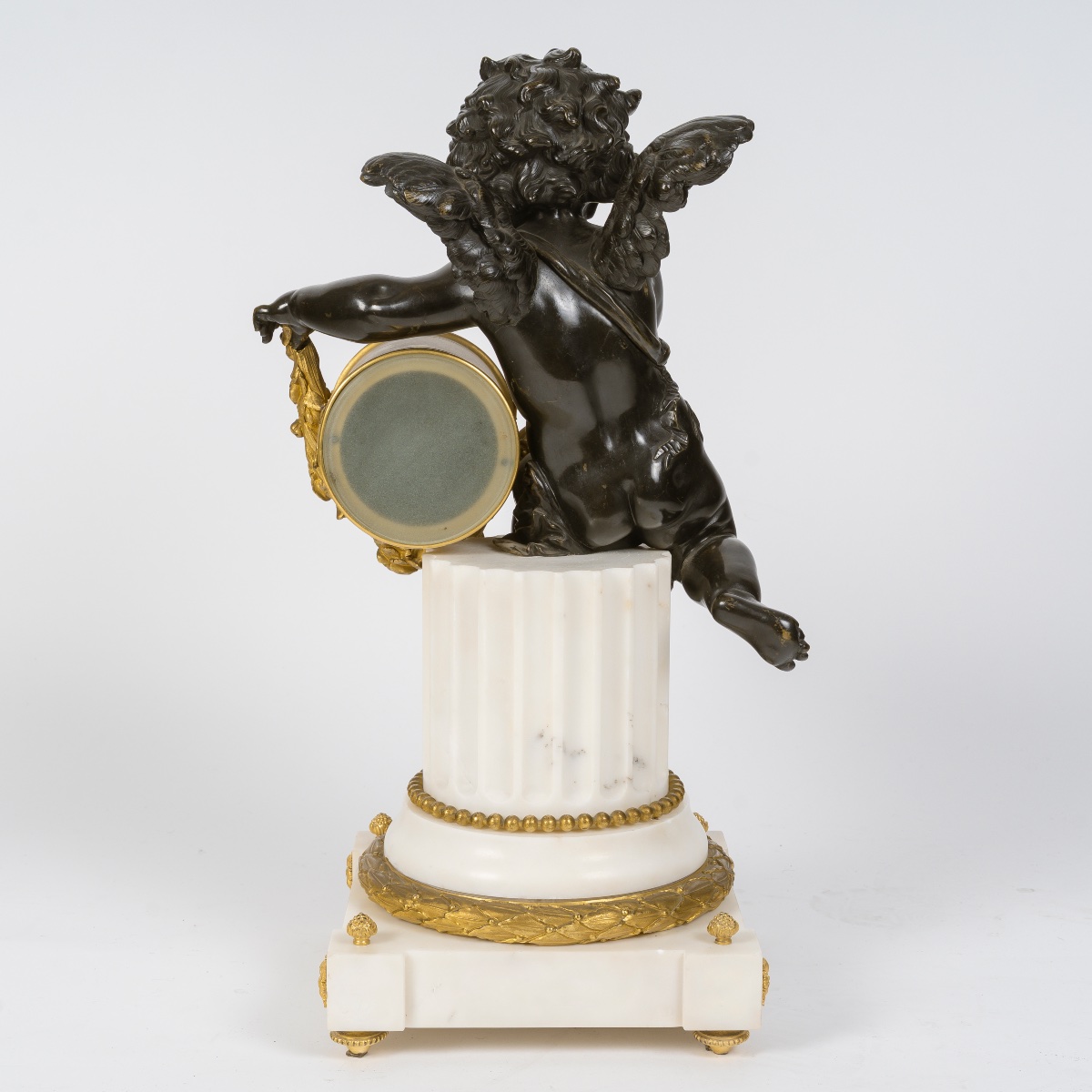
The clock is decorated with an angel seated on a column, holding a drape that supports a cylinder housing the movement; the clock face is enameled with a floral design and displays the hours in Arabic numerals.
The pieces rest on four spindle-shaped feet.
Biography of the VINCENTI Watchmaking House
Born in Corsica, Jean (Ghjuvanni-Giovanni) Vincenti founded the Vincenti & Cie watchmaking company in Montbéliard on October 6, 1823. For the most part, Vincenti developed his own machines and production equipment for manufacturing wheels, pinions, unfinished movements (Roulant Blancs), and complete watch movements. After a few years, the company ran into financial difficulties and was forced to file for bankruptcy on February 24, 1828.
Operations Director Jean “Albert” Roux acquired a portion of the shares held by Vincenti and his business partner James Thayer. This sale of shares provided the struggling company with a capital injection of 110,000 francs. On October 24, 1829, Vincenti & Cie was able to resume operations. Despite health problems, the company’s founder, Vincenti, set out to find new production methods. In Paris, he met Henri Laresche, who advised Vincenti on the matter. Six years after its bankruptcy, in 1834 in Paris, the company impressed the jury with its watches: their achievement was rewarded with a silver medal. Jean Vincenti did not live to see the company’s comeback; he died of cancer in 1833.
After Jean Vincenti’s death, Albert Roux took over the company. The name change to Albert Roux & Cie was likely due to legal reasons, as the watches continued to be sold under the Vincentie & Cie brand. In 1855, the company won another gold medal. The company has traditionally maintained a representative office in Paris on Rue des Arquebusiers (view this address), and later at 110 Rue Vieille-du-Temple.Starting in 1863, the companies Vincenti & Cie, Japy Frères & Cie, and S. Marti & Cie worked closely together in the production and marketing of watches. This is evidenced by the biography of Emile Louis Japy: around 1870, he was a director and shareholder of both Marti & Cie and Vincenti & Cie.
Vincenti & Cie remained in business until 1923.
Carrara marble, patinated and gilded bronze.
Handcrafted by clockmaker VINCENTI
Circa 1855
Dimensions
Clock
height 54 cm
length 33 cm
depth 28 cm
Candelabra
height 65 cm
width 29 cm
depth 26 cm
Description
Important white marble mantelpiece set, gilded and patinated bronze, comprising a clock and two four-candle candelabras held by musician putti seated on fluted truncated columns.
The clock is decorated with an angel seated on a column, holding a drape that supports a cylinder housing the movement; the clock face is enameled with a floral design and displays the hours in Arabic numerals.
The pieces rest on four spindle-shaped feet.
Biography of the VINCENTI Watchmaking House
Born in Corsica, Jean (Ghjuvanni-Giovanni) Vincenti founded the Vincenti & Cie watchmaking company in Montbéliard on October 6, 1823. For the most part, Vincenti developed his own machines and production equipment for manufacturing wheels, pinions, unfinished movements (Roulant Blancs), and complete watch movements. After a few years, the company ran into financial difficulties and was forced to file for bankruptcy on February 24, 1828.
Operations Director Jean “Albert” Roux acquired a portion of the shares held by Vincenti and his business partner James Thayer. This sale of shares provided the struggling company with a capital injection of 110,000 francs. On October 24, 1829, Vincenti & Cie was able to resume operations. Despite health problems, the company’s founder, Vincenti, set out to find new production methods. In Paris, he met Henri Laresche, who advised Vincenti on the matter. Six years after its bankruptcy, in 1834 in Paris, the company impressed the jury with its watches: their achievement was rewarded with a silver medal. Jean Vincenti did not live to see the company’s comeback; he died of cancer in 1833.
After Jean Vincenti’s death, Albert Roux took over the company. The name change to Albert Roux & Cie was likely due to legal reasons, as the watches continued to be sold under the Vincentie & Cie brand. In 1855, the company won another gold medal. The company has traditionally maintained a representative office in Paris on Rue des Arquebusiers (view this address), and later at 110 Rue Vieille-du-Temple.Starting in 1863, the companies Vincenti & Cie, Japy Frères & Cie, and S. Marti & Cie worked closely together in the production and marketing of watches. This is evidenced by the biography of Emile Louis Japy: around 1870, he was a director and shareholder of both Marti & Cie and Vincenti & Cie.
Vincenti & Cie remained in business until 1923.
6 300 €
Period: 19th century
Style: Louis 16th, Directory
Condition: Excellent condition
Material: Bronze
Width: 29 cm
Height: 65 cm
Depth: 26 cm
Reference (ID): 1828556
Availability: In stock
Print