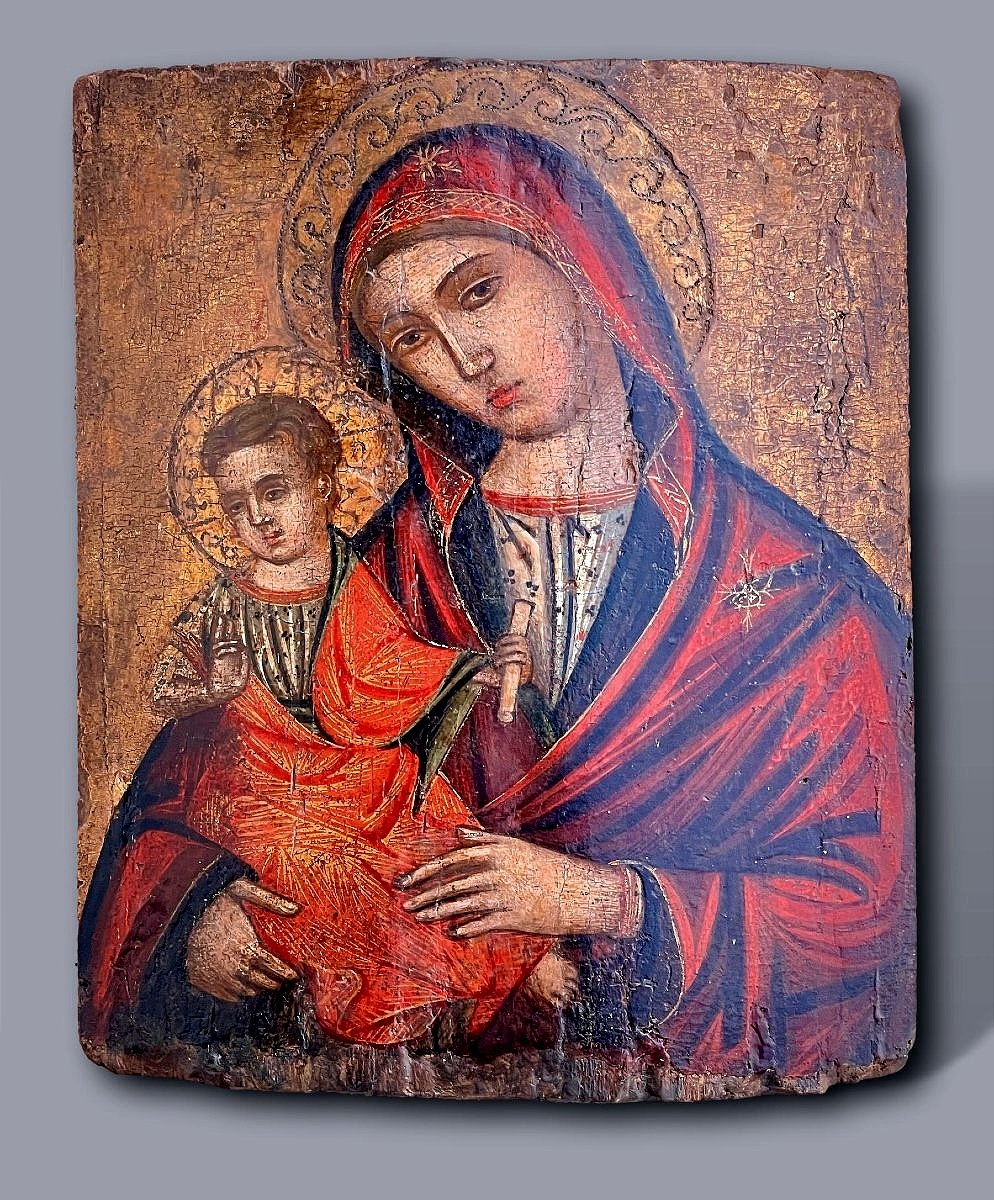
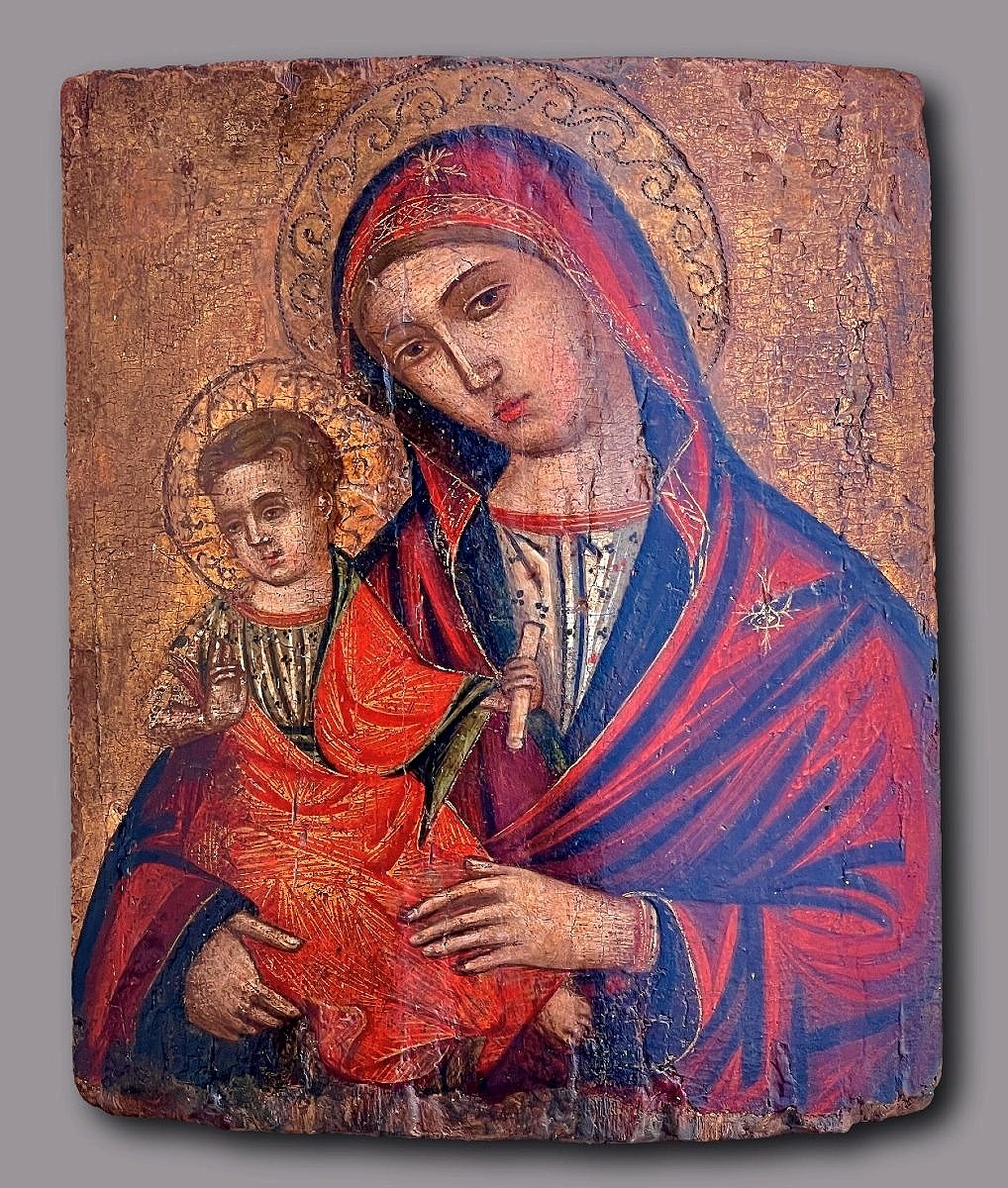
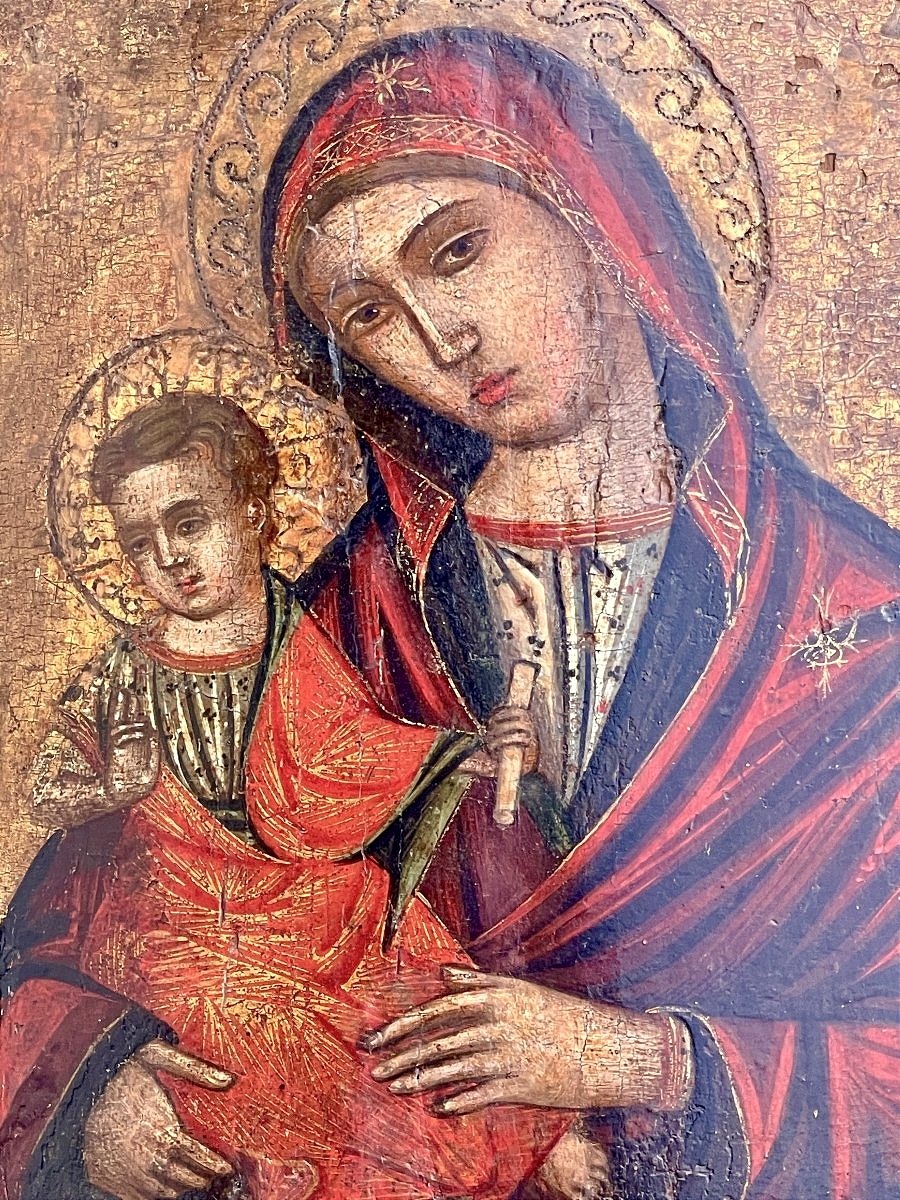
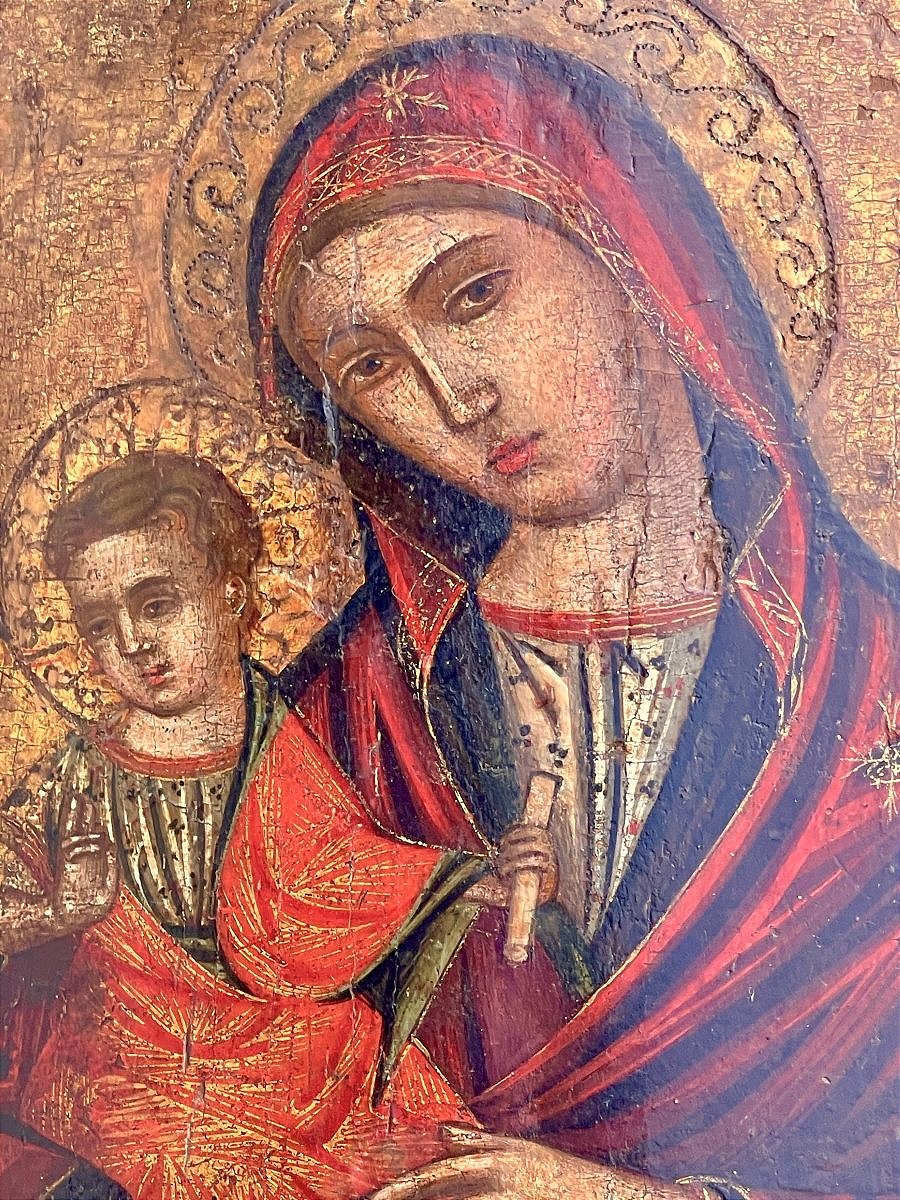
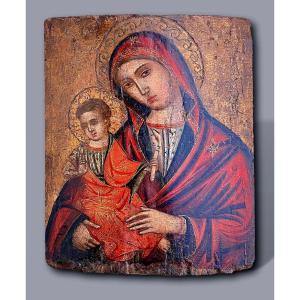


Virgin And Child, Tempera And Gold On Panel, Venetian School, Quattrocento
Dimensions: 28 x 24 cm
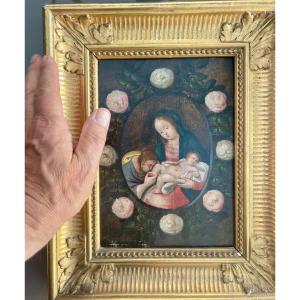
This moving representation of the Virgin and Child belongs to the pictorial tradition that defined fifteenth-century Venice, an extraordinary crossroads between the Byzantine East and the emerging Renaissance West.
Executed in tempera on a wooden panel and enriched with gold leaf, the painting retains its original arched format, characteristic of small devotional panels intended for private oratories, monastic cells, or patrician residences.
It bears witness to a particularly important moment in the history of art: the period when the hieratic rigidity inherited from Byzantium gradually became infused with greater humanity under the influence of the first naturalistic explorations of the Renaissance.
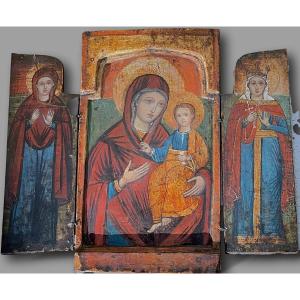
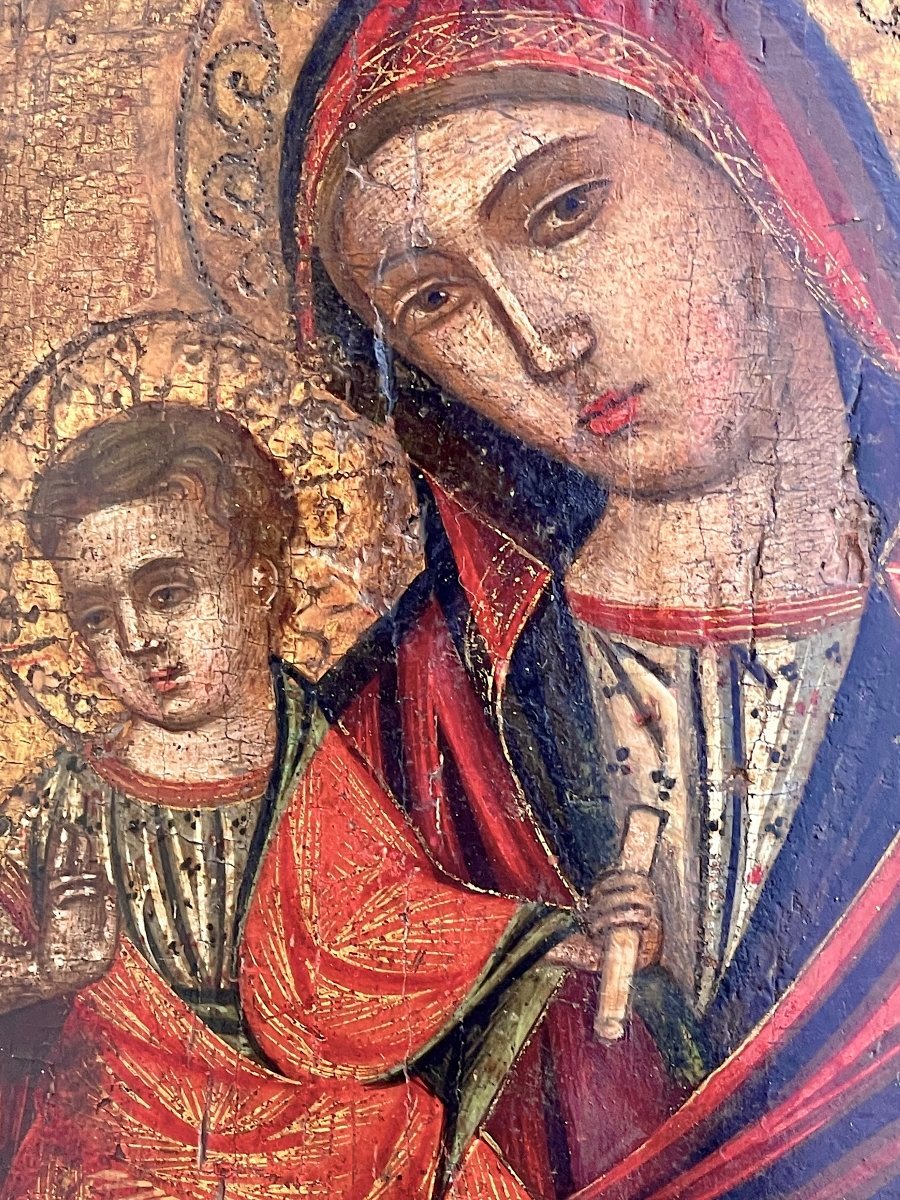
An Iconography of Sacred TendernessThe composition follows the celebrated model of the Eleousa Virgin (“Virgin of Tenderness”).
Mary gently inclines her head toward her Son in a gesture of remarkable grace and affection.
Their faces draw close together, creating a silent intimacy that softens the more austere and monumental character traditionally associated with medieval icons.
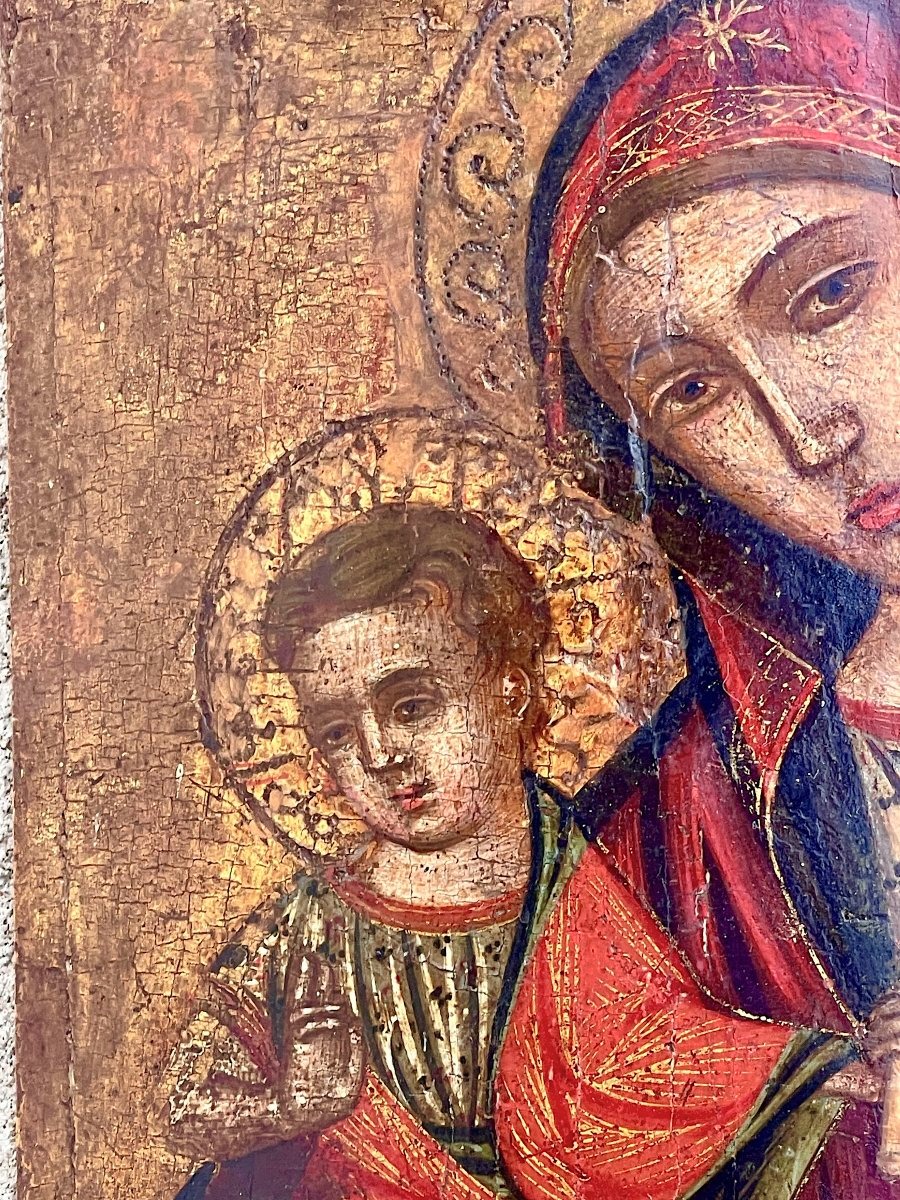
The Christ Child, seated upon His Mother's arm, raises His hand in blessing according to the traditional Eastern gesture.
His surprisingly solemn gaze, despite His youthful appearance, affirms His divine nature and foreshadows His future redemptive sacrifice.
The Virgin herself appears contemplative, almost melancholic, symbolically anticipating the suffering to come.
Stylistic AnalysisThe painting elegantly demonstrates the coexistence of two artistic worlds.
Byzantine HeritageEntirely gilded background
Engraved and punched halos
Frontal composition
Hieratic presentation of the figures
Geometric and angular drapery folds
Spiritual significance of the golden light
More individualized facial features
Subtly modeled flesh tones
Emotionally expressive gazes
More natural volumes
A tender and affectionate relationship between the figures
It is precisely this synthesis that makes Venetian paintings of the Quattrocento so highly prized today.
Pictorial QualitySeveral elements attest to a particularly refined execution:
Delicately drawn almond-shaped eyes
Long, straight nose characteristic of the Italo-Byzantine tradition
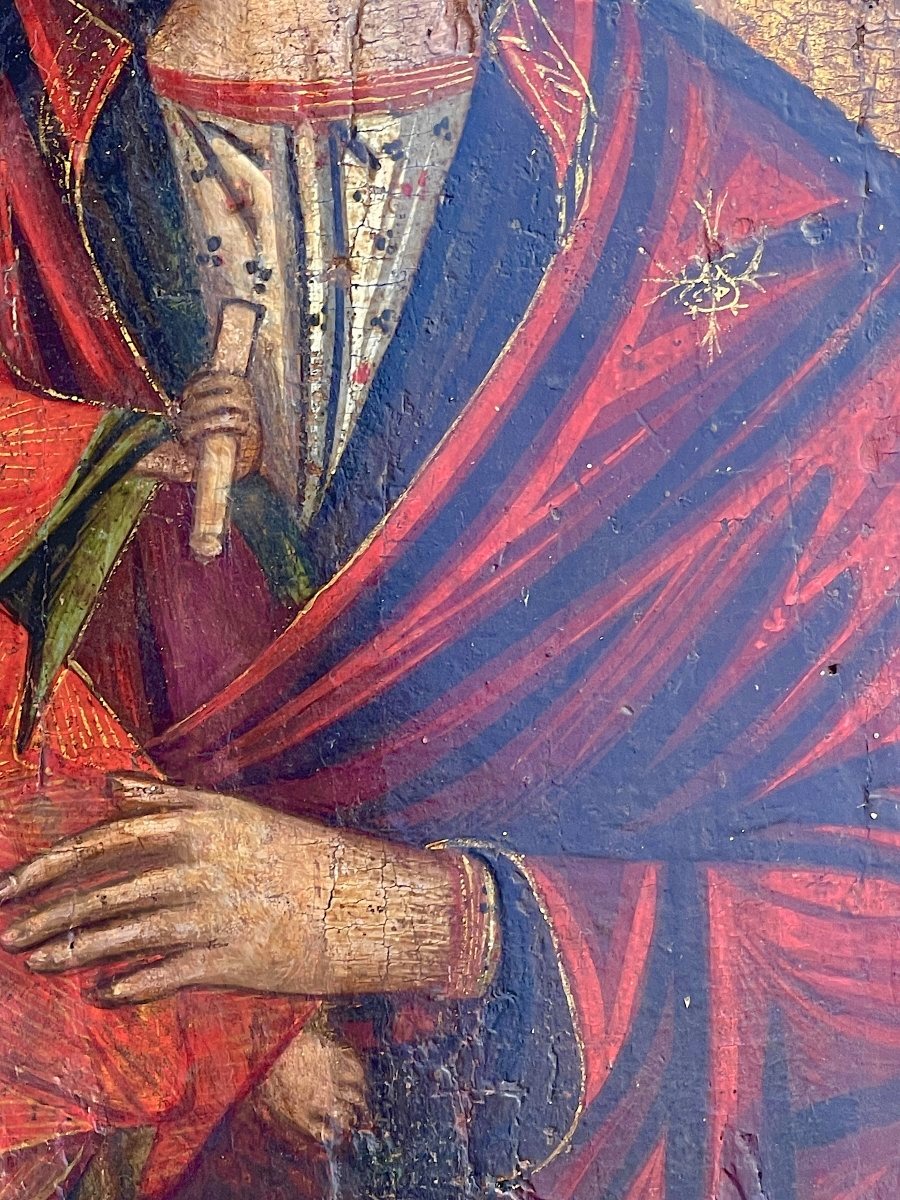
Fine gilded highlights within the garments
Flowing draperies animated by broad rhythmic movements
Remarkable chromatic harmony
Well-preserved original gilding
The deep reds of the Virgin's mantle and the Child's robe contrast beautifully with the dark blues and softly aged gold background.
This opposition creates a luminous visual effect and contributes greatly to the painting’s strong devotional presence.
Palette and PigmentsVisual examination suggests the probable use of traditional pigments commonly employed in Venetian workshops of the fifteenth century:
Vermilion or cinnabar red
Organic red lakes
Azurite blue
Lead white
Natural earth pigments
Gold leaf applied over a prepared ground
The gilded highlights accentuating the folds of Christ’s garment are characteristic of the technique known as chrysography, directly inherited from Byzantine artistic practice.
Attribution and ComparisonsStylistically, the painting may be compared with works produced by:
Venetian workshops influenced by the Greek tradition;
The circle of Jacobello del Fiore;
The later works of Michele Giambono;
Workshops active in Venice and Murano during the second half of the fifteenth century;
Certain Cretan-Venetian devotional productions created for private worship.
While no attribution to a specific master can be proposed without further scientific study, the painting can be consistently placed within the tradition of Late Italo-Byzantine Venetian painting of the Quattrocento.
ConditionThe painting displays:
Wear consistent with its age;
An extensive network of age craquelure;
Minor localized paint lifting and abrasions;
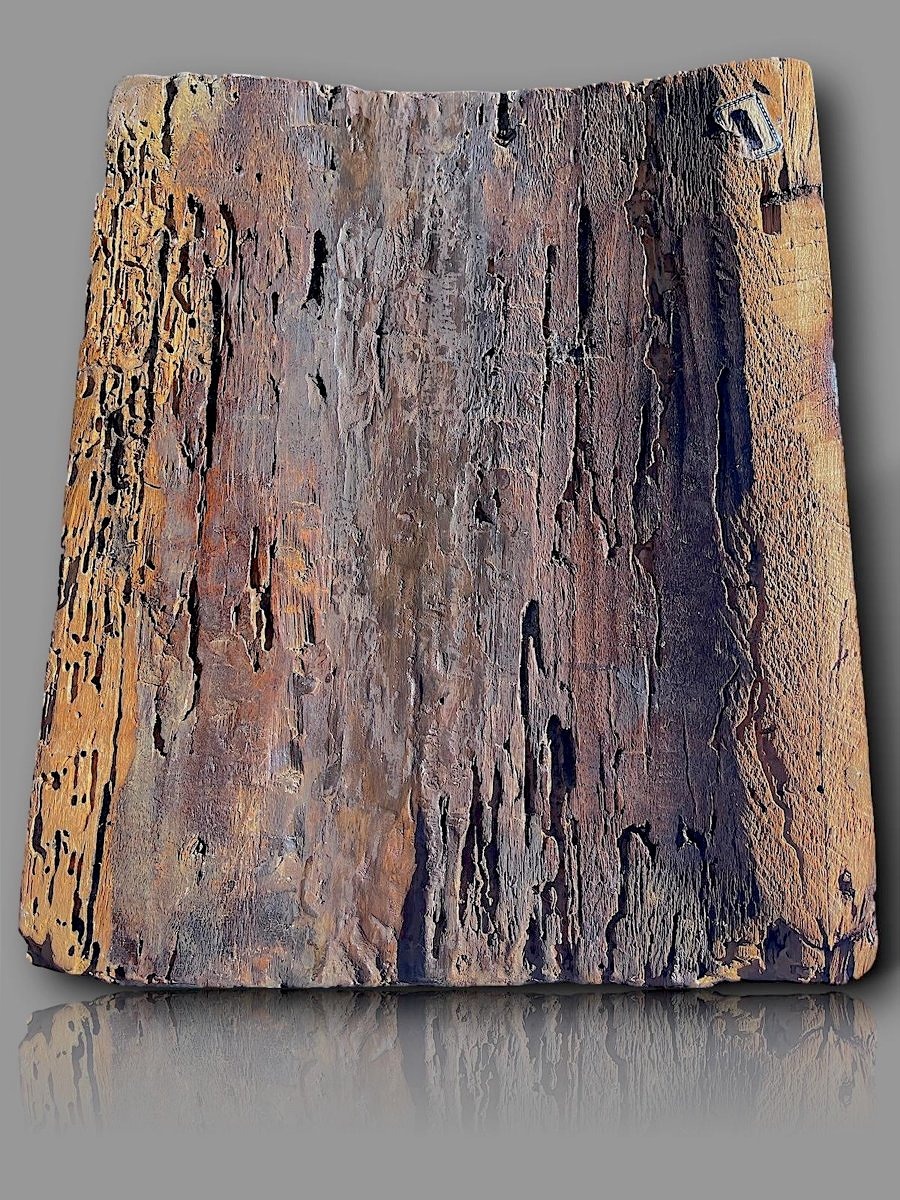
Peripheral wear to the wooden support;
Significant historic woodworm activity visible on the reverse;
A panel that appears structurally stable today.
These characteristics contribute fully to the historical authenticity of the work.
Importance in Art HistoryVenice occupied a unique position in fifteenth-century Europe.
While Florence was developing the principles of the Renaissance, the Serenissima maintained constant cultural and commercial exchanges with Constantinople, Crete, and the wider Greek world.
This painting perfectly illustrates that exceptional historical context.
It preserves the timeless spirituality of the Byzantine icon while revealing the earliest signs of the Renaissance humanization of sacred imagery.
As such, it belongs to one of the most fascinating chapters in the history of Italian painting.
Professional Visual AssessmentBased on the available photographs:
Venetian or Cretan-Venetian School
Second half of the 15th century (circa 1460–1480)
Technique consistent with period practice:
Egg tempera painting;
Original gilded background;
Traditional panel preparation;
Orthodox iconography adapted to Venetian taste.
The age of the support, the natural wear of the gilding, the character of the craquelure, and the historic woodworm traces all support the conclusion that this is an authentically old work.
Period: Before 16th century
Style: Renaissance, Louis 13th
Condition: Good condition
Material: Other
Width: 24 cm
Height: 28 cm
Reference (ID): 1826518
Availability: In stock