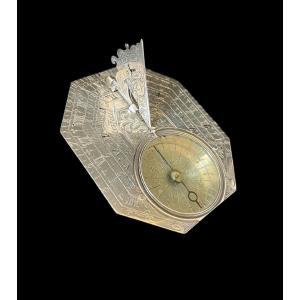


Michael Butterfield, Silver Sundial, Paris, 17th Century.
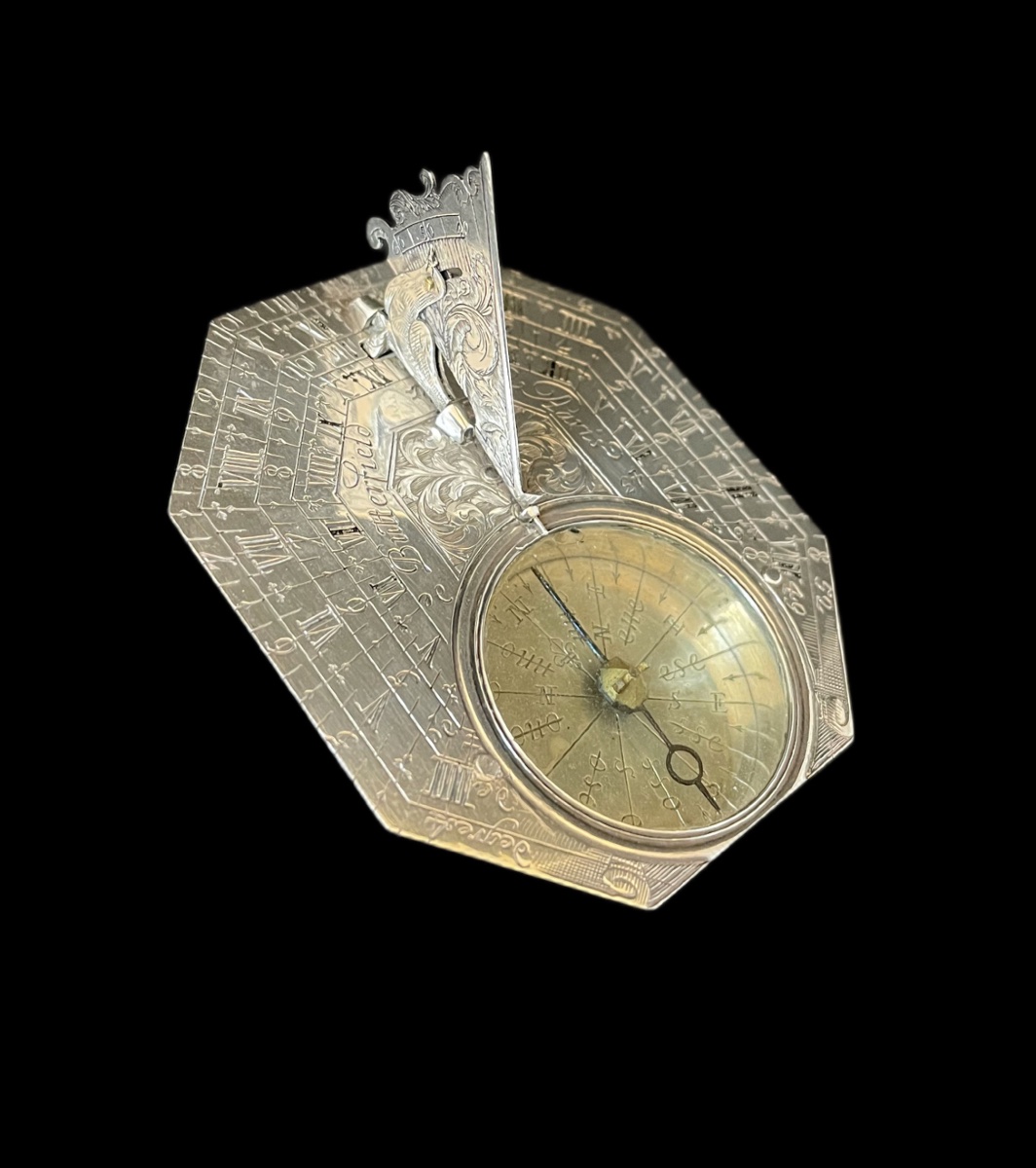
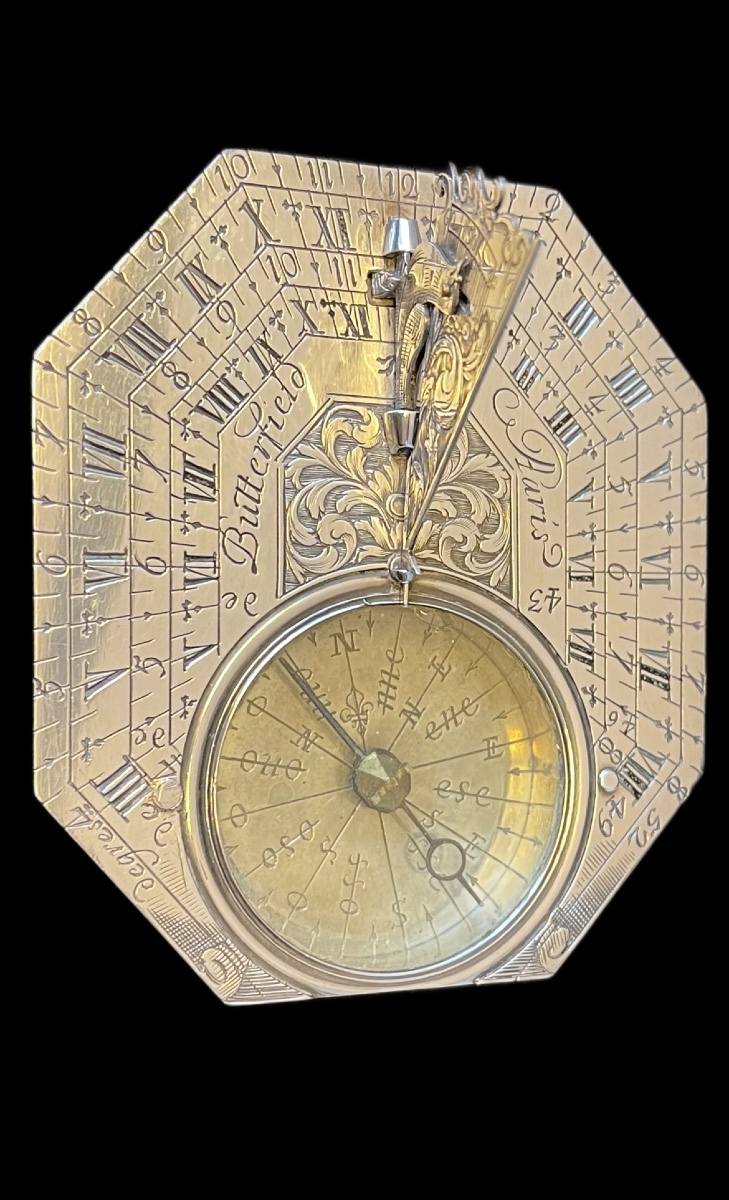
A silver sundial in perfect condition, dating from the last quarter of the 17th century, crafted by the famous Michael Butterfield in Paris.
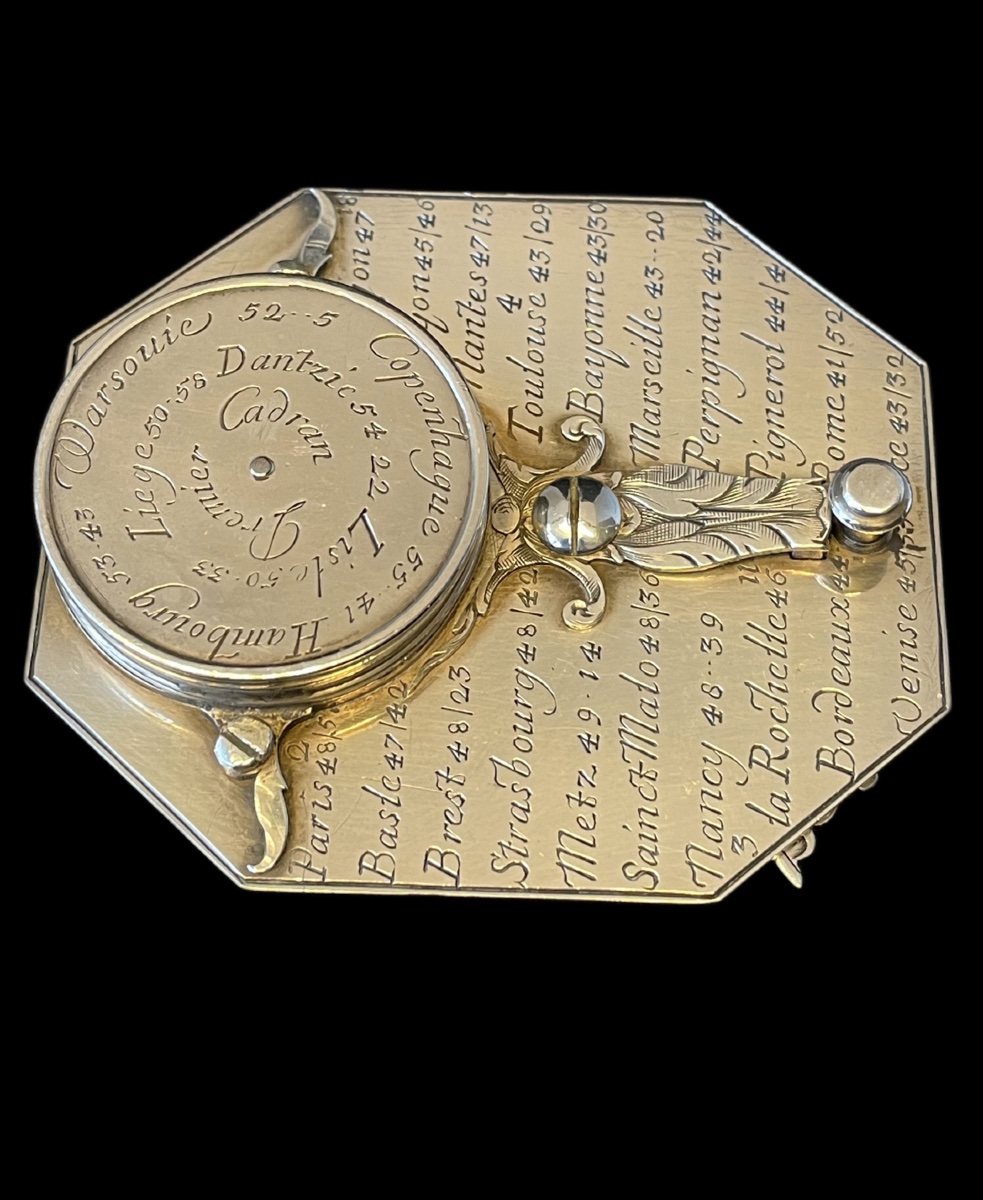
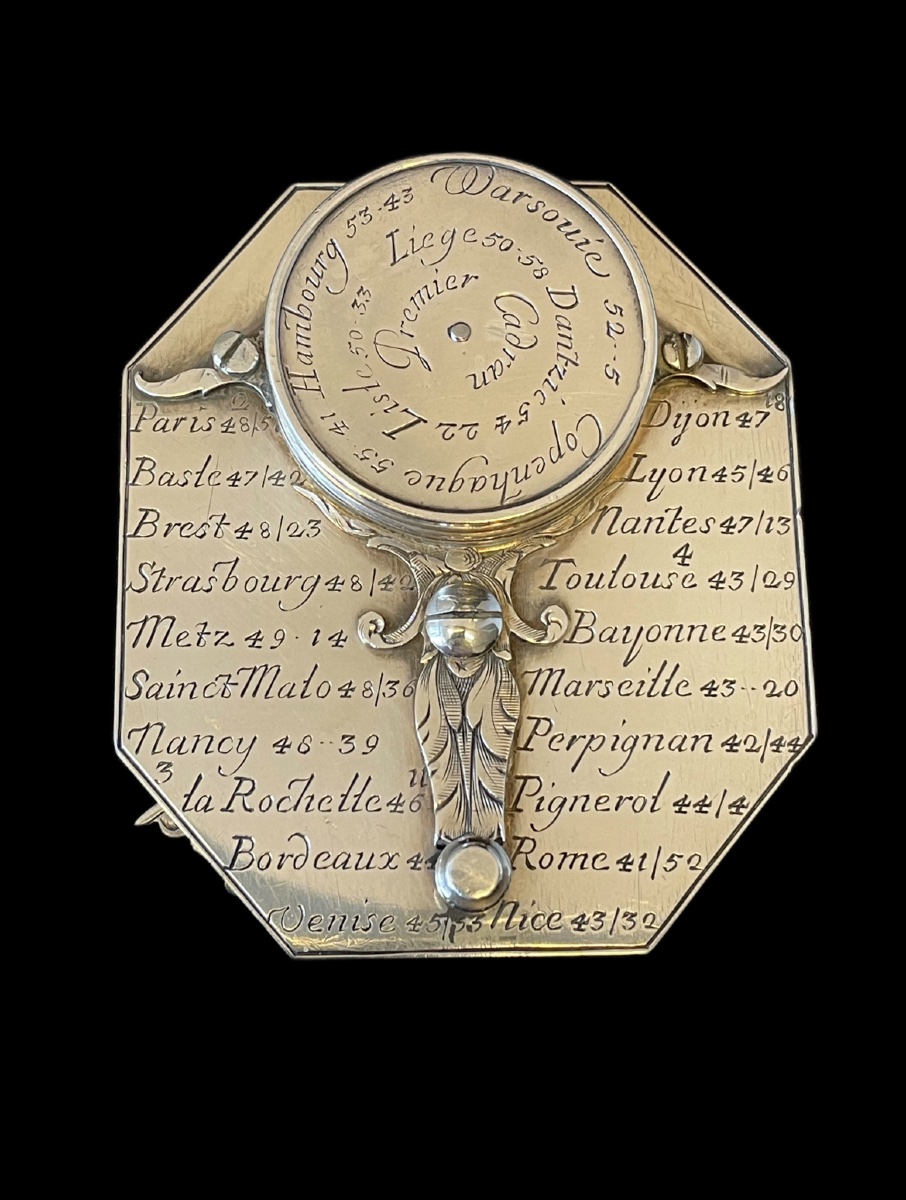
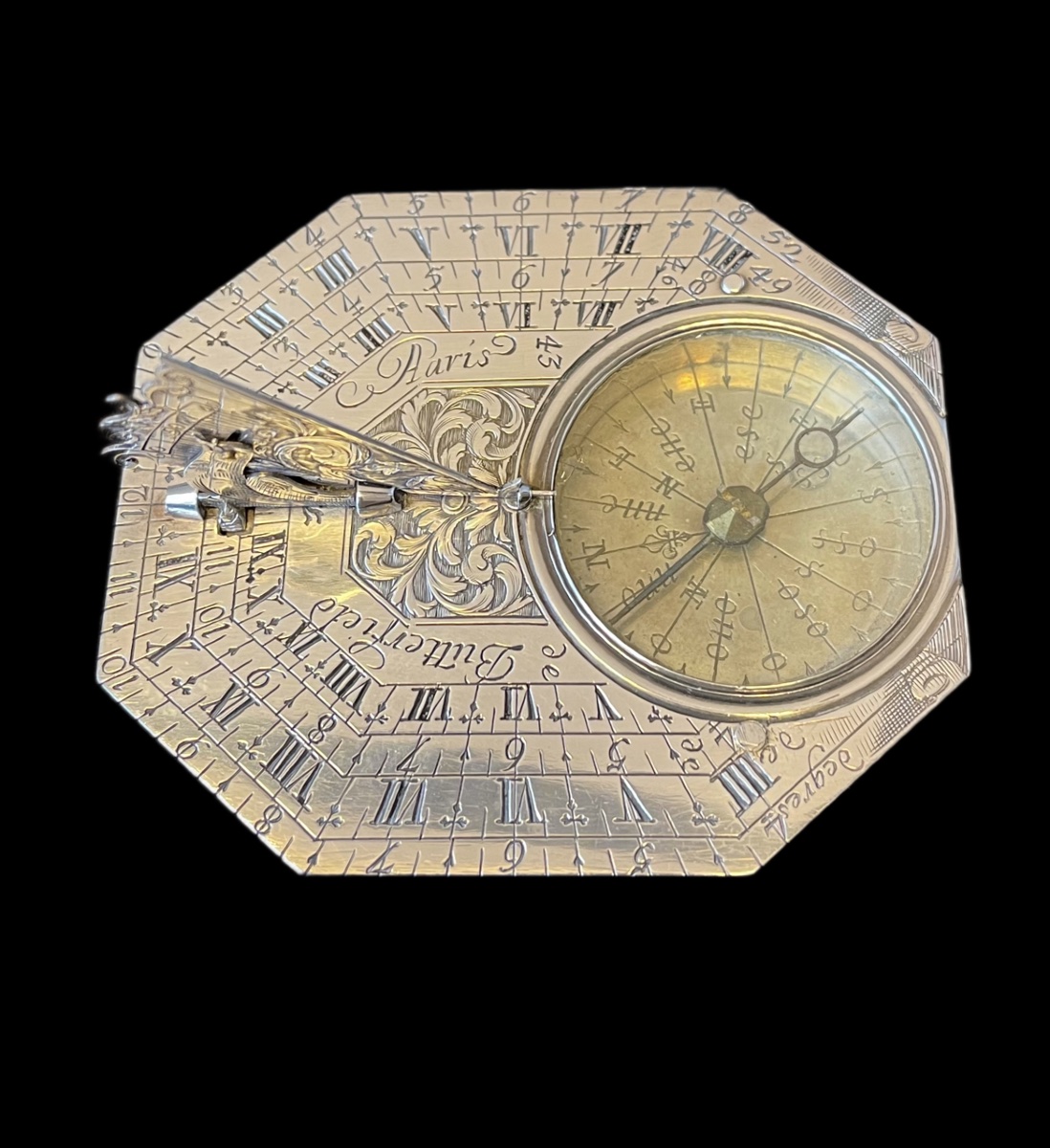
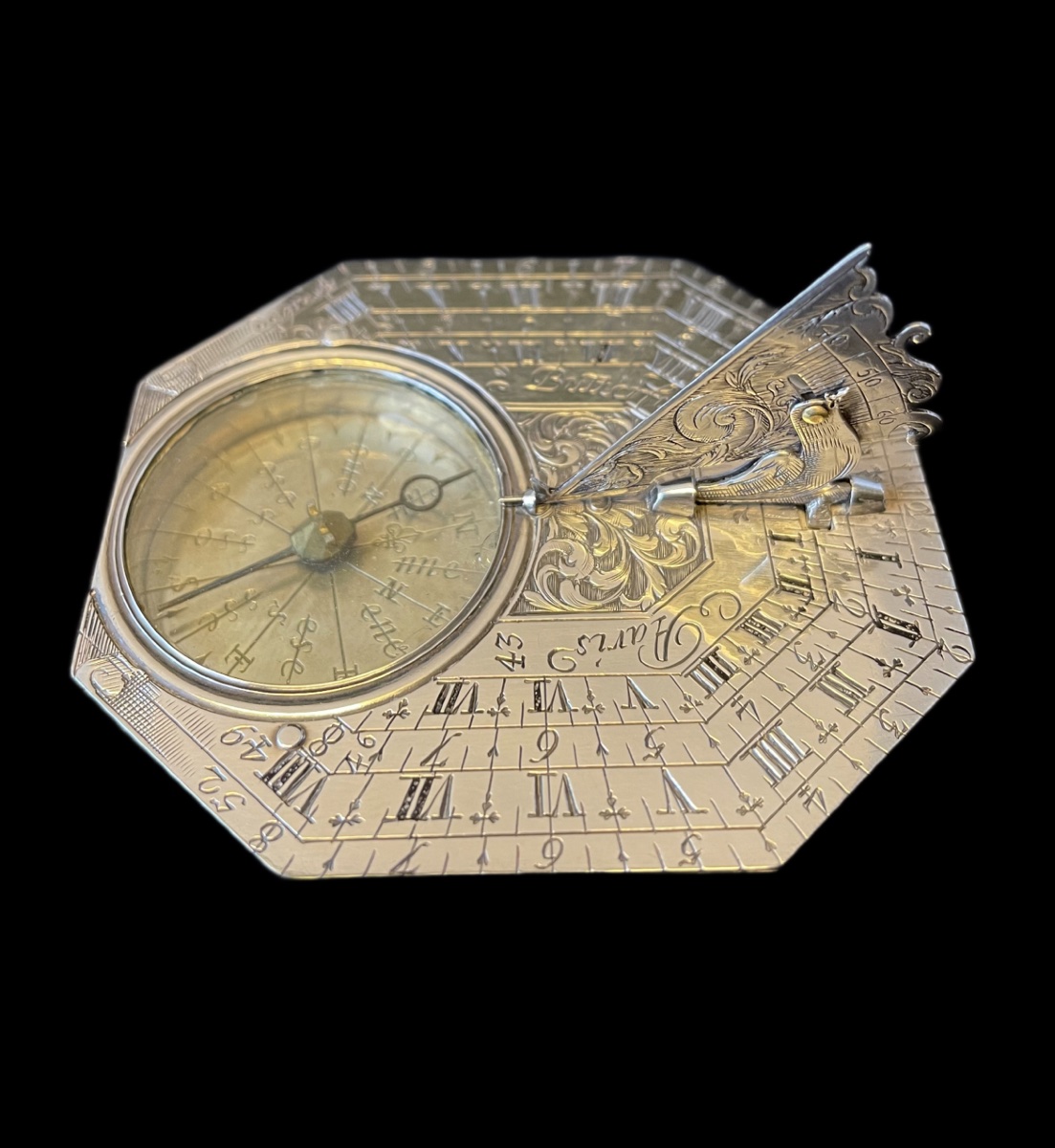
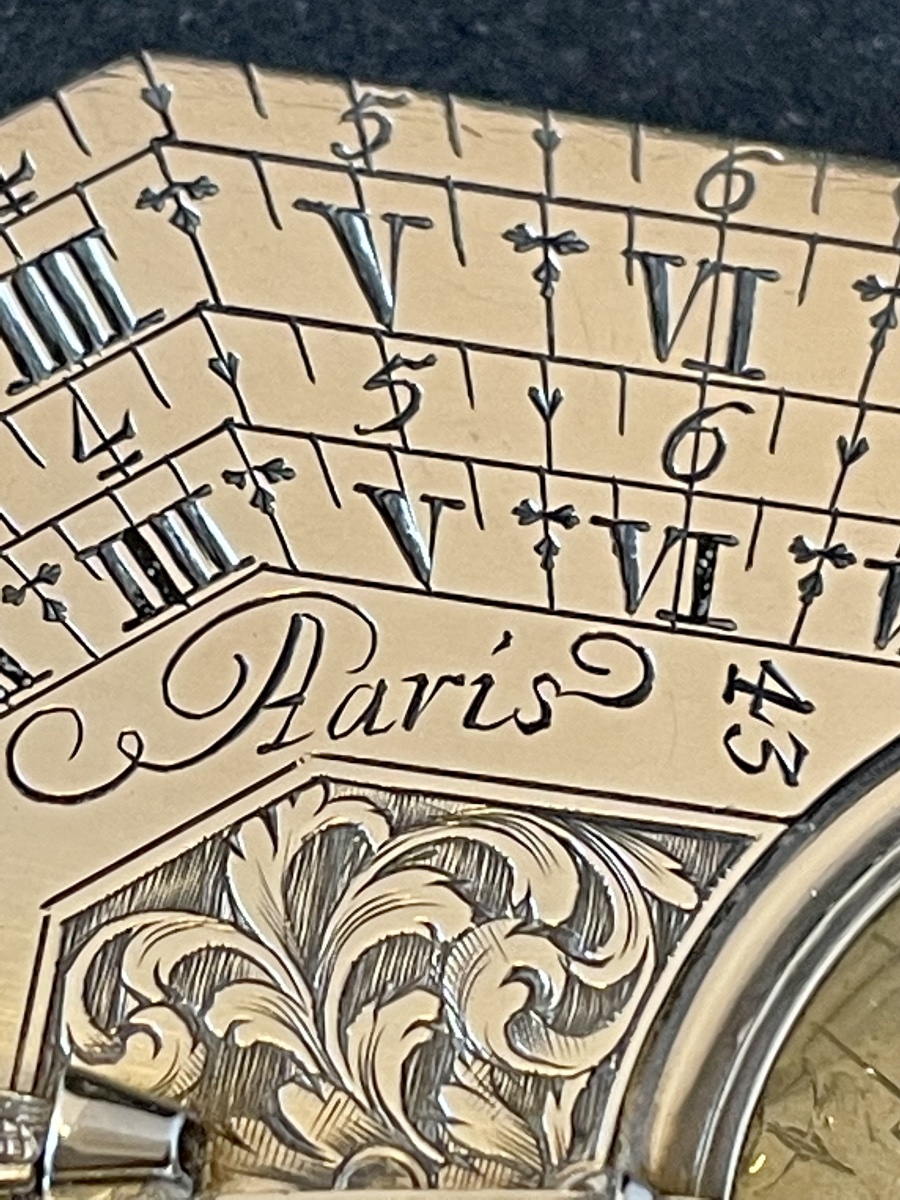
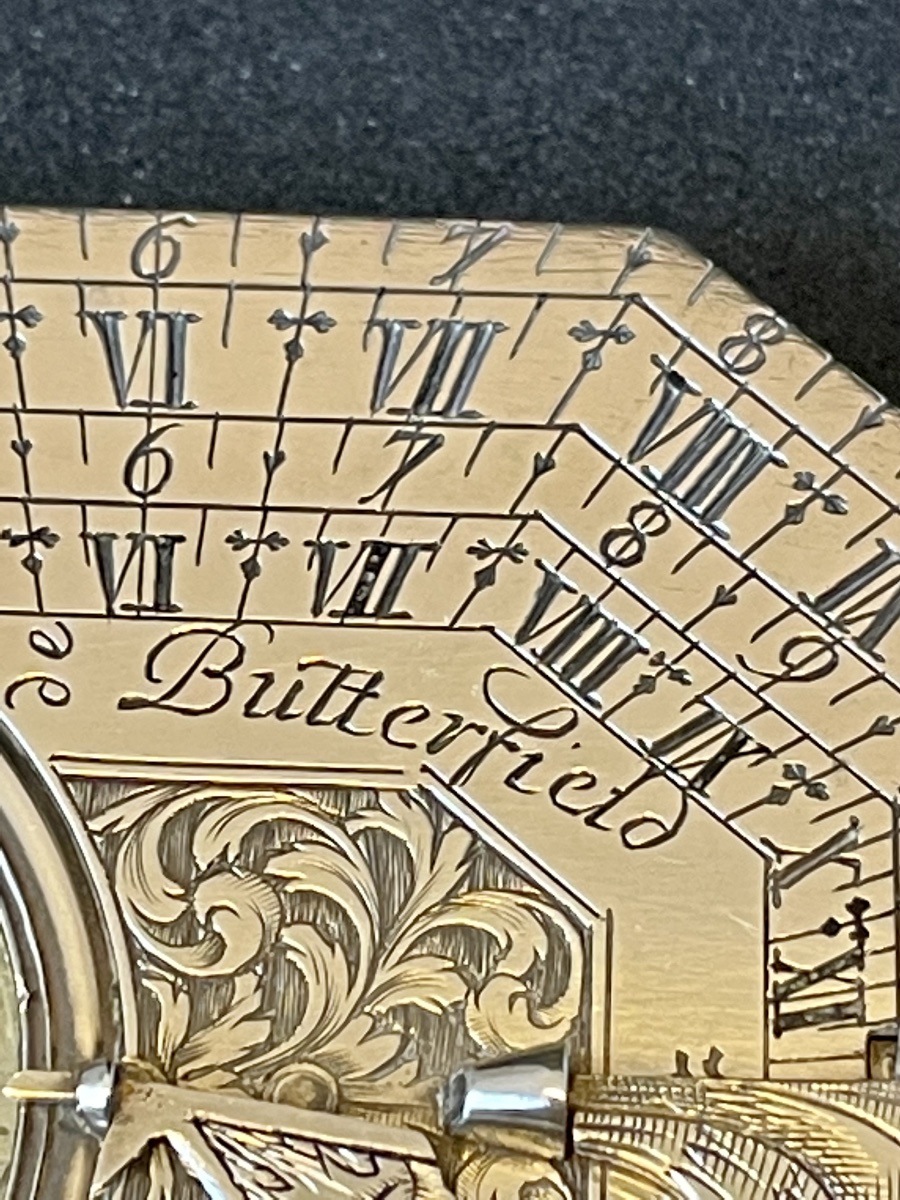
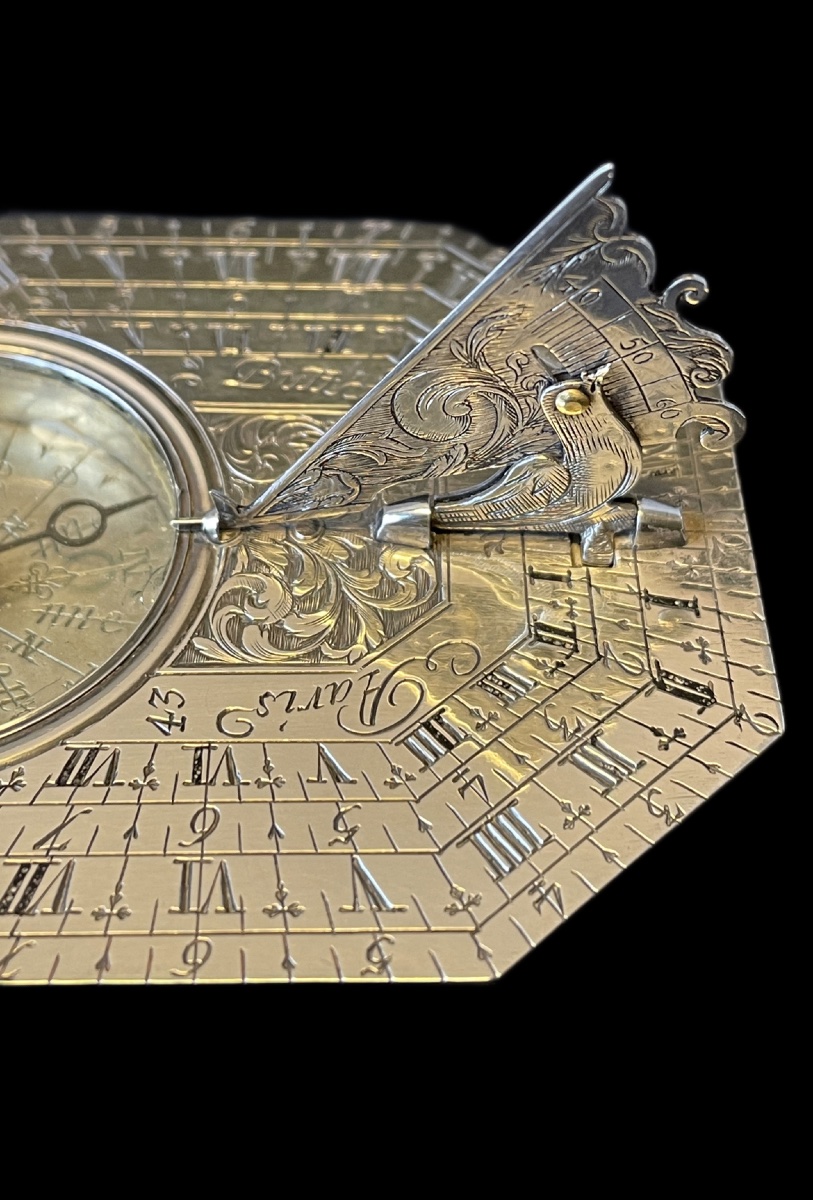
Octagonal in shape, it is made of finely engraved silver. The dial plate is engraved with four hour scales for the latitudes: 43°, 46°, 49°, and 52°. The center is engraved with a foliage motif; the adjustable, fold-down gnomon featuring a bird is mounted on a hinge and held in place beneath the plate by a spring engraved with foliage. The dry-well compass indicates north, marked by a fleur-de-lis, with a blued steel needle. The back of the plate and the compass is engraved with the names of 26 European cities and the inscription “Premier Cadran.”
Michael Butterfield (1635–1724) was an English clockmaker who settled in Paris around 1663. As Louis XIV’s engineer for mathematical instruments, he invented various types of instruments, including this sundial with a compass, which is known as the “Butterfield sundial.”
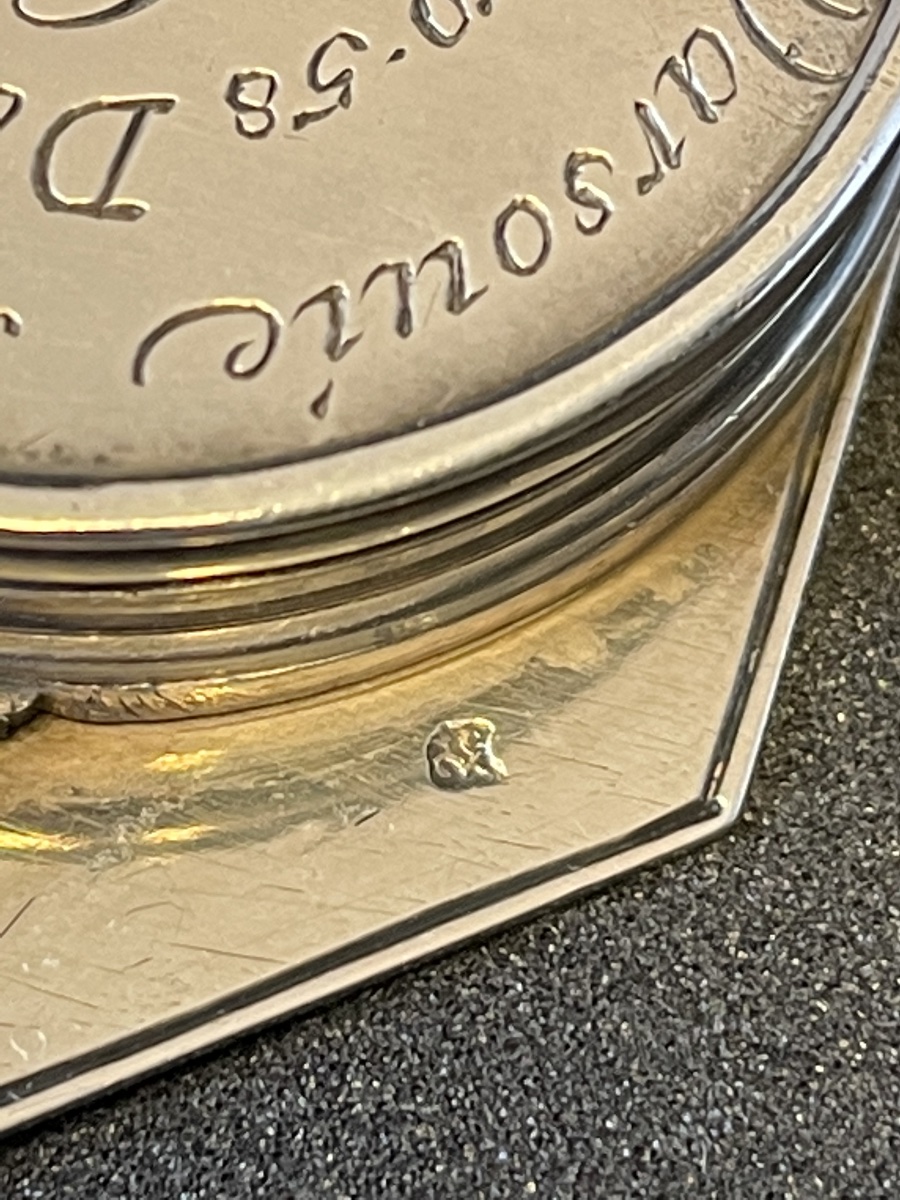
This example is particularly interesting because it is very early; the hallmark allows it to be dated to the period 1684–1687. It is among Michael Butterfield’s earliest works and survived the infamous melting down of Louis XIV’s instruments in 1689.
The sundial bears a hallmark on the back of the base plate, near the compass housing:
. A fleur-de-lis: the hallmark for the smallest items produced in the city of Paris during the period 1684–1687
A superb scientific instrument dating from the late 17th century, in remarkable condition.
6.3 cm x 5.5 cm
30.55 grams
Exceptional condition for an object of this era.
Period: 17th century
Style: Louis 14th, Regency
Condition: Perfect condition
Material: Sterling silver
Reference (ID): 1825627
Availability: In stock