THIS OBJECT WAS SOLD
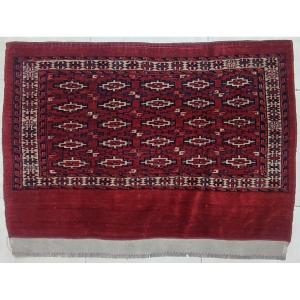
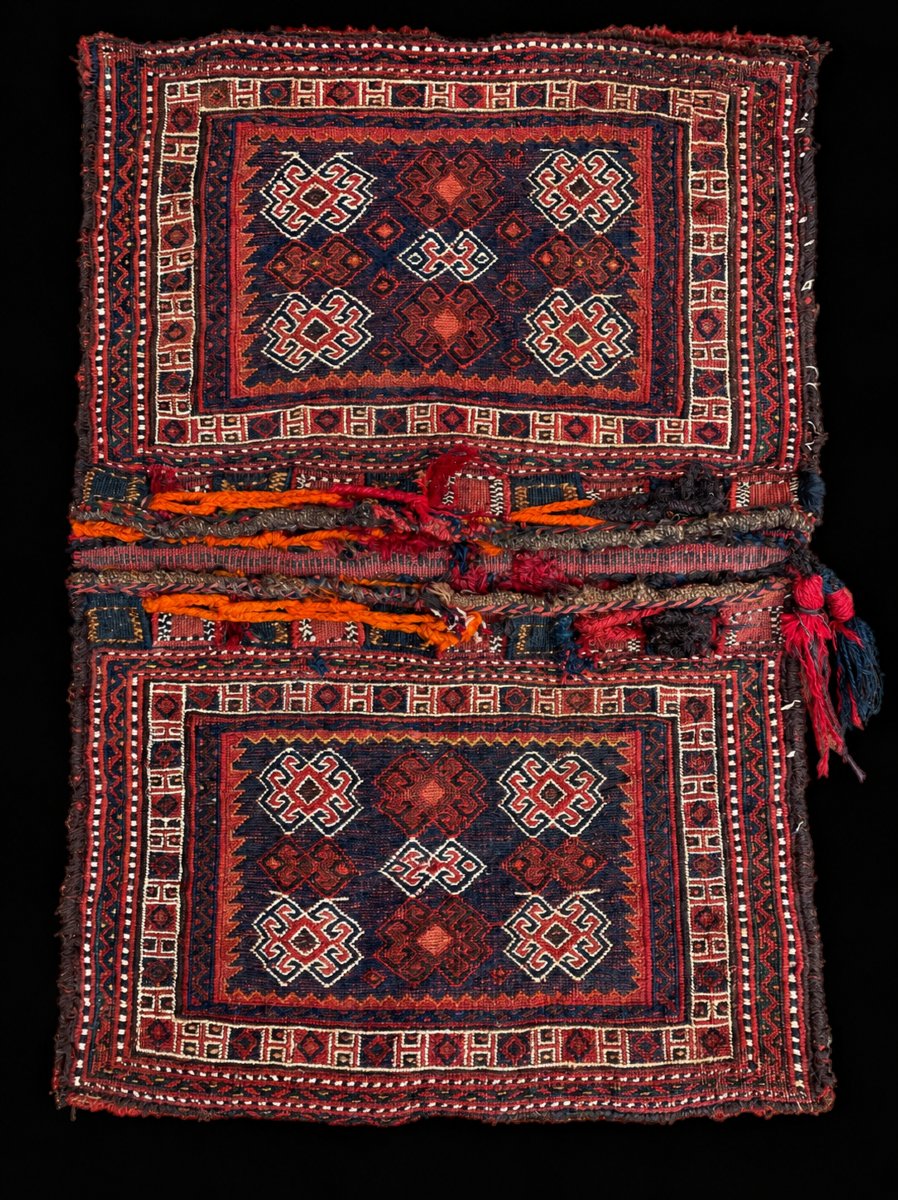
Double Bag. Bathiyari. Persia. Circa 1900. 80 X 58 Cm





At first glance, it’s hard to imagine that such an elaborate object was designed primarily for everyday use.
And yet, that is precisely what appeals to me about this remarkable Bakhtiari double satchel. A treasured item of the nomadic peoples of Persia, where everything is designed for practicality and durability, yet nothing detracts from its refinement. Quite the contrary.
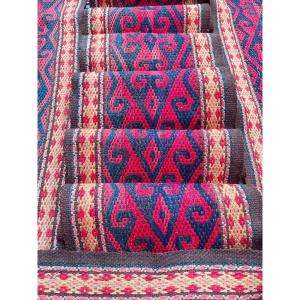
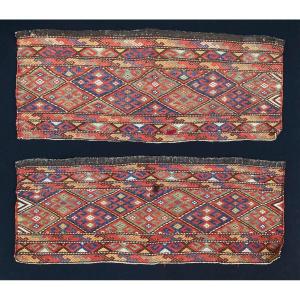
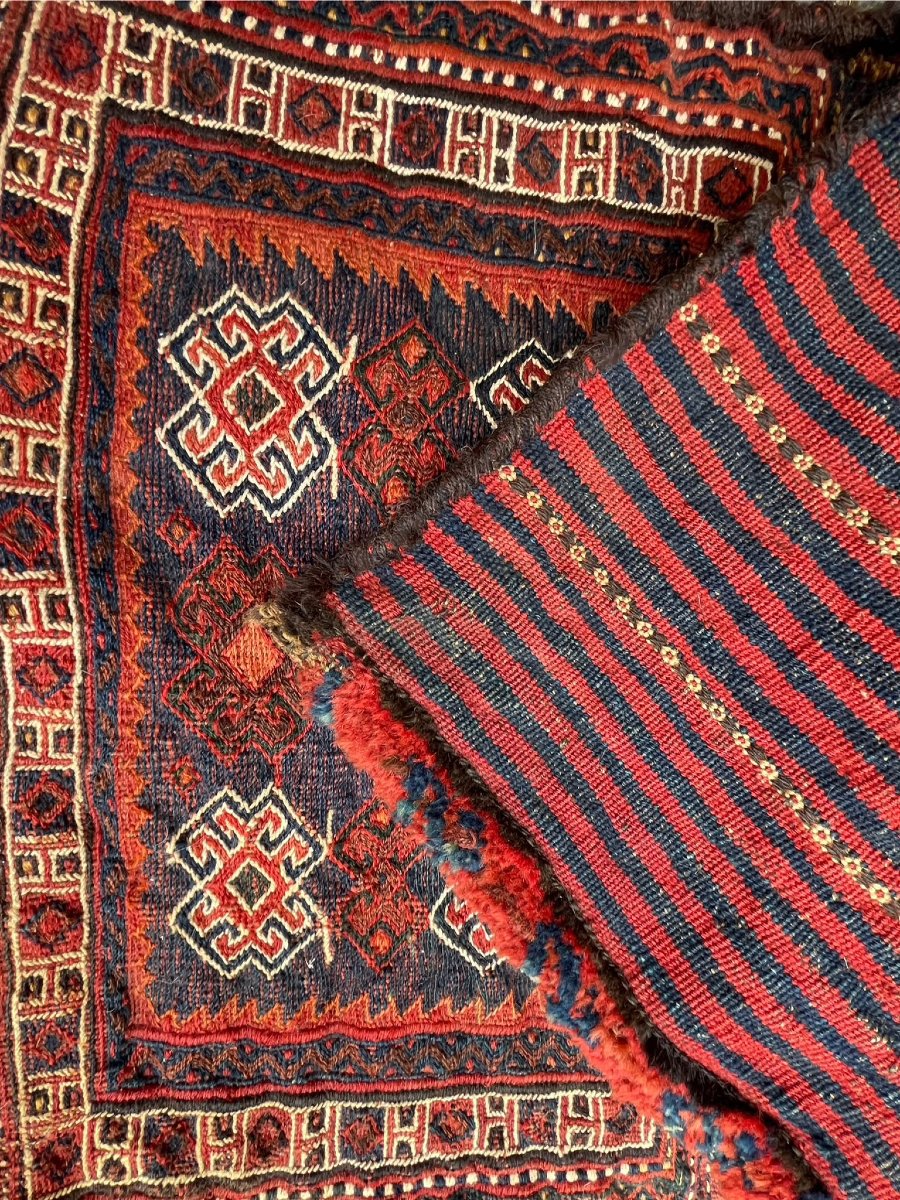
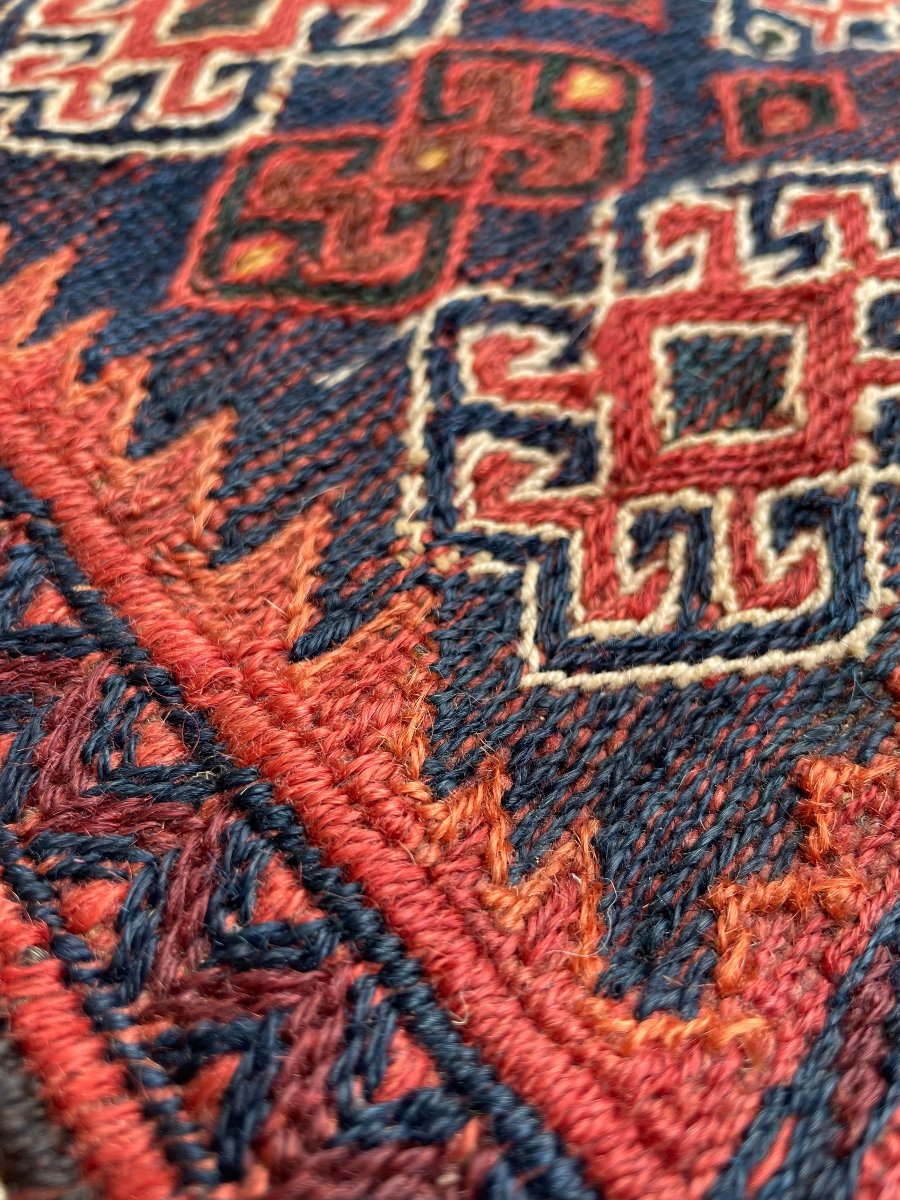
Its construction is particularly interesting. Three techniques—weaving, sumak, and knotted stitch—are combined on a single warp, each in a specific location. The back is simply woven, the sides are crafted using sumak, while the bottom of each bag is knotted. The velvet thus naturally reinforces the part most exposed to wear and tear. A true example of textile ingenuity where technique directly addresses function.
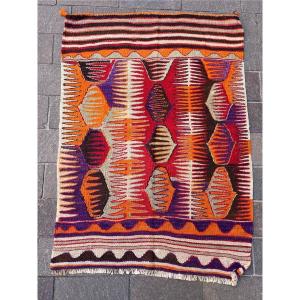
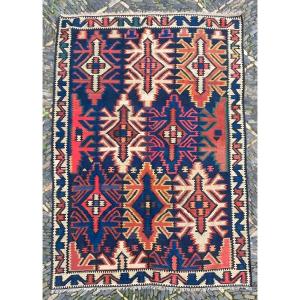
And then there’s the design. Against a deep indigo blue—almost black in places—striking geometric patterns stand out: cross-shaped forms with hooks, diamonds, and small protective elements repeat with the freedom characteristic of nomadic craftsmanship. The numerous borders give structure to the whole and make each side look like a small rug.
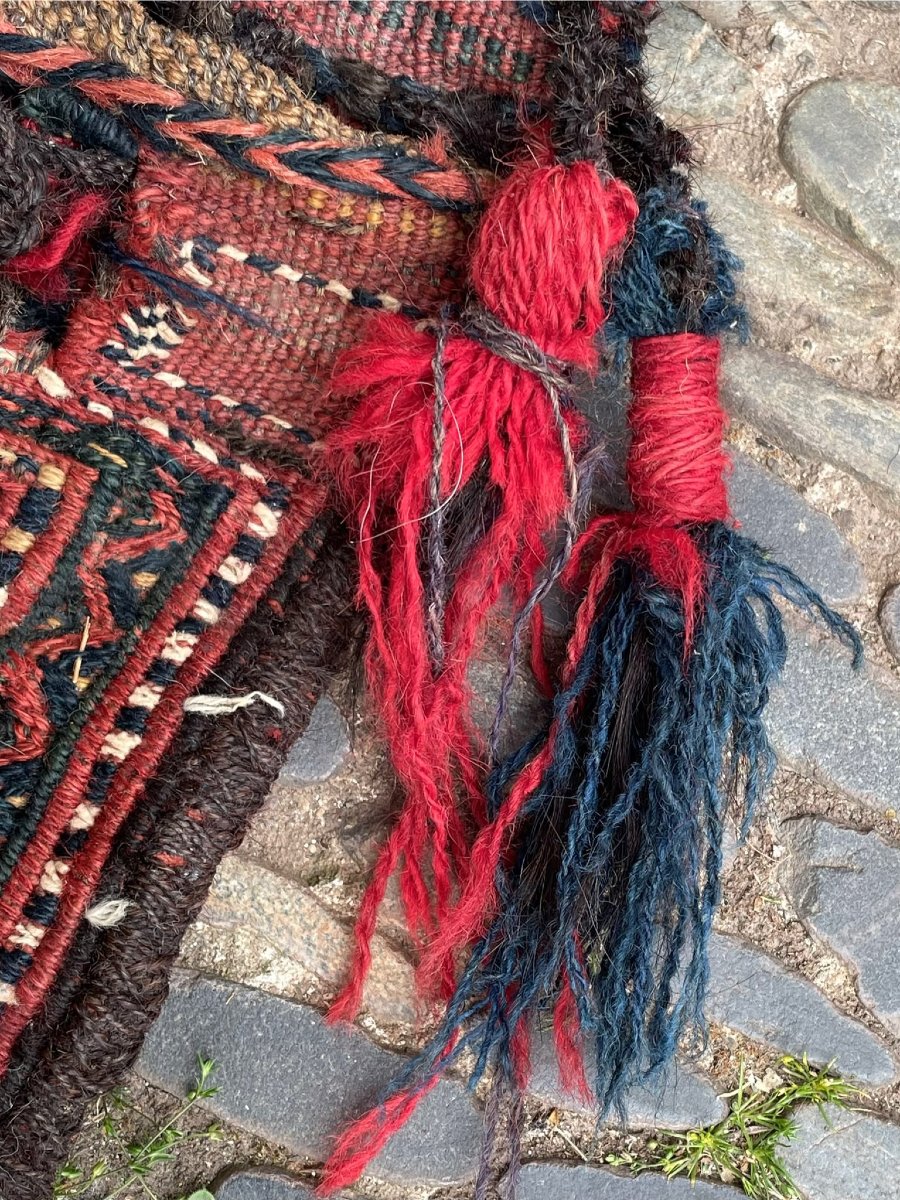
The colors are marvelous. Derived exclusively from plant sources, they combine indigo, madder reds and brick reds, garnet, deep browns, and natural ivory, with a few touches of saffron-orange in the central section. A rich and deep palette, but above all, one that is incredibly harmonious.
Finally, a crucial detail: the ring closure system is intact, as are the rings themselves. The piece has therefore come down to us in its entirety.
An object made to be used, built to last, yet decorated as if it were meant to be admired. Perhaps that is ultimately what I like most about this piece.
Wool on wool—woven, sumak, and knotted
Plant-based dyes
Circa 1900 or earlier
Very good condition
Dimensions: 80 × 58 cm
Laurent
Beauty of Kilims
And yet, that is precisely what appeals to me about this remarkable Bakhtiari double satchel. A treasured item of the nomadic peoples of Persia, where everything is designed for practicality and durability, yet nothing detracts from its refinement. Quite the contrary.
Its construction is particularly interesting. Three techniques—weaving, sumak, and knotted stitch—are combined on a single warp, each in a specific location. The back is simply woven, the sides are crafted using sumak, while the bottom of each bag is knotted. The velvet thus naturally reinforces the part most exposed to wear and tear. A true example of textile ingenuity where technique directly addresses function.
And then there’s the design. Against a deep indigo blue—almost black in places—striking geometric patterns stand out: cross-shaped forms with hooks, diamonds, and small protective elements repeat with the freedom characteristic of nomadic craftsmanship. The numerous borders give structure to the whole and make each side look like a small rug.
The colors are marvelous. Derived exclusively from plant sources, they combine indigo, madder reds and brick reds, garnet, deep browns, and natural ivory, with a few touches of saffron-orange in the central section. A rich and deep palette, but above all, one that is incredibly harmonious.
Finally, a crucial detail: the ring closure system is intact, as are the rings themselves. The piece has therefore come down to us in its entirety.
An object made to be used, built to last, yet decorated as if it were meant to be admired. Perhaps that is ultimately what I like most about this piece.
Wool on wool—woven, sumak, and knotted
Plant-based dyes
Circa 1900 or earlier
Very good condition
Dimensions: 80 × 58 cm
Laurent
Beauty of Kilims
Explore similar pieces and discover your ideal find:
Rugs, Carpets