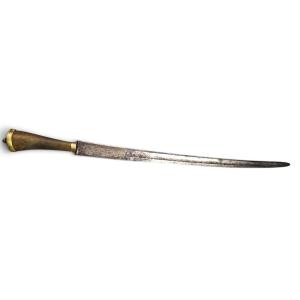


Rare 19th-century European-afghan Hybrid Dagger, With A Blued And Gilded Officer's Blade, Mount
An exceptionally unusual and historically fascinating
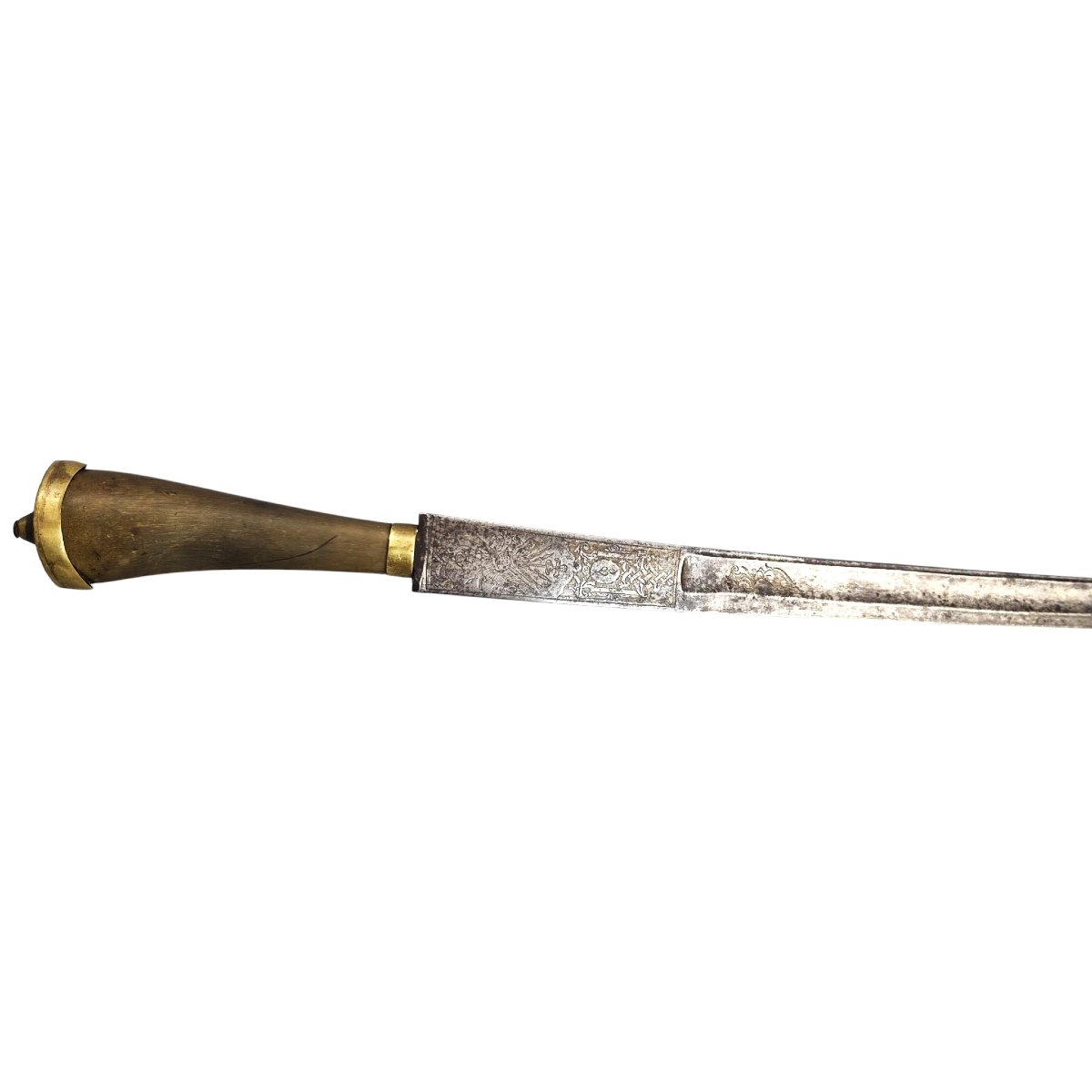
19th-century European-Afghan hybrid weapon, combining a prestigious European
blue and gilt officer's blade with a later Afghan-Pashtun remounting in the
form of a pesh-kabz or Khyber knife. This remarkable object preserves evidence
of two distinct military traditions and offers a tangible record of cultural
contact, conflict and adaptation.
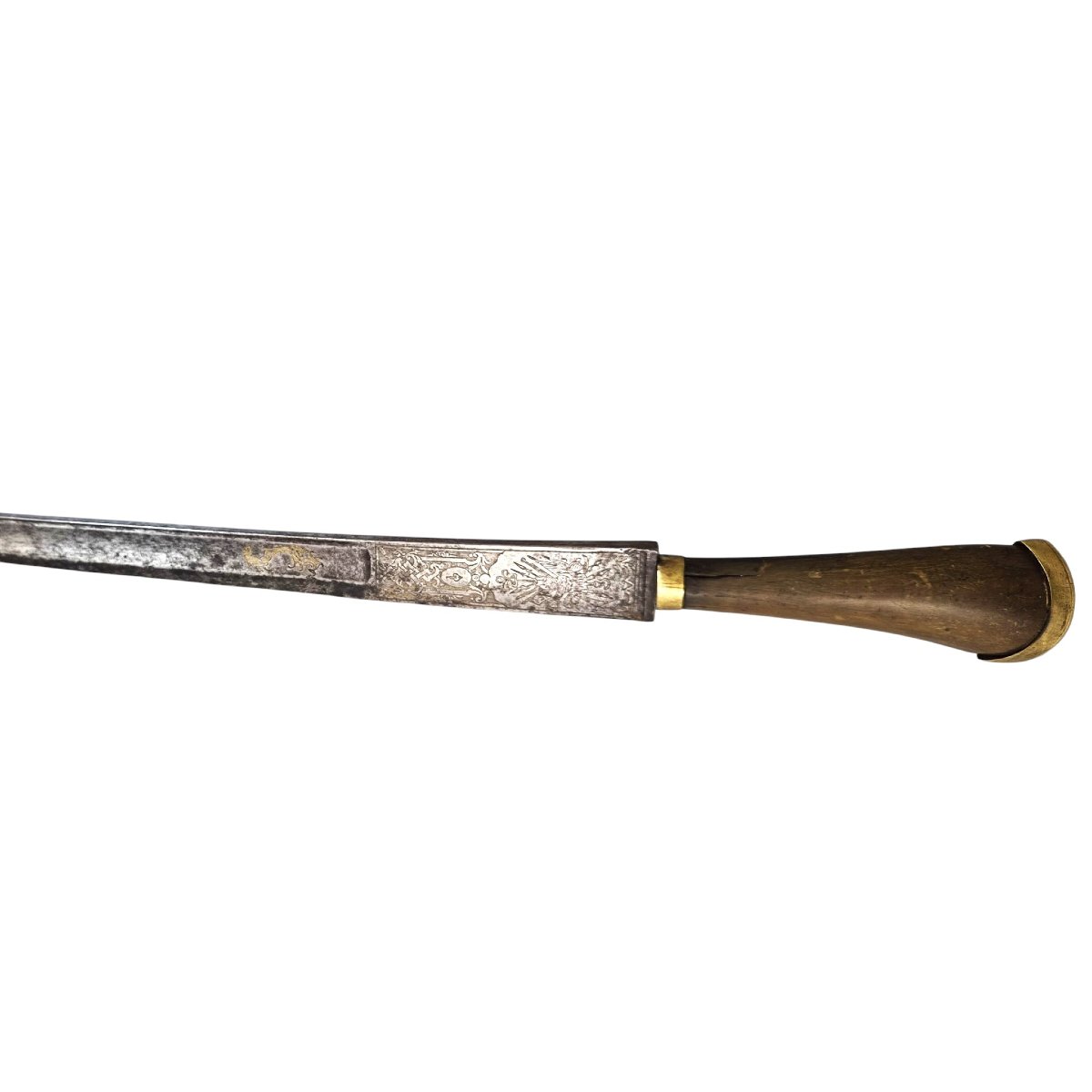
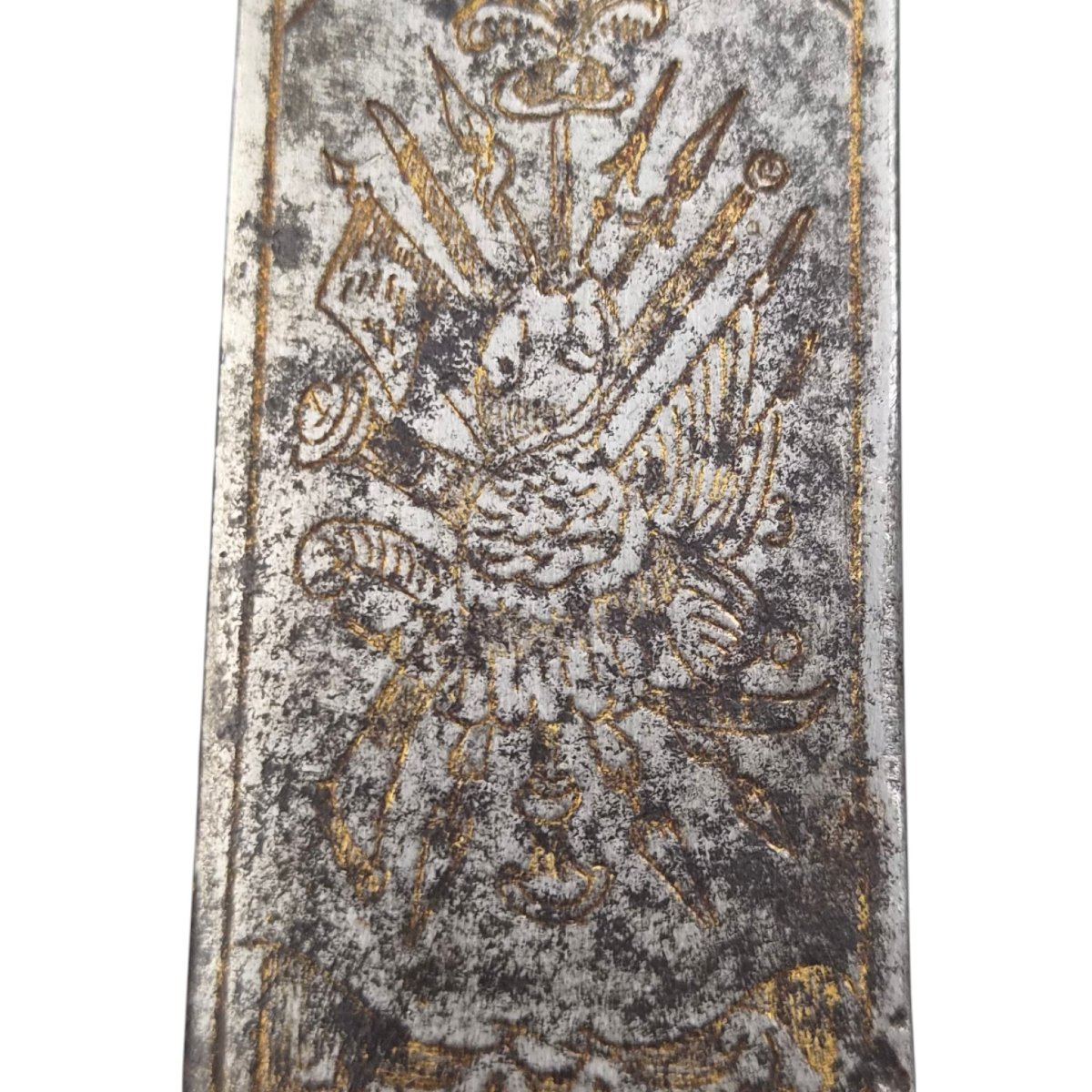
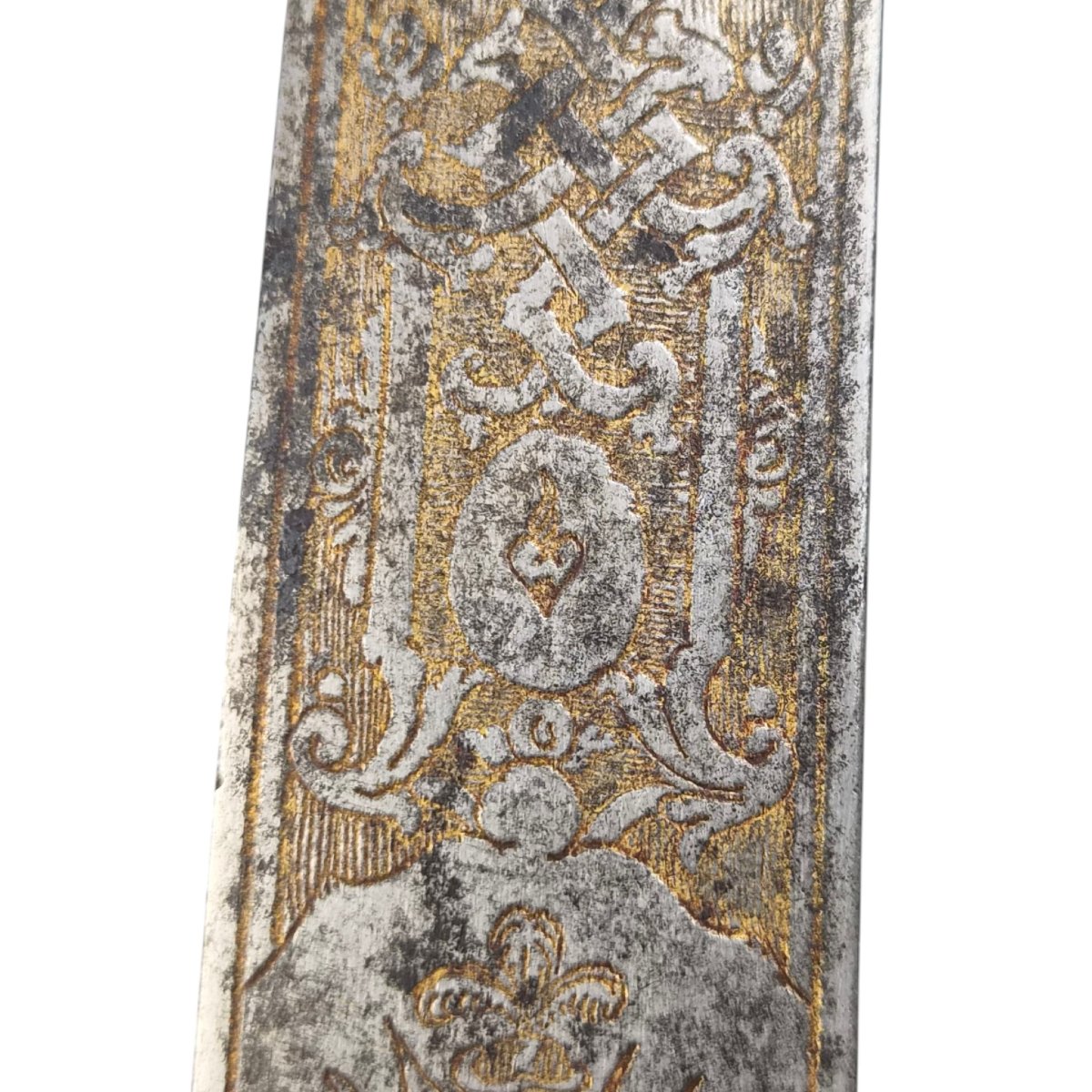
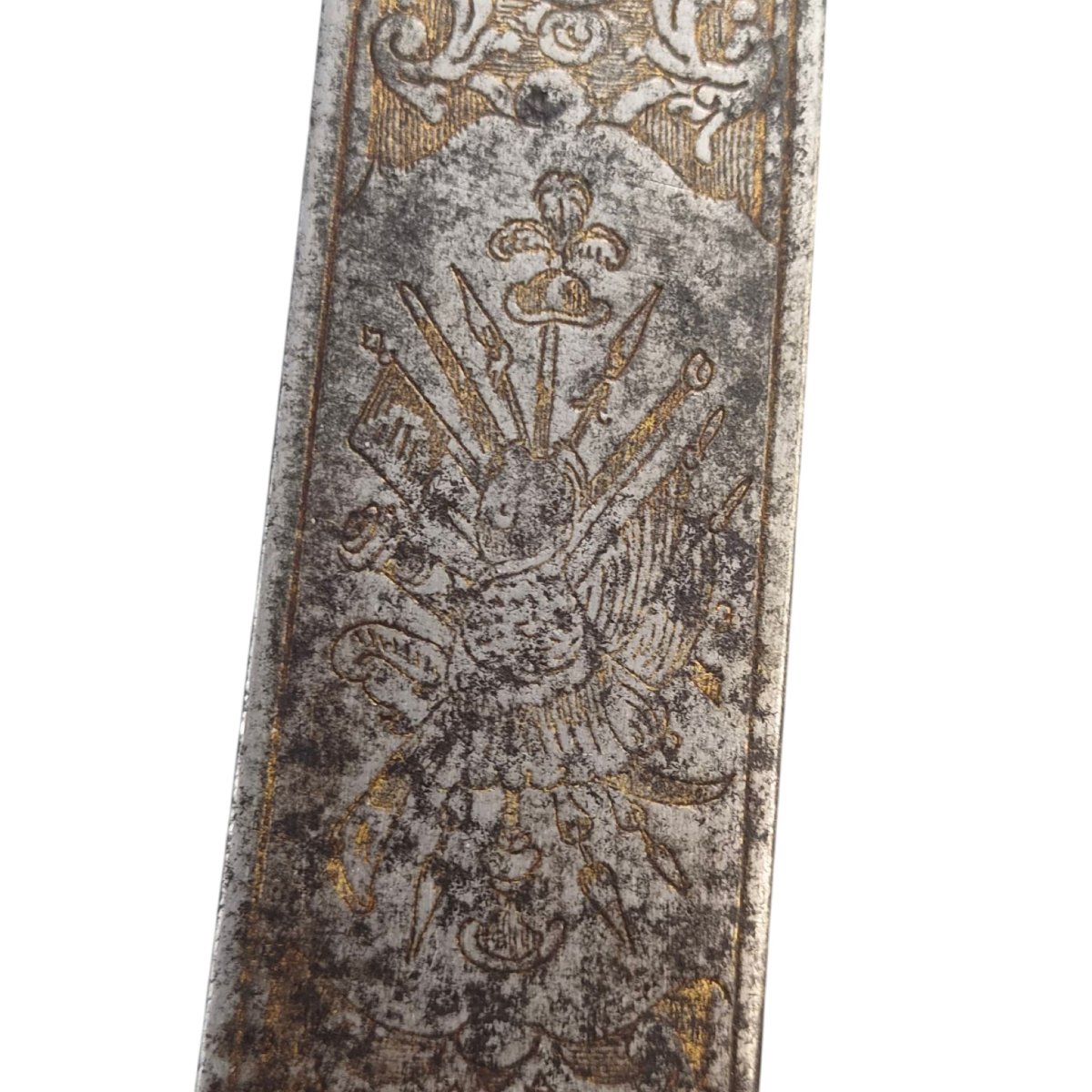
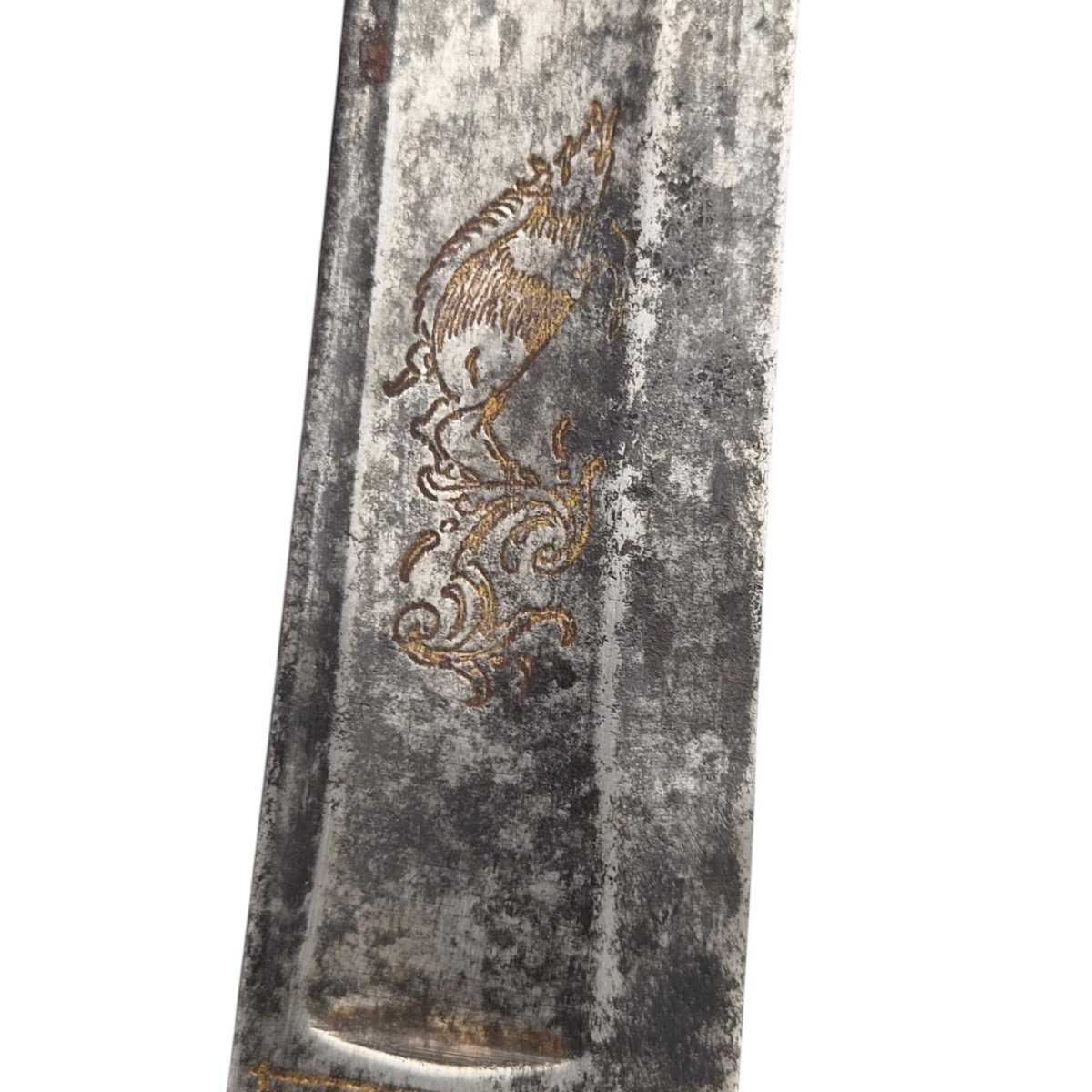
The blade originated as part of a high-status European
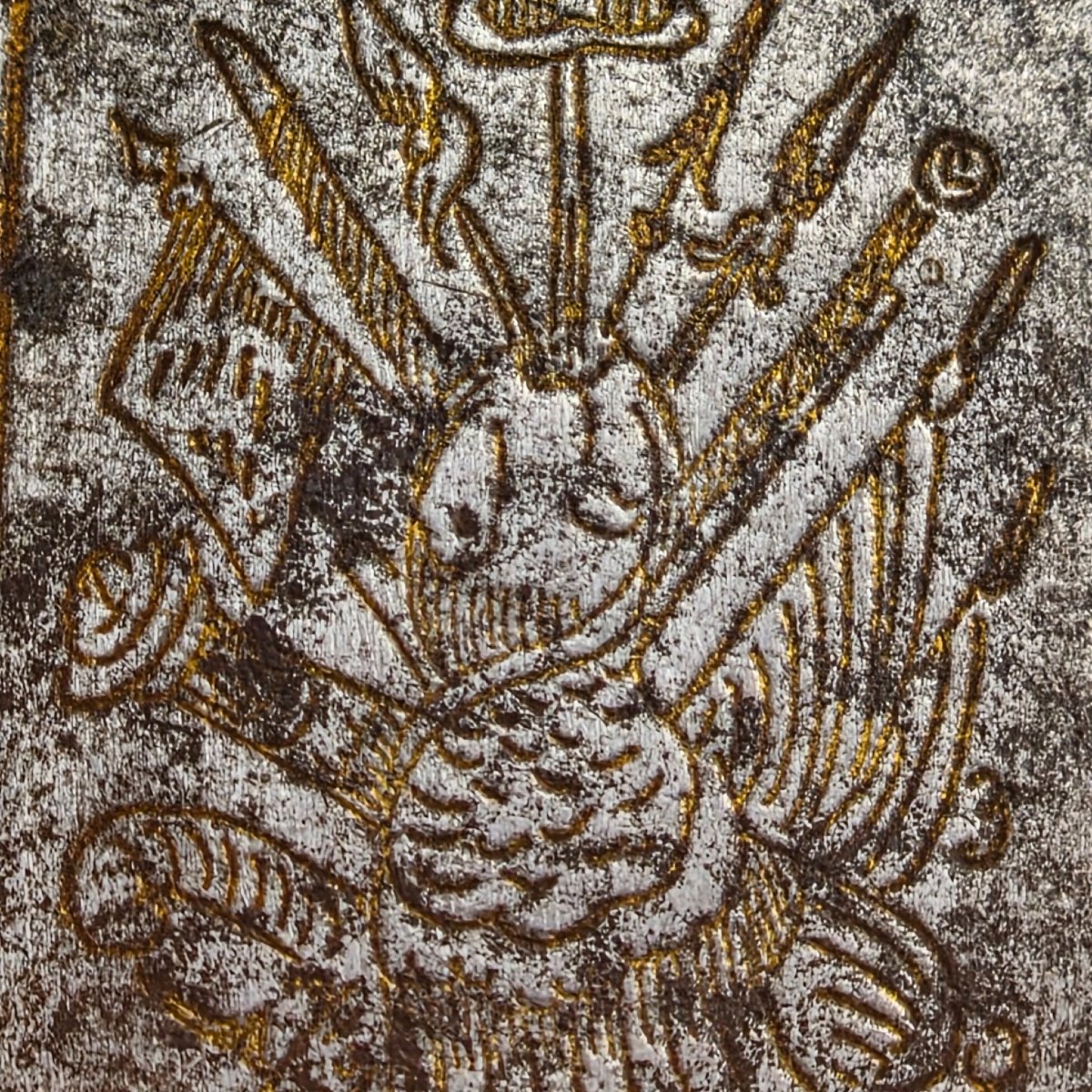
officer's, court or dress weapon. Its surface retains extensive gilt etching
over a darkened ground, originally blued or blackened, featuring military
trophies, standards, polearms, a cuirass, a plumed hat, hunting motifs,
aristocratic ornament and a central heart medallion. Such decorative programmes
were characteristic of elite European arms of the late 18th and early 19th
centuries, where a blade functioned not only as a weapon but also as a symbol of
rank, prestige and personal identity.
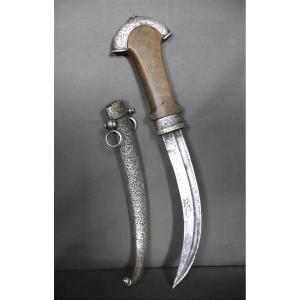
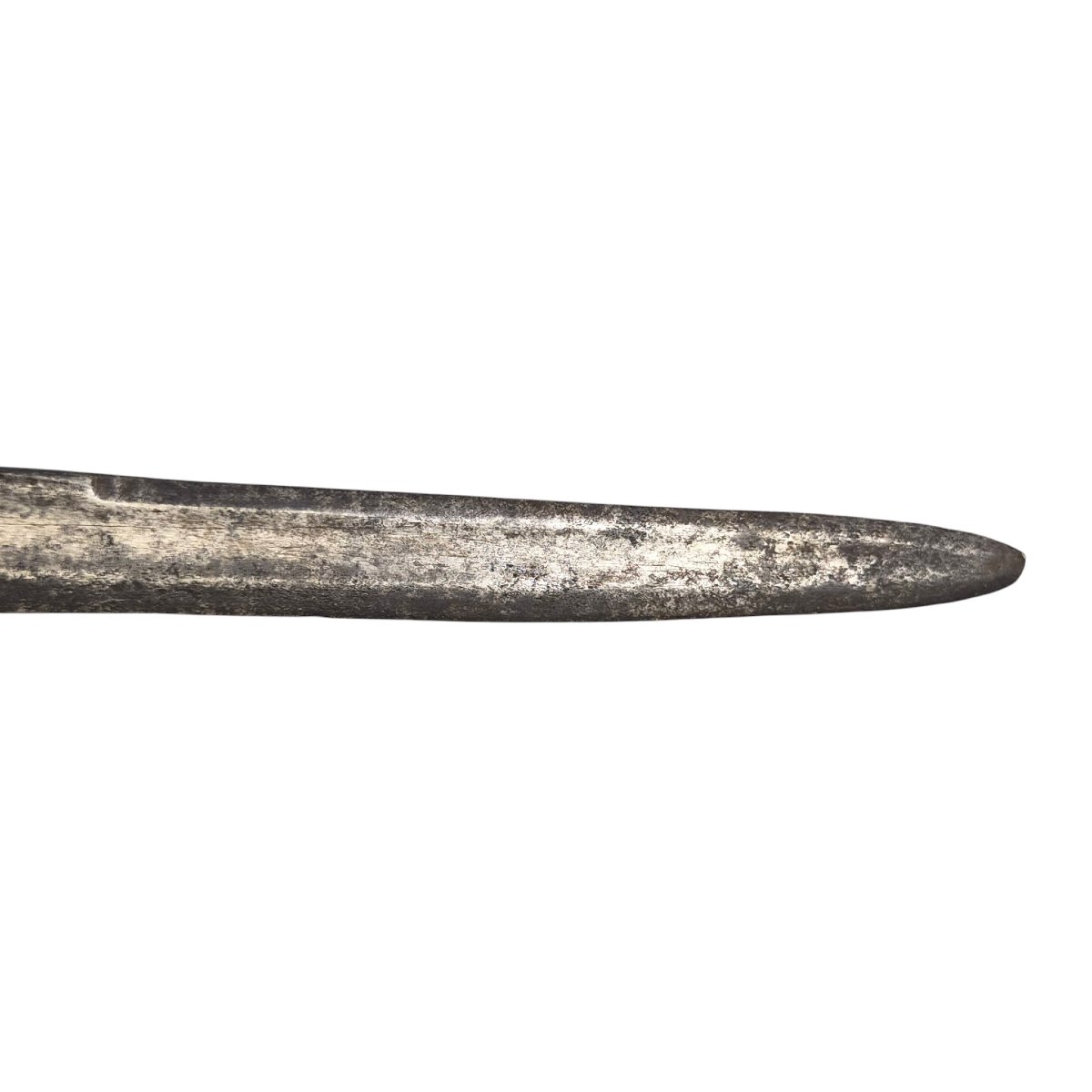
At a later stage, the blade entered the Afghan-Pashtun
armoury tradition and was substantially reworked. The point was shortened while
preserving the most important decorative section near the base, creating a
weapon closely related to the pesh-kabz and Khyber knife forms. The thick
reinforced spine and rigid blade geometry were specifically suited to powerful
thrusting attacks capable of penetrating heavy clothing, mail and defensive
equipment.
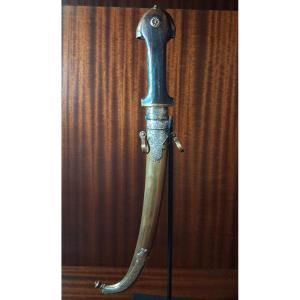
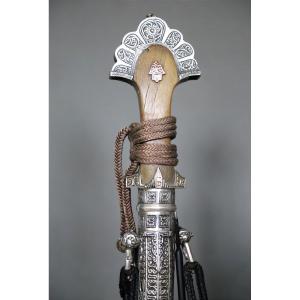
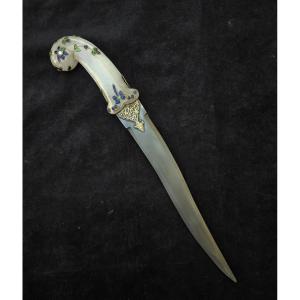
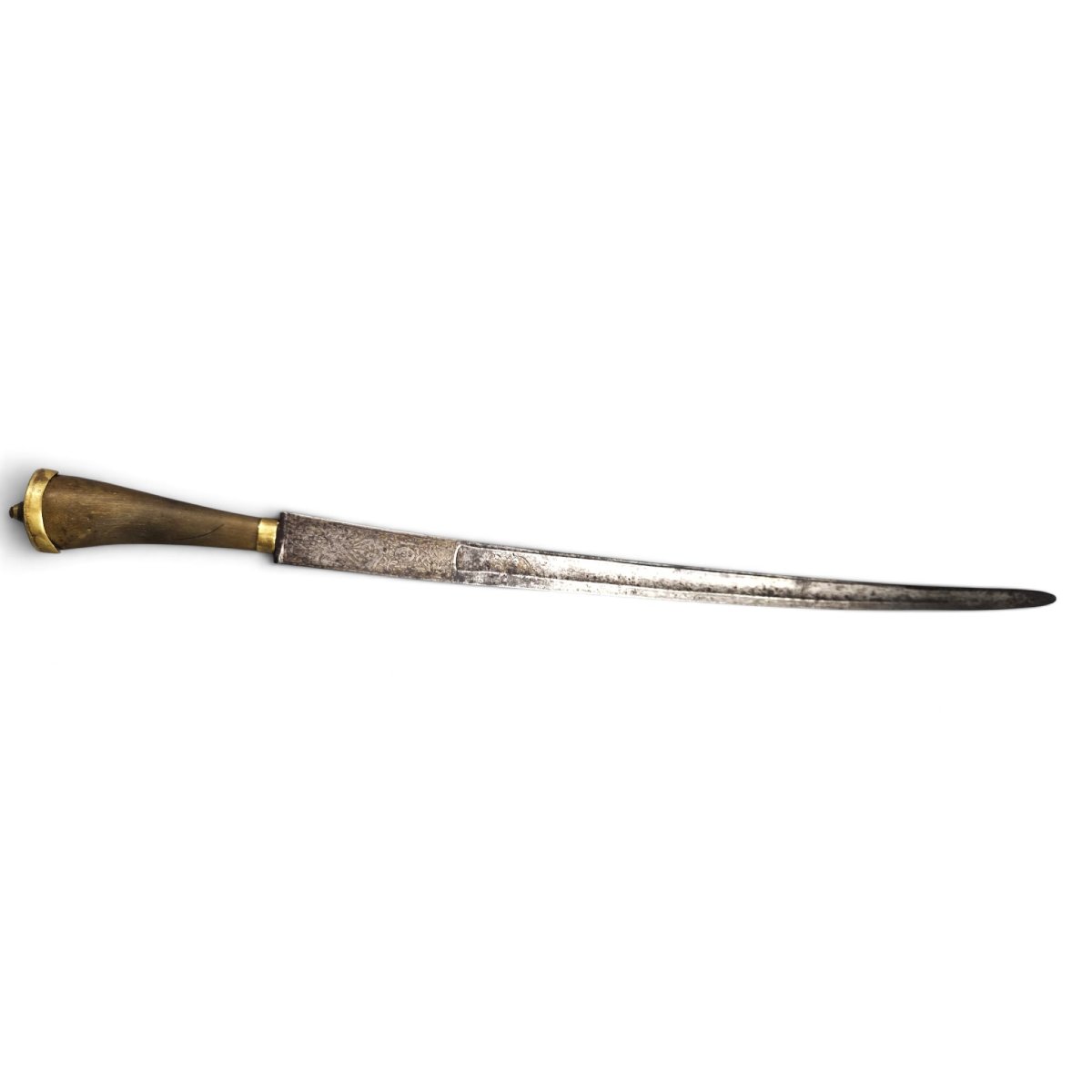
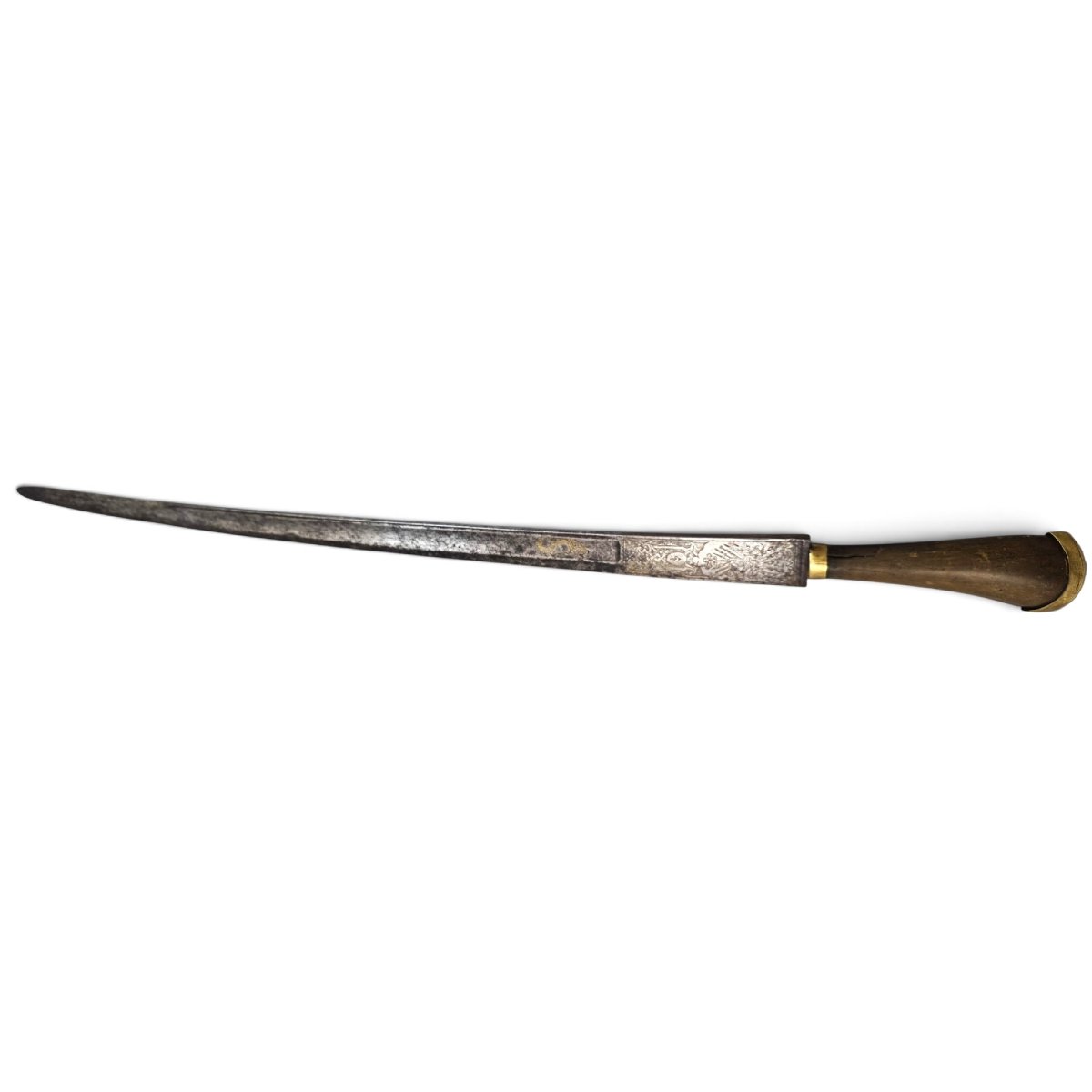
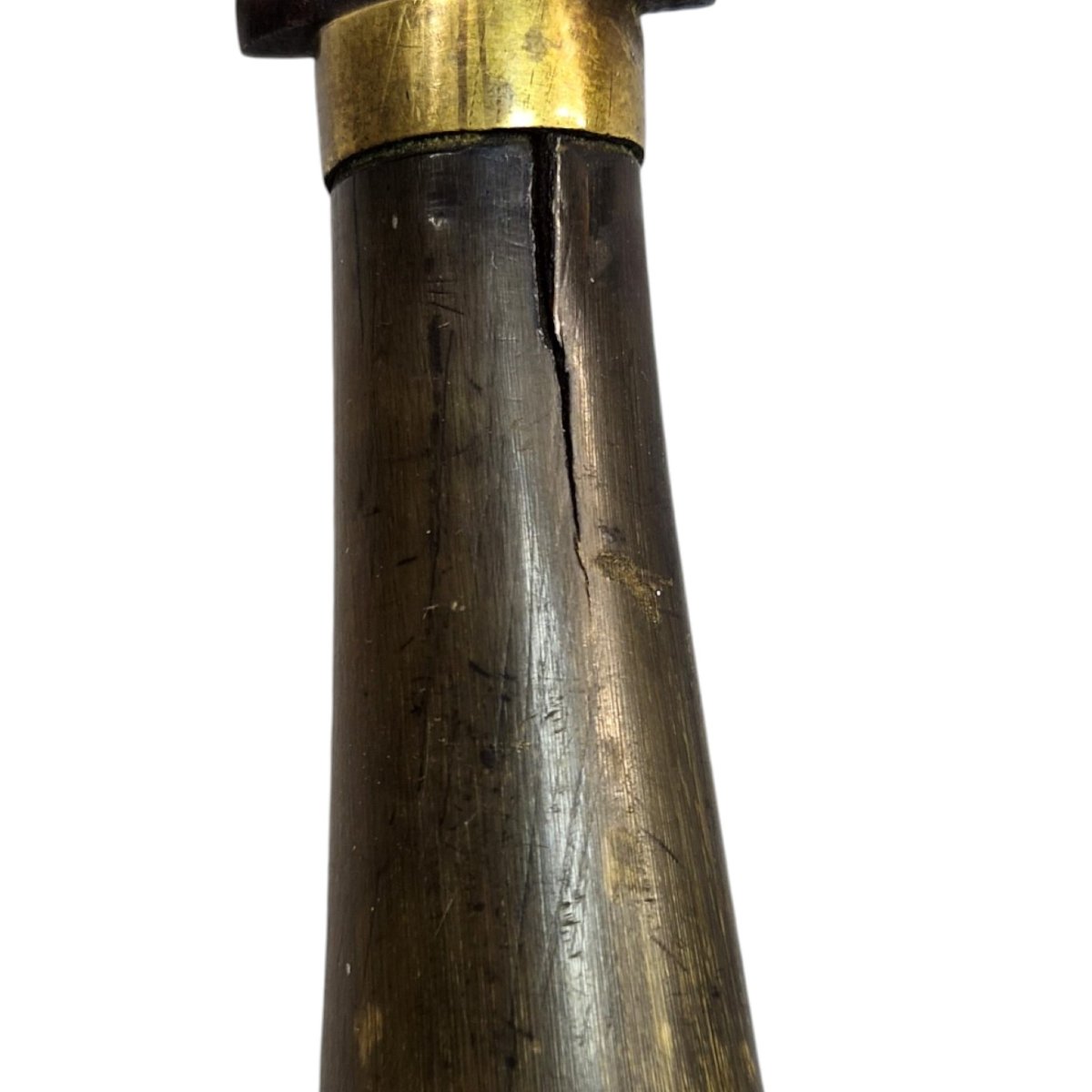
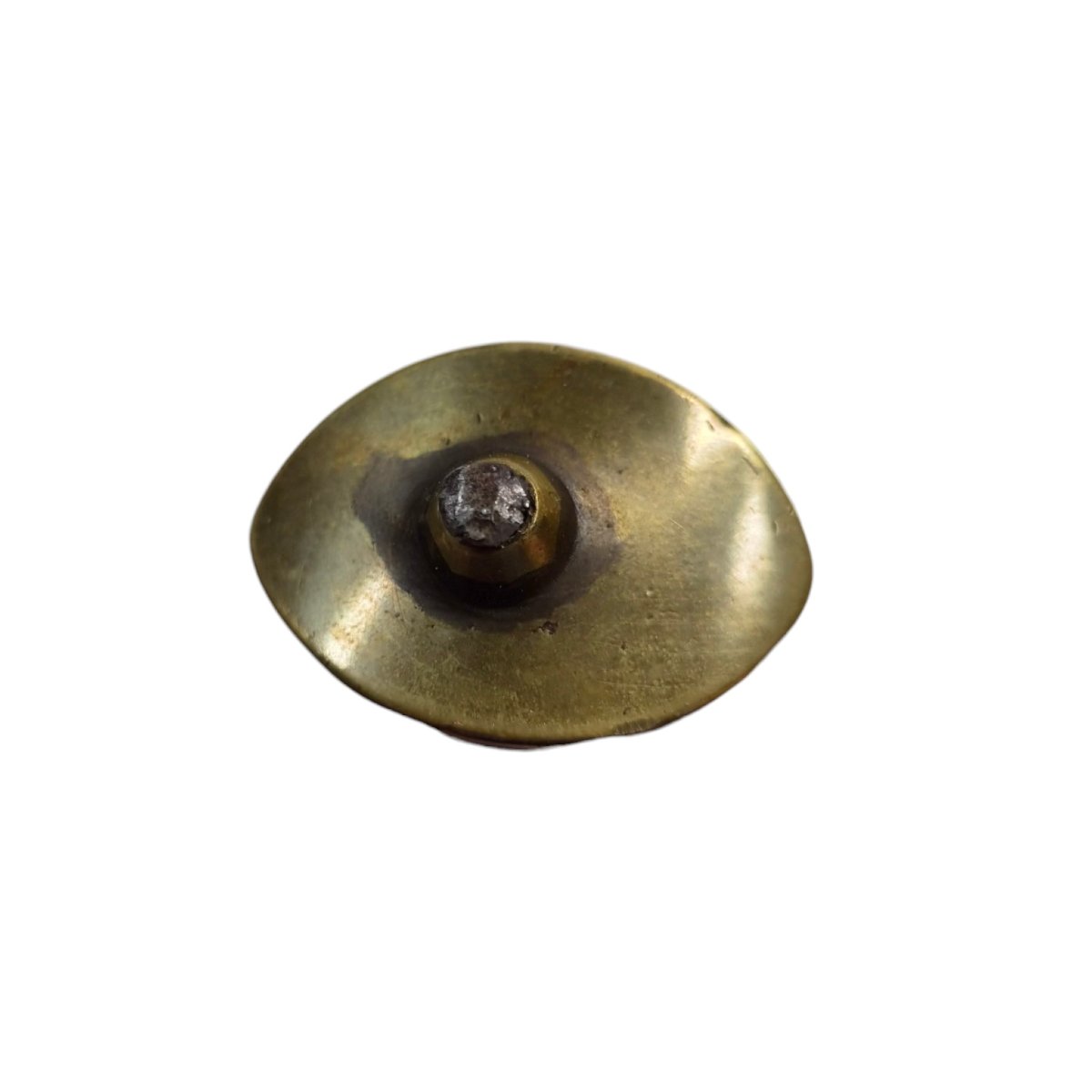
The original European hilt was removed and replaced with a
practical eastern hilt fashioned from dark buffalo horn, fitted with brass
collar and pommel. The through-tang construction confirms that this was
intended as a genuine fighting weapon rather than a decorative curiosity or
tourist object.
Perhaps the most intriguing aspect of the piece is the
deliberate preservation of the European decoration. The Afghan craftsman could
easily have removed the earlier symbolism, overlaid it with local engraving or
added Islamic inscriptions and ownership marks. Instead, the military trophies,
hunting motifs, heart medallion and aristocratic imagery were retained. This
strongly suggests that the blade was valued not merely as a source of good
steel, but as a respected trophy taken from a worthy and high-status opponent.
Within Pashtun martial culture, honouring a brave adversary and preserving a
significant trophy carried genuine symbolic importance.
Two principal historical interpretations remain possible.
The first points towards German or Central European origins, as the decorative
vocabulary closely resembles court, hunting and dress weapons from that region.
The second, and arguably the more compelling historical route, is British.
British officers fought extensively against Afghan and Pashtun forces
throughout the 19th century during the Anglo-Afghan Wars and on the North-West
Frontier. A captured officer's blade could readily have entered local ownership
and subsequently been remounted in the Afghan fighting tradition.
This weapon is especially significant because its history
remains visibly layered rather than erased. It preserves traces of both the
original European owner and the later Afghan-Pashtun warrior who transformed it
for continued use. If future research were to identify the original workshop,
blade type or owner, particularly in connection with a documented military
context, the historical importance and collector interest would increase
considerably.
Measurements
Overall length: 59.5 cm / 23.4″
Blade length: 47.3 cm / 18.6″
Blade width at base: 2.6 cm / 1.0″
Spine thickness at base: approximately 8.1 mm
Weight: 276 g
Condition
An exceptionally rare historical weapon retaining a strong
and authentic surface. The blade shows darkening, corrosion, pitting, surface
wear, partial loss of the original bluing or blackening and areas of wear to
the gilt etched decoration, all consistent with age and prolonged use.
Importantly, the principal decorative programme remains clearly legible. The
buffalo horn hilt displays an attractive age patina together with natural
shrinkage and a small crack. The brass mounts show oxidation, scratches and age-related
wear. The piece has not been over-cleaned and retains a highly desirable
historic appearance.
Shipping & Packaging
Fully tracked and insured delivery where legally permitted.
Shipping cost includes professional packaging, careful
handling and secure postage.
Carefully packed using recycled materials where possible.
Please note: This antique weapon is offered strictly as a
historical collector's object. Sale and shipment are subject to all applicable
age, legal and import restrictions.
1 300 €
Period: 19th century
Style: Orientalism
Condition: Good condition
Reference (ID): 1822402
Availability: In stock
Print