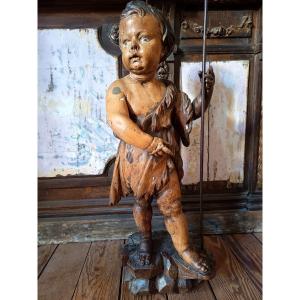


Saint John The Baptist As A Child – Genoese School, Late 17th Century, In The Style Of Anton Maria Maragliano
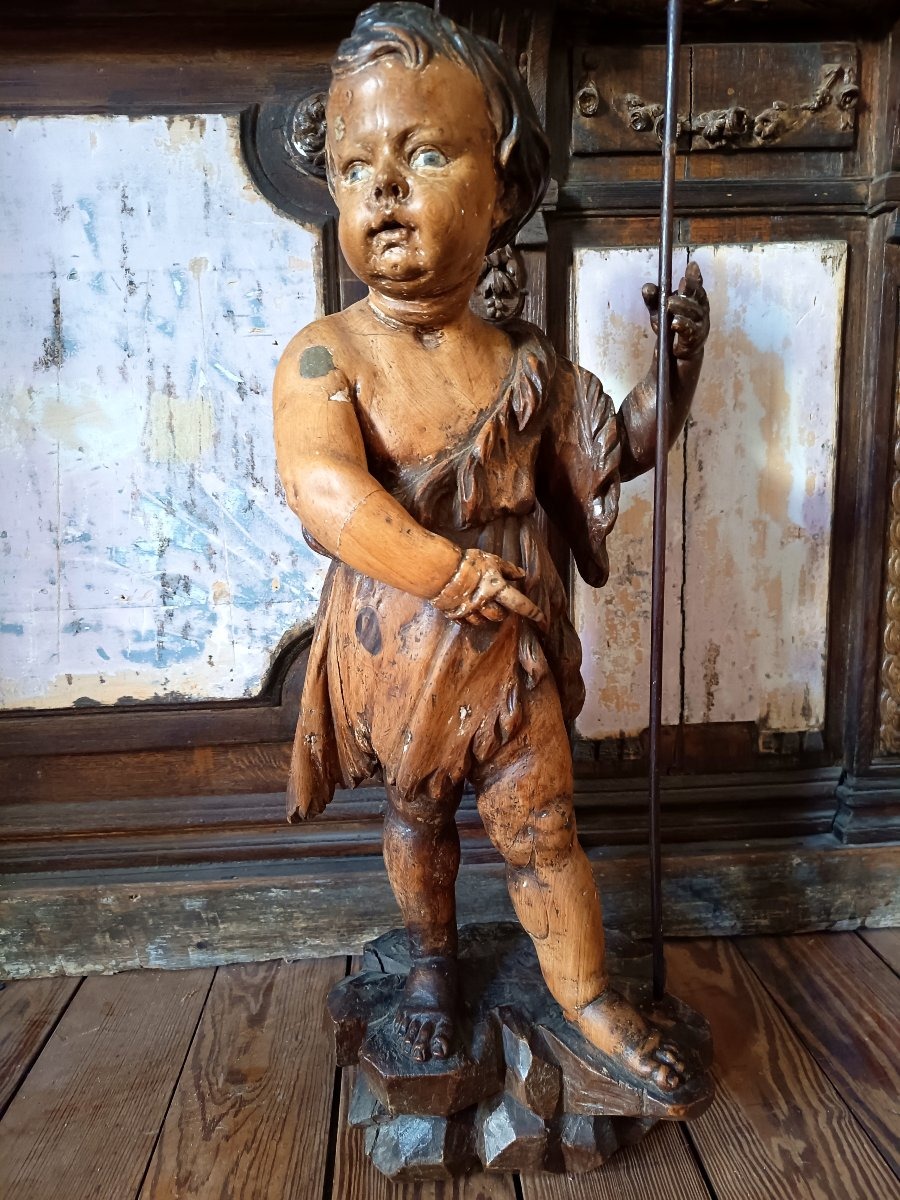
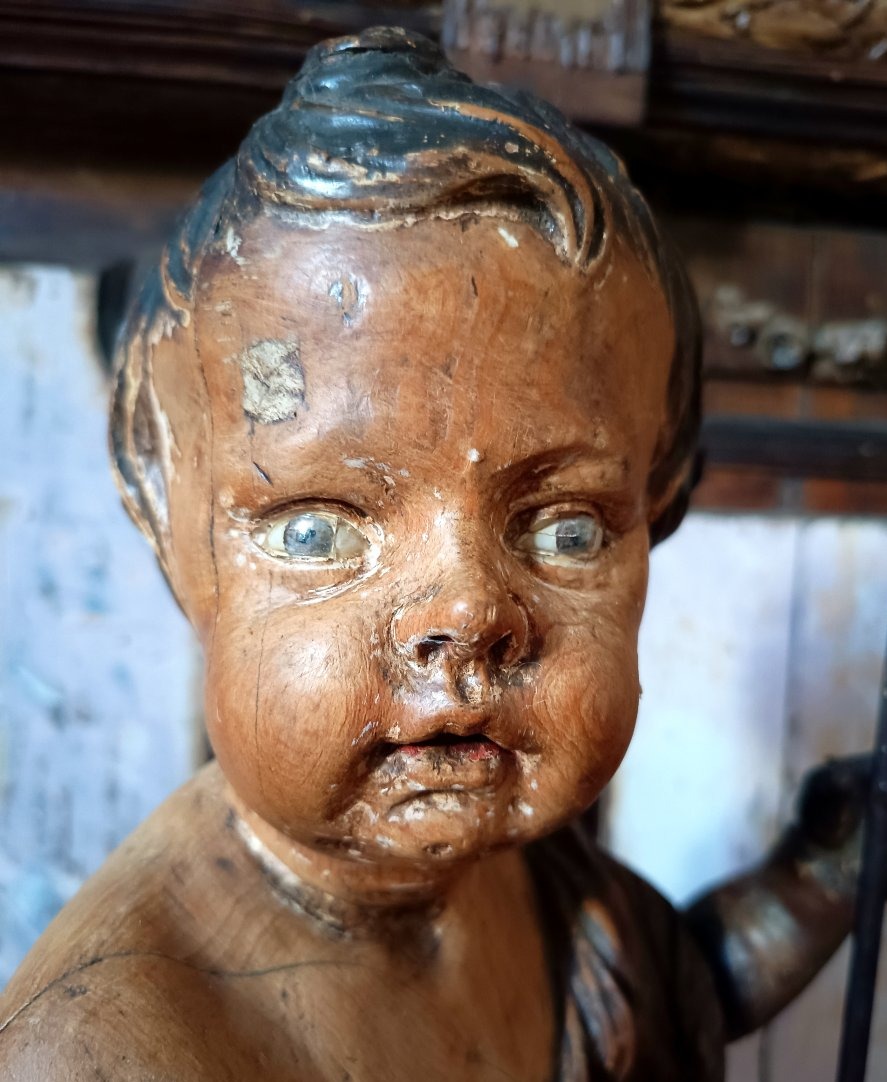
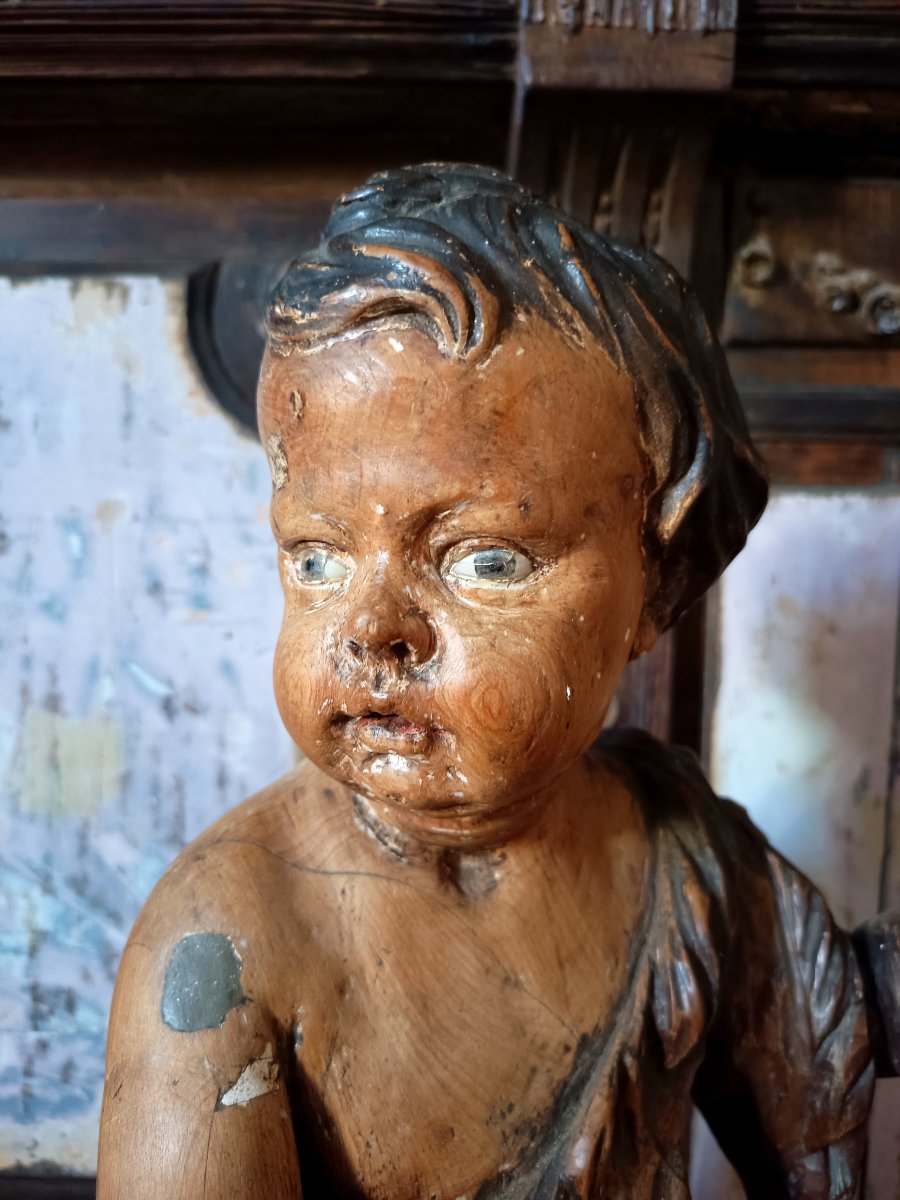
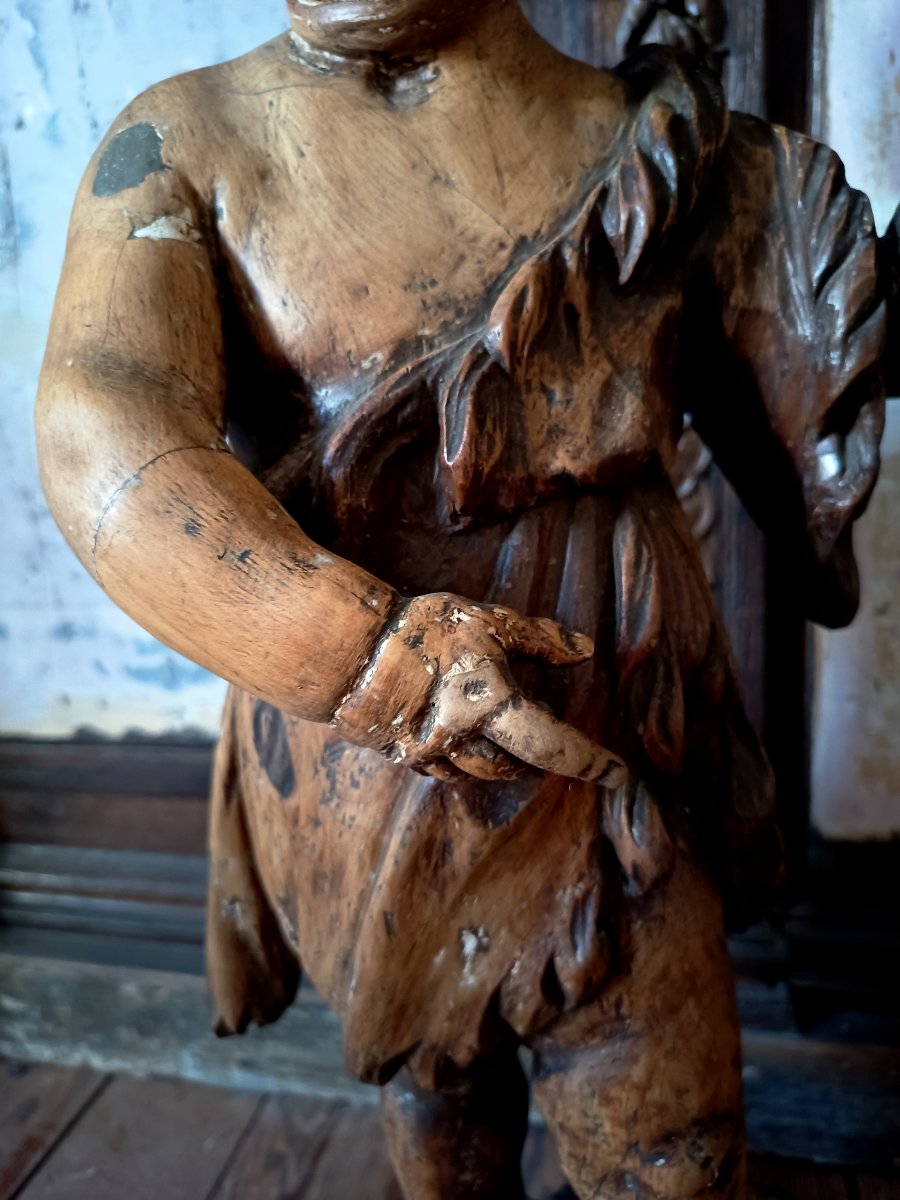
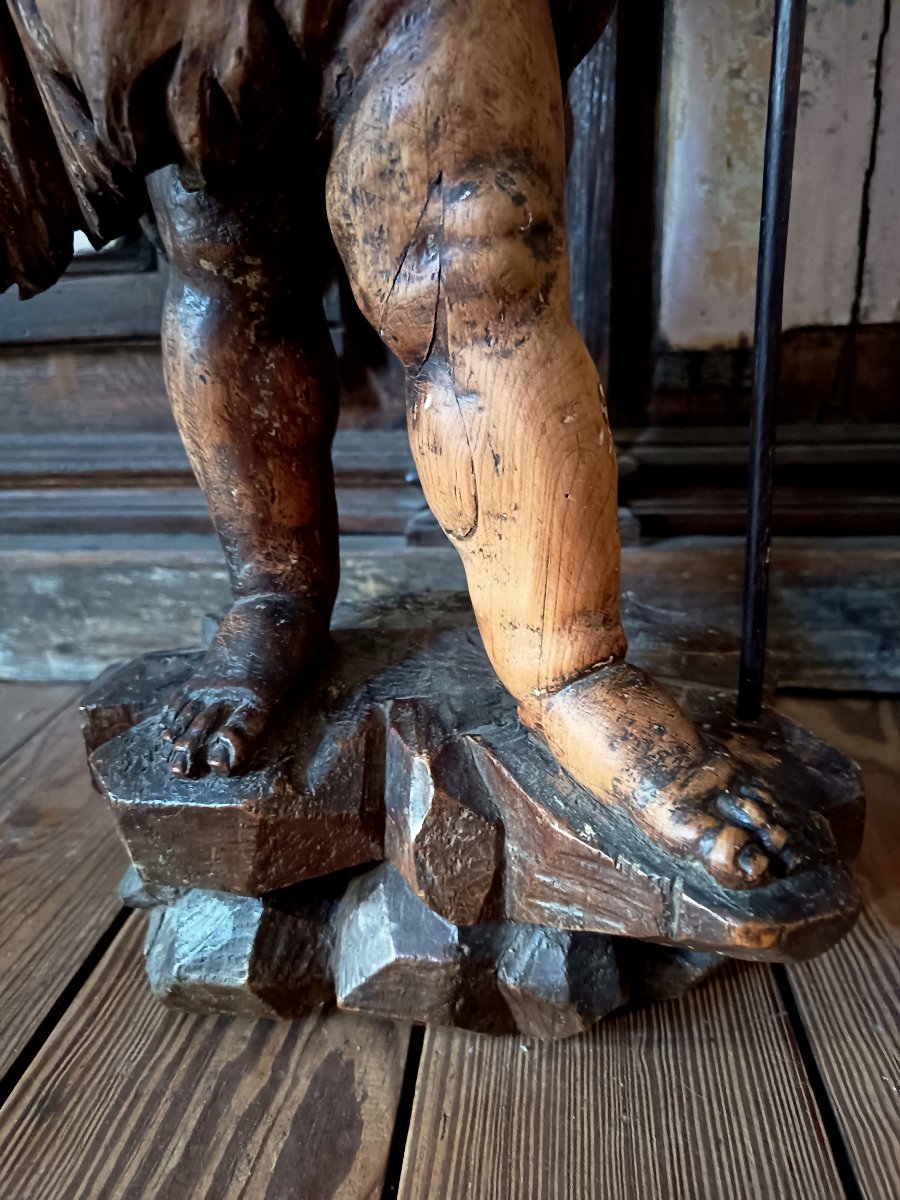
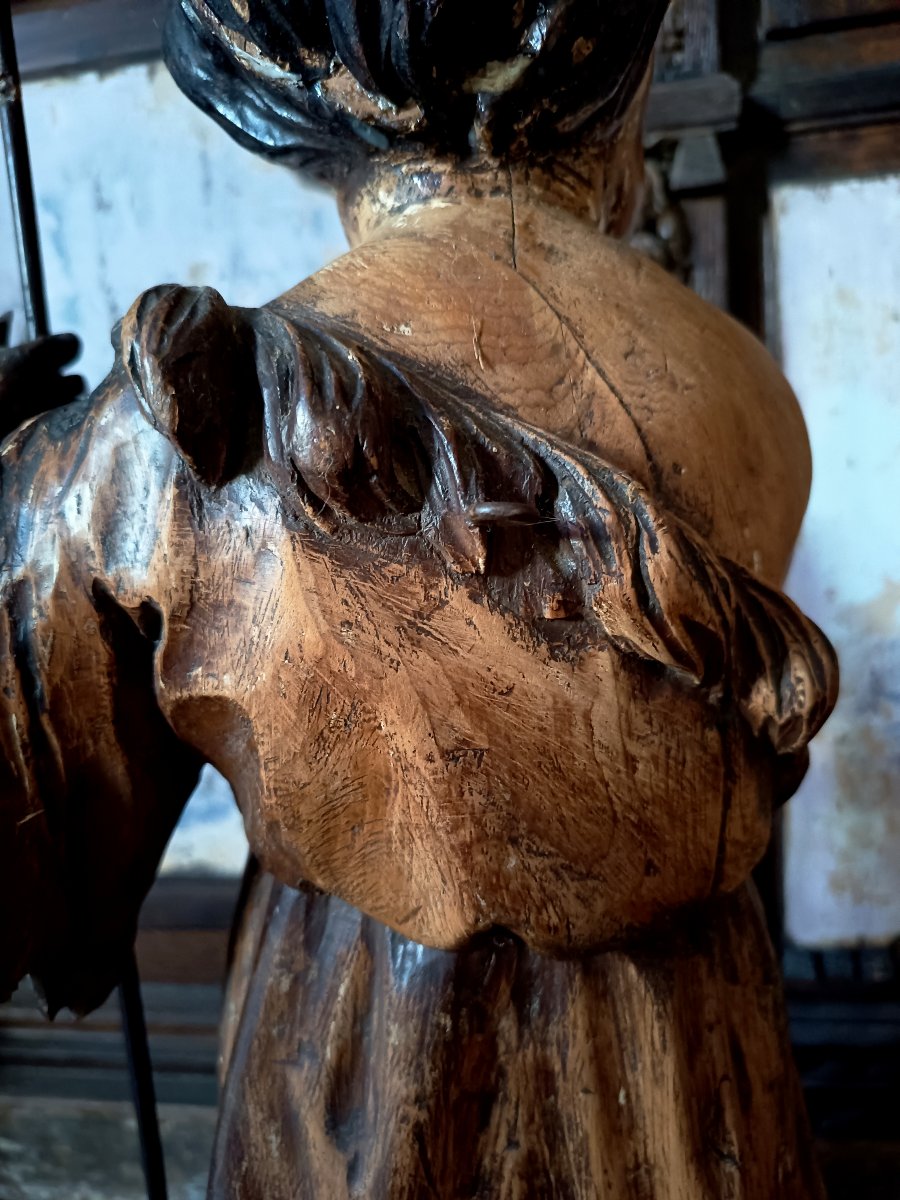
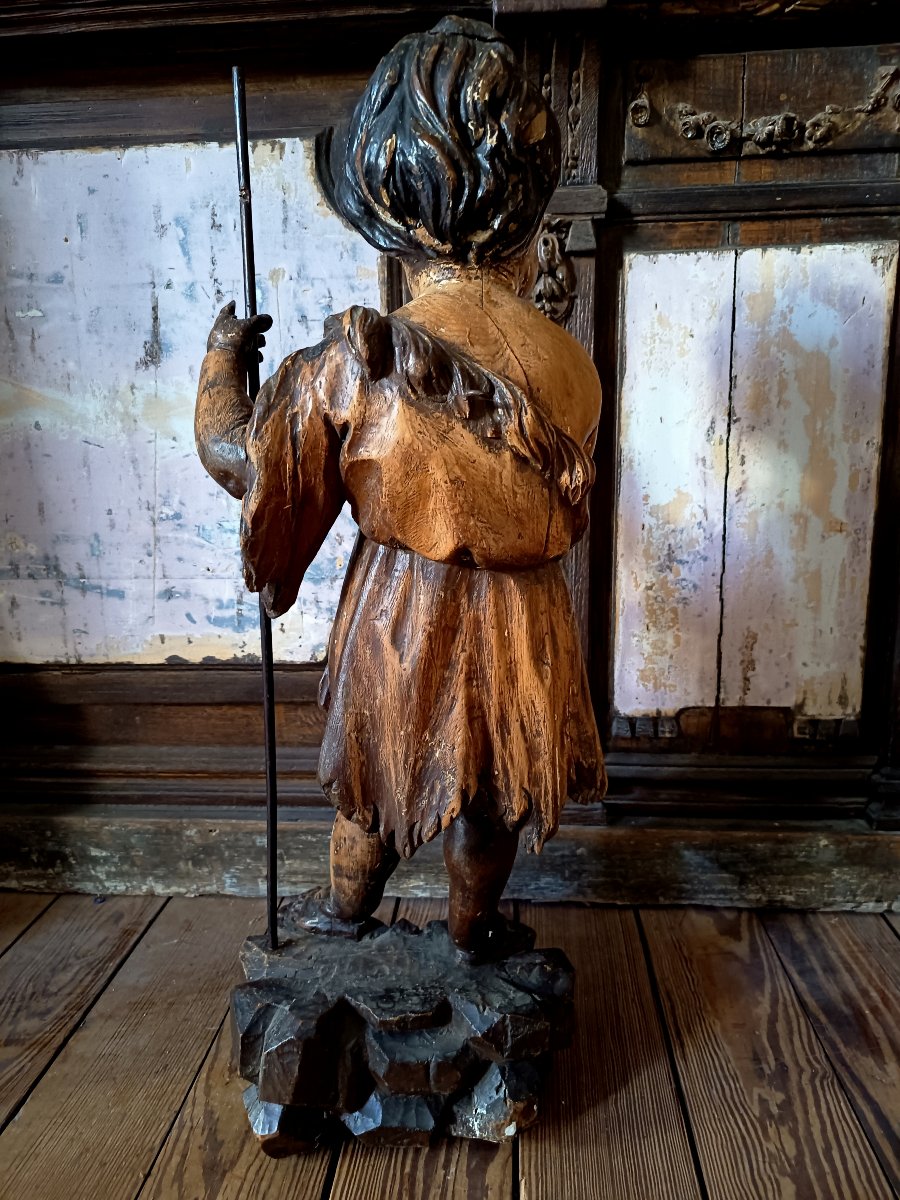
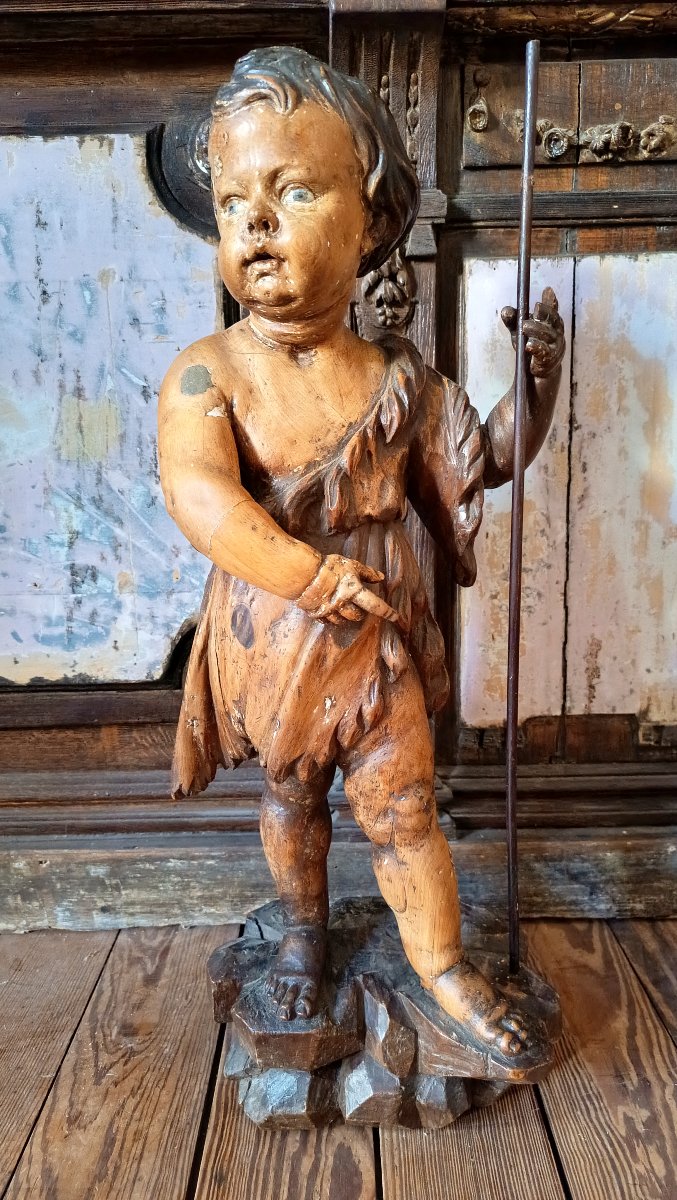
A beautiful sculpture in the round depicting the young Saint John the Baptist, carved from linden wood, with remarkable finesse of execution, particularly in the rendering of the face.The child is depicted standing, draped in an animal hide tied at the waist and slung over his left shoulder—a consistent iconographic attribute of the child Precursor. In his right hand, he holds a long staff, a symbol of his life as a hermit in the desert (the current staff is made of wood, a later replacement for the original staff, which was likely made of crossed reeds). He stands on a rocky pedestal, in the rocaille style typical of depictions of St. John in the desert. The face, of rare naturalism, is rendered with great sensitivity: the plumpness of childhood, a slightly parted mouth, and a lively gaze brought to life by inserted glass eyes—a technique characteristic of 17th- and 18th-century Italian devotional statuary intended to heighten the realism of the expression. The hair, rendered in lively, “flaming” strands, retains its original dark polychromy; the skin tones, however, have lost most of their paint (with occasional visible traces, notably a remnant of red on the lower lip).
Here, the sculptor displays his full virtuosity. A solid sculpture, carved in the round and fully finished on all sides—reflecting high-quality craftsmanship, intended to be displayed freestanding rather than set against an altarpiece.Dimensions: H. 62 cmMaterial: Carved linden wood, traces of original polychromyDate/origin: Late 17th/early 18th century, Genoese school (Liguria), in the style of the workshop of Anton Maria Maragliano (1664–1739), whose workshop was one of the most prolific and renowned in Genoa for religious wood sculpture, with works widely distributed throughout Italy and abroad.From a “malouinière” in the Saint-Malo region—a residence built by the leading merchants and shipowners of Saint-Malo in the 17th and 18th centuries, whose commercial networks maintained close ties with Mediterranean ports, notably Genoa.
Piece previously unseen on the market. Condition: Good overall condition considering its age. Natural shrinkage cracks in the solid wood (back, neck), with no structural impact. Isolated losses of polychrome on the skin tones. Small areas missing on the left hand. Traces of old, stabilized woodworm damage on the base.
Here, the sculptor displays his full virtuosity. A solid sculpture, carved in the round and fully finished on all sides—reflecting high-quality craftsmanship, intended to be displayed freestanding rather than set against an altarpiece.Dimensions: H. 62 cmMaterial: Carved linden wood, traces of original polychromyDate/origin: Late 17th/early 18th century, Genoese school (Liguria), in the style of the workshop of Anton Maria Maragliano (1664–1739), whose workshop was one of the most prolific and renowned in Genoa for religious wood sculpture, with works widely distributed throughout Italy and abroad.From a “malouinière” in the Saint-Malo region—a residence built by the leading merchants and shipowners of Saint-Malo in the 17th and 18th centuries, whose commercial networks maintained close ties with Mediterranean ports, notably Genoa.
Piece previously unseen on the market. Condition: Good overall condition considering its age. Natural shrinkage cracks in the solid wood (back, neck), with no structural impact. Isolated losses of polychrome on the skin tones. Small areas missing on the left hand. Traces of old, stabilized woodworm damage on the base.
1 450 €
Period: 17th century
Style: Louis 14th, Regency
Condition: Condition of use
Height: 62 cm
Reference (ID): 1821649
Availability: In stock
Print