

Bronze Bust Of Christ With Thorns By Clésinger, F. Barbedienne, And Collas, 19th Century
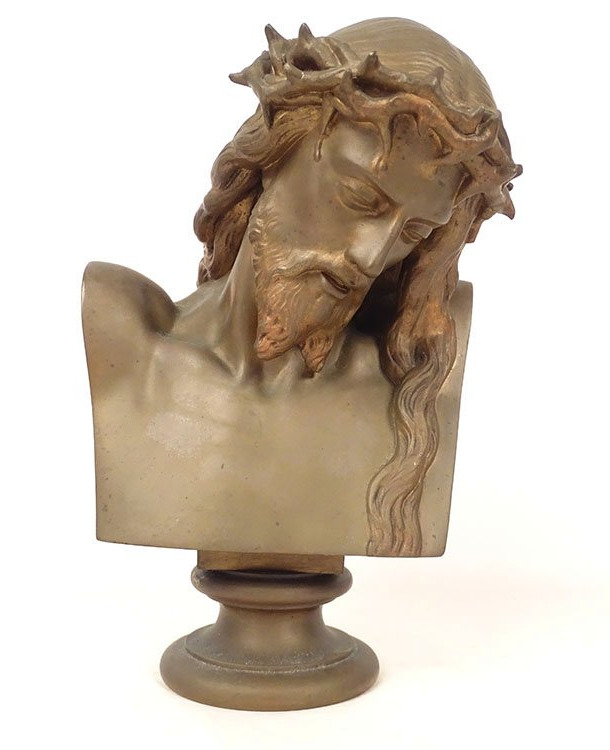
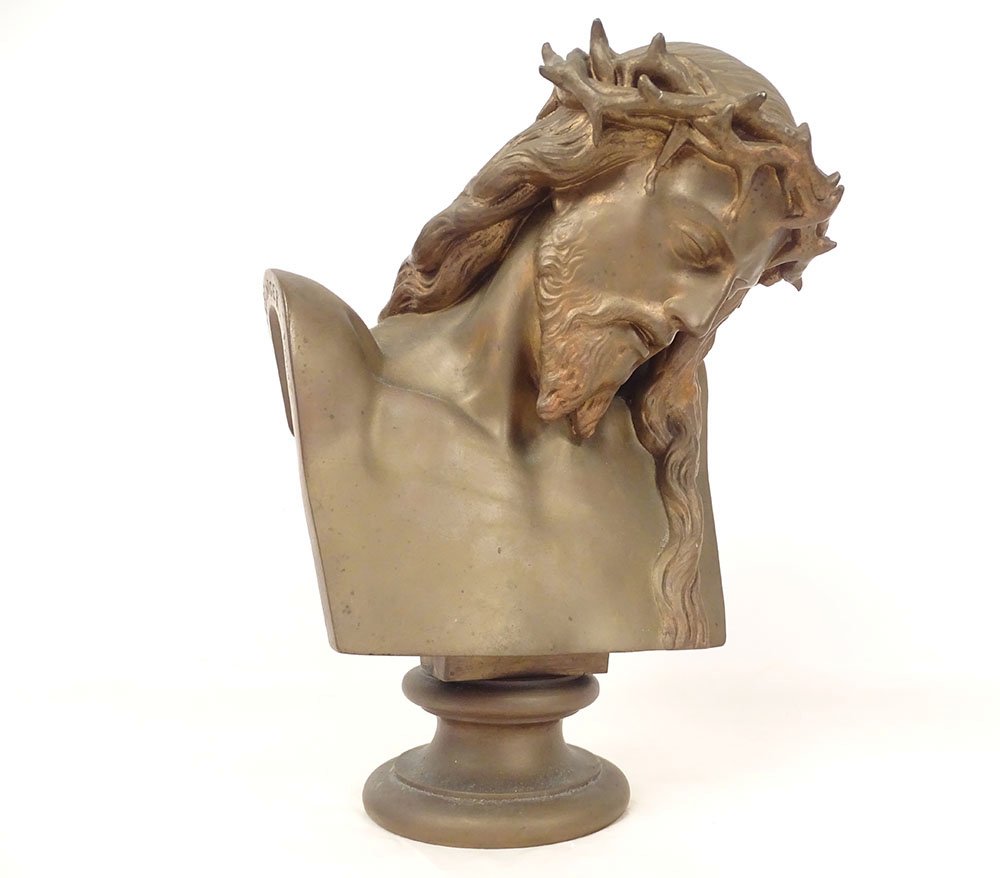
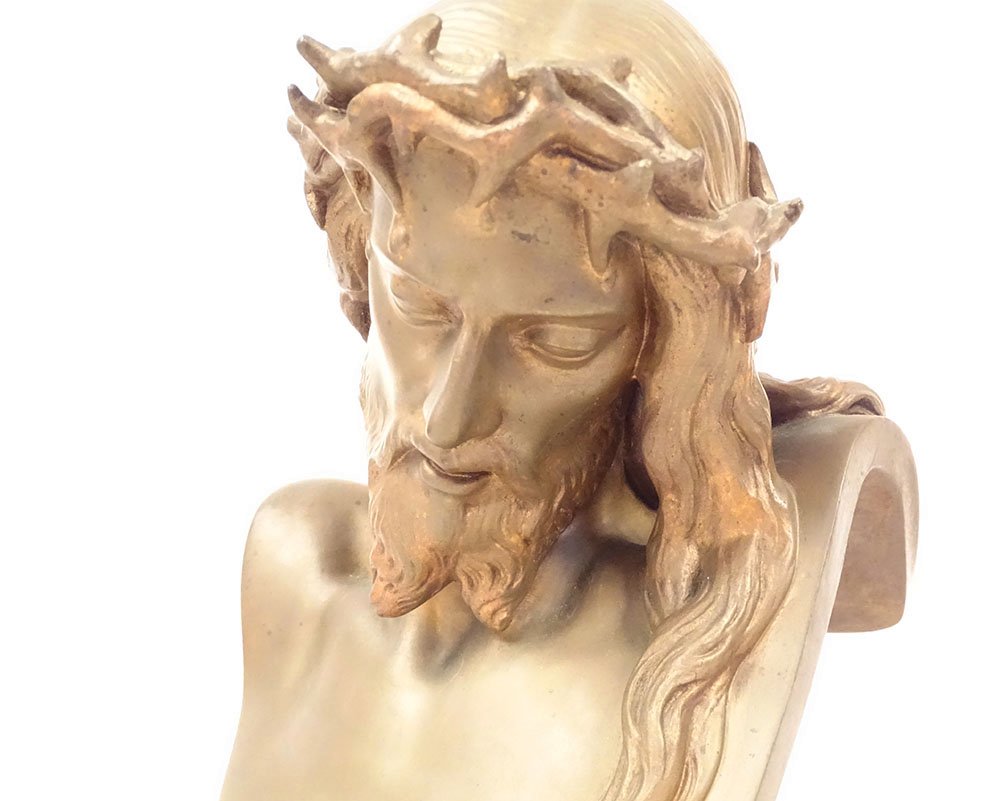
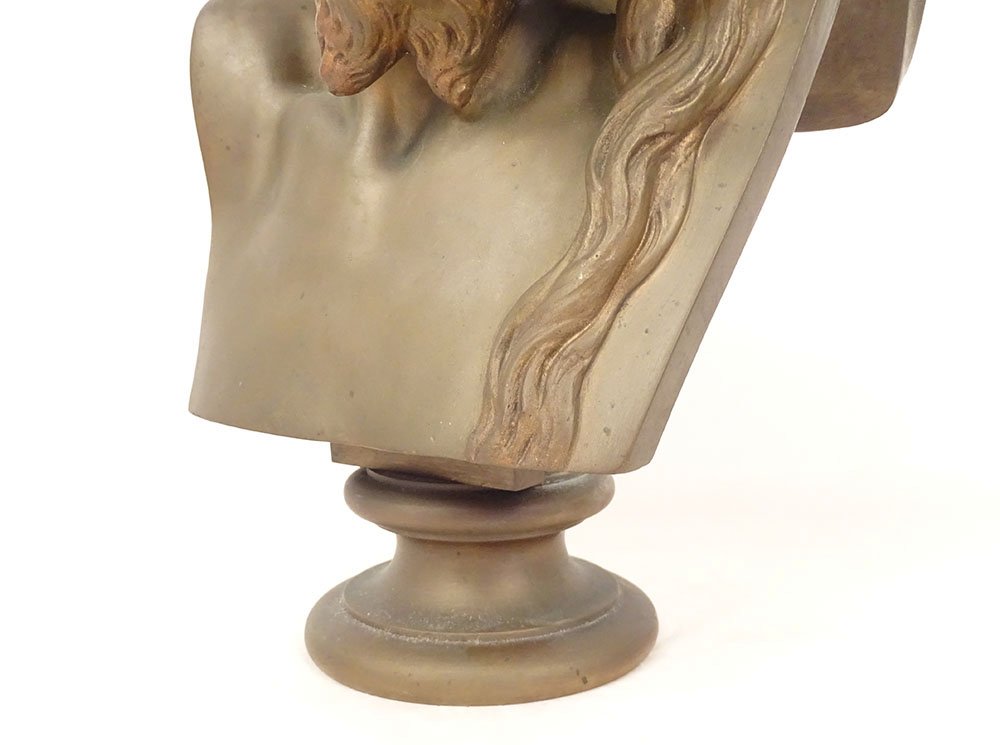
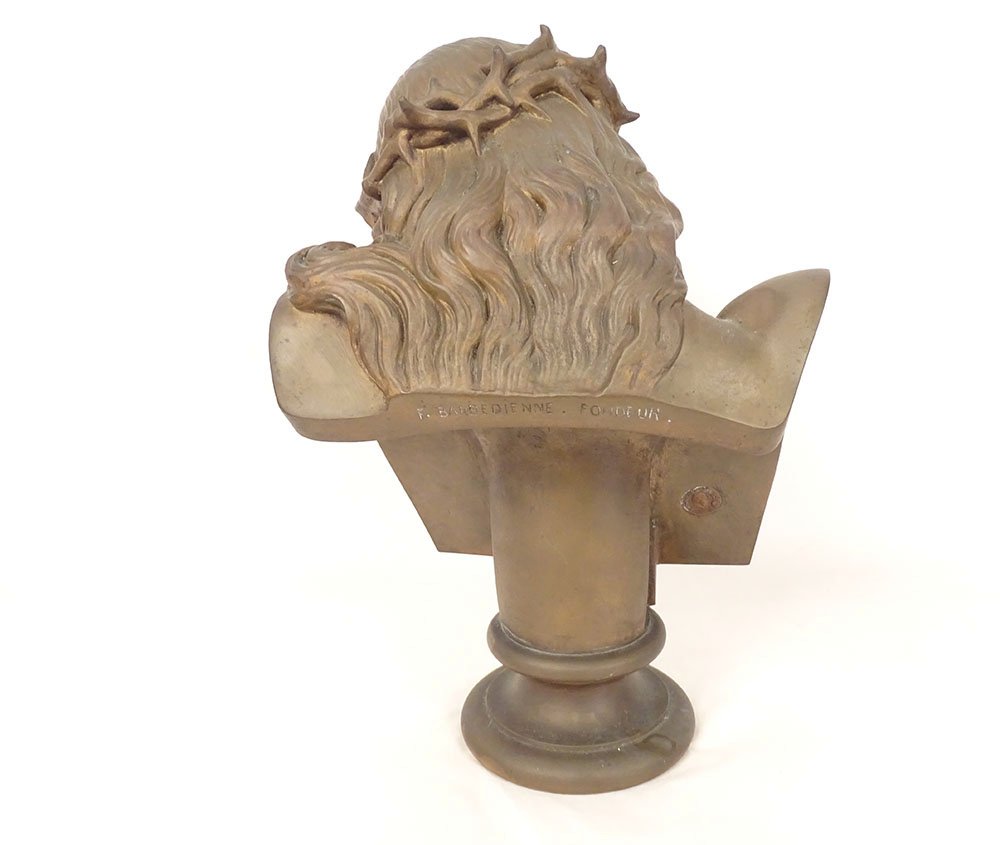
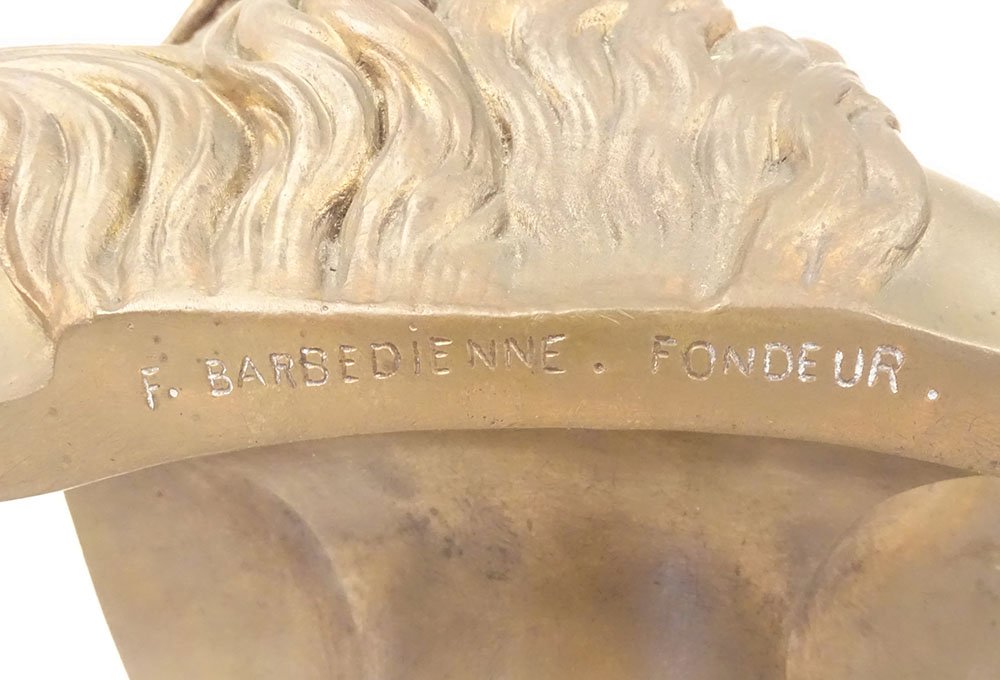
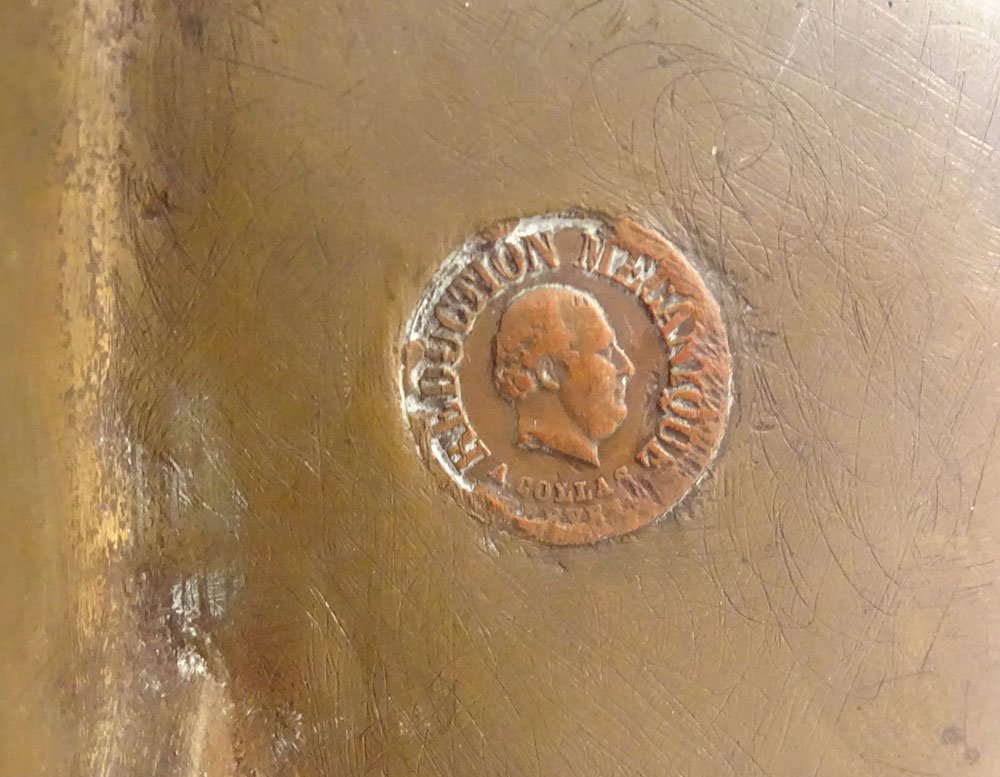
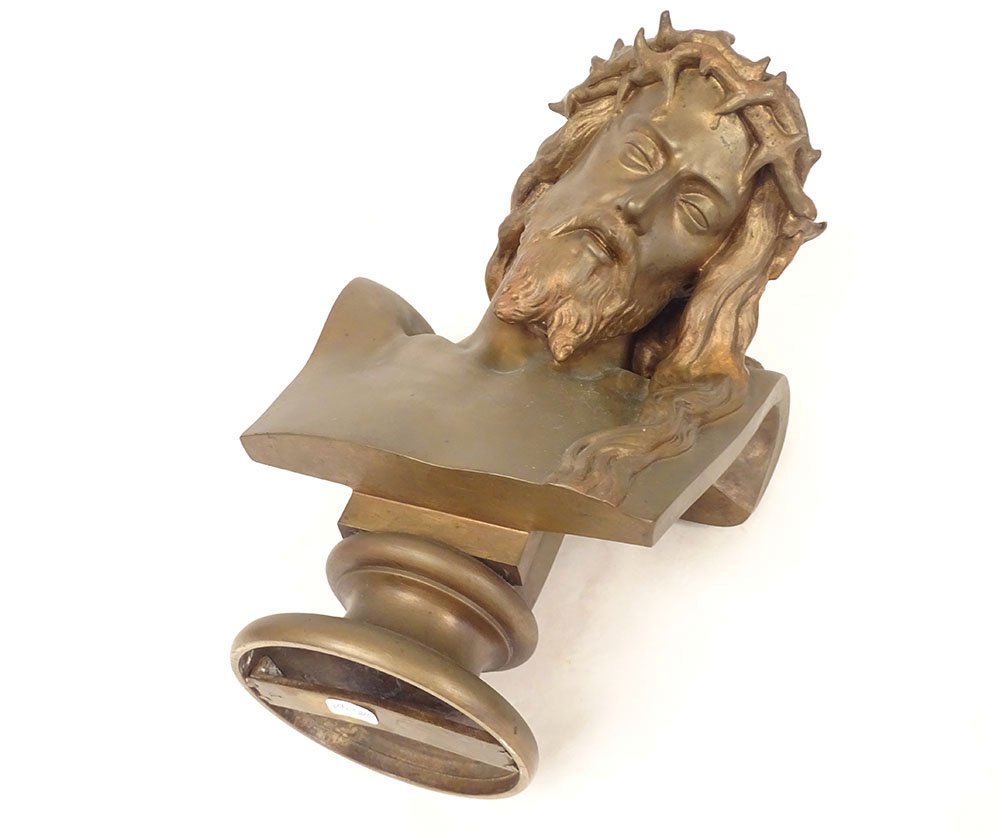
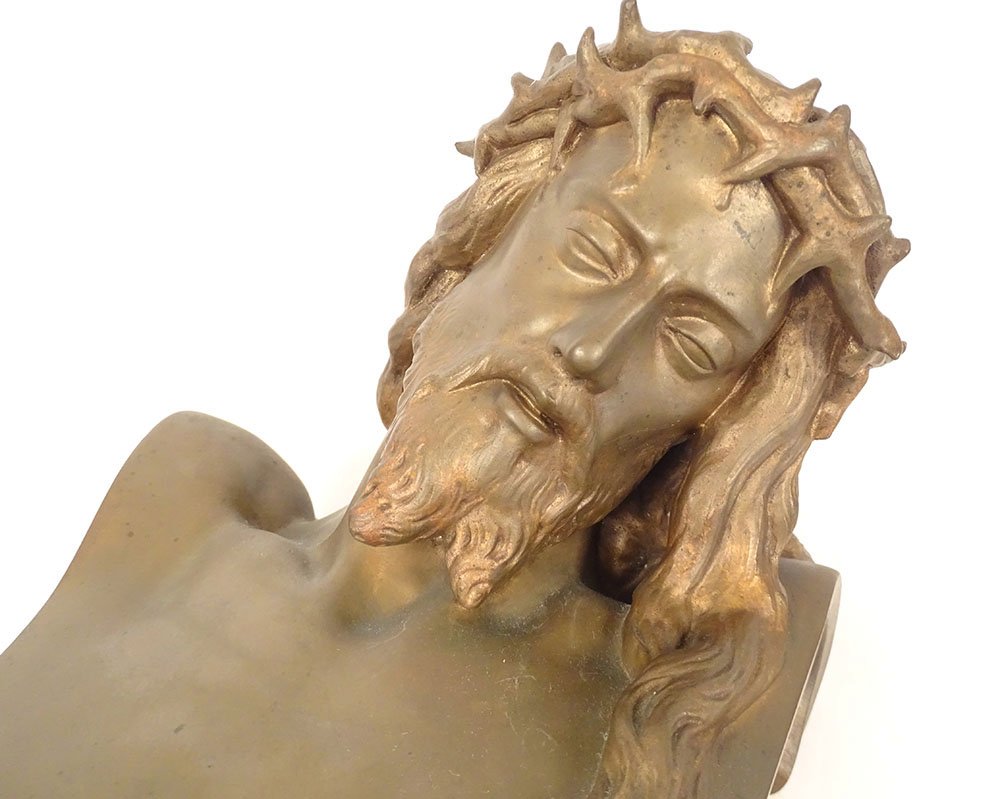
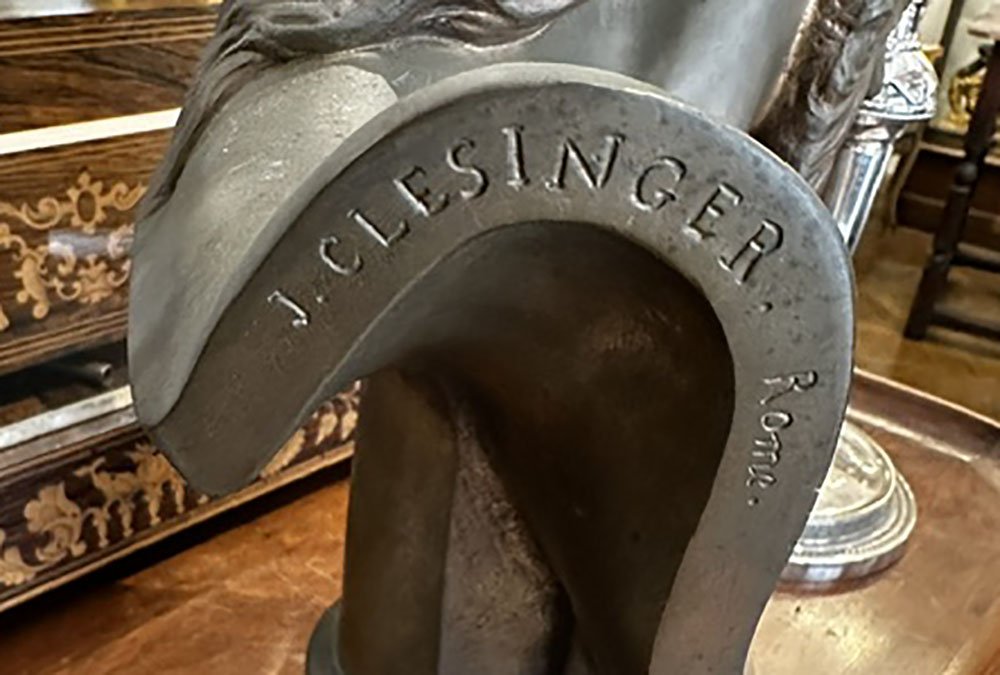
Bronze sculpture with a golden patina (and medal patina) representing the bust of Christ with the crown of thorns, signed by the sculptor J. Clésinger*, founder F. Barbedienne** on the back, stamp of Collas Mechanical Reduction, from the 19th century.
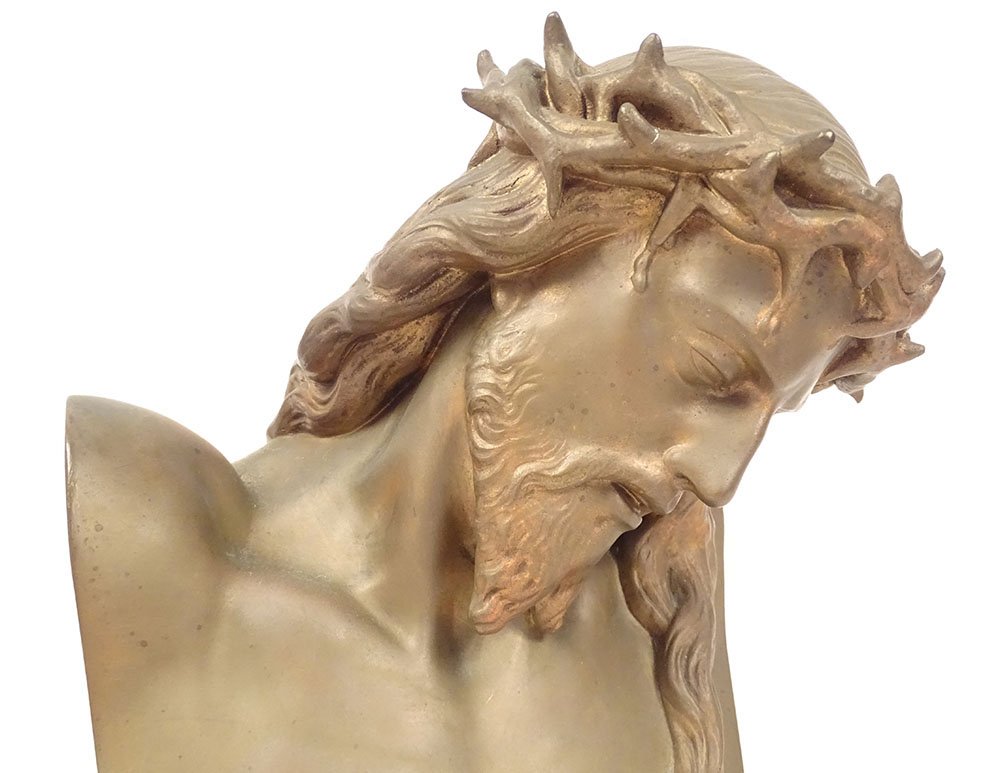
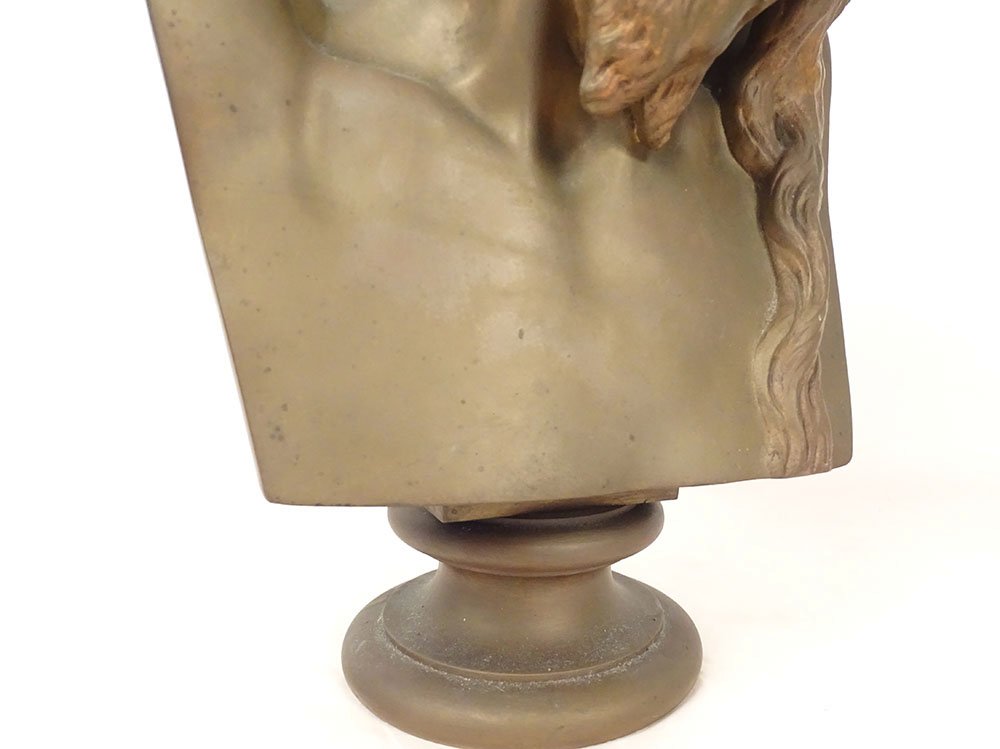
This sculpture is in very good condition. Signed (see photos). The patina is interesting: golden brown for almost the entire body, with highlights of a medal patina on his beard, hair, and crown that illuminate the face of Christ.
Note: some slight soiling and wear consistent with age, see photos.
*Jean-Baptiste ClésingerFrench sculptor and painter (born in Besançon on October 20, 1814, died in Paris on January 5, 1883), son of the sculptor Georges Clésinger, Auguste Clésinger studied sculpture with his father, who took him to Rome at the age of eighteen. In Rome, Clésinger studied under the sculptor Thorwaldsen. He returned to France and went to Paris in 1838 (after a stay in Switzerland) to enlist in a cuirassier regiment stationed in Melun. He became the secretary of General Bougenel (whose bust he had sculpted), who obtained permission for him to reside in Paris and continue his studies. On the recommendation of the painter Jean Gigoux, also from Besançon, he entered the studio of David d'Angers in 1839, though he did not remain there for long. Between 1840 and 1841, he worked in Lausanne, Switzerland, and produced several busts: Doctor Sécretan; General Laharpe, etc. He then stayed in Florence, from where he sent a bust of Jules Valdahon for his first participation in the Salon (1843). In 1847, he married the daughter of George Sand and Baron Dudevant (they separated five years later). Clésinger received several commissions from the State: Tragedy (a portrait of the actress Rachel), an equestrian statue of Francis I (erected in the Louvre courtyard and much criticized, this work remained there for only a few months), Louise of Savoy (Luxembourg Gardens), and Fraternity (erected on the Champ de Mars). Disappointed by the lack of success of his works, Clésinger went into exile in Italy from 1856 to 1864. From 1859 onward, he regularly submitted his works to the Salon. Late in life, he received a commission for four equestrian statues for the façade of the École Militaire in Paris. The statues of Marceau, Hoche, and Kléber were delivered, but the one of Carnot was never finished. He is the author of several portraits and busts: Frédéric Chopin; Ledru-Rollin; Théophile Gautier (a great admirer of Clésinger); Achille Fould; Eugène Scribe; George Sand; MacMahon; Marshal Sebastiani; the Duke of Nemours; and the Duke of Reichstadt. He worked for the churches of Saint Sulpice (Two Kneeling Angels, Pietà), Saint Pierre – Saint Paul in Villeneuve le Roi (Bust of the Virgin), and Saint Pierre in Besançon (The Virgin and Child Jesus). Clésinger also occasionally sculpted animals: Bull Grappling with a Wolf; Victorious Bull, Roman Bullfight, Buffalo and Bison, Victorious Bull, Two Lions.
As a painter, he exhibited several paintings at the Salons. He received a third-class medal in 1846, a second-class medal in 1847 (Woman Bitten by a Snake), and a first-class medal in 1848 (Reclining Bacchante). He was awarded the Legion of Honour in 1849 and made an officer in 1864.
Barbedienne was a French industrialist. He is primarily known for his bronze art reproduction foundry. The son of a modest Norman farmer, he first made his fortune in wallpaper before partnering in 1838 with the mechanic Achille Collas (1795-1859), who had just invented a process for reproducing works of art in bronze on a smaller scale. In 1839, Barbedienne founded the company where he produced bronze reproductions of most of the statues in European museums, reduced sufficiently to adorn modern interiors. His idea was to democratize art by making faithful reproductions of masterpieces accessible. The themes chosen were often allegorical and drew heavily on classical antiquity. Even today, it is quite common to find Barbedienne bronzes in middle-class homes. He applied his techniques to the works of sculptors of his time (Barye, Frémiet, Mène, etc.) and created numerous bronze furniture pieces, enamels, cloisonné, high and low reliefs in wood, and more. Through publishing contracts he offered them, he contributed to their success by disseminating their works. Having no children, it was his nephew and successor, Gustave Leblanc-Barbedienne, who developed the foundry, specializing in monumental bronzes. In France, many war memorials bear the Leblanc-Barbedienne signature. The quality of the casting, chasing, and patina, characteristic of the Barbedienne style, gradually led to the founder's signature gaining importance. Thanks in particular to Ferdinand Barbedienne, the relationship between sculptor and founder became analogous to that between composer and performer in music. Ferdinand Barbedienne is buried in Père-Lachaise Cemetery in Paris.
Ferdinand Barbedienne partnered with Achille Collas(1795-1859) – the inventor of the mechanical reduction process for statues – in 1838, and significantly expanded the production of small bronze editions. His success rested largely on his business policies and strategy. The mechanical reduction process initially allowed their company to distribute reduced-size antique sculptures before they considered commissioning models from living artists. (Excerpt from Proantic Magazine, "Les Bronzes Barbedienne")
- Diamètre socle 11 cm
- Height 31,5 cm
- Width 21 cm
Period: 19th century
Style: Napoleon 3rd
Condition: Good condition
Width: 21 cm
Diameter: socle 11 cm
Height: 31,5 cm
Reference (ID): 1820047
Availability: In stock