THIS OBJECT WAS SOLD
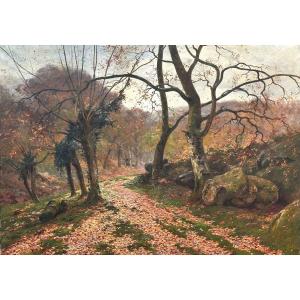
Willem Van Hasselt, Western France Landscape, "view Of Saint Corentin," Oil On Cardboard, Ca. 1930


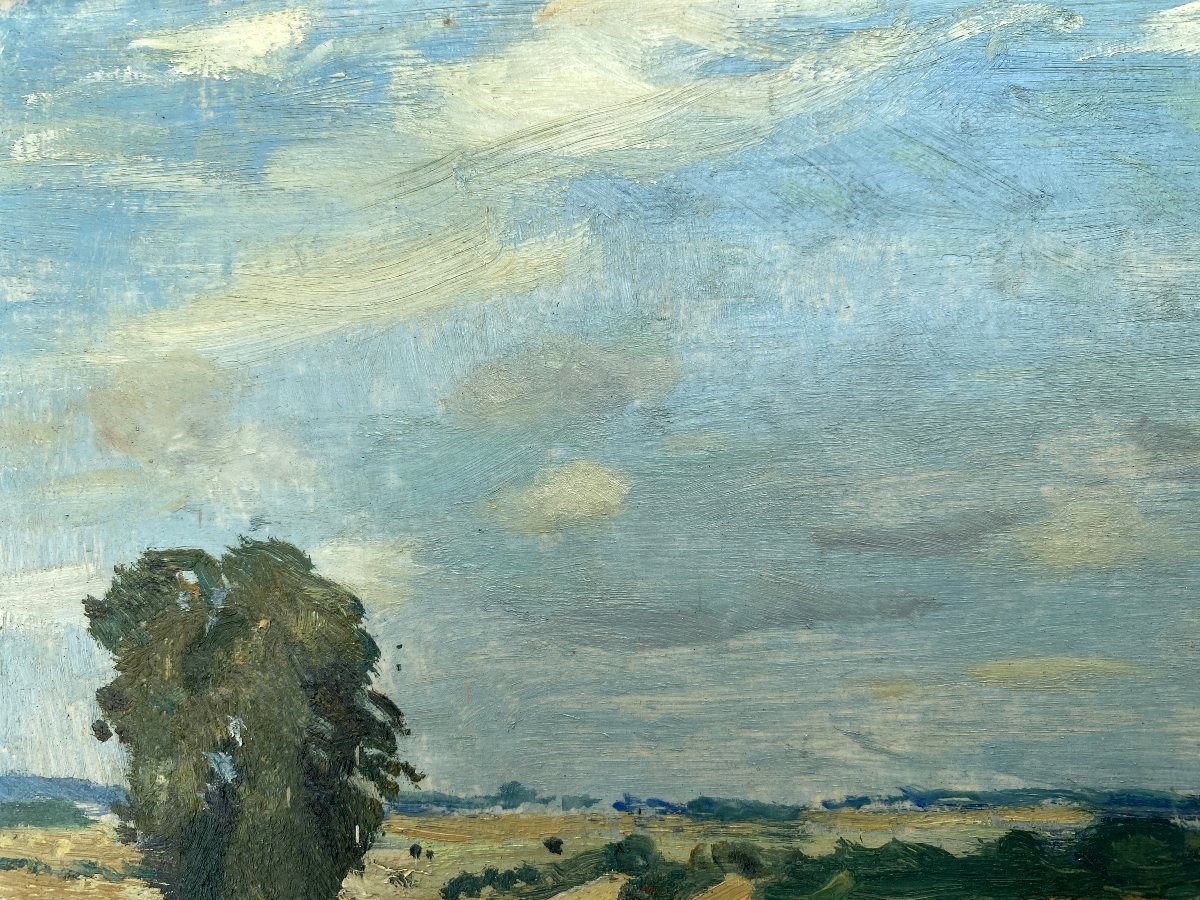


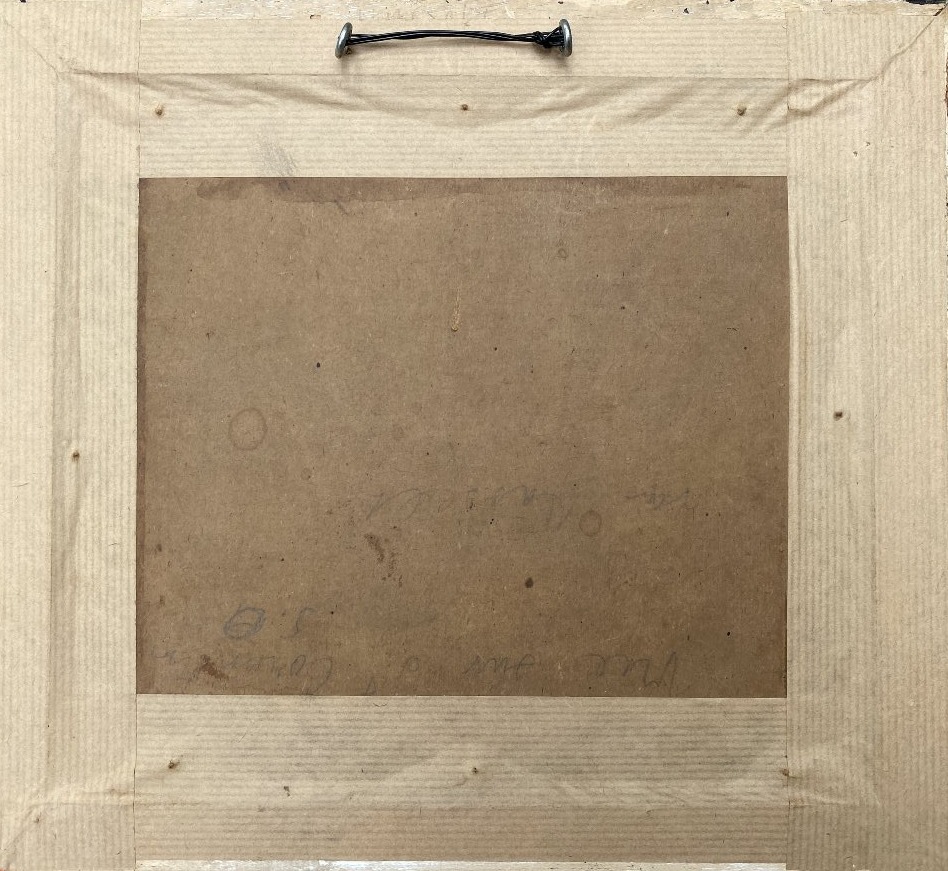
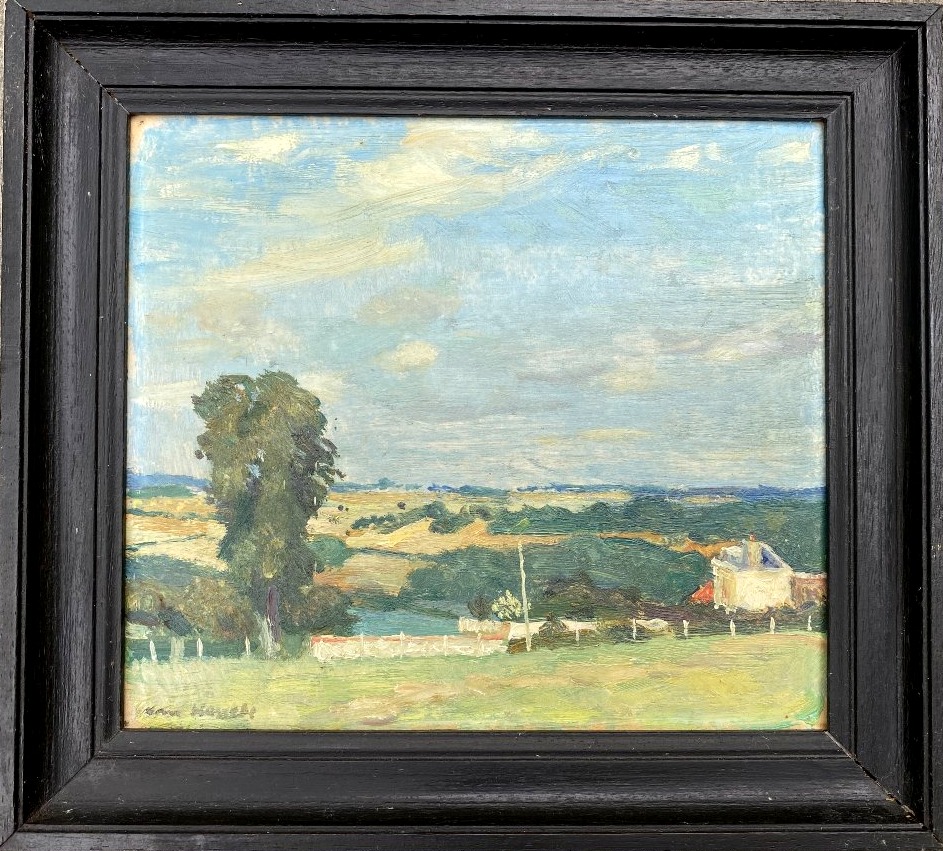
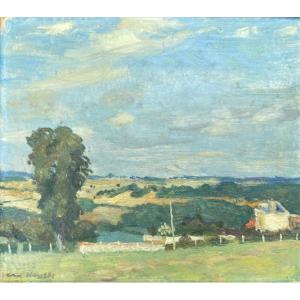


This work by Willem Van Hasselt is located in France, his adopted country; the back is inscribed with “View of St. Corentin.” It most likely depicts a Breton landscape, as Saint Corentin is both a locality and a Breton religious figure.
It depicts a landscape of western France, evoking the lush countryside and reflecting the vision of an artist who, throughout his career, traveled throughout France, bringing these regions to life through his artistic sensibilities—and at times, featuring intimate figures from his own circle.
Here, the scene is beautifully set against a sky where one can sense the clouds drifting over the rural valleys. A few dwellings, bordered fields, and slate roofs.
It is believed to date from the 1930s or 1940s.
Dimensions without frame: 23 cm x 20 cm
Dimensions with frame: 30 cm x 27 cm
Here is the artist’s biography:
Willem Van Hasselt (1882–1963) was a Dutch painter born in Rotterdam. He studied at the Rotterdam Academy of Fine Arts and then in Paris beginning in 1903. After spending a few years in London, he exhibited for the first time in France in 1911. After the war, Willem Van Hasselt continued his artistic exploration in Paris and became acquainted with the Nabis painters, particularly Ker-Xavier Roussel and Edouard Vuillard, with whom he was very close. In 1921, he married the illustrator Louise Le Vavasseur, whose family—well-connected in Bordeaux society—introduced him to a number of prominent figures and intellectuals, notably François Mauriac and Maurice Martin. Willem Van Hasselt spent his summers on the Arcachon Basin, where he painted numerous works depicting landscapes and intimate scenes. He also painted landscapes of the Seine and of Brittany—often Bréhat. His works are included in the collections of the Musée des Beaux-Arts in Bordeaux, the Musée des Beaux-Arts in Nantes, the Musée Eugène Boudin in Honfleur, the Musée d’Art Moderne et Contemporain in Strasbourg, and the Musée Georges Pompidou in Paris. Little has been written about the life and work of Willem Van Hasselt, this courageous Dutchman who enlisted as a volunteer in 1914 and became a naturalized French citizen in 1933. Yet everyone who met him praised the man’s radiant serenity and the artist’s complete sincerity. When a journalist once came to interview him, he replied: “I paint with my heart and as best I can. One must paint as one prays.” He regularly exhibited landscapes inspired by his many trips to coastal areas—in Saint-Tropez, Brittany, and Arcachon—at galleries such as Druet, Hector Brame, and Wildenstein. From his Dutch ancestry, Van Hasselt retained a love for wide-open spaces, seascapes, and boats—a passion that was further strengthened by his 1921 marriage to Louise Levavasseur. Every year, the couple returned to the Bassin and stayed in Bordeaux. In a previously unpublished letter to Jean Gabriel Lemoine—curator at the Musée des Beaux-Arts in Bordeaux at the time his painting “Homage to Vuillard” was deposited by the state in that museum—Van Hasselt wrote about the city: “Bordeaux is a charming city, and the Garonne River in Bordeaux has often inspired me.” Van Hasselt admired Vuillard’s art, and the tribute he painted in 1943 depicts the master surrounded by his friends: Pierre Bonnard, Maurice Denis, Aristide Maillol, Jacques Salomon, and Ker-Xavier Roussel. We can also mention the book documenting part of the artist’s work: The Port of Bordeaux as Seen by the Painters, with an introduction by Albert Reche and texts by François Ribemont, published by Éditions Chimériques.
It depicts a landscape of western France, evoking the lush countryside and reflecting the vision of an artist who, throughout his career, traveled throughout France, bringing these regions to life through his artistic sensibilities—and at times, featuring intimate figures from his own circle.
Here, the scene is beautifully set against a sky where one can sense the clouds drifting over the rural valleys. A few dwellings, bordered fields, and slate roofs.
It is believed to date from the 1930s or 1940s.
Dimensions without frame: 23 cm x 20 cm
Dimensions with frame: 30 cm x 27 cm
Here is the artist’s biography:
Willem Van Hasselt (1882–1963) was a Dutch painter born in Rotterdam. He studied at the Rotterdam Academy of Fine Arts and then in Paris beginning in 1903. After spending a few years in London, he exhibited for the first time in France in 1911. After the war, Willem Van Hasselt continued his artistic exploration in Paris and became acquainted with the Nabis painters, particularly Ker-Xavier Roussel and Edouard Vuillard, with whom he was very close. In 1921, he married the illustrator Louise Le Vavasseur, whose family—well-connected in Bordeaux society—introduced him to a number of prominent figures and intellectuals, notably François Mauriac and Maurice Martin. Willem Van Hasselt spent his summers on the Arcachon Basin, where he painted numerous works depicting landscapes and intimate scenes. He also painted landscapes of the Seine and of Brittany—often Bréhat. His works are included in the collections of the Musée des Beaux-Arts in Bordeaux, the Musée des Beaux-Arts in Nantes, the Musée Eugène Boudin in Honfleur, the Musée d’Art Moderne et Contemporain in Strasbourg, and the Musée Georges Pompidou in Paris. Little has been written about the life and work of Willem Van Hasselt, this courageous Dutchman who enlisted as a volunteer in 1914 and became a naturalized French citizen in 1933. Yet everyone who met him praised the man’s radiant serenity and the artist’s complete sincerity. When a journalist once came to interview him, he replied: “I paint with my heart and as best I can. One must paint as one prays.” He regularly exhibited landscapes inspired by his many trips to coastal areas—in Saint-Tropez, Brittany, and Arcachon—at galleries such as Druet, Hector Brame, and Wildenstein. From his Dutch ancestry, Van Hasselt retained a love for wide-open spaces, seascapes, and boats—a passion that was further strengthened by his 1921 marriage to Louise Levavasseur. Every year, the couple returned to the Bassin and stayed in Bordeaux. In a previously unpublished letter to Jean Gabriel Lemoine—curator at the Musée des Beaux-Arts in Bordeaux at the time his painting “Homage to Vuillard” was deposited by the state in that museum—Van Hasselt wrote about the city: “Bordeaux is a charming city, and the Garonne River in Bordeaux has often inspired me.” Van Hasselt admired Vuillard’s art, and the tribute he painted in 1943 depicts the master surrounded by his friends: Pierre Bonnard, Maurice Denis, Aristide Maillol, Jacques Salomon, and Ker-Xavier Roussel. We can also mention the book documenting part of the artist’s work: The Port of Bordeaux as Seen by the Painters, with an introduction by Albert Reche and texts by François Ribemont, published by Éditions Chimériques.
Explore similar pieces and discover your ideal find:
Landscapes