

Important Gilded Bronze Keman – Japanese Temple Ornament – Meiji Period, 19th Century
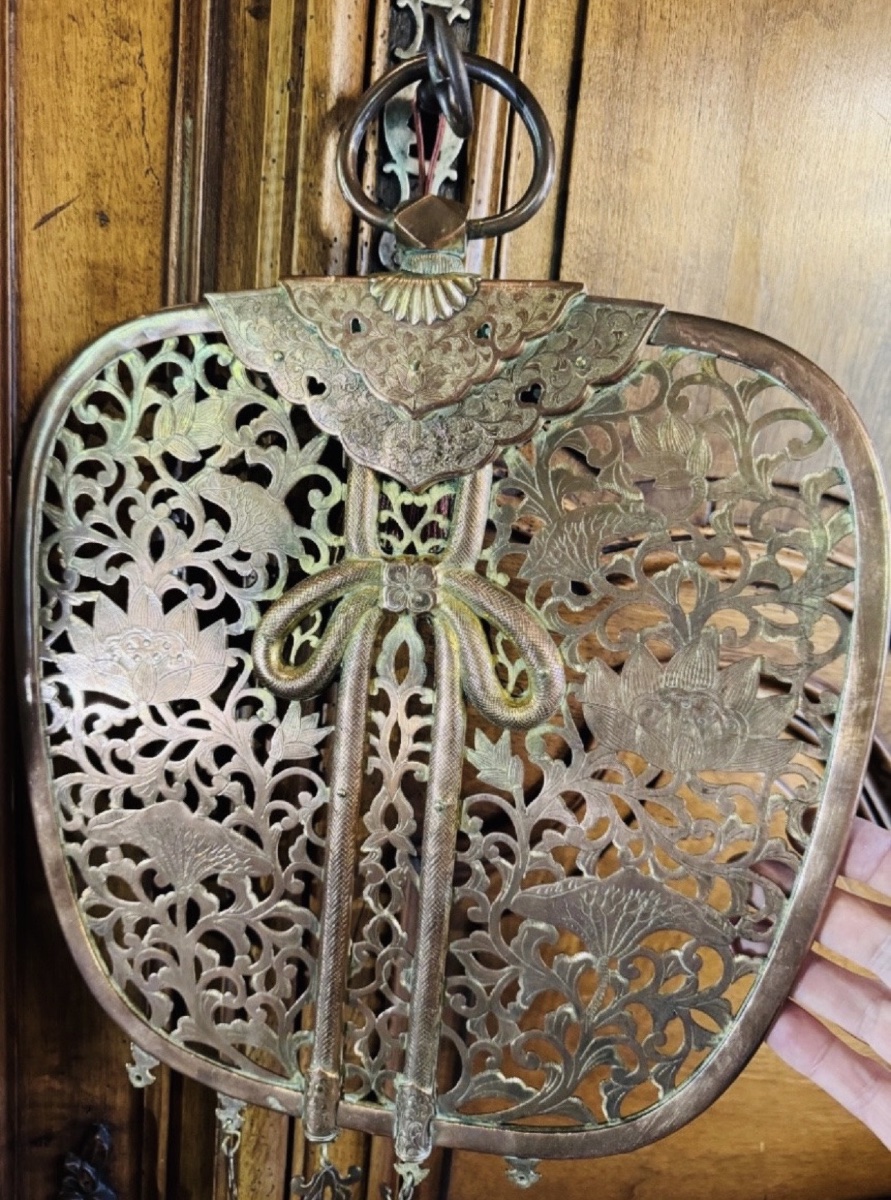
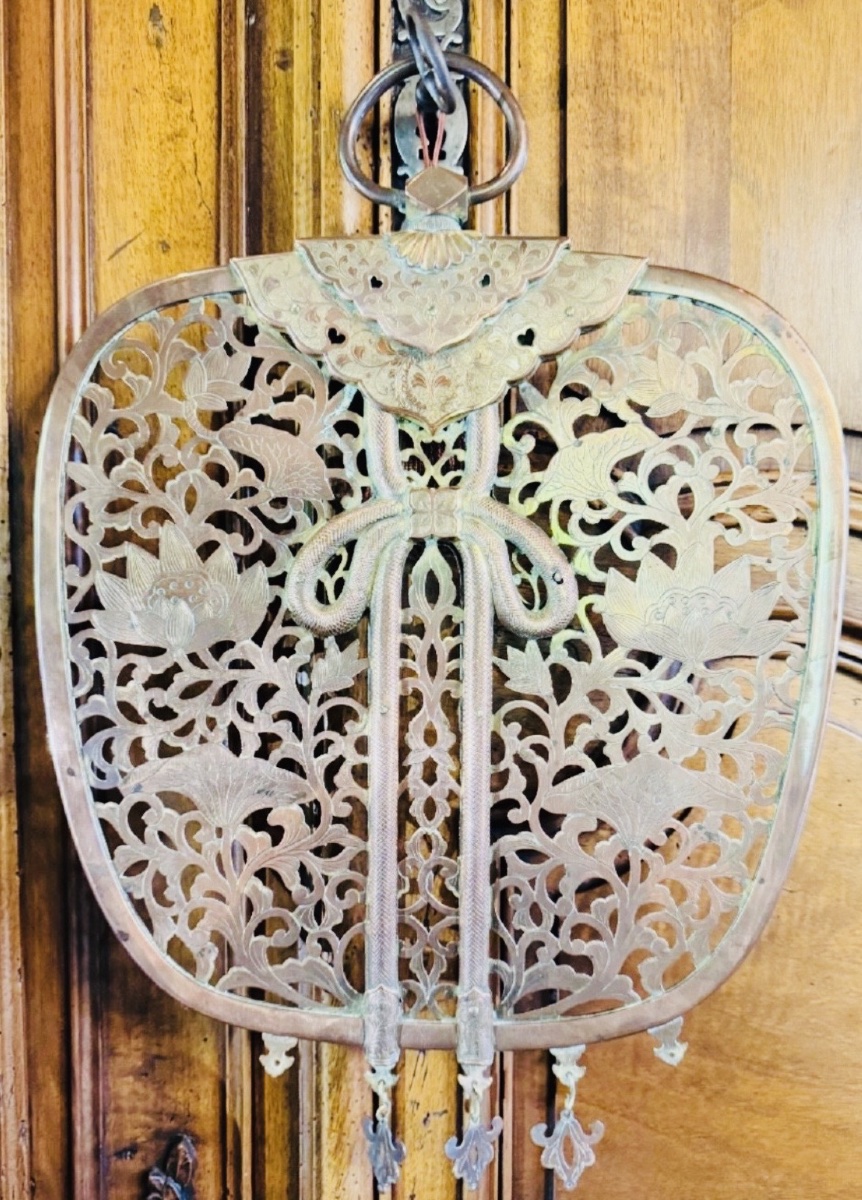
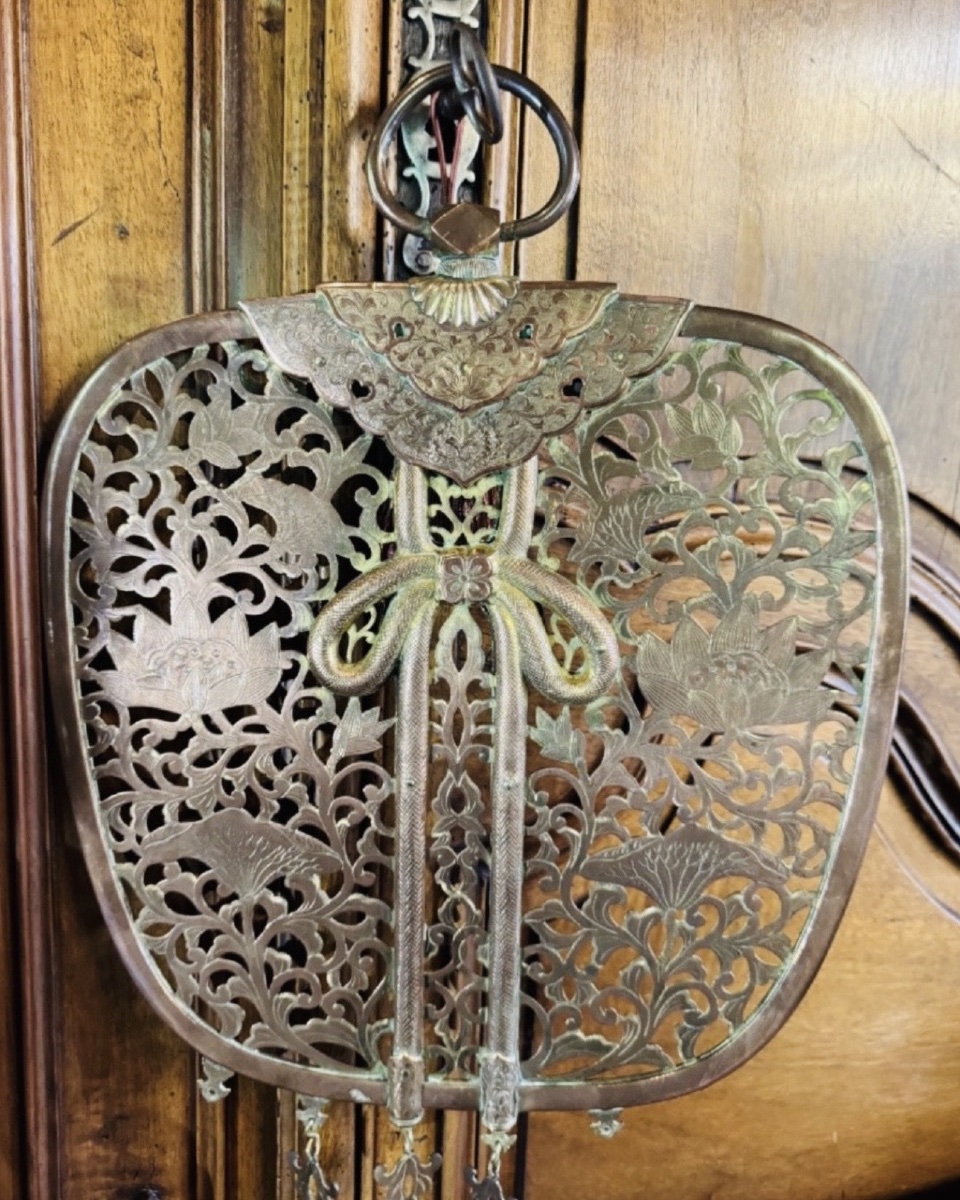
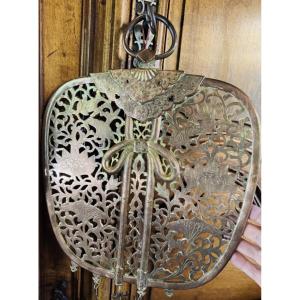
An important Japanese keman made of a copper alloy, finely cut, openworked, chiseled, and formerly gilded.
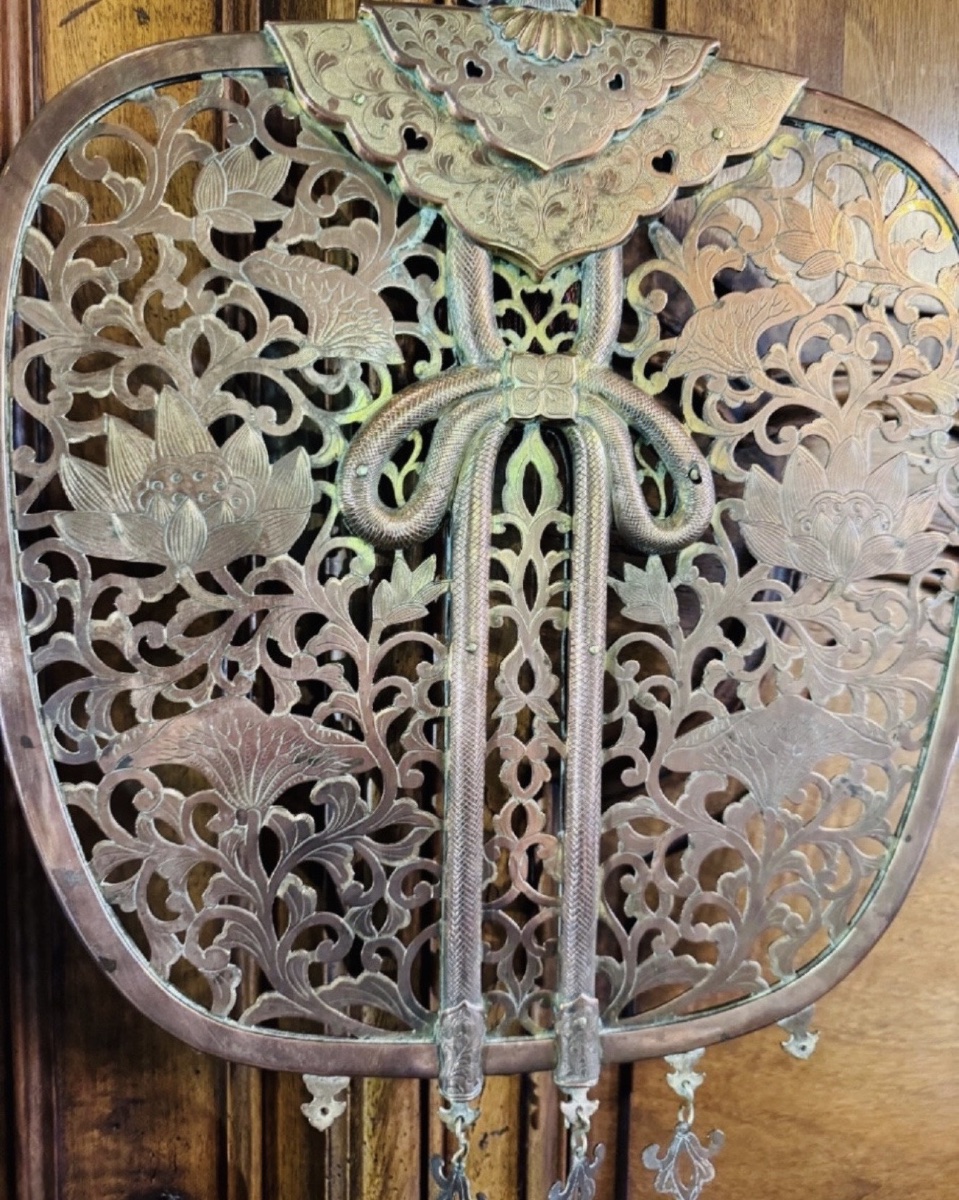
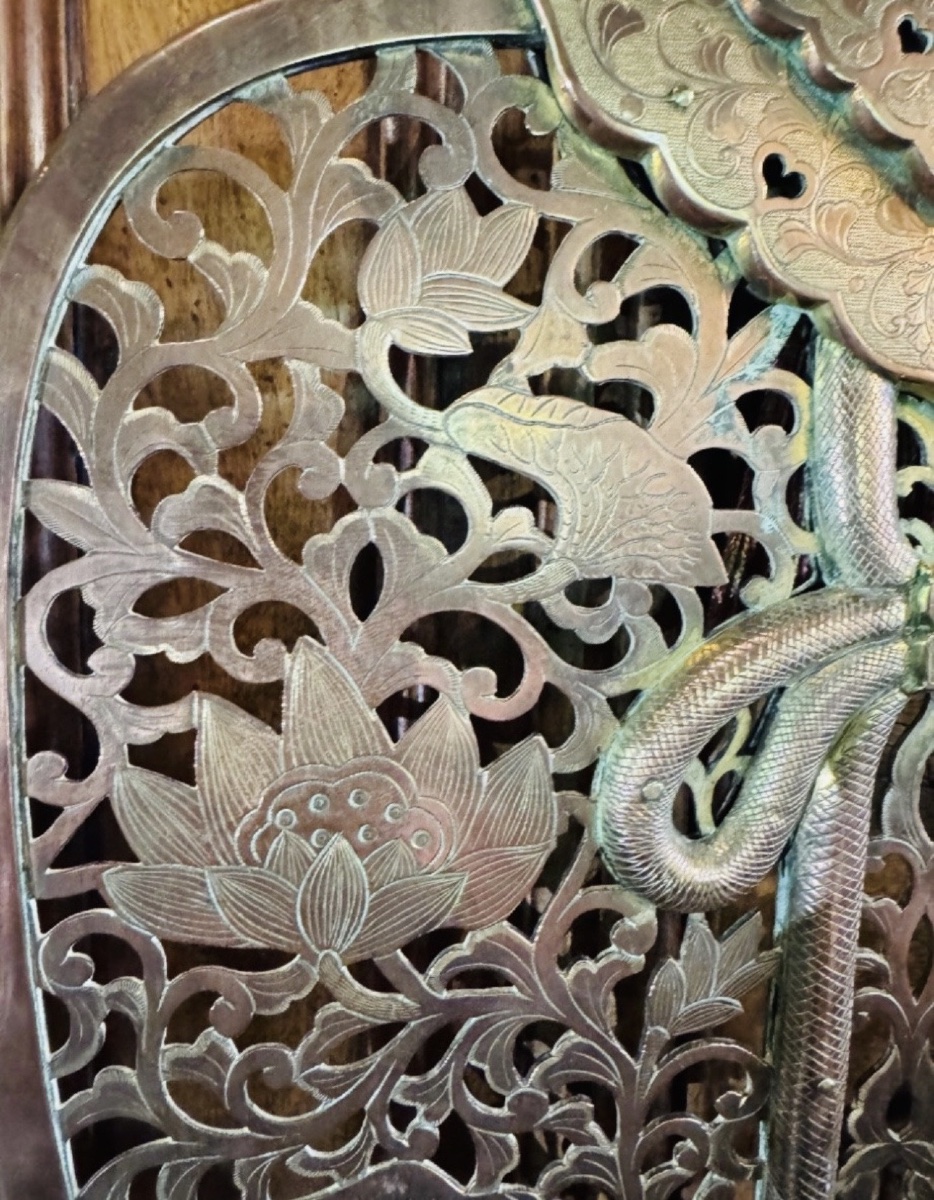
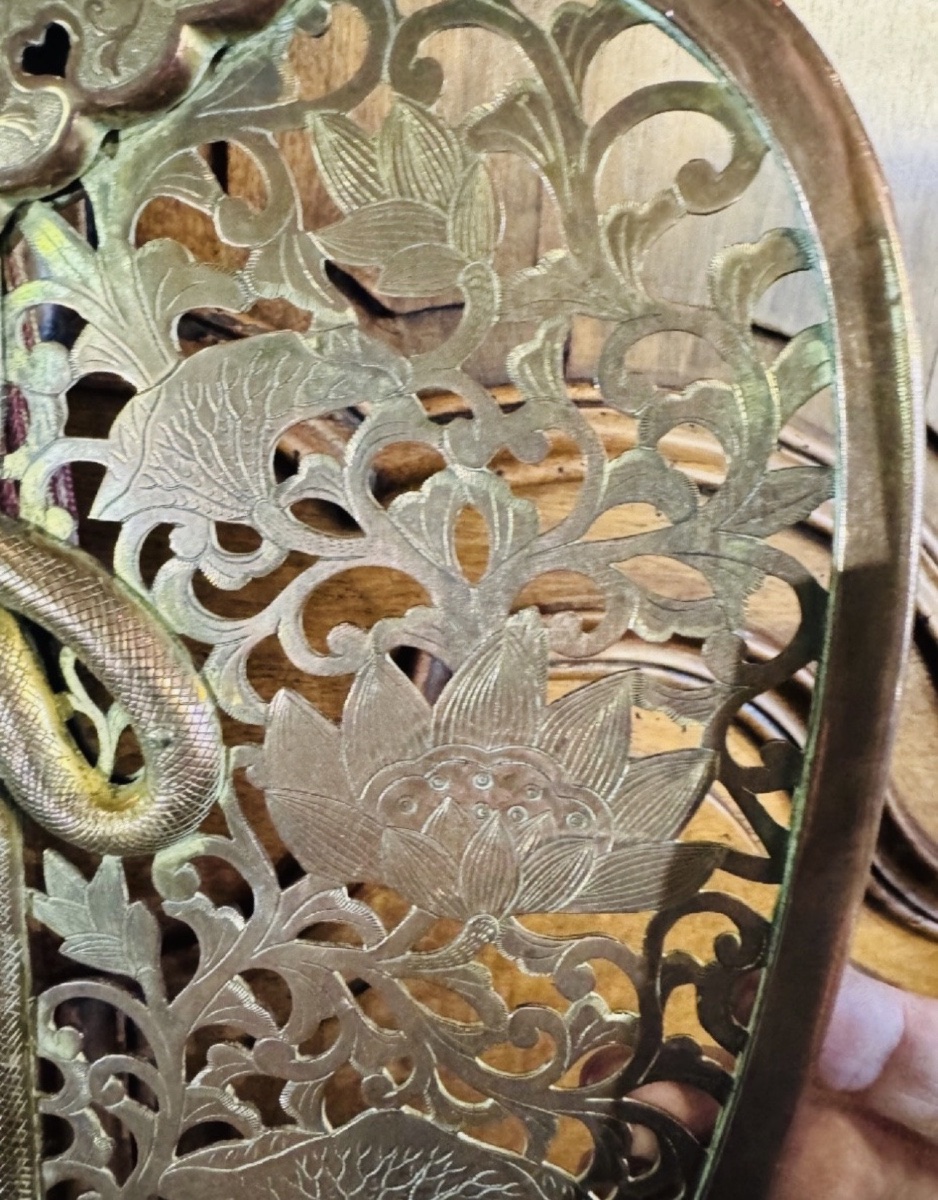
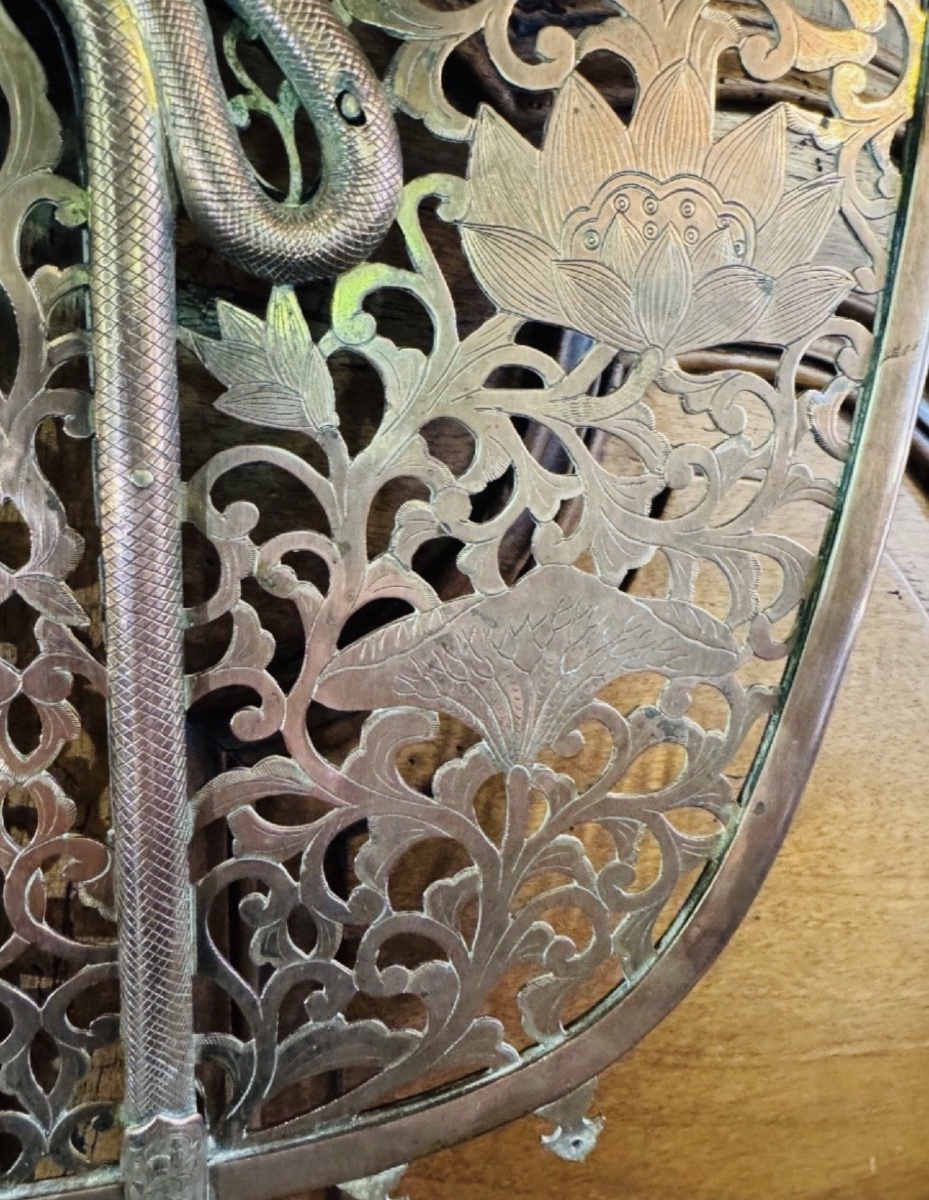
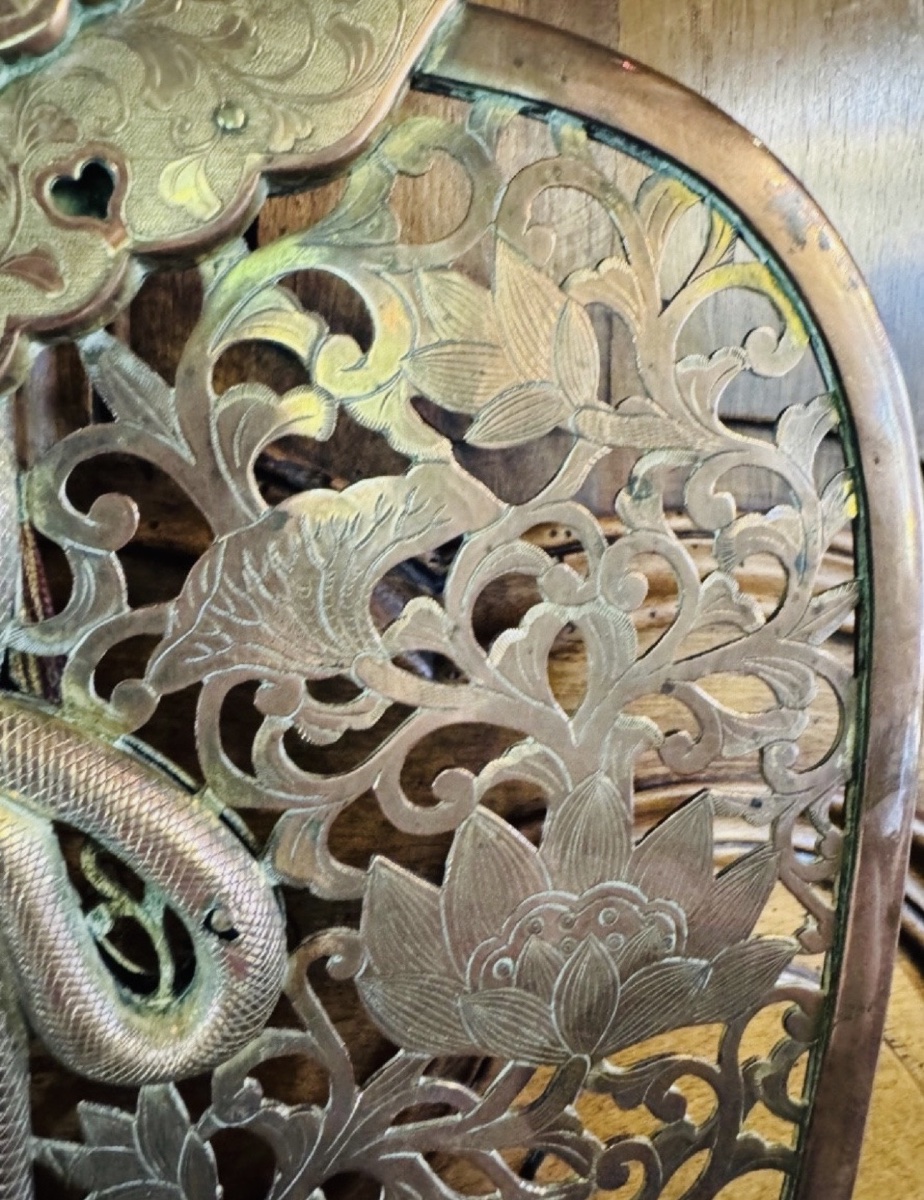
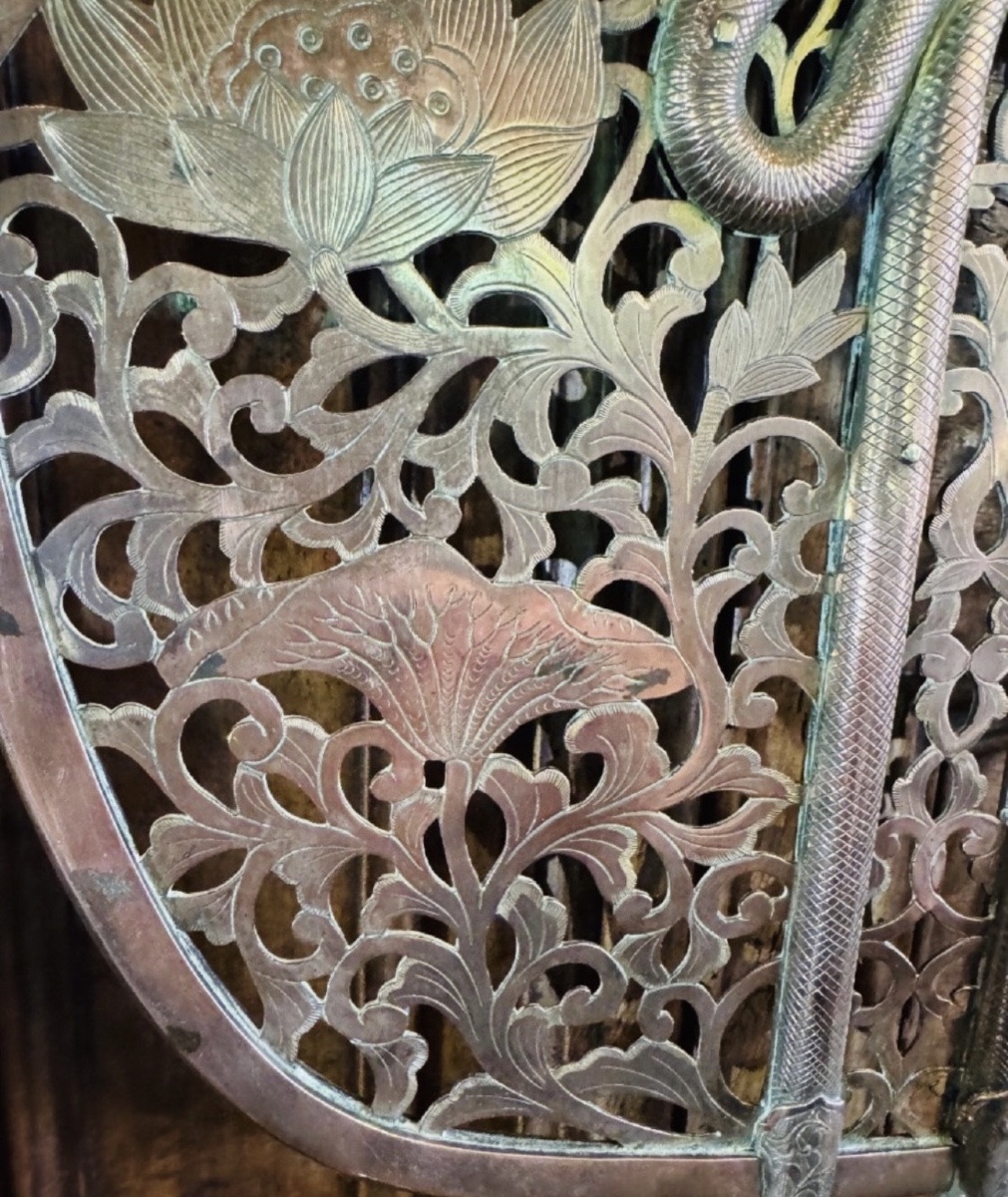
Intended to be hung in a Buddhist temple, the keman is a decorative offering that symbolically evokes a garland of flowers. Our example stands out for the abundance and remarkable delicacy of its decoration, featuring lotus flowers and peonies amid elegant foliage.
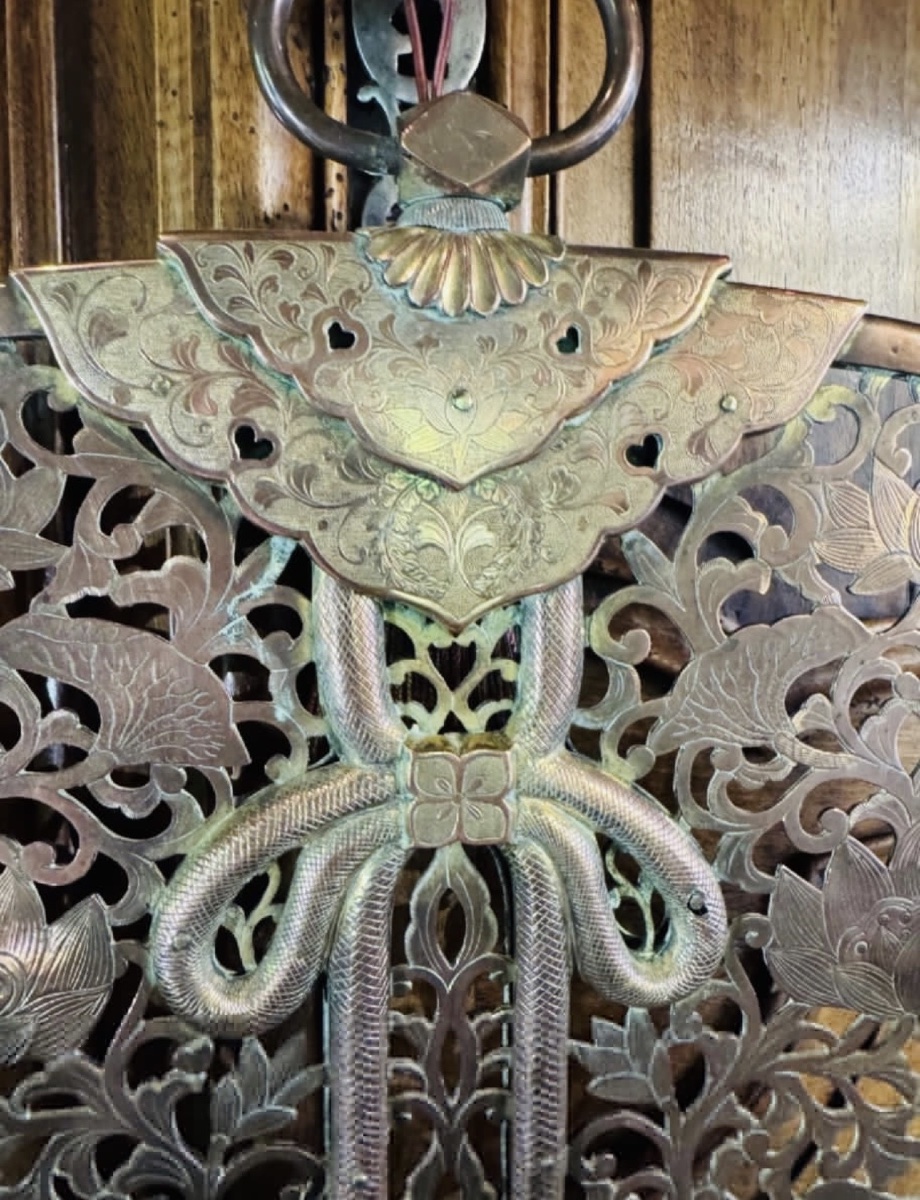
The lotus, associated with purity and spiritual elevation, is paired with the peony, a symbol of prosperity, honor, and happiness. The composition is enriched with karyōbinga, celestial creatures from the Buddhist tradition, as well as the famous “mon” featuring three aoi leaves, the emblem of the Tokugawa family.
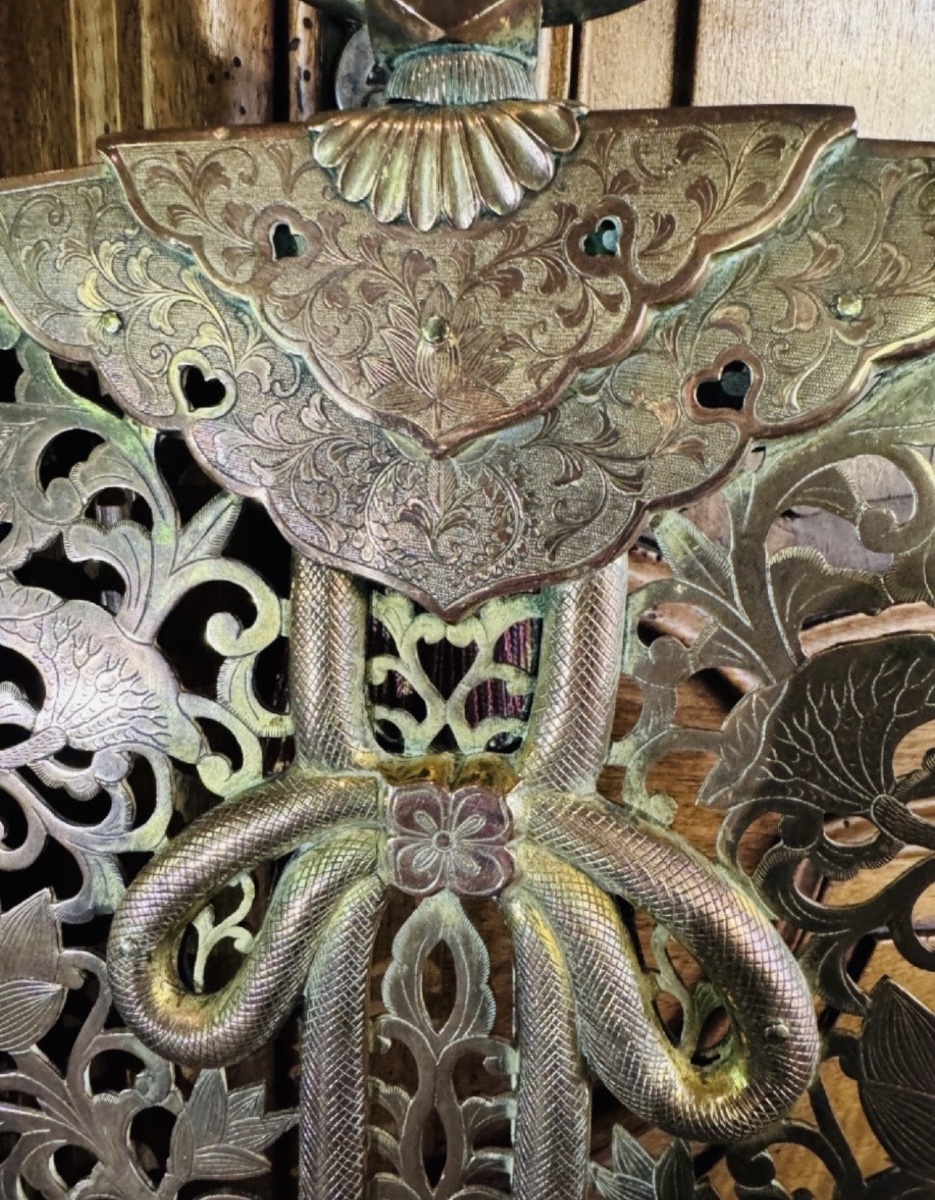
In the center, an imposing knot rendered in high relief harmoniously structures the entire piece. The finesse of the cutwork, the precision of the chiseling, and the richness of the symbolic repertoire attest to a work of exceptional Japanese craftsmanship.
Traces of the original gilding remain, particularly in the recesses of the design, highlighting the beautiful patina acquired over time.
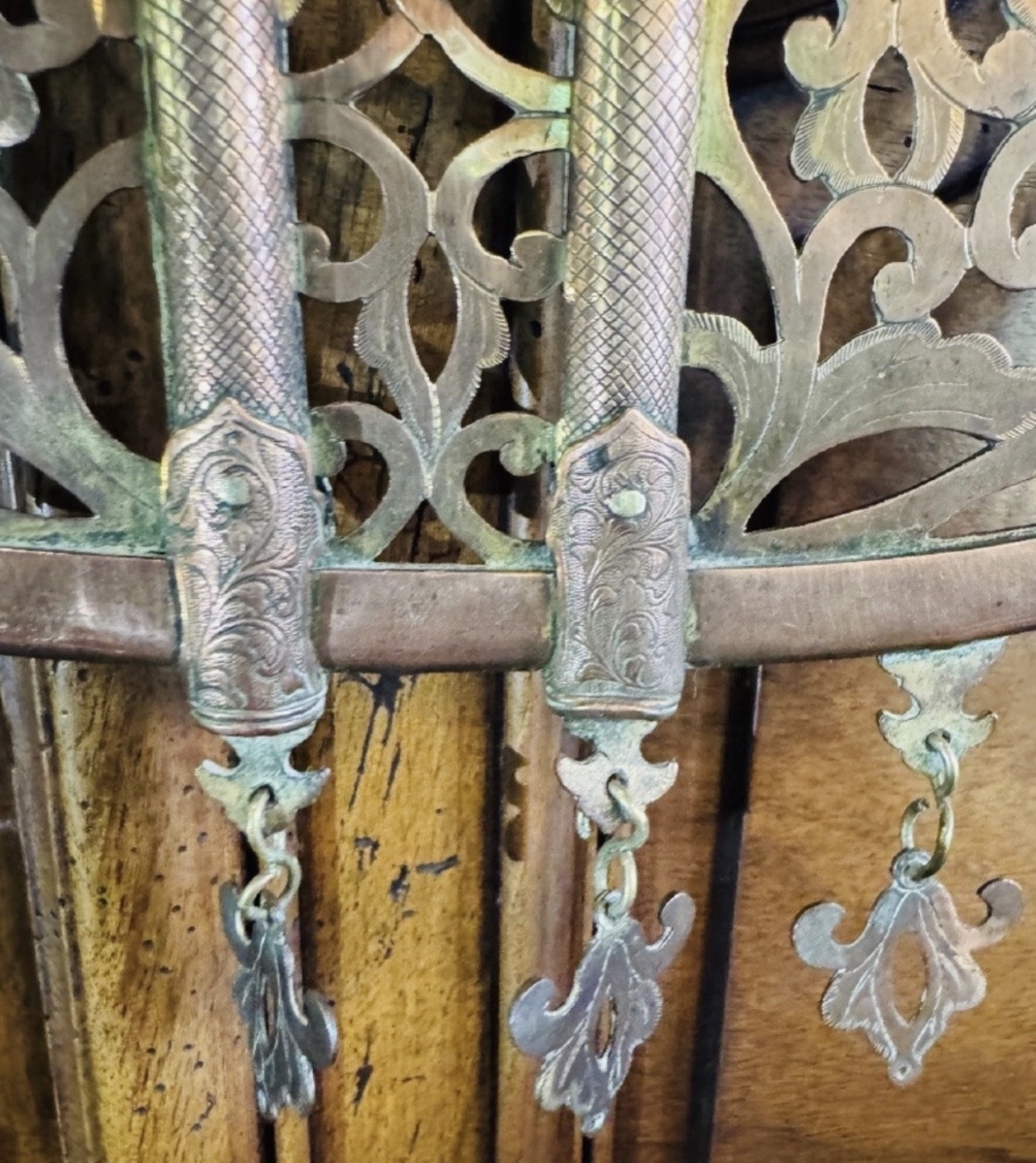
The small rings arranged along the lower edge once held bells or movable pendants, which are now missing. Three suspension ornaments are still preserved.
Japan, Meiji period, 19th century, possibly earlier.
In good overall condition considering its age. Wear and loss of gilding; lower bells or pendants missing.
A rare, spectacular, and symbol-laden Japanese work of art that also serves as a remarkable piece of wall decor.
Dimensions:
Total height: 44 cm
Width: 31 cm
Substantial thickness
We deliver and ship worldwide. Please contact us for an accurate quote.
Period: 19th century
Style: Asian art
Condition: En l'etat
Material: Bronze
Width: 31 cm
Height: 44 cm
Reference (ID): 1816906
Availability: In stock