

Anna Pinel (1868) - Presumed Portrait Of Pauline Viardot In The Role Of Sappho
Anna Pinel (active in the 19th century)
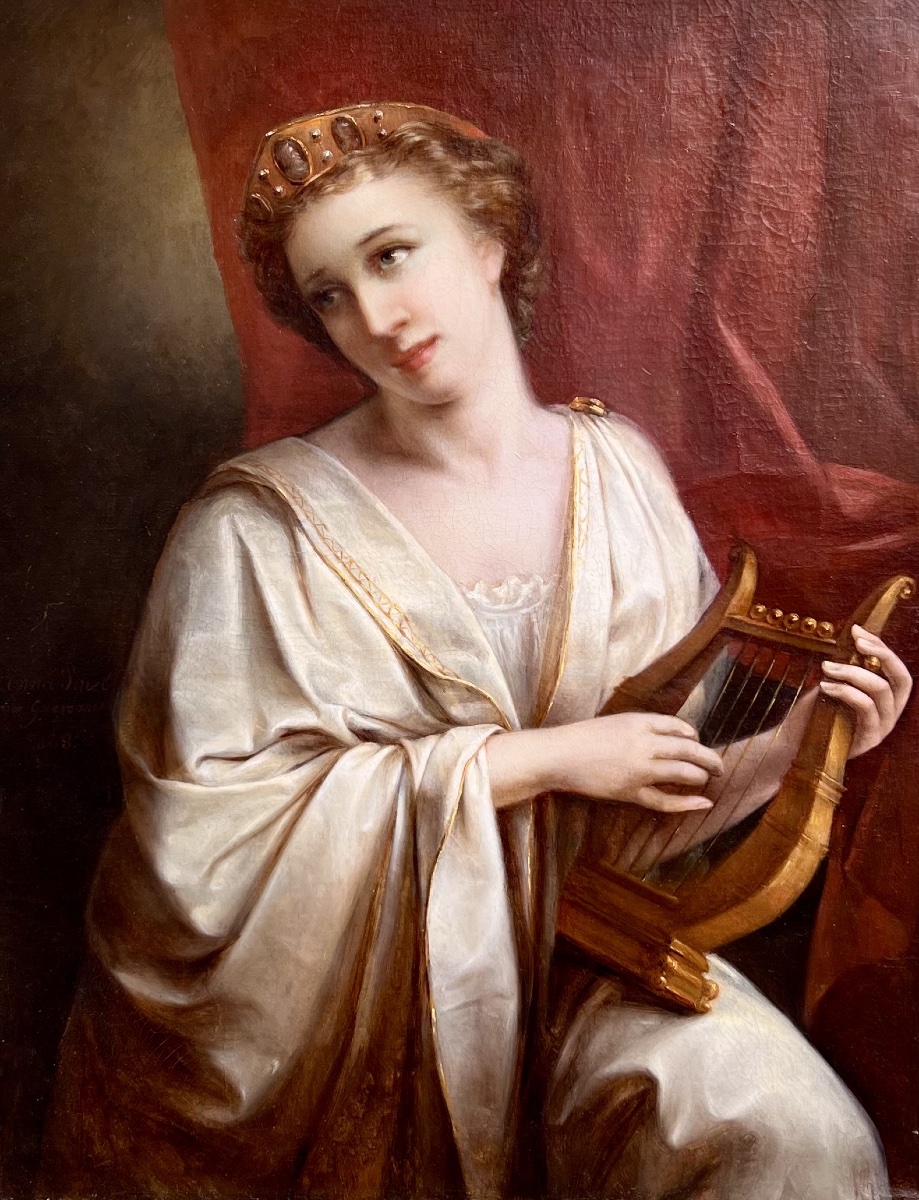
Presumed portrait of Pauline Viardot in the role of Sappho
Oil on canvas
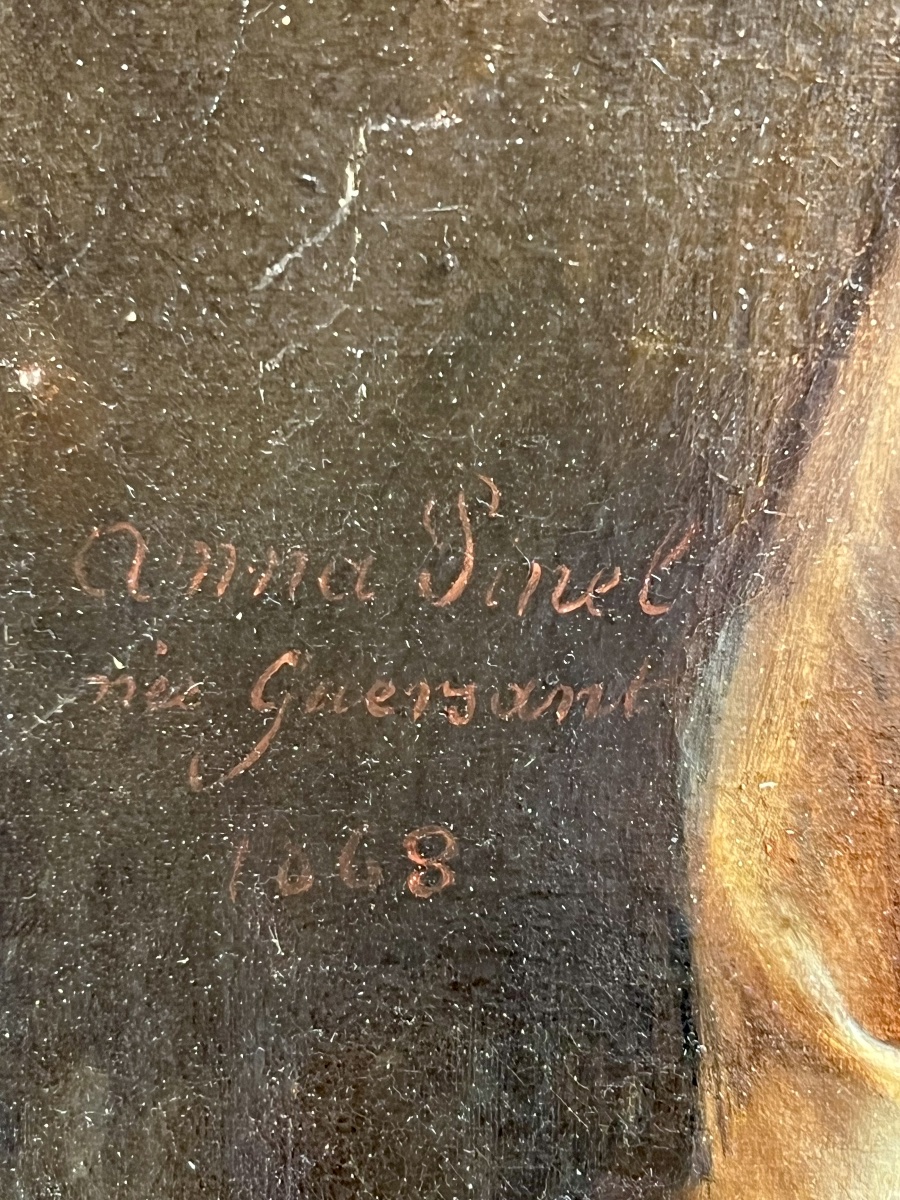
Dimensions: 92 × 72 cm, signed and dated on the left “Anna Pinel / 1868.”
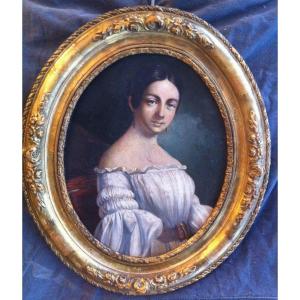
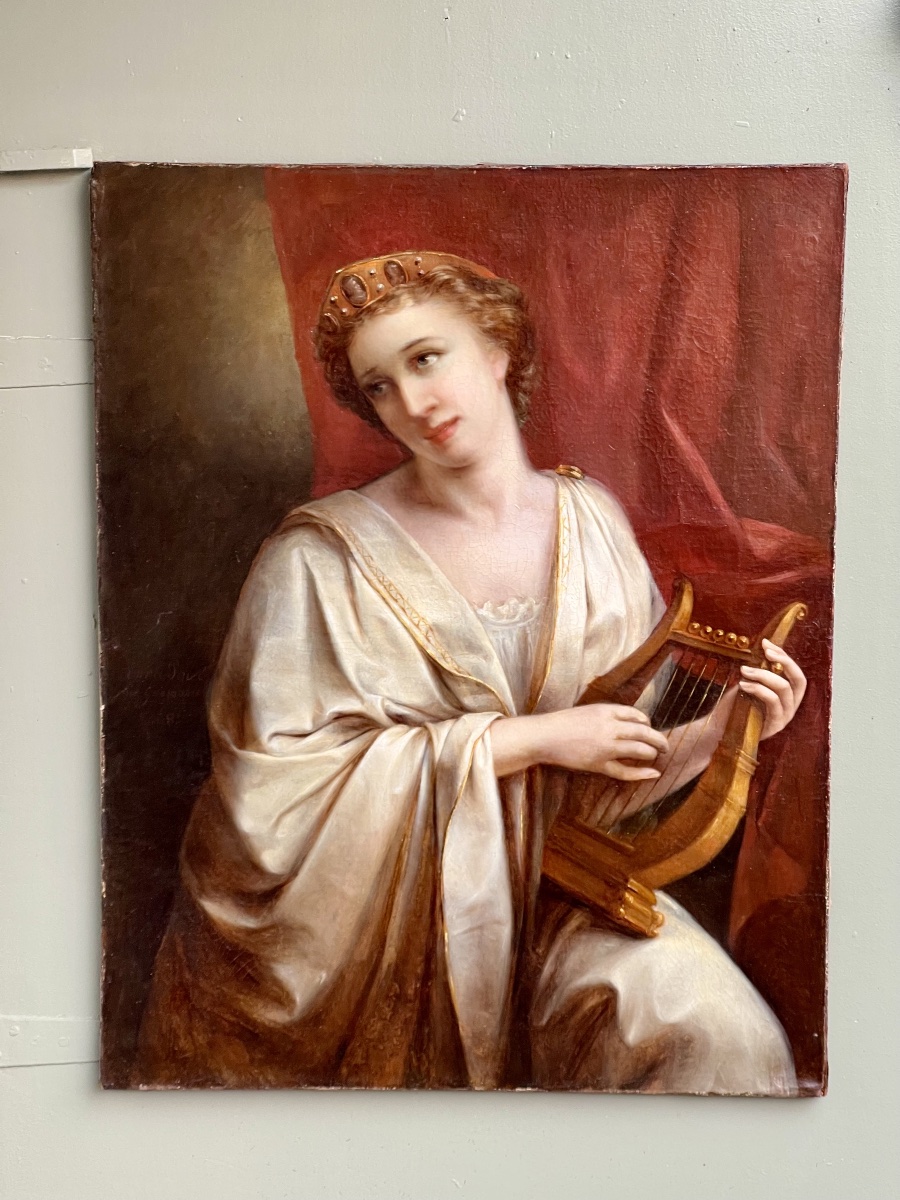
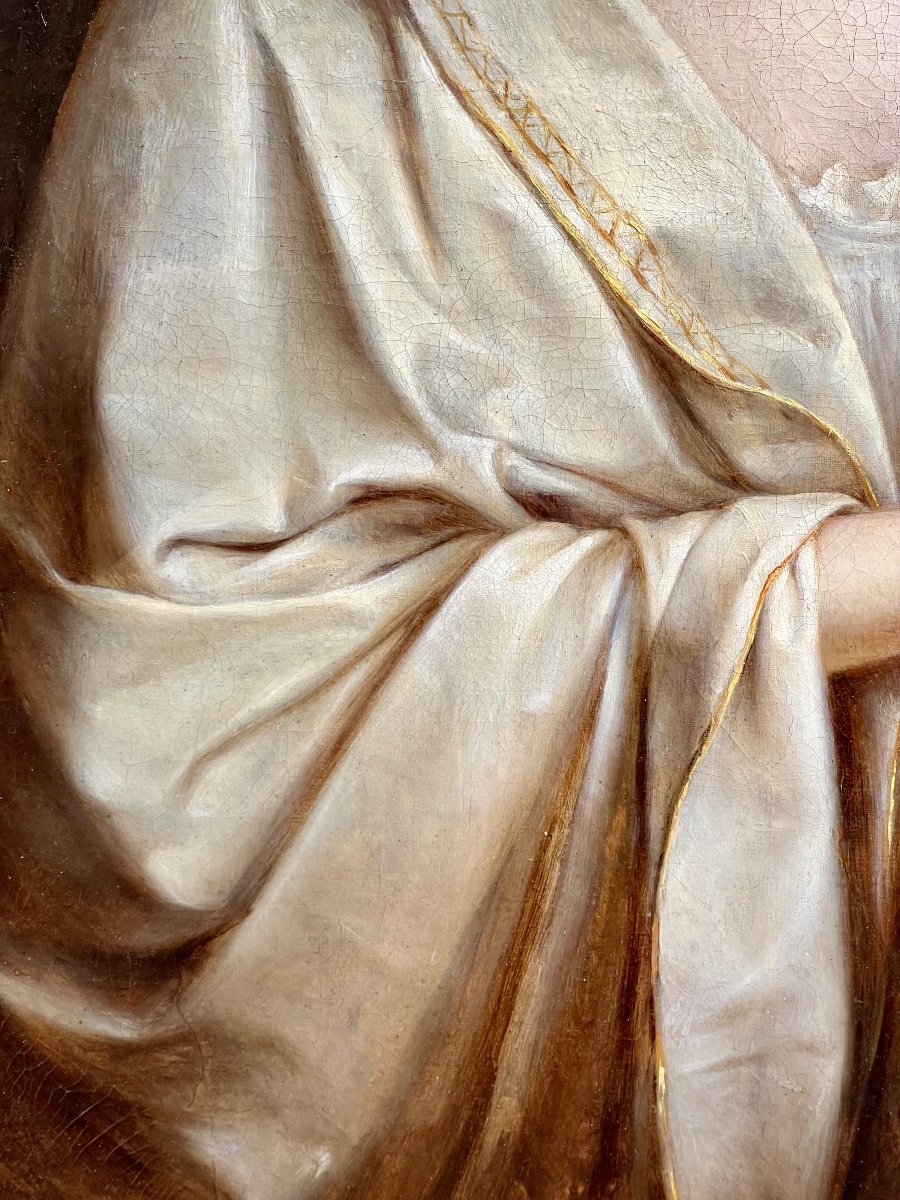
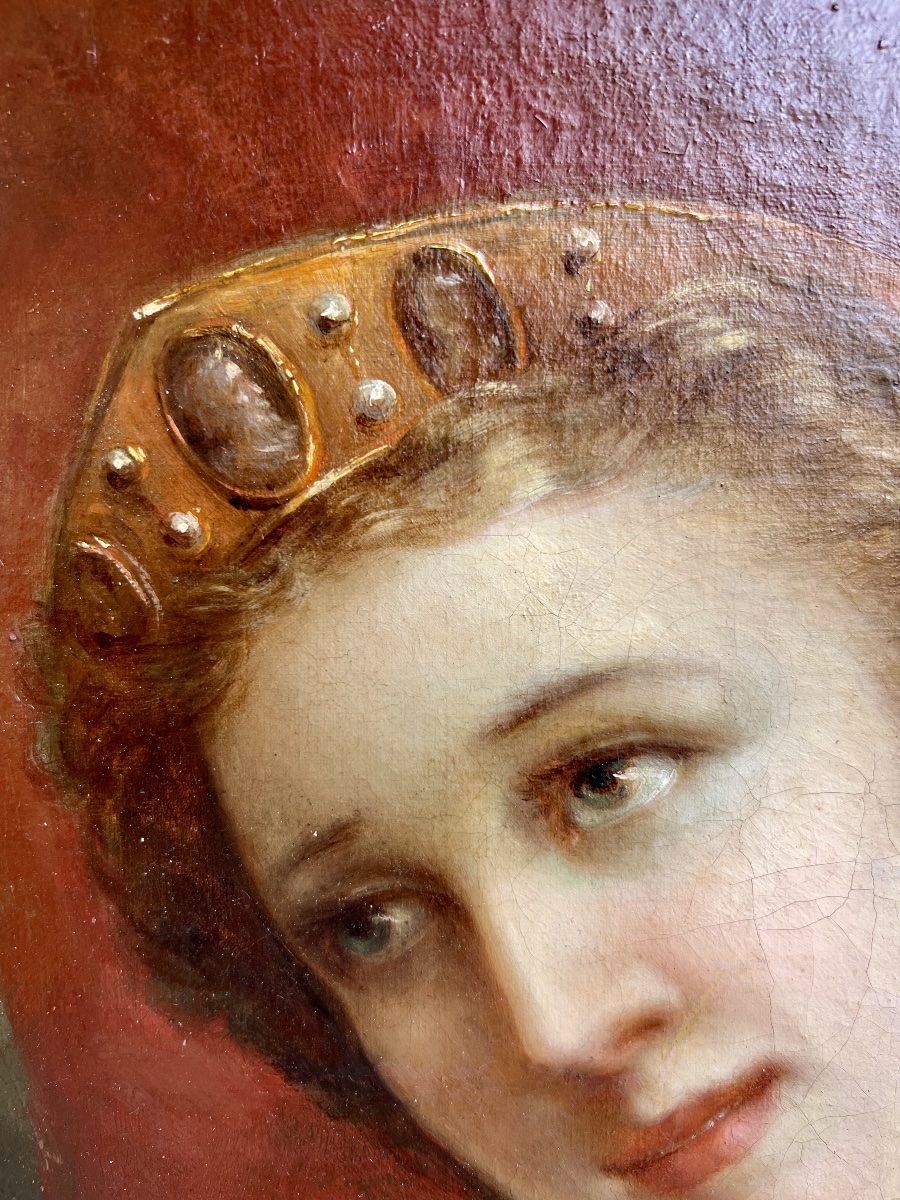
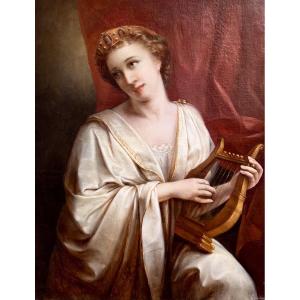
This beautiful academic painting depicts a young woman in ancient attire, crowned with a gold diadem set with cabochons, draped in a white tunic with gold braiding and an ivory cloak with brown lapels. She holds a golden lyre, plucking its strings with her right hand, her gaze slightly averted, her expression both dreamy and melancholic. The background features a sweeping red drape that isolates the figure and lends her a theatrical presence. The composition clearly evokes the poetess Sappho, a major figure in 19th-century Romantic and Neo-Greek imagination.
The suggested identification—Pauline Viardot in the title role of Charles Gounod’s *Sapho*—is entirely plausible.
Pauline Viardot-García (1821–1910), a mezzo-soprano of Spanish origin and sister of Maria Malibran, was one of the greatest singers of her time.
She premiered the role of Sapho at the premiere of Gounod’s opera at the Opéra de Paris (Salle Le Peletier) on April 16, 1851. The work, written in close collaboration with her, made her the modern embodiment of the poetess of Lesbos: an improviser, a betrayed lover, and a figure of the female artist.
In 1868, Viardot was forty-seven years old; the portrait makes her appear younger and idealizes her, as was common for role portraits. The motif of the “woman with the lyre,” popularized in particular by Vigée-Lebrun’s portrait of Madame de Staël as Corinne, finds a direct musical and theatrical expression here.
Anna Pinel was a French painter of the Second Empire, listed in the Benezit. She was likely related to the sculptor Pierre-Sébastien Guersant (1789–1853), a student of Cartellier, which places her within Parisian artistic circles.
Like many female painters of her generation, she painted portraits and genre scenes in a refined style inherited from her academic training: supple rendering of skin tones, skillfully studied drapery, and lighting that sculpts the face and hands. The date 1868 corresponds to a period when classical subjects and portraits of figures from the worlds of opera and literature remained highly prized at the Salon.
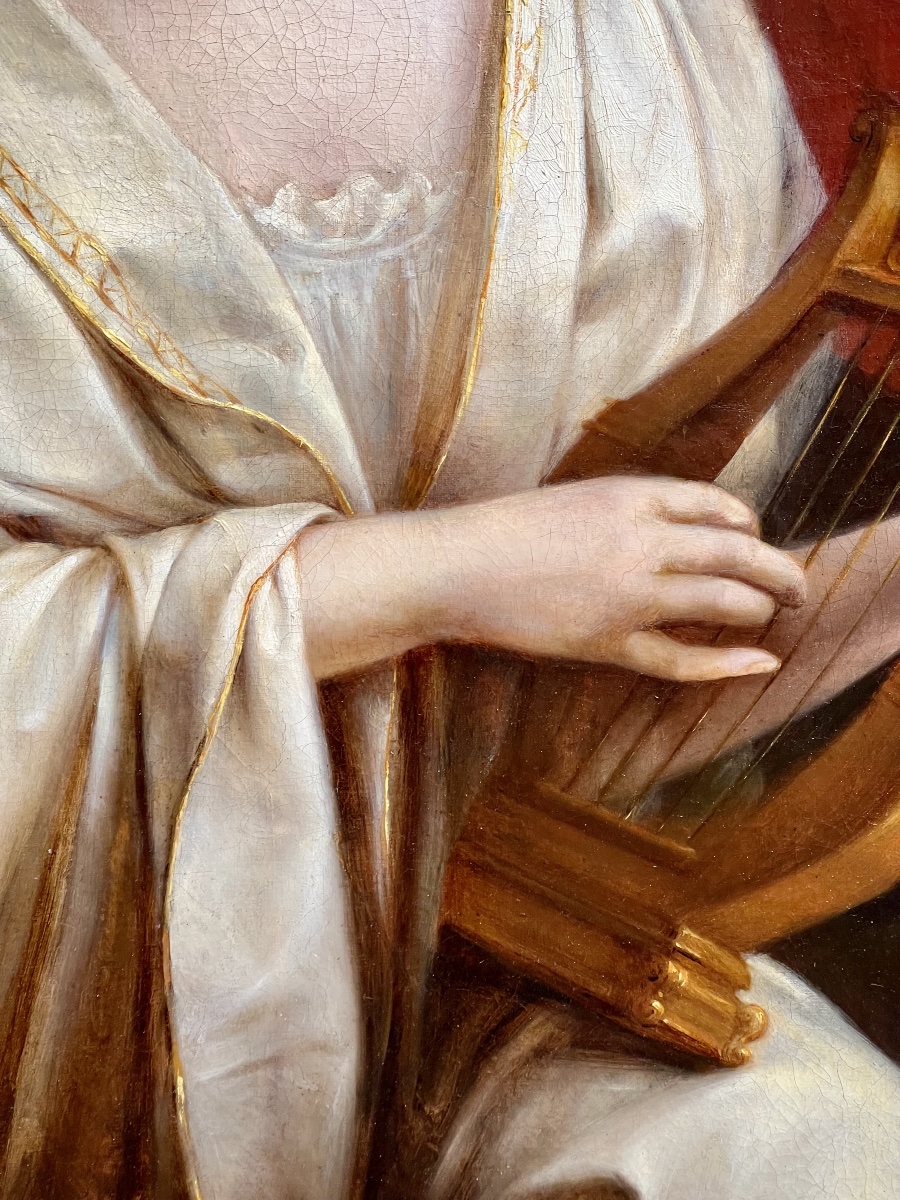
The work stands out for the quality of its execution: the rendering of the fabrics (the satin of the tunic, the velvet of the cloak), the precision of the lyre (Sappho’s emblematic instrument), the delicacy of the diadem, and the psychological depth conveyed by the gaze.
A beautifully executed painting, it is representative of the historicist and musical tastes of the 1860s, bringing together two remarkable female figures: a singer-composer who left her mark on the history of French opera and a painter who is now forgotten but was firmly embedded in the artistic circles of her time.
Period: 19th century
Style: Napoleon 3rd
Condition: Good condition
Material: Oil painting
Reference (ID): 1815556
Availability: In stock