

Cusco School, Rare Virgin And Child, Virgin Cocharcas—18th Century
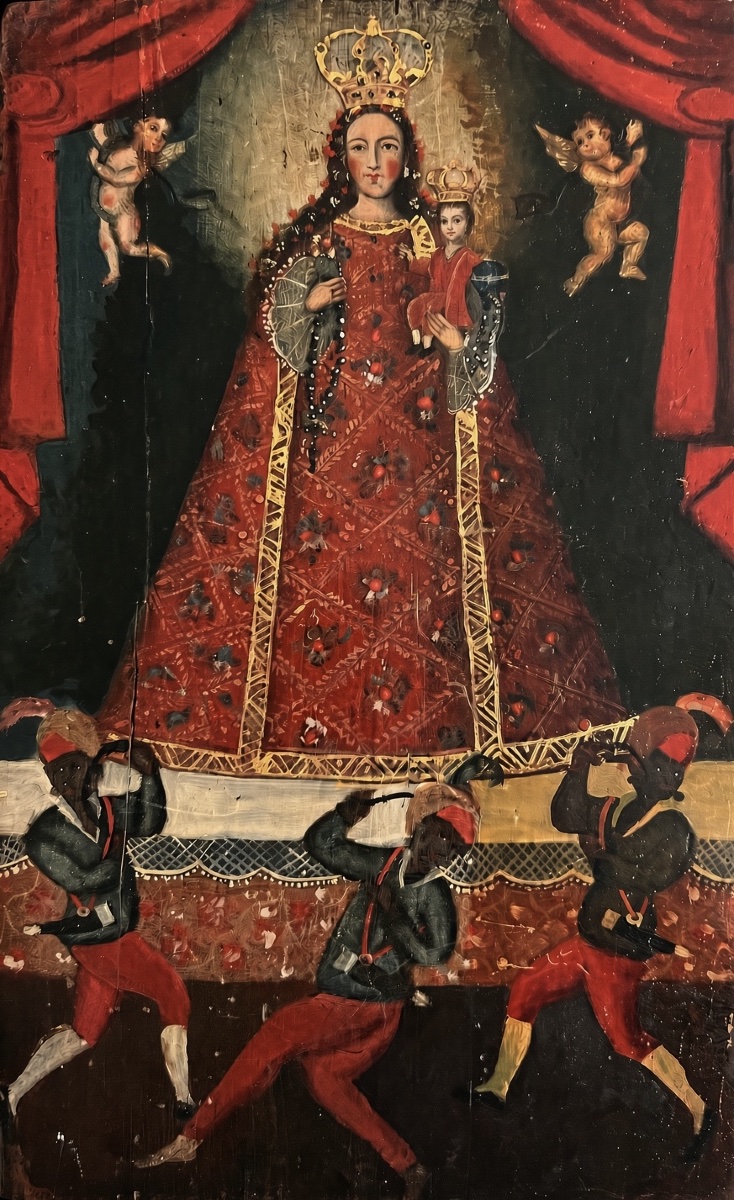
An extremely rare Virgin and Child carried in procession, known as the Virgin of Cocharcas, characteristic of Spanish-American colonial art (18th century, School of Cuzco or Viceroyalty of Peru).
Oil on panel
Dimensions: 32 × 20 cm
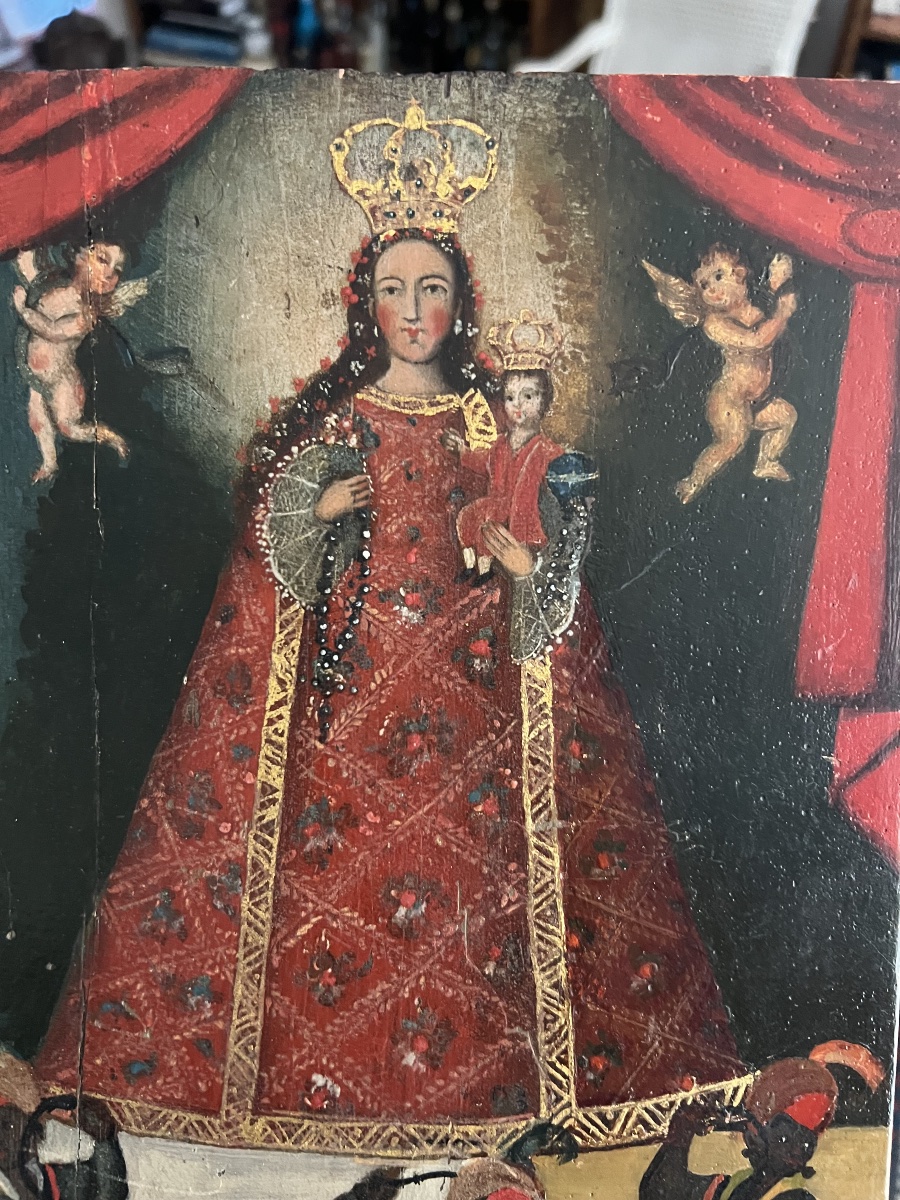
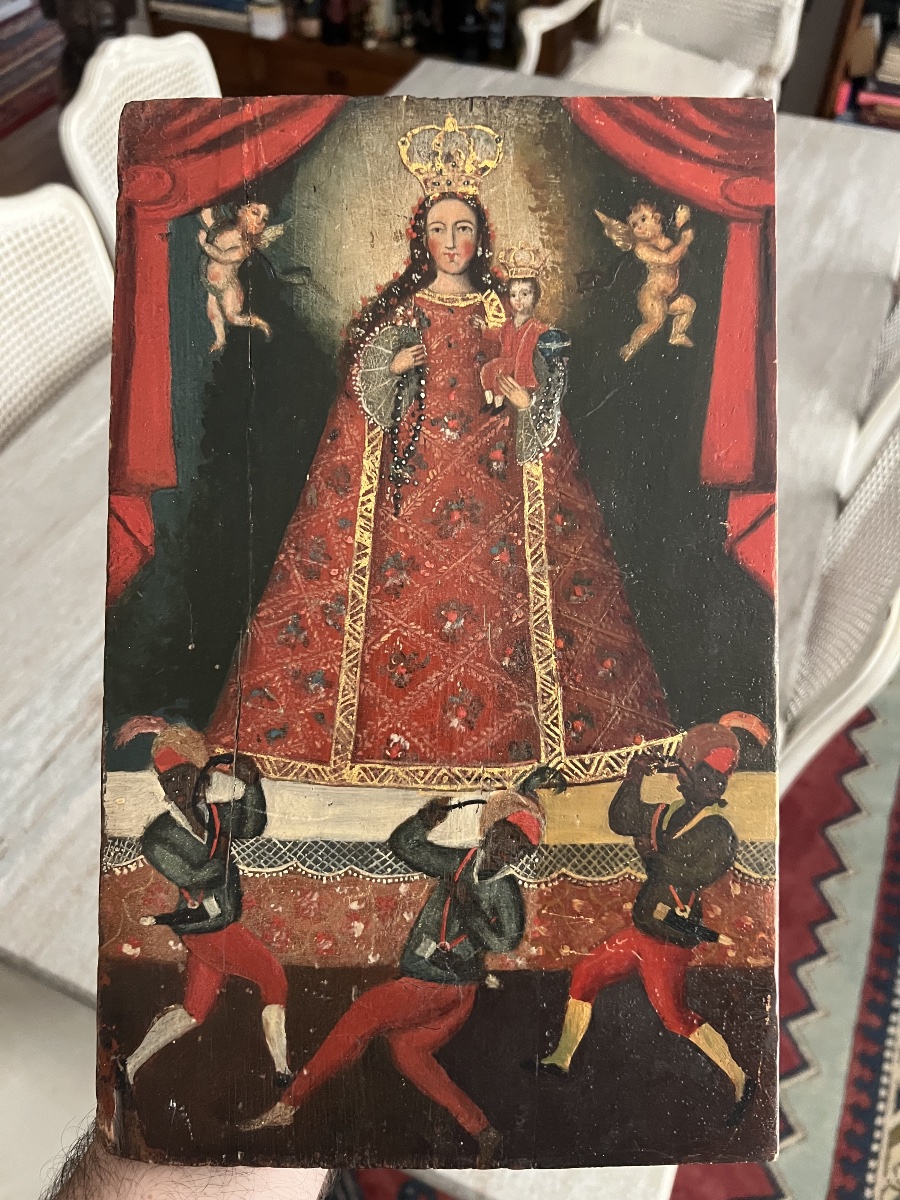
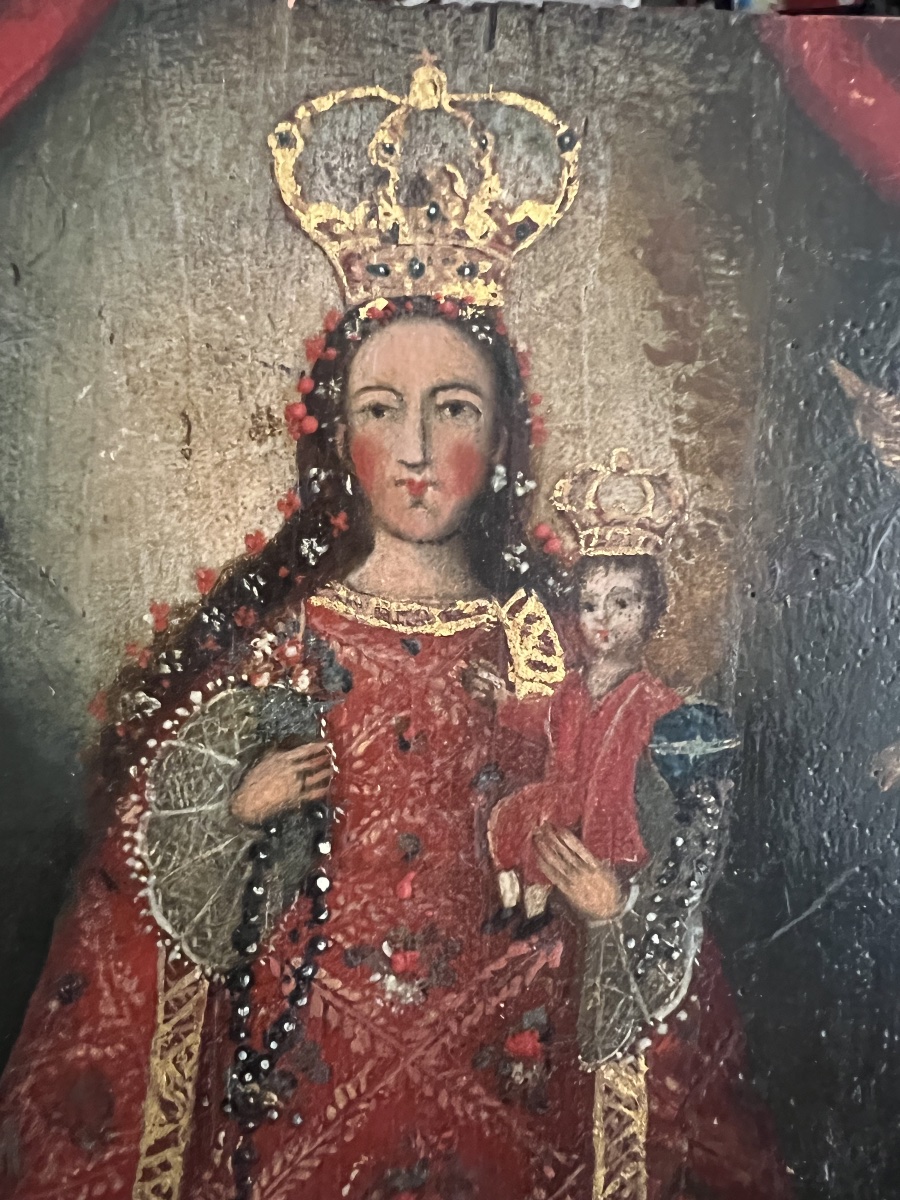
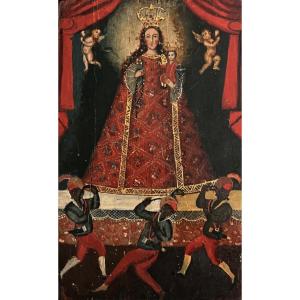
This small oil on panel, in an intimate format suited to private devotion, depicts a Virgin and Child in majesty—not merely “in a painting” but as a cult image in motion: a “statue de vestir” (imagen de vestir) standing on her anda, carried in procession.
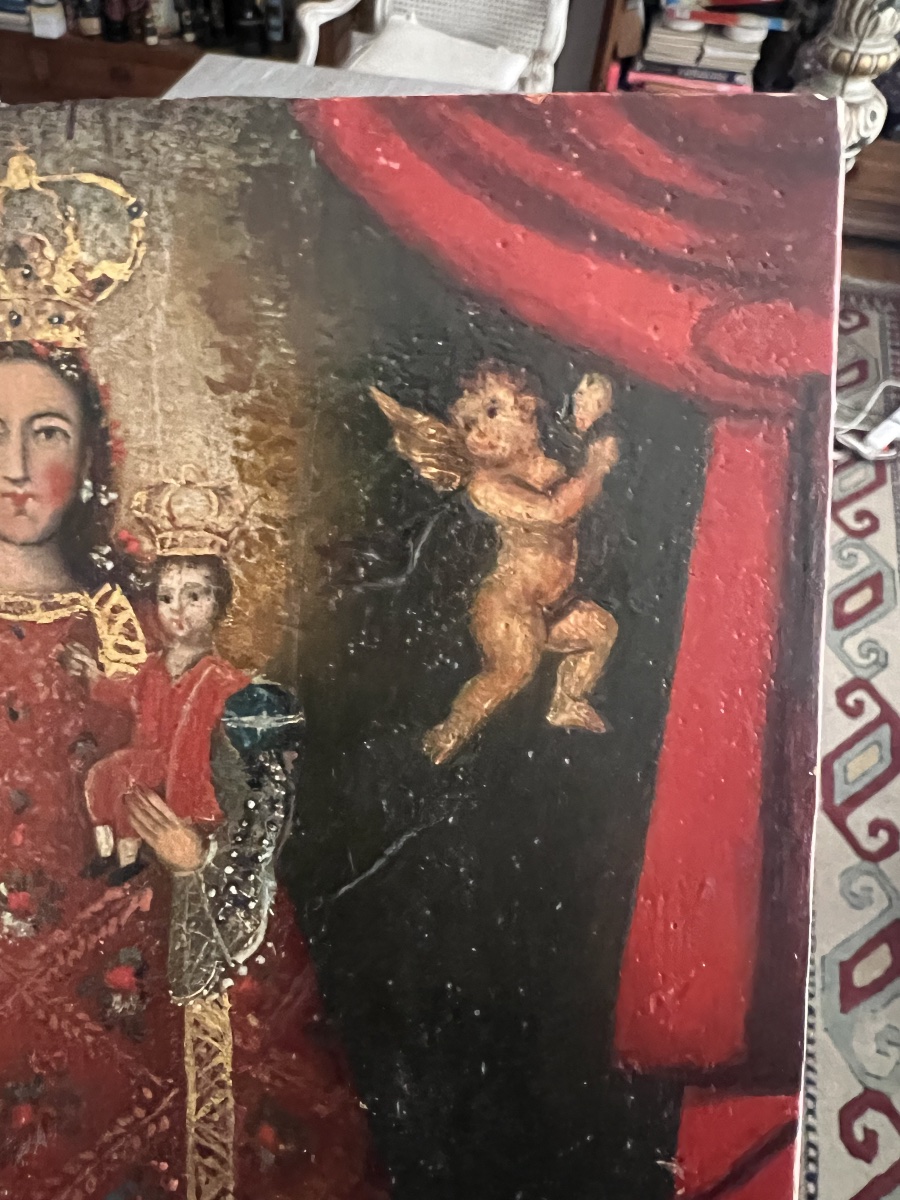
Mary, crowned in gold, with a fair and slightly flushed face, holds the Child Jesus, who is also crowned. She wears a loose-fitting red triangular cloak embroidered in gold, studded with floral motifs and cabochons, typical of the rich “sayas” and cloaks used to dress processional sculptures. A black rosary hangs from her right hand. Two flying cherubs part heavy red velvet curtains that form a theatrical canopy, isolating the sacred vision against a dark background.
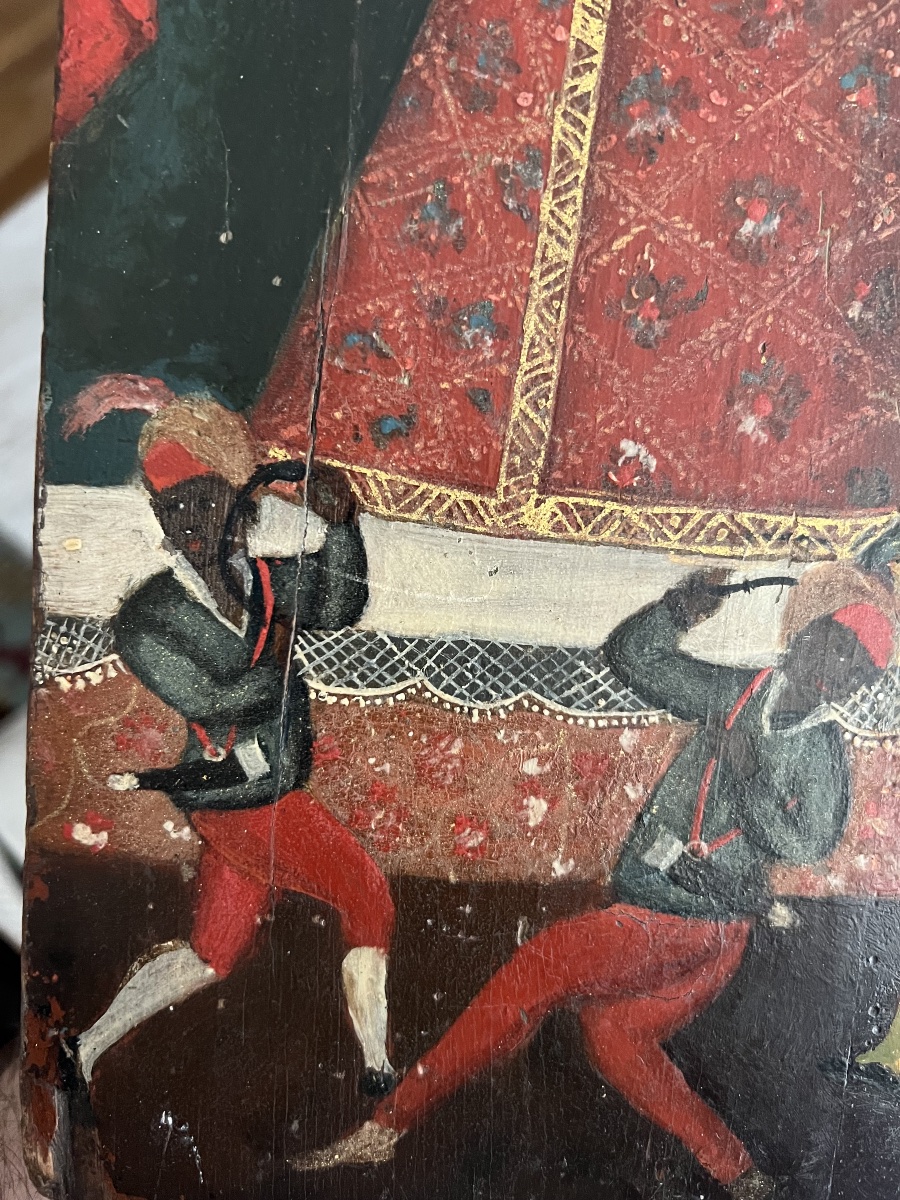
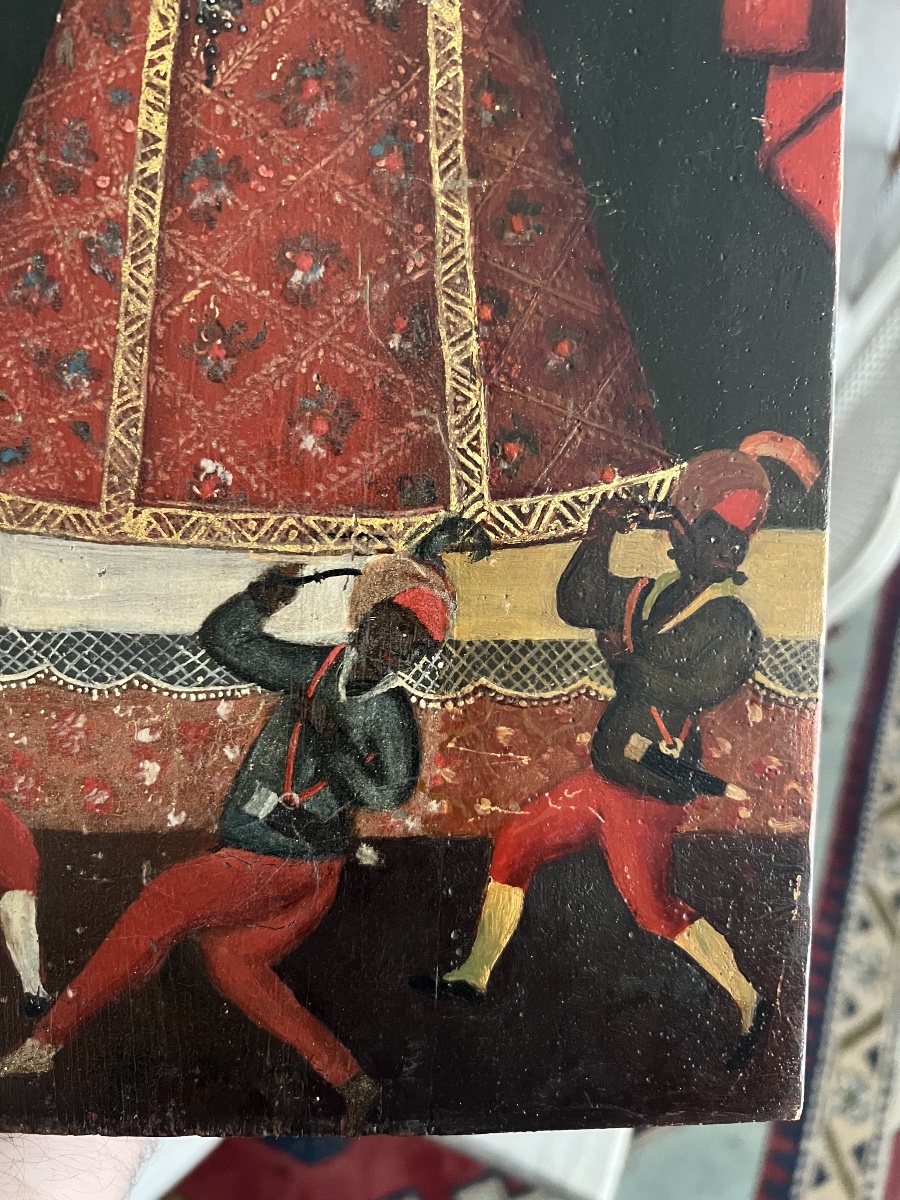
In the lower register, four dancers/bearers of African descent, dressed in dark jackets with red shoulder straps, red breeches, yellow or green stockings, and red headdresses, advance with a dynamic, dancing stride, supporting the platform covered with a white cloth with a scalloped border. This depiction of the anderos (bearers) of African or Afro-descendant origin is particularly telling: it evokes the cofradías of Blacks and Mulattos who, in the colonial Hispanic world (Seville, Lima, Cuzco, Quito, or the cities of New Spain), had their own processions and devotional practices.
The work belongs to this popular and devotional tradition of the 18th century, in which artists depicted not only the Virgin, but the Virgin as she was seen in the streets—dressed, crowned, and carried. These paintings served as votive offerings, mementos of pilgrimages, and portable devotional images. The style—somewhat naïve, with bold colors, strong contours, and simplified perspective—is characteristic of colonial workshops that worked for a devout clientele rather than for the viceregal palaces.
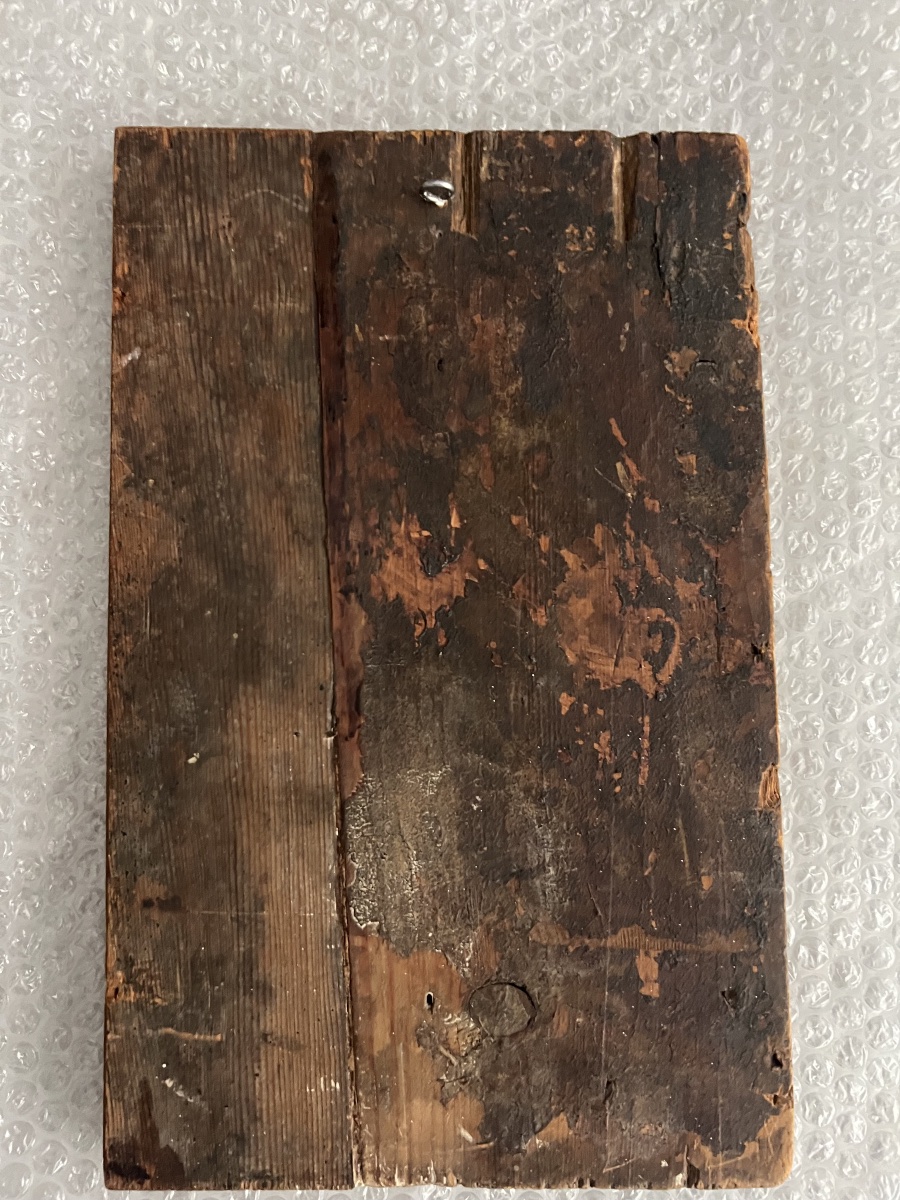
The panel shows the expected signs of wear: craquelure, surface wear, a slight patina, and a vertical crack. These signs of age in no way detract from the power of the image; on the contrary, they serve as a reminder that this is an object of devotion that was actually used.
A rare piece due to its precise iconography—the Virgin in procession carried by figures of African descent—and its small size, which makes it a fine collector’s item for a lover of colonial art or 18th-century popular religious painting.
Period: 18th century
Style: Louis 14th, Regency
Condition: En l'etat
Material: Oil painting on wood
Reference (ID): 1815486
Availability: In stock