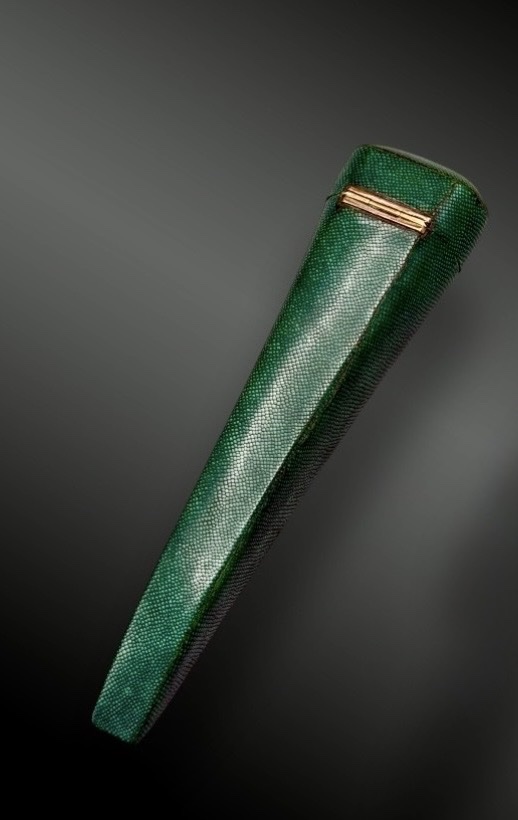


Case With A Knife Featuring Interchangeable Blades, Known As A “cabriolet”
France, Louis XVI period, circa 1775–1781
Hallmarks and registration marks through 1819
Steel, silver, mother-of-pearl, gold, wood, shagreen, and velvet
Case length: 14.5 cm; blade length: 11 cm
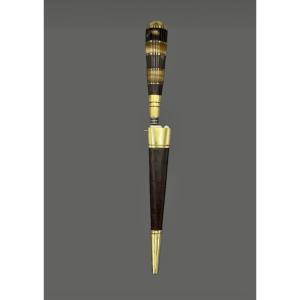
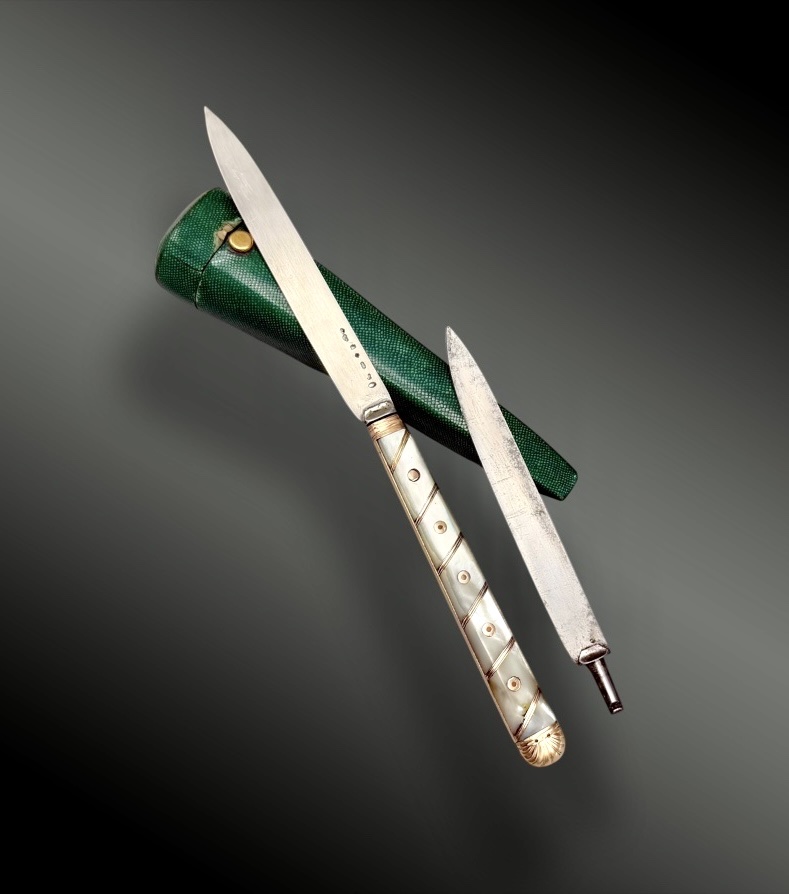
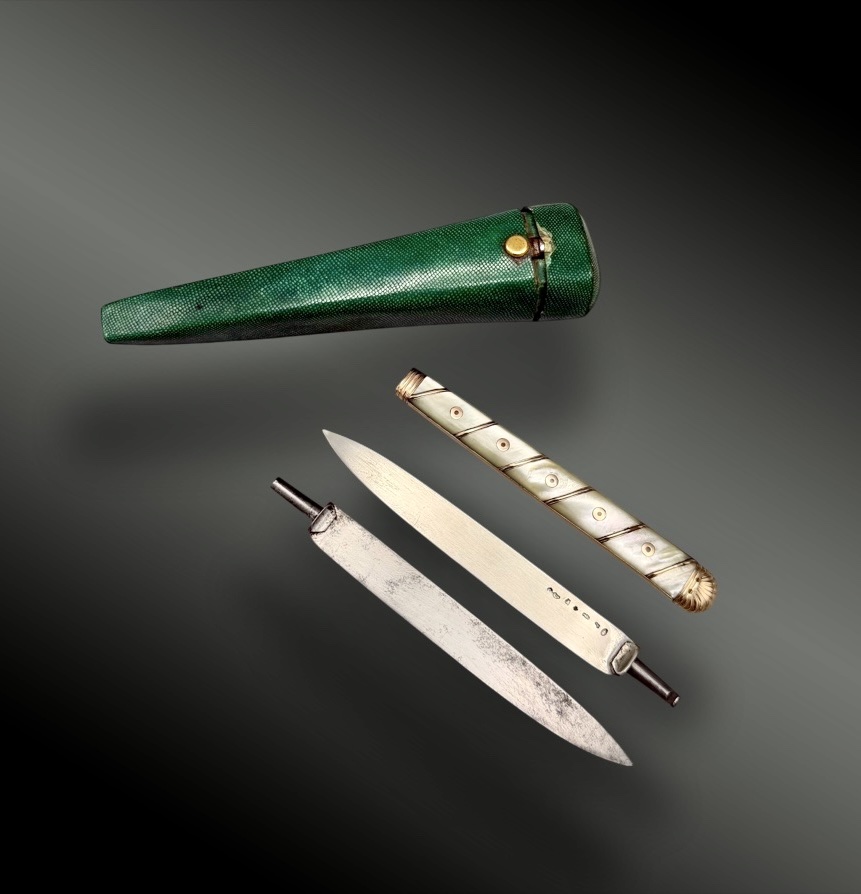
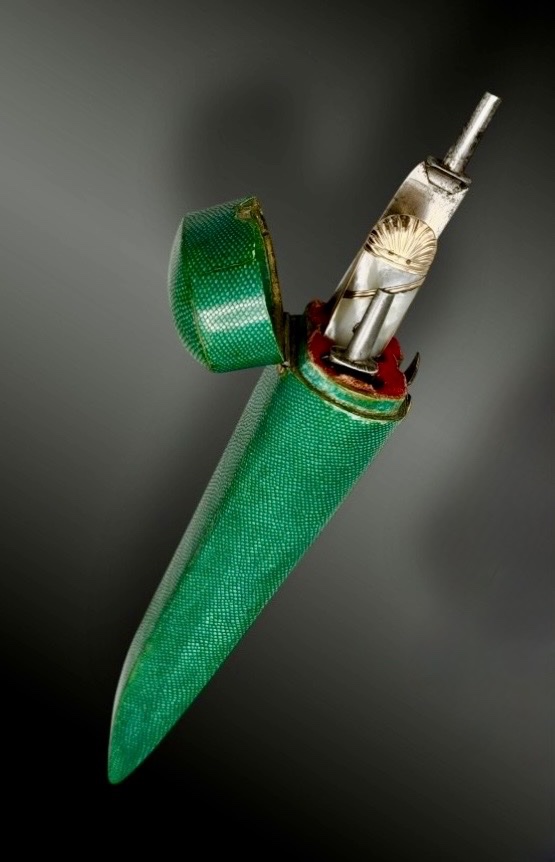
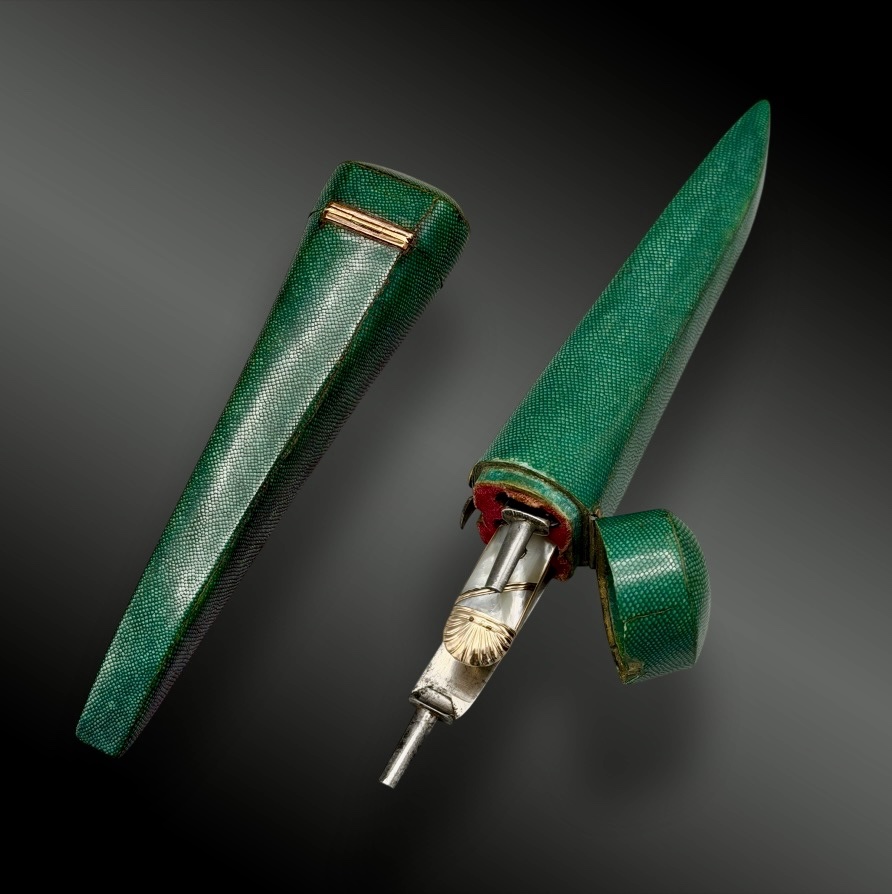
Rare “cabriolet” travel knife, consisting of a removable handle and two interchangeable single-edged blades: one made of steel, intended for everyday use, and the other made of silver, likely reserved for cutting fruit.
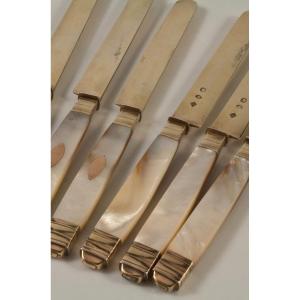
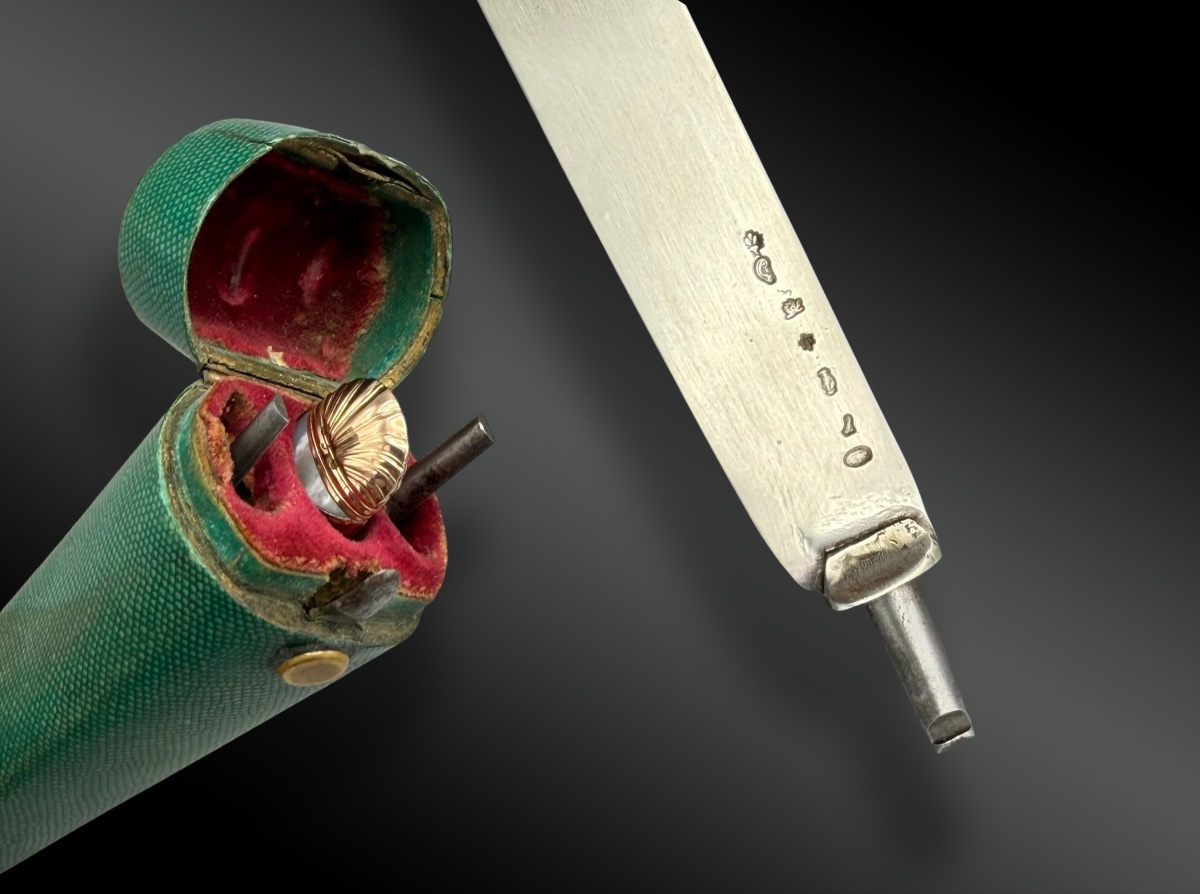
The handle features steel plates inlaid with mother-of-pearl scales arranged in a spiral pattern. It is embellished with diagonal fillets, circular rivets, a bolster, and a pommel shaped like a radiating shell, all in gold.
The blades are held in the handle by an ingenious mechanism featuring a movable hook. Pressing the side button—designed to look like a false rivet—unlocks the system, allowing one blade to be replaced with the other.
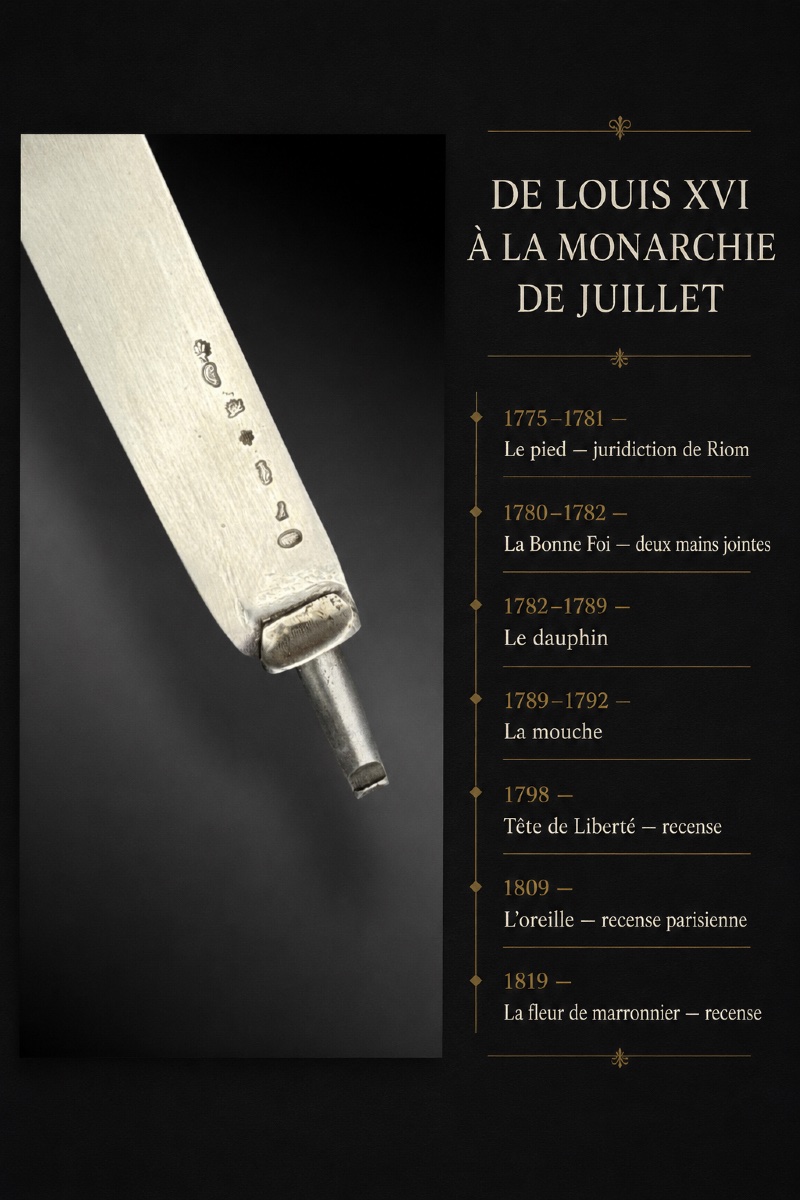
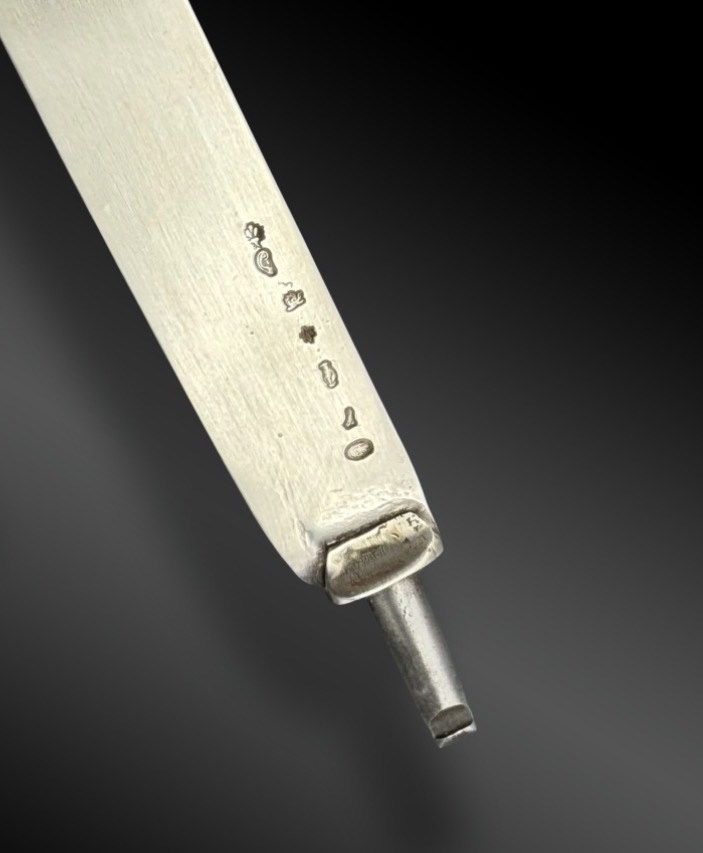
The silver blade bears an exceptional series of seven hallmarks and registration marks, attesting to its use and repeated presentation to the assay offices between the end of the Ancien Régime and the Restoration:
- the foot, jurisdiction of Riom, 1775–1781;
- Good Faith, represented by two joined hands, 1780–1782;
- the dolphin, 1782–1789;
- the fly, 1789–1792;
- the Head of Liberty, 1798 registration;
- the ear, listed in the 1809 Paris census;
- the chestnut blossom, listed in the 1819 census.
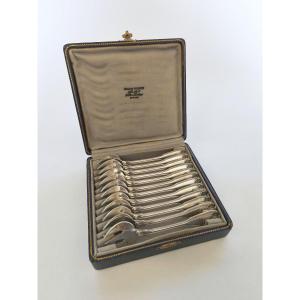
The set is preserved in its original wooden case lined with green shagreen. The interior, lined with red velvet, features three compartments for the handle and the two blades. It closes with a hinged lid and a push button.
A beautiful and rare set of travel cutlery, particularly remarkable for the quality of its materials, its mechanism, and the exceptional number of hallmarks on the silver blade.
The series of seven hallmarks serves as a veritable “administrative passport” for the object, spanning the period from the end of the Ancien Régime to the July Monarchy.
The exceptional presence of seven successive hallmarks on a single silver blade lends this knife historical and documentary significance of the highest order. Made during the reign of Louis XVI, the blade was regularly presented to the hallmarking offices and thus spanned the Ancien Régime, the Revolution, the Consulate, the First Empire, and the Restoration. A veritable chronology of French silversmithing etched into the metal, this accumulation of hallmarks is an extremely rare feature and is particularly sought after by collectors of antique silverware.
Period: 18th century
Style: Louis 16th, Directory
Condition: Excellent condition
Reference (ID): 1815209
Availability: In stock