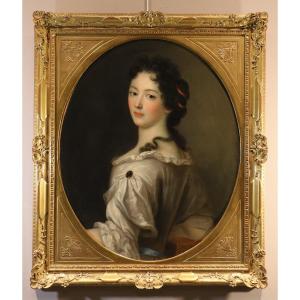


Nicolas Fouché (troyes, 1653 – Paris, 1733), Portrait Of Marie Thérèse De Bourbon
Artist: Nicolas Fouché, Ou Foucher (troyes, 1653 - Paris, 1733), Attribué à
Nicolas Fouché, or Foucher (Troyes, 1653 – Paris, 1733), attributed to
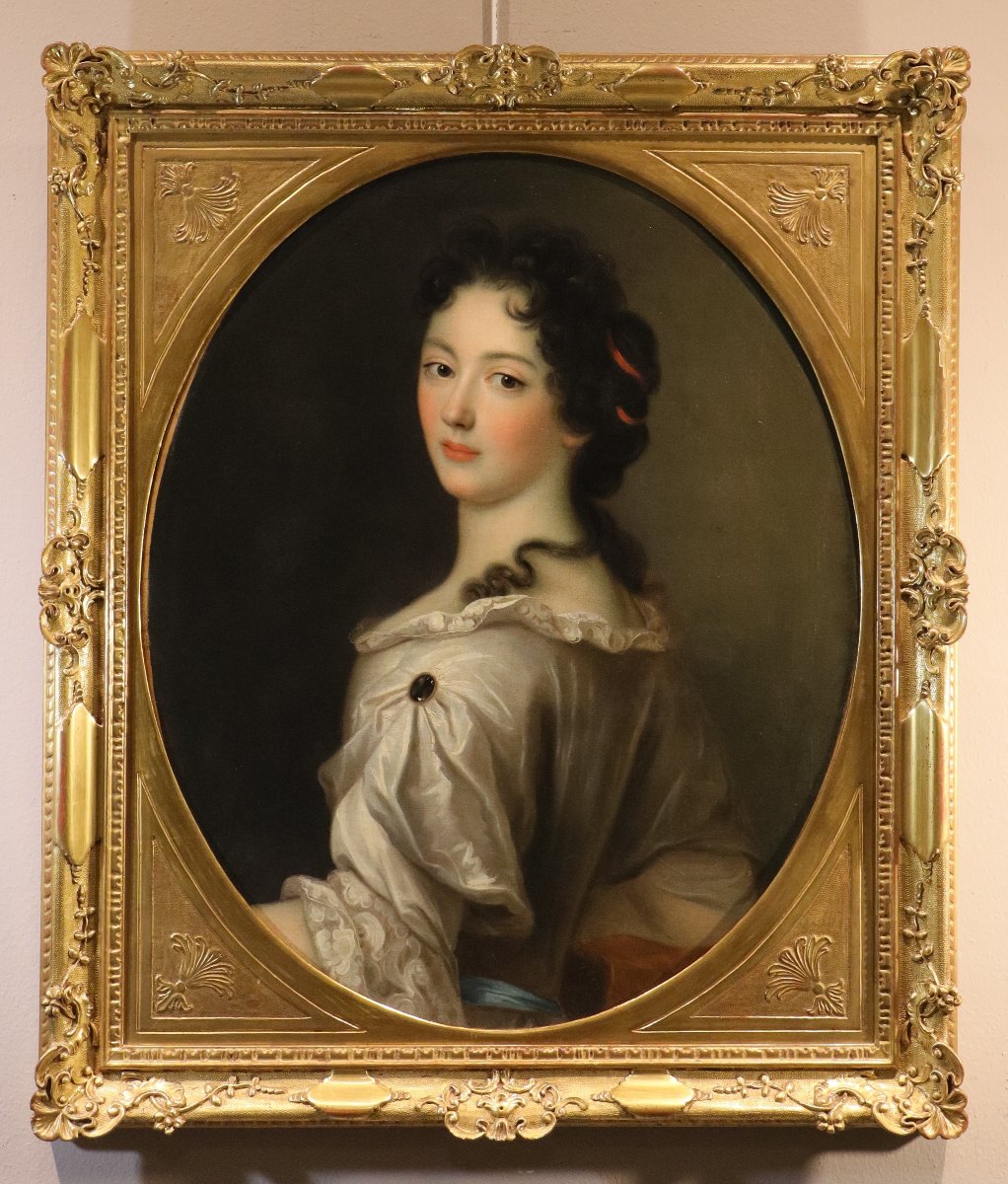
Portrait of Marie Thérèse de Bourbon (Paris, 1666 – Paris, 1732), Princess of Conti
Oil on canvas
73 x 59 cm. - In a gilded frame, 88 x 74 cm.
FULL DETAILS OF THE WORK (CLICK HERE)
The young and attractive woman portrayed in this painting is the French princess Marie-Thérèse de Bourbon-Condé (1666–1732), also known as the Princess of Conti following her marriage to François Louis de Bourbon-Conti.
A direct descendant of the French royal dynasty, she was born in Paris to Henry III Julius of Bourbon-Condé (Prince of Condé) and Anne Henriette of the Palatinate.
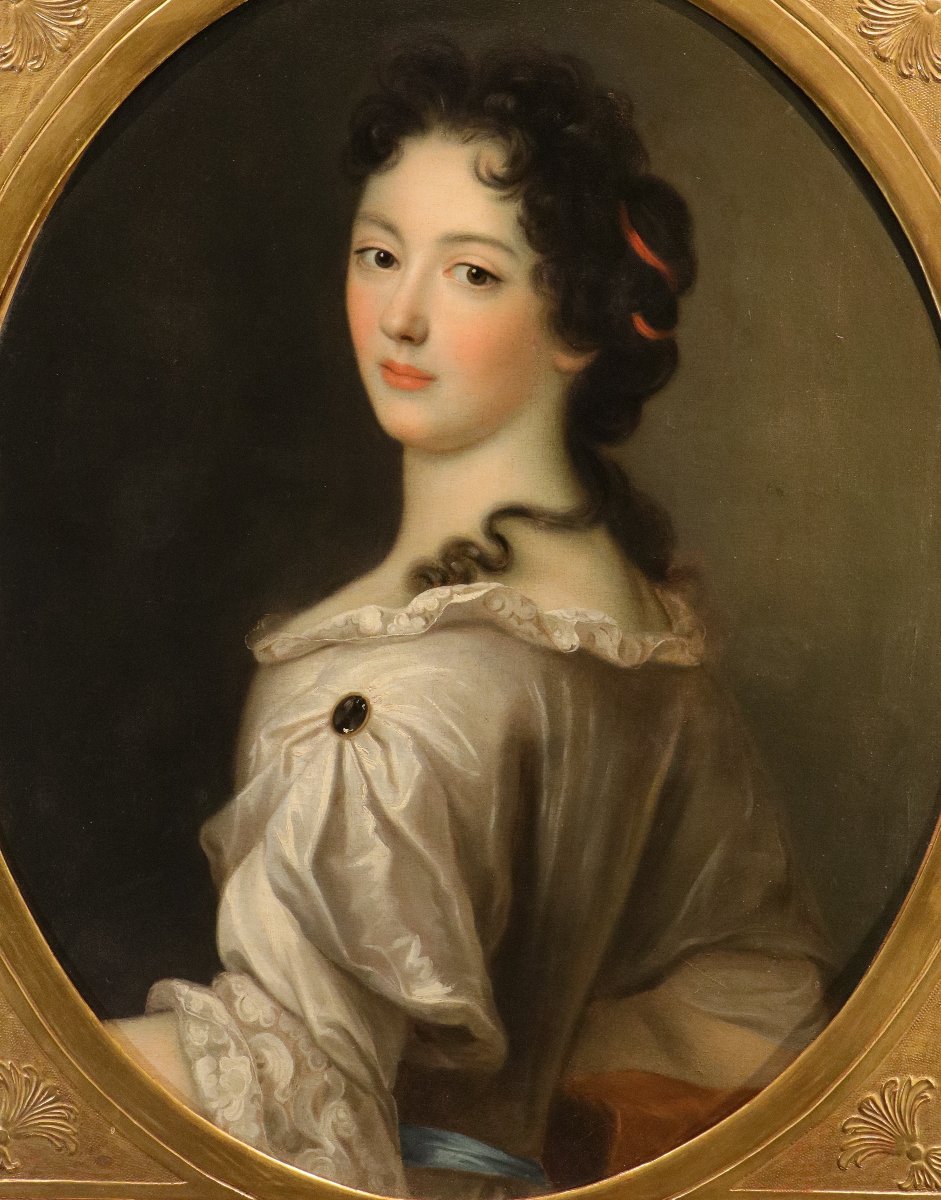
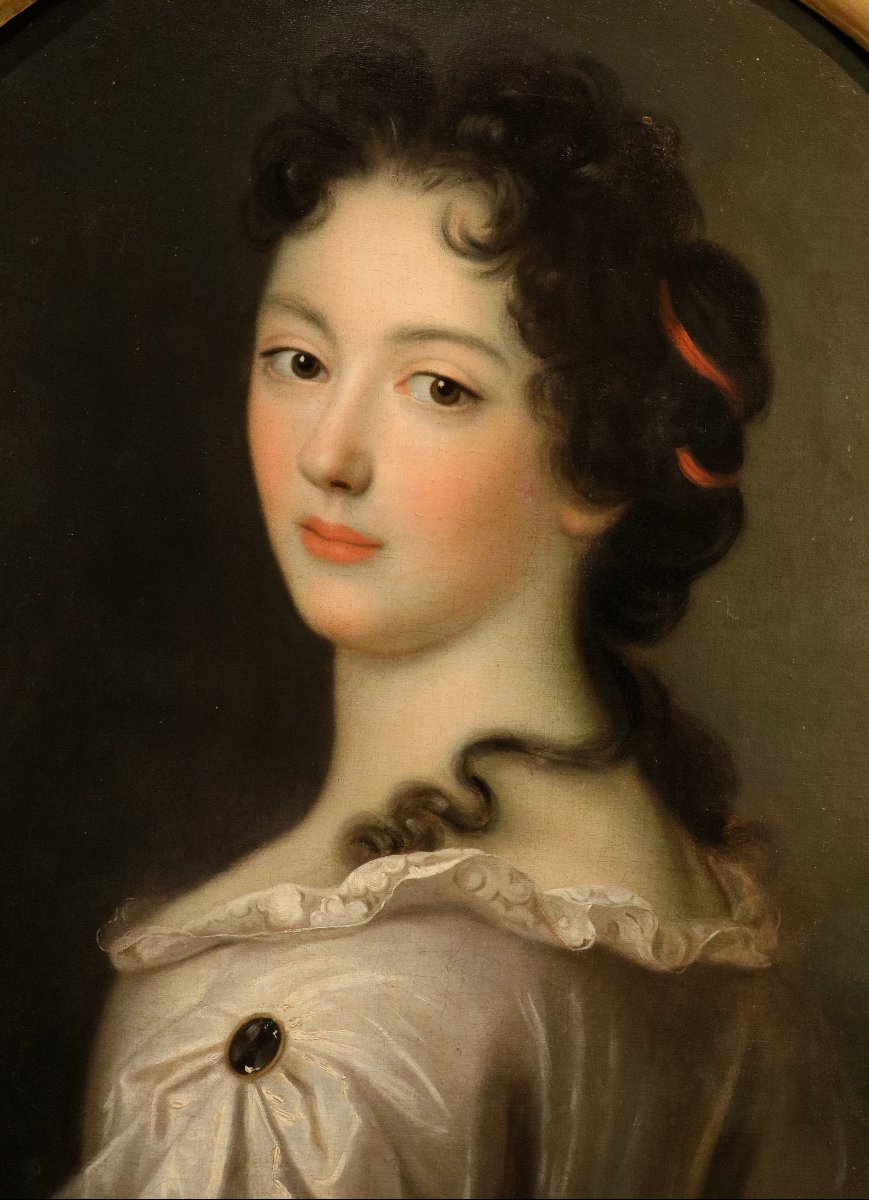
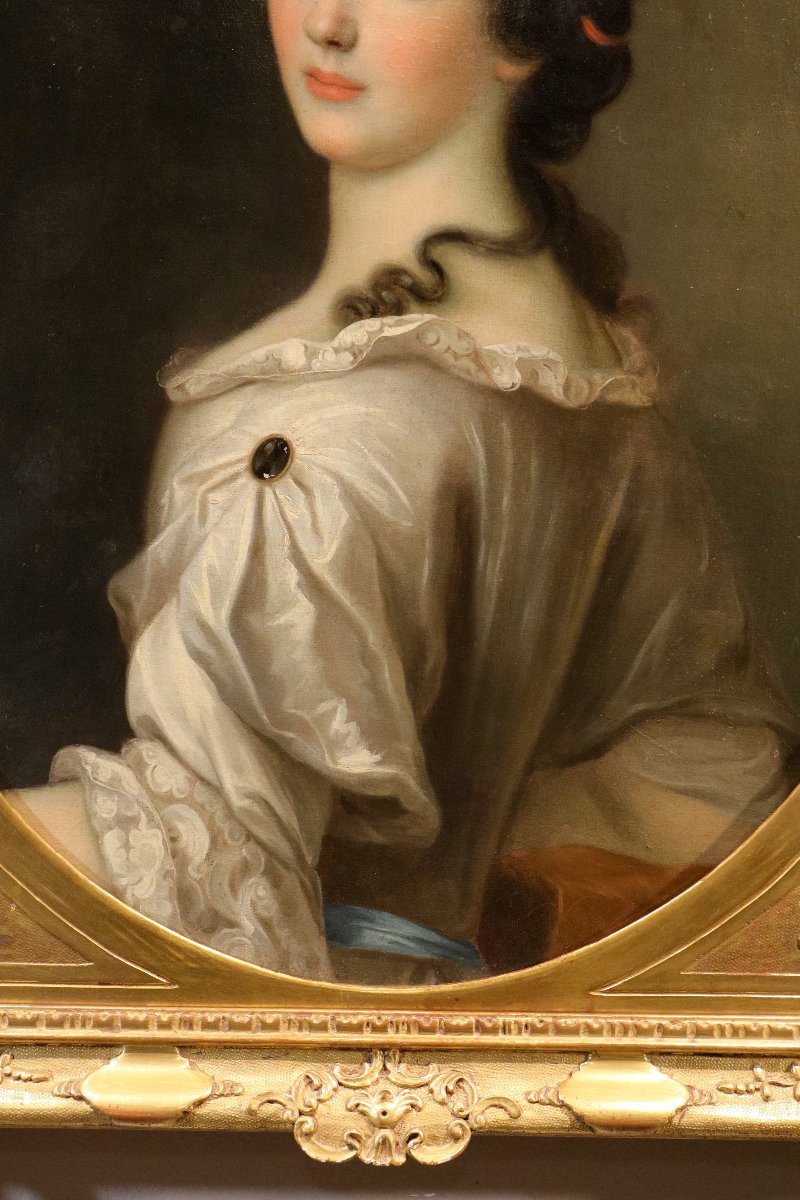
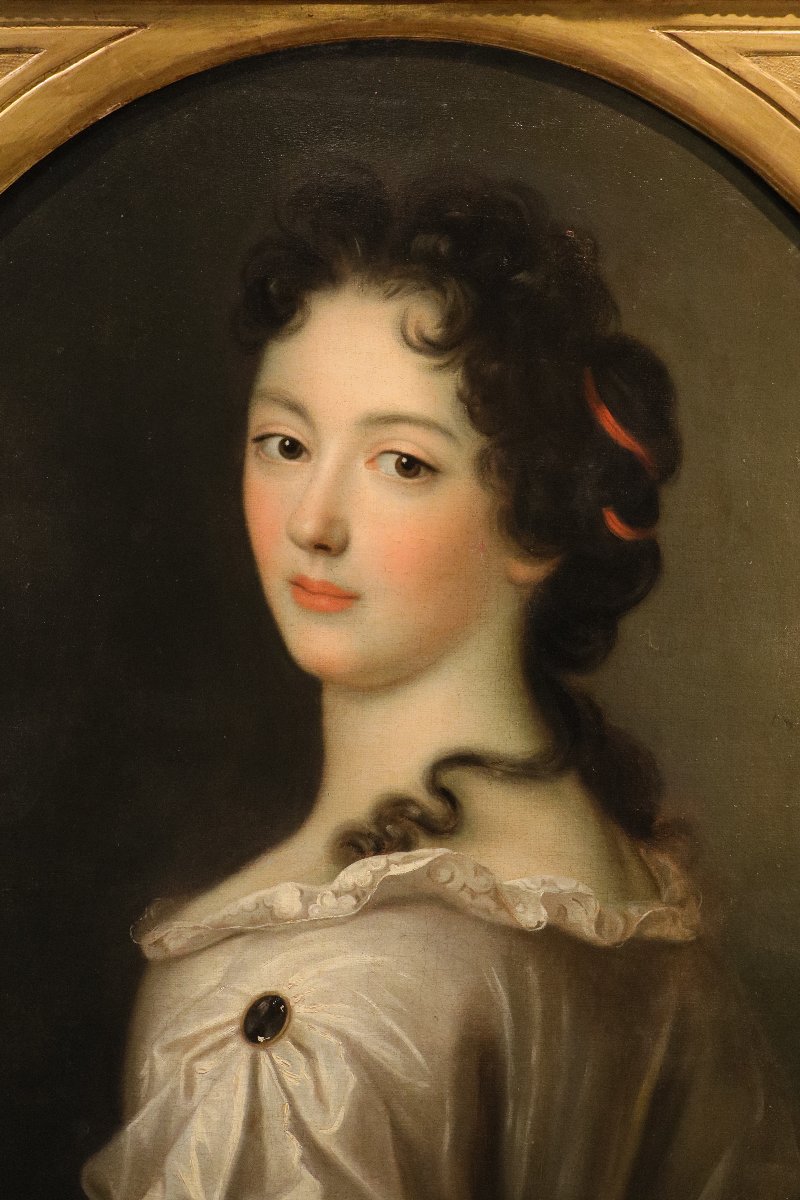
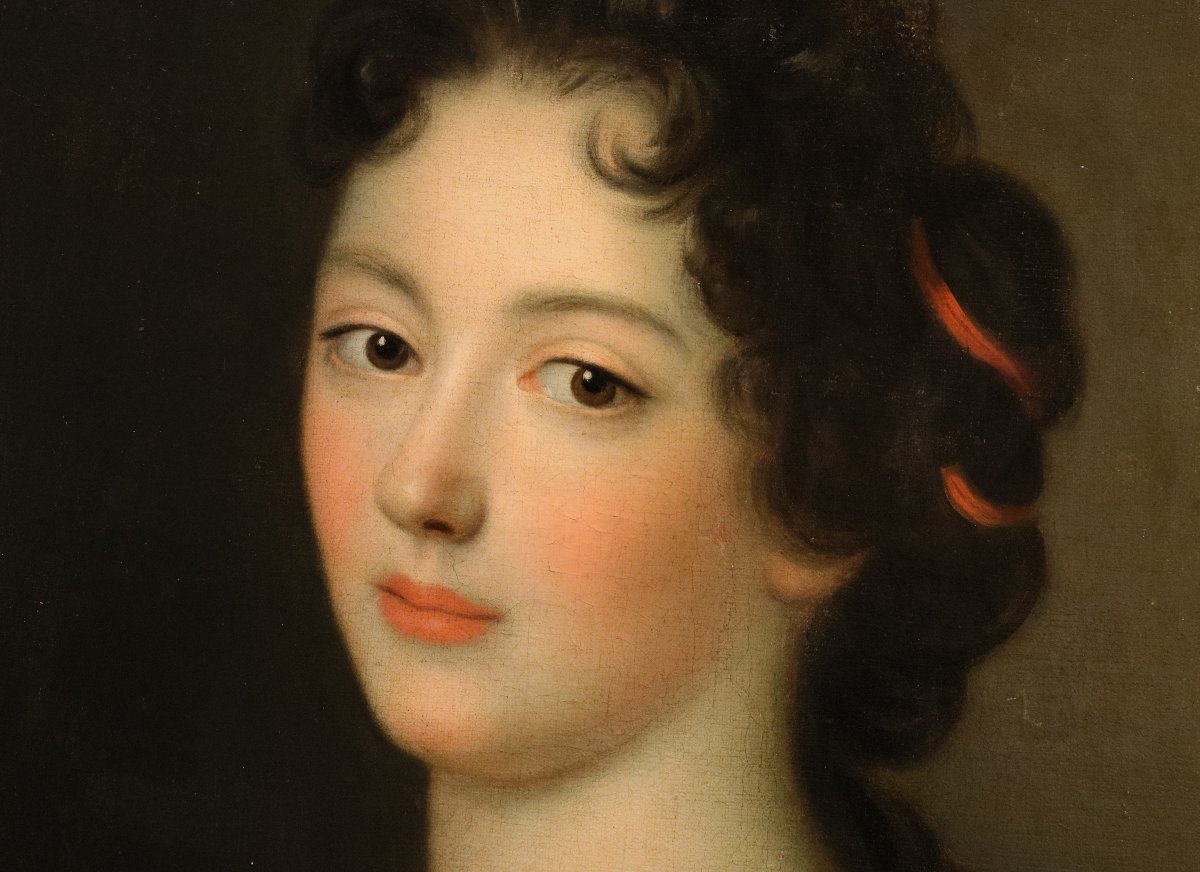
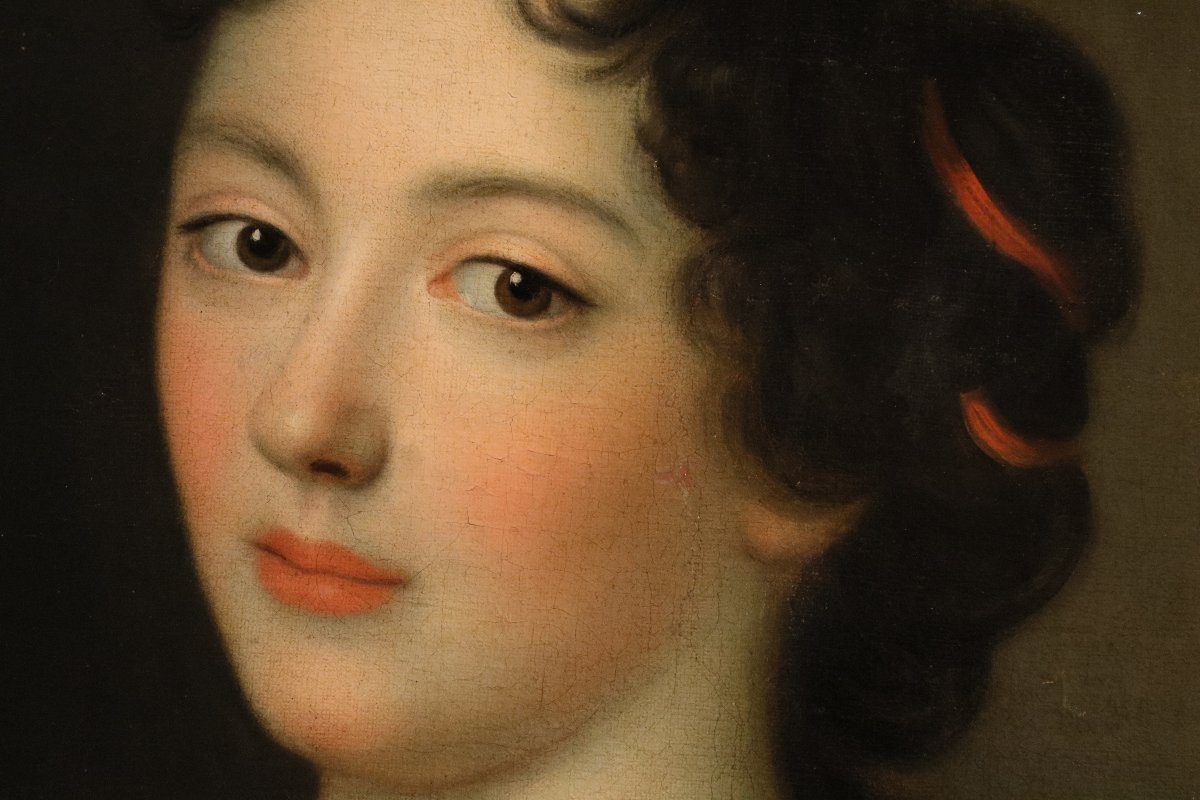
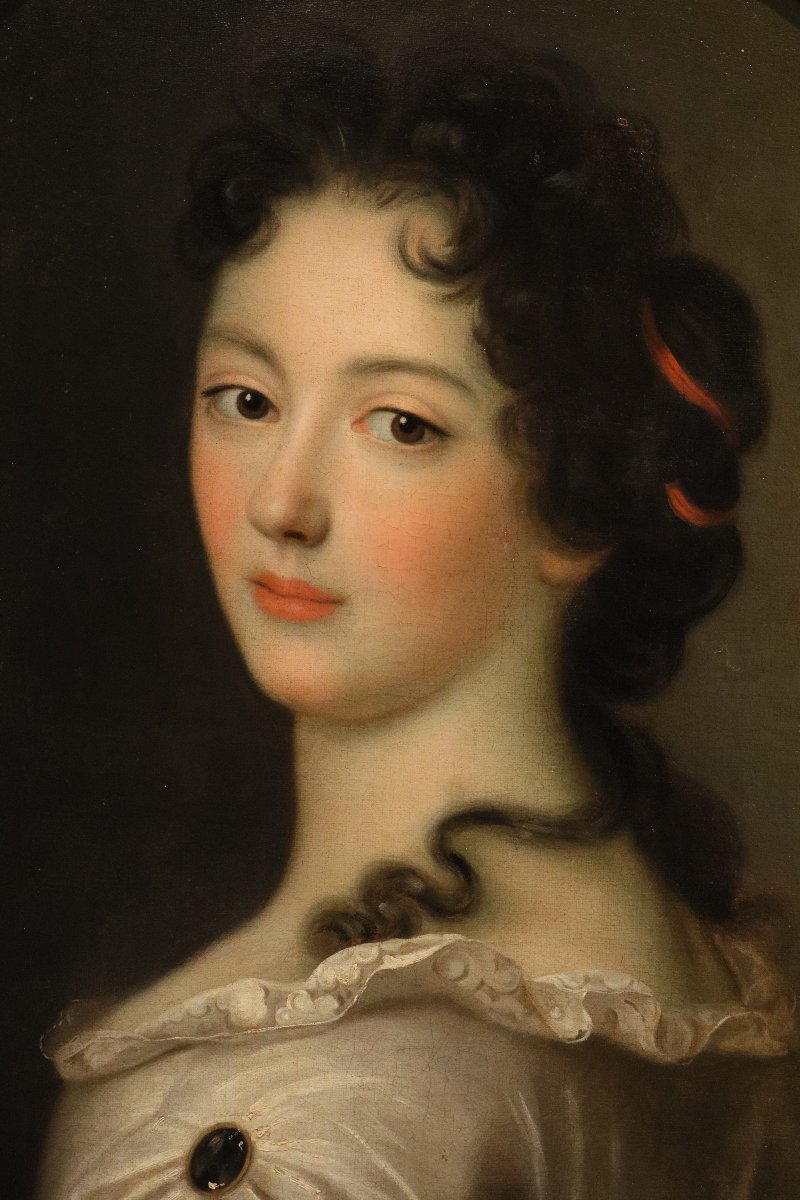
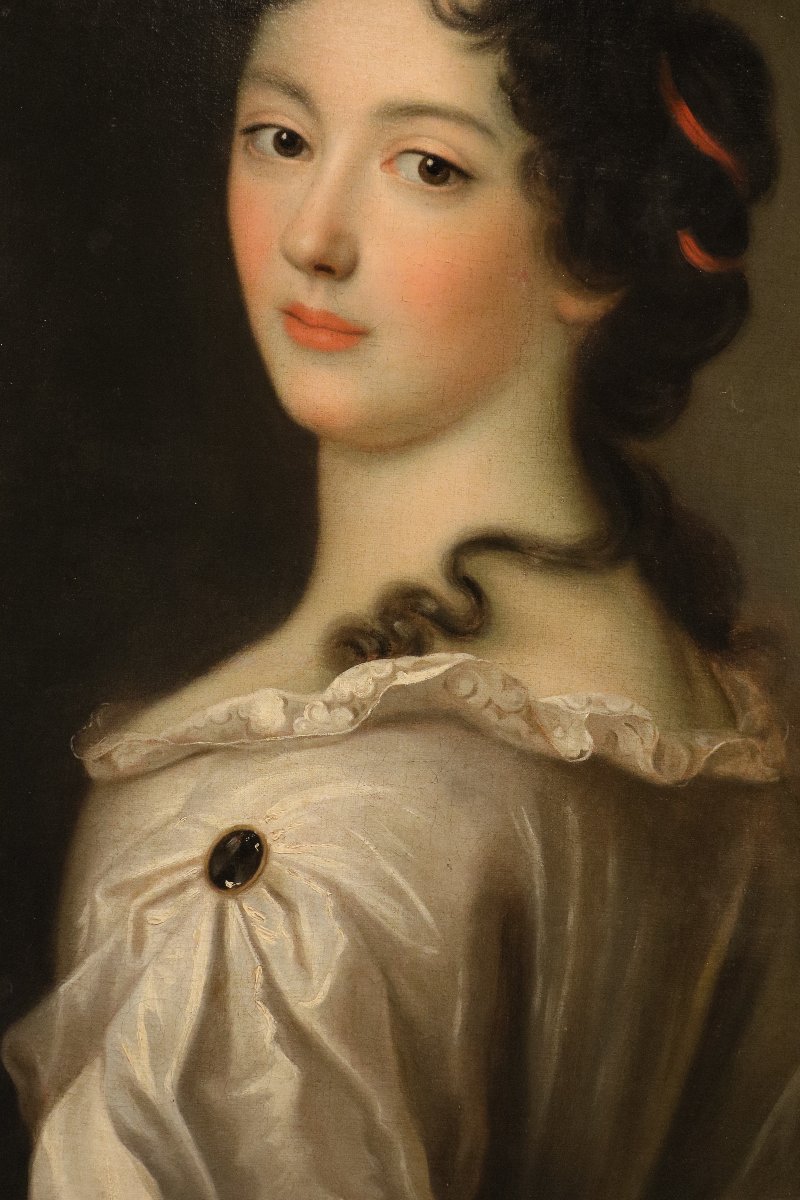
The beautiful noblewoman is depicted here from behind, with her torso turned, as she gazes directly at the viewer. We admire her delicate features, characterized by a fair complexion and cheeks slightly flushed with rouge, against which her large dark eyes stand out.
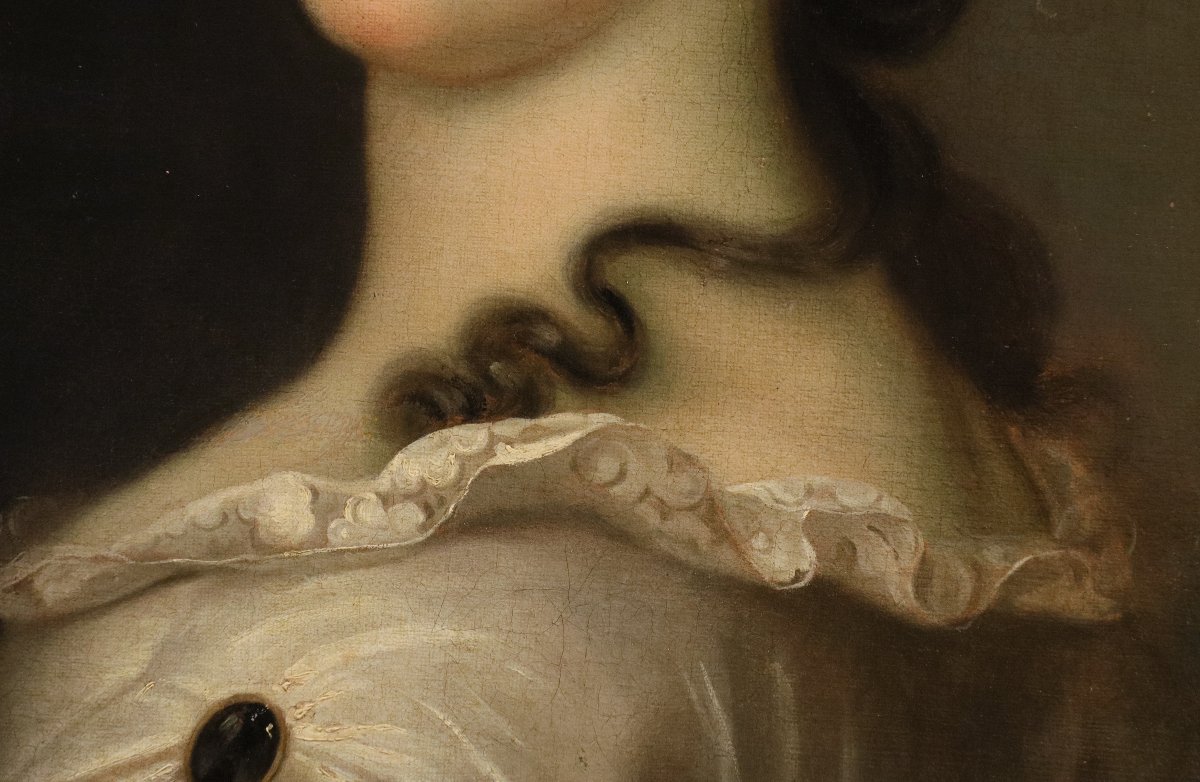
Her brown, curly hair is styled in an elaborate coiffure typical of the French court of the time, embellished with a red ribbon tied among the locks, allowing a long, soft curl to fall over her left shoulder.
The princess wears a glossy white silk gown with a low neckline, which vividly reflects the light, creating soft drapery, with wide sleeves and a generous neckline, cinched at the waist by a light blue sash. The sleeve is delicately gathered at the shoulder by a precious dark clasp—perhaps a cameo—and ends at the forearm with embroidery in the finest lace.
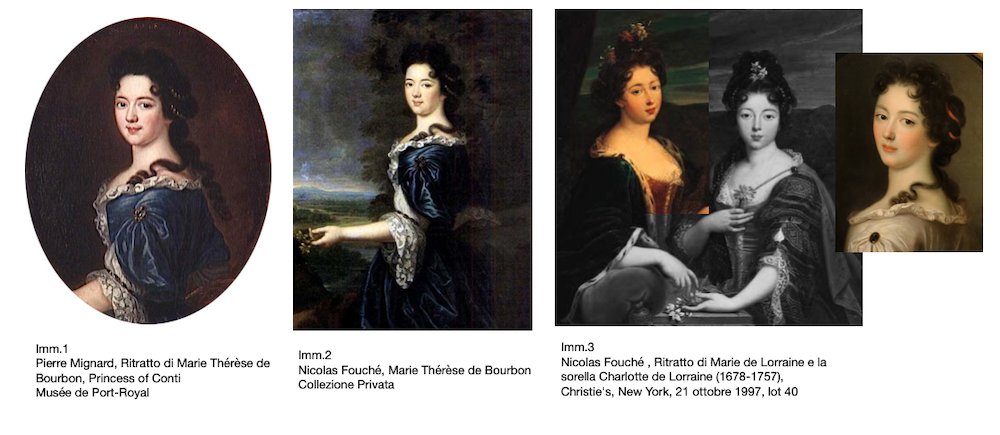
As was often the case with ladies of the high nobility endowed with great beauty, she became the subject of the most celebrated portraitists of the French court between the late 17th and early 18th centuries, including Nicolas de Largillière, François de Troy, Hyacinthe Rigaud, and Pierre Mignard. The latter painted her official portrait—and perhaps her best-known one—in 1691, now in the Musée de Port-Royal (Fig. 1).
To this illustrious list of names must be added that of the artist behind our painting, Nicolas Foucher (Troyes, 1653 – Paris, 1733), a leading portraitist of the French school of the late 17th and early 18th centuries.
He spent much of his career in Paris, first as a student and later as a collaborator of Pierre Mignard, inheriting from his master the graphic styles characterized by great grace and delicacy.
Also known for having painted the Princess, Fouché was, for example, credited with a refined three-quarter-length portrait in which the princess wears a blue dress and holds daisies in her hand (Fig. 2). This painting is historically akin to—and mirrors, in style and pose—Mignard’s graphic models, to the extent that the two attributions have often been confused on the antiques market.
Although his works are relatively rare, they demonstrate a mastery of decorative refinement that, following in Mignard’s footsteps, stands apart from the monumental rigidity of other contemporaries (such as Charles Le Brun), favoring sinuous lines, subtle transitions, and an extremely fluid and silky rendering of fabrics.
By way of comparison, we may mention the portrait of Marie of Lorraine and her younger sister Charlotte of Lorraine (Fig. 3), where the features of the former are mirror images of those in the painting under consideration: we find the same refined features and even the same facial pose—a three-quarter view, slightly tilted.
Fouché’s subjects are, in fact, distinguished by an unmistakable, extremely graceful classicism, known at the time as mignardise (literally “graceful” or “graceful”), in which the faces feature idealized features, serene expressions, and fair, smooth complexions, designed to please and ennoble the Parisian aristocracy.
ADDITIONAL INFORMATION:
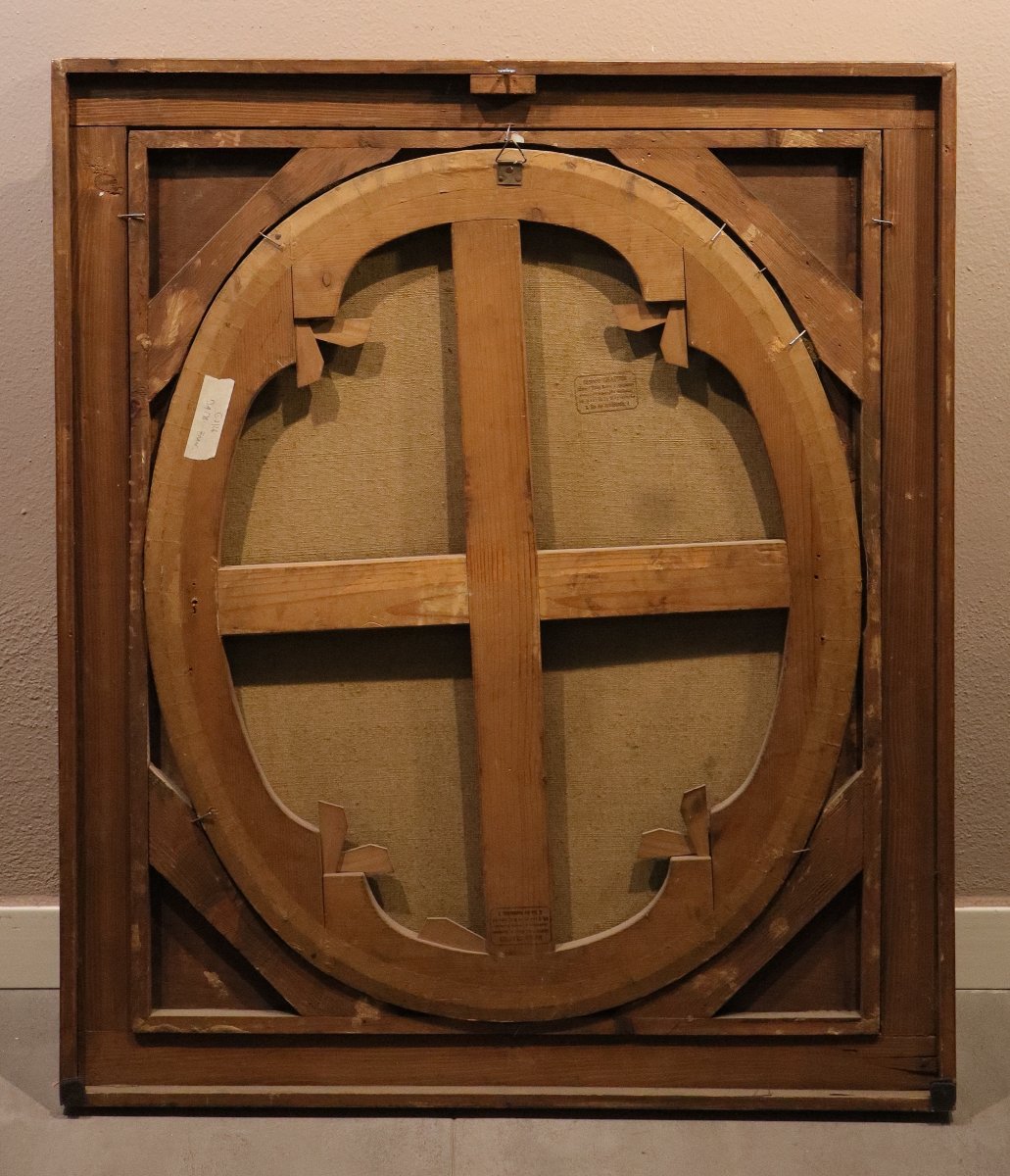
Good condition, with minor restoration and scattered retouching.
The painting is set in a rich and elaborate rectangular gilded wooden frame, finely carved with floral motifs, garlands, and geometric scrolls at the corners.
The work is sold with a certificate of authenticity and a descriptive iconographic sheet.
We arrange and organize the shipping of purchased works, both within Italy and internationally, using professional and insured carriers.
Please contact us for any information; we’ll be happy to assist you. You can also view the painting at our gallery in Riva del Garda; we’d be delighted to welcome you and show you our collection of artworks.
Follow us on:
https://www.instagram.com/galleriacastelbarco/?hl=it
https://www.facebook.com/galleriacastelbarco/
Portrait of Marie Thérèse de Bourbon (Paris, 1666 – Paris, 1732), Princess of Conti
Oil on canvas
73 x 59 cm. - In a gilded frame, 88 x 74 cm.
FULL DETAILS OF THE WORK (CLICK HERE)
The young and attractive woman portrayed in this painting is the French princess Marie-Thérèse de Bourbon-Condé (1666–1732), also known as the Princess of Conti following her marriage to François Louis de Bourbon-Conti.
A direct descendant of the French royal dynasty, she was born in Paris to Henry III Julius of Bourbon-Condé (Prince of Condé) and Anne Henriette of the Palatinate.
The beautiful noblewoman is depicted here from behind, with her torso turned, as she gazes directly at the viewer. We admire her delicate features, characterized by a fair complexion and cheeks slightly flushed with rouge, against which her large dark eyes stand out.
Her brown, curly hair is styled in an elaborate coiffure typical of the French court of the time, embellished with a red ribbon tied among the locks, allowing a long, soft curl to fall over her left shoulder.
The princess wears a glossy white silk gown with a low neckline, which vividly reflects the light, creating soft drapery, with wide sleeves and a generous neckline, cinched at the waist by a light blue sash. The sleeve is delicately gathered at the shoulder by a precious dark clasp—perhaps a cameo—and ends at the forearm with embroidery in the finest lace.
As was often the case with ladies of the high nobility endowed with great beauty, she became the subject of the most celebrated portraitists of the French court between the late 17th and early 18th centuries, including Nicolas de Largillière, François de Troy, Hyacinthe Rigaud, and Pierre Mignard. The latter painted her official portrait—and perhaps her best-known one—in 1691, now in the Musée de Port-Royal (Fig. 1).
To this illustrious list of names must be added that of the artist behind our painting, Nicolas Foucher (Troyes, 1653 – Paris, 1733), a leading portraitist of the French school of the late 17th and early 18th centuries.
He spent much of his career in Paris, first as a student and later as a collaborator of Pierre Mignard, inheriting from his master the graphic styles characterized by great grace and delicacy.
Also known for having painted the Princess, Fouché was, for example, credited with a refined three-quarter-length portrait in which the princess wears a blue dress and holds daisies in her hand (Fig. 2). This painting is historically akin to—and mirrors, in style and pose—Mignard’s graphic models, to the extent that the two attributions have often been confused on the antiques market.
Although his works are relatively rare, they demonstrate a mastery of decorative refinement that, following in Mignard’s footsteps, stands apart from the monumental rigidity of other contemporaries (such as Charles Le Brun), favoring sinuous lines, subtle transitions, and an extremely fluid and silky rendering of fabrics.
By way of comparison, we may mention the portrait of Marie of Lorraine and her younger sister Charlotte of Lorraine (Fig. 3), where the features of the former are mirror images of those in the painting under consideration: we find the same refined features and even the same facial pose—a three-quarter view, slightly tilted.
Fouché’s subjects are, in fact, distinguished by an unmistakable, extremely graceful classicism, known at the time as mignardise (literally “graceful” or “graceful”), in which the faces feature idealized features, serene expressions, and fair, smooth complexions, designed to please and ennoble the Parisian aristocracy.
ADDITIONAL INFORMATION:
Good condition, with minor restoration and scattered retouching.
The painting is set in a rich and elaborate rectangular gilded wooden frame, finely carved with floral motifs, garlands, and geometric scrolls at the corners.
The work is sold with a certificate of authenticity and a descriptive iconographic sheet.
We arrange and organize the shipping of purchased works, both within Italy and internationally, using professional and insured carriers.
Please contact us for any information; we’ll be happy to assist you. You can also view the painting at our gallery in Riva del Garda; we’d be delighted to welcome you and show you our collection of artworks.
Follow us on:
https://www.instagram.com/galleriacastelbarco/?hl=it
https://www.facebook.com/galleriacastelbarco/
7 800 €
Period: 17th century
Style: Louis 15th - Transition
Condition: Excellent condition
Material: Oil painting
Width: encadré 74 cm.
Height: encadré 88 cm.
Reference (ID): 1814427
Availability: In stock
Print