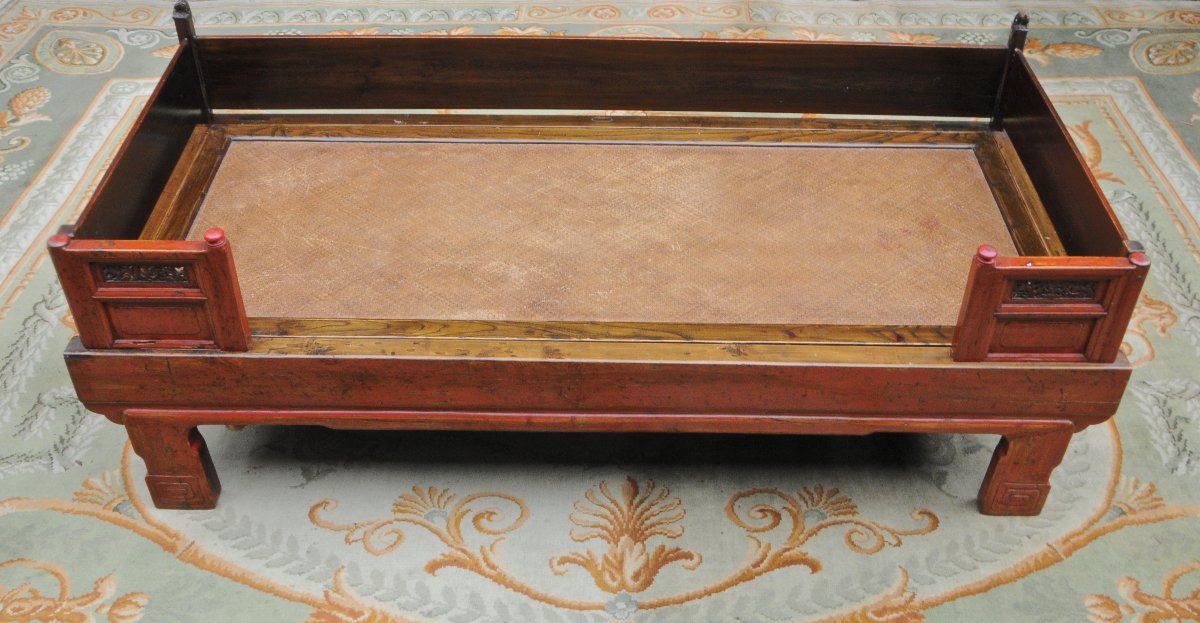
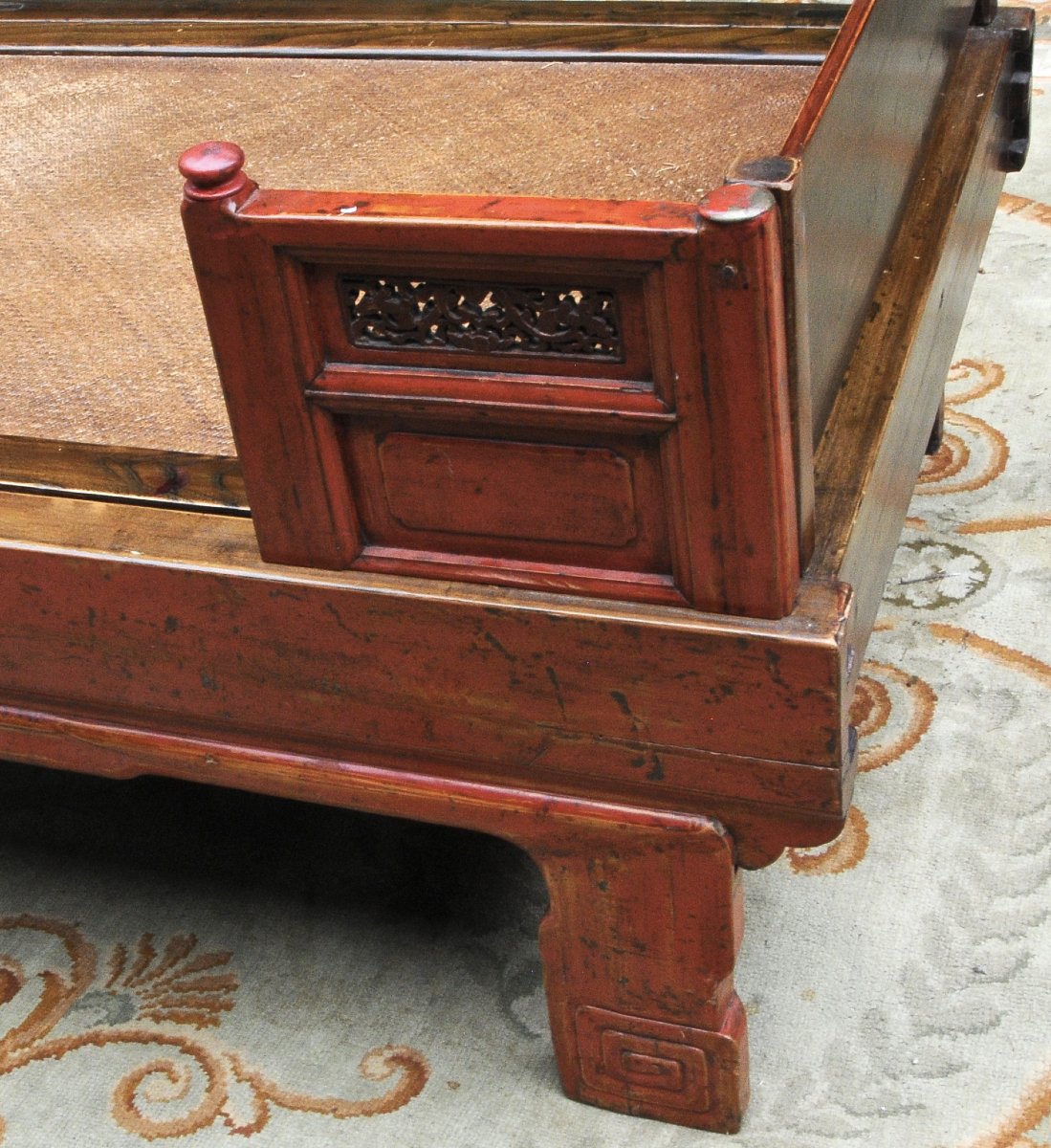
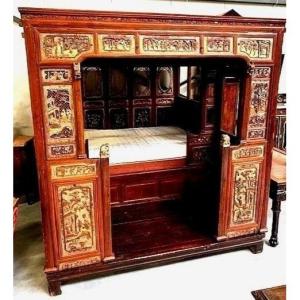
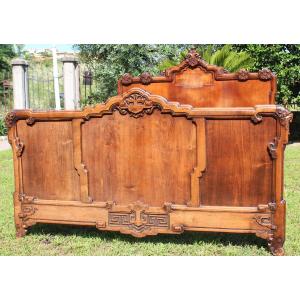
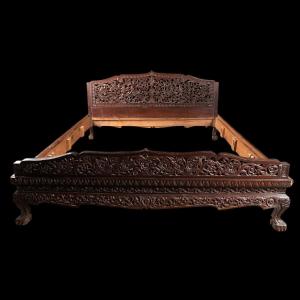
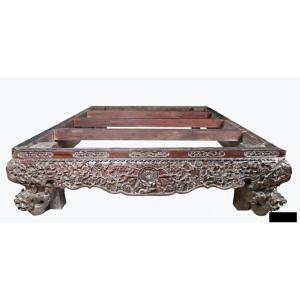
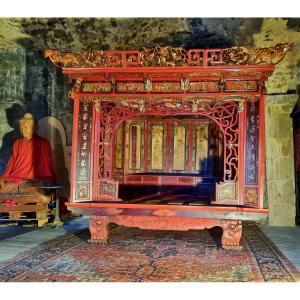
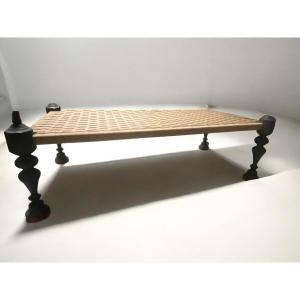
Structure: It is made of solid wood (usually varnished elm or a hardwood such as juwood or huali, depending on the region of origin, such as Shanxi).
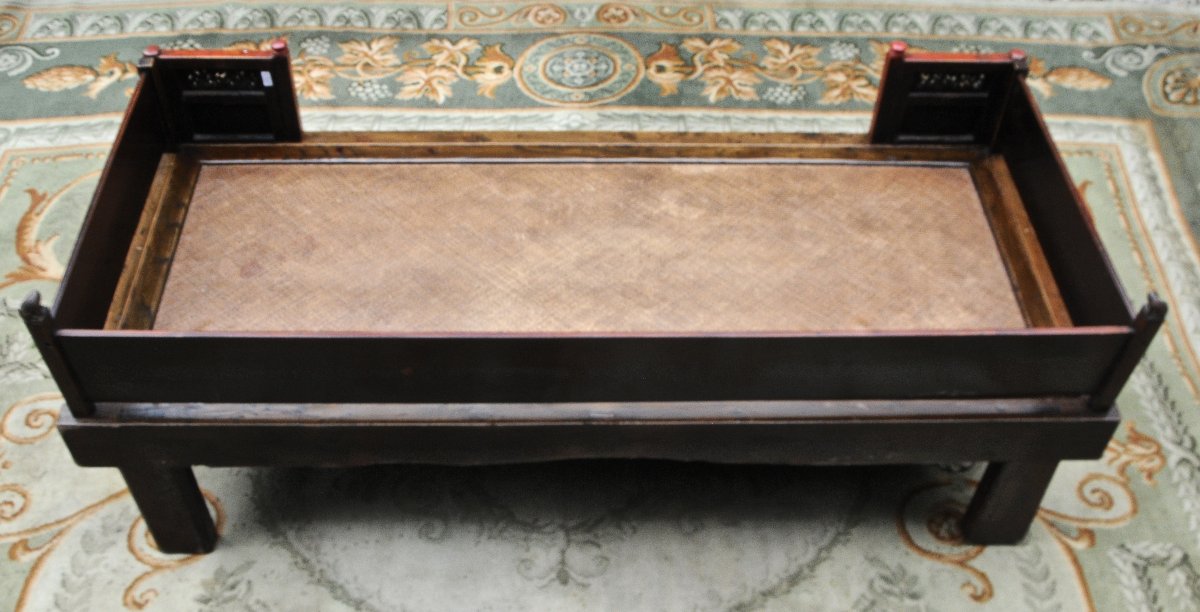
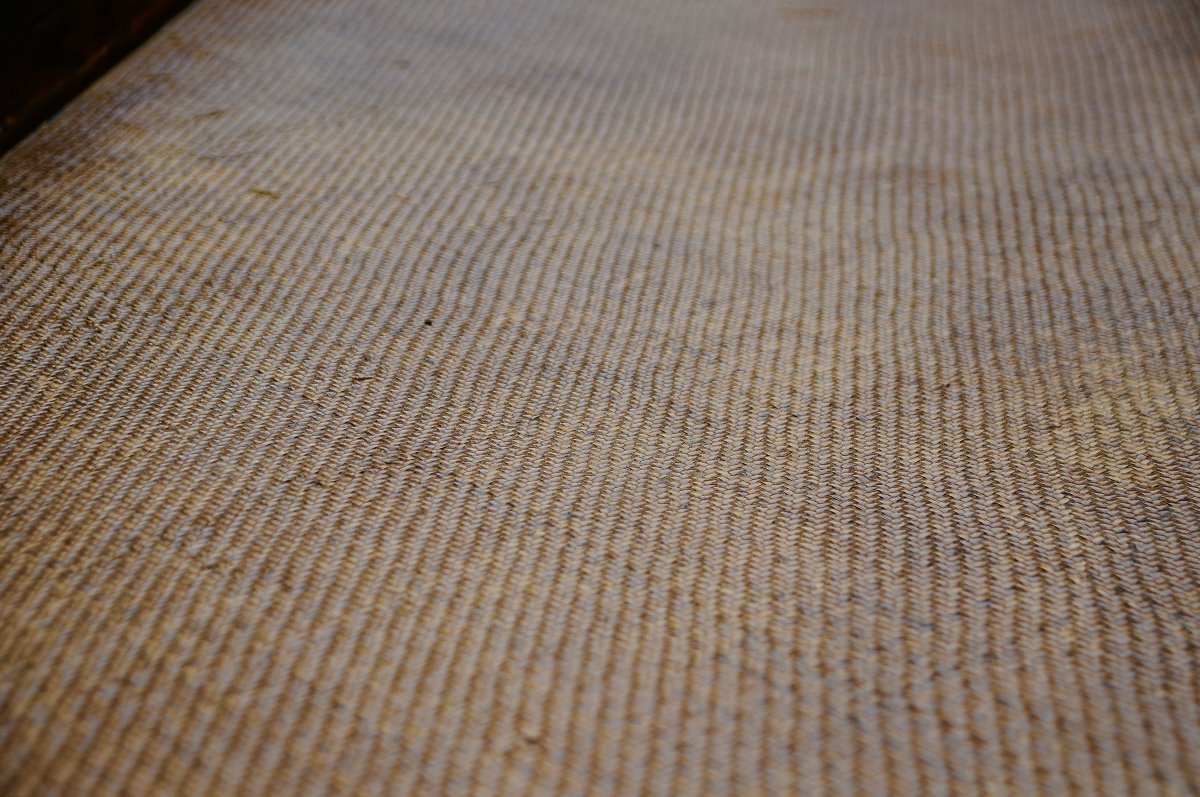
Seating: The central platform features a traditional covering of rattan or woven rice straw, designed to provide a cool and breathable seat.
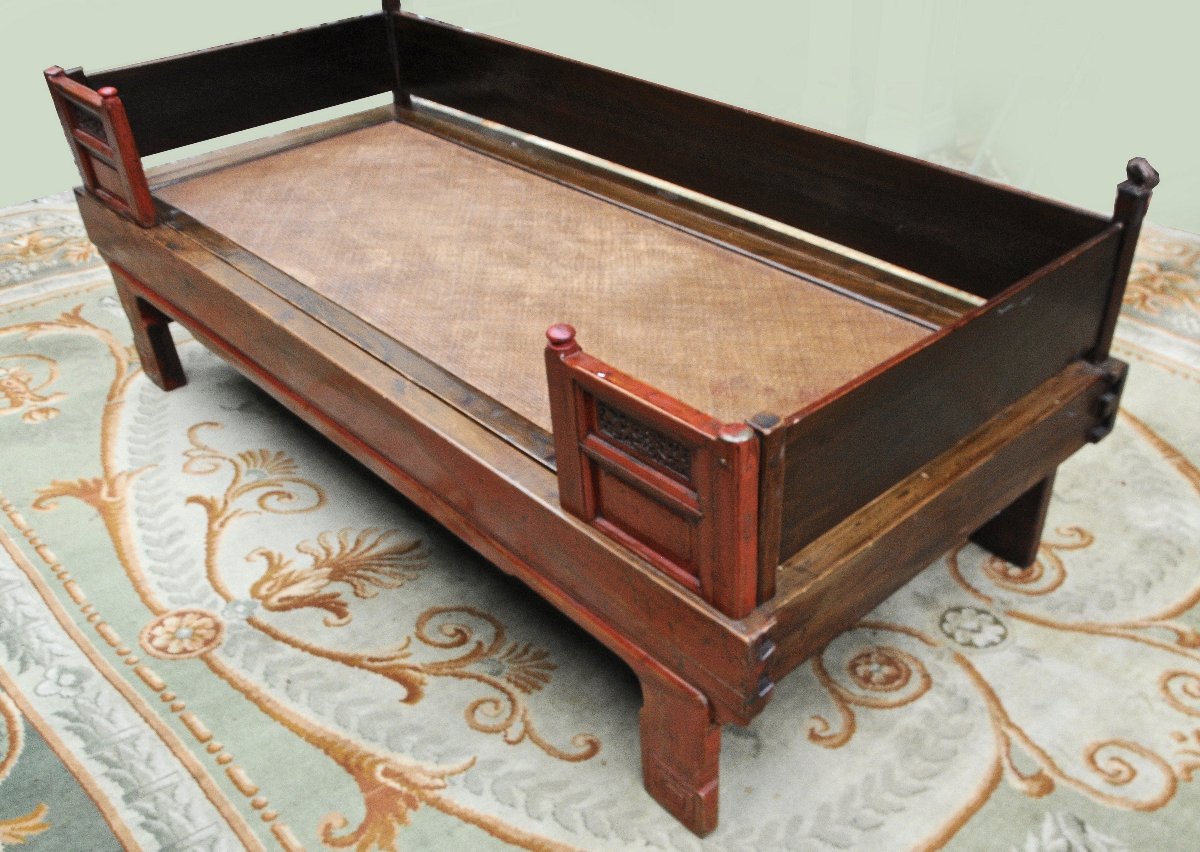
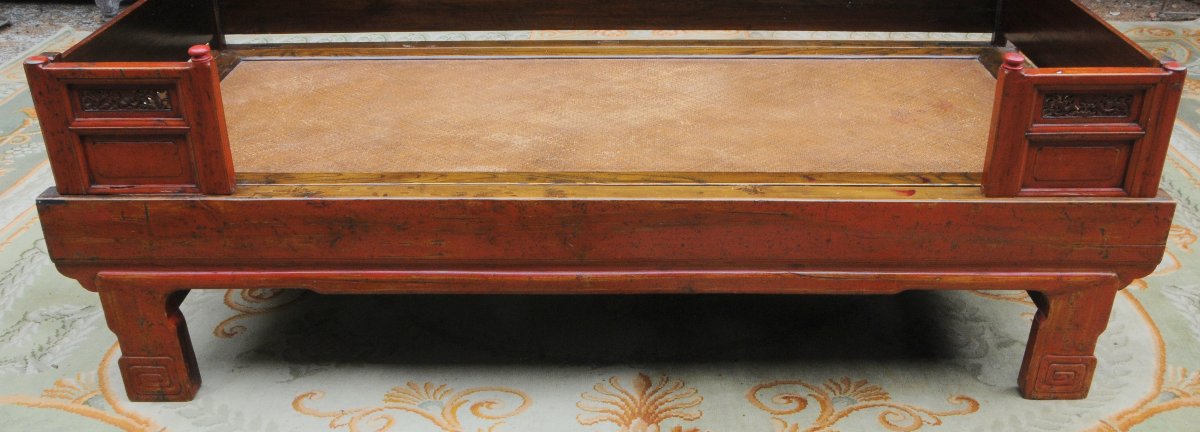
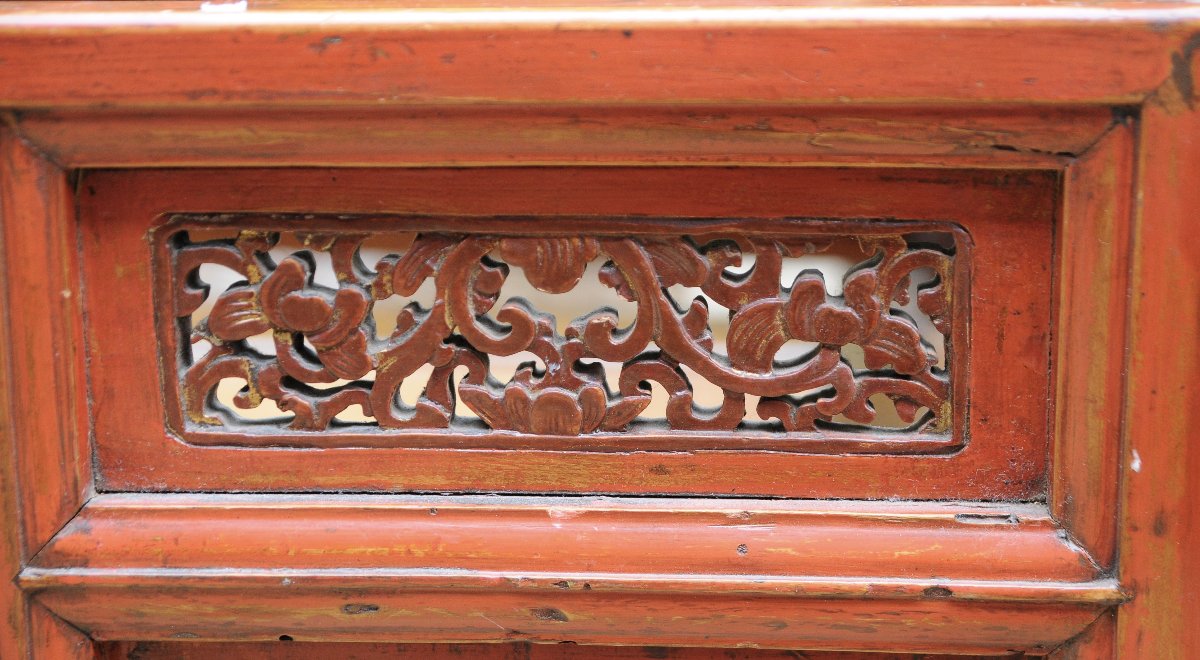
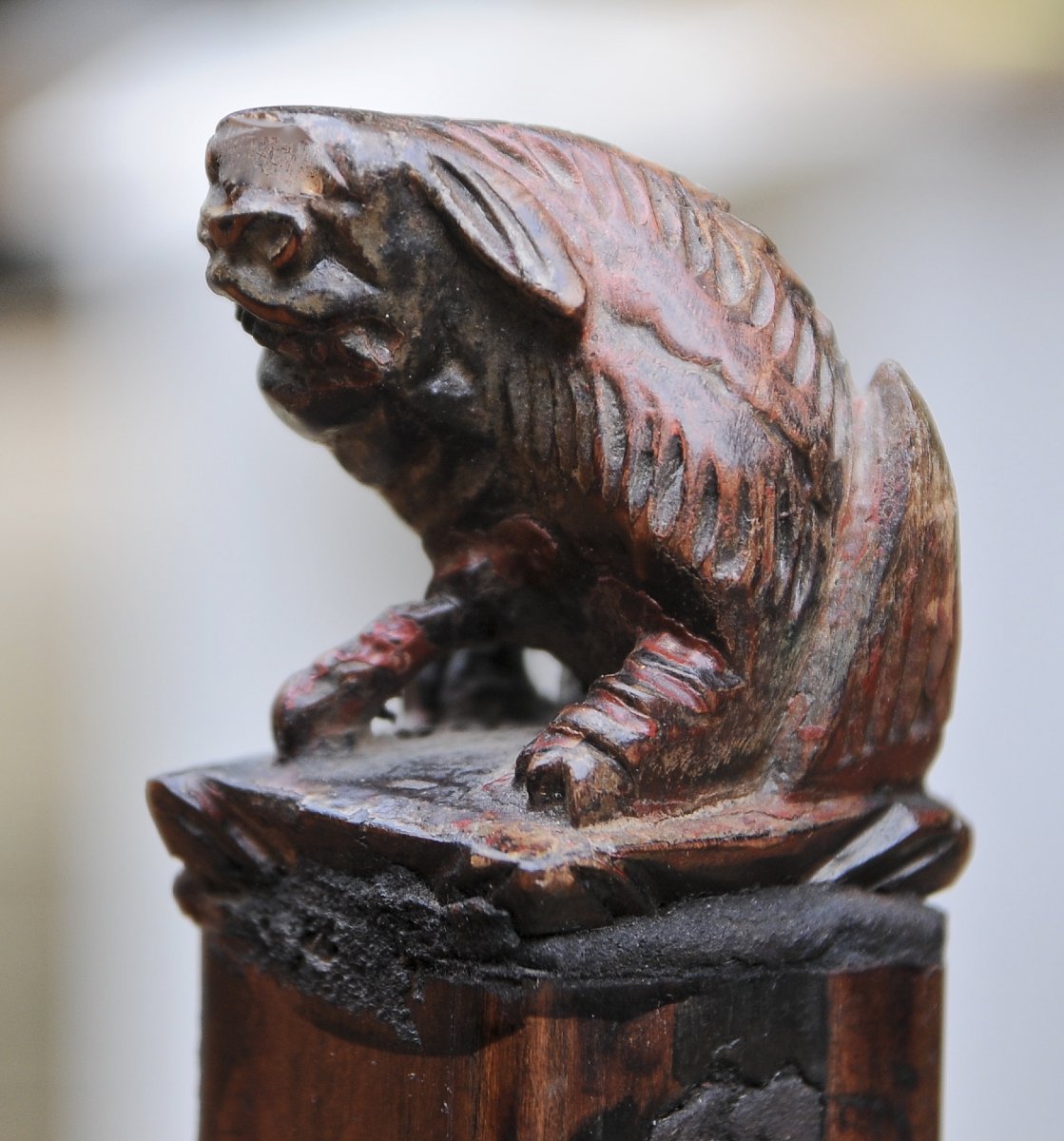
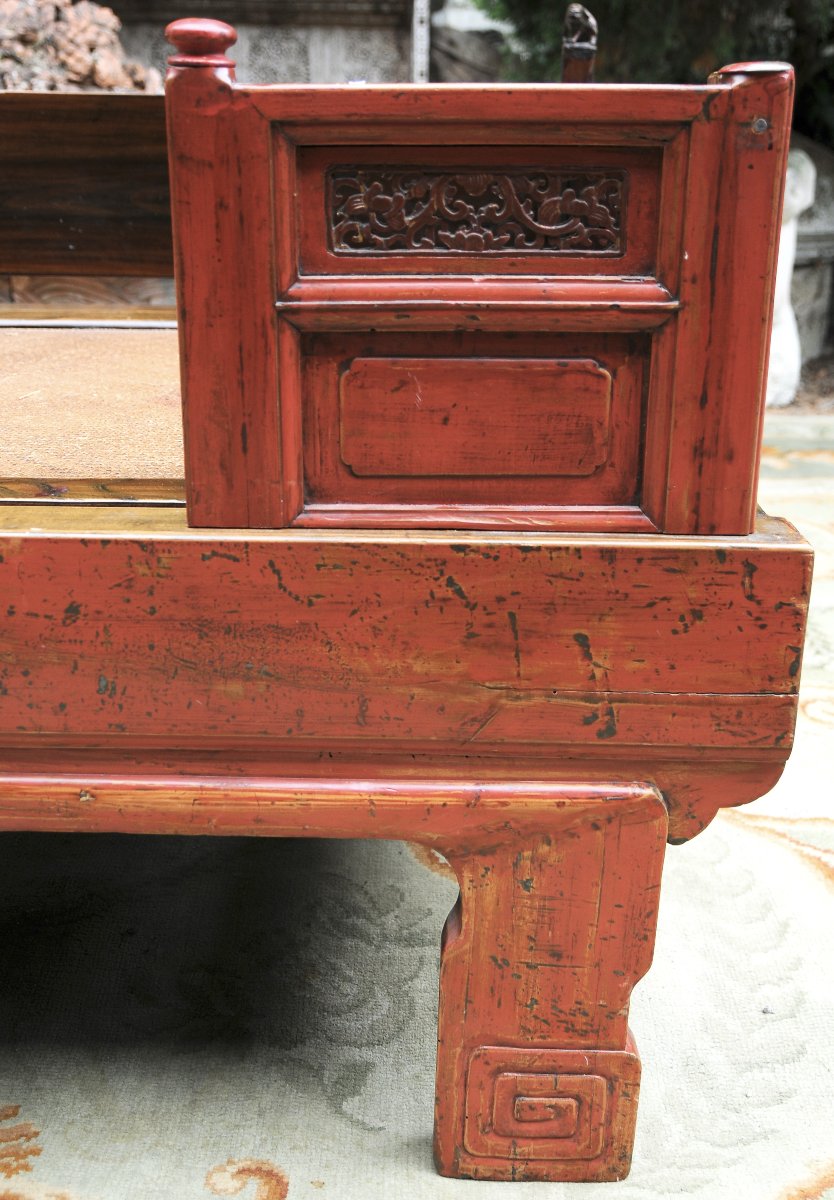
Design: It is characterized by its removable railings on three sides, decorated with geometric cutouts and Foe dogs at the ends of the back panel, a lacquered patina with reddish accents, and sturdy, curved legs inspired by the Ming dynasty. In contemporary interiors, these large, low beds are frequently repurposed as monumental coffee tables or guest beds.
Qing Dynasty
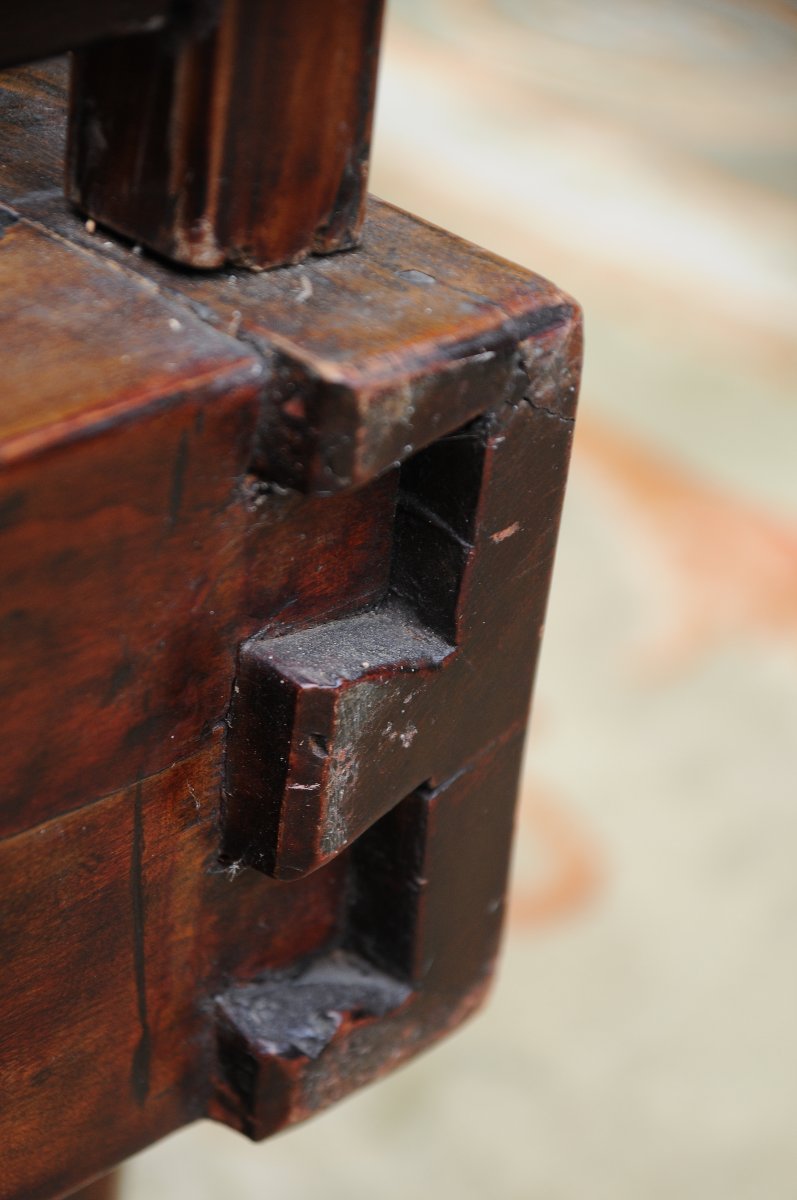
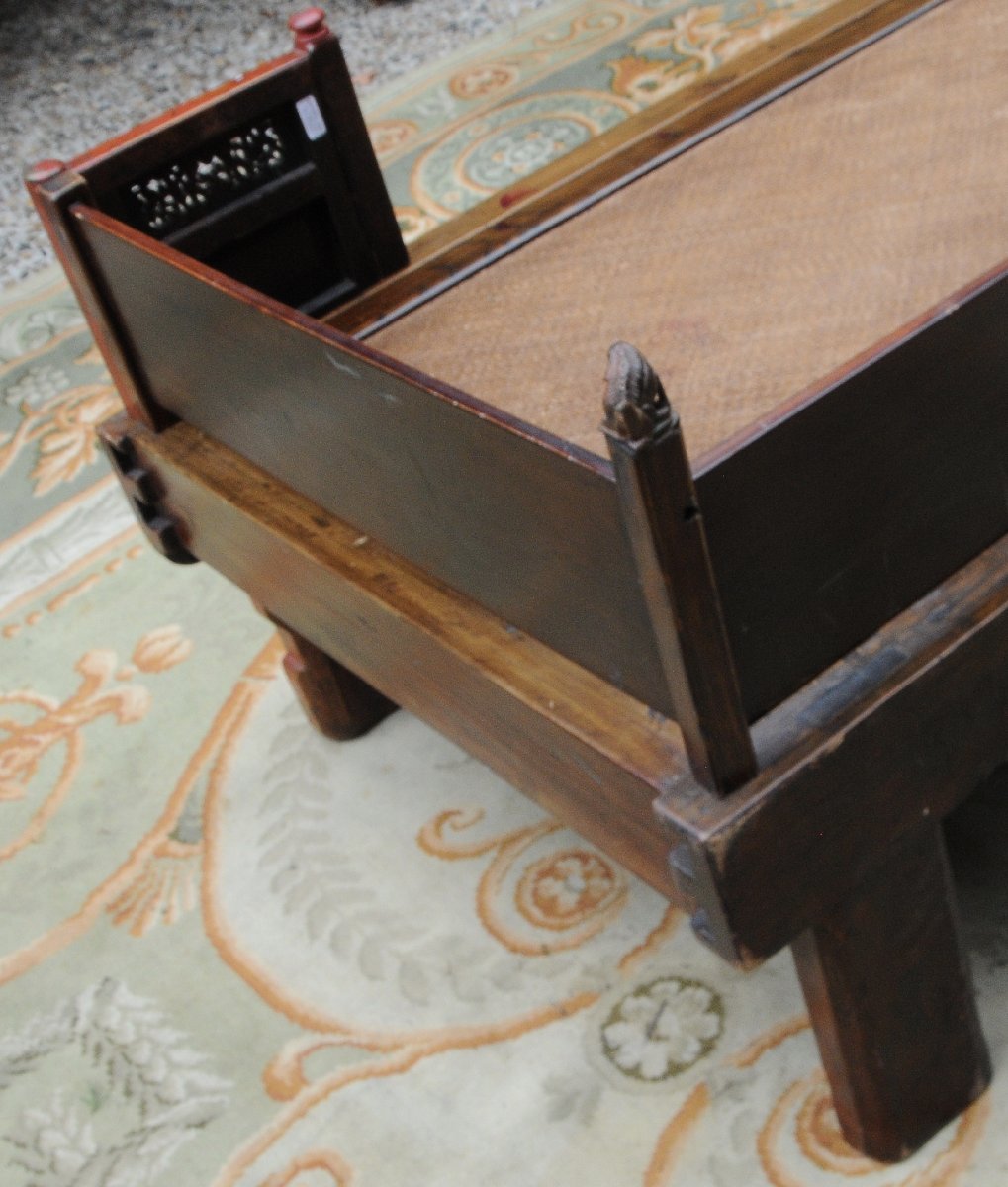
Traditional Construction: The protruding structures at the back feature a nail-free through-mortise-and-tenon joint system. This is typical of classical Chinese cabinetmaking.
Patina and wear: The upper edge of the railings reveals raw wood beneath the reddish-brown lacquer. The wear on the corners, the small marks on the wooden band, and the condition of the rattan braiding confirm that this is an authentic antique piece (probably from the late Qing Dynasty, 19th century).
The wood: The grain visible on the lower crossbar resembles Chinese elm (jumu), a regional hardwood highly sought after for its strength and flamed patterns.
Railing: The left side panel features meticulous openwork carving at the top.
Proantic uses a cookie to analyze traffic and improve its service by using Google Analytics. Data sent to Google Analytics (frequency of visits to the site and pages visited) are anonymous. No other cookie tracks your activity, your personal data is not collected. Thank you for helping us to have better understanding how Proantic is used.