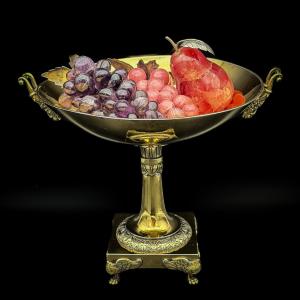


Henry Auguste – Vermeil Fruit Bowl, Empire Period, Paris 1798–1809
Henry Auguste – Silver-Gilt Fruit Bowl, Empire Period, Paris 1798–1809
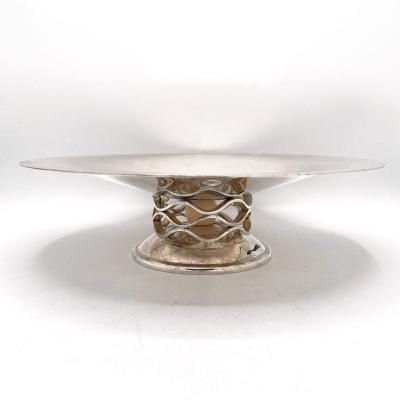
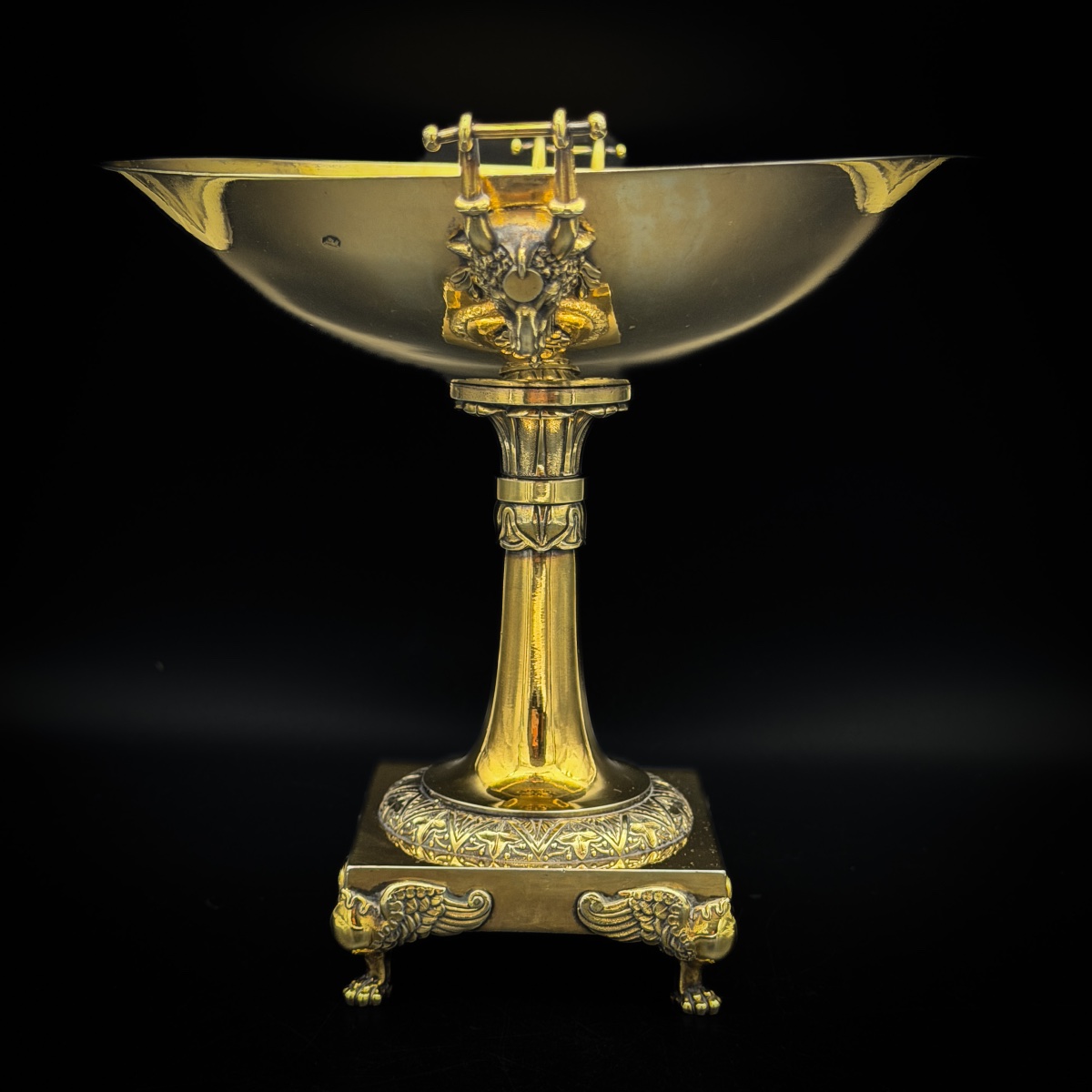
A rare and elegant silver-gilt fruit bowl from the Empire period, made in Paris between 1798 and 1809 by Henry Auguste (1759–1816), one of the most important French silversmiths of the Neoclassical and Empire periods.
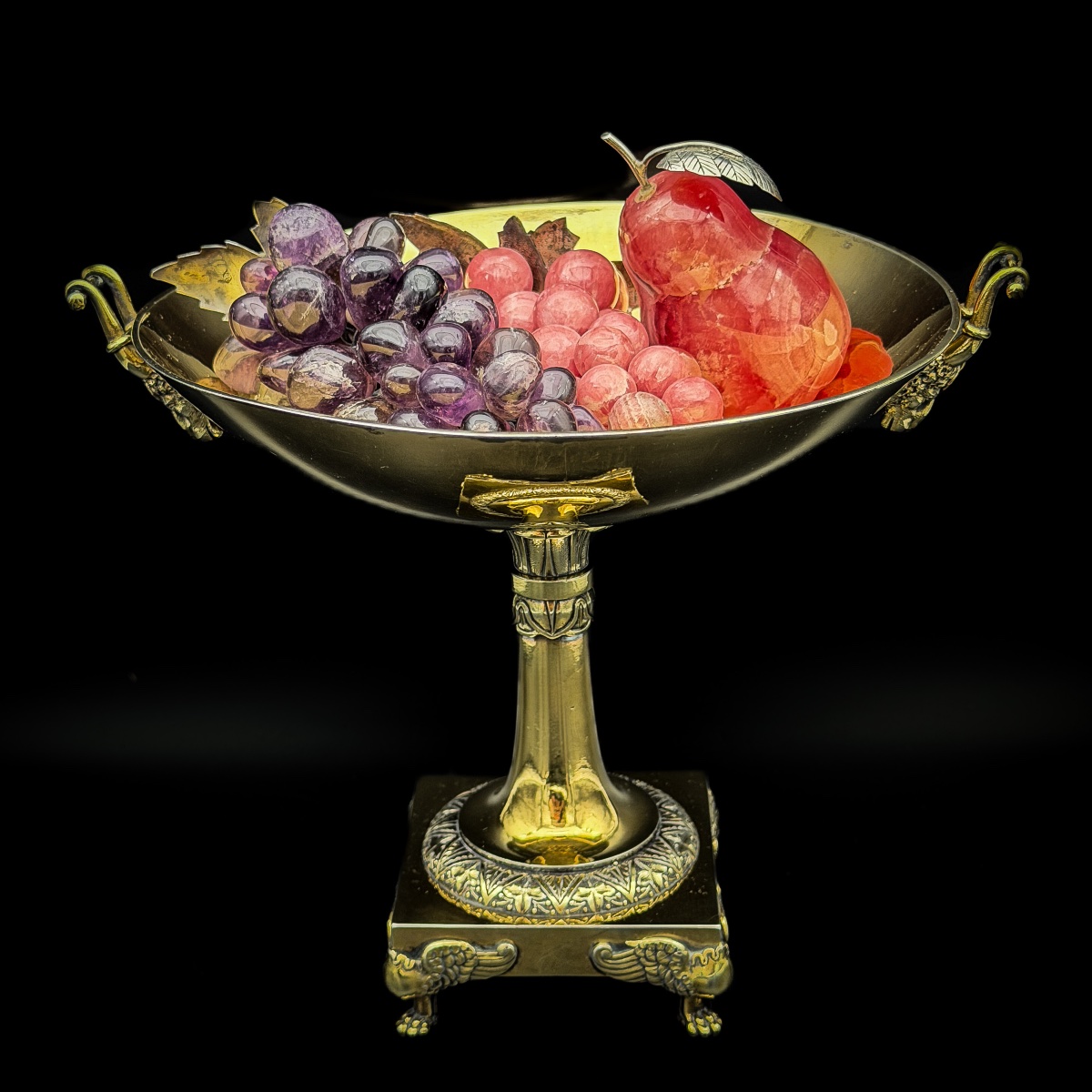
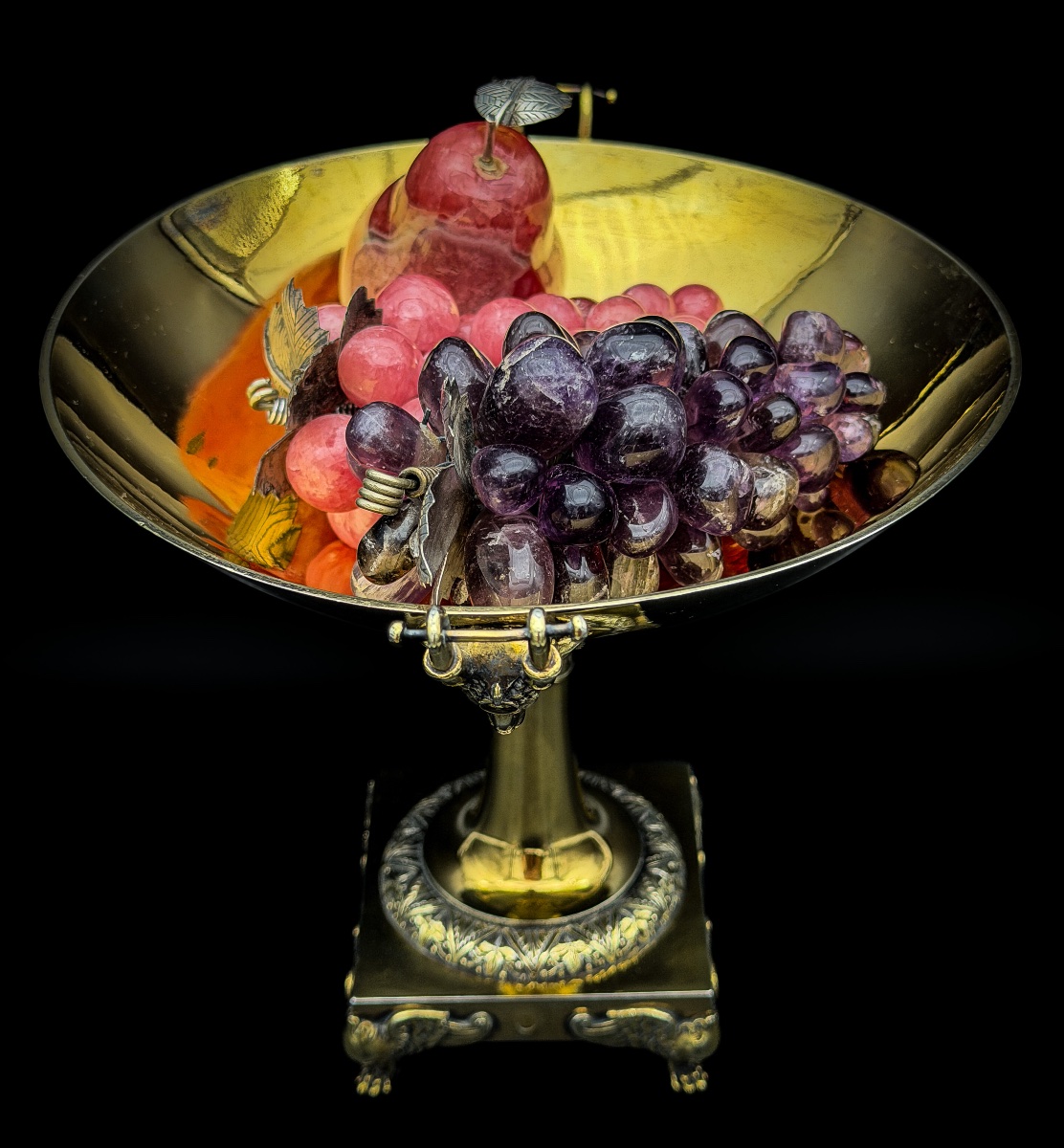
The hemispherical bowl displays a particularly architectural composition. The rim is enhanced with a finely worked frieze, while the lower part is decorated with a prominent radiating pattern of raised lanceolate leaves.
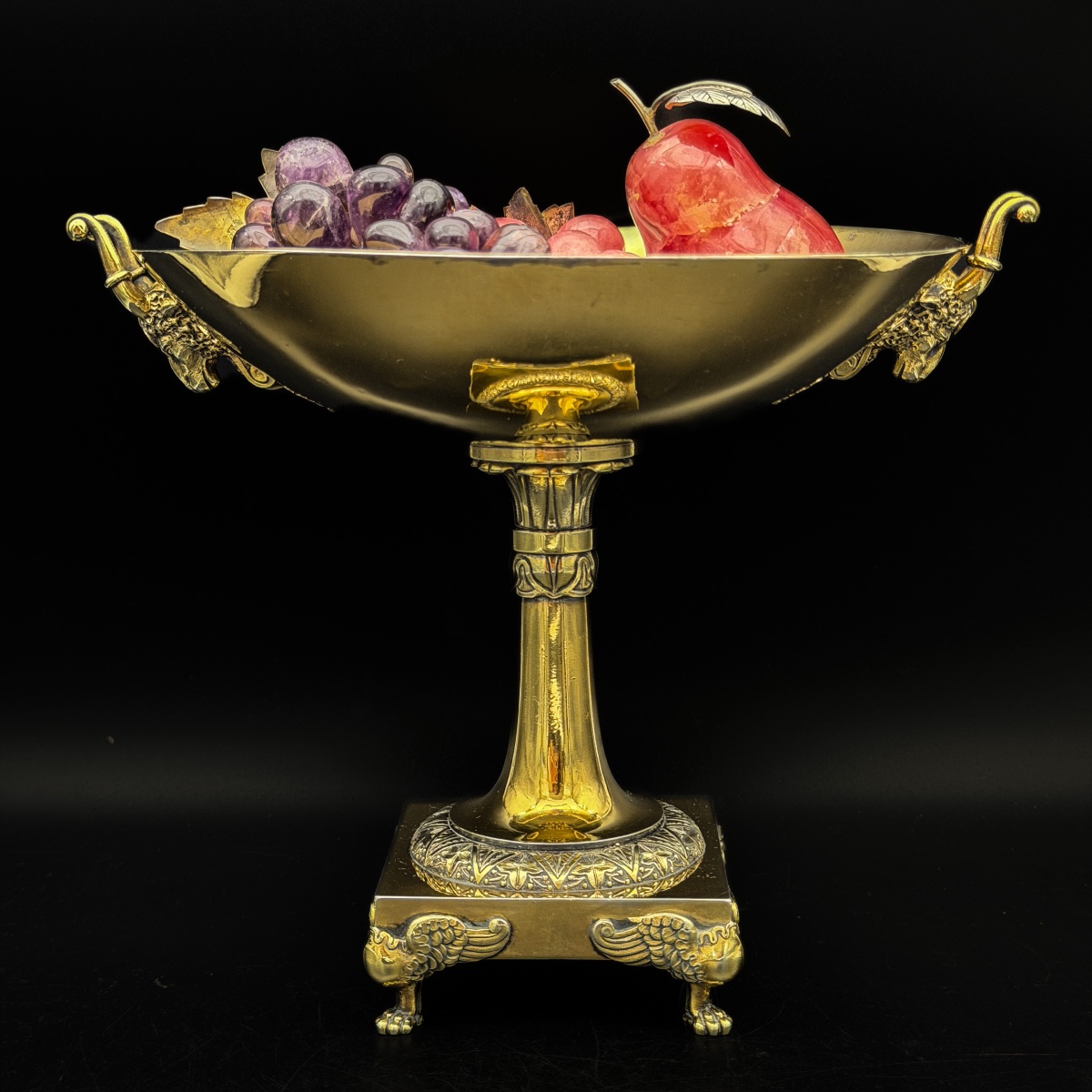
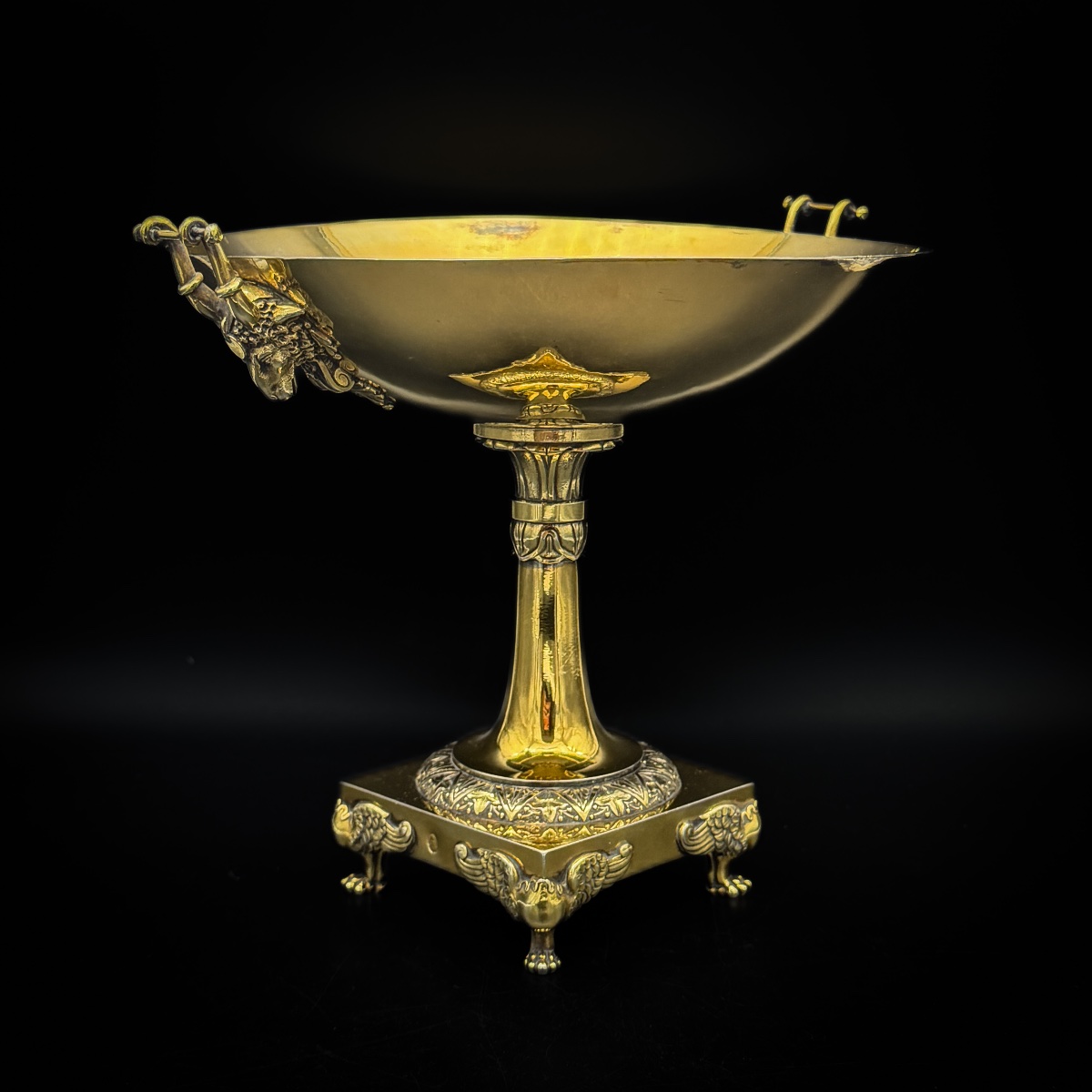
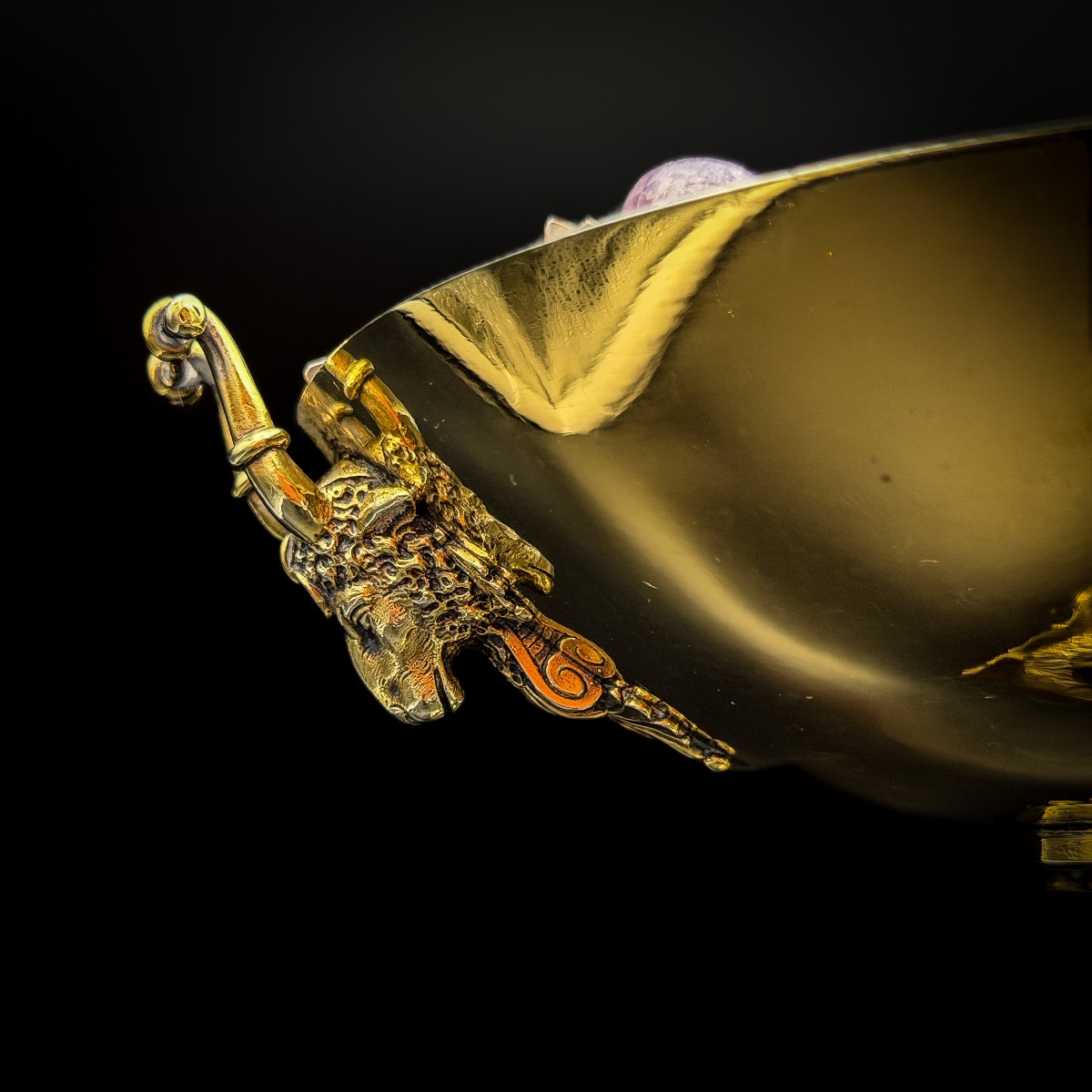
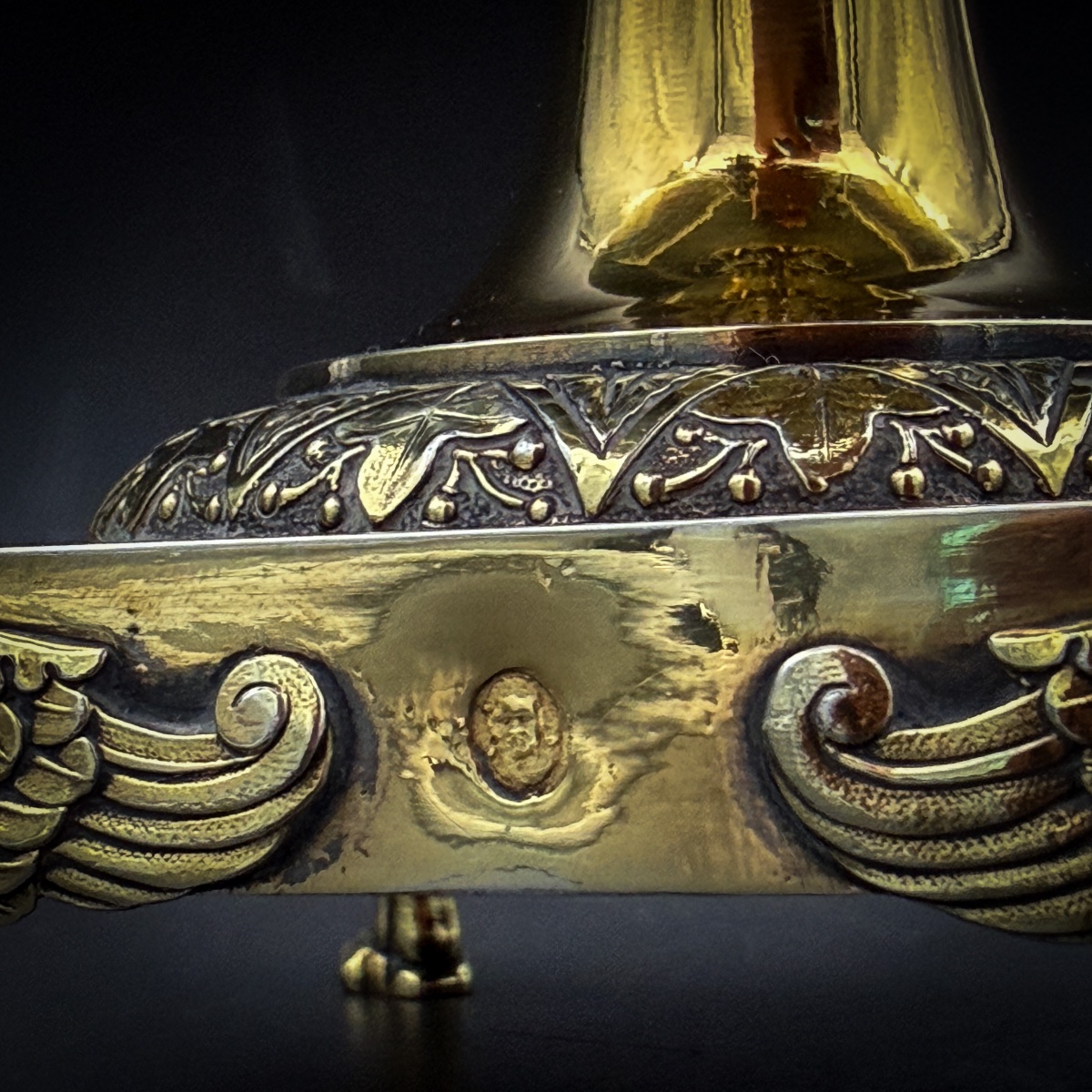
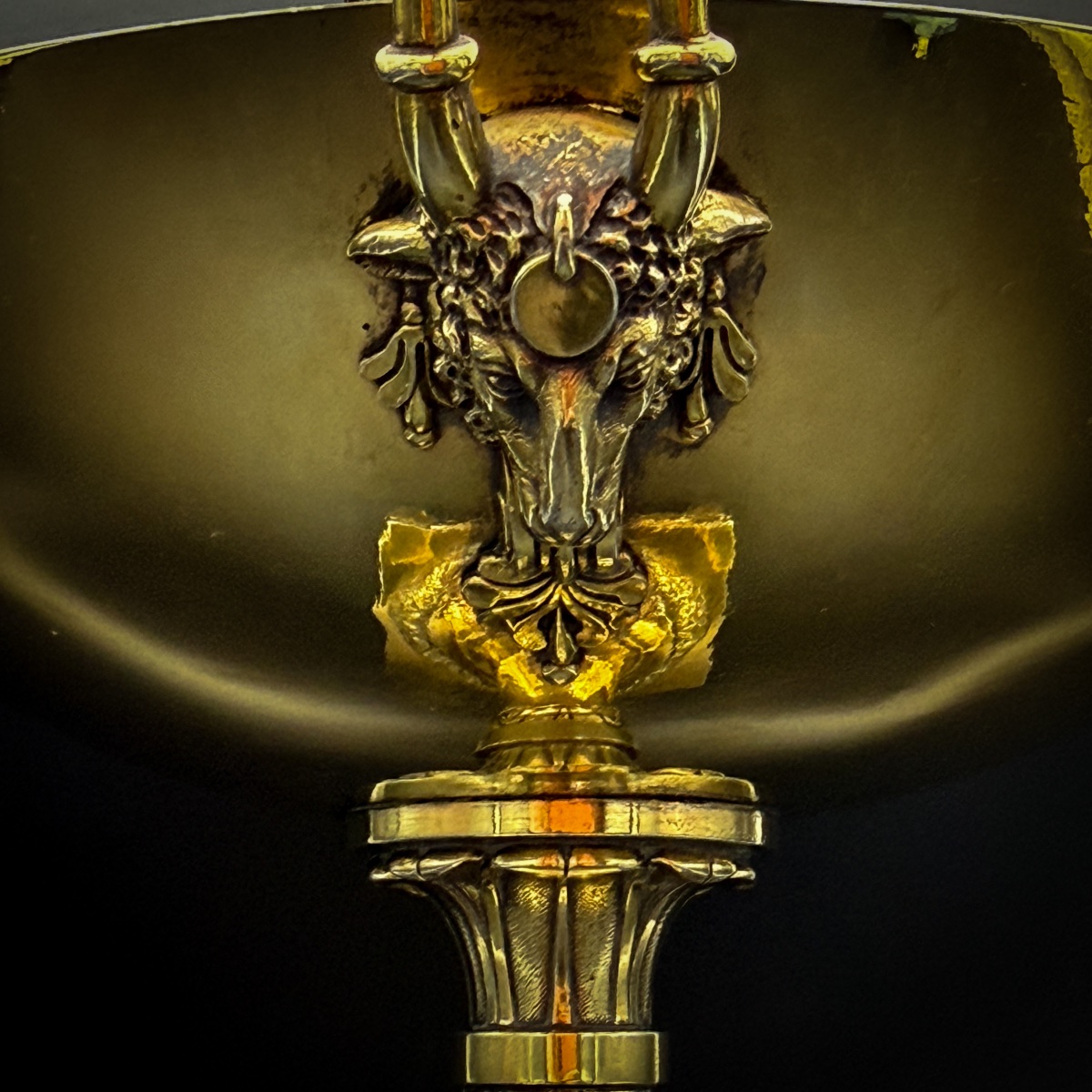
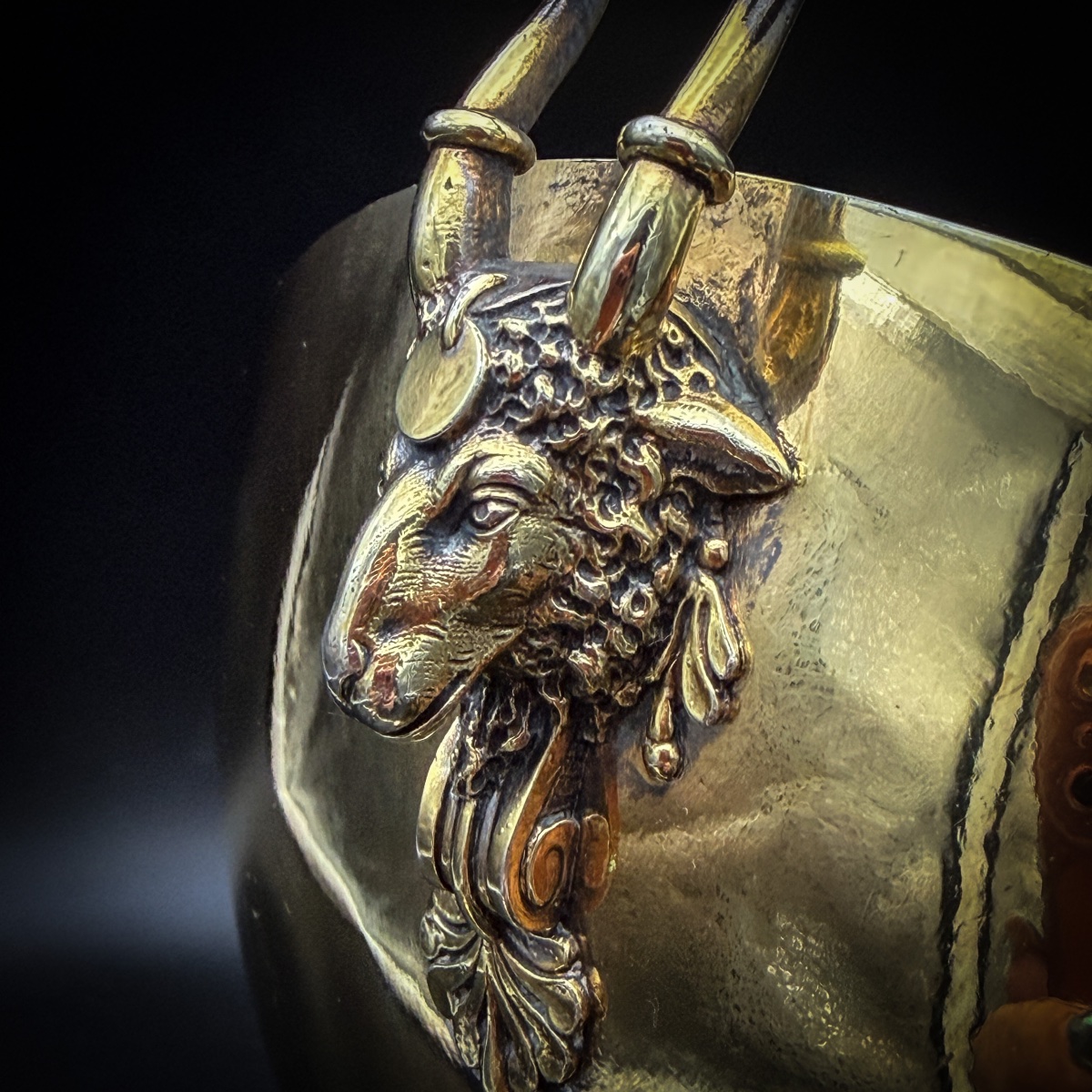
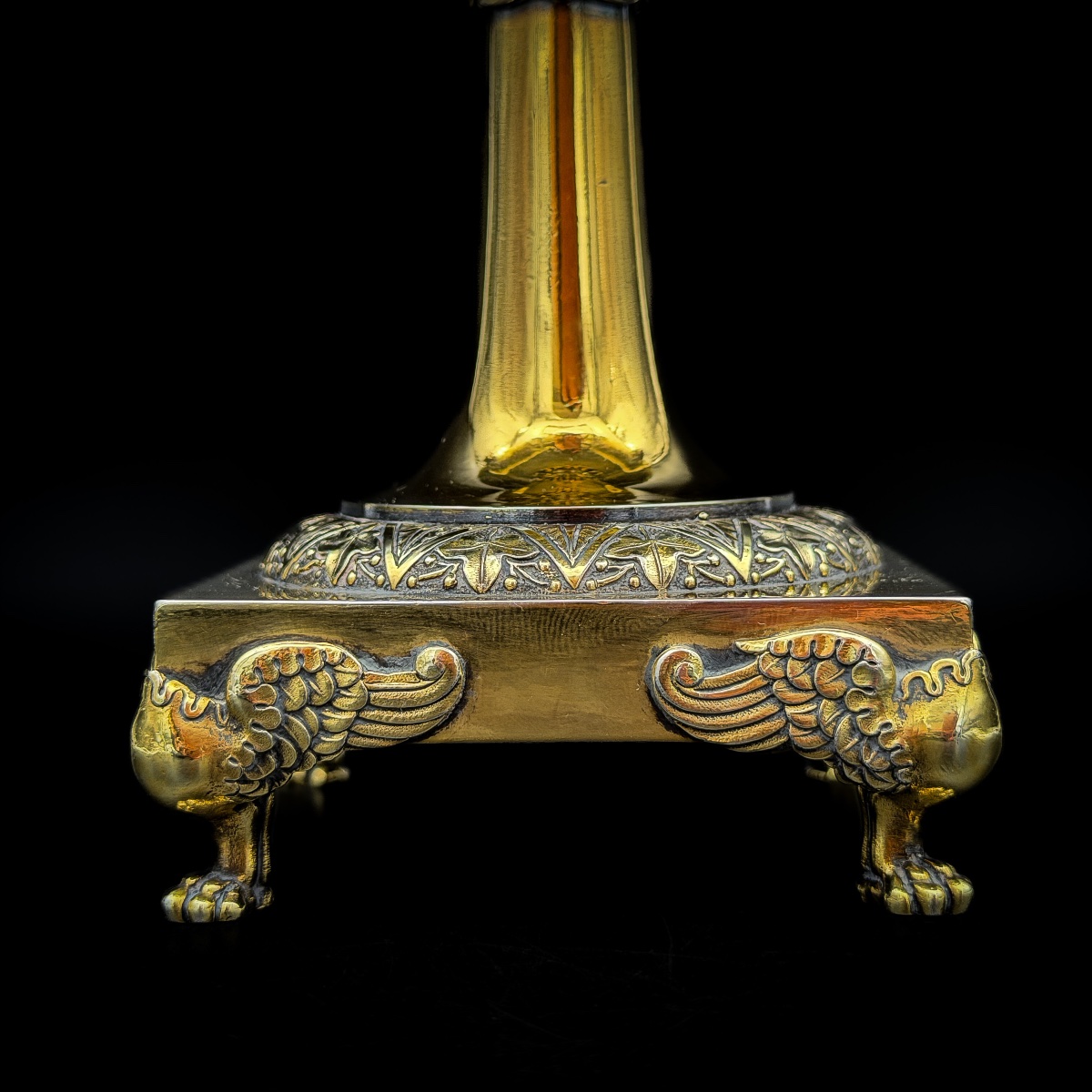
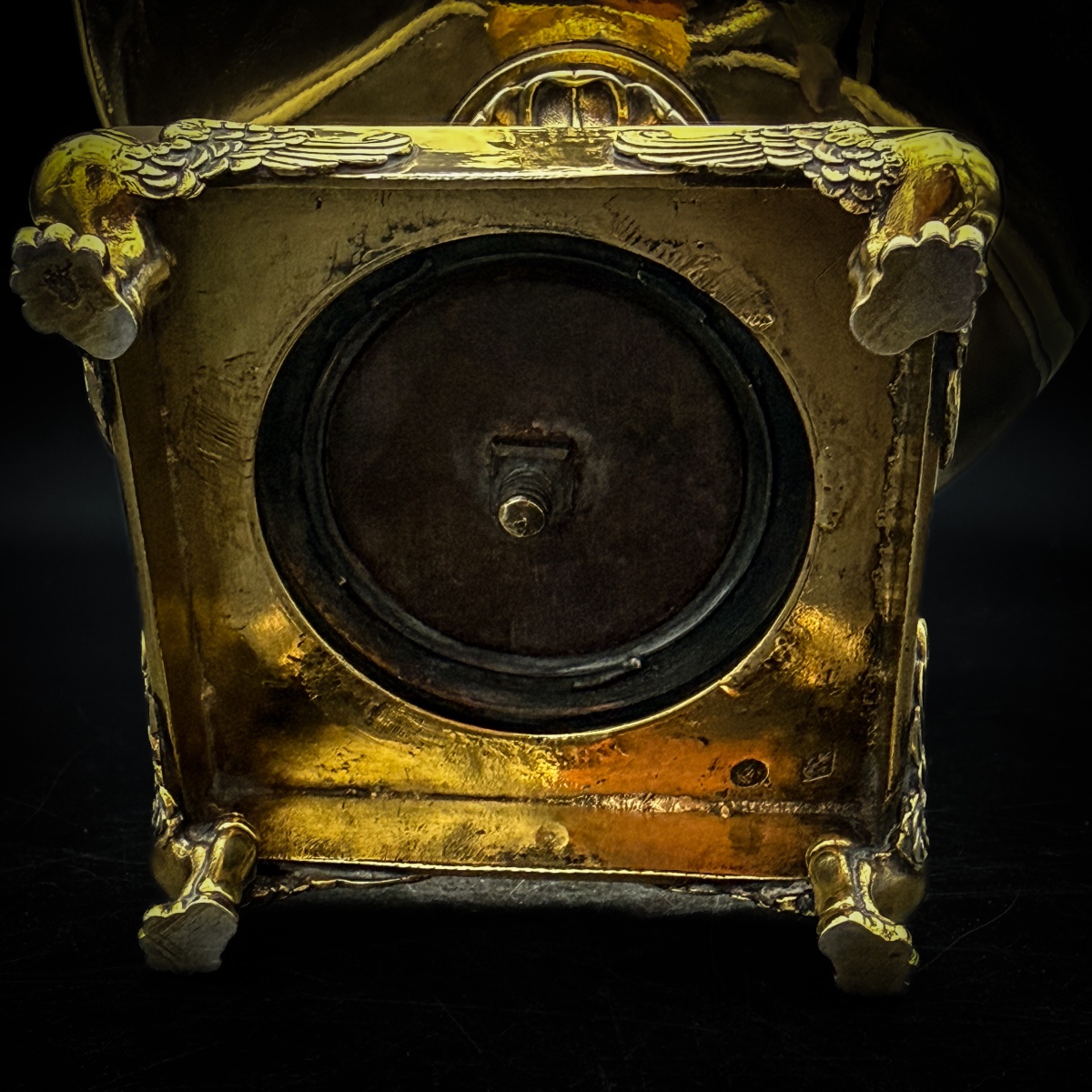
The bowl rests on a remarkable architectural support centred around a fluted stem. Two finely chased ram’s heads, symmetrically positioned on either side of the stem, form one of the principal decorative features. The curved supports descend towards an architectural base decorated with Neoclassical motifs and raised on winged feet terminating in claws.
The composition incorporates the rich ornamental vocabulary inspired by Antiquity that characterises the finest creations of the Consulate and Empire periods: ram’s heads, palmettes, water leaves, fluting, wings and claw feet. Despite the richness of the decoration, the overall composition remains perfectly balanced and demonstrates the exceptional quality of Parisian silverwork at the turn of the 19th century.
The piece retains its original silver-gilt finish, executed using mercury gilding, in superb condition. The depth and warm tone of the gilding particularly enhance the modelling of the two ram’s heads, the finely chased ornamentation and the various reliefs of the support.
Designed as a fruit bowl or centrepiece, this work also possesses a particularly strong decorative quality. Its sculptural silhouette and harmonious proportions allow it to integrate equally well into a classical or contemporary interior. Filled with fruit, it fully recovers its original function as a centrepiece intended to form part of the decoration of the table.
Henry Auguste, a Major Figure in French Silver
Henry Auguste (Paris, 1759 – Port-au-Prince, 1816) belonged to one of the great dynasties of Parisian silversmiths. The son of the celebrated silversmith Robert-Joseph Auguste, he continued the excellence of the family workshop while contributing to the Neoclassical renewal of French silver.
His creations belong to the artistic movement that led French decorative arts from the Neoclassicism of the late reign of Louis XVI towards the monumental aesthetic of the Consulate and Empire periods. His workshop notably executed works based on designs by the great sculptor Jean-Guillaume Moitte, whose drawings played an important role in the renewal of French silver design.
The exceptional quality of Auguste’s work was recognised at the highest level. At the 1802 Exposition des Produits de l’Industrie, Henry Auguste was awarded a gold medal, as was Jean-Baptiste-Claude Odiot.
This distinction helps place Henry Auguste at his rightful level. Although the names of Martin-Guillaume Biennais and Jean-Baptiste-Claude Odiot are today more immediately familiar to the general public, Auguste belonged to the same foremost circle of great French silversmiths active at the turn of the 19th century.
Henry Auguste, Biennais and Odiot
These three great silversmiths, each with his own distinctive artistic language, contributed to the extraordinary development of French silver during the Consulate and Empire periods.
Martin-Guillaume Biennais (1764–1843) became one of Napoleon’s principal suppliers and produced numerous works for the Imperial Household.
Jean-Baptiste-Claude Odiot (1763–1850) also enjoyed a brilliant career under the Empire and worked for several of Europe’s great courts. His international reputation would establish his name permanently as one of the most celebrated in French silver.
Henry Auguste, meanwhile, received one of the most prestigious commissions in the entire history of First Empire silver.
On the occasion of Napoleon’s Coronation in 1804, the City of Paris commissioned Auguste to create the spectacular silver-gilt service intended for the Emperor. This monumental ensemble, produced within an exceptionally short period through the mobilisation of a considerable workshop, was presented to Napoleon at the Hôtel de Ville in Paris in December 1804.
Among the most celebrated surviving elements of this ensemble is the monumental Nef de l’Empereur, now preserved at the Château de Fontainebleau.
Works by Henry Auguste are today preserved in major international public collections. The Metropolitan Museum of Art in New York, for example, holds important works by the silversmith, including a pair of Neoclassical candelabra executed after a design by Jean-Guillaume Moitte, as well as an exceptional gold ewer.
The comparison with Biennais and Odiot is therefore historically relevant: Henry Auguste belonged to the generation of great masters who brought French silver to its apogee at the turn of the 18th and 19th centuries. Although his name is today less immediately familiar than those of Biennais or Odiot, the importance of the commissions entrusted to him, the distinctions he received and the presence of his works in major museum collections all testify to his standing.
The present fruit bowl is a remarkable example of the silverwork of this period: a rich vocabulary derived from Antiquity, exceptional chasing, architectural balance and the sumptuous character of silver-gilt combine in an object that is at once functional, sculptural and highly decorative.
Characteristics
Silversmith: Henry Auguste (1759–1816)
Origin: Paris, France
Period: Empire
Date: 1798–1809
Material: solid silver, first standard, 950/1000 fineness
Finish: silver-gilt, original mercury gilding
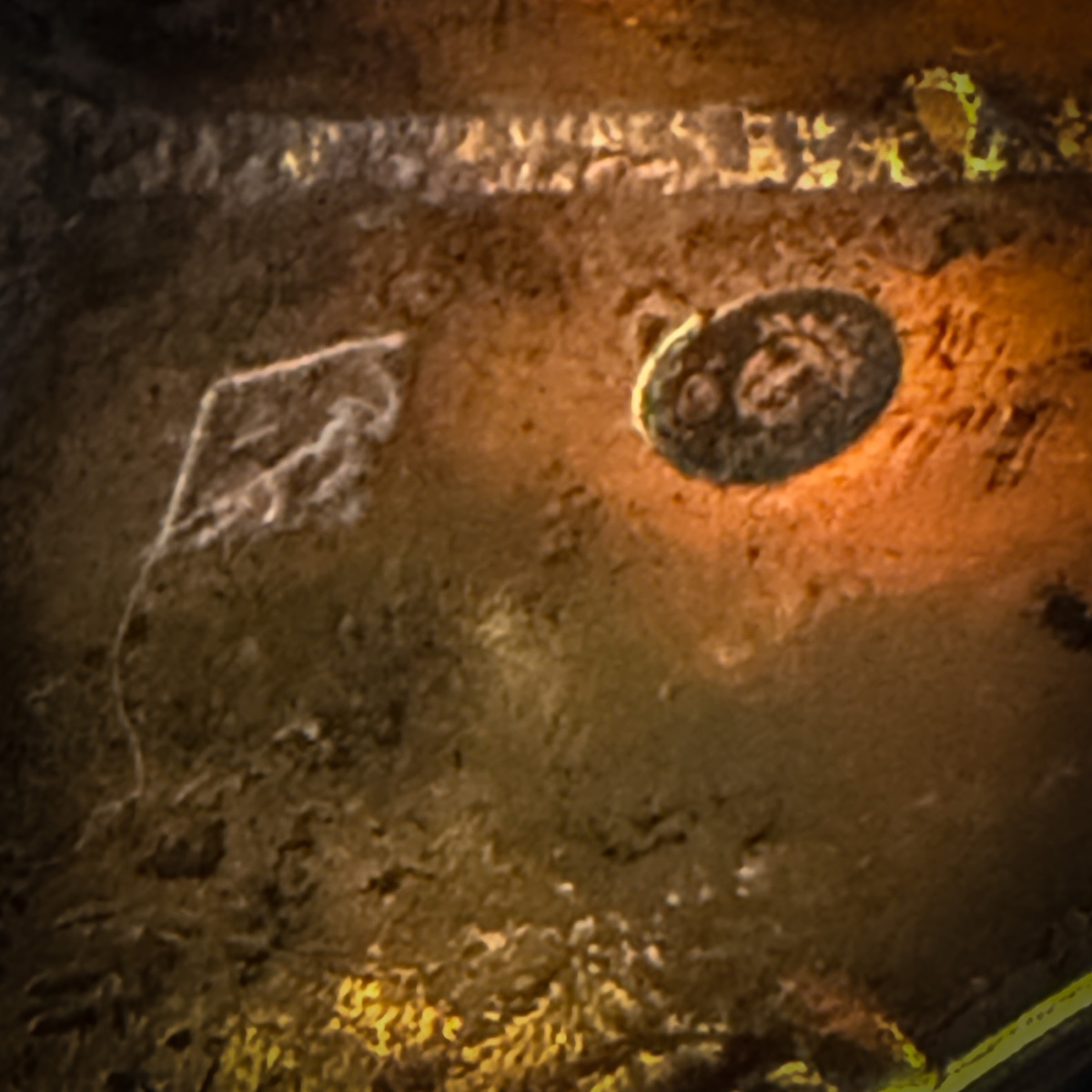
Hallmarks: Henry Auguste’s maker’s mark, perfectly struck; Paris first-standard First Cockerel hallmark, 1798–1809
Height: 16 cm
Diameter: 17 cm
Weight: 650 g
Condition: superb condition, with the original mercury gilding remarkably well preserved.
The hardstone fruits shown in some of the photographs are for decorative presentation only and are not included with the fruit bowl.
Period: 19th century
Style: Consulat, Empire
Condition: Excellent condition
Material: Vermeil
Reference (ID): 1813771
Availability: In stock