

François Vion - Louis XVI-era "lion" Clock, Circa 1770 - Patinated And Gilded Bronze
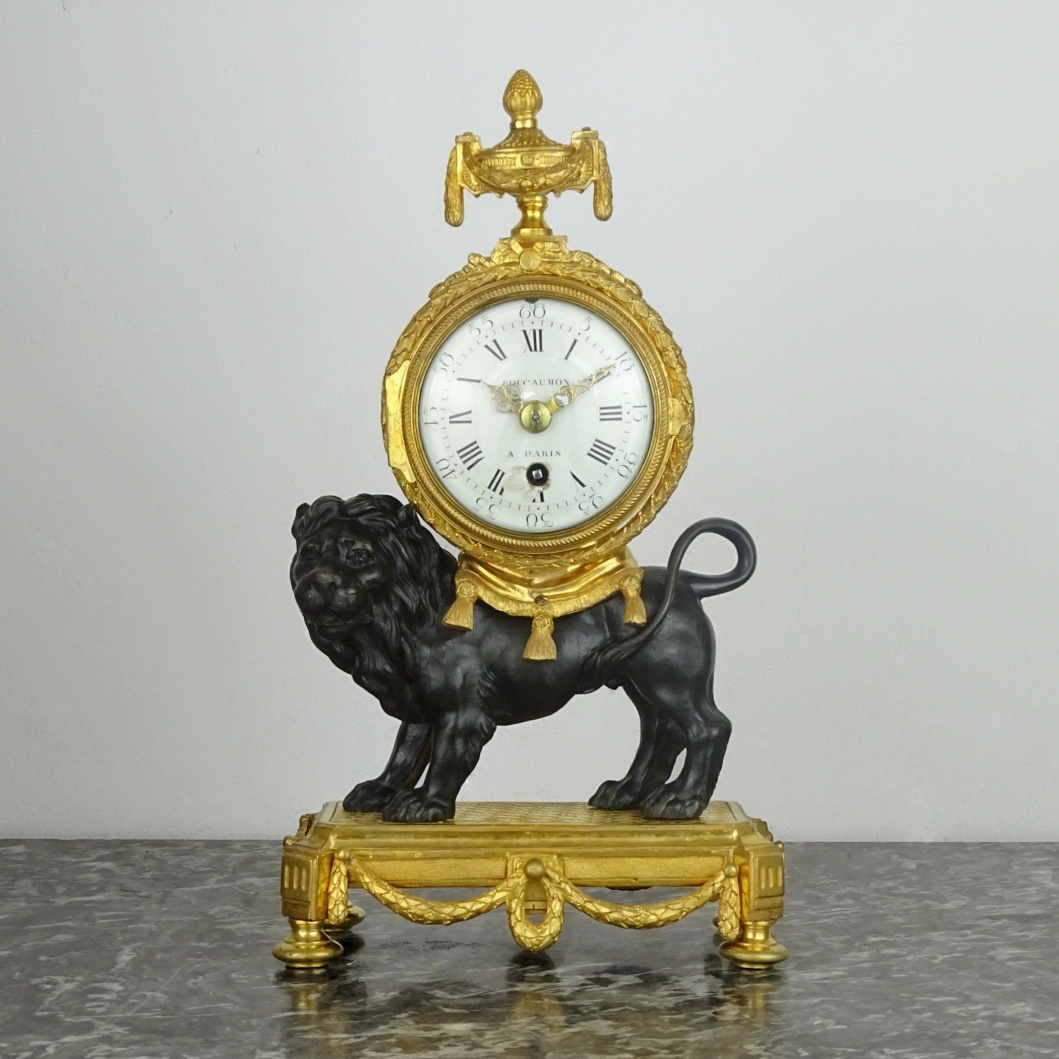
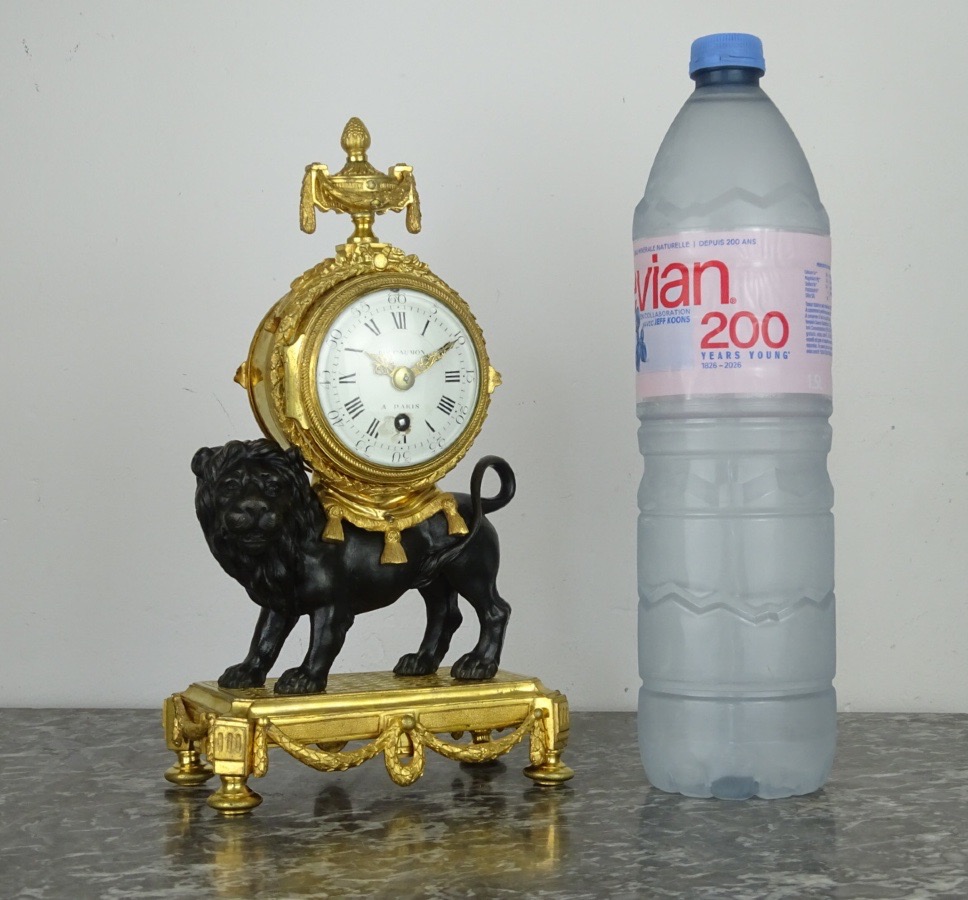
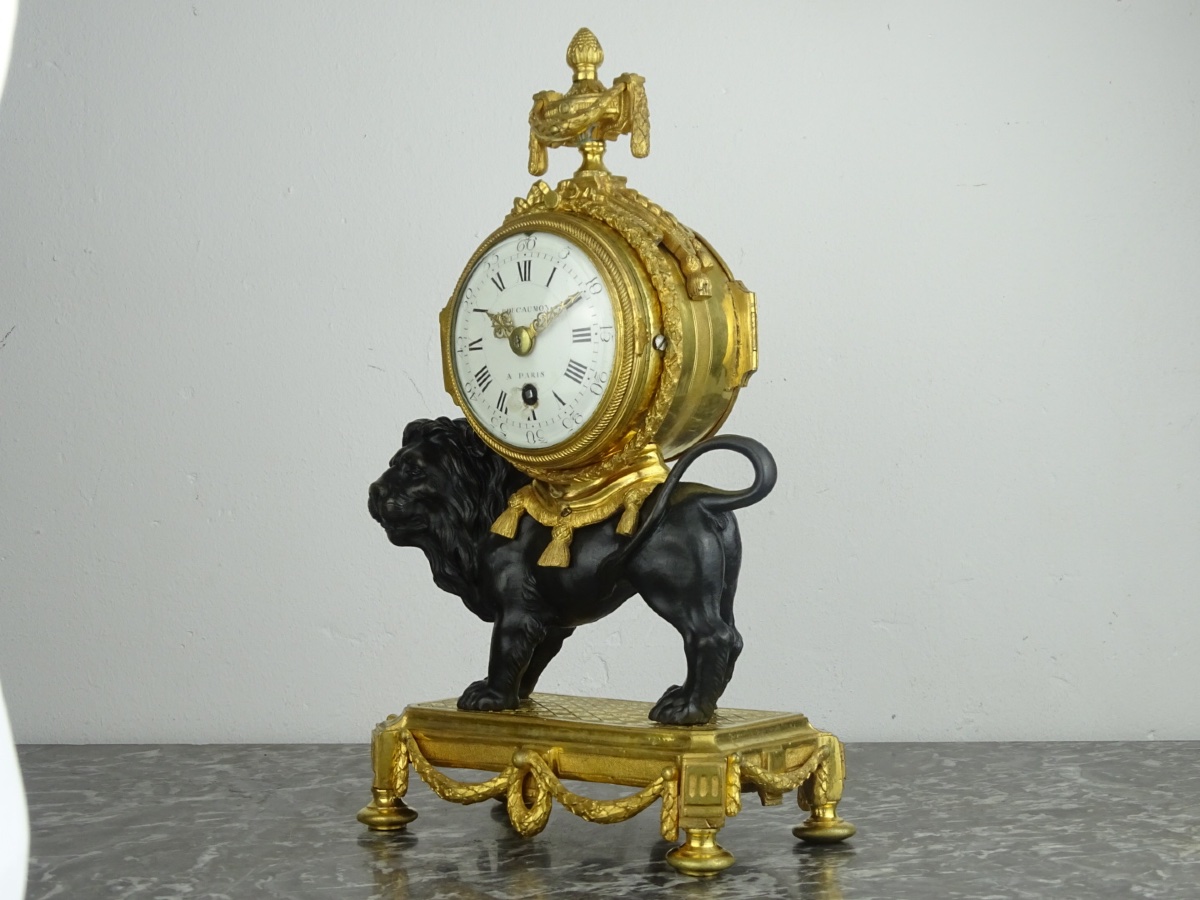
A very fine and rare Louis XVI period “Lion” mantel clock, made in Paris circa 1770, in finely chased, mercury-gilt and patinated bronze. The enamel dial is signed “BOUCAUMON À PARIS.”
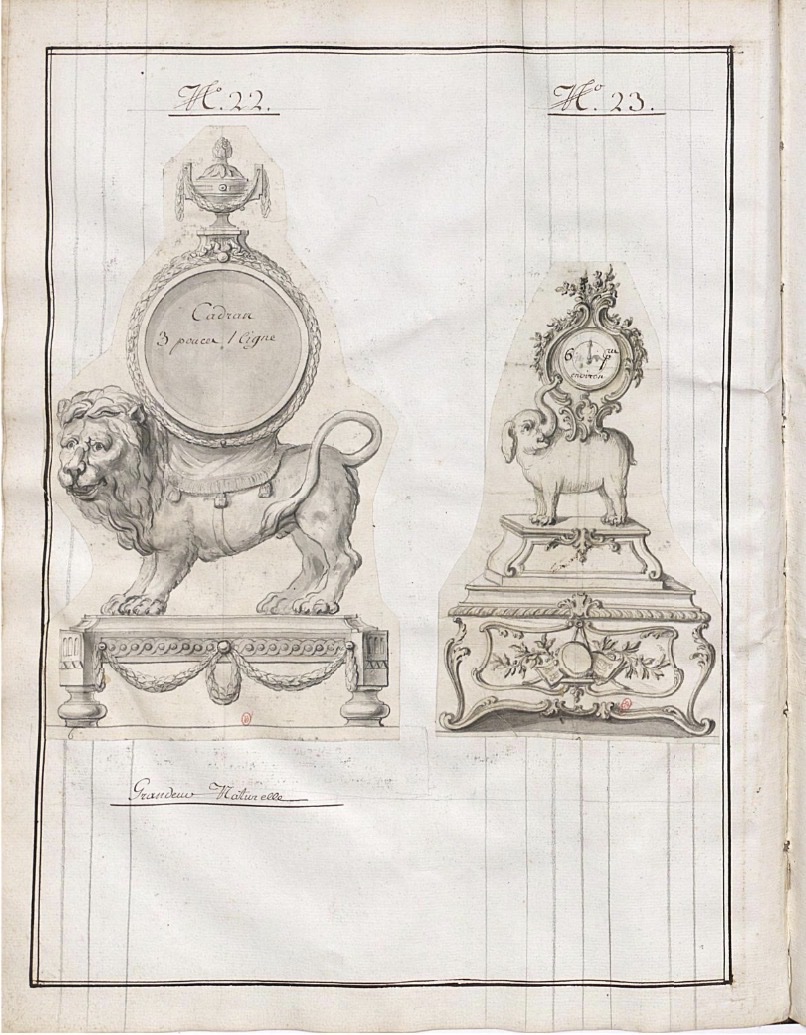
This particularly elegant model was executed after a design by the bronzier François Vion, who was received as a maître fondeur-ciseleur in Paris in 1764 and ranks among the leading bronze makers of the second half of the 18th century. The design for this clock belongs to a group of models by Vion now preserved at the Bibliothèque Jacques Doucet in Paris, and was notably published by Hans Ottomeyer and Peter Pröschel in Vergoldete Bronzen.
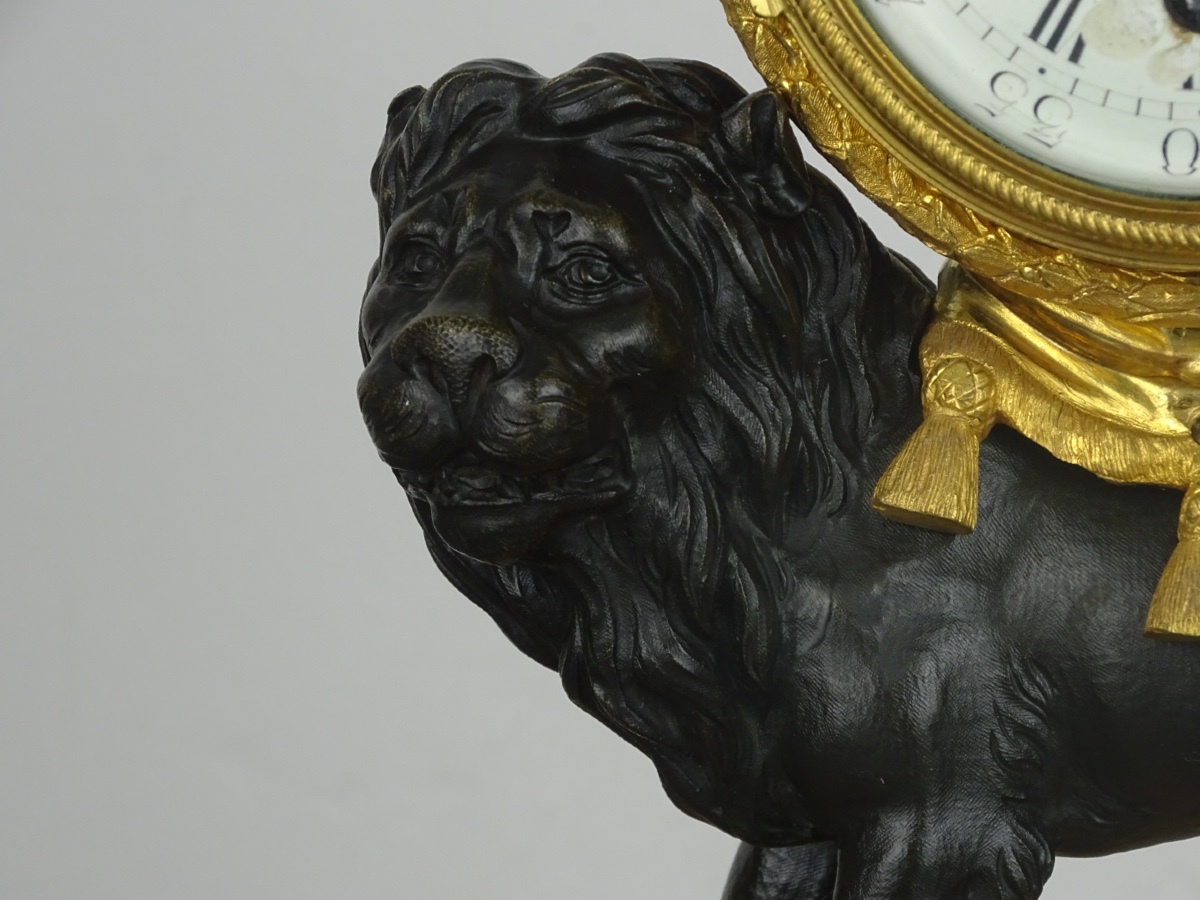
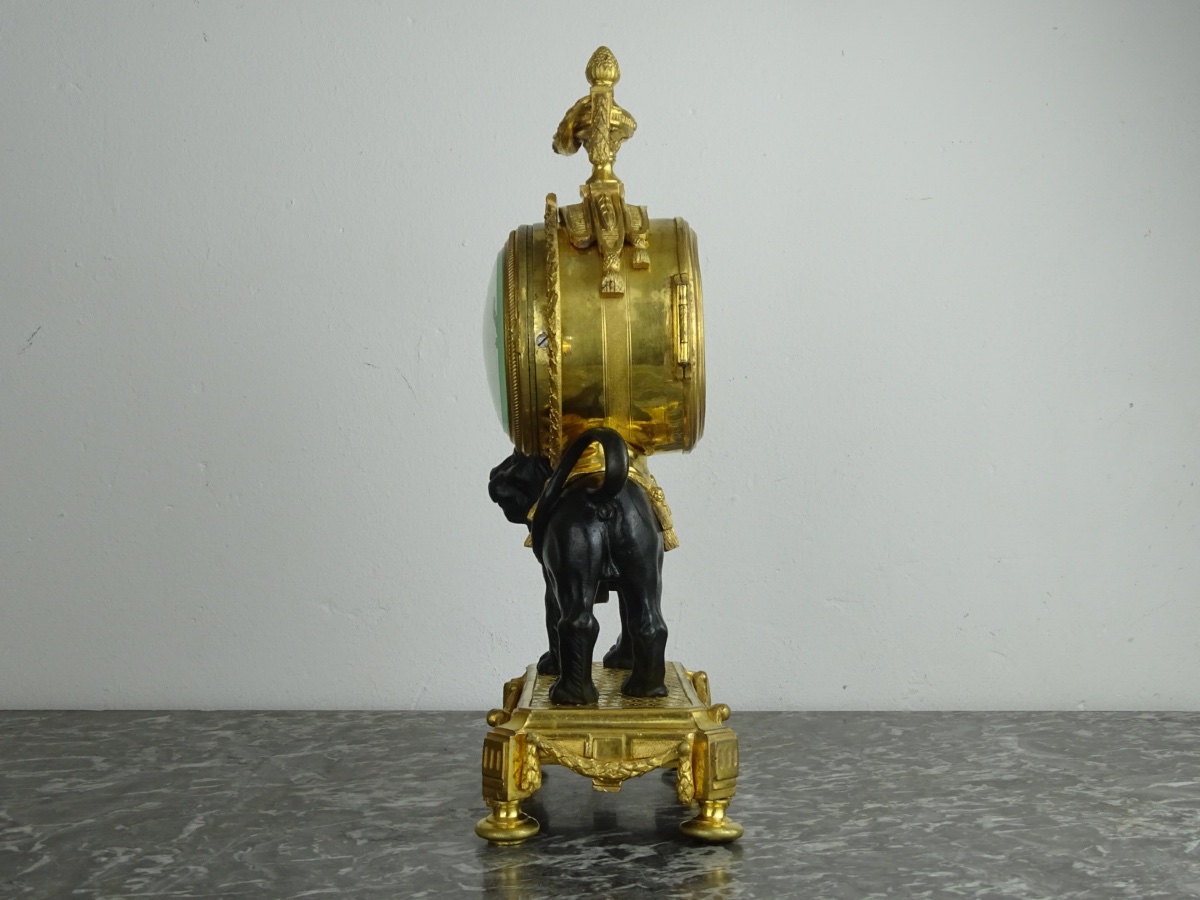
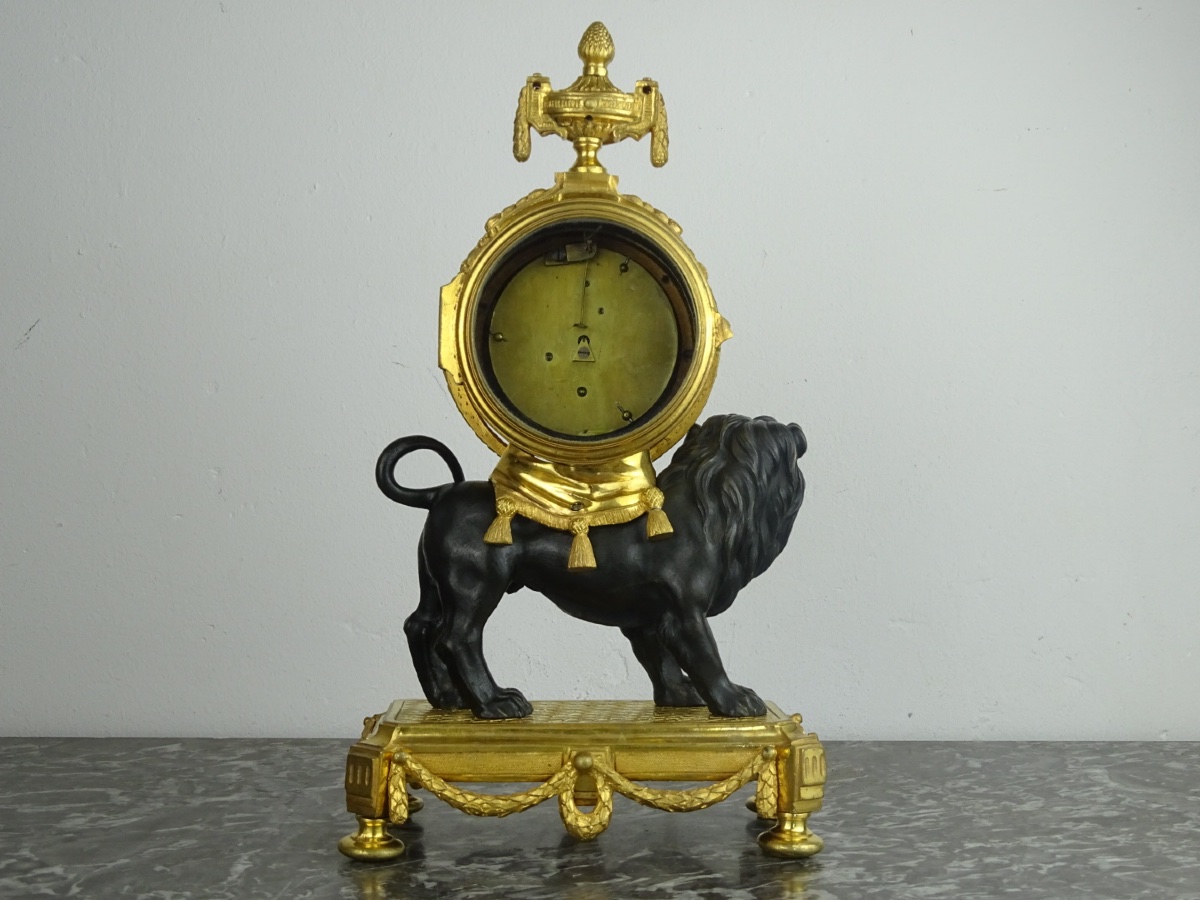
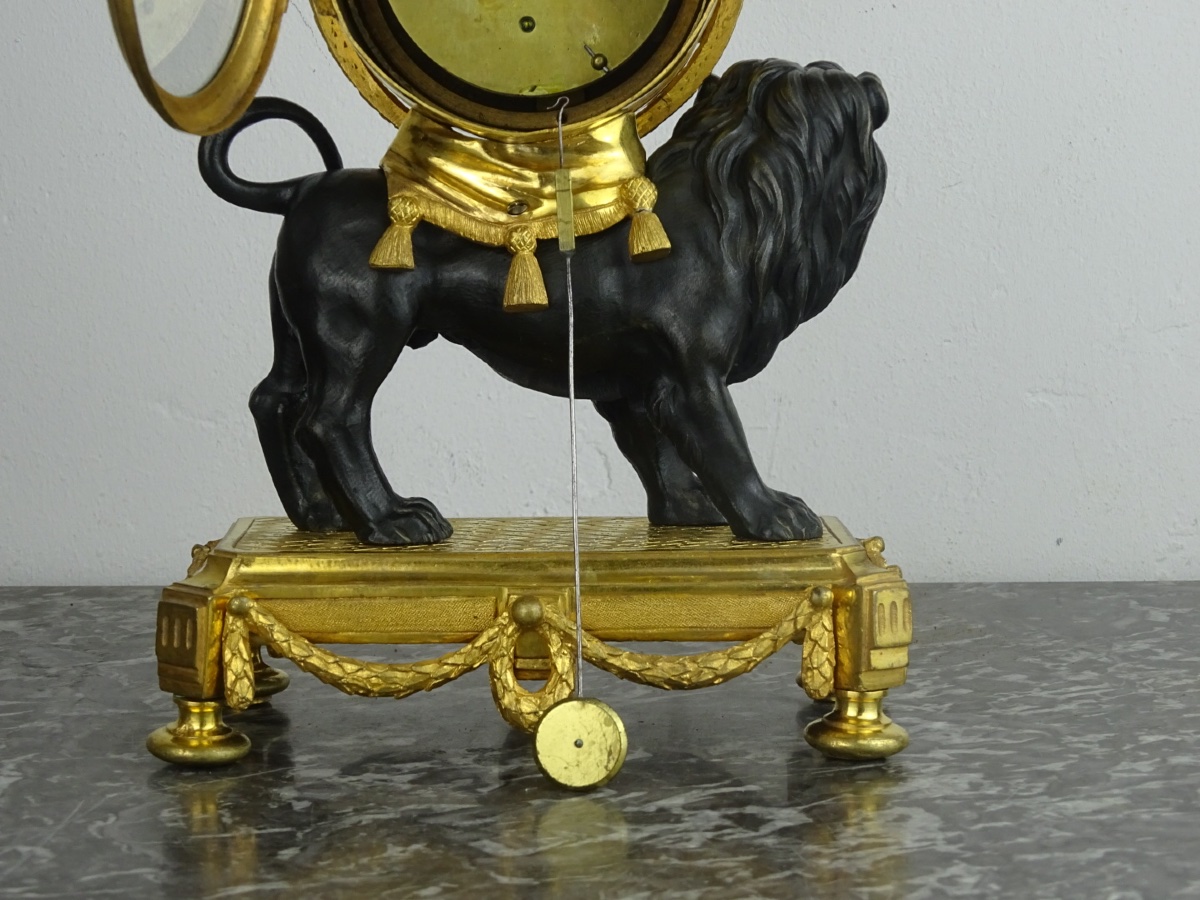
The composition is dominated by a superb lion in dark-patinated bronze, standing with its head turned towards the viewer. The quality of the modelling is particularly evident in the treatment of the mane, face and musculature. Resting upon its back is the movement, housed within a richly ornamented circular gilt-bronze case.
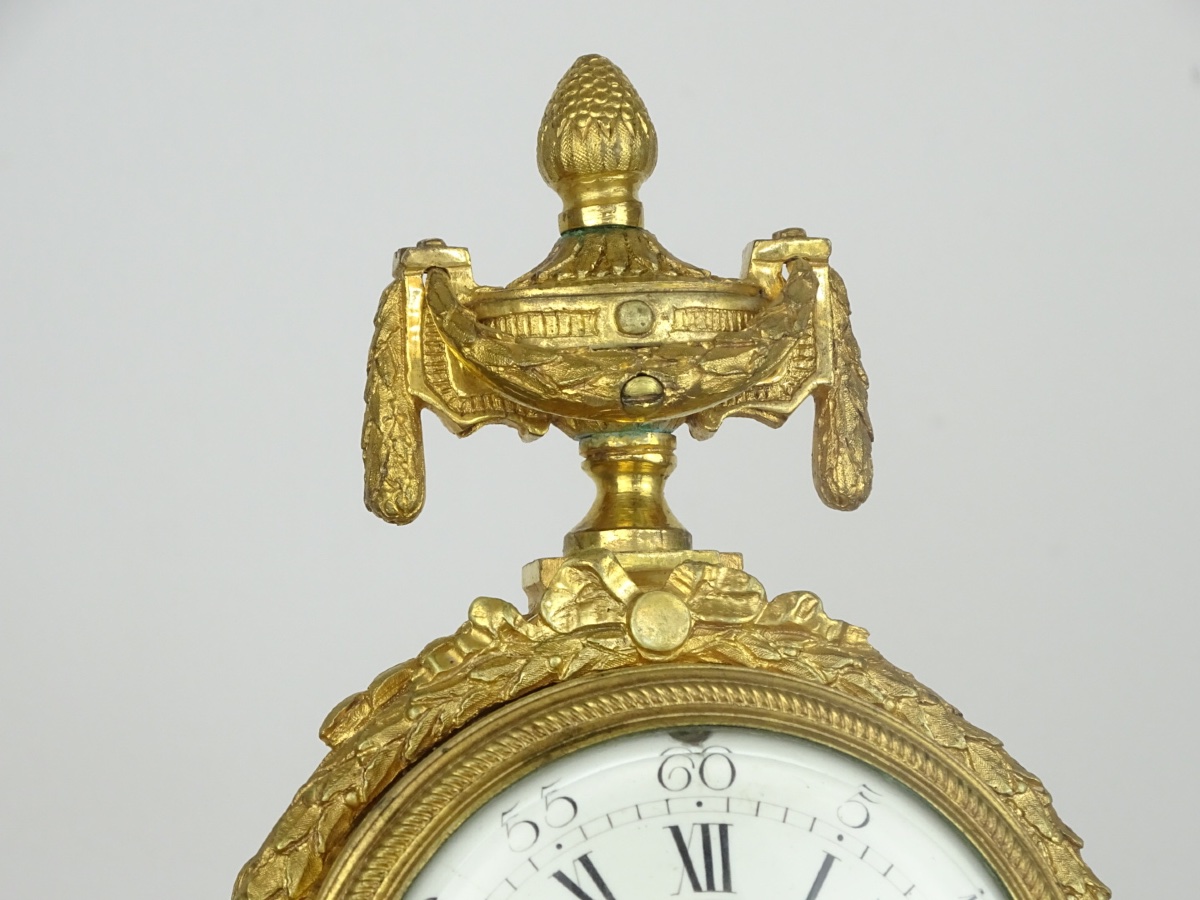
The latter is surrounded by foliate friezes and ribbon motifs and surmounted by an elegant covered vase in the Antique manner, adorned with garlands and foliate pendants and crowned by a pine cone finial. The refinement of these ornaments, together with the contrast between the gilding and the deep patina of the lion, gives the composition its remarkable presence.
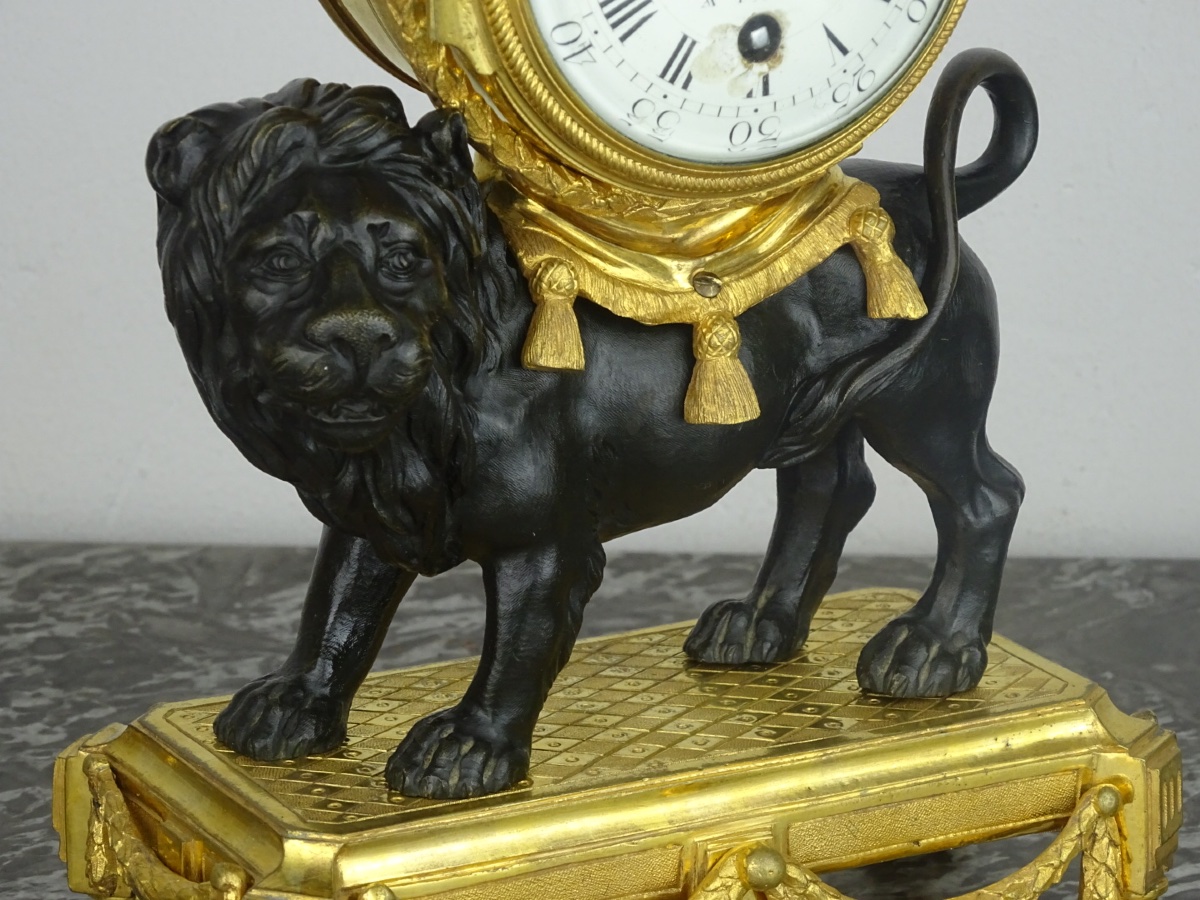
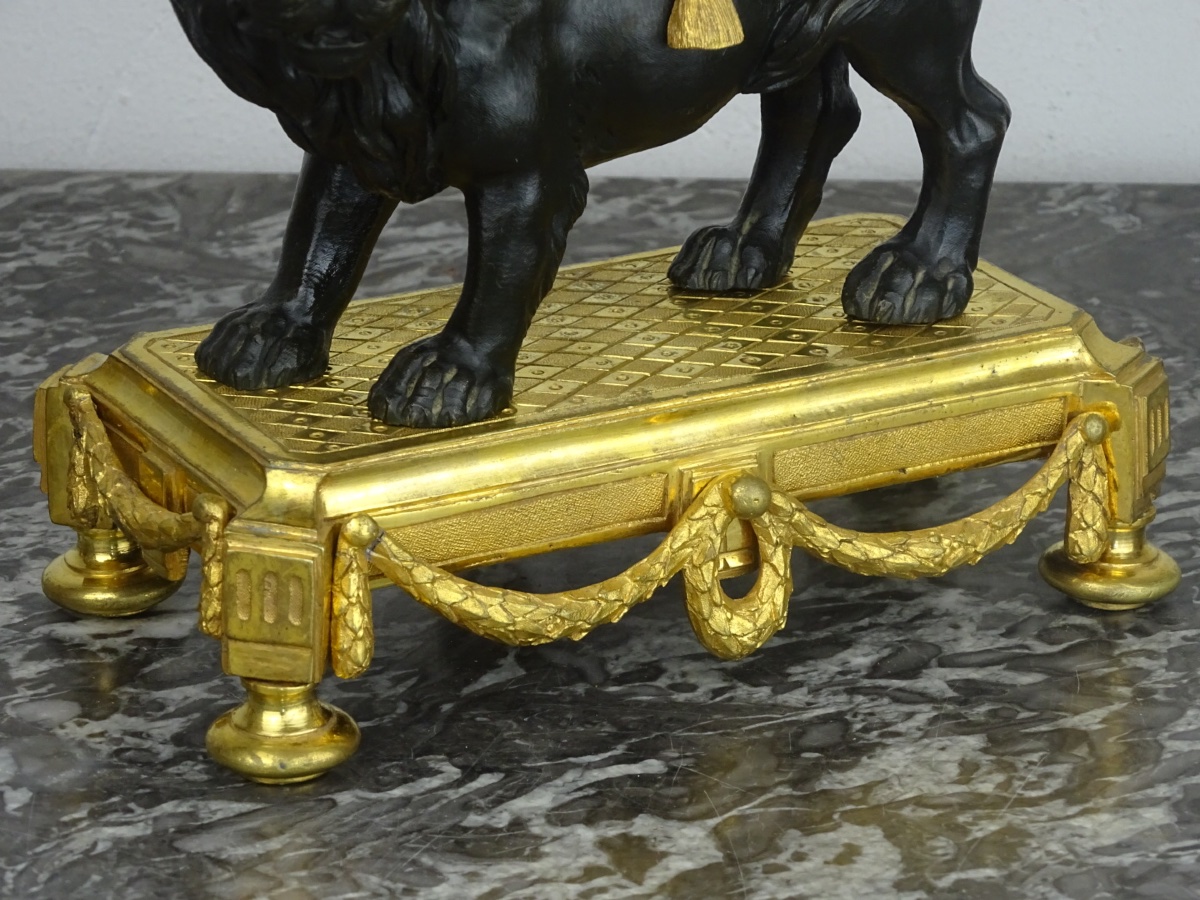
The lion stands upon a rectangular base entirely executed in gilt bronze. Its upper surface is finely decorated, while the frieze is adorned with laurel garlands, suspended from the corners and joined at the centre around a wreath. The whole rests upon four circular feet.
The white enamel dial, signed “BOUCAUMON À PARIS,” indicates the hours in Roman numerals and the minutes in Arabic numerals. It retains its elegant pierced gilt-bronze hands.
A model documented in major collectionsThe importance of this clock is further enhanced by the historical significance of the model created by François Vion.
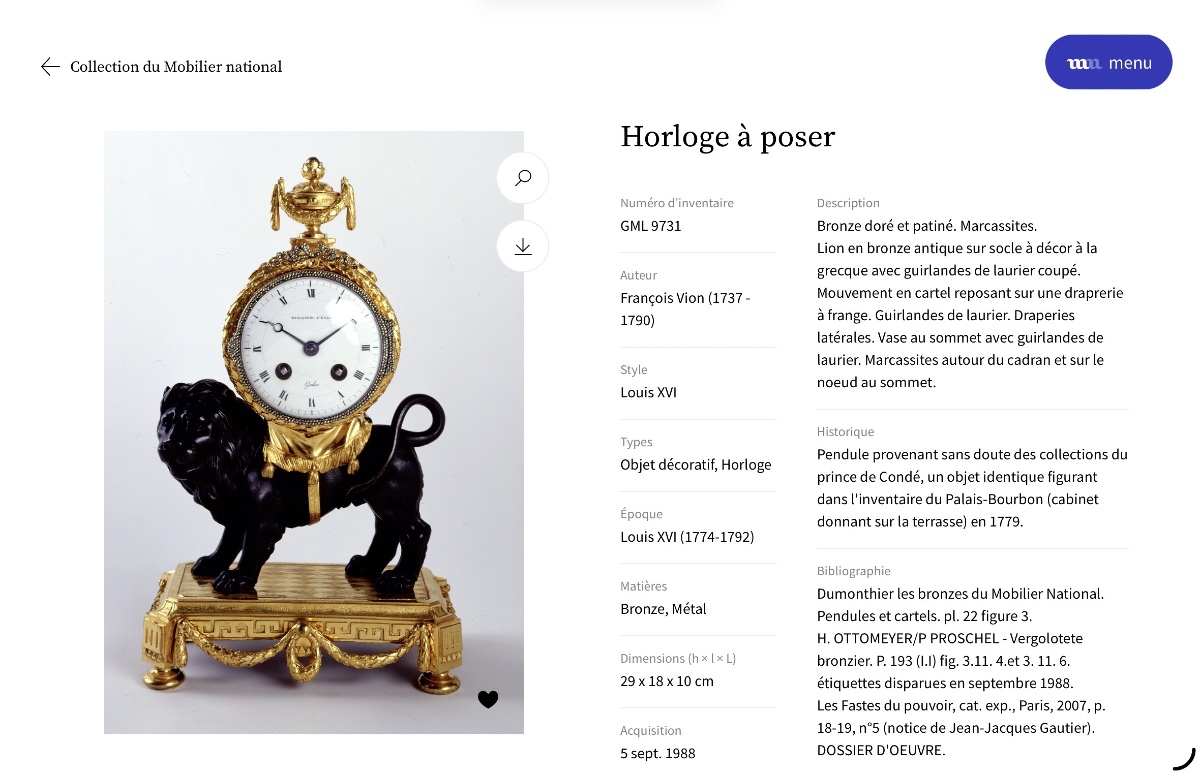
An example attributed to Vion is today preserved in the collections of the Mobilier national. A clock of this model is recorded as early as 1779 at the Palais-Bourbon, in the collection of Louis-Joseph de Bourbon, Prince of Condé, demonstrating the prestige already enjoyed by this composition during the 18th century.
Other examples and variants are documented in important collections, notably at Pavlovsk Palace near Saint Petersburg. The Musée Jacquemart-André in Paris also preserves a lion clock executed after François Vion’s model.
The model is furthermore known with the signatures of various Parisian clockmakers, a perfectly normal practice in the 18th century: the bronzier supplied the case, while the clockmaker fitted it with his movement.
François VionReceived as a maître fondeur-ciseleur in 1764, François Vion distinguished himself particularly through the creation of clock cases in which bronze became sculpture in its own right. Mythological figures, animals and allegorical compositions occupy an essential place in his work and are no longer merely decorative elements surrounding the movement.
The Lion clock belongs fully to this important body of work: here, the animal itself becomes the architectural support for the clock. The survival of the preparatory design, together with the existence of several examples in prestigious collections, allows this model to be identified with precision among Vion’s important creations.
A bedroom clock movementAn interesting feature of the clock is its silent bedroom movement, without striking mechanism, with silk-thread suspension. The absence of a striking mechanism is therefore consistent with the more intimate purpose of this type of clock, intended to indicate the time without disturbing a bedroom or private cabinet.
Its proportions, richness without heaviness, and delicacy of decoration make it particularly suited to display on a dressing table, chest of drawers or secrétaire, perhaps alongside jewellery, necessaires or other precious objects.
It has something of the character of a jewel-like object: the contrast between the dark bronze and the gilding, the sculptural lion, the Antique-style vase and the refinement of the smallest ornaments give it a remarkable presence without requiring the imposing dimensions of a large drawing-room clock.
ConditionThe clock is preserved in a very fine overall condition, particularly noteworthy for an original Louis XVI period piece. The bronzes retain the quality of their chasing and a beautiful mercury gilding, while the lion preserves its old patina.
The original movement is in working order, with silk-thread suspension, and is complete with its pendulum.
A small chip to the enamel surrounding the single winding hole should be noted and is visible in the photographs. If desired, this may be entrusted to a specialist restorer and professionally restored; this can be arranged upon request and subject to quotation.
During dismantling, a small flower-shaped mark chased beneath the principal base was also discovered. Probably an atelier mark or assembly mark, it represents a particularly interesting detail of the manufacture of the piece, although its precise significance cannot currently be established with certainty. A few fixing washers have been replaced at a later date, a minor technical intervention with no bearing on the age of the clock, its bronzes or its original movement.
By virtue of its period, the quality of its bronzes, its movement signed Boucaumon à Paris, its remarkable state of preservation and, above all, a model directly documented by a surviving design by François Vion, this clock represents a very fine example of the great Parisian bronze and clockmaking tradition of the Louis XVI period.
A rare model on the market, represented today in several prestigious collections, combining the historical significance of a genuine 18th-century work of art with the charm and refinement of a particularly decorative object.
Paris, Louis XVI period, circa 1770.
Chased, mercury-gilt and patinated bronze.
Dial signed “BOUCAUMON À PARIS.”
Model after François Vion, maître in 1764.
Silent bedroom movement with silk-thread suspension, without striking mechanism.
Hans Ottomeyer & Peter Pröschel, Vergoldete Bronzen, Munich, 1986, vol. I, p. 193.
Jean-Dominique Augarde, Les Ouvriers du Temps, Geneva, 1996.
Giacomo & Aurelia Wannenes, Les plus belles pendules françaises de Louis XIV à l'Empire, Florence, 2013.
Period: 18th century
Style: Louis 16th, Directory
Condition: Good condition
Material: Bronze
Height: 29 cm
Reference (ID): 1806690
Availability: In stock