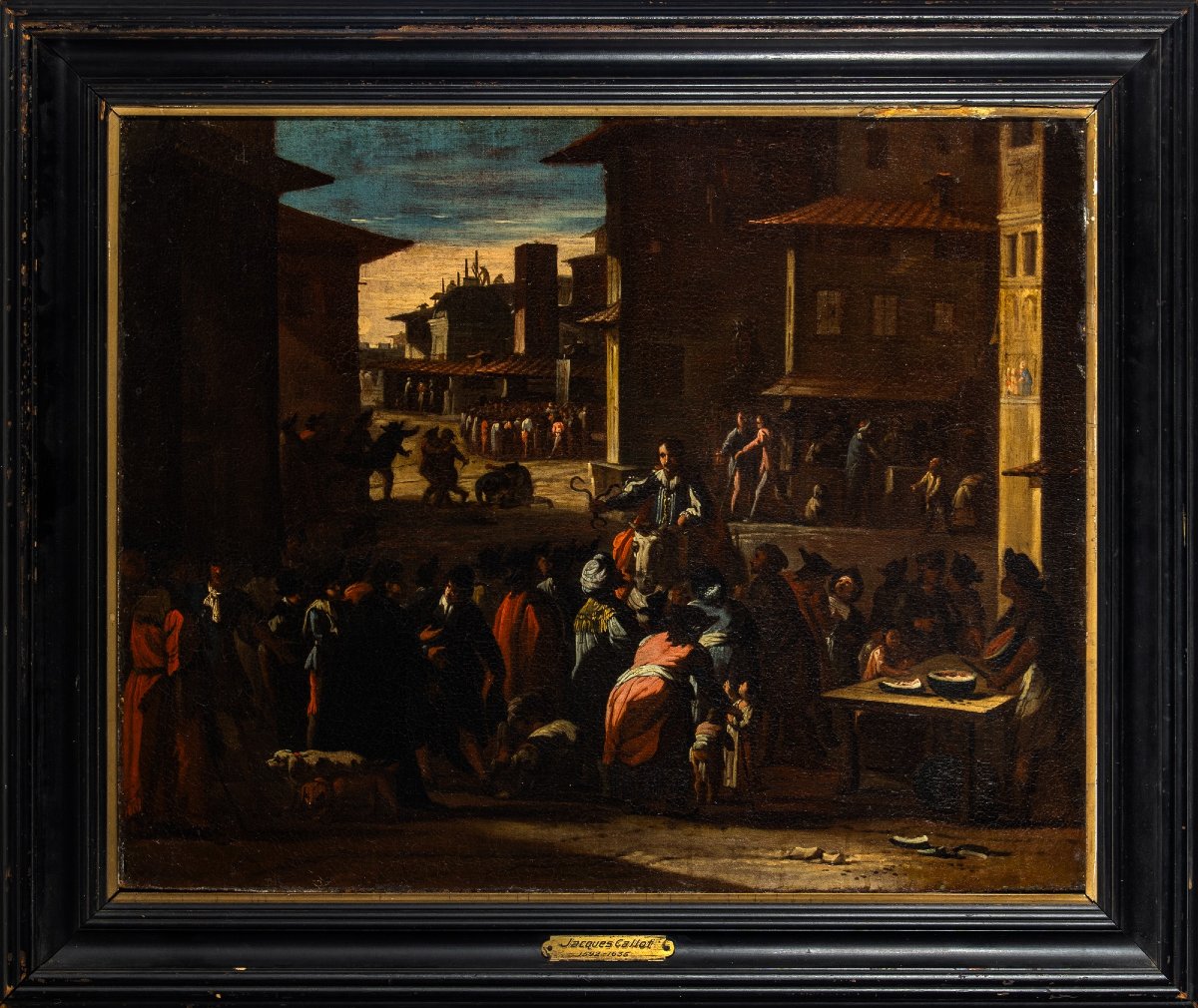


Charlatan With Snakes In A Roman Square, Bamboccianti, 17th Century
Charlatan with Snakes in a Roman Square, Bamboccianti, 17th Century
Oil on canvas
58.4 × 71.4 cm
With frame: 75 × 88.9 cm
Roman-Flemish milieu of the Bamboccianti
Rome, mid-17th century
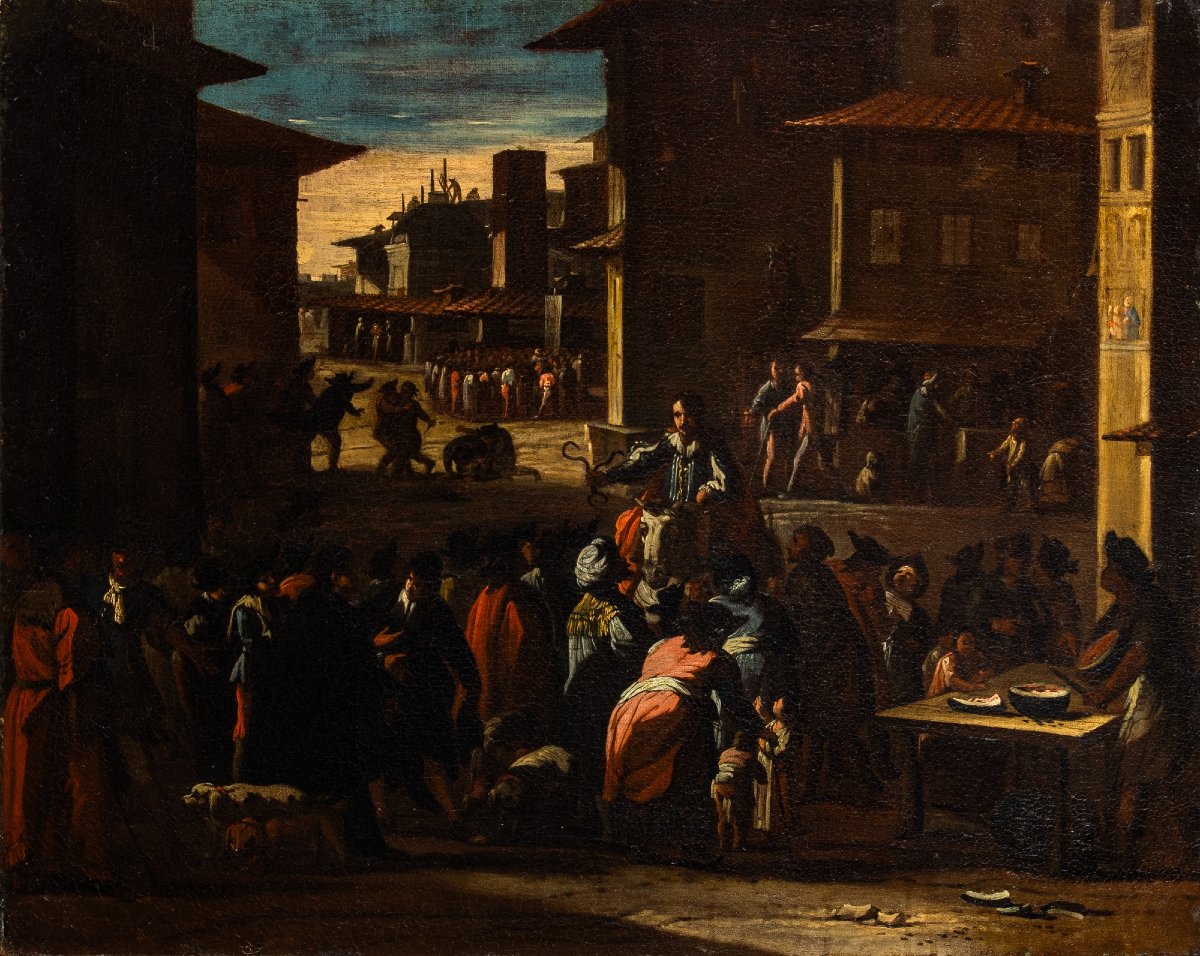
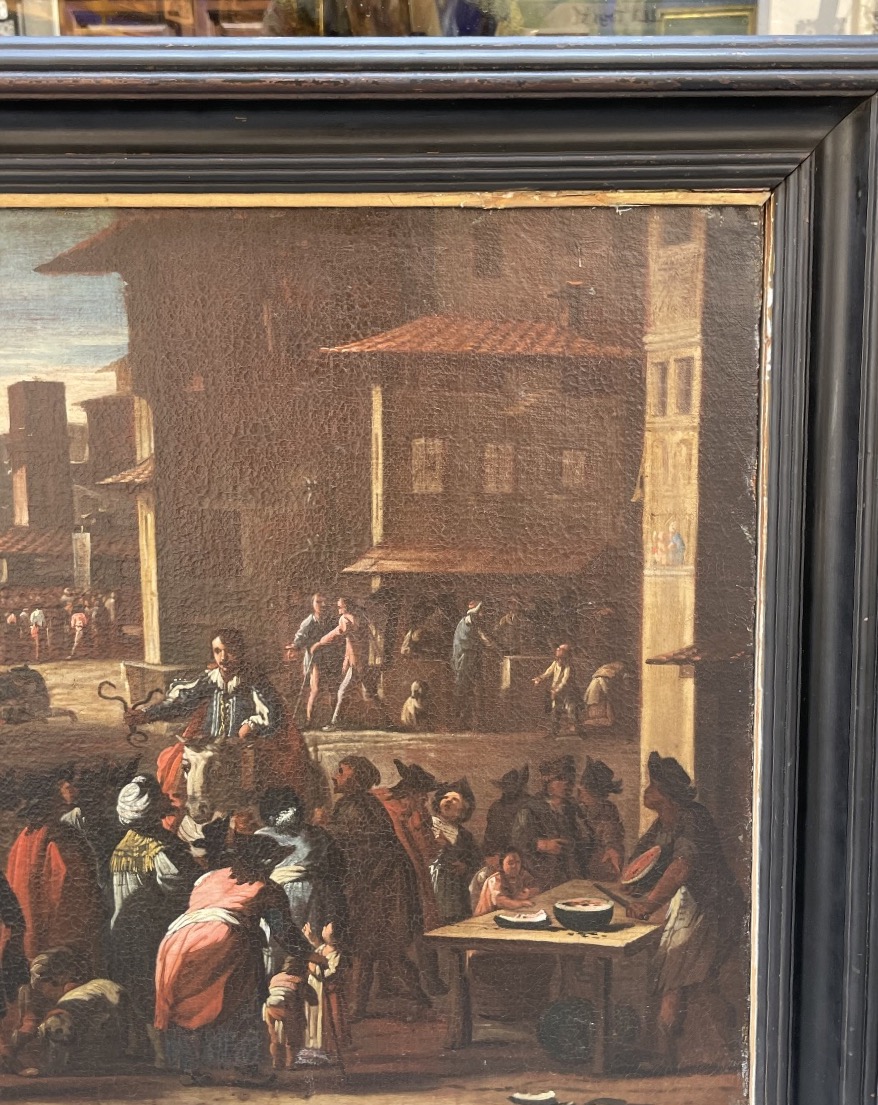
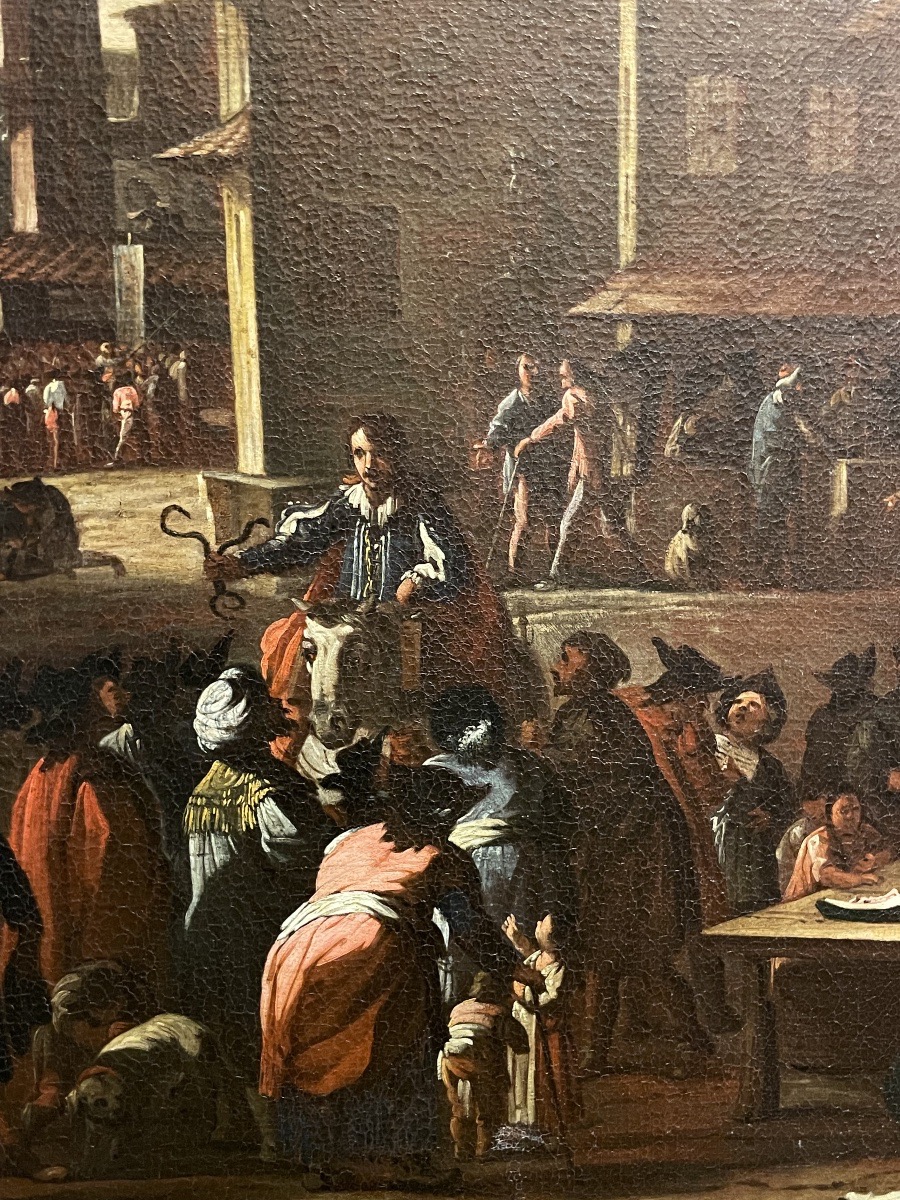
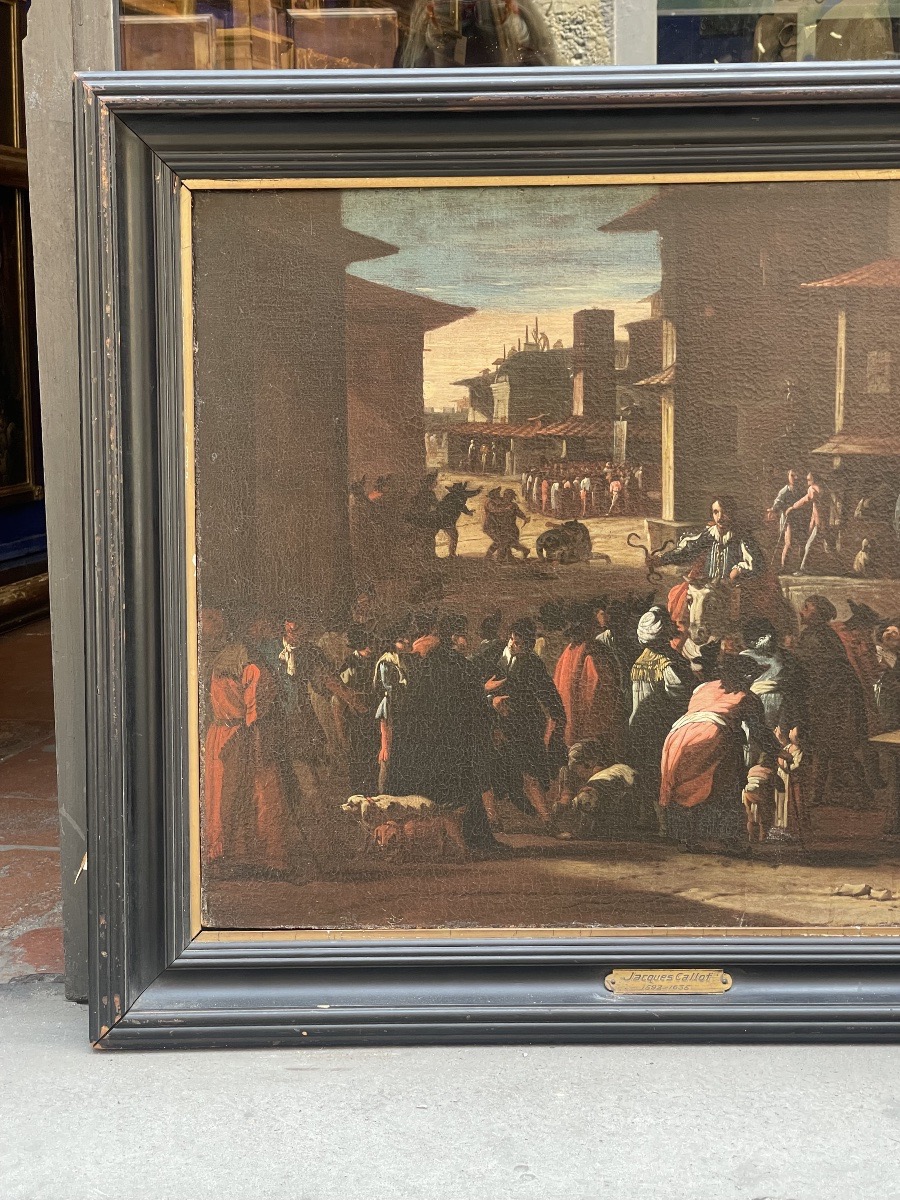
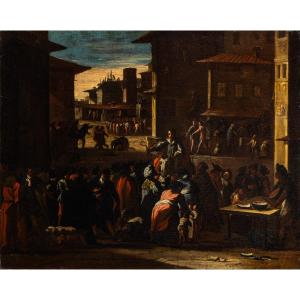
At the centre of the square, a charlatan on horseback displays snakes to the crowd, evoking the world of mountebanks, sellers of remedies and antidotes against poisons who animated Italian cities during the 17th century.
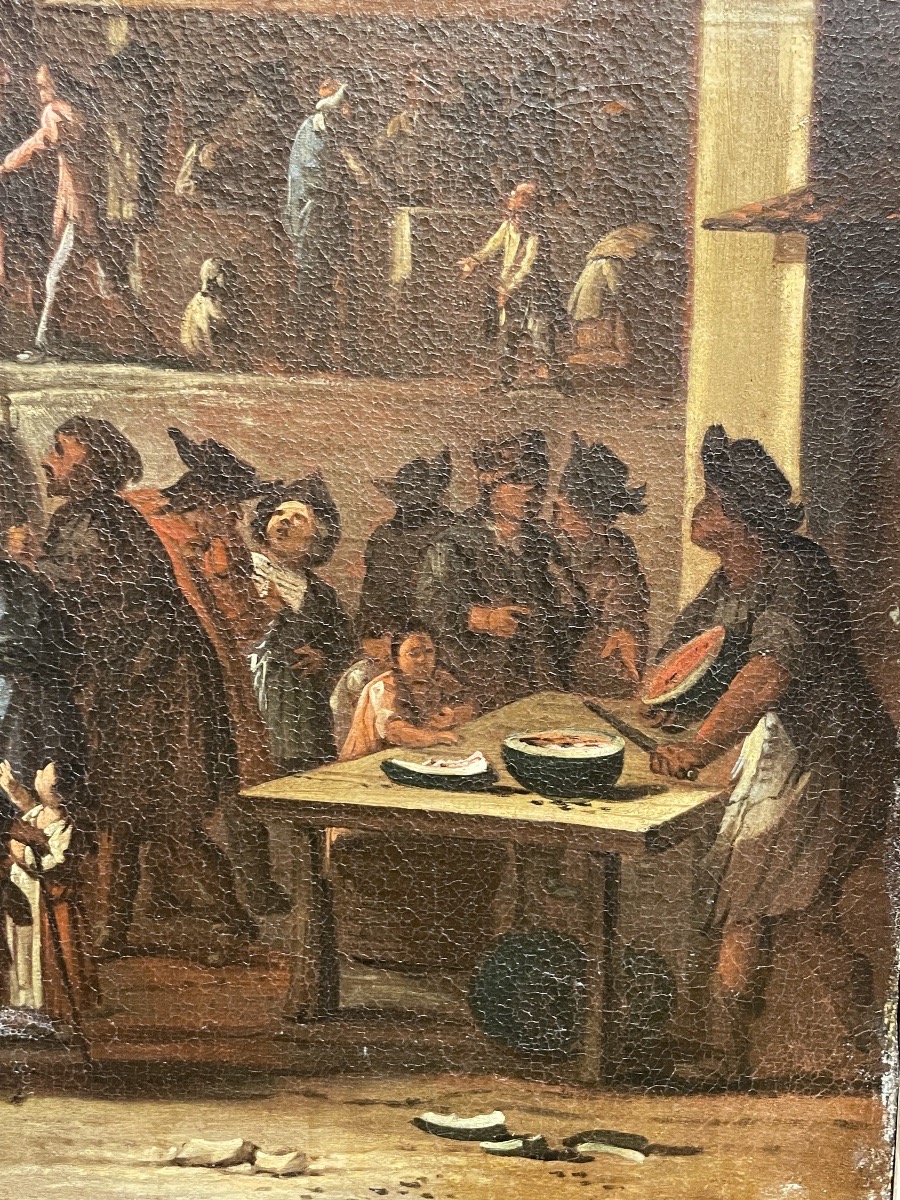
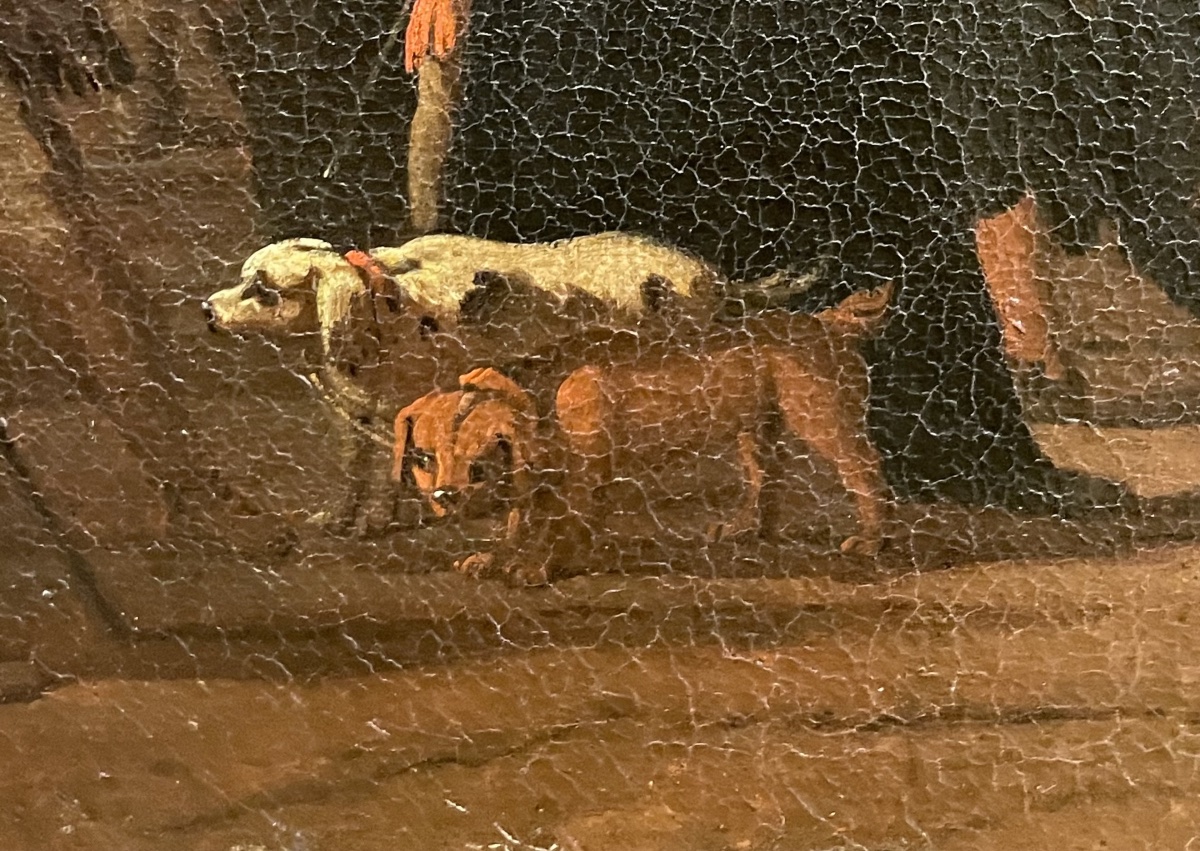
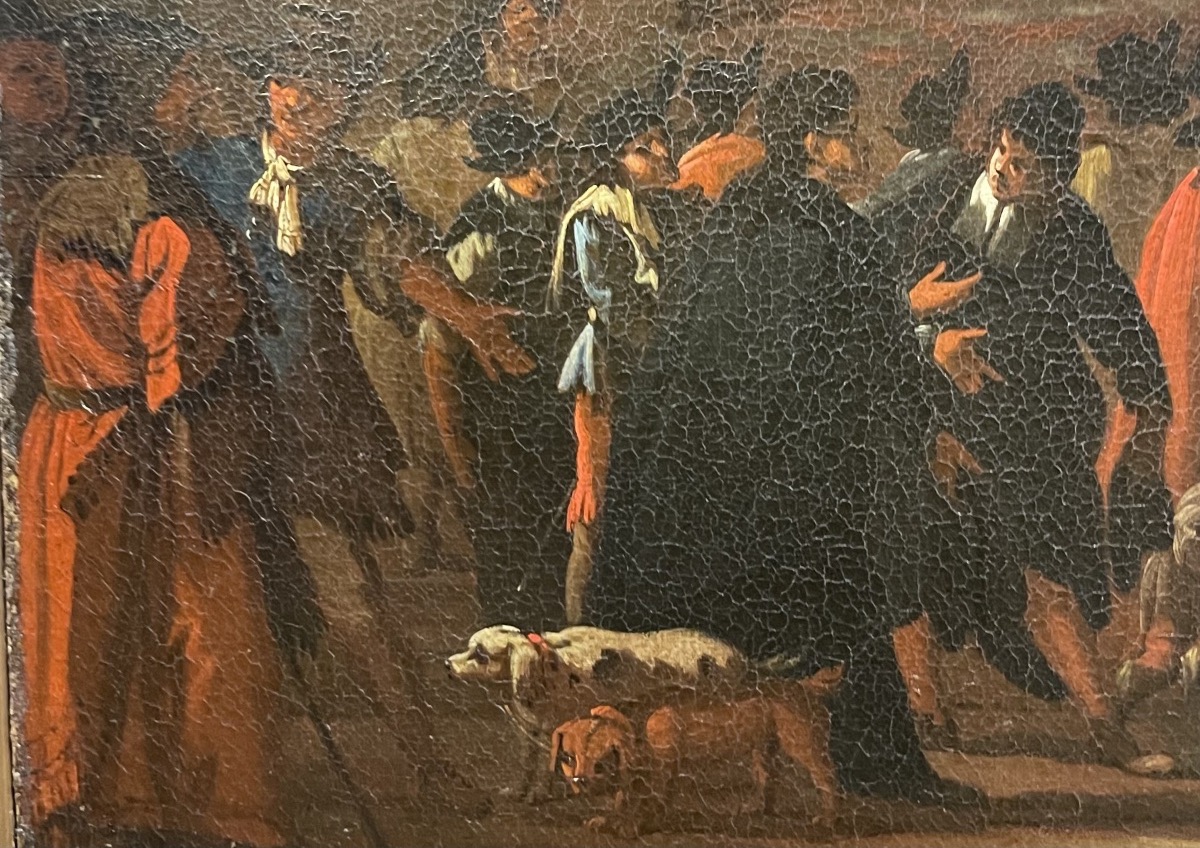
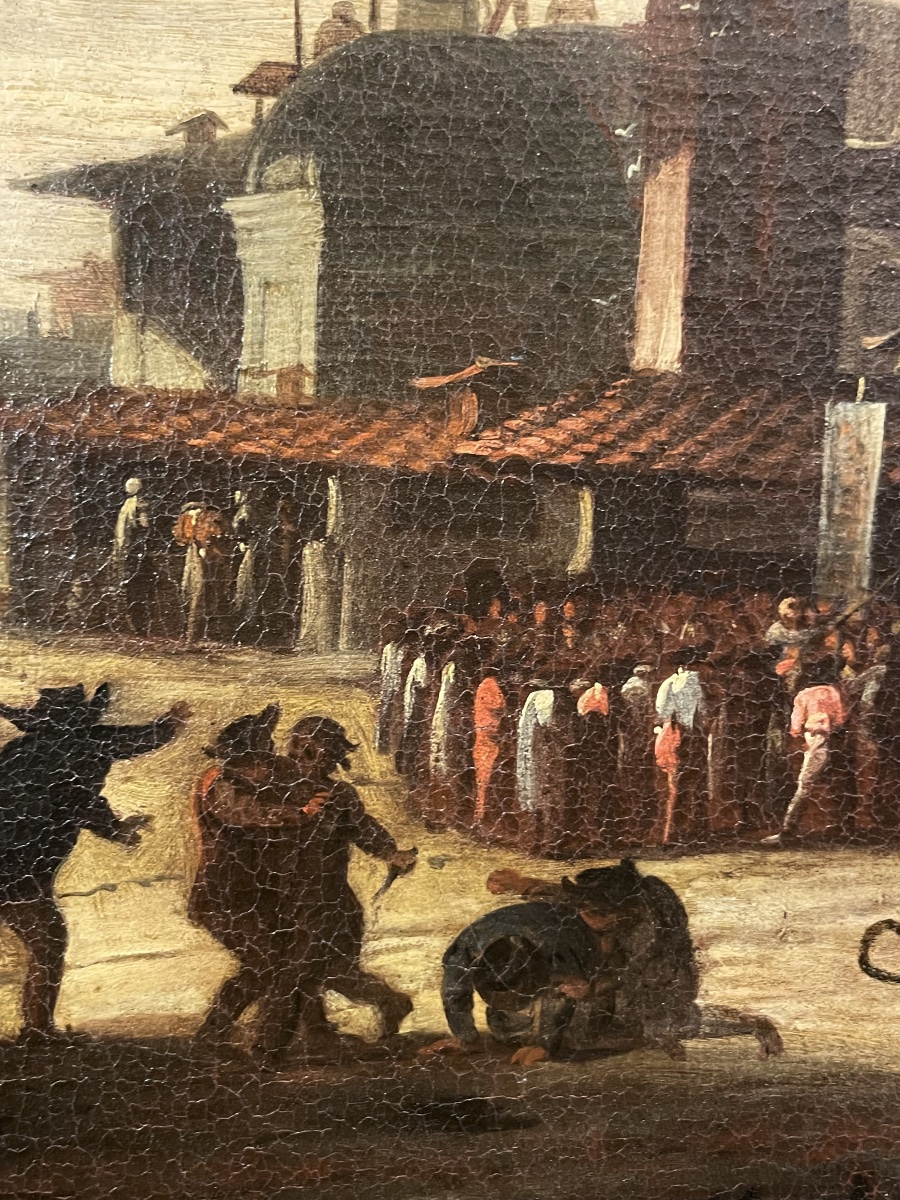
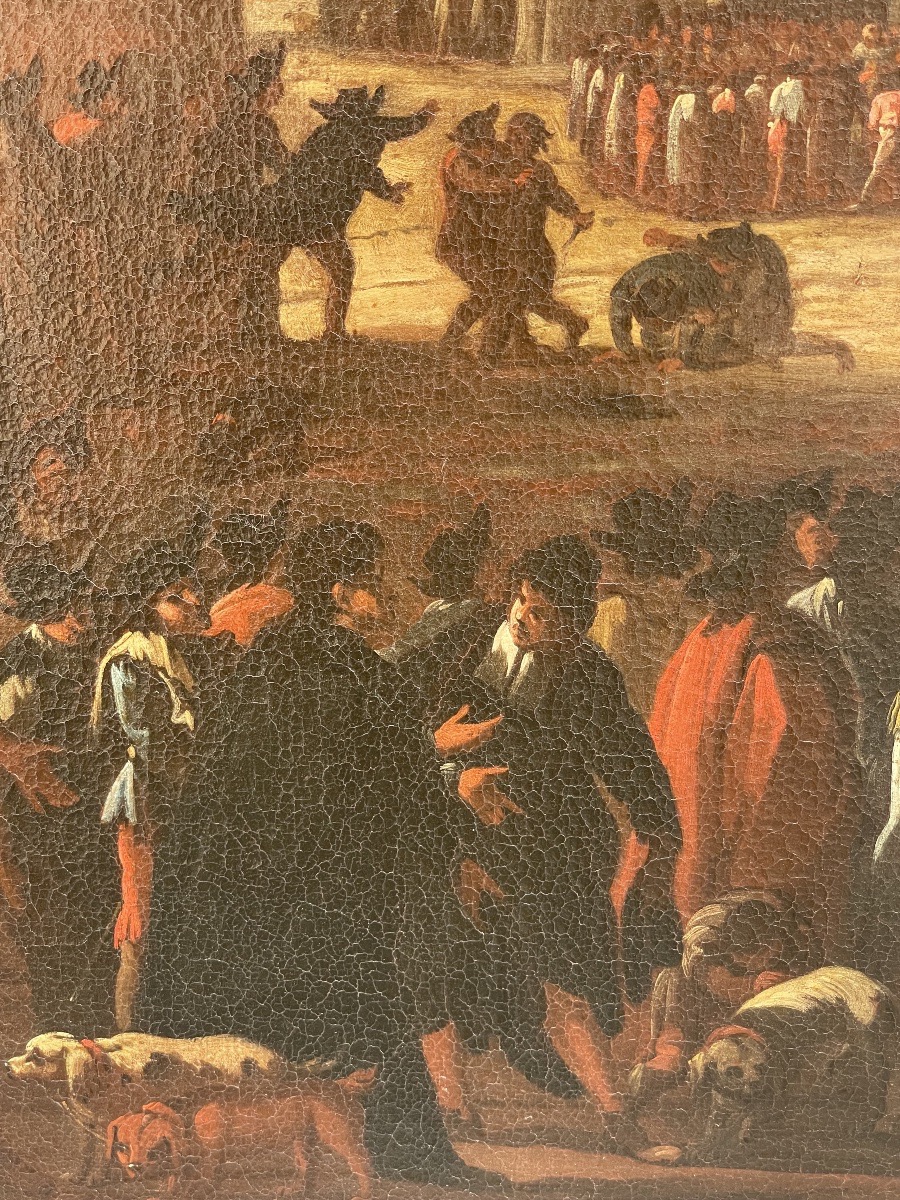
Around him unfolds an unusually rich panorama of street life. In the foreground, a brawl has escalated and two men have drawn their knives; nearby, a watermelon seller displays his wares. Men, women, children, merchants and onlookers mingle with figures wrapped in ample, Oriental-style draperies. Dogs are also present, a recurring feature in the scenes of everyday life painted by Northern European artists active in Italy.
The background is equally animated. A building is still under construction, with men working among beams and scaffolding; farther away, a tower bears what appears to be a sundial. Numerous secondary episodes emerge among the architecture and at the edges of the crowd, making the painting particularly rich in details to discover.
The subject belongs fully to the culture of the Bamboccianti, which developed primarily in Rome during the 17th century among painters largely originating from the Netherlands and Northern Europe. Rather than the grand subjects of history painting, these artists brought to canvas squares, markets, taverns, street vendors, beggars, soldiers, brawls, games, petty deceptions and street performances. Monumental Rome thus became the setting for the life of ordinary people, observed in its most immediate and sometimes roughest aspects.
In this painting, the Bamboccianti repertoire is particularly concentrated: the large Italian square, the charlatan and his performance, the knife fight, the merchants, a highly varied population, figures in Oriental-style dress, animals and even the building site in the background. It is precisely this accumulation of simultaneous episodes that gives the composition its vitality and makes it a vivid record of 17th-century street life.
The painting reveals a strongly individual manner. The small figures are executed with rapid, confident brushwork and, although often defined with only a few touches, retain clearly differentiated gestures, attitudes and physiognomies. Reds, blues, whites and ochres emerge from the predominantly brown tonalities, while the alternation of light and shadow structures the crowd without diminishing its variety.
The work was formerly attributed to the School of Jacques Callot, an understandable association given its taste for crowded scenes and the multiplicity of popular episodes. Its pictorial culture, however, finds a more convincing context in the genre painting practised in 17th-century Rome by the Bamboccianti and the Northern European artists active in the city.
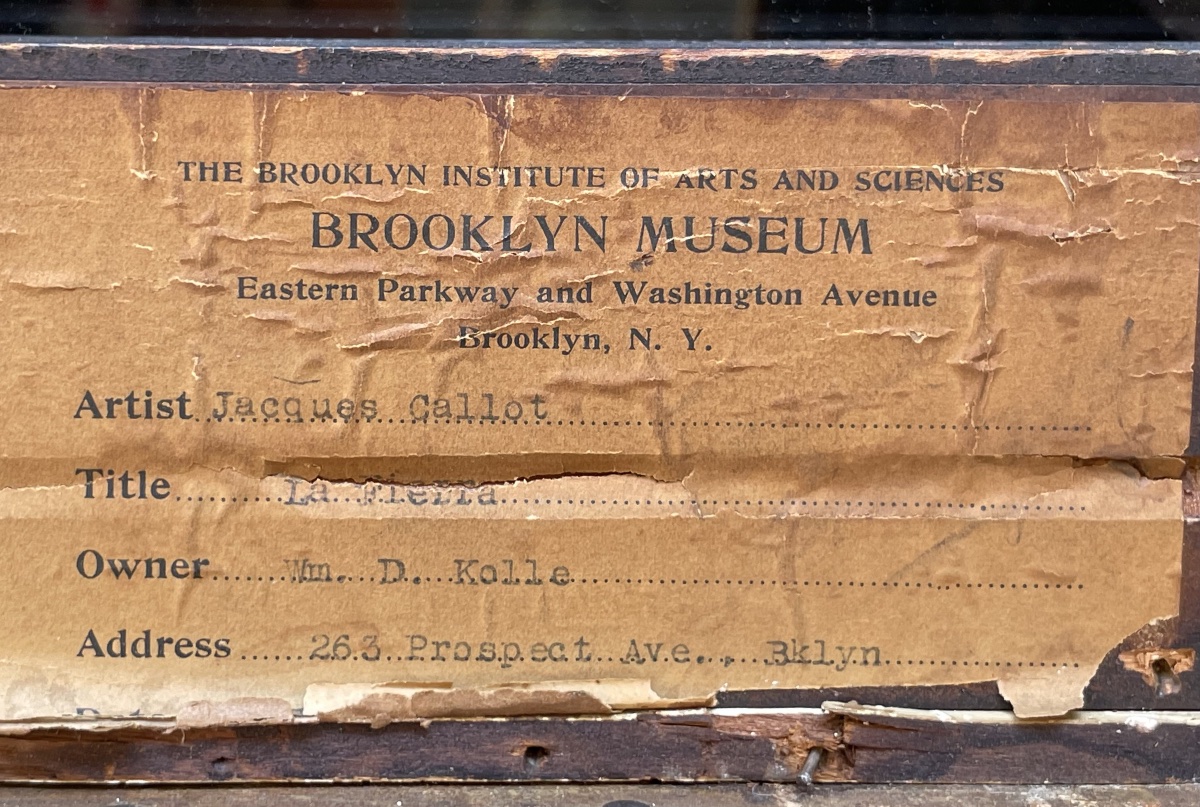
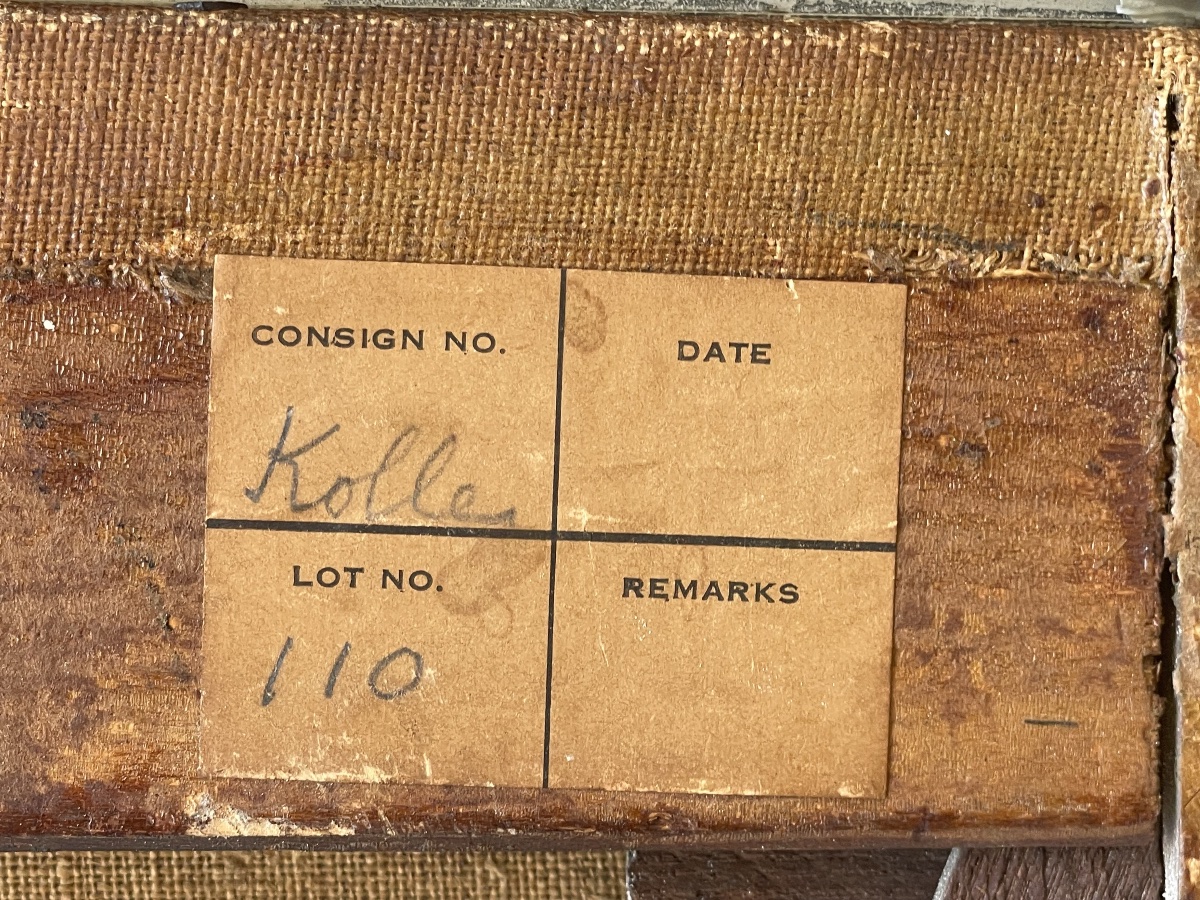
The painting also has an interesting American provenance. It belonged to William D. Kolle of Brooklyn, a collector of Old Master paintings active during the first half of the 20th century, and its documented history subsequently mentions the Brooklyn Institute of Arts and Sciences – Brooklyn Museum. With the documentation currently available, it is not possible to determine the precise nature of this association — whether a loan, deposit, or presence in connection with an exhibition. It nevertheless represents a significant element in the painting’s American collecting history, before its subsequent passage into a private New York collection.
Provenance:
William D. Kolle, Brooklyn, New York
Brooklyn Institute of Arts and Sciences – Brooklyn Museum
Private collection, New York
Condition: relined canvas, some abrasions.
Period: 17th century
Style: Renaissance, Louis 13th
Condition: Re-canvas
Material: Oil painting
Width: 89cm
Height: 75cm
Reference (ID): 1805841
Availability: In stock