

Paris, 1760, Solid Silver Tastevin, By Jean-baptiste Gillet
Bien sûr. J’ai remplacé tastevin par wine taster dans l’ensemble du texte.
Solid Silver Wine Taster
Paris, 1760–1761
Jean-Baptiste Gillet, master silversmith
Weight: 108 g
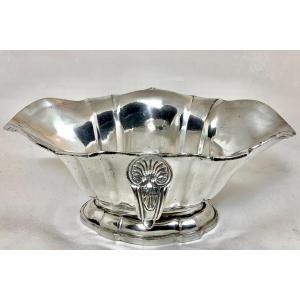
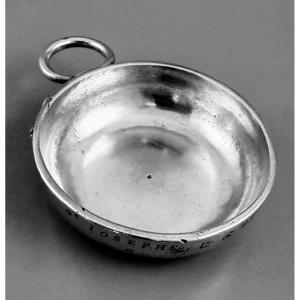
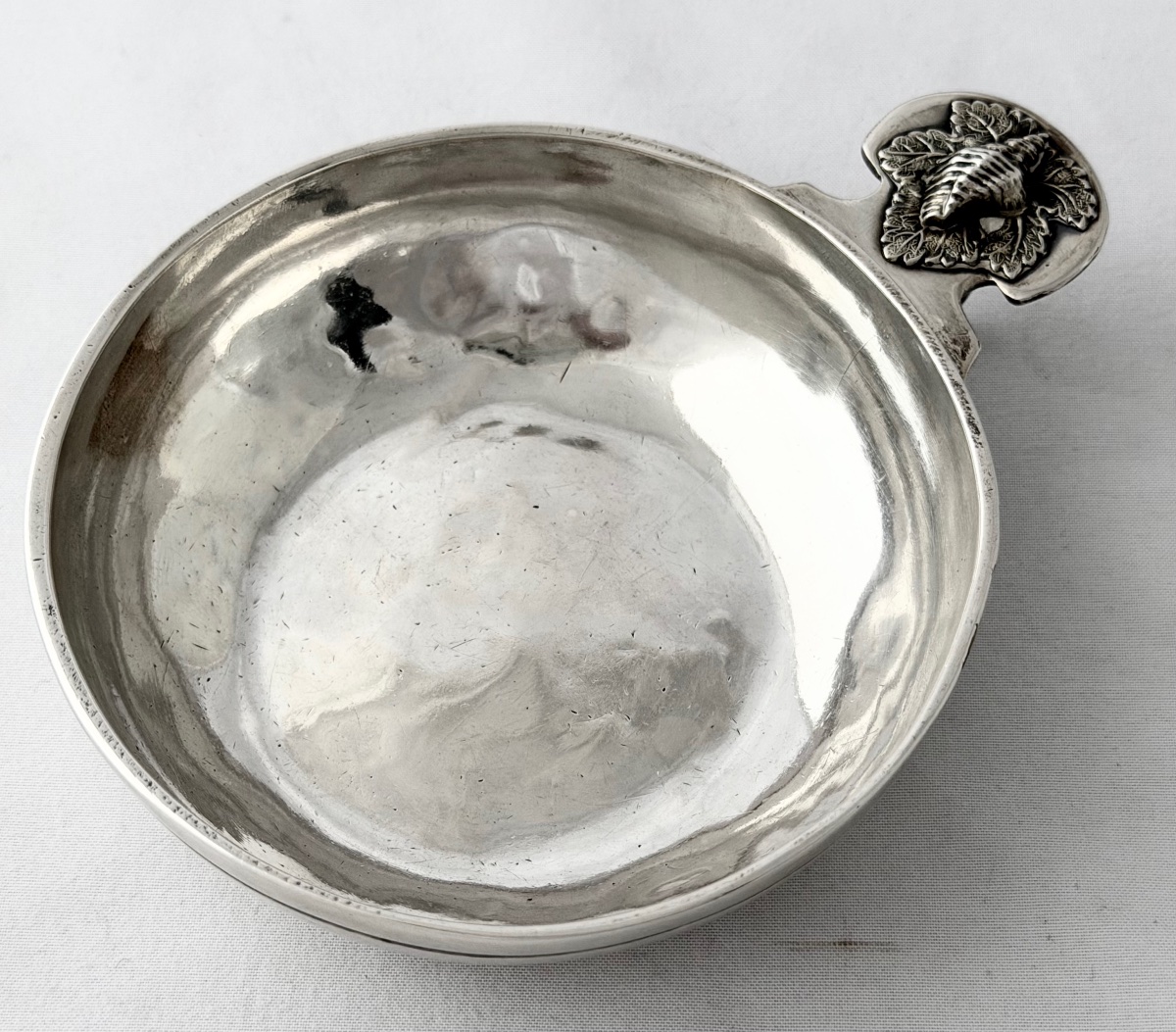
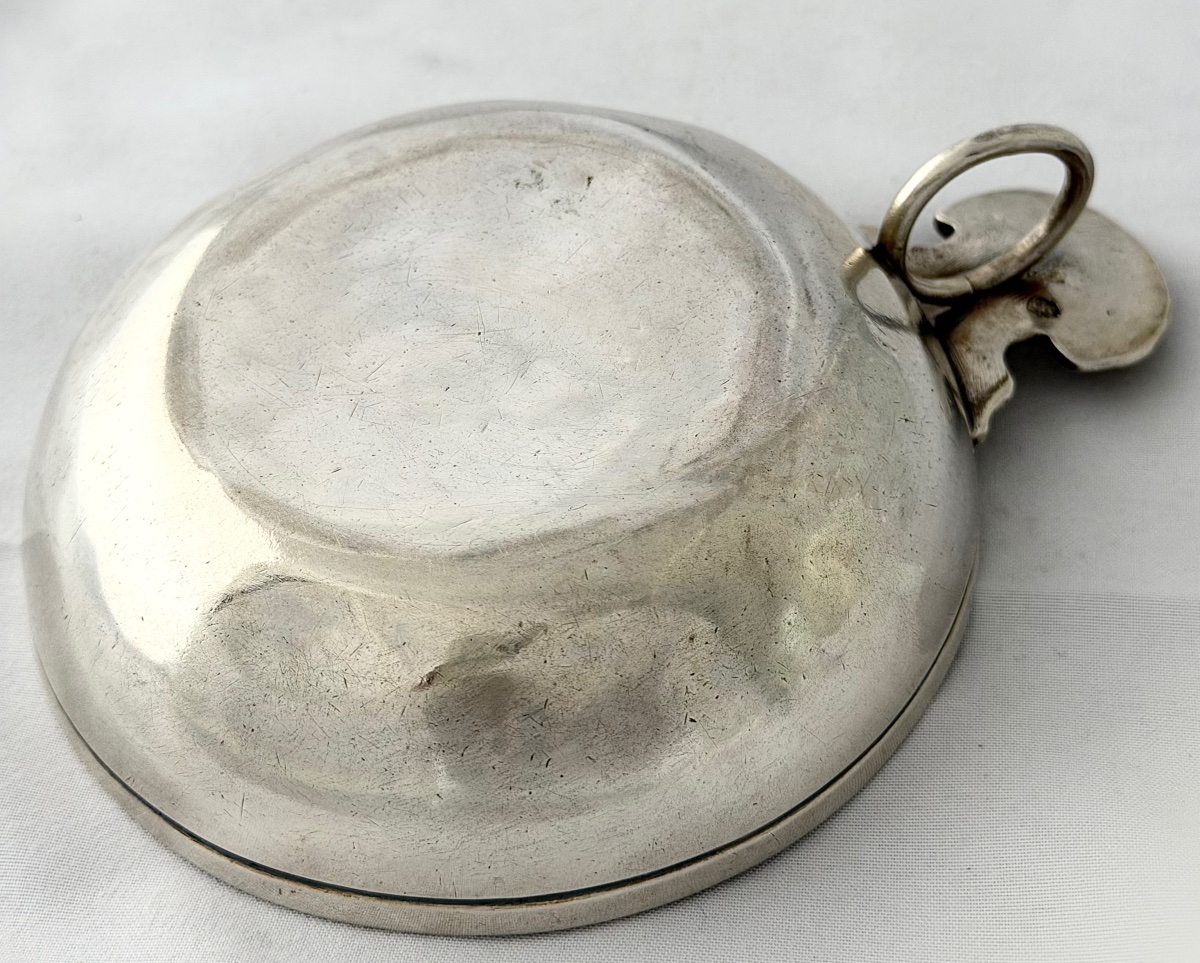
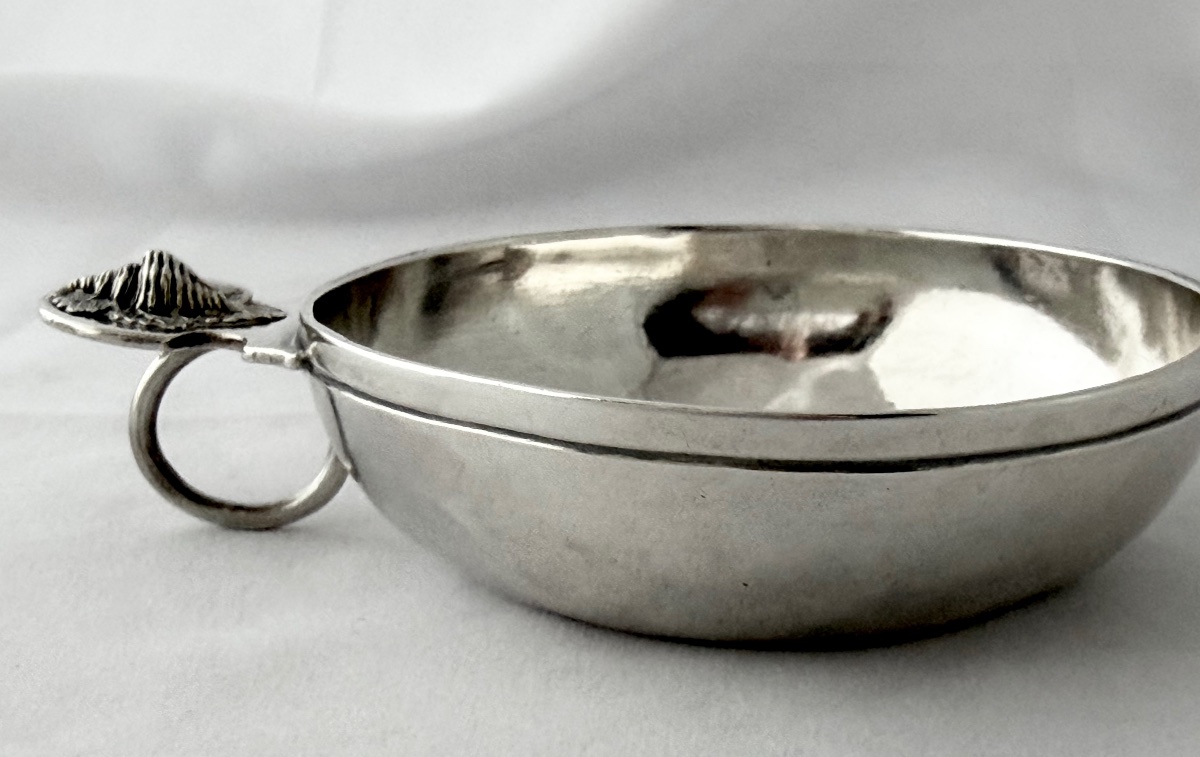
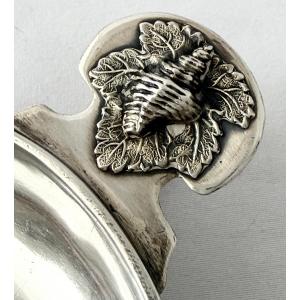
Solid silver wine taster of circular form, with a plain, deep and broadly open bowl bordered by a moulded rim. Its outline, characteristic of eighteenth-century Parisian wine-tasting cups, is enhanced by a particularly remarkable handle.
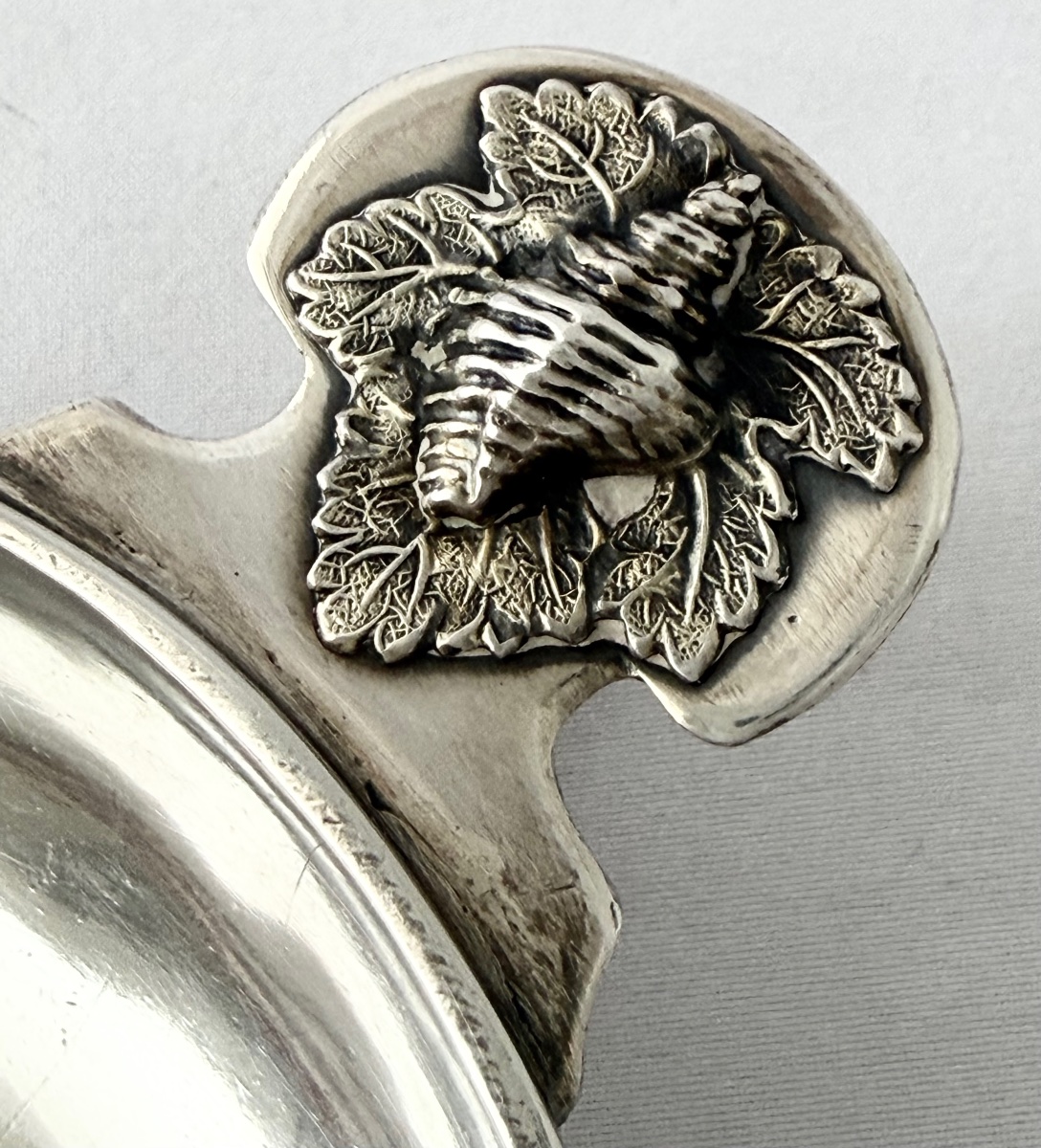
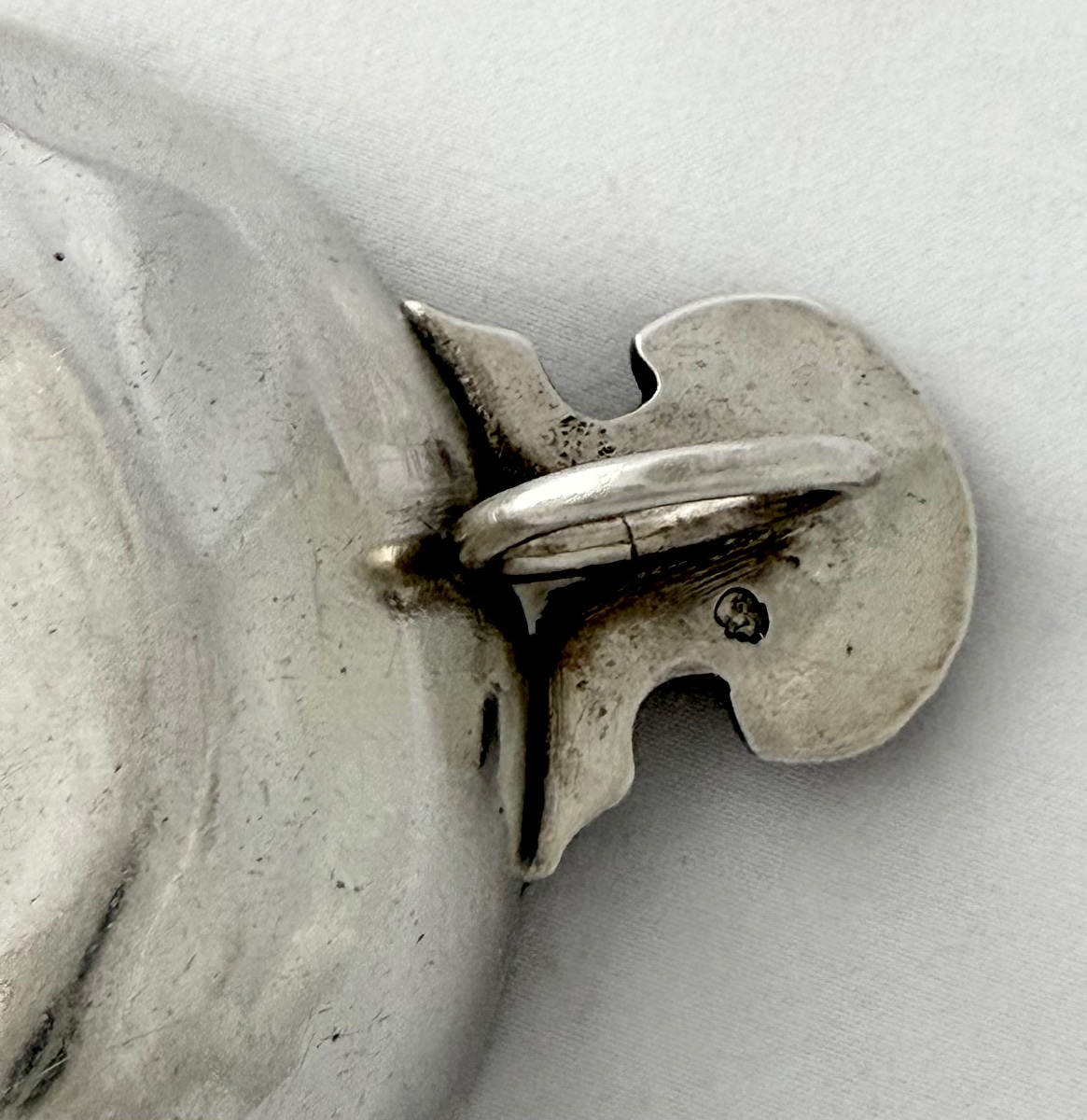
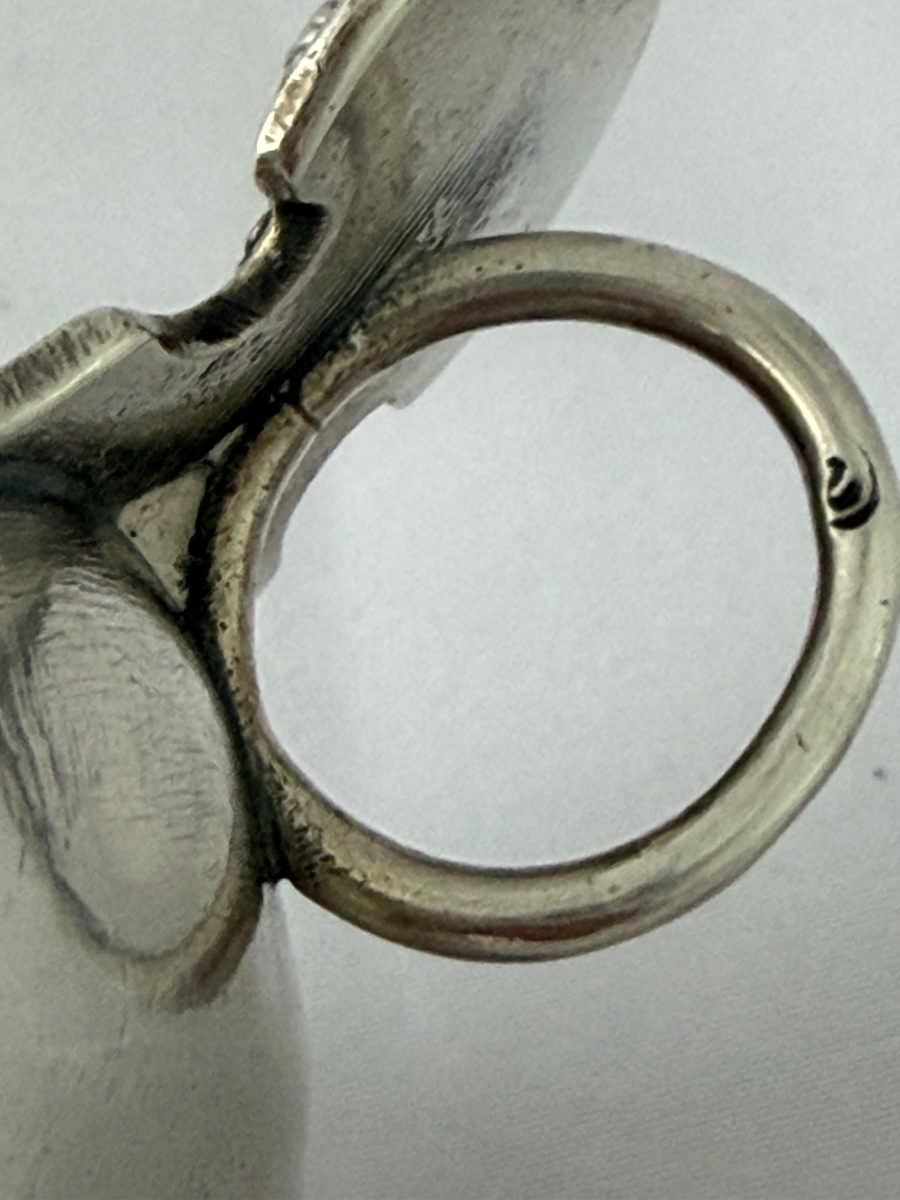
The handle is formed as a large vine leaf upon which a shell stands out in pronounced relief. This unusual element, cast in silver and subsequently finished by chasing, constitutes the principal distinguishing feature of the piece. A ring placed beneath the handle allowed the vessel to be held securely or suspended.
The combination of the vine leaf, directly related to the function of the object, and the shell, borrowed from the Rococo decorative vocabulary, gives this wine taster a more ornamental character than Parisian examples fitted merely with a ring, a thumbpiece or an isolated shell.
Described in early French texts as a tasse à vin, tâte-vin or goûte-vin, and only later as a tastevin, this small vessel was used by winegrowers, wine brokers and wine merchants to draw a small quantity of wine and assess its clarity, colour and general qualities. Its shallow form allowed the wine to be swirled and its appearance to be examined more easily, even in the subdued light of a cellar.[1]
Silver was particularly well suited to this purpose: its bright, reflective surface facilitated the examination of the wine, while the metal imparted no taste to it. On certain examples, fluting, small depressions and relief decoration on the interior further enhanced the play of light. The forms of the handles varied according to region and workshop and included shells, serpents, rings, coiled tails, vine leaves, vine shoots and bunches of grapes.[2]
The wine taster was also a personal possession. Many examples bear the name, initials, date or coat of arms of their owner. Curiously, the present example bears no personal inscription. This absence leaves the plain surface of the bowl entirely unobstructed and places greater emphasis on the sculptural decoration of the handle.
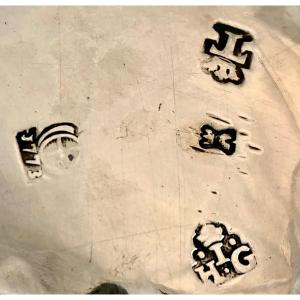
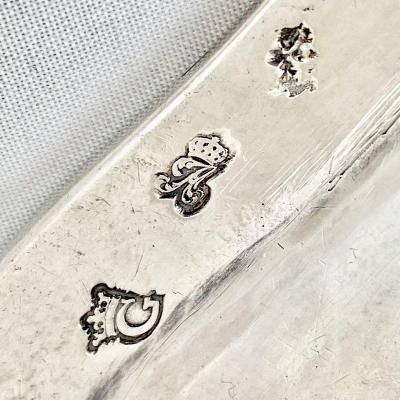
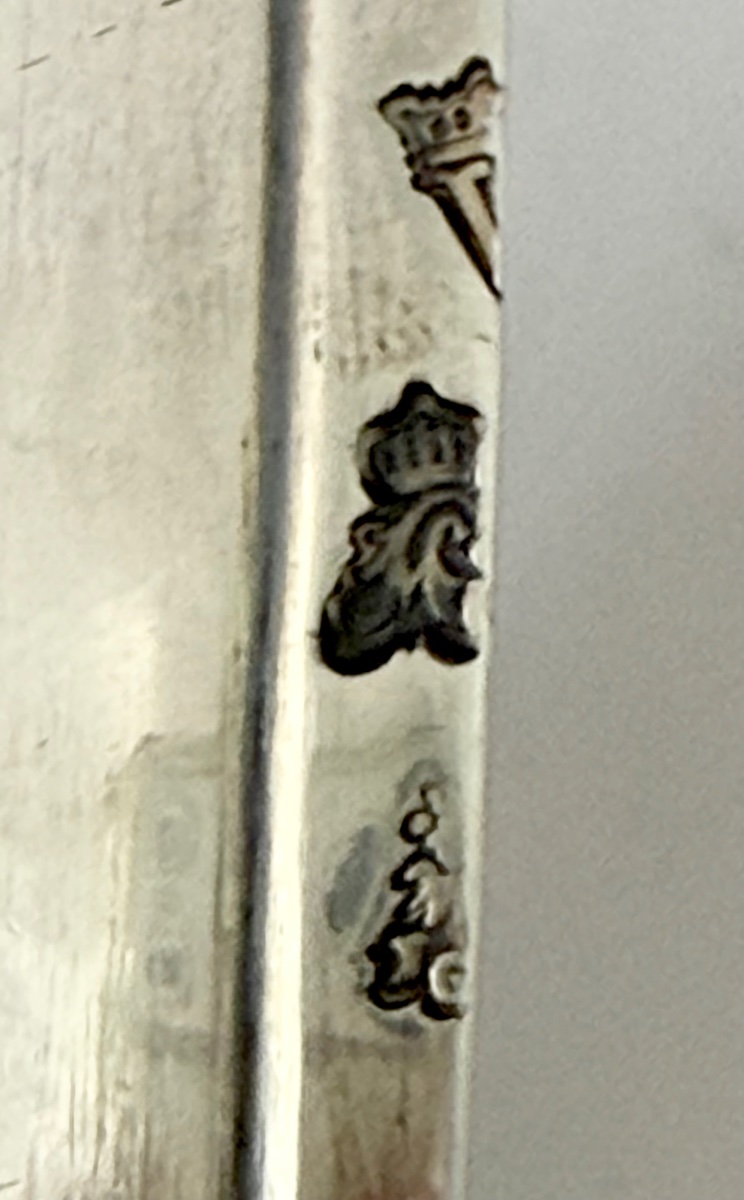
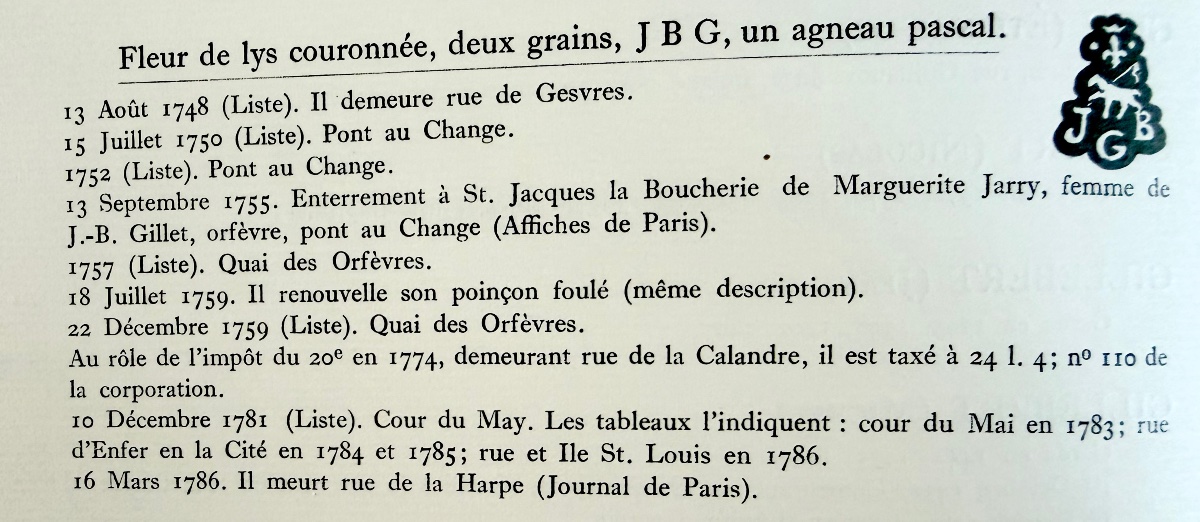
The rim bears the Paris hallmarks of the Ancien Régime: the charge mark for large silverware, consisting of a crowned and fleur-de-lys-decorated letter A, used in Paris between 1756 and 1762; the crowned letter V date mark, introduced on 12 July 1760 and used until the annual renewal in July 1761; and the partially legible maker’s mark of Jean-Baptiste Gillet, consisting of a crowned fleur-de-lys between two grains of remedy, the initials JBG and the Paschal Lamb.[3]
The combination of these hallmarks allows the wine taster to be dated precisely to 1760–1761.
Jean-Baptiste Gillet
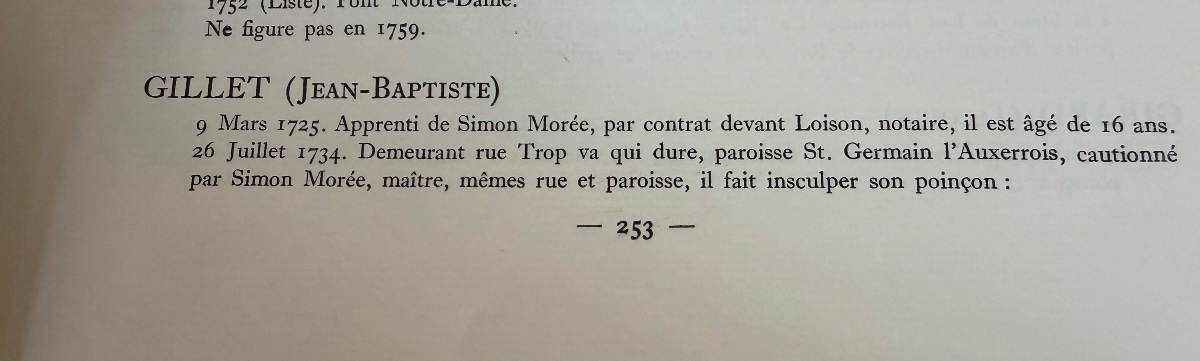
Jean-Baptiste Gillet began his apprenticeship on 9 March 1725, at the age of sixteen, in the workshop of the Parisian silversmith Simon Morée. On 26 July 1734, while established in the rue Trop-Va-Qui-Dure in the parish of Saint-Germain-l’Auxerrois, he registered his maker’s mark under the sponsorship of Simon Morée.[4]
He subsequently worked in several districts traditionally associated with Parisian silversmiths: the rue de Gesvres in 1748, the Pont au Change in 1750 and 1752, the Quai des Orfèvres from 1757 onwards, and later the rue de la Calandre and the Cour du Mai. He renewed his maker’s mark on 18 July 1759, retaining the same composition. Documents also record him in the rue d’Enfer on the Île de la Cité and later in the rue and Île Saint-Louis. He died on 16 March 1786 in the rue de la Harpe.[4]
Condition
Very fine condition. The wine taster displays fine scratches, slight irregularities and a few small dents resulting from historic use, without any significant alteration to its overall form. The handle, its cast and chased decoration, and the suspension ring are all well preserved.
References
[1] Metropolitan Museum of Art, New York, catalogue entries for French wine-tasting cups, including examples from the Catherine D. Wentworth Collection.
[2] Domaine du Château de Seneffe, Centre de l’orfèvrerie de la Fédération Wallonie-Bruxelles, catalogue entry for the Parisian wine taster by François Picard; Metropolitan Museum of Art, catalogue entries for French wine tasters of the seventeenth and eighteenth centuries.
[3] Michèle Bimbenet-Privat and Gabriel de Fontaines, La datation de l’orfèvrerie parisienne sous l’Ancien Régime : poinçons de jurande et poinçons de la Marque, 1507–1792, Paris, Paris-Musées, 1995, particularly nos. 427 and 442.
[4] Henry Nocq, Le Poinçon de Paris. Répertoire des maîtres-orfèvres de la juridiction de Paris depuis le Moyen Âge jusqu’à la fin du XVIIIᵉ siècle, entry “Gillet, Jean-Baptiste”, p. 253 ff.
Period: 18th century
Style: Louis 15th - Transition
Condition: Good condition
Material: Sterling silver
Length: 12 cm
Diameter: 9,5 cm
Depth: 2,5 cm
Reference (ID): 1803311
Availability: In stock