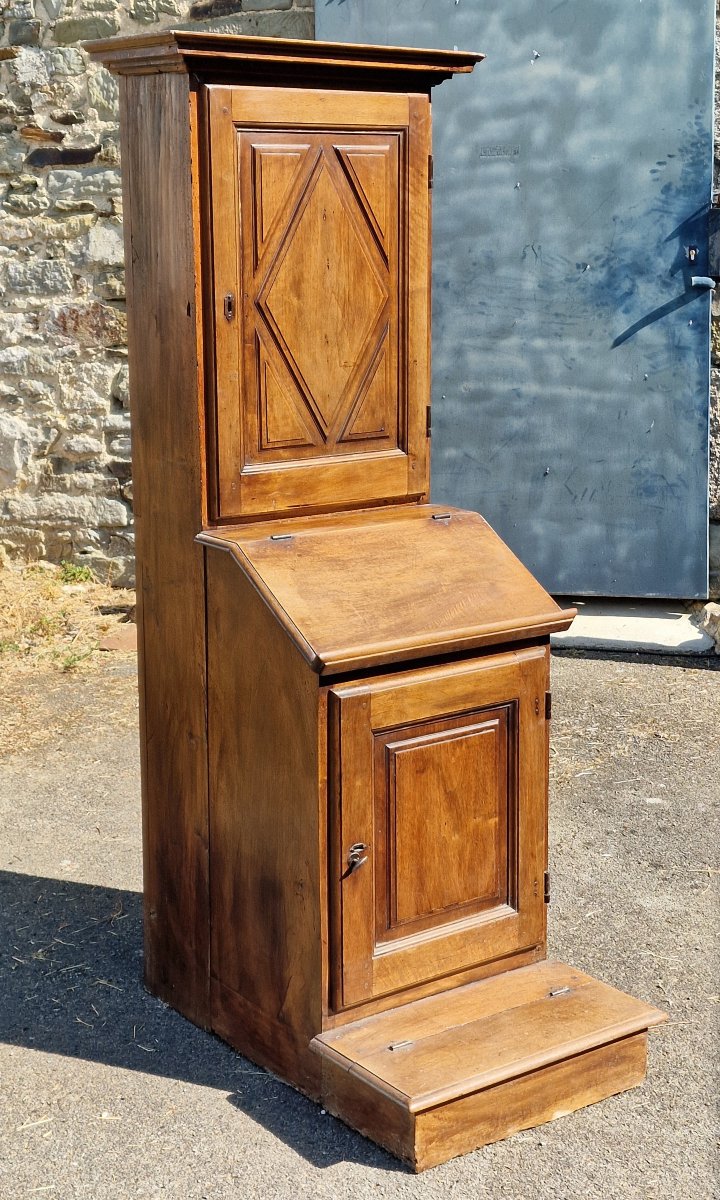
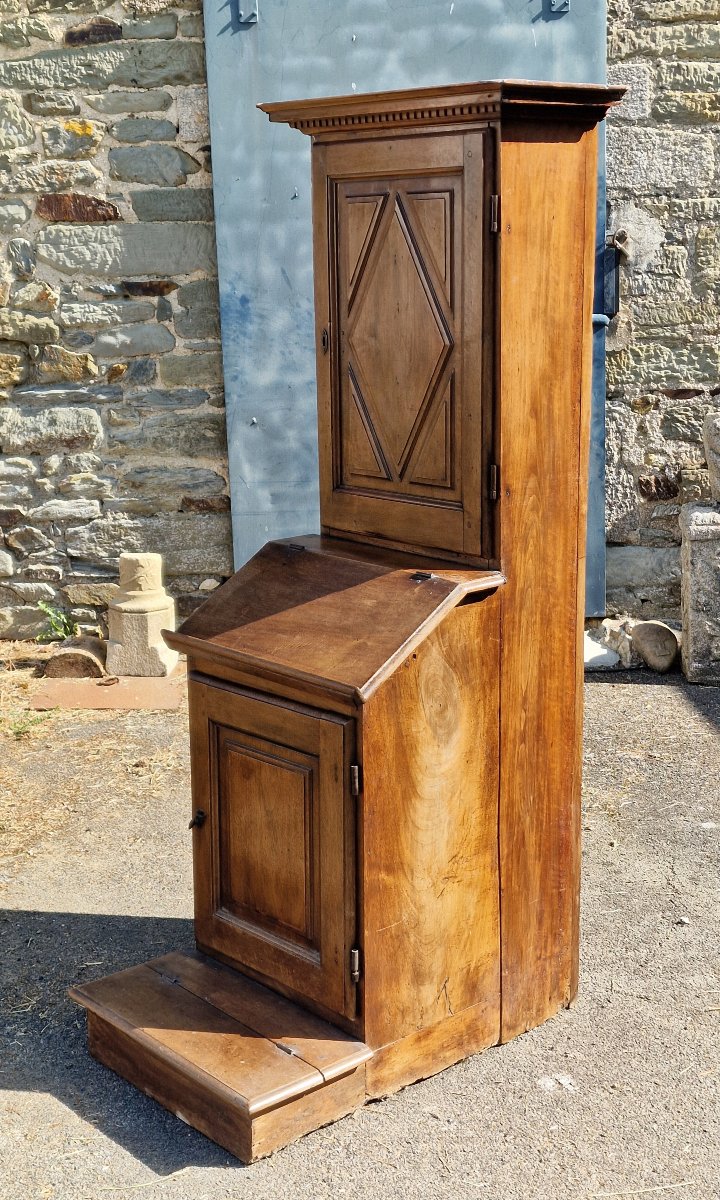


Late 17th-century Walnut Oratory Chair With Diamond-shaped Finials
Artist: Inconnu
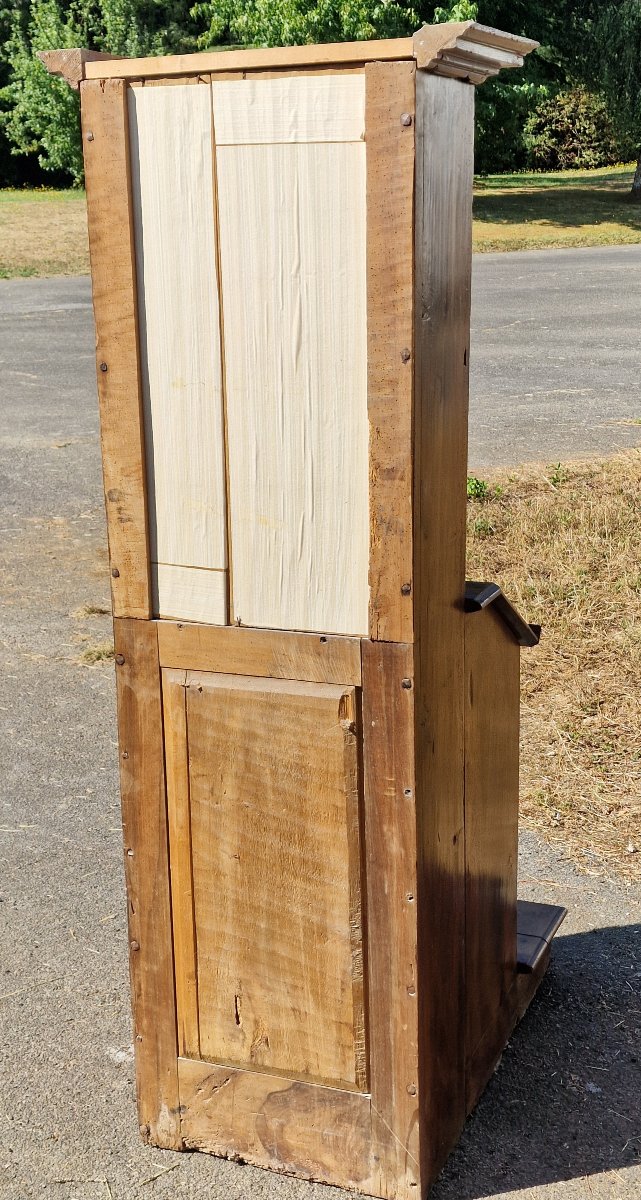
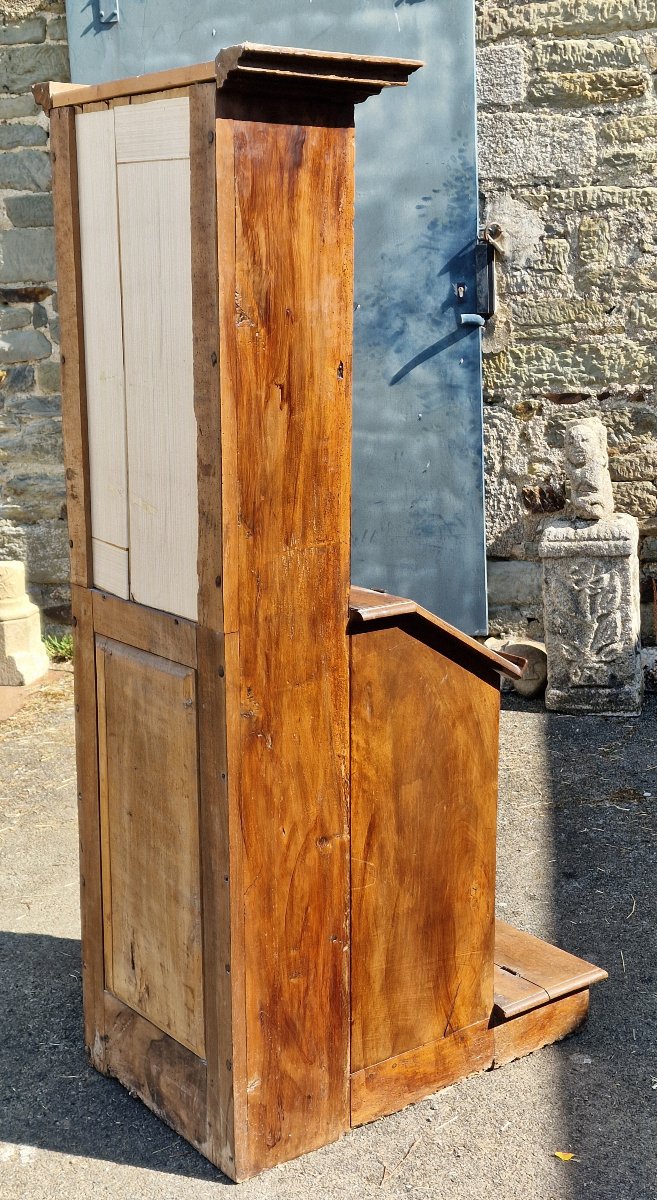
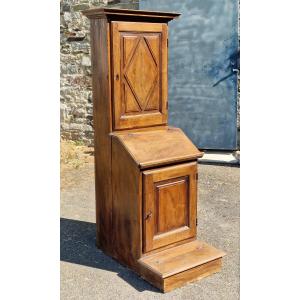
A walnut oratory cabinet* likely dating from the late 17th to early 18th century, in the Louis XIII style.
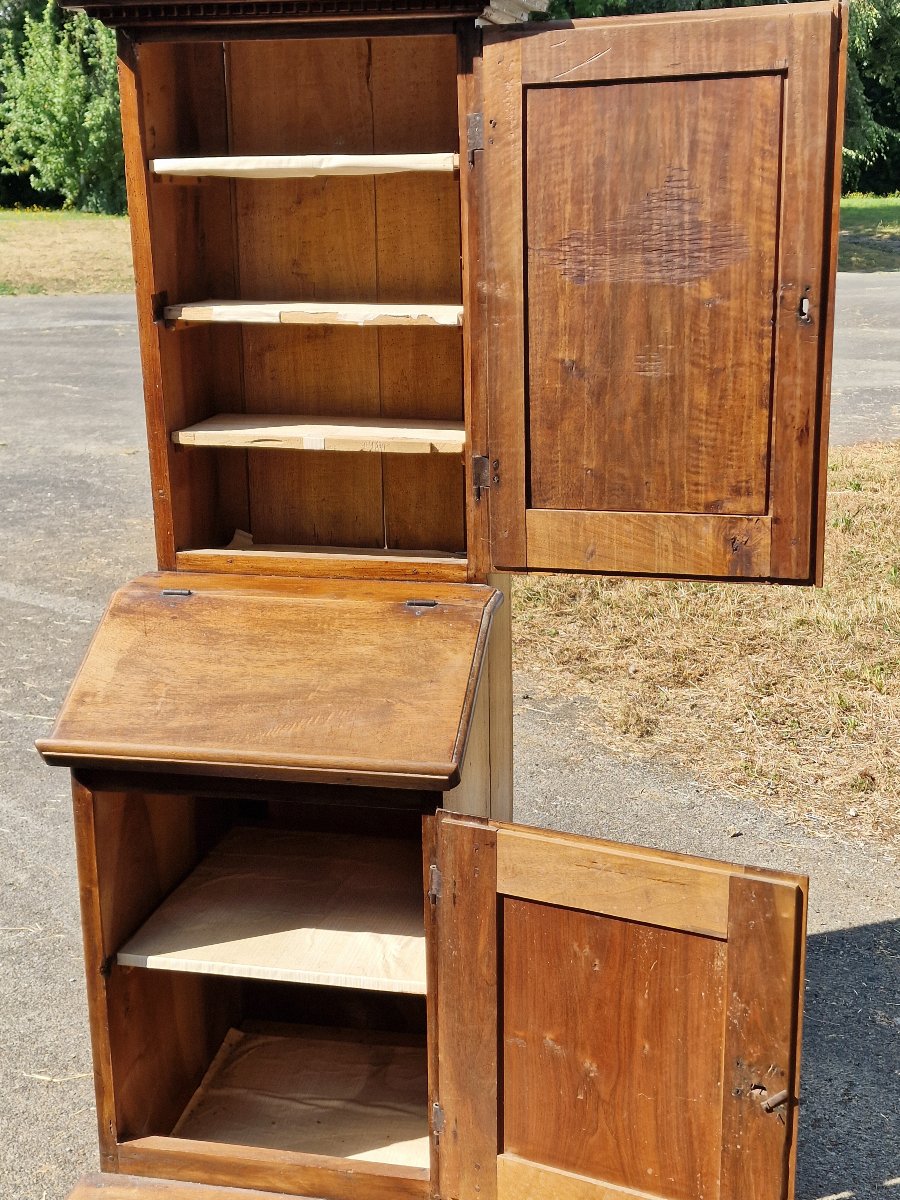
This piece consists of four distinctive elements:
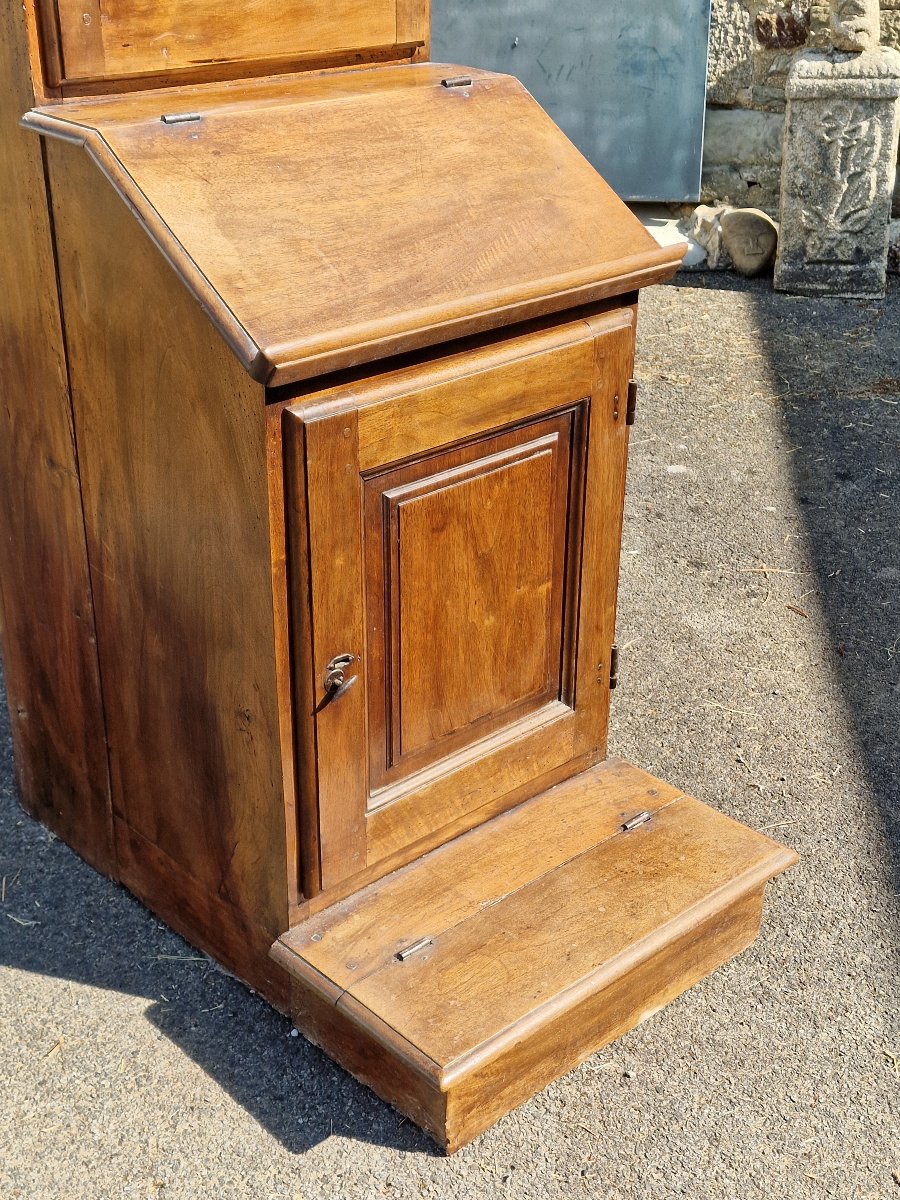
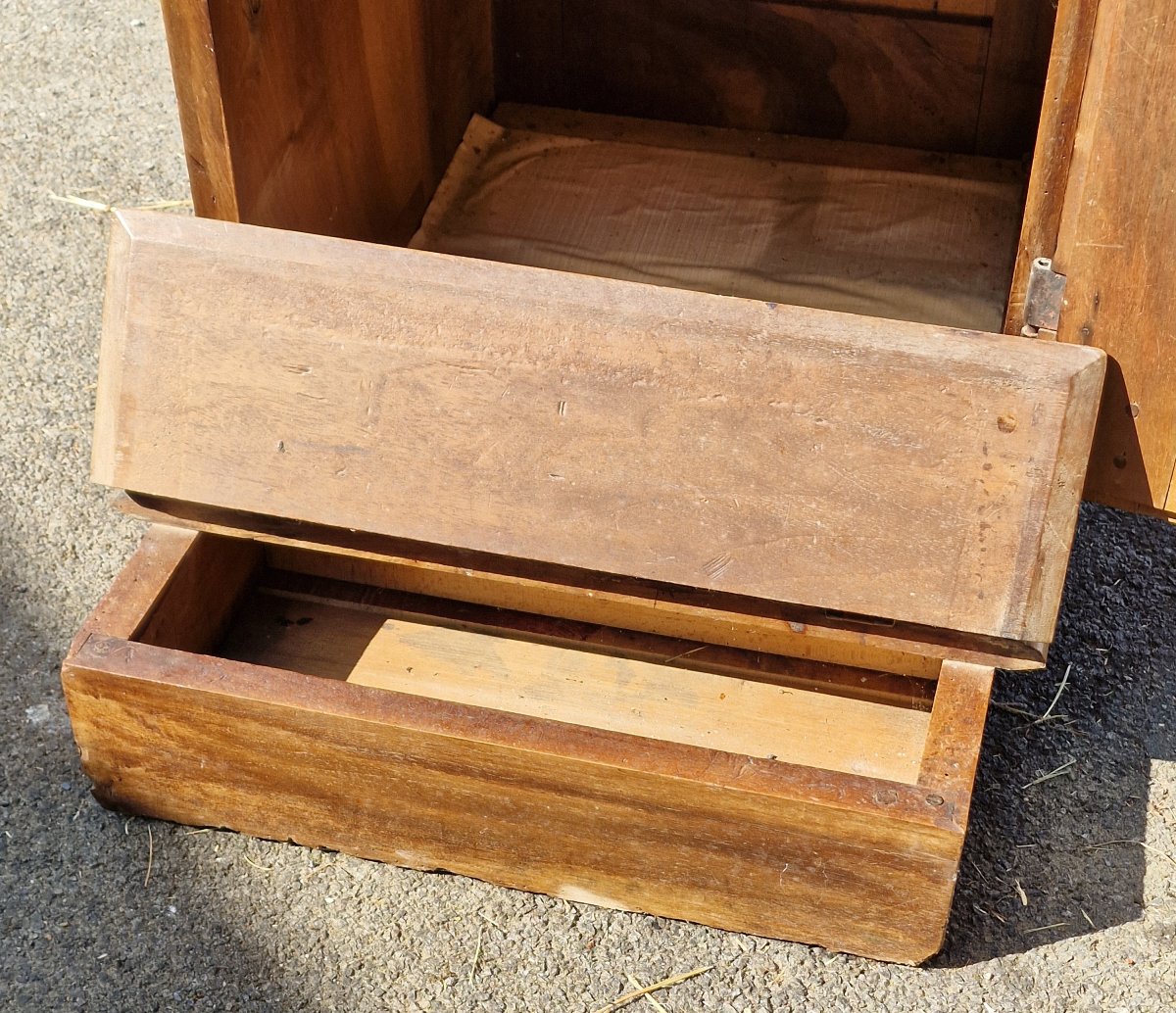
A kneeler: A raised platform, often removable at the base, intended for kneeling to pray.
A lower chest or cabinet: A small cabinet closed by a door, used to store missals or rosaries.
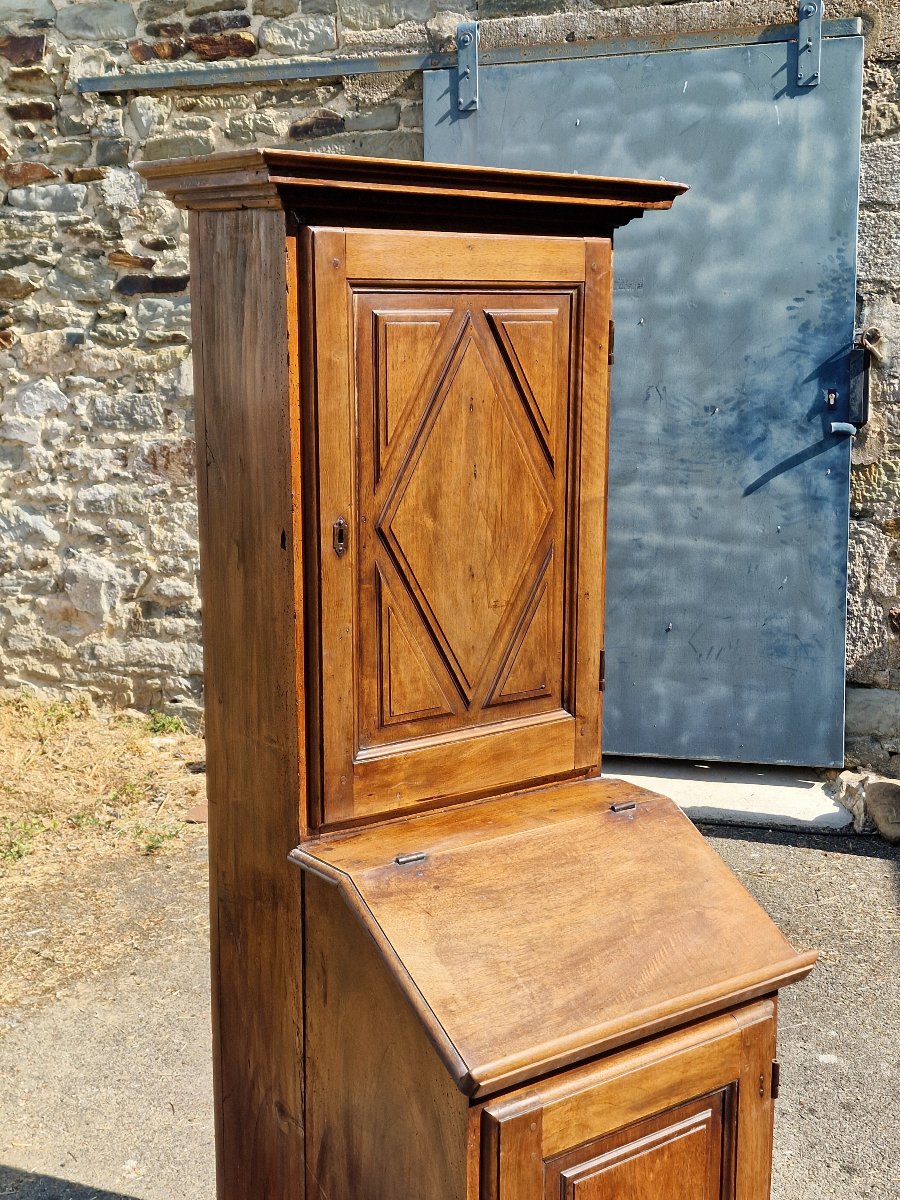
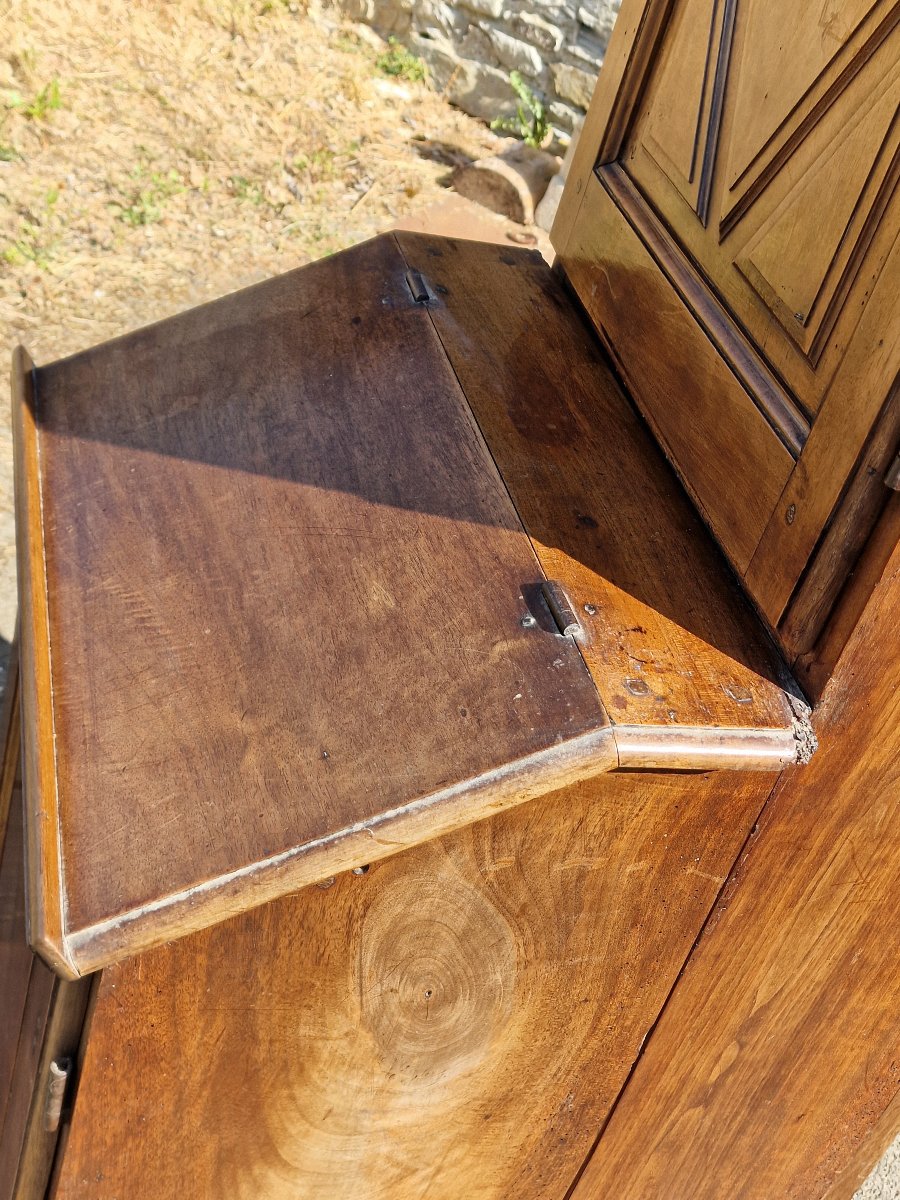
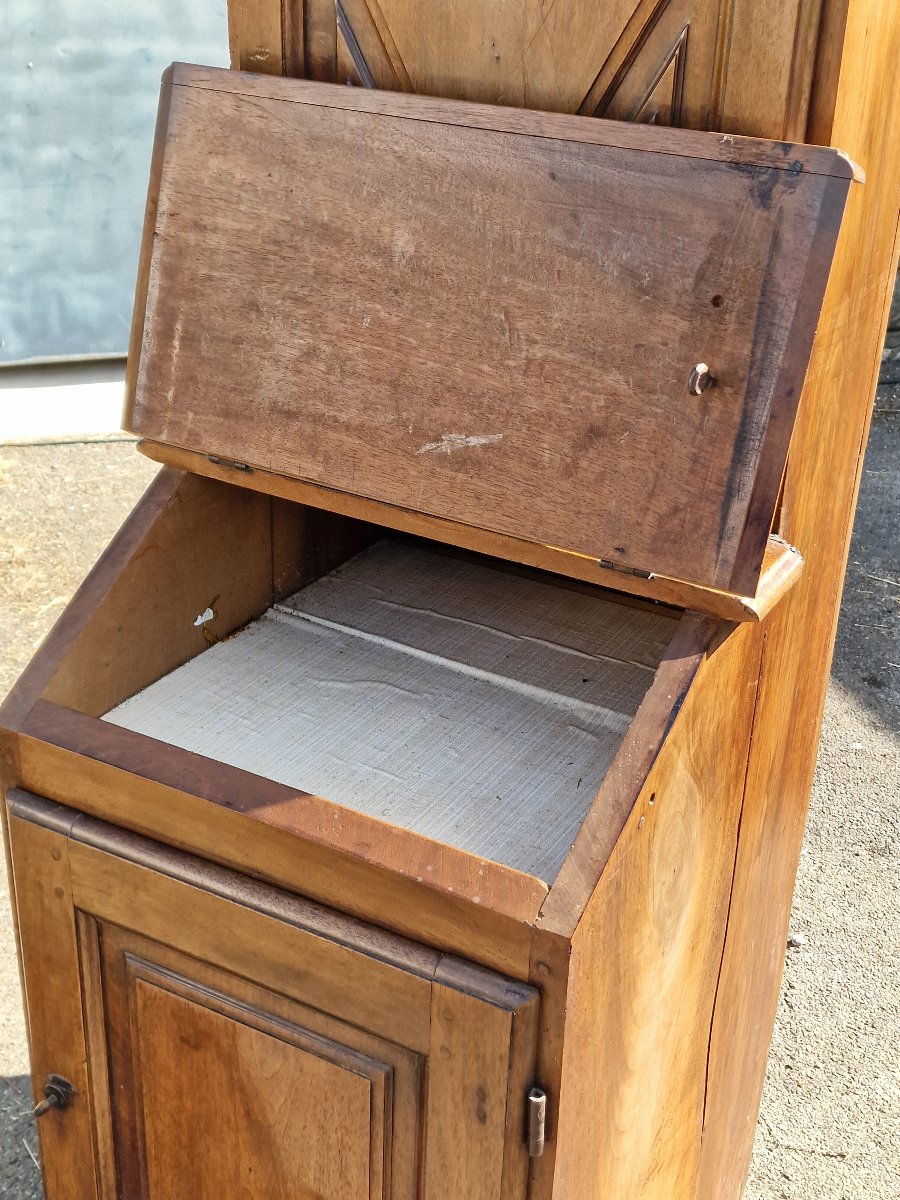
A lectern or drop-down panel: The slanted top (donkey-back style) located in the center, which opens to reveal storage space.
An upper cabinet: The upper section closed by a door, adorned with molded panels in a diamond or “diamond-point” pattern, a highly prized decorative motif during the Louis XIII era.
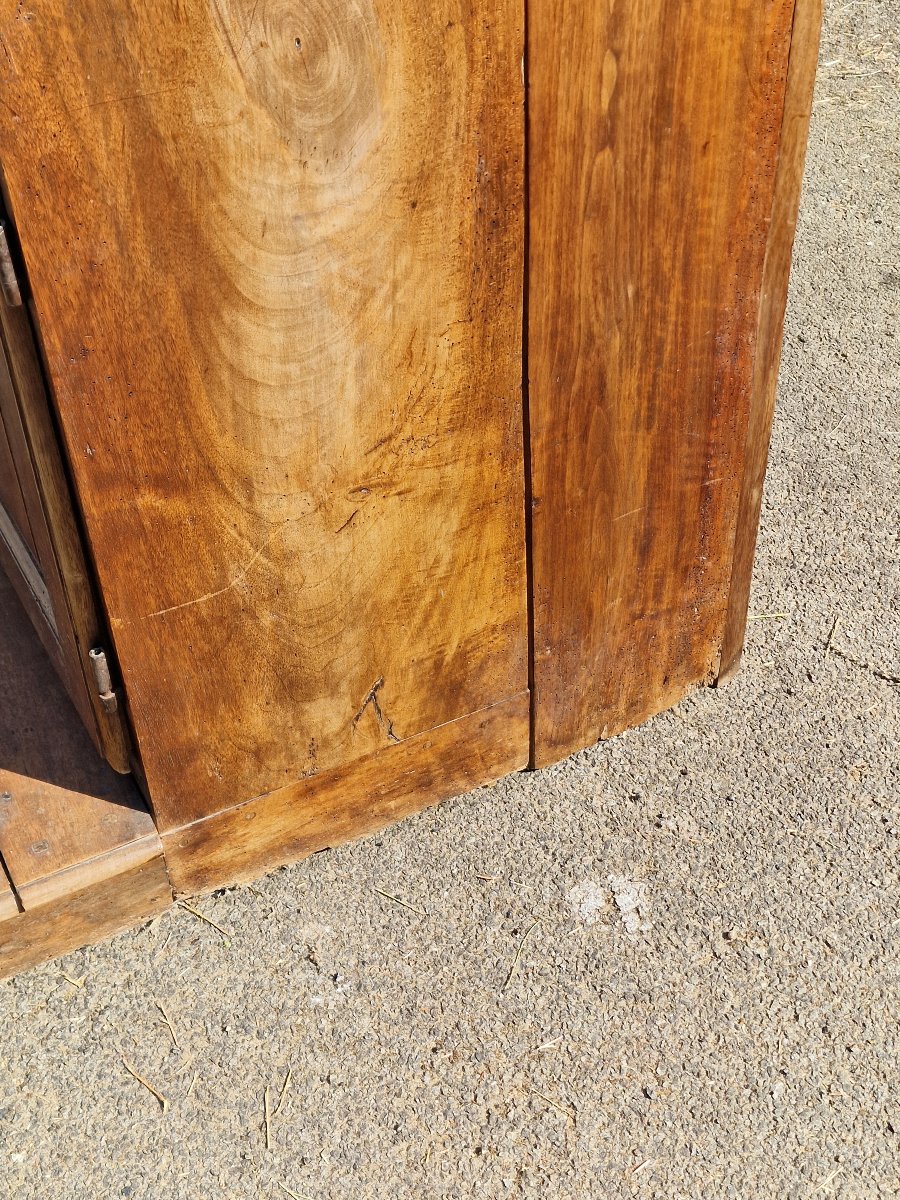
This piece comes from a Breton estate; it is being sold at a low price because it requires restoration to bring it back to perfect condition, though it is otherwise in fairly good condition.
Delivery to be arranged or pick up on site
*An oratory was originally a chapel, a place of devotion invoking divine protection. More specifically, this term refers to a small monument dedicated to the worship of a saint, represented by a statuette or sometimes simply by a plaque bearing the saint’s image or a cross.
The oratory therefore has a rural character, as it allowed believers—whether aristocrats or peasants—living in sometimes remote areas to come and offer devout prayers to a patron saint without having to go to church. Nevertheless, the oratory is more than just a place of worship; it is an expression of gratitude and an offering, made in the hope of receiving the protection of the saint to whom it is dedicated.
An oratory can refer to either a small private chapel attached to a large house (palace, castle, or mansion) or a public chapel built along a roadside to preserve a religious memory or to pray for the dead, who were often buried near crossroads at that time.
.
This piece consists of four distinctive elements:
A kneeler: A raised platform, often removable at the base, intended for kneeling to pray.
A lower chest or cabinet: A small cabinet closed by a door, used to store missals or rosaries.
A lectern or drop-down panel: The slanted top (donkey-back style) located in the center, which opens to reveal storage space.
An upper cabinet: The upper section closed by a door, adorned with molded panels in a diamond or “diamond-point” pattern, a highly prized decorative motif during the Louis XIII era.
This piece comes from a Breton estate; it is being sold at a low price because it requires restoration to bring it back to perfect condition, though it is otherwise in fairly good condition.
Delivery to be arranged or pick up on site
*An oratory was originally a chapel, a place of devotion invoking divine protection. More specifically, this term refers to a small monument dedicated to the worship of a saint, represented by a statuette or sometimes simply by a plaque bearing the saint’s image or a cross.
The oratory therefore has a rural character, as it allowed believers—whether aristocrats or peasants—living in sometimes remote areas to come and offer devout prayers to a patron saint without having to go to church. Nevertheless, the oratory is more than just a place of worship; it is an expression of gratitude and an offering, made in the hope of receiving the protection of the saint to whom it is dedicated.
An oratory can refer to either a small private chapel attached to a large house (palace, castle, or mansion) or a public chapel built along a roadside to preserve a religious memory or to pray for the dead, who were often buried near crossroads at that time.
.
280 €
Period: 17th century
Style: Renaissance, Louis 13th
Condition: Some repairs
Material: Wallnut
Length: 55
Height: 174
Depth: 84
Reference (ID): 1802381
Availability: In stock
Print