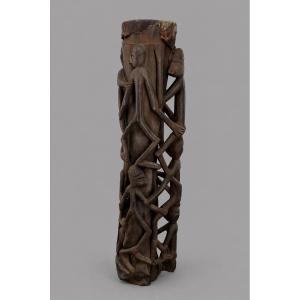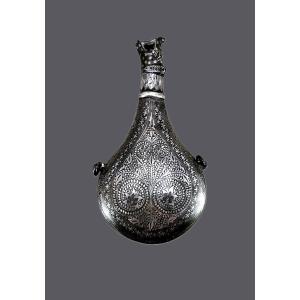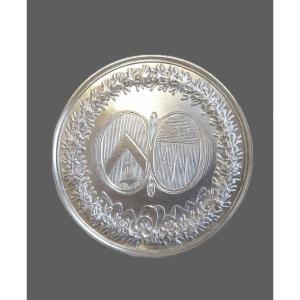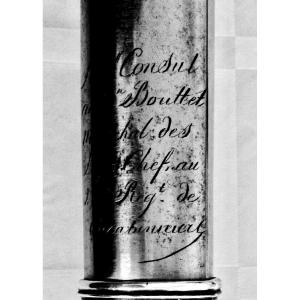
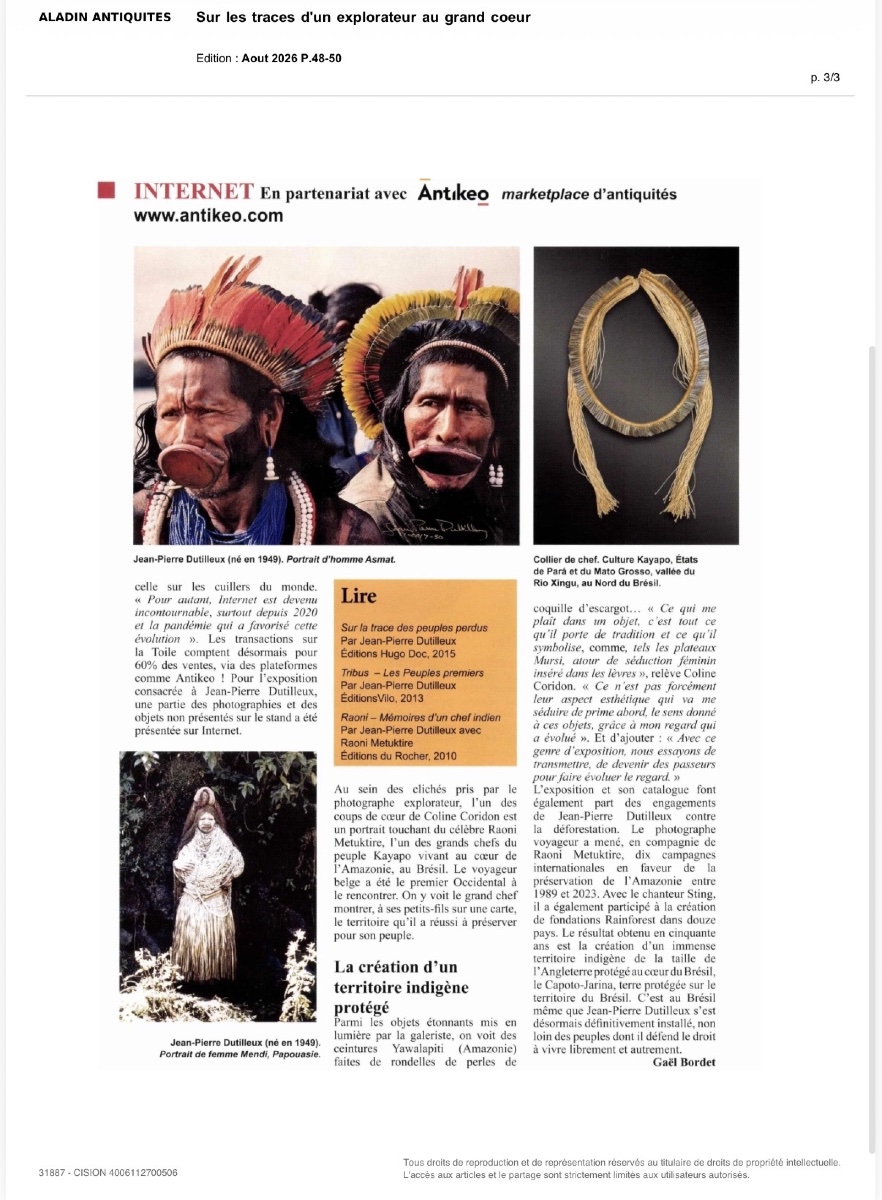


Kayapó (ngâp) Chief's Ceremonial Necklace
Kayapó (Mebêngôkre) culture, Xingu River Valley, states of Pará and Mato Grosso, Brazil
First half of the 20th century
PROVENANCE
Jean-Pierre Dutilleux Collection, Belgium.
Collected during fieldwork and subsequently kept in his private collection.
EXHIBITION
Displayed in Belgium as part of the exhibition:
“ Le Monde Premier”
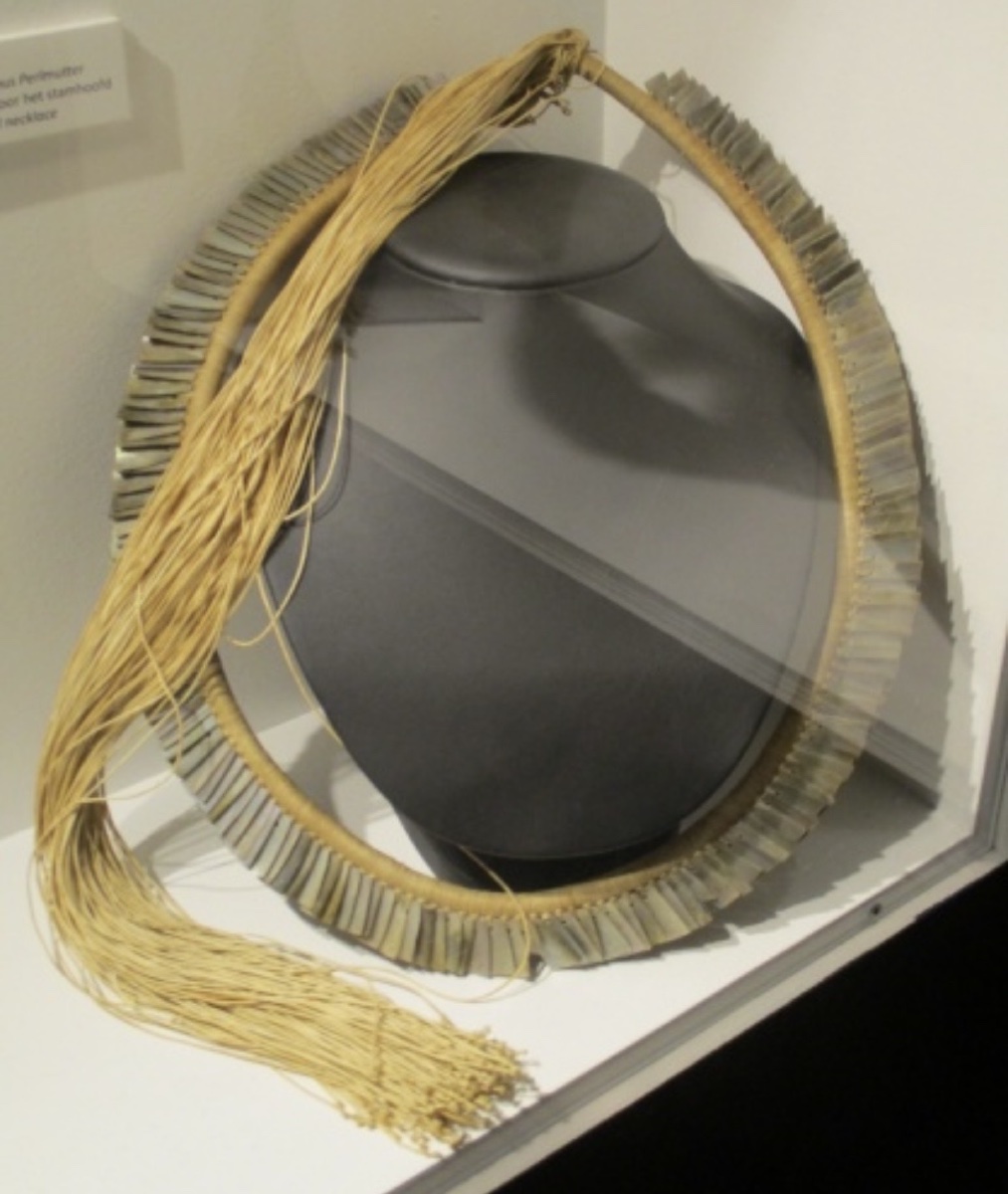
The specimen on display is clearly identifiable in the photographs taken during this exhibition. It was also reproduced in the specialized press in connection with this event.
⸻
DESCRIPTION
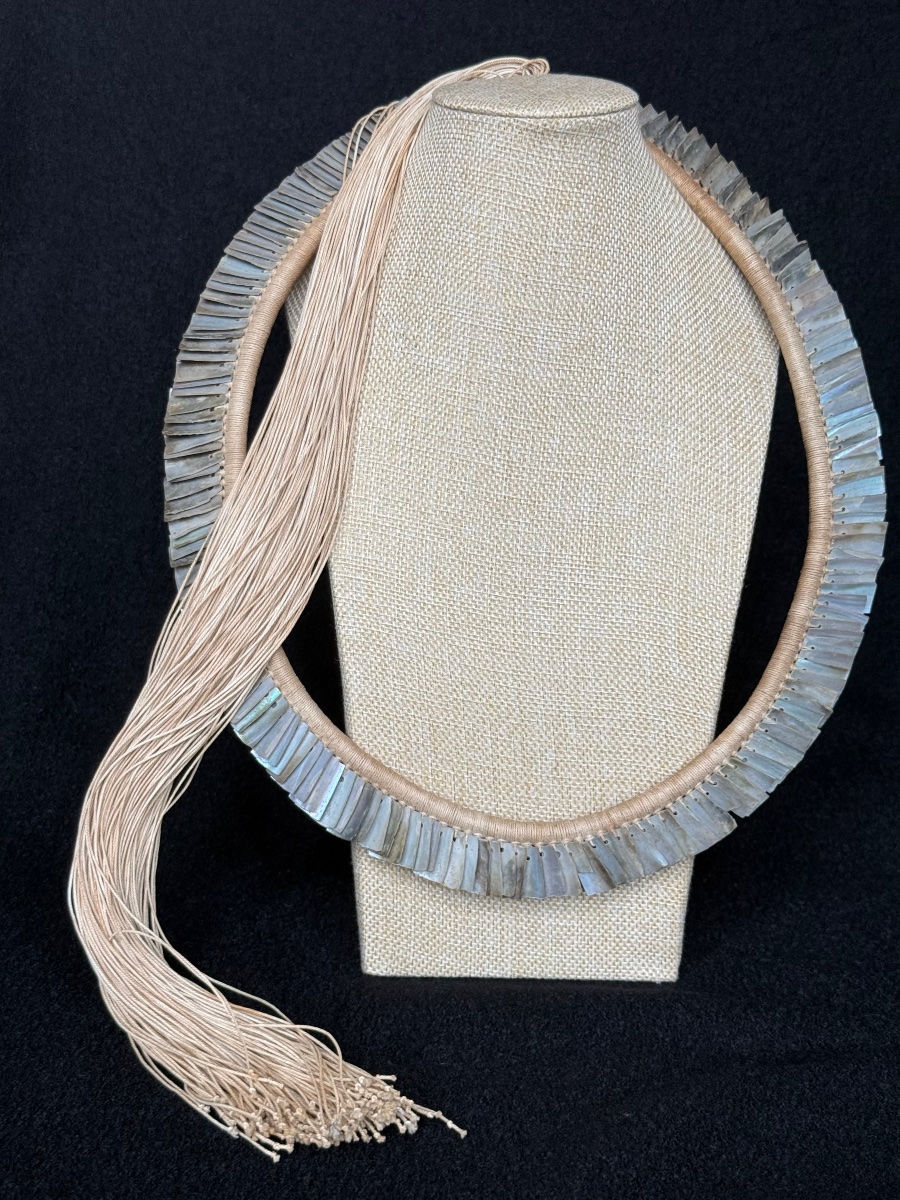
An important, prestigious ceremonial ornament of circular shape, consisting of a ring-shaped frame made of plant fibers, entirely adorned with finely cut freshwater mother-of-pearl plates arranged in a particularly regular radial pattern.
The sequence of mother-of-pearl elements forms a continuous crown whose iridescent reflections produce a remarkable luminous effect. The natural shades of the mother-of-pearl, which vary depending on the lighting and viewing angle, give this headdress an exceptional visual presence.
The upper section is extended by a spectacular cascade of long, supple plant fibers, designed to accompany the wearer’s movements during ceremonies and to enhance the visual impact of the ensemble.
One of the most remarkable aspects of this piece lies in the exceptional quality of its craftsmanship. The plates are assembled using extremely fine ligatures with an almost silky appearance, revealing uncommon technical mastery. The uniformity of the assembly, the precision of the plates’ alignment, and the overall balance of the composition clearly distinguish this set from more ordinary examples.
The balance between the geometric precision of the circle, the iridescent luster of the mother-of-pearl, and the fluidity of the suspended fibers produces a work of great formal elegance, designed to affirm the prestige and visibility of its wearer.
⸻
ETHNOGRAPHIC ANALYSIS
Among the Kayapó (Mebêngôkre) of the Xingu River Valley, large circular mother-of-pearl ornaments, called ngâp, play an essential role in communal ceremonies. Crafted by women from freshwater shells, plant fibers, and cotton cords, they are worn during the major rituals that mark the community’s social life.
These ornaments are true symbols of prestige. Wearing them is closely associated with the wearer’s rights, privileges, and social status. Among adults, they are reserved for ceremonial occasions and play a key role in the display of authority, beauty, and cultural identity.
The circular shape accentuates the silhouette, while the long plant fibers follow the dancer’s movements, reinforcing the dynamic effect sought during ritual performances.
⸻
IMPORTANCE
- Jean-Pierre Dutilleux Collection.
- Field collection.
- Public exhibition documented as part of “Le Monde Premier.”
- Specimen clearly identifiable in the exhibition photographs.
- Reproduced in the specialized press.
- Exceptional quality of assembly and bindings.
- Remarkable use of mother-of-pearl.
- Strong visual presence.
- Museum-quality piece.
⸻
CONDITION
Good overall condition.
Stable and uniform structure.
Some wear and irregularities consistent with the object’s age and ceremonial use.
Two mother-of-pearl plaques show signs of historical damage, already visible in the photographs taken during the “Le Monde Premier” exhibition, attesting to the historical state of preservation of this set of ornaments.
The ancient plant fibers display a uniform patina that is perfectly consistent with the object’s age.
Appraisal estimate: 7,800 euros
Period: 20th century
Style: Tribal Art
Condition: Excellent condition
Reference (ID): 1802292
Availability: In stock