THIS OBJECT WAS SOLD
Poitiers, 1763, Marquis De Chavagnac, Sterling Silver Meat Dish , Pierre-olivier Guidon
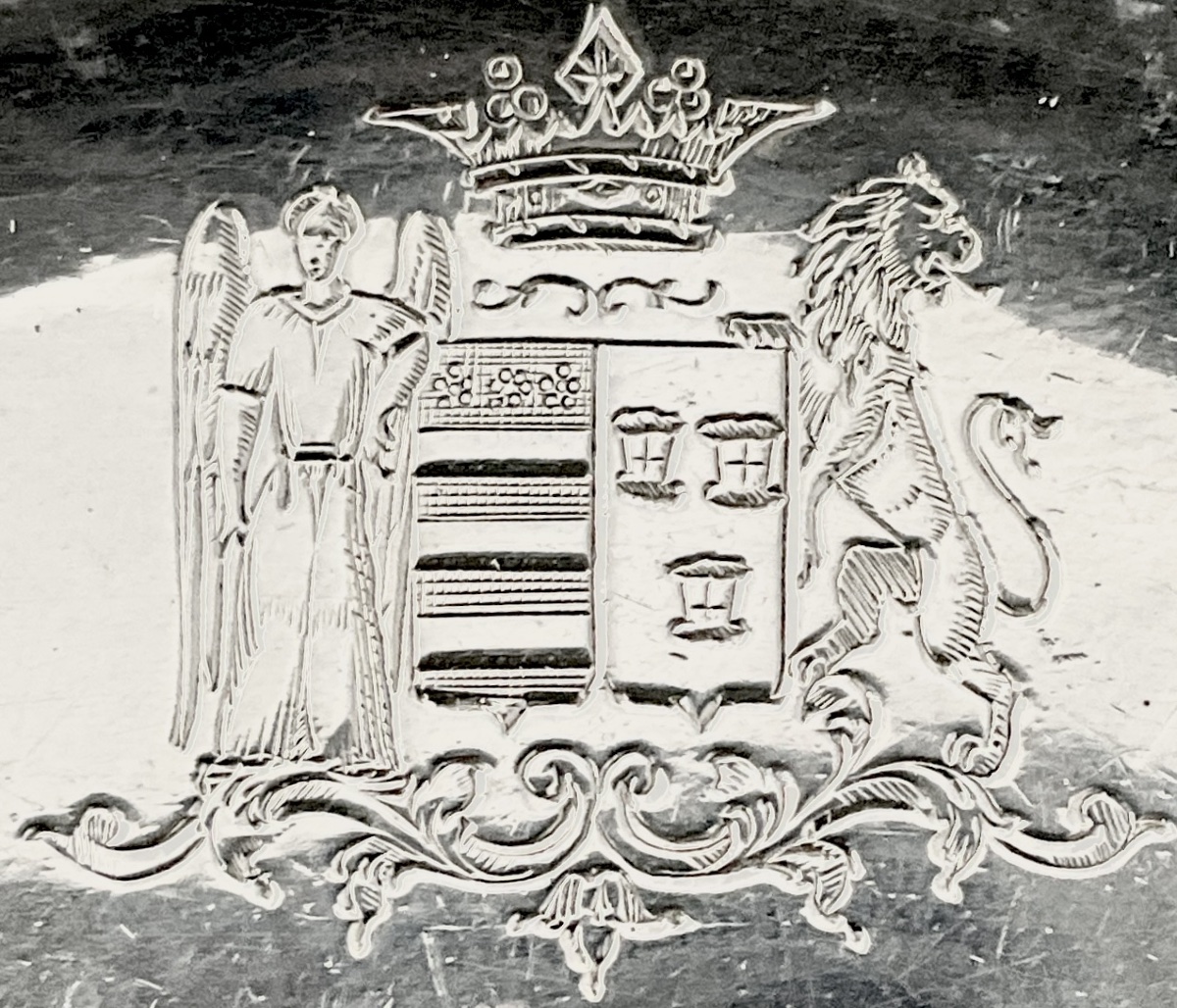
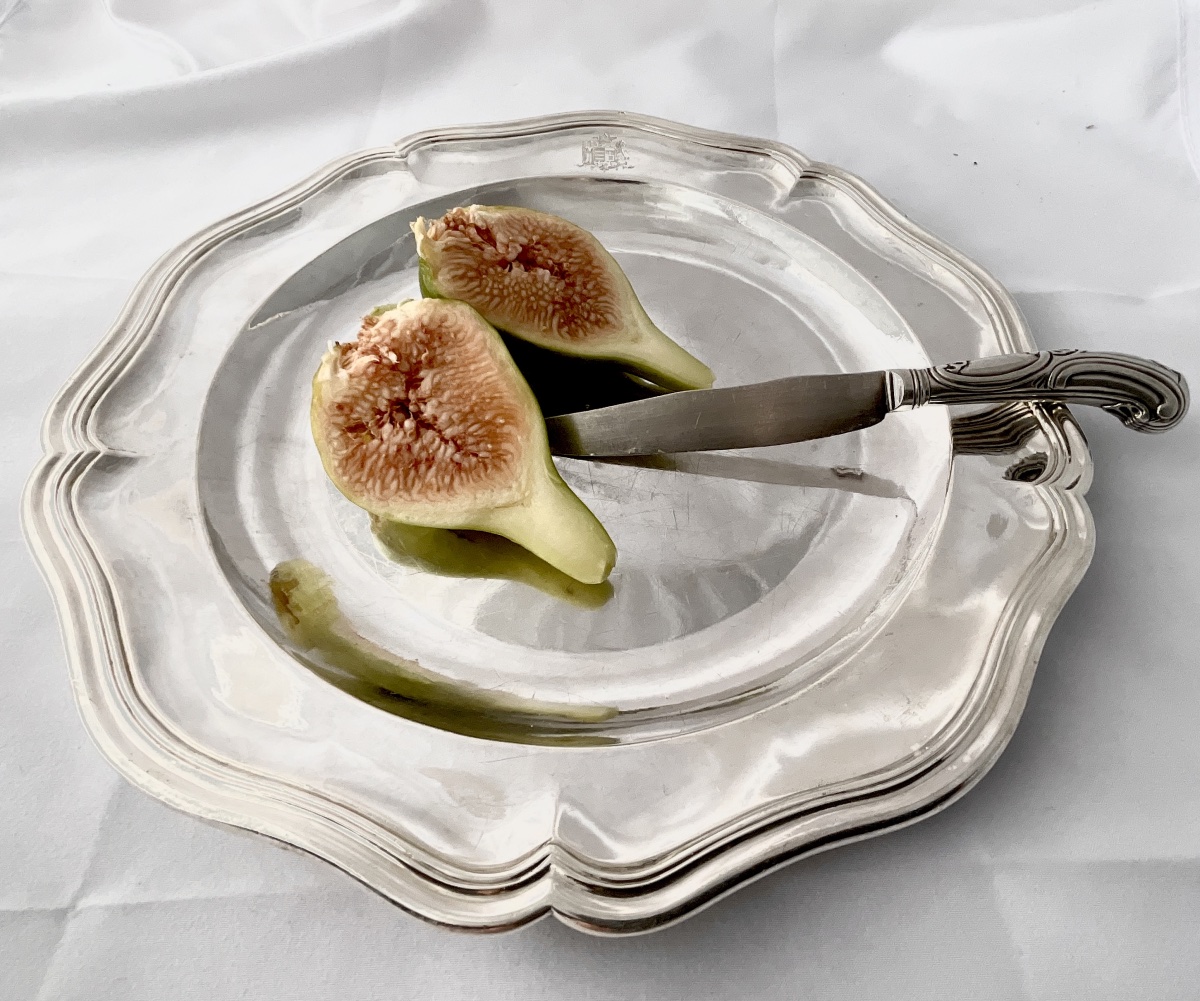
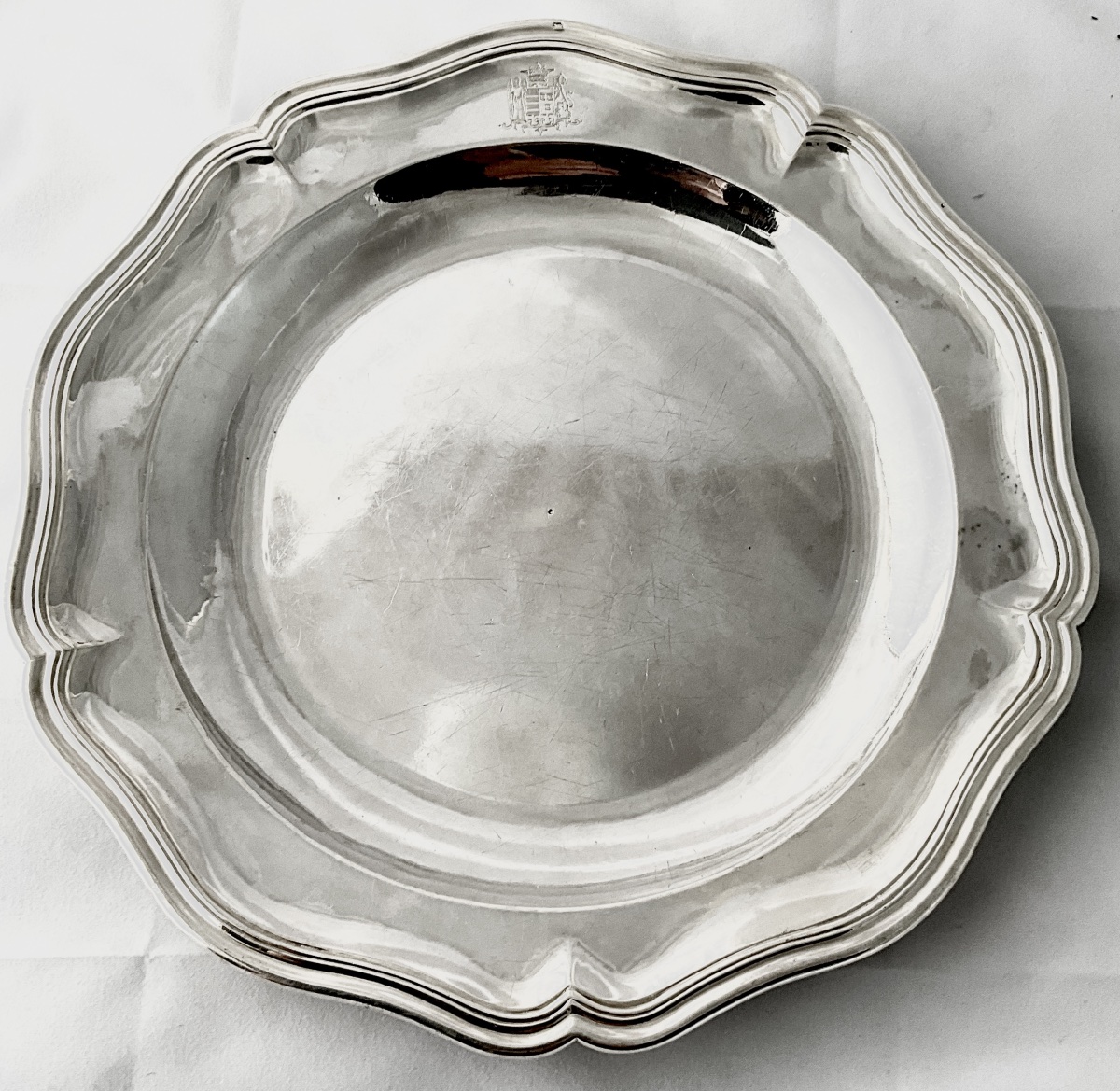
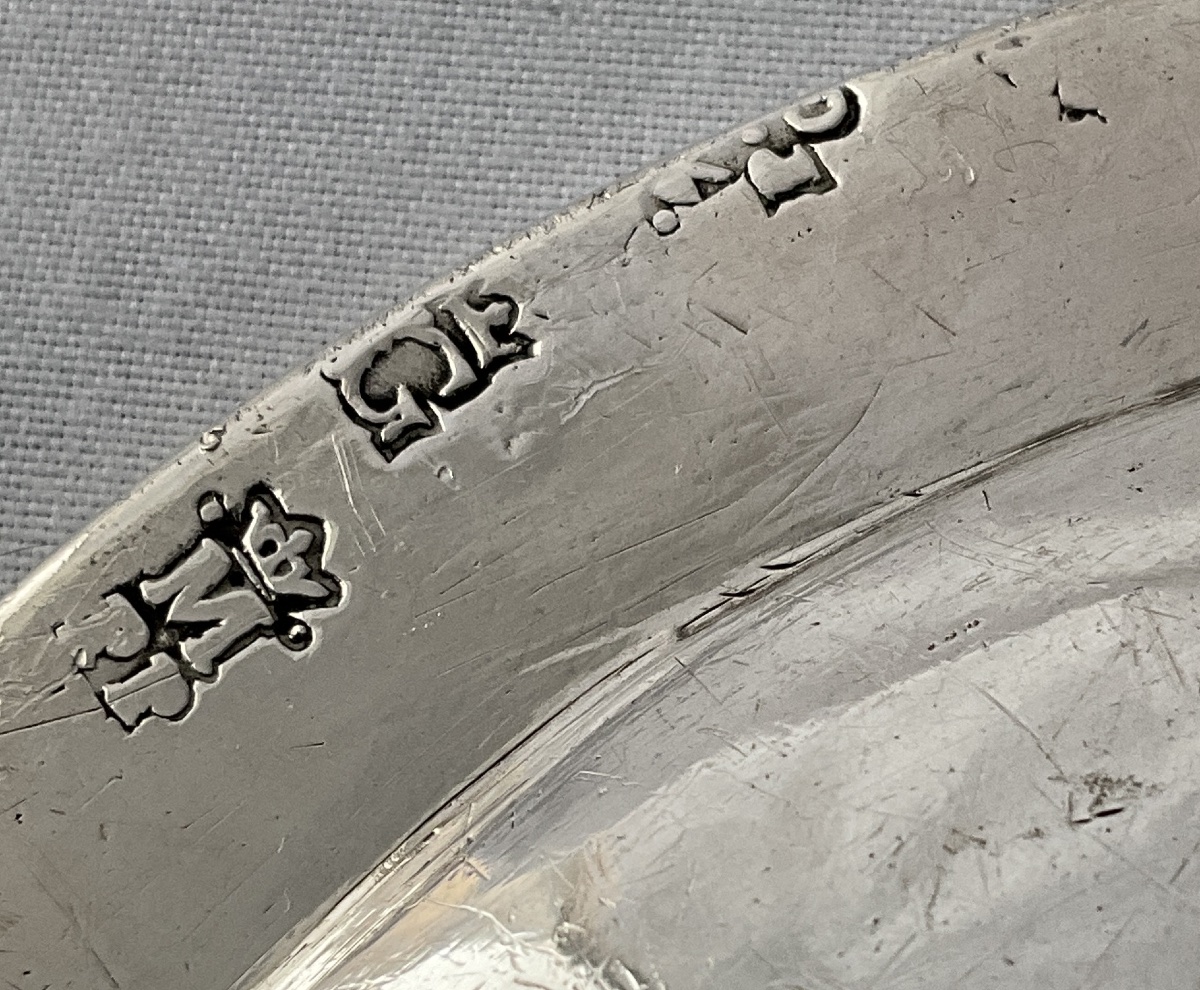

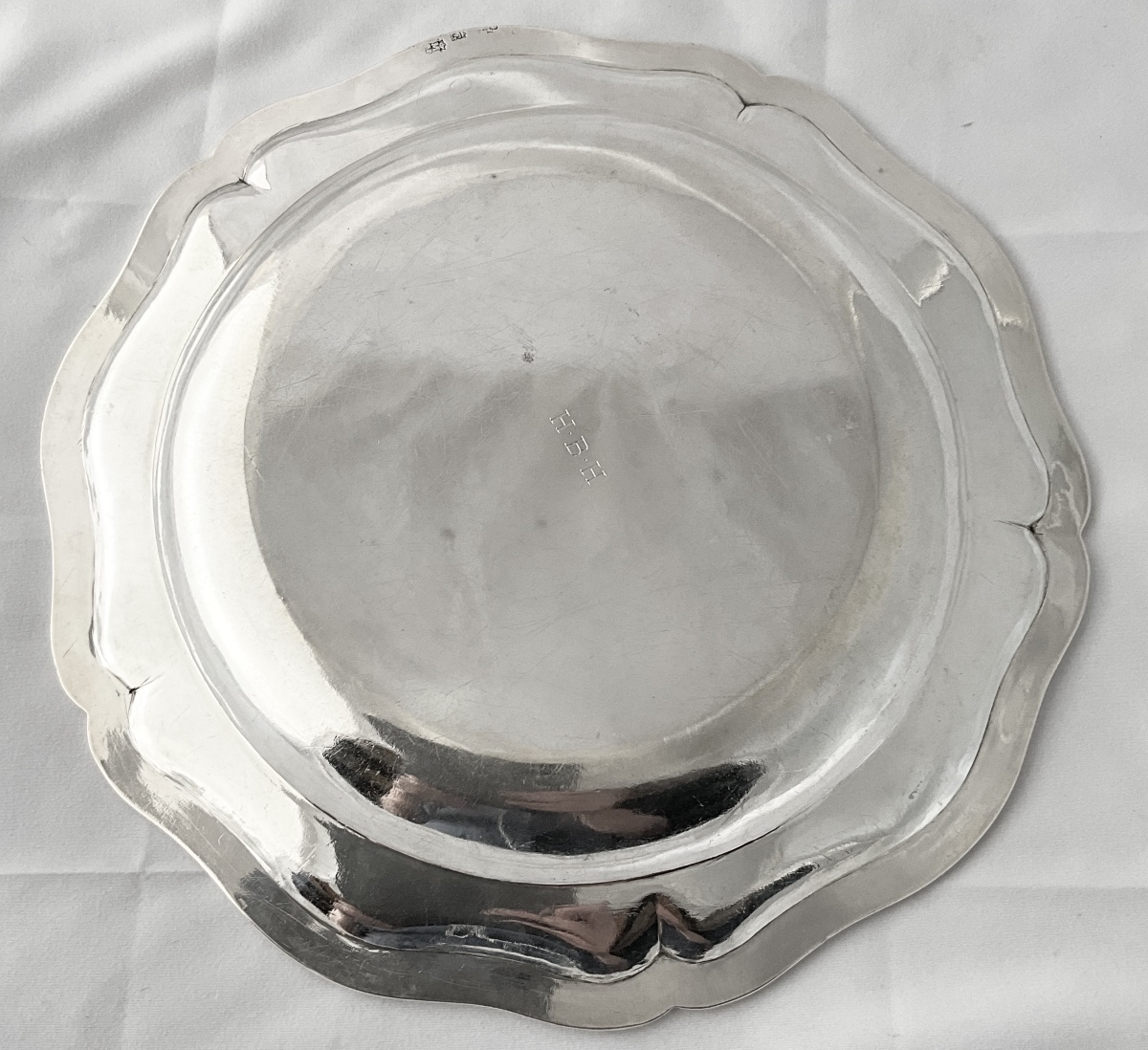
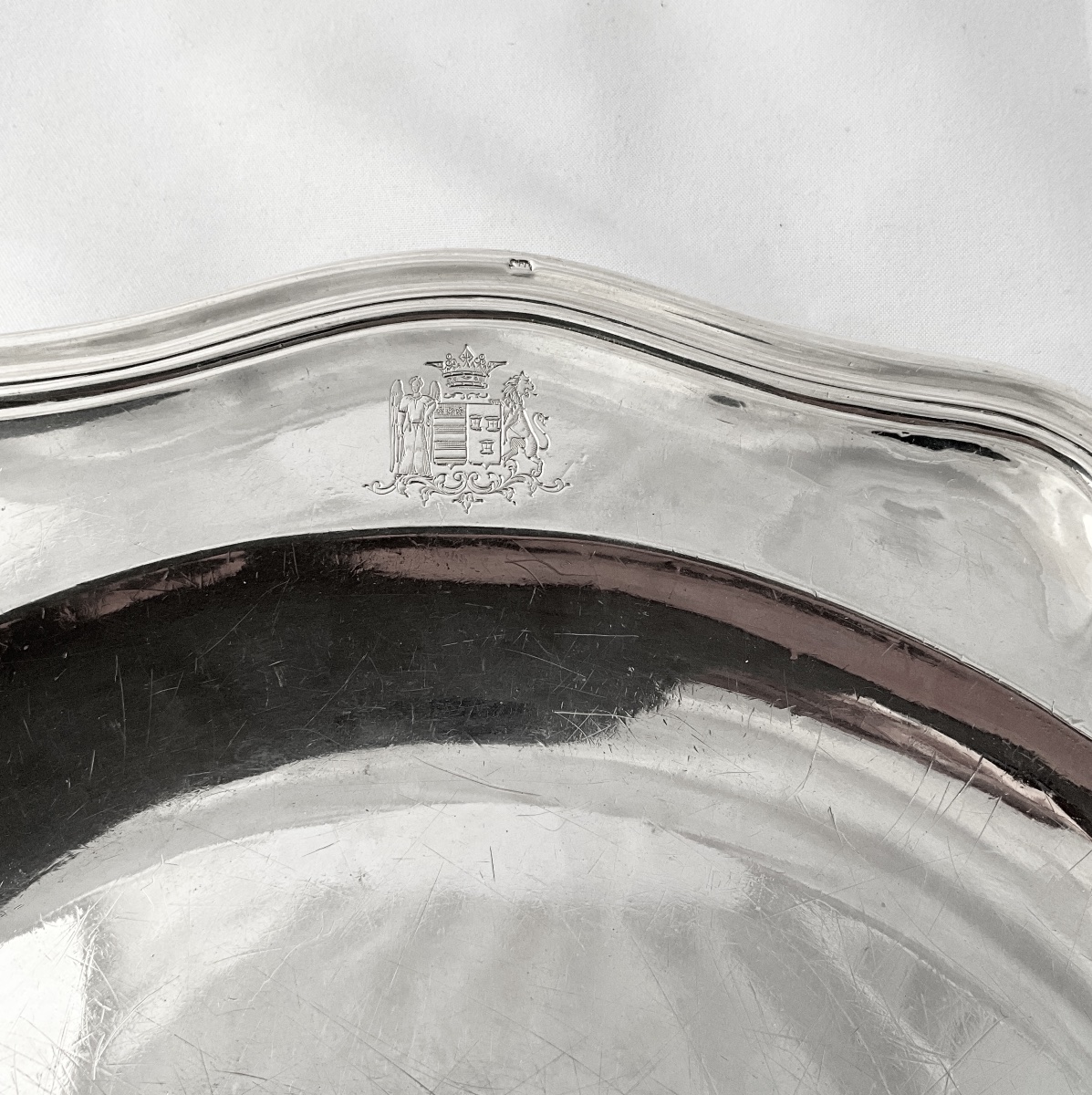
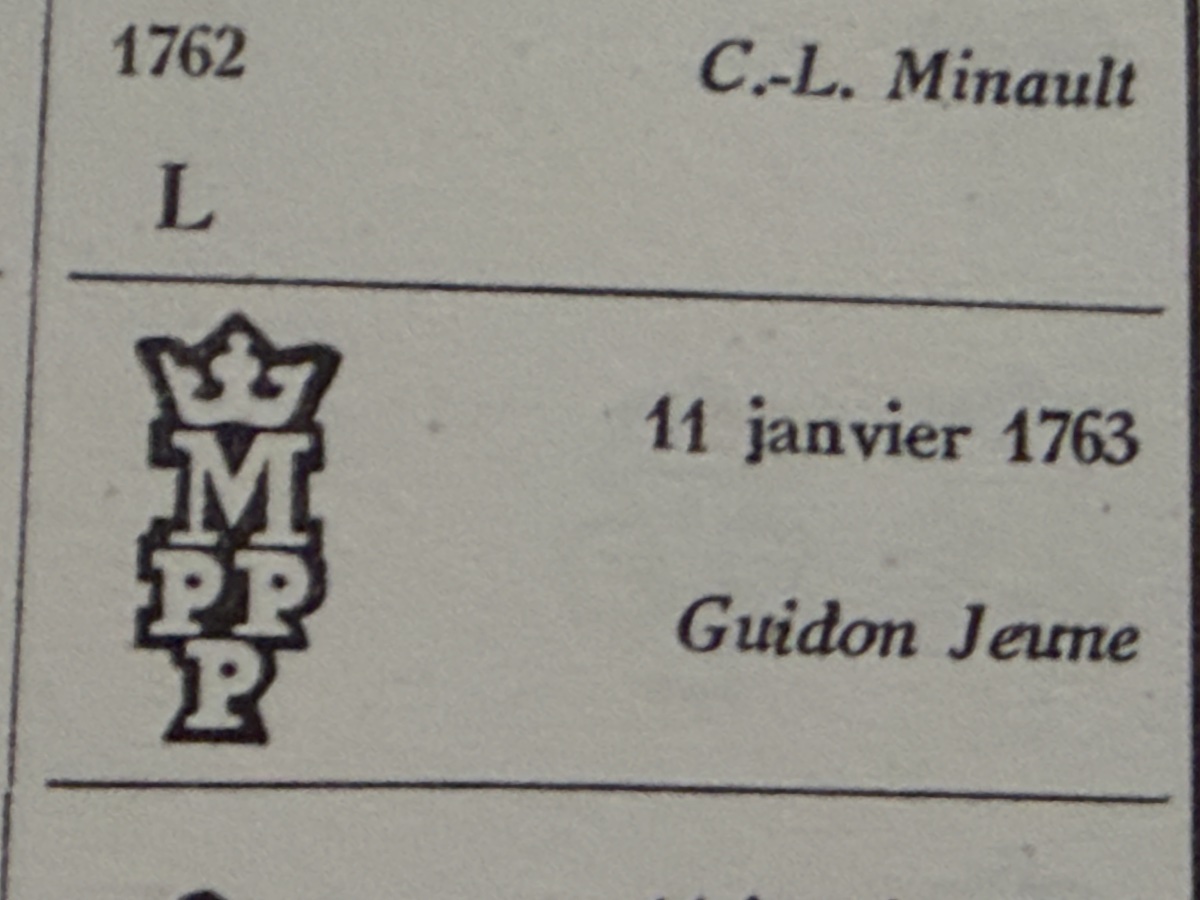
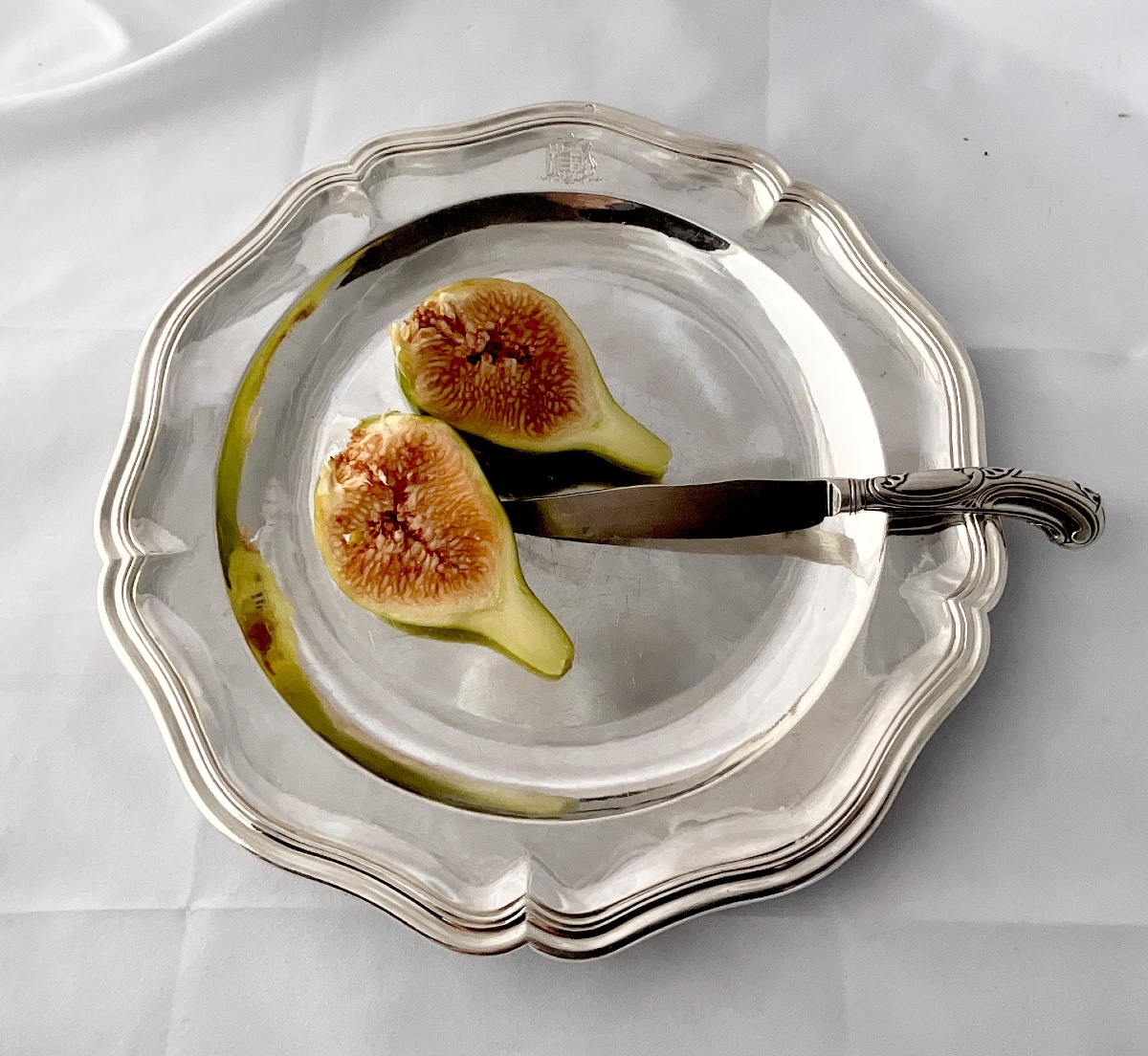
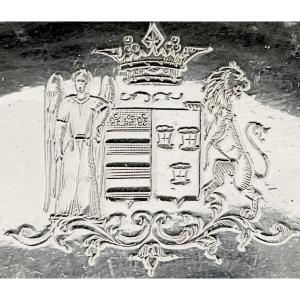


A circular solid silver dish with a five-lobed, contoured rim; the wing is engraved with two heraldic shields surmounted by a marquis’s crown. It bears the master silversmith’s hallmark of Pierre Olivier Guidon, a master silversmith in Poitiers, as well as the guild hallmark—a crowned letter M, corresponding to the year 1763—and the office hallmark, a crowned G, of the Poitiers guild.
An apprentice to Pierre Dupont beginning July 14, 1700, Pierre Olivier Guidon was admitted as a master on November 4, 1710, and established his workshop near the Jacobins in Poitiers. He trained several generations of Poitiers goldsmiths, including his own son, who was accepted as an apprentice in 1735. His hallmark was struck on July 23, 1766, after more than fifty-six years as a master—a particularly exceptional duration for an 18th-century goldsmith.
The coat of arms appears to have been engraved after the dish was made, likely in the late 18th or early 19th century. The first shield can be identified with certainty as that of the Marquis de Chavagnac, whose coat of arms is sable with three silver fess, the chief charged with three gold roses. The arms on the second shield remain unidentified to this day.
Originally from Auvergne, the House of Chavagnac owned the estate of Chavagnac in Auriac-l’Église. In 1716, Henri-Louis de Chavagnac acquired the seigneury of Blesle, which was united in 1720 with Chavagnac and Le Brues to form the marquisate of Chavagnac. In the 19th century, the branch of the marquises also owned the Château de La Rongère, which passed into the family by inheritance in 1843, as well as the estate and the Château de La Forge in Chailland, acquired beginning in 1834. In the 20th century, the Château du Rocher in Mézangers came into the family through marriage. Other branches of the Chavagnac family owned the châteaux of La Chaussière and L’Épine, as well as the Hôtel de Chavagnac in Moulins.
Diameter: 28 cm
Weight: 709 g
Explore similar pieces and discover your ideal find:
Dinnerware